REVIEW · SIEM REAP
Personalised Angkor Wat Day Tour by an Air-conditioned Car
Book on Viator →Operated by Cambodia Overland Travel · Bookable on Viator
Angkor Wat feels huge, and this plan keeps it manageable. This private day tour in Siem Reap runs on an air-conditioned car with hotel pickup, so you can focus on temples instead of logistics. You’ll move through the big hits—Angkor Wat, Angkor Thom (South Gate, Bayon, Baphuon), and Ta Prohm—at a pace that feels personal.
I especially like the human touch here: an English-speaking guide who handles the day’s flow, route, and practical bits. In the feedback tied to this style of tour, guides such as Lao (plus Panha, and Chheuy Haklao in other cases) are praised for being responsible, energetic, and patient—handy when it’s hot and you want to understand what you’re actually seeing.
One thing to watch: the temple pass is extra ($37/person) and meals aren’t included, so you’ll want cash/card set aside for entry and lunch. Also, Angkor’s heat and dress code are real—knees and shoulders covered, and the rule specifically says no scarf—so plan your clothes accordingly.
In This Review
- Key things that make this Angkor Wat day tour worth it
- Private air-conditioned car beats the usual Angkor scramble
- Angkor Wat first: using your two hours well
- Angkor Thom South Gate, Bayon, and Baphuon: the story in the middle
- Ta Prohm after lunch: managing the famous overgrowth
- Guide quality is the real upgrade
- Temple pass, dress code, and what you should prep before pickup
- Pricing math: when this private tour becomes a smart deal
- Timing and the 7–8 hour rhythm
- Should you book this Angkor Wat private day tour?
- FAQ
- What’s included in the Angkor Wat day tour price?
- How long is the tour?
- Do I need to buy a temple pass?
- What temples will we visit?
- Is this tour private?
- What dress code do I need for Angkor?
- Can I cancel if my plans change?
Key things that make this Angkor Wat day tour worth it
- Private, air-conditioned transport with hotel pickup and drop-off, plus bottled water during the tour.
- A focused temple route that hits the essentials: Angkor Wat, Angkor Thom South Gate, Bayon, Baphuon, and Ta Prohm.
- A guide who explains as you go, which matters a lot at Angkor where details can be easy to miss.
- Real flexibility for a group of your size (up to 10 in one private group).
- Practical time blocks (about 7–8 hours total) that keep the day from feeling rushed.
Private air-conditioned car beats the usual Angkor scramble
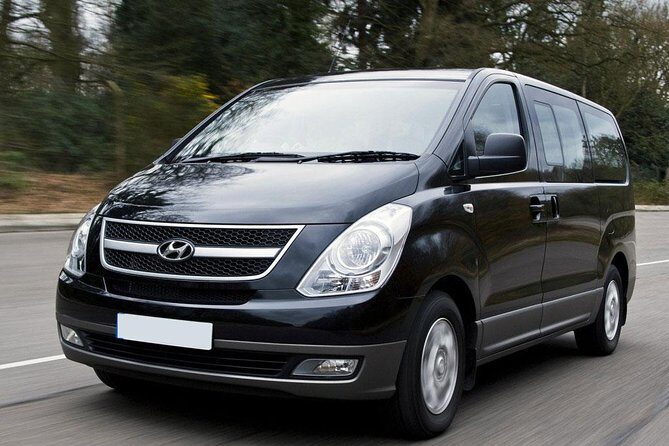
Angkor can be an energy test. Even if you love ruins, a long day in the sun wears you down fast. That’s why I like that this tour runs on a private, air-conditioned vehicle with hotel pickup and drop-off. It reduces the usual stress of meeting times, finding transport, and dragging your day bag from one ride to another.
The pace is also built around a comfortable “temple then rest” rhythm. Between stops, you’re not stuck shuffling around heat with no escape. Plus, you get bottled water during the tour, and people mention chilled/iced water being part of the car experience—small comfort, but it helps on a day where you’ll walk more than you think.
The other big practical upside is control. Since it’s private (only your group), you can ask questions without competing for the guide’s attention. And if your group moves at a slower pace—common in the heat—that’s less likely to derail the whole day.
You can also read our reviews of more tours and experiences in Siem Reap.

Angkor Wat first: using your two hours well
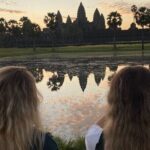
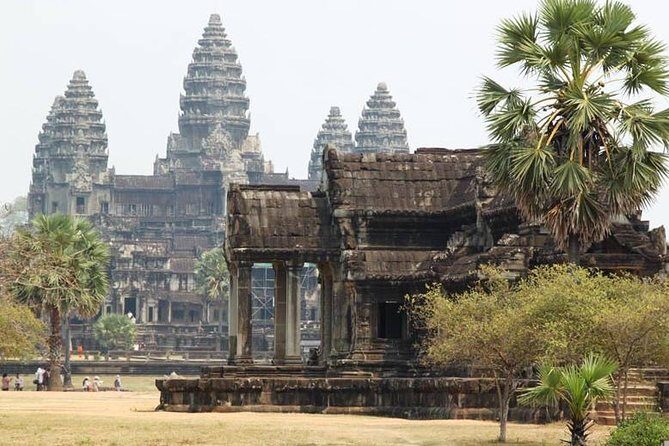
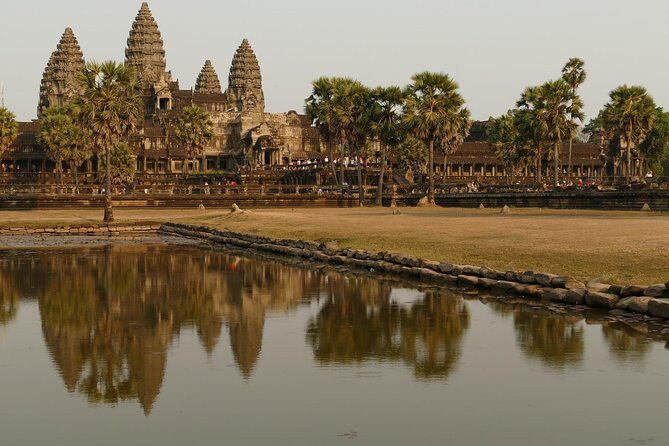
Angkor Wat is the star, and starting here makes sense. This tour gives you about 2 hours at Angkor Wat, and that time is enough to do more than a quick loop if you actually look at what’s in front of you.
A few tips to make those two hours feel worth it:
- Take your time with the main temple area, not just the outer views. Angkor Wat is built by King Suryavarman II in the 12th century, and the structure rewards slow looking.
- Use the guide to point out the parts that change how you read the carvings. If you know what you’re looking at, the temple stops being just “big rocks with walls.”
- Don’t underestimate how tiring stairs and sun can be. If you pace yourself early, you’ll enjoy the later stops more.
The trade-off with Angkor Wat being first is that it can set a high emotional bar. If you come in expecting perfection, you may feel a little whiplash later. But that’s also why it’s smart to go first: you get your “wow” temple when you’re still fresh.
Angkor Thom South Gate, Bayon, and Baphuon: the story in the middle
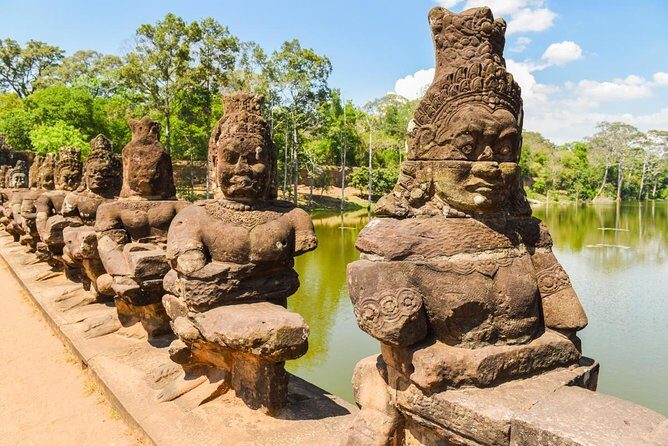
After Angkor Wat, you’ll head to Angkor Thom South Gate for about 20 minutes. This is a short stop by design. The goal is to get your bearings and step into the bigger Angkor Thom complex without losing half the day.
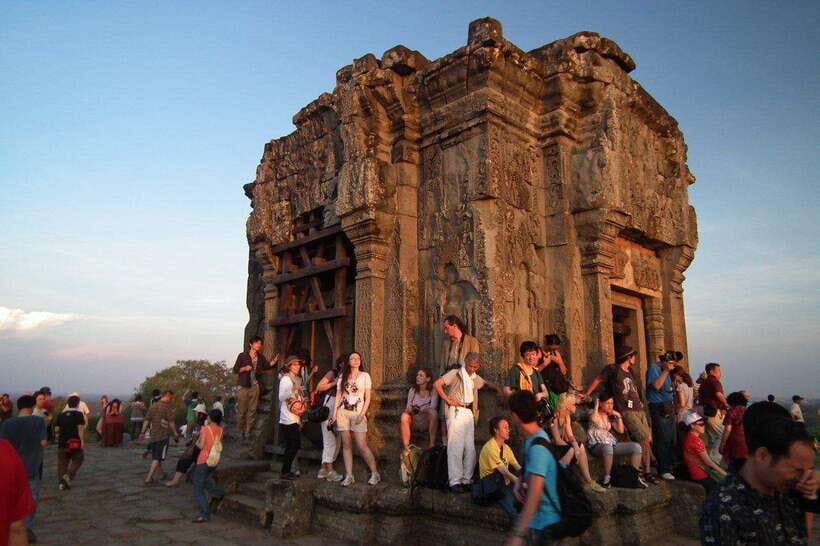
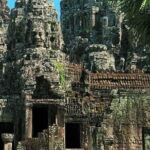
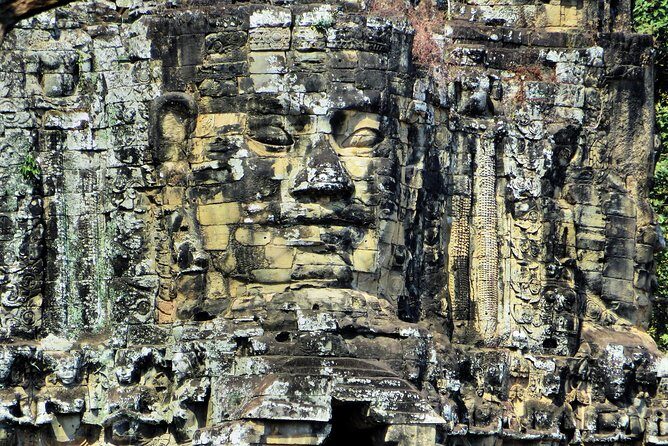
Then comes Bayon (about 1 hour), located in the center of Angkor Thom. Bayon’s most famous feature is the massive Buddha faces carved into each of its towers—49 towers are part of what people talk about most. If you only glance at Bayon, you’ll miss what makes it special: the way the faces feel like they’re watching you from different angles as you move.
From there you walk on to Baphuon for about 40 minutes. This is the “exercise” stop: it’s known for steep stairs, so it’s where you’ll feel the day physically. If your knees aren’t thrilled, just go slower and plan extra breaks with your group.
Here’s the payoff of this sequence:
- South Gate helps you enter the setting.
- Bayon gives you the iconic face moment and the central-feeling temple geometry.
- Baphuon adds action and effort so the day feels dynamic, not repetitive.
If you’re the kind of person who wants photos, this segment is good. But even if you’re not, you’ll likely enjoy it more with a guide because you’ll connect the dots between each stop.
Ta Prohm after lunch: managing the famous overgrowth
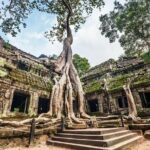
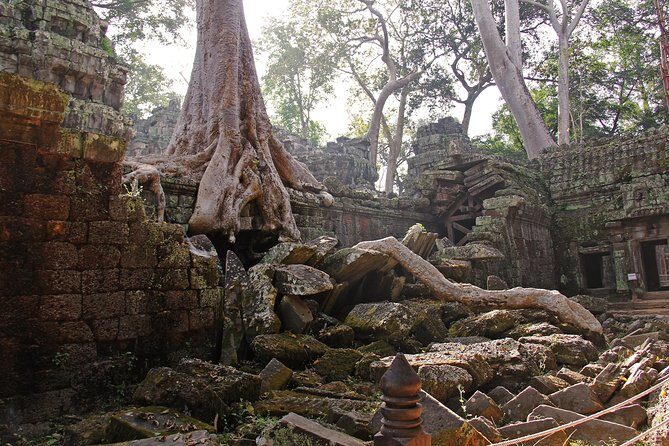
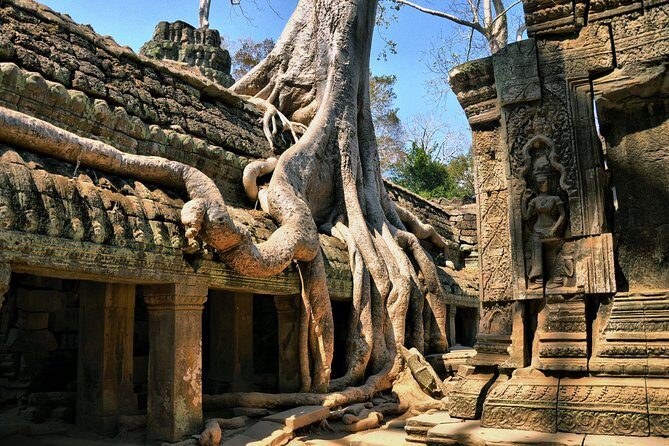
Ta Prohm is the temple people arrive for with movie-style expectations. And yes, it’s famous for its overgrown look—trees and roots weaving through the structure. This tour builds in lunch time first, with lunch at a local restaurant on your own account, then about 1 hour at Ta Prohm.
A practical way to handle Ta Prohm:
- Don’t try to do it at a jog. The “wow” comes from slow scanning—roots, carvings, and the way the plants interact with stone.
- Use your guide’s explanation to keep you from just photographing the most obvious scenes.
- Bring water mindset into this stop. By now you’ll feel the heat more.
One potential drawback: because lunch isn’t included, you’re making one extra decision during the day. Still, that flexibility can be helpful—you can choose something simple and local rather than being stuck with a set meal you might not like.
Guide quality is the real upgrade
Angkor can overwhelm you: too many temples, too many angles, and too many details that look similar unless someone explains what you’re seeing. What stands out in the feedback is that the English-speaking guide is doing real work—not just escorting.
In examples connected with this style of service, guides named Lao are described as responsible and highly engaging. Other named guides like Panha are described as friendly and knowledgeable, and Chheuy Haklao is mentioned as patient and amusing, especially when the group included different ages and fitness levels.
I’d treat those as signals, not guarantees. But the bigger point for you is clear: choose this tour because you want context and pacing, not just a car and a ticket.
If you care about understanding Angkor (instead of merely seeing it), ask your guide simple questions like:
- What should I notice first at each temple?
- What’s the most important thing that connects these sites?
- Are there any details that are easy to miss if you rush?
That’s where a great guide turns ruins into something you actually remember.
Temple pass, dress code, and what you should prep before pickup
This tour is clear about what’s included and what isn’t. You’ll get guide, transport, and bottled water, but temple admission is not included. The temple pass is $37 per person.
So your total cost will be:
- Base tour price: $108.98 per group (up to 10)
- Plus: $37/person temple pass
- Plus: meals and drinks (lunch is on your own account)
Dress code matters at Angkor, and the rules here are specific: knees and shoulders covered, and the instruction says never use scarf. That’s worth taking seriously because it can affect whether you’re allowed to enter certain areas. I’d plan lightweight clothing that covers comfortably in heat.
Also, this tour uses a mobile ticket approach, and you receive confirmation at booking. That reduces the risk of last-minute confusion and can speed up check-in if you’re organized with your phone.
What to bring (practical, not fancy):
- Comfortable walking shoes
- Sun protection (the day is long)
- A layer that covers shoulders if your shirt is too short
- Your phone for the mobile ticket
Pricing math: when this private tour becomes a smart deal
The price looks high at first glance: $108.98 per group up to 10. But because it’s per group, not per person, the value changes dramatically depending on your group size.
Here’s a quick way to think about it:
- If you’re 2 people, the base tour is about $54.49 each (before the $37 pass).
- If you’re 4 people, it’s about $27.25 each (before the $37 pass).
- If you’re 10 people, it’s about $10.90 each (before the $37 pass).
Now add the temple pass:
- Even at 2 people, you’re paying $108.98 + (2 × $37) for the day’s core access.
- At 4 people, the pass becomes the bigger share, but the transport and guide cost stays shared.
So who does this fit best? Couples, families, and friend groups. It’s less cost-friendly for solo travelers compared to group shuttles, but it can still be worth it if you strongly value a private pace and a guide who explains as you go.
Timing and the 7–8 hour rhythm
The tour runs about 7 hours (approx.), and the whole day is described as 7–8 hours. That’s a good length for Angkor because it’s long enough to see the major temples without turning your trip into an all-day endurance event with endless stops.
One review mentioned a 10am pickup from a hostel and then going to the ticket office before starting temples. Even if your start time varies, that pattern is useful for you to plan around: you’ll want to eat something beforehand, stay hydrated, and expect a schedule that builds during the morning/afternoon heat.
A good mindset for this length:
- Focus on quality in each stop, not trying to “collect” everything.
- Take breaks when you need them. A private guide makes it easier to keep the day comfortable.
- Save energy for Bayon and Ta Prohm, which often feel most intense visually once you’re deep into the day.
Should you book this Angkor Wat private day tour?
Book it if you want comfort, context, and control. The private air-conditioned car with hotel pickup and English guidance is a strong match for people who feel overwhelmed by the idea of coordinating Angkor on their own. It’s also a great fit if your group includes kids or mixed abilities, since a patient, calm guide style is a theme tied to the named guides connected to this service.
Skip (or reconsider) if you’re trying to travel ultra-budget. The temple pass ($37/person) and meals not included mean you’ll pay extra no matter what, and the private-tour base price favors shared groups more than solo travelers.
If you do book, go in with one goal: ask your guide to help you notice what makes each temple different. With that approach, you won’t just see Angkor—you’ll actually understand it.
Also, if plans change, it’s reassuring that free cancellation is available up to 24 hours in advance.
FAQ
What’s included in the Angkor Wat day tour price?
The tour includes an English-speaking guide, private air-conditioned vehicle transport, hotel pickup and drop-off, and bottled water during the tour. Temple admissions and meals/drinks are not included.
How long is the tour?
The tour is listed at about 7 hours (approximately), and the full experience takes around 7–8 hours.
Do I need to buy a temple pass?
Yes. The $37/person temple pass is not included in the tour price.
What temples will we visit?
You’ll visit Angkor Wat, Angkor Thom South Gate, Bayon Temple, Baphuon Temple, and Ta Prohm.
Is this tour private?
Yes. It’s a private tour/activity, and only your group will participate.
What dress code do I need for Angkor?
You should cover knees and shoulders. The guidance also says to never use scarf.
Can I cancel if my plans change?
Yes. Free cancellation is available if you cancel up to 24 hours in advance for a full refund.