REVIEW · SIEM REAP
Private Angkor Sunrise & Major Temples Tour by English Speaking SUV Car Driver
Book on Viator →Operated by Around Cambodia Travel · Bookable on Viator
Sunrise at Angkor feels like time travel. This private Angkor tour strings together the big names—Angkor Wat at sunrise plus major temples—with an English-speaking SUV driver who helps explain what you’re looking at. It’s built for people who want a strong start and fewer crowds.
I especially like the “start early” focus. If you’ve ever watched tour groups swarm temples mid-morning, you’ll appreciate getting to key viewpoints before the day gets loud. I also like the flexibility: you can ask the driver about nearby temples and they’ll adjust as time allows.
One thing to weigh: the price covers transport and the driver, but Angkor Wat admission is not included (listed at $37 per person), and you’re not guaranteed a licensed temple guide who will walk with you inside every site.
In This Review
- Key things to know
- Sunrise Angkor Wat: why early beats any checklist
- Pickup, timing, and how the “avoid crowds” idea works in real life
- Stop-by-stop: from Angkor Wat sunrise through the North Gate
- Angkor Wat at sunrise + Angkor Temple
- Sras Srong (Old reservoir)
- Ta Prohm (famous for movie energy)
- North Gate of Angkor Thom
- Pallilay and the royal-palace carvings: where details start to click
- Pallilay Temple
- Elephant Terrace carvings on the old royal palace wall
- Phimeanaka Temple inside the old royal palace
- Baphuon and Bayon: faces, myths, and the South Gate exit
- Baphoun Temple
- Bayon Temple and the South Gate
- The value play: $30 for transport, comfort, and an explanation partner
- Who should book this sunrise major-temples circuit?
- Small practical tips before you go
- Should you book this tour?
- FAQ
- What’s included in the tour price?
- What’s not included?
- How long is the tour?
- Is this a private tour?
- Do you offer hotel pickup?
- Can I ask the driver to visit other nearby temples?
- Do I get a licensed temple guide?
- Where does the tour start?
Key things to know
- Sunrise-first plan for a smoother, less-crowded feel
- English-speaking driver explanations (from guides like Nak, Lux/Luong, Nob, and John in reviews)
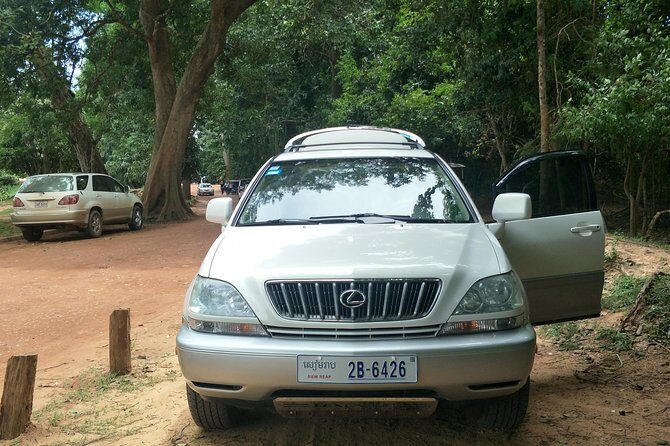
- Private SUV for your group, with hotel pickup offered and early arrival (10–15 minutes)
- Stop list is major-temples heavy, with chances to swap in nearby ruins
- Air-conditioned comfort for the Siem Reap heat between temple zones
- Licensed temple guide not included, but you can request one after booking
Sunrise Angkor Wat: why early beats any checklist
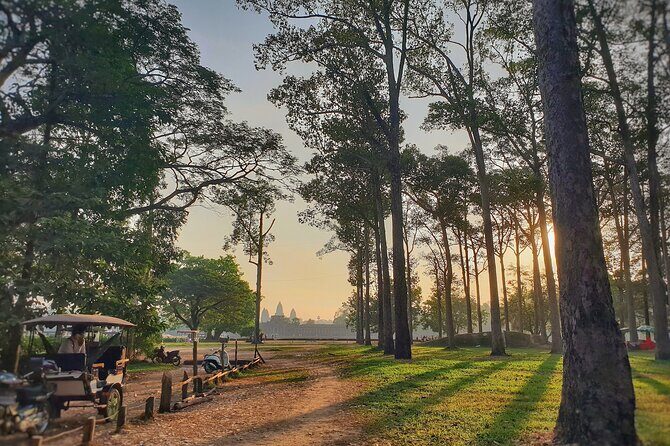
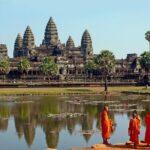
Angkor Wat at sunrise is the obvious headline. What’s less obvious is how much your whole day improves when you build around early light and calm. Getting going for the first temples means you’re not fighting crowds later, and you can take your time with the details—arches, bas-reliefs, and the changing shadows on stone.
This tour is designed as a “kickstart” day. You’re not just doing one famous stop. You’re starting with the icon, then continuing through other big names while your energy is still high. That matters because Angkor isn’t a quick stroll. Even the walking between zones adds up, and comfortable pacing makes the difference between a fun day and a slog.
The sunrise part also plays nicely with guide-style explanations. In reviews, names like Nak and Nob are highlighted for turning the Khmer empire and religious symbolism into something you can actually follow while you’re standing there. If you like history with your photos, this helps the day feel more than just sightseeing.
You can also read our reviews of more private tours in Siem Reap
Pickup, timing, and how the “avoid crowds” idea works in real life
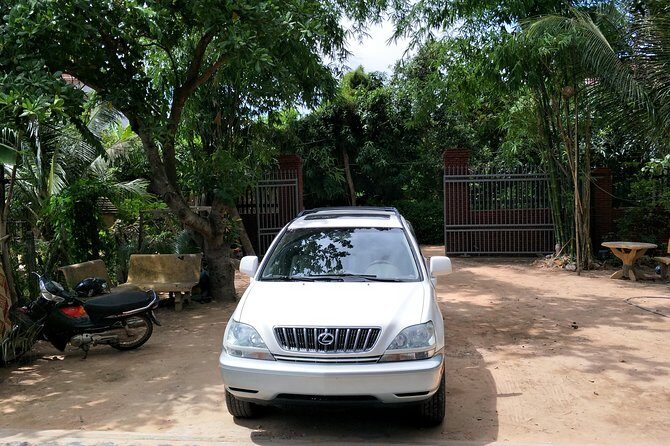
The tour runs about 7 to 8 hours. That’s a practical length for Angkor without turning it into an all-day grind. You’ll also appreciate that it’s private—just your group in the vehicle—so you’re not waiting for other people’s late arrivals or dragging your feet at each stop.
Pickup is offered in Siem Reap, and the driver is noted as being at your hotel lobby 10–15 minutes early. That’s small, but it saves time. It also helps you get to the morning sites with a calmer headspace.
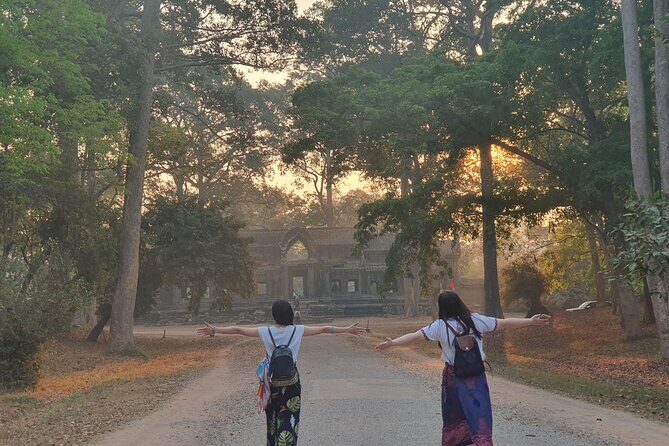
Now, about crowd avoidance: this tour doesn’t promise zero people. Angkor is popular. What it does offer is a smart order and a relaxed rhythm. Reviews mention arriving with breathing room and seeing sights in relative peace—often because you’re not arriving after the largest waves. If you want the temples, not the temple stampede, the timing strategy is one of the main reasons to consider this day plan.
The other timing advantage is the “takes it easy” approach. There’s a lot to see here. If the day feels rushed, you’ll start skipping the thoughtful details and just trying to hit photo angles. A slower pace lets you notice things like how different faces and carvings repeat across sites.
Stop-by-stop: from Angkor Wat sunrise through the North Gate
This is a long day with a clear spine: start at Angkor Wat, then move through Angkor Thom and the royal-palace zone, finishing around Bayon.
Angkor Wat at sunrise + Angkor Temple
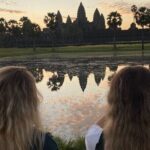
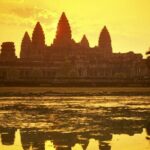
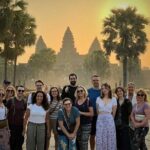
You’ll begin with Angkor Wat at sunrise, then continue to Angkor Temple. Angkor Wat is the classic because of the symmetry and the way the stone works with light. Sunrise also makes the space feel more open—like you’re seeing the temple as it was meant to be seen, not just photographed from every angle.
Angkor Temple after that keeps the momentum going. It’s a good sequencing choice because your eyes are already “tuned in” to the Angkor style. If you go later in the day, you often feel like you’re switching modes: monument mode to crowd mode. Here, it’s more continuous.
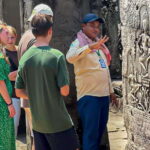
A bonus from the review highlights: the driver-style explanations can turn what looks like random carvings into a story. One reviewer described Nak as unusually effective at making Buddhism understandable, even for homeschool lessons. That kind of guide talk can make a huge difference when you’re staring at stones that took centuries to build.
Sras Srong (Old reservoir)
Next comes Sras Srong, an ancient reservoir. This stop often gets less attention than the “face temples,” but it’s valuable. Water spaces help you breathe between dense temple zones. You also start to see Angkor as a whole water-and-city system, not just a collection of buildings.
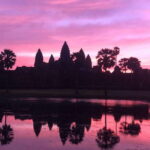
A reservoir also gives you natural photo moments—temple silhouettes, reflections when the light cooperates, and big sky views that feel different from the carved-stone corridors.
A few more Siem Reap tours and experiences worth a look
Ta Prohm (famous for movie energy)
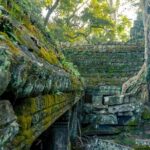
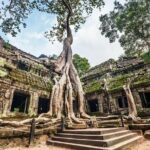
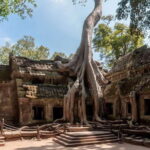
Then you head to Ta Prohm, widely known from film. Yes, it’s famous. But it’s famous for a reason: the massive trees and tangled roots interacting with the stone creates a mood you can’t fake. Even if you know the movie reference, the scale and the way the trees claim the structure still feel special in person.
One practical caution: Ta Prohm is visually complex. If you rush, you’ll miss the composition. The upside of doing it as part of a planned circuit is that you can slow down and choose your “main view” before you go hunting for side details.
North Gate of Angkor Thom
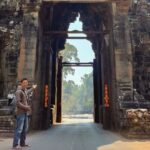
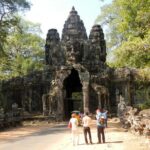
From there, you reach the North Gate of Angkor Thom. Gates matter here because they frame the entire entrance experience to Angkor Thom. You get a sense of direction and power. It’s a good waypoint because it signals the transition from one temple “type” to another.
If you’re the kind of traveler who likes orientation—where you are and why it matters—gates are your friend. They’re also a break from long interior wandering and let you reset your legs for the next wave.
Pallilay and the royal-palace carvings: where details start to click
After the North Gate, the tour continues into smaller but meaningful stops, then lands in the royal core.
Pallilay Temple
Pallilay Temple is one of those places that can feel less loud than the top-tier headlines, which can be a relief. Smaller temples often let you focus on the textures and layout without feeling like the main show is happening somewhere else.
Even if this isn’t your favorite on a first visit, it’s strategically placed in the day. You’re not exhausted yet, so it’s easier to appreciate the quieter atmosphere.
Elephant Terrace carvings on the old royal palace wall
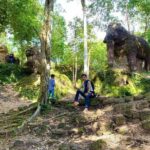
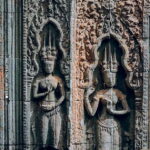
Next is the Elephant Terrace, tied to carvings on the old royal palace area. This is where Angkor’s “message in stone” becomes obvious. Terraces and guardian-like carvings are meant to communicate status, ritual, and myth. When you’re standing there, you understand why these structures weren’t built just to impress—they were built to tell people what the world should look like.
This is also where the tour format helps. If your driver is one of the more engaging explainers—reviews repeatedly mention guides like Lux (Ngoun) and John answering questions with enthusiasm—you’ll likely start noticing patterns faster. That makes the carvings feel less like work and more like a language.
Phimeanaka Temple inside the old royal palace
Then comes Phimeanaka Temple, located within the old royal palace area. Palace-zone stops work because they’re connected. You see how the architecture supports the idea of power centered on specific ceremonial spaces.
Phimeanaka can be visually compact compared to some surrounding areas, so don’t treat it as a quick stop. Look at placement. The way temples sit inside palace layouts gives context to the whole complex.
Baphuon and Bayon: faces, myths, and the South Gate exit
Baphoun Temple
The circuit moves to Baphoun (Baphuon) Temple. Baphuon helps bridge the “royal zone” feel into the face-temple mood. It’s often a stop where you get to enjoy larger views and stone storytelling before the final highlight.
If you’re thinking about photos, this is a good area to slow down. The lighting can shift quickly at Angkor, and a calm pause lets you catch the details without constantly repositioning.
Bayon Temple and the South Gate
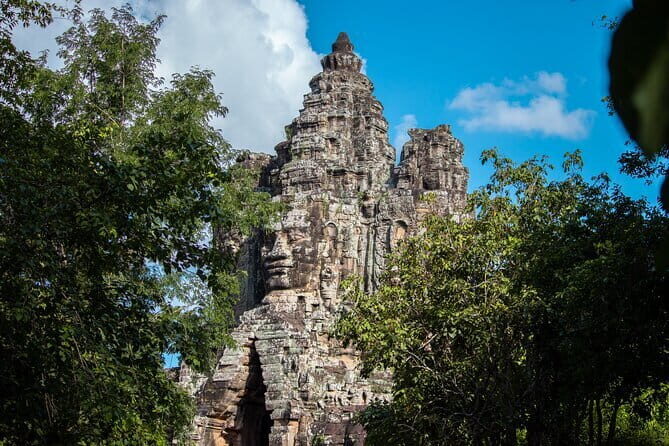
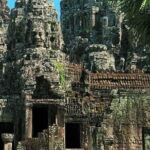
Finally, you reach Bayon Temple, with the South Gate on the way out. Bayon is famous for the stone faces, and it has that slightly unreal vibe that makes you feel like you’re moving through a myth.
This ending works well because you’re finishing where the visual impact is strong. It’s the kind of capstone that keeps the day feeling worthwhile—even if you’ve logged plenty of steps already.
One practical point: by the time you’re in Bayon, you’ll likely be hot and tired. That’s where the “private SUV + pacing” matters most. You get enough time to enjoy without racing through it like a conveyor belt.
In reviews, one repeated theme is that good guides keep the day moving ahead of the biggest waves, so you can take in Bayon without feeling like you’re getting swallowed by crowds.
The value play: $30 for transport, comfort, and an explanation partner
The headline price is $30 per person. What that number really buys you here is the day structure: private transportation, petrol included, and an air-conditioned vehicle with an English-speaking car driver.
The big extra cost you must plan for is Angkor Wat admission at $37 per person. That’s the only specific admission fee listed. So when you budget, think in two buckets:
- your tour price (transport + driver)
- Angkor Wat admission (listed at $37 per person)
If you’re used to paying for a driver-only option and then trying to cobble together guidance, this is a more complete package. Even without a fully licensed walking guide, the English-speaking driver can still add meaning—especially since multiple reviews highlight guides who explain religion and Khmer history in a way you can follow while you’re standing on stone steps.
Still, be realistic. The tour notes that the driver can communicate and understand you, but they are not licensed temple guides who will walk around and lead inside. If you want formal guidance inside temples, you’ll need to hire a licensed guide after you book (you can request this).
Who should book this sunrise major-temples circuit?
This tour fits you best if:
- You want Angkor Wat at sunrise and a full day of major sights afterward
- You prefer a private SUV day over crowded group chaos
- You like having someone in the vehicle who can explain what you’re seeing (names in reviews include Nak, Lux (Ngoun), Nob, and John)
- You want flexibility for nearby temple swaps if time allows
It’s also a good match for families who need a guide tone that works at different ages. One review called out a monk background (10 years) for Nak, and that kind of perspective can be a hit when you have kids asking “why” every five minutes.
If you’re the type who wants a deep, minute-by-minute explanation while inside every temple, you’ll likely get more out of adding a licensed guide. The transport and driver support here are strong; the “walking guide” part is the missing piece.
Small practical tips before you go
- Start with comfy shoes. Even in a well-paced day, the walking adds up at Angkor.
- Bring patience for heat. The air-conditioned SUV helps between stops, but midday sun is still real.
- Use your driver’s Q&A time. If your driver is one of the more engaged explainers, asking questions in the vehicle can make the temples click faster once you arrive.
- Treat sunrise as part of the whole plan. You’re not just paying for early entry. You’re buying a better-feeling day.
From the review highlights, you may also run into thoughtful touches like cold towels or water. That’s not stated as guaranteed, but it shows the kind of care some drivers provide.
Should you book this tour?
Yes—if you want an efficient, private, sunrise-centered Angkor day with an English-speaking driver who can explain the story behind the stones. The strongest reasons to book are the sunrise start, the major-temples route, and the relaxed, crowd-aware pacing that helps you enjoy more than just ticking boxes.
Consider hiring a licensed temple guide if you want someone officially leading inside and through every temple stop with formal interpretation. And budget for Angkor Wat admission at $37 per person, since that’s the main extra fee explicitly listed.
If that sounds like your style, this tour is a solid way to kick off Siem Reap with maximum impact and minimal stress.
FAQ
What’s included in the tour price?
The tour includes petrol, an air-conditioned vehicle, private transportation, and an English-speaking car driver.
What’s not included?
Admission fees are not included. The Angkor Wat admission fee is listed as $37 per person.
How long is the tour?
The duration is about 7 to 8 hours.
Is this a private tour?
Yes. It’s private, and only your group participates.
Do you offer hotel pickup?
Pickup is offered, and the driver is described as arriving 10–15 minutes early at the hotel lobby.
Can I ask the driver to visit other nearby temples?
Yes. The driver is described as flexible, and you can ask for other nearby temples that aren’t in the fixed itinerary.
Do I get a licensed temple guide?
No licensed tour guides who walk around the temples are included with this specific tour setup. If you want one, you can let them know after booking so you can hire a guide.
Where does the tour start?
The start point is in Krong Siem Reap, Cambodia.