REVIEW · SIEM REAP
Private Tour in Angkor Wat by Tuk Tuk
Book on Viator →Operated by Sok Saroom’s TukTuk Adventures: Explore Siem Reap in Style and Comfort · Bookable on Viator
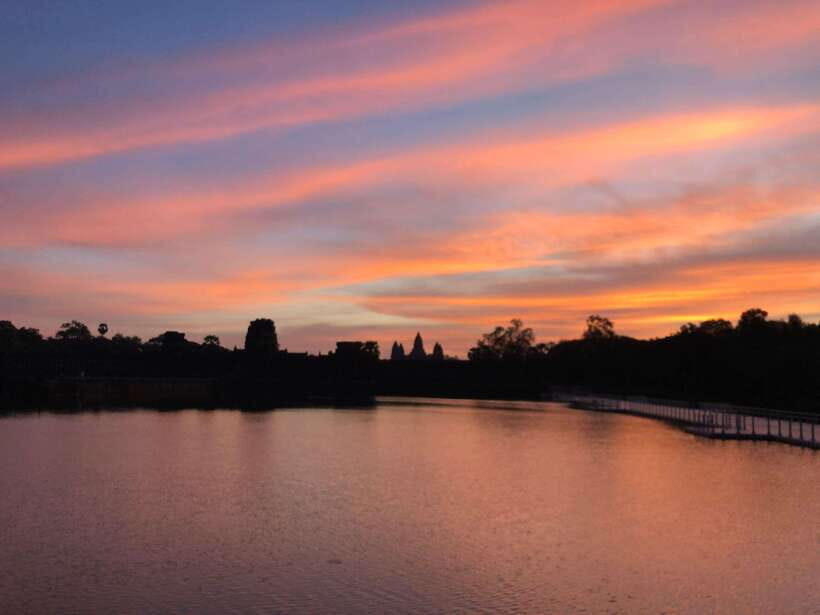
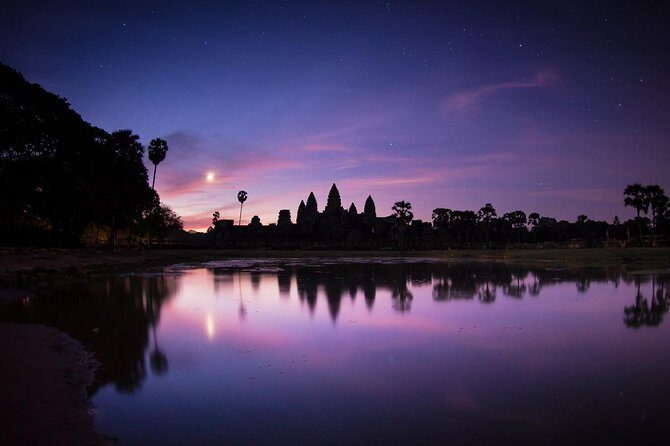
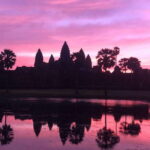
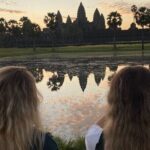
Sunrise makes Angkor feel personal. This private tuk tuk day (or long half-day) pairs early sunrise temple time with a calm, local-guided route built around the big names: Angkor Wat, Bayon, Ta Keo, Ta Prohm, and Banteay Kdei, all at a pace you control in comfort inside the vehicle. I like that it’s truly private transportation—no crowd shuffling, no waiting around for other groups, and you can adjust when the light is right.
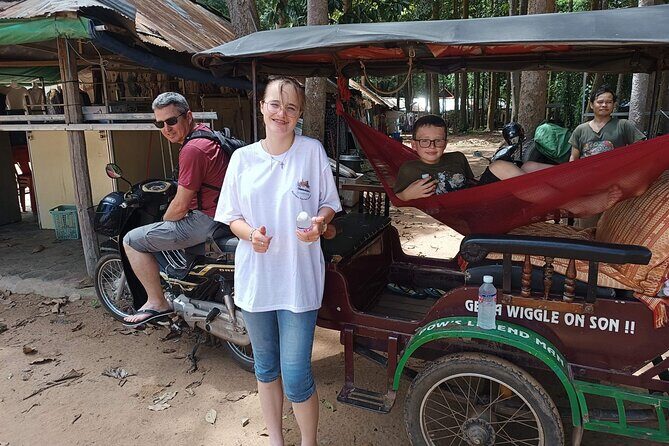
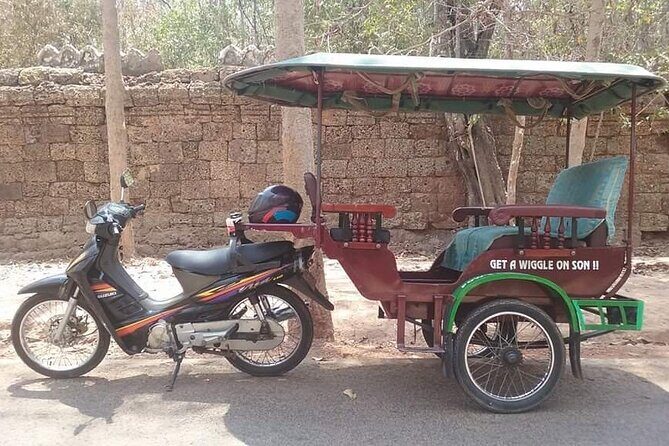
Two things I especially value here: the tour includes an English-speaking guide/driver (in this service you may be with Sok Saroom, who is described as friendly and punctual, and who shares good recommendations), and the tuk tuk is set up with a large cooler so you can keep water and snacks handy. One consideration: the Angkor Archaeological Park entrance fee isn’t included, so your total spend will depend on the ticket you choose.
In This Review
- Key highlights you’ll actually feel
- Why a private tuk tuk is such a smart way to do Angkor
- Morning timing: how to plan for the 5:30 AM–5:00 PM window
- Angkor Wat: your first 3 hours and what to focus on
- Bayon Temple: medieval Buddhist shift and the face you can’t ignore
- Ta Keo: the sandstone turning point (and why it’s not just another stop)
- Ta Prohm: Jayavarman VII’s mother and the monastery-of-the-king story
- Banteay Kdei: pinkish stone carvings for a calmer closing hour
- Price and value: what $45 really buys, and what to budget for
- The guide factor: why your experience depends on the right person (Sok)
- Comfort details that make the route easier: cooler, water, and snacks
- Who this tuk tuk tour is best for
- Should you book this private tuk tuk Angkor Wat route?
- FAQ
- What’s included in the private tour price?
- Is the Angkor entrance fee included?
- How long does the tour take?
- Is pickup offered?
- Do I get tickets electronically?
- What’s the tour schedule?
- What’s the cancellation setup?
Key highlights you’ll actually feel
- Private tuk tuk with pickup: You’re not stuck with a fixed group schedule, and the ride is built for comfort.
- Early operating hours for sunrise timing: The tour window runs 5:30 AM–5:00 PM, and the route is designed for morning temple light.
- English-speaking guide plus local know-how: You get help making sense of what you’re seeing and where to focus your time.
- Cooler on board for snacks and drinks: You can request a customized stock of beers, soft drinks, and snacks in advance.
- Route hits both icons and architecture detail: You see Angkor Wat and Bayon, then shift into Khmer-era building styles at Ta Keo, Ta Prohm, and Banteay Kdei.
Why a private tuk tuk is such a smart way to do Angkor
Angkor is huge. Even when you know the names, moving between temples without stress is half the battle. This setup uses a private tuk tuk with an experienced English-speaking driver and guide, so you’re not negotiating buses, buying extra rides, or wasting the most precious part of the day standing around. For me, that translates to better pacing: you spend energy on looking, reading, and photographing, not logistics.
I also like the comfort details you don’t always get on budget day trips. The included bottled water matters when you’re walking in the early heat, and the cooler onboard is a real quality-of-life upgrade. You’re paying for convenience, not just sightseeing.
One more subtle win: because it’s private, the guide can tailor the flow to what you care about most—big views first, or more time on carvings and temple layouts. That flexibility is valuable at Angkor, where everyone has the same must-sees but different interests.
You can also read our reviews of more private tours in Siem Reap
Morning timing: how to plan for the 5:30 AM–5:00 PM window
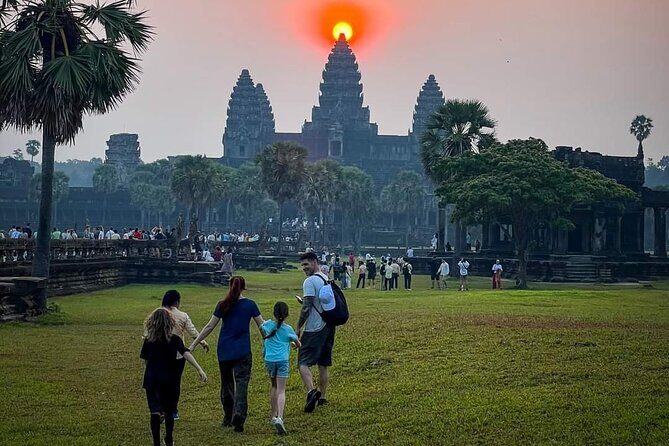
This tour runs inside Siem Reap’s main operating window: 5:30 AM to 5:00 PM. The schedule is built for early temple time, which is exactly when crowds feel lighter and the stone looks more dramatic. If you’re the type who can handle an early start, you’ll get more breathing room and better photos.
Practically, you should think about what you’ll want right away at sunrise: water, comfortable footwear, and layers. Morning can be cooler than midday, but walking between temples keeps you moving. Bring sun protection too, since the day will likely warm up fast.
If you’re tempted to pack heavy for comfort, remember you’re on a tuk tuk with a cooler option. Keep your pack simple: a small day bag, a hat, sunscreen, and whatever you need to stay comfortable for several hours of temple time.
Angkor Wat: your first 3 hours and what to focus on
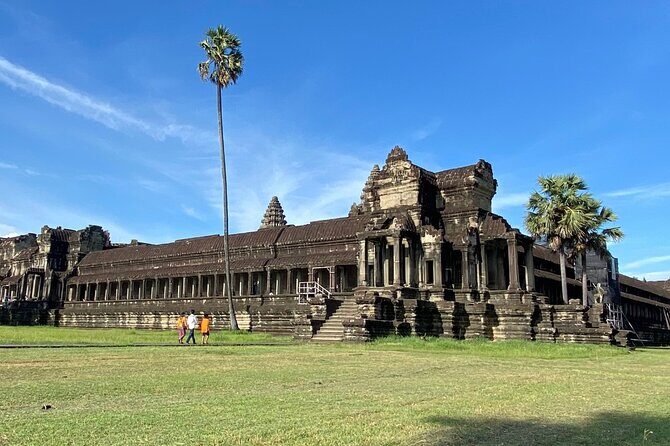
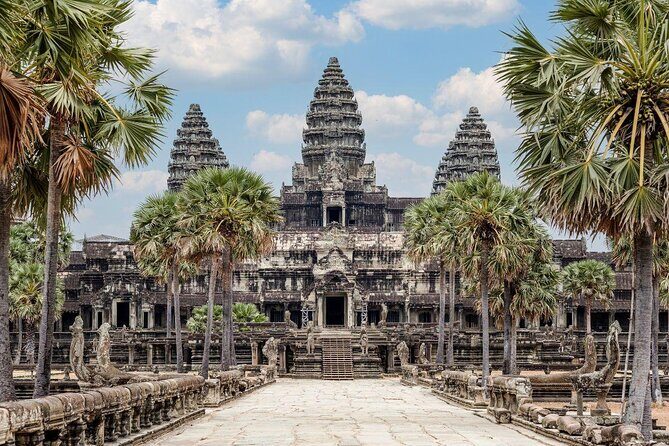
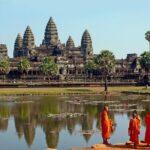
Angkor Wat is the reason most people come to Cambodia, and this route treats it as the main event—about 3 hours at the site. You’re exploring the largest religious monument in the world footprint-wise, covering around 400 acres, which is why having a plan matters. In a group setup, it’s easy to skim; in a private format, you can spend your time more intentionally.
What I think you should focus on during those first hours:
- Start with a broad overview so you get the temple’s overall layout in your head.
- Then shift to details—stonework, symmetry, and the way pathways guide your eye.
- If the light is good, take a moment for photos, but don’t let the camera run the whole visit.
The itinerary lists Angkor Wat admission as free within the park-ticket structure, but the key thing is this: the overall Angkor Archaeological Park entrance fee is not included. So plan your budget based on the ticket option you’ll buy for the length of your stay.
Potential drawback: Angkor Wat can feel like information overload if you don’t slow down. The guide’s job is to help you pick what matters most, and the best sessions feel like guided looking, not just walking.
Bayon Temple: medieval Buddhist shift and the face you can’t ignore
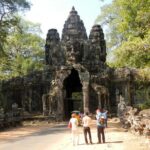
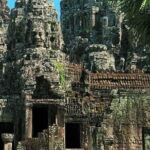
After Angkor Wat, you move to Bayon Temple for about 2 hours. Bayon is described as the Angkor Empire’s single Buddhist temple and a record of a religious change in the medieval period. That matters, because you’re not just seeing beauty—you’re seeing how beliefs and architecture evolved.
What makes Bayon especially worth your time is the emotional pull. Even if you’re not a temple-history nerd, the “face” element tends to grab attention, and it’s easier to appreciate when you have time to step back and watch how the view changes with your angle.
In a private tour, you can do something simple but powerful: linger. You don’t have to rush to the next spot just to keep up. Ask your guide to point out key features and then let your eyes do the rest. Bayon is one of those places where a little guidance makes the whole site click.
Ta Keo: the sandstone turning point (and why it’s not just another stop)
Next comes Ta Keo, also around 2 hours. This is where the tour shifts from the most famous names to architectural significance. Ta Keo is highlighted as a turning point in Khmer architecture and specifically noted as the first temple constructed entirely of sandstone.
Why that matters to you as a visitor: the building material affects how the temple looks and how it feels. Stone surfaces, edges, and carvings read differently than at sites built with other materials. Ta Keo gives you a chance to compare styles across the day, so the overall experience feels more like understanding Angkor rather than ticking boxes.
A practical note: at this stage of the route, you’ll likely feel the day building up—heat, walking, and sun. Ta Keo is a good place to slow down and use shade when you can. With a private vehicle, you can also take micro-breaks without breaking a group’s timing.
Ta Prohm: Jayavarman VII’s mother and the monastery-of-the-king story
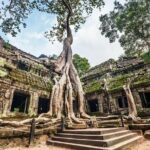
Then you head to Ta Prohm for about 2 hours. The tour describes it as originally designated Rajavihara—the Monastery of the King—and devoted to Jayavarman VII’s mother. It was constructed in 1186, which gives you a clear historical anchor as you walk.
Here’s how I suggest you approach Ta Prohm: treat it like a story scene. Instead of just scanning for famous angles, focus on how the space is organized and how the site’s purpose shaped what was built there. When you have the guide’s context, it stops being just a photo stop and starts feeling like a real place with intent.
A small consideration: Ta Prohm is often one of the most visually “busy” temples. If you’re prone to visual overload, ask your guide to point you toward the most important viewpoints or the key areas to see first. A private tour is great for that kind of triage.
Banteay Kdei: pinkish stone carvings for a calmer closing hour
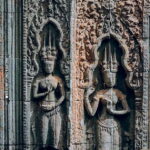
Your final temple stop is Banteay Kdei, about 1 hour. The standout detail in the description: it’s made of a unique pinkish-hued stone, and it’s known for some of the finest stone carvings. You’re also told the site began in 967, which again helps connect what you’re seeing to a broader timeline.
One reason I like ending here: the duration is shorter. After spending longer stretches at the larger temples, a final hour can feel like a “finish strong” moment instead of another marathon. Banteay Kdei is a good place to reset your eyes—look at carving lines and textures—without feeling like you have to power through.
If you have only an hour, you’ll benefit from focusing on what the guide recommends: the most impressive carvings and the most readable viewpoints. With a private format, you can stop and start based on what you’re noticing, not just what comes next on a list.
Price and value: what $45 really buys, and what to budget for
The listed price is $45, and the tour includes private transportation, bottled water, local tax, and an experienced English-speaking driver and guide. That’s a lot of practical value when you compare it to piecing together multiple local transport options plus paying for a guide separately.
The big variable is the Angkor Archaeological Park entrance fee, which is not included. The park ticket is listed as US$ 11–US$ 37 depending on your overall stay. So the true cost for you will be $45 plus the ticket you choose.
Here’s the way to think about value: if you want convenience, early timing, and guidance across multiple major temples, this price makes sense. If you’re traveling solo on a super-tight budget, you may be able to DIY parts of the route—but you’ll give up the comfort, timing control, and the help interpreting what you’re seeing.
Also, food and beverages aren’t included. The included water helps, but you’ll still want a plan for lunch/snacks.
The guide factor: why your experience depends on the right person (Sok)
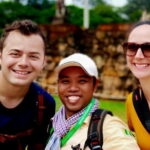
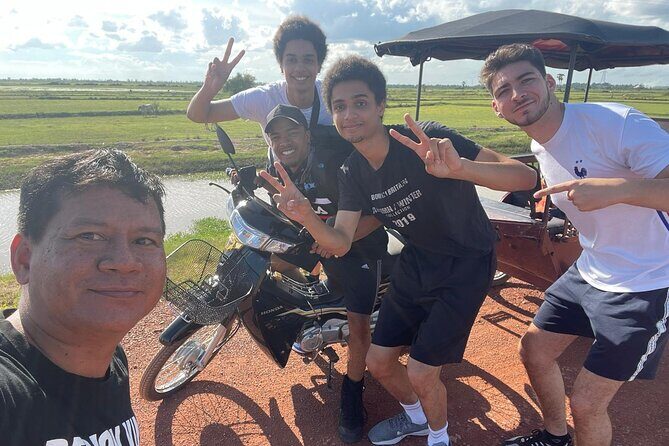
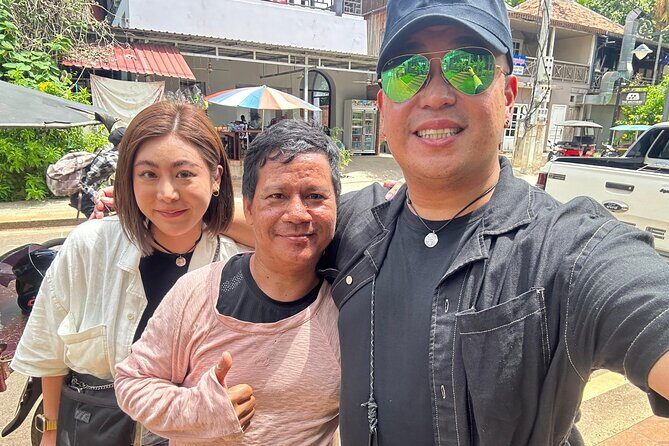
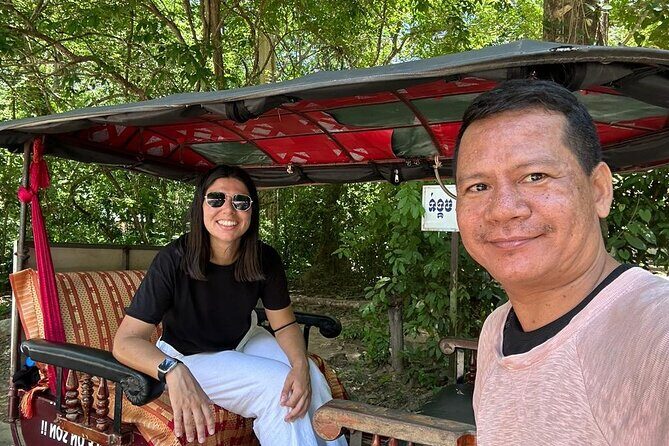
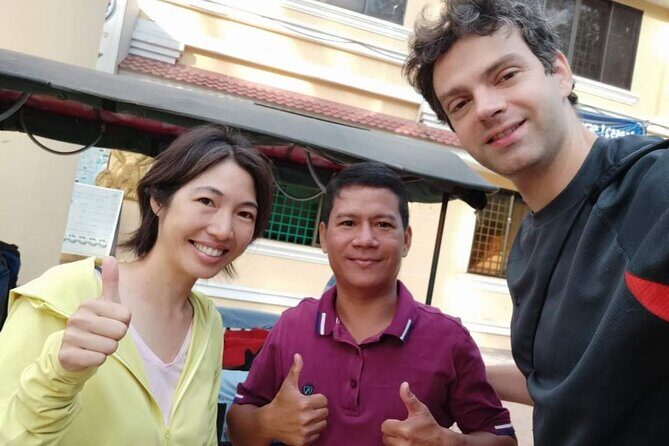
One of the most praised aspects of this service is the person behind the wheel and the information. The review feedback highlights Sok as friendly and punctual, and especially focused on making sure you’re having a good time. It also notes that he gives good recommendations on what to see and what to visit.
That kind of guidance matters at Angkor because it changes your visit from “I walked around” to “I understood what I saw.” Even if you’re not a temple scholar, a good guide helps you know where to spend your limited time. It can also prevent common mistakes like spending too long in one area while missing the view-angle that makes a carving or structure click.
You’ll feel this most at the transition points—when you go from Angkor Wat’s scale to Bayon’s spiritual shift, then to Ta Keo’s building-material significance, and so on. A strong guide makes the route feel connected instead of random.
Comfort details that make the route easier: cooler, water, and snacks
This tour is set up for comfort in small but meaningful ways. Bottled water is included, and the tuk tuk includes a large cooler. If you want to make the day feel more like a relaxed outing than a grind, you can request a customized stock of beers, soft drinks, and snacks in advance.
This is one of those perks you appreciate later. During temple hours, it’s easy to get worn down by heat and walking. Having your own supplies ready means you’re not hunting for refreshments between stops, and you can keep your energy up.
Food and beverages aren’t included, so if you have preferences, it’s smart to decide your snack plan beforehand. Even a simple strategy helps: choose something portable for in-between time, and save a proper meal for when you have a comfortable break.
Who this tuk tuk tour is best for
This is a good fit if you:
- Want a private day with less waiting and more control over pacing
- Like the big icons (Angkor Wat and Bayon) but also want architecture context (Ta Keo and Banteay Kdei)
- Prefer an English-speaking guide to help you make sense of what you’re seeing
- Can handle a sunrise start and want a calmer morning vibe
It’s also a reasonable match for couples and small groups who want flexibility. Since you only share with your group, you can move at the pace that feels right for you.
Should you book this private tuk tuk Angkor Wat route?
I’d book this tour if you care about comfort and guidance and you want to cover several key temples without turning the day into a transportation puzzle. The price is solid for what’s included—private tuk tuk, water, and an English-speaking guide—and the route is structured so you get a mix of scale (Angkor Wat), spiritual history (Bayon), architectural turning points (Ta Keo), and distinct temple purpose (Ta Prohm).
You might think twice if budget is your main driver, because the Angkor Archaeological Park entrance fee is separate and can vary based on the ticket length. But if you already plan to visit multiple major temples, this format saves time and makes your day feel smoother.
If you’re deciding late, use this rule: if you want more looking time and less logistics time, choose the private tuk tuk.
FAQ
What’s included in the private tour price?
The tour includes private transportation, bottled water, local tax, and an experienced English-speaking driver and guide.
Is the Angkor entrance fee included?
No. The entrance fee to the Angkor Archaeological Park is not included. It’s listed as US$ 11–US$ 37 depending on your overall stay.
How long does the tour take?
The duration is approximately 5 to 10 hours.
Is pickup offered?
Yes, pickup is offered.
Do I get tickets electronically?
The tour includes a mobile ticket.
What’s the tour schedule?
The opening hours listed are 5:30 AM to 5:00 PM, Monday through Sunday.
What’s the cancellation setup?
Free cancellation is available up to 24 hours in advance of the experience’s start time for a full refund. If you cancel less than 24 hours before, the amount paid is not refunded.