REVIEW · SIEM REAP
Siem Reap: Banteay Srei and 5 Grand Temples Tour with Guide
Book on GetYourGuide →Operated by Siem Reap Shuttle · Bookable on GetYourGuide
Angkor feels huge, but this day feels personal. The route mixes Banteay Srei with major Grand Circuit temples, and your guide ties the carvings, gods, and daily life together in plain language. You also get those little roadside glimpses of how people live now, not just how kings lived centuries ago.
What I like most is how the day balances “wow” and context. First, Banteay Srei gives you that pink-stone, detail-obsessed feel without the crush of the big-ticket sites. Second, the guided explanations at each stop make Hindu and Buddhist symbolism click fast, from doorway statues to recurring motifs.
One thing to think about: it’s a long day in Cambodia heat, with a lot of walking on uneven ground. If you’re sensitive to hot weather—or you need step-free access—this tour may be a tough fit, even with cold towels and bottled water.
In This Review
- Key highlights worth planning for
- Banteay Srei and the Grand Circuit: a smarter way to see more
- Before You Go: entrance ticket timing and the no-shorts rule
- How the 8-hour schedule really feels from Siem Reap
- Stop 1 on the route: the trip into the Angkor temple zone
- Banteay Srei: the pink carvings that feel made for close inspection
- Pre Rup: a smaller stop that still gives you that Angkor feeling
- East Mebon and Ta Som: different eras, different vibes
- Preah Khan: where the day’s story expands
- Village craft stops: sugar palm and hats add real-world contrast
- Heat management and photo sanity tips
- Price and value: what $20 buys you, and what it doesn’t
- Who should book this tour, and who should skip it
- My final verdict: should you book this Banteay Srei day?
- FAQ
- How long is the tour?
- What temples and stops are included?
- Is hotel pickup and drop-off included?
- Is the entrance fee included?
- Is lunch included?
- What should I wear to avoid being turned away?
- Is this tour suitable for wheelchair users or limited mobility?
Key highlights worth planning for
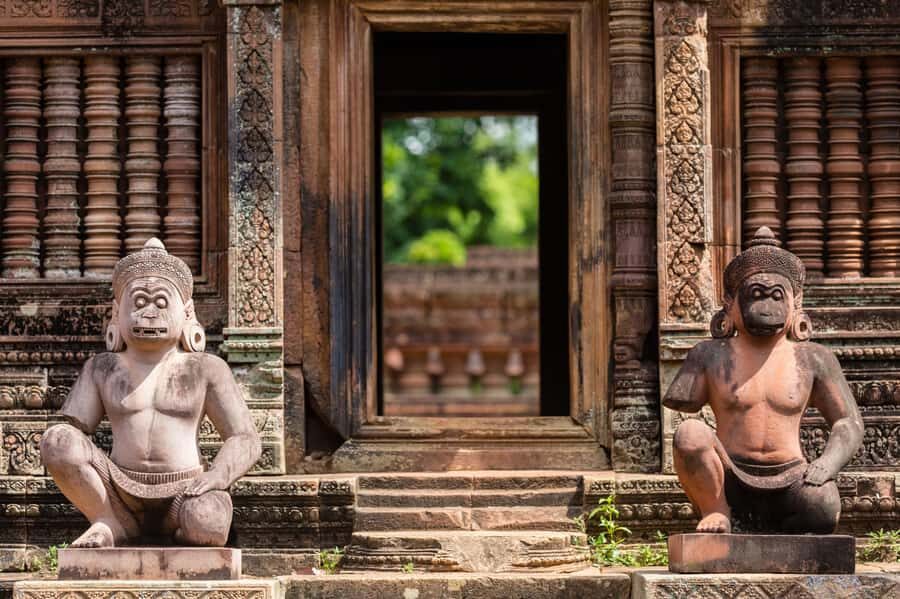
- Banteay Srei’s Citadel of Women vibe: the small size makes the carvings easier to study up close
- Five Grand Circuit temples in one day: Pre Rup, Banteay Srei, East Mebon, Ta Som, and Preah Khan
- Villager craft stops en route: watch sugar palm and hat-making along the way
- Strong guide factor: many English-speaking guides (including names like Pip, Nara, and Phyrom) focus on clarity and stories
- Comfort touches included: hotel pickup, cold towels, and bottled water
- Dress and mobility matter: covered shoulders/knees and limited suitability for wheelchairs
Banteay Srei and the Grand Circuit: a smarter way to see more
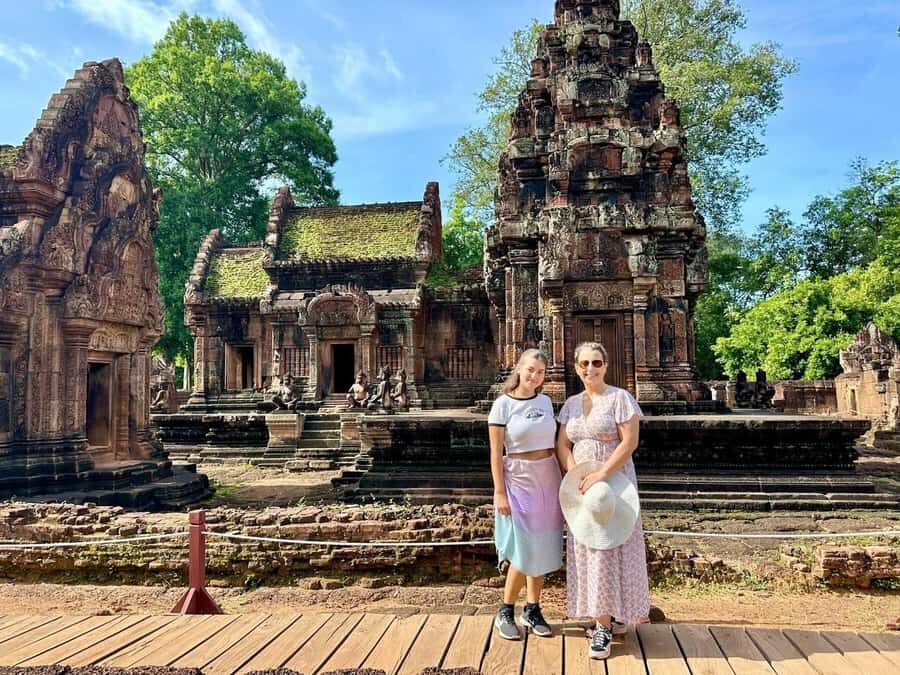
This tour works because it doesn’t try to cram everything from the most famous Angkor sites. Instead, you hit Banteay Srei and then roll through key temples of the Grand Circuit that many people skip when they’re only chasing the headline names.
The result is a day that feels varied. You move from the “medieval city” feeling around Angkor to the intimate scale of smaller temples, then into larger complexes where the story widens again. A good part of the value is that your guide helps you connect what you’re seeing, so the temples don’t blur together.
You can also read our reviews of more guided tours in Siem Reap
Before You Go: entrance ticket timing and the no-shorts rule
One practical thing you’ll want to get straight: the Temple Pass (entrance fee) is not included. The tour includes a stop where you can purchase your entrance ticket at the Apsara Authority ticket office, so you’re not scrambling on arrival.
Bring cash. Also plan your clothing early. There’s a dress code for places of worship and museums: no shorts or sleeveless tops, and both shoulders and knees must be covered for men and women. If you show up in the wrong outfit, you risk being refused entry, which can wreck your schedule fast.
What you should bring is simple:
- Hiking shoes (temple steps can be uneven and slippery)
- Sunscreen and insect repellent
- Cash for the ticket
And for comfort: you’ll be outside for much of the day, so a light layer that covers up helps with sun and shade.
How the 8-hour schedule really feels from Siem Reap
You’re picked up from your hotel in Krong Siem Reap, and you’ll start the day with a ready-at-lobby time that’s early enough to beat some of the worst heat. The tour is listed as 8 hours, and the driving time is built in: think about a coach ride of about 40 minutes early on, plus other travel between temple stops.
Inside the vehicle, you’re in a high-quality, likely air-conditioned ride (some guides and drivers are praised for comfort and organization). You also get bottled water and cold towels, which matters more than it sounds when you’re under strong sun for hours.
The big reality check: this is not a sit-and-snap tour. Expect guided walking, stairs, and standing time for explanations. If you’re the kind of person who likes to linger, the day can feel long, but the pace is set up to keep you moving steadily rather than sprinting between photo stops.
Stop 1 on the route: the trip into the Angkor temple zone
Your morning begins with pickup, then the first stretch of driving toward the wider Angkor temple area. Even before you reach the temples, this is where the tour can be surprisingly useful: your guide’s context helps you understand what you’re about to see.
You’re going from Siem Reap into the “former Khmer Empire capital” landscape, where temple layouts and carvings weren’t random decoration. They were built around beliefs, rituals, and social meaning, so your guide’s explanations make the later details easier to catch.
On the way, you also have a couple of chances to slow down and watch village life. The highlights call out stops for sugar palm and hat-making—small glimpses that give you contrast: the region still has crafts and traditions, even when the ruins are the main attraction.
Banteay Srei: the pink carvings that feel made for close inspection
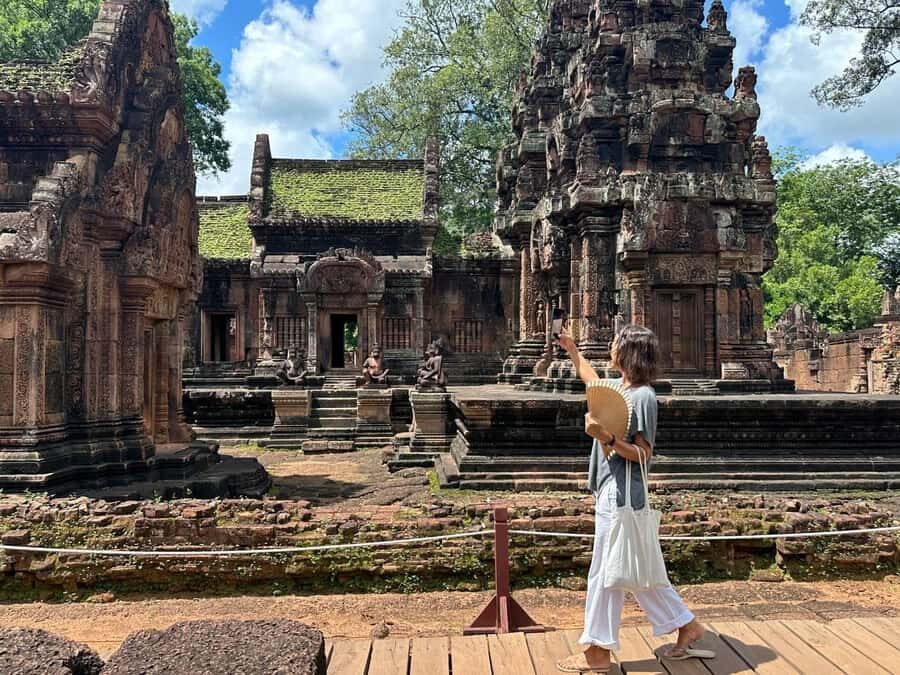
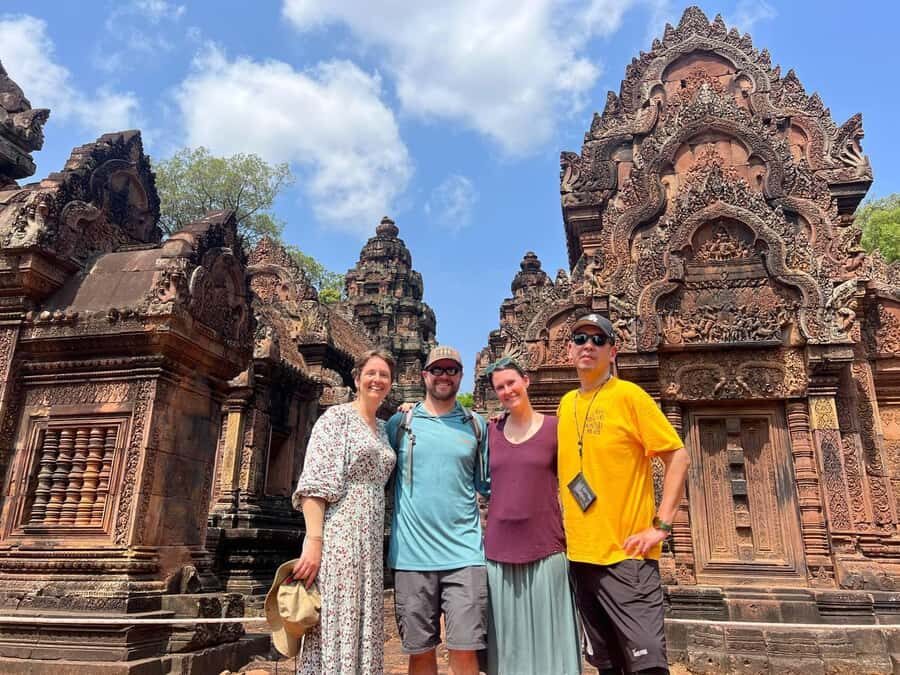
Banteay Srei (Citadel of Women) is the star of this tour, mainly because the temple is smaller and more detailed. You get about 80 minutes here with a guided visit, which gives you breathing room to actually look at the carving surfaces rather than just orbit the main platform.
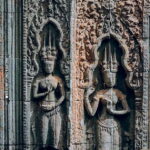
The temple is known for its distinctive pink-toned stone and for the intricate ornament that covers doorways and sacred spaces. Many people connect its “women” reputation to the way the temple’s authorship is remembered, and your guide’s job is to explain what that title means and how it fits into Khmer belief systems.
You’ll also hear about the setting near Phnom Dei, which helps you understand why the temple feels tucked into a specific landscape rather than dropped in the middle of nowhere. This matters, because when you understand the location, the carvings start to feel like part of a larger spiritual geography.
One more practical tip: this is one of those temples where good footwear pays off. Take your time climbing and descending. If you’re rushed, you’ll miss the best details.

Pre Rup: a smaller stop that still gives you that Angkor feeling
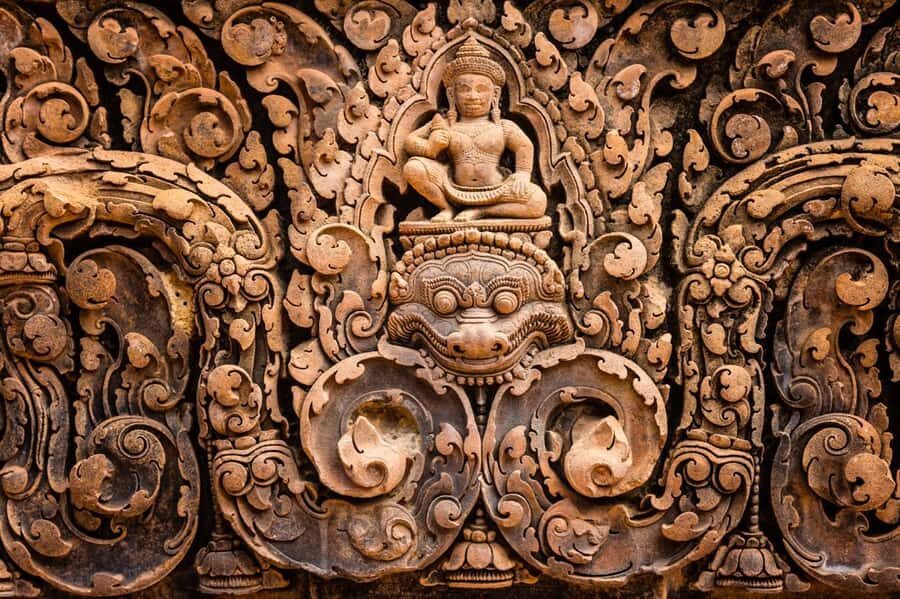
After Banteay Srei, you head to Pre Rup, listed as about 1 hour with a guided visit. This is one of those temples that feels complete in a way that makes it easier to read from multiple angles.
The overview specifically calls Pre Rup one of the few remaining structures in the complex that’s still quite intact. That’s important because ruins can sometimes look like scattered stone until someone explains what you’re supposed to notice. A guide can show you where key elements once pointed—spiritual direction, ritual space, and the idea of sacred transitions.
You’ll also likely get more symbolism context here, since your guide is building a thread from earlier temple ideas into later ones. If you’ve seen larger Angkor sites already, Pre Rup gives you a different scale. If you haven’t, it helps you learn the “language” of these temples before you move into the bigger afternoon stops.
East Mebon and Ta Som: different eras, different vibes
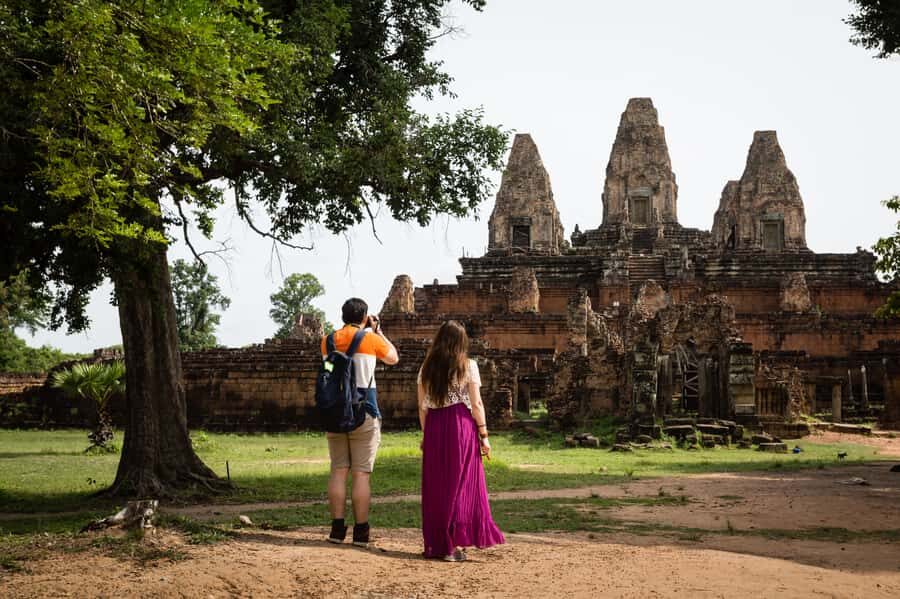
In the afternoon, the route shifts into three key temples: East Mebon, Ta Som, and Preah Khan. You won’t get equal time at every single spot (the tour listing gives set guided durations for some of them), but the important part is the variety of styles and time periods.
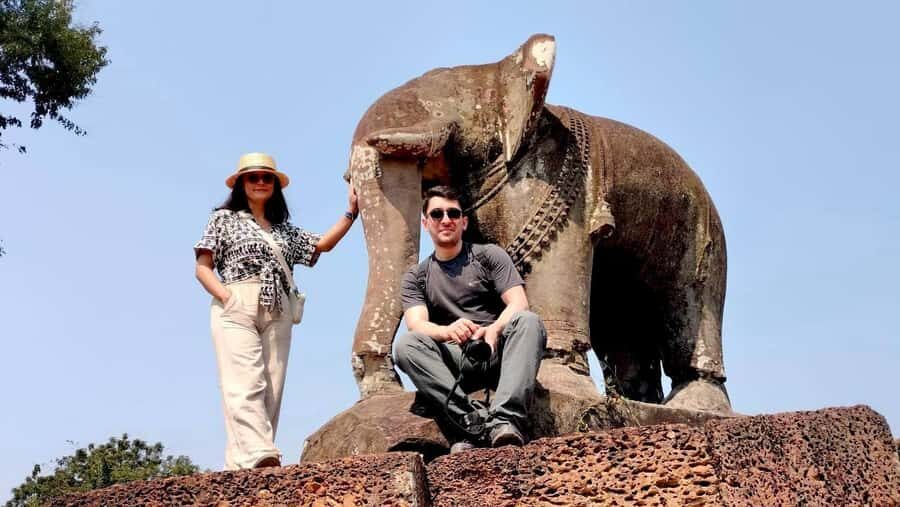
East Mebon comes first in the sequence mentioned, and it helps you see how Khmer temple design evolved. The guide’s explanations are usually where East Mebon pays off—because even when you think you’re just looking at stone piles, you start spotting layout logic.
Then comes Ta Som, with about 40 minutes for its guided visit. Ta Som’s appeal is visual and atmospheric, but what makes it memorable on a guided day is how the guide relates its features to the temple’s intended function and spiritual meaning. You’ll leave with a clearer sense of how these temples fit into the Grand Circuit as a system, not a random list.
Preah Khan: where the day’s story expands
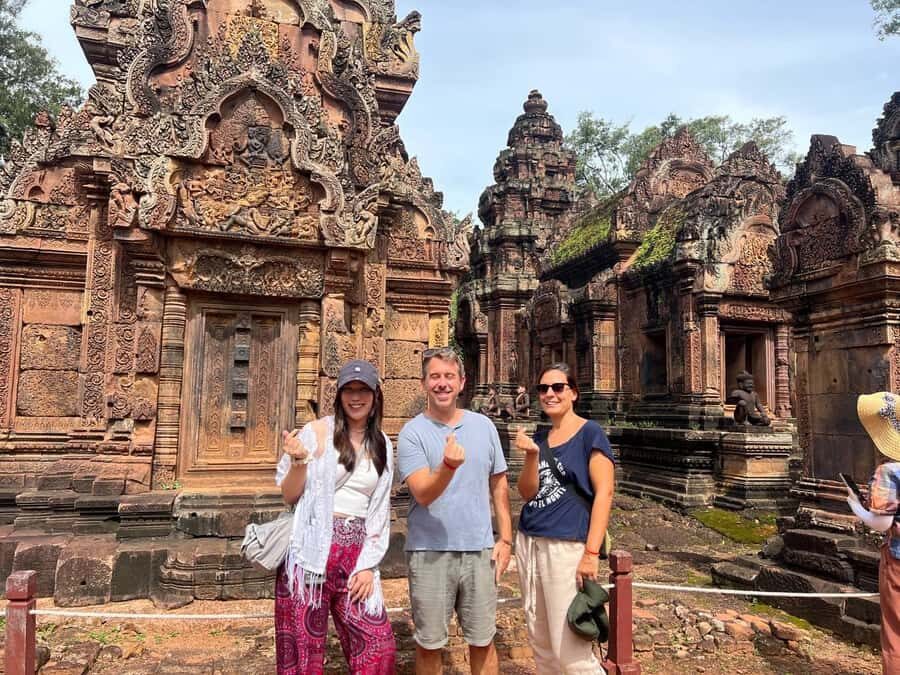
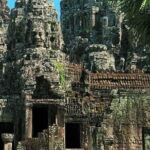
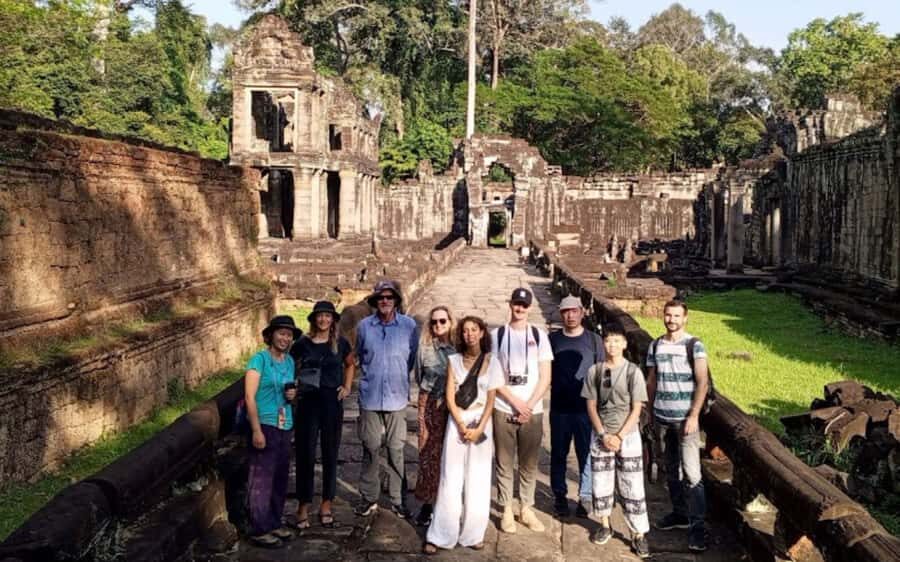
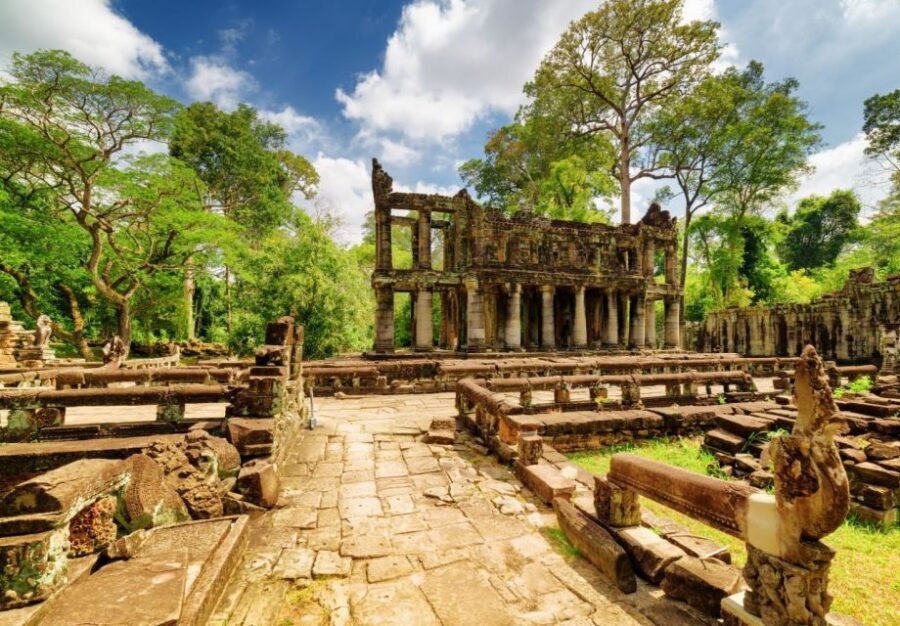
The final temple stop is Preah Khan, about 80 minutes with a guided visit. Preah Khan tends to feel more dramatic than the smaller stops because of its scale and the way it invites you to slow down and look for structure in the complexity.
This is where your guide’s ability to connect symbolism to stone really matters. The best guides explain what to look for beyond the obvious carvings: the logic of sacred space, the relationship between religious practice and architectural choices, and why certain motifs repeat across the empire’s temples.
If you’ve got even a mild interest in Hindu and Buddhist rituals, this is the moment when it can start to feel like more than sightseeing. You get glimpses into how people once inhabited this extraordinary sacred world—less like a museum, more like a place where daily belief had a physical address.
Village craft stops: sugar palm and hats add real-world contrast
One underrated part of this tour is the included time for small roadside stops where villagers make sugar palm products and hats. These are the kinds of moments that make your day feel grounded.
It also helps with pacing. Temple walking can get intense. A craft stop gives you a different kind of attention: watching hands at work, seeing materials processed, and understanding that the region’s cultural identity didn’t vanish when the empire fell.
If you like travel that includes people now—not just monuments from long ago—these brief stops are a strong reason to choose this specific itinerary.
Heat management and photo sanity tips
Let’s be honest: Siem Reap heat can be brutal. Even on a well-organized day, you’re outdoors with sun exposure between temple shade. The tour includes cold towels and bottled water, and that support matters.
I also recommend you plan your day around this tour. It’s not a good idea to schedule something intense afterward if you’re sensitive to heat. Better move that energy into the next morning or evening when you’re not worn out.
For photos, wear shoes you trust. Temples have uneven surfaces, and quick snap-and-run shots can lead to slips. If your guide is especially good at picture timing, take advantage of it—several guides on this route are praised for taking great photos and guiding group positioning so you get cleaner shots without wasting time.
Price and value: what $20 buys you, and what it doesn’t
This tour is priced at $20 per person, and for many people, that’s the headline that makes them click. Here’s the value math you should actually care about.
You get:
- Hotel pickup and drop-off
- Transportation by a quality vehicle
- English-speaking guide (shared option)
- Cold towels and bottled water
- Guided visits for multiple temples across the Grand Circuit
What you don’t get:
- Temple Pass / entrance fee
- Lunch
- A private guide option (private is an add-on)
So the $20 is really about paying for the structure: someone organizes the route, you get a guide for context, and you avoid the stress of coordinating transport across multiple sites. In practice, your total day cost will rise once you add the Temple Pass and whatever you choose to eat at the restaurant stop.
I’d also add one caution: the lunch stop tends to be pricey on similar tours, so if you want better value, you may want to keep expectations realistic and plan to pick something you can eat quickly and comfortably.
Who should book this tour, and who should skip it
This tour fits best if you:
- Want a guided day that helps you understand Khmer Hindu and Buddhist symbolism, not just see carvings
- Are comfortable with a full 8-hour outing with steady walking
- Like cultural contrast, especially the roadside craft stops for sugar palm and hats
- Prefer a more relaxed day than early start “sunrise circuit” options (it’s typically less intense than those extra-early trips)
It may be a poor match if you:
- Use a wheelchair or have mobility impairments. The tour is not recommended for people with walking disabilities or in a wheelchair.
- Travel with infants or children under 12 in a shared option (not suitable for that age range)
- Need a fully private, step-by-step pace. While private vehicles and private guide add-ons may exist, the standard shared format is built for group timing.
My final verdict: should you book this Banteay Srei day?
If you want one day that balances the standout of Angkor with practical comfort, I’d book it. Banteay Srei is worth your time, and the way the rest of the Grand Circuit stops are strung together makes the day feel like a coherent story instead of a checklist.
Skip this tour only if heat and walking are hard for you, or if your mobility needs are significant. Otherwise, it’s a solid value day: great temple variety, useful guide explanations, and just enough real-world village texture to keep the experience human.
FAQ
How long is the tour?
It runs for about 8 hours.
What temples and stops are included?
You’ll visit Banteay Srei, Pre Rup, East Mebon, Ta Som, and Preah Khan, with additional road stops to see villagers make sugar palm and hats. The day starts with hotel pickup in Krong Siem Reap and ends with drop-off back there.
Is hotel pickup and drop-off included?
Yes. Pickup and drop-off from/at your hotel in Krong Siem Reap are included.
Is the entrance fee included?
No. The Temple Pass entrance fee is not included. The tour includes a stop where you can purchase your entrance ticket at the Apsara Authority ticket office.
Is lunch included?
No. Lunch is not included.
What should I wear to avoid being turned away?
You need a dress code: no shorts or sleeveless tops. Both men and women should cover shoulders and knees to enter places of worship and museums.
Is this tour suitable for wheelchair users or limited mobility?
It is not recommended for people with walking disabilities or in a wheelchair. Pets are also not allowed, and luggage or large bags are not allowed.