REVIEW · SIEM REAP
Small Tour and Big Tour By Car
Book on Viator →Operated by Trip Around Cambodia · Bookable on Viator
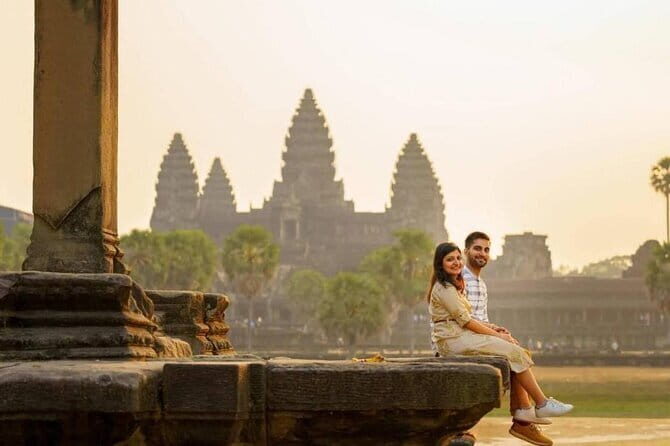
Angkor in two days feels like a sprint. That is exactly why this kind of English-speaking guide + air-conditioned car tour works: you hit the big icons, plus enough “lesser-known” stops to keep the day from feeling copy-paste.
What I like most is the timing: sunrise at Angkor Wat (starting around 4:45am) and sunset viewing from Phnom Bakheng with time to climb. The other win is the sheer temple coverage packed into a private, small-group format with WiFi on board and pickup from Siem Reap.
One consideration: the big cost is not the $22 price. The temple pass is not included, and you will also want to plan for early starts, warm weather, and plenty of walking steps during climbs.
In This Review
- Key Highlights You Should Know Before You Go
- Price and Logistics: What You’re Really Paying for at $22
- The Two-Day Game Plan: Why This Temple Route Works
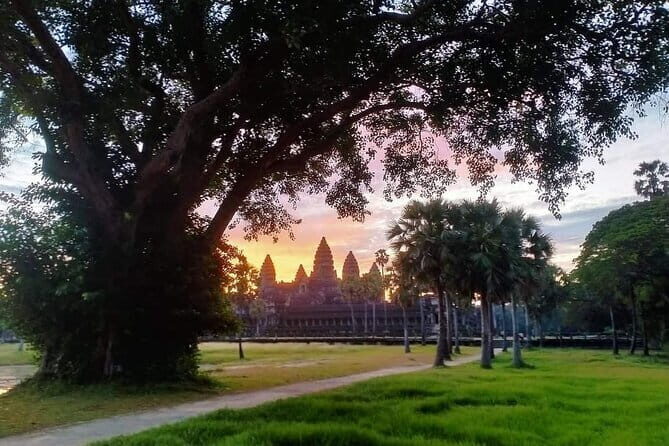
- Sunrise at Angkor Wat (Around 4:45am): The Early Start That Pays Off
- Ta Prohm to Ta Keo: When Angkor Looks Like a Jungle Set
- Banteay Kdei, Srah Srang, and Kravan: The Spots That Reward Slower Looking
- Phimeanakas and Chau Say Tevoda: Two Temples, Two Different Vibes
- Phnom Bakheng at Sunset (Around 5pm): The View Everyone Talks About
- Bayon and the Heart of Angkor Thom: Faces, Symbolism, and Scale
- Day 2 Neak Pean and Preah Khan: The Longer Stops That Feel Less Rushed
- Banteay Samre and Ta Som: Restoration and Quiet Architecture
- Who This Tour Is Best For (and Who Might Want a Different Style)
- Comfort, Money-Saving Tips, and What to Pack
- Should You Book This Car-Based 2-Day Angkor Tour?
- FAQ
- FAQ
- Is the temple pass included in the $22 price?
- How long is the tour?
- Do I get pickup?
- Is there an English-speaking guide?
- Will transportation be comfortable?
- Is WiFi included?
- Do you provide water?
- What does the itinerary include?
- What if the weather is bad?
- What’s the cancellation rule?
Key Highlights You Should Know Before You Go
- Sunrise at Angkor Wat starts early, so you avoid the worst crowds and get softer light on the carvings.
- Phnom Bakheng at sunset is the payoff climb that many visitors remember most.
- An English-speaking guide helps you make sense of what you’re seeing, not just where to walk.
- Air-conditioned private transportation + WiFi keeps the long temple day bearable.
- Temple pass not included means you must budget for the official ticket on top of the tour price.
- Mobile ticket and pickup make the logistics feel easy on arrival day.
Price and Logistics: What You’re Really Paying for at $22
At $22 per person for about 2 days, this tour price is good value if you care about convenience. You’re paying for the car, the driver arrangement, and the guide time that strings together a lot of stops across the Angkor area.
Here is what can change your total budget: temple admission is not included, and you’ll be buying your own pass separately (and also paying for your own meals). In practice, that means you should treat the $22 as the transportation + guiding component, then add the official temple ticket cost on top.
You’ll also want to respect the early schedule. Even though the main meeting time is listed as 8:00am from Siem Reap Airport, the plan includes a sunrise start around 4:45am for Angkor Wat and a sunset climb around 5pm for Phnom Bakheng. Translation: you’re likely going to be on the go long before breakfast, and the best results come when you plan ahead.
You can also read our reviews of more tours and experiences in Siem Reap.

The Two-Day Game Plan: Why This Temple Route Works
This experience is built around two very different moods of Angkor.
Day 1 is your “classic hits” day: Angkor Wat first, then a long circuit through Ta Prohm, Angkor Thom highlights, and the temples you can tie to the big skyline views. You also end the day with Phnom Bakheng at sunset, which is one reason the itinerary feels full—because the light matters.
Day 2 slows down a bit. You still cover major sites, but the pacing leans more into time at places like Neak Pean and Preah Khan, where you’ll spend longer absorbing the scale and the textures of the ruins rather than rushing between entrance gates.
If you’re doing Angkor for the first time, this is a smart way to get oriented fast. If you already know the temples well, you’ll still appreciate how the route mixes famous stops with quieter ones that many people skip when they only chase photos.
Sunrise at Angkor Wat (Around 4:45am): The Early Start That Pays Off
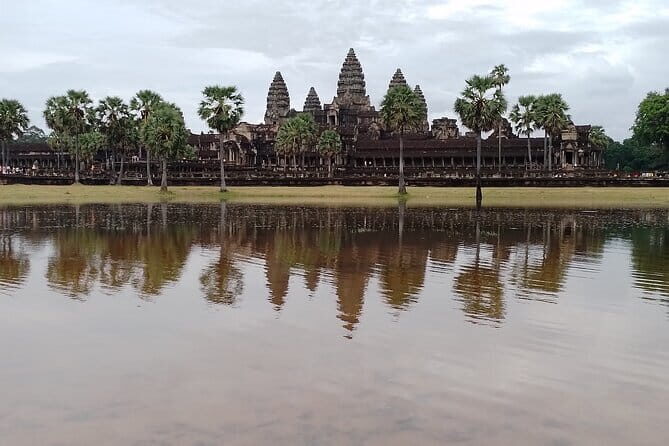
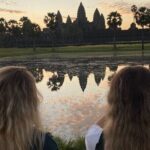
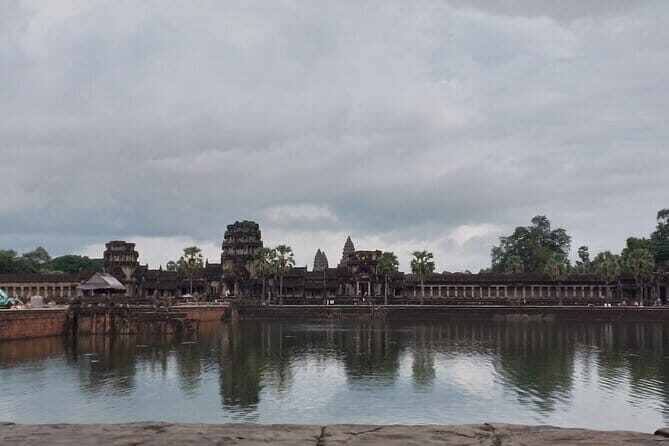
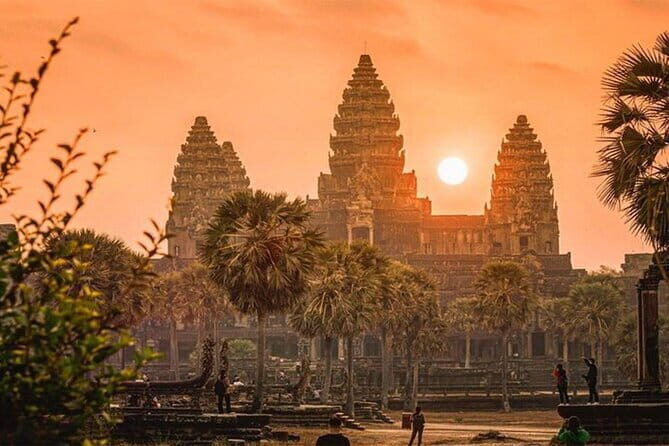
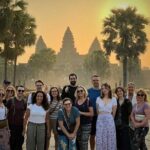
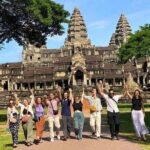
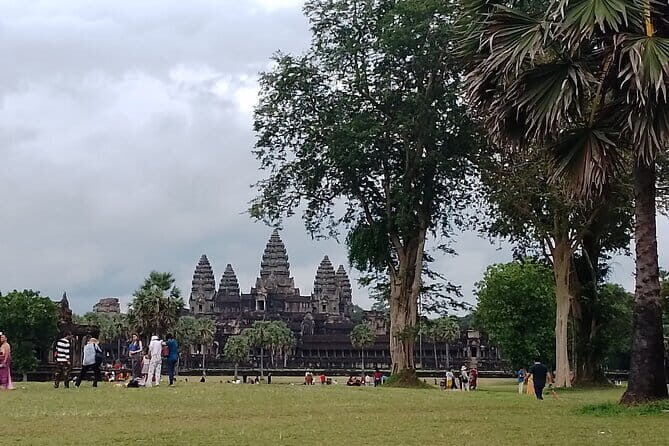
Angkor Wat is the headline for a reason: it’s the best-preserved centerpiece of Khmer architecture and one of the few Angkor temples that stayed a major religious site since its founding. Seeing it in the early light changes the entire feel of the place—less harsh glare, more definition in the bas-reliefs, and a calmer pace as you take in the symmetry.
The practical part is this: sunrise means you’ll likely be moving in the dark or early pre-dawn. Bring a light layer even if it seems warm later in the day. Your guide is going to help you understand what you’re looking at—temple geometry, the symbolic layout, and how its design connects to the idea of a world shaped like the heavens.
Time-wise, you’re allotted about 1 hour 10 minutes at Angkor Wat. That’s enough for the main viewpoints and photos if you don’t get stuck doing every last corner. The trick is to pick your priorities before you arrive, then let your guide steer you to the best angles first.
Ta Prohm to Ta Keo: When Angkor Looks Like a Jungle Set
After Angkor Wat, the tour moves into temples with different personalities.
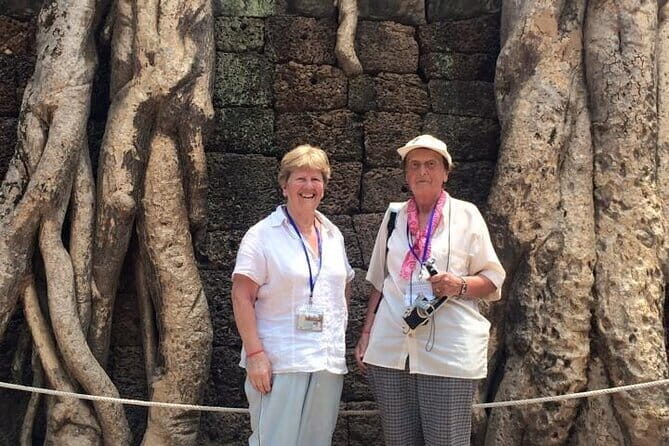
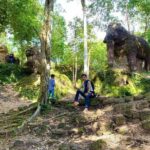
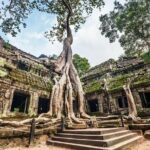
Ta Prohm is famous for the trees growing through the ruins and the atmospheric jungle feel. You’ll spend about 45 minutes here. It’s a great stop to reset your eyes after Angkor Wat’s clean symmetry, because Ta Prohm looks messier, older, and more human—like time is still actively taking its share.
Then Ta Keo keeps things striking but simpler. This is the temple-mountain dedicated to Shiva, built with huge sandstone blocks and known as a boldly towering structure. Expect around 20 minutes. It’s not always the most photogenic for everyone, but it’s a useful contrast if you’ve been staring at walls covered in carvings and want a cleaner architectural read.
Banteay Kdei, Srah Srang, and Kravan: The Spots That Reward Slower Looking
This part of Day 1 is where the tour becomes more than just a list of famous names.
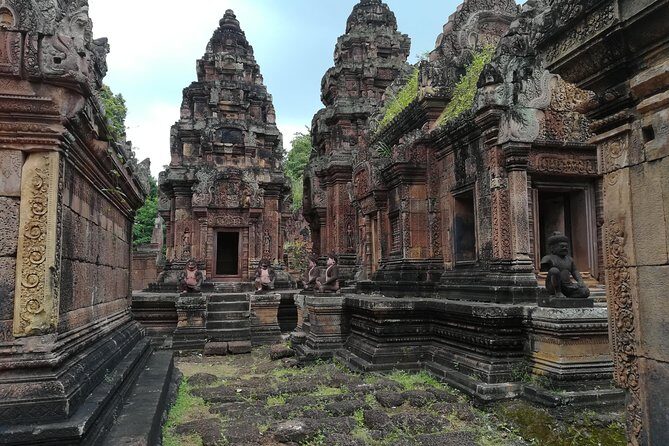
- Banteay Kdei (about 30 minutes) is a Buddhist temple in the Bayon style from the reign of Jayavarman VII. It’s often less crowded, and you’ll notice the mix of later use and the mystery around its original dedication.
- Srah Srang (about 15 minutes) is the Royal Bath, a water-based setting that changes how you experience the ruins. Even with limited time, it helps you understand how Khmer religious and royal life was tied to ceremonial spaces.
- Prasat Kravan (about 20 minutes) is a Hindu temple from the early 10th century, and it’s a good breather when you want something smaller and more contained after the big sites.
The benefit of this trio is variety without fatigue. You’re not just chasing landmarks; you’re getting a sense of how different temple types functioned—bathing/water, worship/sanctuary, and how Buddhism and Hinduism show up in the same region over time.
Phimeanakas and Chau Say Tevoda: Two Temples, Two Different Vibes
Two stops later on Day 1 give you a good read of Angkor Thom’s edges and elevated viewpoints.
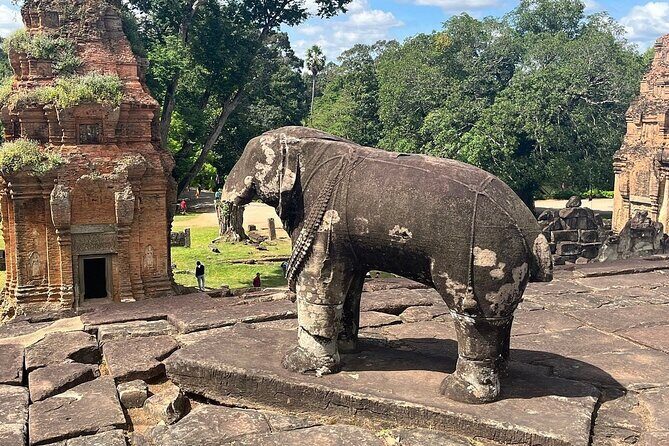
Phimeanakas (about 30 minutes) is the former royal palace: a laterite and sandstone pyramid that’s the tallest scalable temple in Angkor Thom. Even if the decoration doesn’t survive in the same way as other temples, climbing matters here. The view from the top helps you understand how the complex sits inside the broader capital layout.
Then Chau Say Tevoda (about 20 minutes) is a smaller temple across from Thommanon with a similar plan. It’s in very good condition compared to many Angkor sites, and it’s a nice “fine detail” stop if you want to see the Angkor Wat style in a more compact setting.
If you feel temple overload by the afternoon, these two stops are a smart kind of break—less sprawling, more targeted.
Phnom Bakheng at Sunset (Around 5pm): The View Everyone Talks About
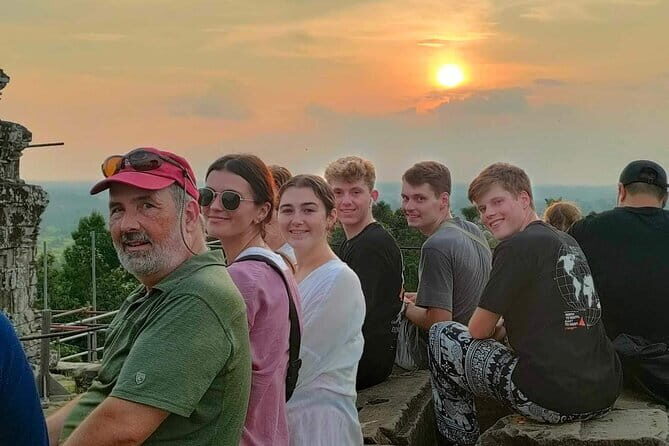
This is the moment people remember. Phnom Bakheng is widely seen as one of the best sunset spots in the Angkor region, and yes, that means you’re committing to climb.
The tour includes about 1 hour at Phnom Bakheng, and it’s worth respecting that time because stairs can feel longer as the sun drops. The temple itself was built earlier than Angkor Wat and originally functioned as a Shiva temple mountain. So when the sky turns gold, you’re not just looking at a view—you’re looking at a site that was once a major centerpiece of the region.
Bring good walking shoes. Even with a guide helping you manage timing, you’ll still be moving in uneven surfaces. If your group is sensitive to steep steps, plan your pace early so you’re not rushing during the best light.
Bayon and the Heart of Angkor Thom: Faces, Symbolism, and Scale
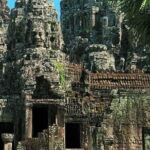
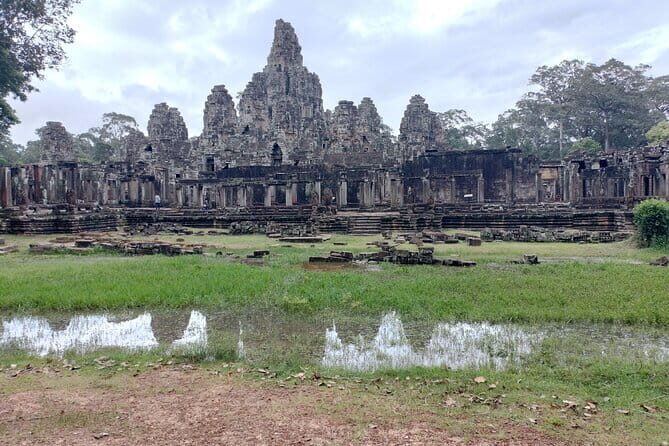
Later in Day 1 you reach Bayon (about 40 minutes). This is the richly decorated Khmer temple built around the end of the 12th or start of the 13th century, at the center of King Jayavarman’s capital, Angkor Thom.
Bayon is famous for its face towers and its role as a Mahayana Buddhist shrine, which later kings modified in line with changing religious preferences. Your guide’s job here is crucial: the temple layout can feel confusing if you only look for photos. With the explanations, it starts to click—how the design directs movement and how later additions layer meaning.
Also keep this in mind: Angkor Thom is big. Even when you’re not walking the entire complex, you’re still experiencing the scale. That’s why the car matters—you’re saving energy for the temple tops and the courtyards where you actually need to stand and look.
Day 2 Neak Pean and Preah Khan: The Longer Stops That Feel Less Rushed
Day 2 is where the experience becomes more relaxed even though it’s still temples.
Neak Pean (about 1 hour 20 minutes) is a small island temple in the middle of the last baray, with eight pools arranged in an axis pattern. It originally was known as Rajasri, and its modern name comes from the coiled nagas that surround the temple. This is a stop that benefits from time. If you rush, you’ll miss the layout and the calm rhythm of the water setting.
Then you go to Preah Khan (about 40 minutes). This one was built on the site connected with Jayavarman VII’s victory and became a major center in its heyday. The site is flat in design, and vegetation grows among the ruins—so it feels more lived-in by nature than some other areas. If you like temples with a more archaeological, less fully restored look, you’ll likely enjoy Preah Khan’s texture and spacing.
Banteay Samre and Ta Som: Restoration and Quiet Architecture
Day 2 closes with two more stops.
Banteay Samre (about 30 minutes) is known for Angkor Wat-style architecture and has been restored using the anastylosis method. That detail matters because it changes how you experience it: you’re seeing original structure and reconstruction working together, and the result feels legible compared to fully unrestored sites.
Finally Ta Som (about 20 minutes) is a smaller stop that still gets you out of the constant grand-temple loop. It’s an opportunity to keep moving without tiring out, and it helps break up the day with a smaller, more manageable visit.
Who This Tour Is Best For (and Who Might Want a Different Style)
I think this tour fits best if you want a “two days, a lot of Angkor” approach and you value being handled. The private transportation and guide-led route mean you spend less time figuring out routes and more time understanding what you’re looking at.
You’ll also like it if:
- You’re a first-timer who wants Angkor Wat + Bayon + Ta Prohm + sunset views without doing the planning yourself.
- You care about comfort—air-conditioned vehicle and WiFi on board are real wins when the heat ramps up.
- You prefer a structured itinerary with enough flexibility to pace yourself at each stop.
I’d be cautious if:
- You know you dislike very early mornings or climbing stairs during sunset hours. This itinerary includes both the sunrise (around 4:45am) and the climb at about 5pm.
- You’re hoping for a slow, deeply detailed day at just one temple—this is built for coverage.
Comfort, Money-Saving Tips, and What to Pack
Because the tour includes a long day in the Angkor region, your success depends on what you do before you arrive at each temple.
- Wear shoes that can handle rough stone and stairs.
- Bring a hat and a light layer. Even if mornings start cool, afternoons can feel intense.
- Expect to purchase the temple pass yourself. Plan that budget early so you don’t feel surprised once you’re there.
- Drink your bottled water (you get one bottle each person in the tour features). If you get thirsty easily, you might want extra water on top of that, since meals are your own expense.
One more small practical note: the schedule can be tight. A guide with English skills helps you focus faster, so you waste less time wandering without direction.
Should You Book This Car-Based 2-Day Angkor Tour?
Yes, I’d recommend booking it if you want the efficient Angkor experience: sunrise at Angkor Wat, sunset at Phnom Bakheng, and a guided circuit that covers a lot of ground without feeling chaotic. The price is low for what you get in transport, guidance, and time management, and the car plus WiFi makes it easier to stay comfortable between temple stops.
I’d hesitate only if temple passes, early starts, and stair climbs are deal-breakers for you. If you’re okay budgeting for the temple ticket and you can handle the early wake-up and the sunset climb, this is a solid way to get your bearings quickly and see major temples with a guide who explains what you’re looking at.
If you want, tell me your travel dates and whether you prefer sunrise temples or sunset temples most, and I can suggest how to prioritize these stops day-by-day so the schedule feels less like a rush.
FAQ
FAQ
Is the temple pass included in the $22 price?
No. The temple pass (admission ticket) is not included, and you’ll need to buy it yourself.
How long is the tour?
It’s listed as approximately 2 days.
Do I get pickup?
Yes, pickup is offered, and the start location is Siem Reap Airport with a listed start time of 8:00am.
Is there an English-speaking guide?
Yes. The tour includes an English speaking tours guide.
Will transportation be comfortable?
Yes. You get an air-conditioned vehicle and private transportation.
Is WiFi included?
Yes. There is WiFi on board.
Do you provide water?
Yes. One bottle of water each person is included.
What does the itinerary include?
It includes visits to many Angkor area temples over two days, with Angkor Wat at sunrise (around 4:45am) and Phnom Bakheng for sunset (around 5pm).
What if the weather is bad?
This experience requires good weather. If it’s canceled due to poor weather, you’ll be offered a different date or a full refund.
What’s the cancellation rule?
Free cancellation is available. You can cancel up to 24 hours in advance of the experience for a full refund.