REVIEW · SIEM REAP
2 Days Angkor temples with Sunrise & Sunset
Book on Viator →Operated by Angkor Doors · Bookable on Viator
A great Angkor plan isn’t just big temples. This 2-day Angkor temples tour strings together major sights (including Banteay Srei) with a proper early-morning Angkor Wat sunrise and a sunset payoff at either the South Gate of Angkor Thom or Phnom Bakheng. I like how it covers a wide slice of the Angkor World Heritage site without wasting your time. One thing to consider: you start early on Day 2 (around 4:30am or 5am), and temple entry still means buying the Angkor Pass.
What I really like here is the balance of must-sees plus calmer stops that feel different once you’ve seen enough Angkor Wat photos. On top of that, the tour runs with an English-speaking guide and comfortable AC transport, plus bottled cold water to keep things sane in the heat. In the reviews, the guide experience often comes up strongly, with Bunpheng highlighted as punctual and professional, and even praised for being a great photographer.
The main drawback for some people is the math and the timing. Entrance isn’t included (you’ll need the 3-Day Angkor Pass for each visitor), and the sunrise schedule depends on the season. Add the strict temple dress code (thighs and shoulders covered), and you’ll want to come prepared to avoid delays at the gates.
In This Review
- Key highlights you’ll feel right away
- Why this 2-day Angkor route works (and feels like a real plan)
- Sunrise logistics: what 4:30am/5am really means for your body
- Day 1 from Prasat Kravan to Angkor Thom: the “core Angkor” day
- Prasat Kravan: small towers, big carving energy
- Banteay Kdei: a citadel of chambers vibe
- Ta Prohm: the famous monastery with roots on it
- Ta Keo: the unfinished state temple
- Angkor Thom: a full city, not just one temple
- Phnom Bakheng: temple mountain, sunset energy
- Day 2: Angkor Wat at dawn, Banteay Srei at its best, and the quieter classics
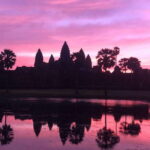
- Angkor Wat sunrise: the big one, properly timed
- Pre Rup: warm views and another Jayavarman-era angle
- Banteay Srei: the carvings you didn’t know you wanted
- Banteay Samre and Eastern Mebon: smaller scale, clearer shapes
- Ta Som and Neak Pean: calm, Buddhist energy
- Preah Khan: “Royal Sword” and a bigger complex finish
- Price and value: the $115 tour price plus the Angkor Pass reality
- Guide quality makes or breaks Angkor days
- Practical tips that keep the temples from becoming a hassle
- Dress code: the gate will say no
- Start times are real
- Heat + walking adds up
- Photo strategy
- Who this tour suits best
- Should you book this 2 Days Angkor temples with Sunrise & Sunset tour?
- FAQ
- What time does the tour start?
- What time is sunrise at Angkor Wat?
- Is pickup included?
- What’s included in the tour price?
- Are temple entrance fees included?
- How much is the Angkor Pass?
- Do I need the Angkor Pass for every visitor?
- Is the sunset included?
- What should I wear to the temples?
- Can I cancel and get a refund?
- Is this tour private?
Key highlights you’ll feel right away
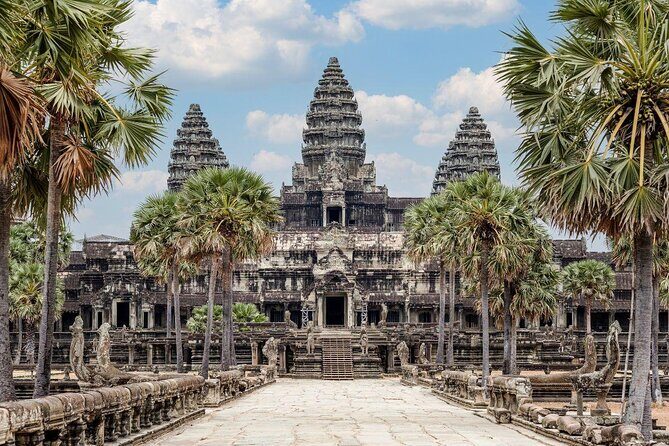
- Angkor Wat sunrise timed for your earliest start (about 4:30am or 5am)
- A wide Angkor route that includes Banteay Srei and multiple Bayon-style and Jayavarman-era temples
- Sunset at either South Gate of Angkor Thom or Phnom Bakheng for a classic ending
- AC car/minivan/minibus and bottled cold water, so the long days stay manageable
- Bunpheng-style guiding focus: punctual, professional, and responsive to what you want to see
Why this 2-day Angkor route works (and feels like a real plan)
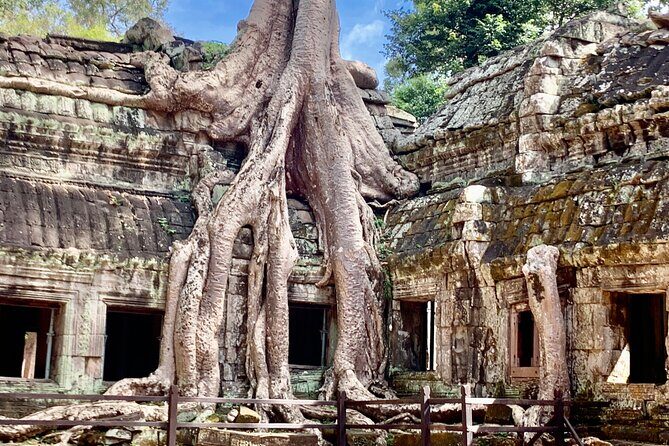
Angkor is one of those places where you can’t just “see temples.” You need a plan that respects your energy and the light. This tour is built around two peak photo windows: sunrise at Angkor Wat and sunset near Angkor Thom or at Phnom Bakheng. That means you’re not only ticking boxes—you’re actually catching Angkor when the colors shift and the crowds change.
The route also avoids the common problem of cramming in too many similar-looking blocks back-to-back. Day 1 leans into the classic cluster around Angkor Thom and the Ta Prohm vibe, while Day 2 spreads you through smaller, more finely carved stops like Banteay Srei and a sequence of temples you can appreciate at a slower pace. It’s a smart way to make the second day feel different, not like a repeat.
Finally, I appreciate that the tour is private for your group. That matters because sunrise and sunset schedules don’t forgive slow decisions. When your guide can adjust to your pace, you spend more time looking at stone details and less time waiting on the group.
You can also read our reviews of more evening experiences in Siem Reap

Sunrise logistics: what 4:30am/5am really means for your body
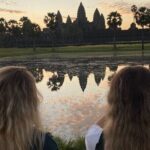
The tour sets up sunrise at Angkor Wat with an early start—4:30am or 5am depending on the season—then you head to the main temple after the sun clears. If you’ve never done an Angkor sunrise, here’s the practical reality: you’re not just waking up early, you’re also asking your brain to switch from sleep mode to temple mode fast.
That’s why the rest of the plan is structured around that morning. If you can manage a short sleep hit, sunrise becomes one of the most rewarding Angkor experiences you’ll have. Angkor Wat at dawn tends to feel calmer, the light is softer, and the temple’s proportions click in a way they don’t at midday.
You’ll also want to plan your clothes around both dawn chill and daytime heat. The tour includes bottled cold water, but you should bring your own sunscreen, hat, and comfortable walking shoes. Temperatures and humidity can swing, even within a single morning.
Day 1 from Prasat Kravan to Angkor Thom: the “core Angkor” day
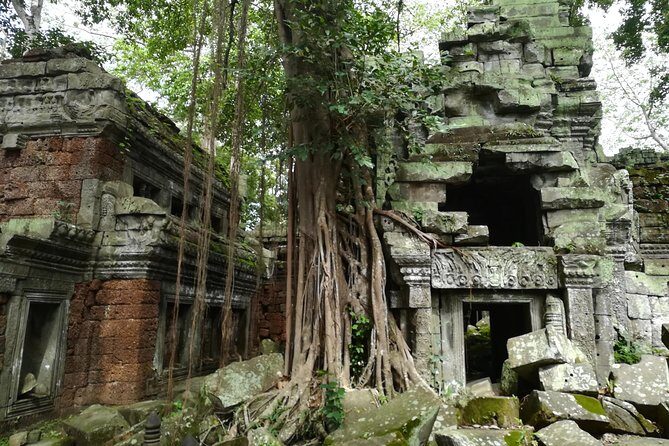
Day 1 starts later than the sunrise day, with pickup offered and the first stops rolling through from 9:00am. This first day is where you build your Angkor reference points—what Bayon style looks like, what the Angkor Thom layout feels like, and where the most iconic rubble-and-root scenes live.
Prasat Kravan: small towers, big carving energy
You’ll begin at Prasat Kravan, a small 10th-century temple with five reddish brick towers. It sits on an elevated terrace and has that “compact but old” feeling that’s great early in the day. The listing notes its original Sanskrit name is unknown, and its modern Khmer name is Prasat Kravan—nice little reminder that history here often has gaps, and you’re walking through what survives.
Drawback to consider: it’s brief (about 20 minutes), so if you love lingering, you’ll need to hold your longer “deep look” energy for later stops.
Banteay Kdei: a citadel of chambers vibe
Next is Banteay Kdei, whose name translates to “A Citadel of Chambers.” It’s a Buddhist temple built in the late 12th and early 13th century by King Jayavarman VII. This is one of those temples where you start noticing the rhythm of stone corridors and chambers—less dramatic in one single view, more satisfying if you enjoy architectural detail.
A few more Siem Reap tours and experiences worth a look
Ta Prohm: the famous monastery with roots on it
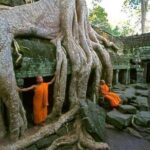
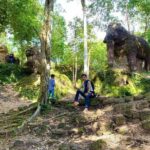
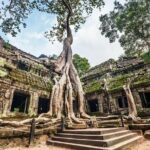
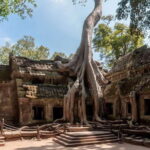
Then comes Ta Prohm, originally a Buddhist monastery and university. The standout here is how it has largely kept its dramatic relationship with trees and roots. If you’ve seen it in photos, Day 1 is the right time to see it in person, because you’ll be sharp enough to absorb what makes the scene feel real.
Ta Keo: the unfinished state temple
Ta Keo is a state temple started in 975 AD by Jayavarman V, and it was unusually never finished. There are stories for why, but even without the story hunt, it’s still interesting because unfinished temples often show you how construction methods look before final finishing work.
Angkor Thom: a full city, not just one temple
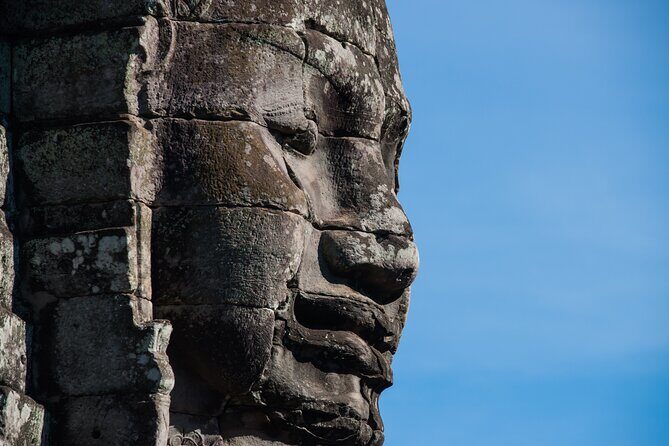
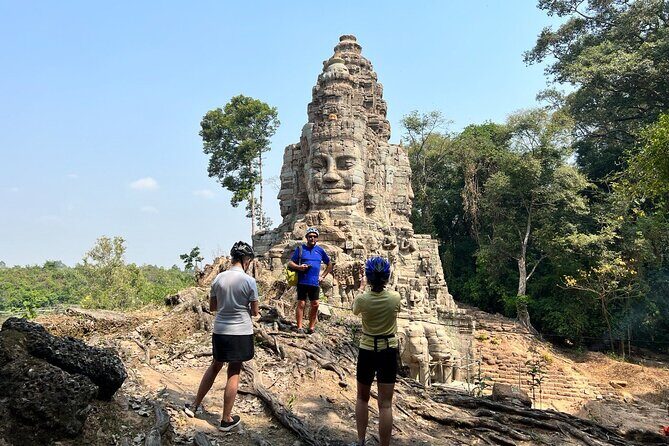
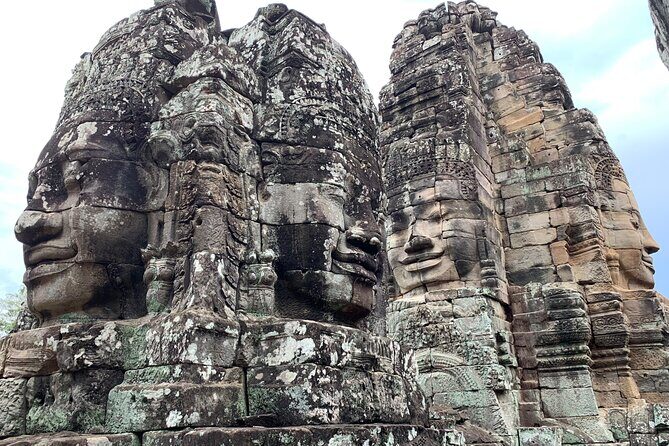
After that, you move into Angkor Thom, the ancient capital city. This is where you see multiple landmarks in one zone: the Royal Palace area, the Terrace of the Elephants, the Terrace of the Leper King, and the Bayon temple. The plan also includes the South Gate and its bridge area, which matters because you’ll connect it later with sunset.
You’ll likely feel the “city scale” more than the single-temple feeling. It’s a lot to take in, so use your guide to point out what to focus on first. Short attention? Ask for a quick route inside the area so you don’t get lost in “wandering for wandering.”
Phnom Bakheng: temple mountain, sunset energy
Day 1 ends with Phnom Bakheng, a temple mountain dedicated to Shiva built by King Yasovarman at the end of the 9th century. It’s on top of a hill, which gives you that bigger-view effect even if you don’t stay at the very top for long. Since sunset is part of the overall experience (South Gate or Phnom Bakheng), this stop also helps you gauge how you want to approach the final light later.
Day 2: Angkor Wat at dawn, Banteay Srei at its best, and the quieter classics
Day 2 is longer in emotional impact even if some stops are short. You start with Angkor Wat sunrise, then continue through a set of temples that mix famous names with some that feel more personal—especially after Day 1 trains your eye.
Angkor Wat sunrise: the big one, properly timed
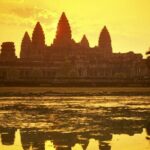
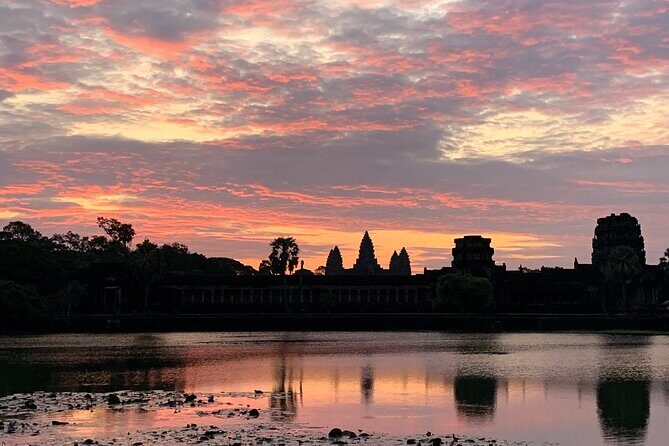
The day begins with sunrise at Angkor Wat. After sunrise, you’ll head to the main temple. This is where you’ll notice how Angkor Wat’s layout makes sense when the sky is bright but not burning-hot. If you’re picky about photos, sunrise is also when details like bas-relief depth show best.
Practical note: sunrise mornings are when your schedule gets strict. Show up ready to go—no last-minute outfit hunting. If you’re unsure about dress code, sort that before you ever leave your room.
Pre Rup: warm views and another Jayavarman-era angle
Next is Pre Rup, visited for about 30 minutes in the plan. It’s a classic stop because it gives you temple-mountain energy without the same “night-march” feel as some other sunrise-adjacent spots. Use the time to look for how the stones frame the sky.
Banteay Srei: the carvings you didn’t know you wanted
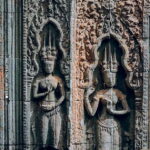
Now for one of the most satisfying stops in the entire Angkor region: Banteay Srei. It’s known as the Citadel of the Women and is famous for its fine carvings. The tour information even points out that the carvings are said to be delicately done, which is part of why the name sticks.
Here’s why this stop is valuable: Angkor can feel repetitive if you only stare at huge silhouettes. Banteay Srei rewards slow attention. If you like details—patterns, faces, and the way stone work catches light—this is where you’ll feel it.
Banteay Samre and Eastern Mebon: smaller scale, clearer shapes
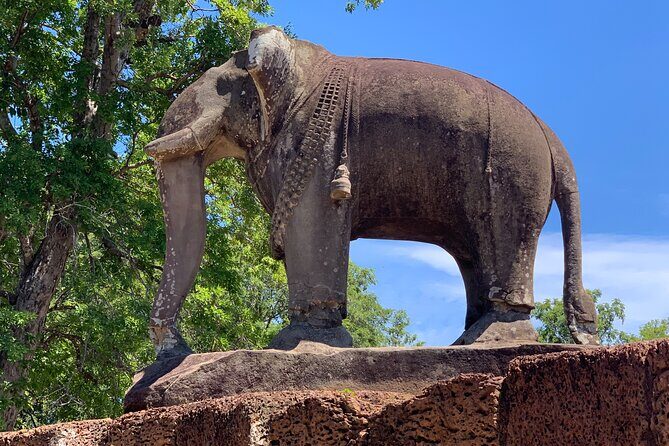
Then you visit Banteay Samre, described as a smaller replica of Angkor Wat, built in the early 12th century and dedicated to Vishnu. After that, Eastern Mebon comes in for a shorter visit.
These stops aren’t trying to outcompete Angkor Wat. They give you different proportions and a less overwhelming tempo, which helps you digest what you saw the previous day.
Ta Som and Neak Pean: calm, Buddhist energy
You’ll also see Ta Som, a Buddhist temple built by Jayavarman VII and dedicated to Lokesvara Buddha. It’s brief, but it adds variety to the spiritual mix of the itinerary.
After that, Neak Pean appears: “Entwined Serpents” and a 12th-century Buddhist temple built on a man-made island in the middle of a man-made lake. Even if you’re not chasing symbolism, the setting helps you reset your eyes.
Preah Khan: “Royal Sword” and a bigger complex finish
Finally, Preah Khan—translated as “Royal Sword”—is a 12th-century temple built by Jayavarman VII and dedicated to his late father. It’s located 1km north of Angkor Thom’s ancient city zone, and the plan gives it more time (about 50 minutes), which is perfect for stretching your legs and letting the complex settle into your mental map.
Sunset wrap: the overall experience includes watching sunset at the South Gate of Angkor Thom or Phnom Bakheng. If you’re choosing your preference, think about what you’ll enjoy more after two intense days: a gate-and-bridge composition (South Gate) or the higher “temple mountain” view (Phnom Bakheng).
Price and value: the $115 tour price plus the Angkor Pass reality
The tour price is $115 per person, and the big add-on you should budget for is the temple entry. The included details make it clear you’ll need the 3-Day Angkor Pass, listed at $62 per person, and it’s required for each visitor.
So your realistic baseline is $177 per person for the tour plus the pass, before food. Food and drinks aren’t included, and accommodation isn’t included. The value comes from what the $115 covers: an English-speaking guide, AC transportation, and bottled cold water across both days, plus the heavy-lift of scheduling sunrise and sunset around the day’s temple route.
Also worth noting: there are group discounts, and you get a mobile ticket. For some people, that reduces hassle during check-in and arrival. If you’re the kind of person who hates logistical back-and-forth, that’s a real value point, not just a small perk.
Guide quality makes or breaks Angkor days
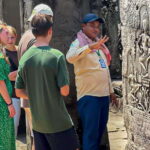
This is one of those places where a good guide doesn’t just explain facts—they help you look better. In the provided feedback, Bunpheng is repeatedly praised for being punctual and extremely professional, and one note also highlights him as a great photographer. There’s also praise for guides who adapt the plan to what you need, which is key when you’re traveling with a parent, traveling on a honeymoon, or working with a tight timeline.
Here’s what I’d look for in a guide for a tour like this, based on how this itinerary runs:
- Help timing your walks so you don’t hit every spot at the hottest part of the day
- Translate temple meaning into what you can actually see on stone
- Point out what matters first at each stop, since some are short
Because this is private, you can ask questions without feeling like you’re hijacking a group schedule. Even if you’re not a trivia person, a guide can point out why one temple feels different from another in just 30 seconds.
Practical tips that keep the temples from becoming a hassle
Angkor is easy to mess up in small ways. The tour includes water and transport, but you control the rest.
Dress code: the gate will say no
The tour notes a strict dress code: you must cover thighs and shoulders when entering temple complexes. If you aren’t dressed correctly, you may be refused entrance. This isn’t a “maybe” rule—so plan accordingly.
A simple approach: pack a light shawl or long breathable layer you can pull on quickly. Even if the day is hot, it beats losing time at entrance points.
Start times are real
Day 1 starts at 9:00am, but Day 2 sunrise means early morning. Build in sleep, and don’t schedule late-night plans the night before.
Heat + walking adds up
Even when stops are “only” 20 to 50 minutes, you’re outside, walking between zones, and climbing where the temple structure demands it. Comfortable shoes matter more than you think.
Photo strategy
If you care about photos, sunrise and sunset are your biggest wins. For midday temples, focus less on a single perfect shot and more on details—the carvings at Banteay Srei are a good example of where a slower camera approach pays off.
Who this tour suits best
This tour is a strong fit if:
- You want a 2-day Angkor plan that hits the major names and also includes “lesser known but worth it” temples
- You care about sunrise at Angkor Wat and want a proper sunset ending
- You prefer a private setup with AC transport and an English-speaking guide
It may not be perfect if you hate early starts or if you’re traveling with a strict budget and don’t want the added Angkor Pass cost. Also, if you struggle with dress-code rules (or forgot to pack the right layers), plan extra time for clothing adjustments.
Should you book this 2 Days Angkor temples with Sunrise & Sunset tour?
Yes—if you want a smooth, high-effort Angkor experience without trying to build the logistics yourself. The combination of major temples plus Banteay Srei, paired with sunrise and a sunset finale, is exactly what makes a short stay in Siem Reap feel like more than a checklist.
I’d book it especially if:
- You want professional, punctual guiding like the Bunpheng feedback highlights
- You like having someone else manage the tempo while you focus on stone, light, and photos
Skip or rethink if:
- You’re not willing to wake up around 4:30am/5am
- You’re not ready for the entrance fee on top of the tour price
- You’re worried about the strict temple dress code and haven’t planned clothing
FAQ
What time does the tour start?
The tour starts at 9:00am.
What time is sunrise at Angkor Wat?
Sunrise is scheduled with an early start around 4:30am or 5am depending on the season.
Is pickup included?
Yes, pickup is offered.
What’s included in the tour price?
You get an English speaking tour guide, AC transportation (car/minivan/minibus), and bottled cold drinking water.
Are temple entrance fees included?
No. Entrance fee is not included, and you need the 3 Day Angkor Pass.
How much is the Angkor Pass?
The 3 Day Angkor Pass is listed as $62.00 per person.
Do I need the Angkor Pass for every visitor?
Yes. One Three-Day Angkor Pass is required for each visitor.
Is the sunset included?
Yes. You’ll watch sunset at either the South Gate of Angkor Thom or Phnom Bakheng.
What should I wear to the temples?
The dress code is strict: cover your thighs and shoulders when entering the temple complex. If you’re not wearing the correct clothing, you may be refused entrance.
Can I cancel and get a refund?
Yes. Cancellation is free up to 24 hours in advance for a full refund.
Is this tour private?
Yes. It’s private, and only your group will participate.