REVIEW · SIEM REAP
2 Days Angkor Wat Sunrise and Sunset Private Tour
Book on Viator →Operated by Angkor Buddy Tour · Bookable on Viator
Angkor temples look best before the crowds fully wake up. This 2-day private tour is built around the best light: sunrise at Angkor Wat and sunset from Phnom Bakheng, while you also work through the big-name sites and the quieter circuit temples.
Two things I really like about this setup are the tight temple coverage and the pacing with a dedicated English-speaking guide. You’ll hit the classic highlights like Angkor Wat, Bayon, Ta Prohm, and Banteay Srei, plus more off-the-main-road stops that make the two days feel like one complete Angkor story.
One thing to consider: the temple entrance pass and fees are not included. The tour price covers the guide, car, and the planned visits, but you still need to budget for the 3Days Angkor Pass (or buy entrance tickets for the morning visits).
In This Review
- Quick hits before you go
- Two days that cover the Big and Small Circle without feeling like a sprint
- Day 1: Angkor Wat to Ta Prohm, plus Angkor Thom’s key moments
- Day 1’s hidden value
- Day 2: Banteay Srei and the sunrise-to-sunset flow
- How sunrise and sunset feel different here
- The private format: when it helps and when you still need your own stamina
- Price and value math: $134 is only half the budget
- Temple entry rules that affect your comfort (dress, bags, and drones)
- Breakfast before sunrise: a smart workaround if your hotel offers it
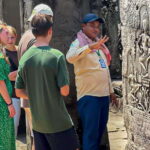
- Guide quality: why it changes the whole feel of Angkor
- Who this tour suits best
- Should you book this Angkor Wat sunrise and sunset tour?
- FAQ
- What’s included in the 2-day Angkor tour?
- Are temple entrance fees included?
- Do I need to buy the 3Days Angkor Pass?
- Is this tour private or shared?
- What about breakfast before sunrise?
- What’s the dress code for Angkor temples?
- Are drones allowed at the temples?
- Should I tip the guide or driver?
- What’s the cancellation policy?
Quick hits before you go
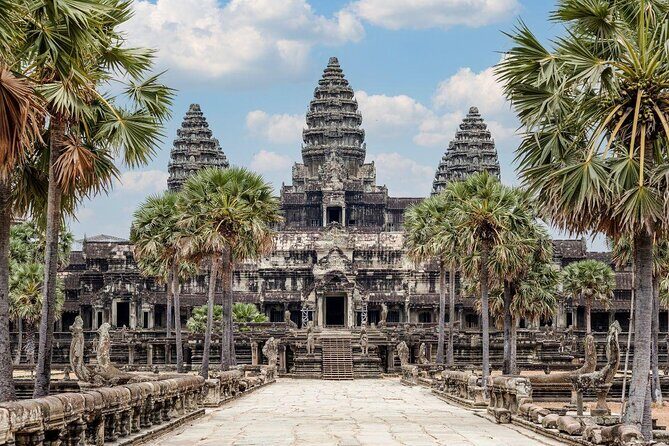
- Sunrise + sunset timing: Angkor Wat in the golden morning, then Phnom Bakheng for evening views
- Private pacing: your group only, with hotel pickup and drop-off in town
- Big and Small Circle mix: major monuments plus lesser-stopped temple sites
- Weather-proof structure: multiple stops across both days, not just a rushed highlight list
- Dress and drone rules matter: cover shoulders/knees, and drones require APSARA permission
Two days that cover the Big and Small Circle without feeling like a sprint
This is the kind of Angkor plan that makes sense. One day is anchored on the Angkor Wat and Angkor Thom core—where you’ll see the temple-mountain look, big gates, and the famous carved faces. The second day shifts out toward the smaller, more spread-out temples, including Banteay Srei and several sites tied to Jayavarman VII’s building era.
What you get is coverage that stays coherent. Instead of hopping randomly, the route groups temples by area and by mood. Day 1 feels like the heart of Angkor: grand layouts, iconic structures, and temple details you can actually study. Day 2 feels like a slower discovery day: stone temples with more character, plus the payoff of a great view at sunset.
Even the “approx. 2 days” length fits the reality of Angkor. You’re not just passing through. You’re spending real time at major stops (for example Angkor Wat is listed at 2 hours, and Bayon at 1 hour), which is the difference between seeing temples and actually noticing them.
You can also read our reviews of more private tours in Siem Reap
Day 1: Angkor Wat to Ta Prohm, plus Angkor Thom’s key moments
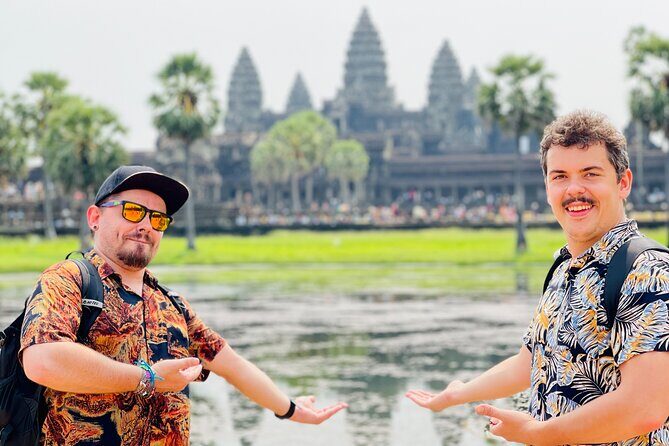
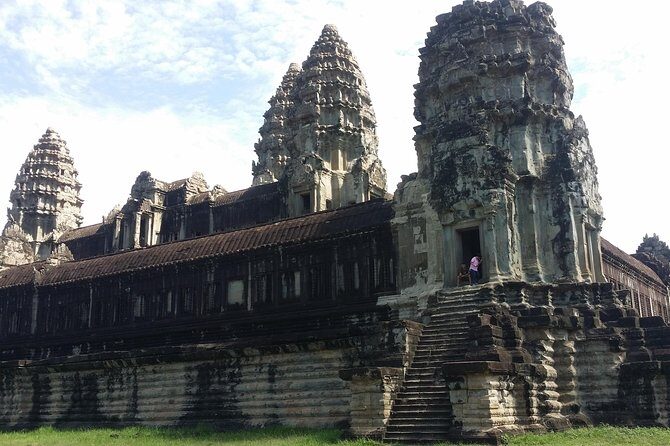
Day 1 starts at Angkor Wat, and it’s given the time it deserves. This massive Hindu temple complex was originally dedicated to Vishnu and sits on a site measuring 162.6 hectares. With 2 hours on the schedule, you should be able to move through the grounds without feeling like you’re being chased out by the next group.
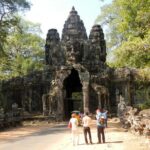
Then you head to Angkor Thom South Gate. This part matters because it connects you to the Khmer empire’s story: Angkor Thom was the last and most enduring capital city of the Khmer empire, established in the late 12th century by King Jayavarman VII. The gate is short in time (15 minutes), but it’s a good “orientation moment” before you step into the denser temple zone.
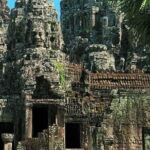
Next comes Bayon Temple (1 hour). Bayon is known for being the state temple of the Mahayana Buddhist King Jayavarman VII, built in the late 12th or early 13th century. The 1-hour stop is the right amount of time to take in the architecture and the carved detailing without getting fatigued.
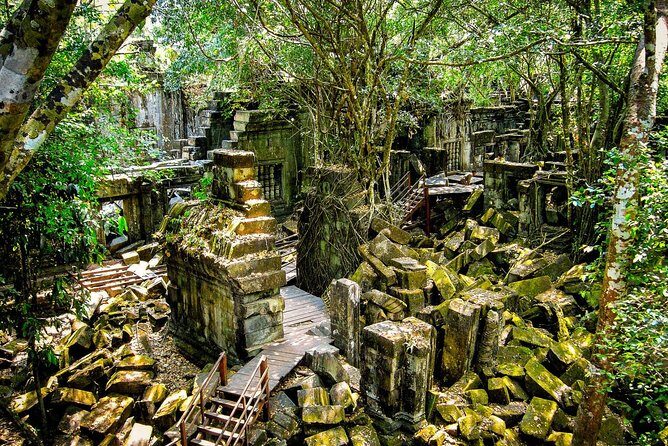
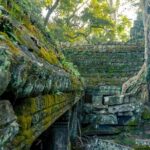
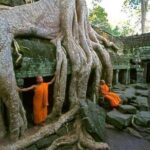
From there, you go to Ta Prohm (1 hour). Ta Prohm is the modern name for the temple originally called Rajavihara. It’s built in the Bayon style largely in the late 12th/early 13th centuries. Even if you’ve seen photos before, the atmosphere here hits different in person—like you’ve stepped into a living ruin.
You then add Ta Nei Temple (40 minutes). It’s a late 12th-century stone temple near the northwest corner of the East Baray, and it’s dedicated to the Buddha. This stop feels like a breather after Ta Prohm. You get the change of pace and a different kind of temple focus.
Finally, you visit the Terrace of the Elephants (15 minutes). It’s located in Angkor Thom, and even though it’s short, it’s the kind of place where you understand the scale of the city layout and the role this area played in ceremonies and public life.
Day 1’s hidden value
The best part of Day 1 isn’t any single temple. It’s how the sequence helps you build a mental map fast—starting at Angkor Wat, then moving through Angkor Thom’s gate-to-temple progression.
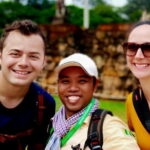
And it’s exactly where a well-prepared guide makes a real difference. In the positive feedback I’m seeing around this tour, Tann is specifically praised for being well prepared and providing excellent service—so you’re not just walking; you’re being guided through what you’re actually seeing.
Day 2: Banteay Srei and the sunrise-to-sunset flow
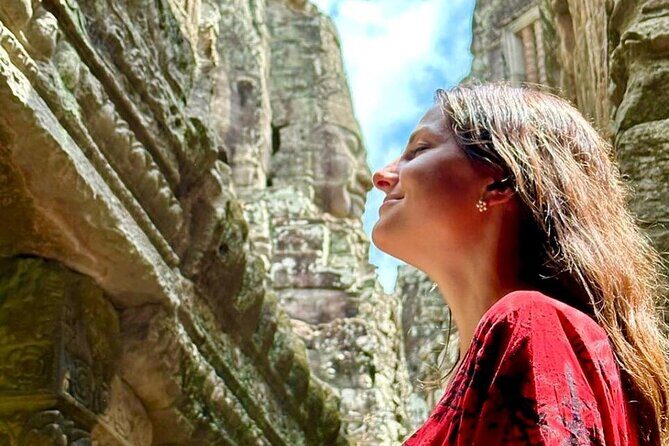
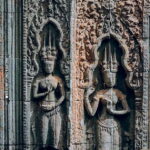
Day 2 begins with Banteay Srei, also spelled Banteay Srey, a 10th-century temple dedicated to Shiva. It’s part of the Angkor region, and the route gives you 2 hours here, which is important. Banteay Srei is the kind of place where you need time to notice fine stone details and the way the carvings change your sense of scale.
After Banteay Srei, the tour heads to Preah Khan (1 hour). Preah Khan is a 12th-century temple built for King Jayavarman VII to honor his father. It’s located northeast of Angkor Thom and just west of the Jayatataka baray. The 1-hour slot is enough to understand the layout before the route moves onward.
Then you visit Neak Pean (30 minutes). Neak Pean is an artificial island with a Buddhist temple on a circular island in the Jayatataka Baray area, linked to Preah Khan temple. This stop is shorter, but it’s a nice change: you’ll feel the setting shift from temple grounds to a more contained, island-like environment.
Next is Ta Som (35 minutes), built at the end of the 12th century for King Jayavarman VII and dedicated to the Buddha (as described in the tour notes). It’s near Neak Pean, so the route keeps these smaller sites close together rather than scattering them all over the map.
Then comes Eastern Mebon (40 minutes). This 10th-century temple sits on an artificial island at the center of what is now a dry area. It’s built during the reign of King Rajendravarman. This is the kind of location where you can see the original idea of the island setting even after the water is gone.
And that brings you to the big evening payoff: Phnom Bakheng (1 hour). It’s a Hindu and Buddhist temple mountain in Siem Reap Province, dedicated to Shiva and built at the end of the 9th century during King Yasovarman’s reign. This is the sunset anchor of the tour—meaning your timing is designed for the golden-hour look.
How sunrise and sunset feel different here
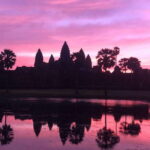
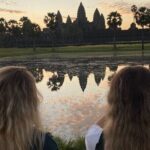
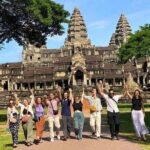
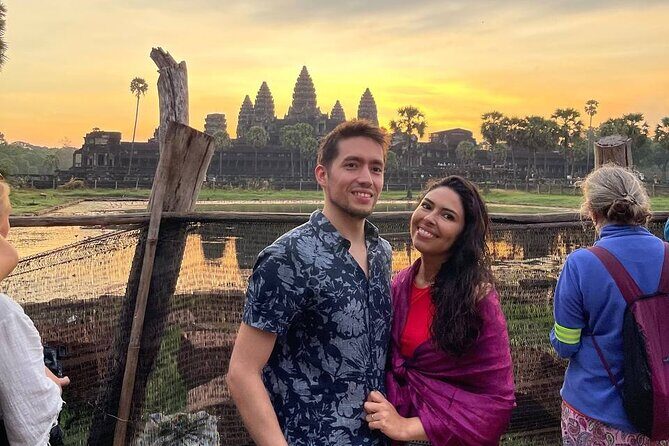
Angkor Wat sunrise is about symmetry, glow, and the sense that the whole complex is waking up at once. Phnom Bakheng sunset is more about viewpoint energy—standing high, watching light fade over the temple landscape. Doing both on separate days gives you two different “camera angles” emotionally, not just visually.
You can also read our reviews of more evening experiences in Siem Reap

The private format: when it helps and when you still need your own stamina
This is a private tour/activity. That means it’s just your group, not a shared scramble with strangers. For Angkor, that matters. The pace through temples is smoother, and you get more control over photo stops and walking decisions.
You also get pickup and drop-off at city hotels and transportation by an air-conditioned vehicle. In the heat, that’s not a luxury; it’s part of staying comfortable. Bottled water is included, which is a smart move because daytime temperatures can be strong even when the temples are cooler.
The “private” part also helps with the two big transitions of the itinerary: the early temple start for sunrise and the later move into evening views. Even if you’re not a slow walker, having someone plan the flow can prevent you from losing time to confusion.
Still, you should plan for the physical reality. Temple days in Angkor involve walking on uneven stone and stepping in and out of shaded areas. This is not a sit-behind-and-watch show.
Price and value math: $134 is only half the budget
At $134 per person, the tour price covers the guide and transport, including free pickup and drop-off and bottled water. It also includes sightseeing as specified and uses a mobile ticket.
What’s not included is a big part of the Angkor experience: breakfast, lunch, drinks, and the temple entrance costs. The tour notes that the 3Days Angkor Pass costs $62 per person and is not included. It also says you can buy temple entrance fees on the day just before sunrise, and that they accept visa cards.
So how do you think about value?
- If you already have the pass and you’re paying for a guide anyway, the tour price becomes easier to justify.
- If you still need to buy entrance access, your all-in cost rises fast. But you’re also paying for two structured days of expert guidance and car time, not just a single “see the famous thing” stop.
In plain terms: this tour is priced like a guide-and-driver service for two days plus sunrise/sunset planning. If you want a smooth Angkor flow without figuring out logistics, it can be a good deal. If you’re trying to keep costs very low, you’ll need to weigh it against DIY planning and fewer guided hours.
Temple entry rules that affect your comfort (dress, bags, and drones)
Angkor is a place with rules, and this tour calls out the important ones.
Dress code: respectful clothing with shoulders and knees covered is required. The notes also say only a real dress scarf isn’t allowed. In practice, that means you should bring clothing that fully covers, not something flimsy that won’t look like a proper scarf or wrap.
Drones: flying drones at the temples is not allowed. If you want to use one for any reason, you’d need permission from APSARA. Don’t plan on spontaneous drone time.
Tickets: temple entrance tickets are not included in the tour price. But you can buy them on the day before sunrise, and they accept visa cards.
These aren’t tiny details. They’re the stuff that keeps your morning from turning into a last-minute scramble.
Breakfast before sunrise: a smart workaround if your hotel offers it
Breakfast is not included. But there’s a practical tip in the tour notes: if your hotel includes breakfast, you can request a breakfast pack and enjoy it after sunrise at Angkor Wat.
That matters because your Day 1 sunrise timing can make a normal sit-down breakfast impossible. If you can get a breakfast pack, you reduce the stress and you’ll have more energy for the walking.
Guide quality: why it changes the whole feel of Angkor
Angkor can be overwhelming—too many stones, too many gates, too many names. That’s where a strong guide earns their keep.
In the strongest feedback around this tour, Tann is praised for being well prepared and for giving excellent service, and the overall experience is described as an excellent two-day program that works because one day is set for sunset and the other for sunrise.
Even without naming every temple fact, a good guide helps you notice patterns: why certain structures are where they are, how the temple complex layouts connect, and what to look for first so you don’t spend time guessing.
Who this tour suits best
This 2 days Angkor Wat sunrise and sunset private tour is a great fit if you want:
- Sunrise and sunset planned as part of a two-day structure, not as random add-ons
- A mix of major temples and smaller circuit sites
- A dedicated English-speaking guide and air-conditioned transport
- The convenience of hotel pickup and drop-off
It might be less ideal if:
- You’re trying to travel ultra-budget and would rather DIY every temple entrance and route choice
- You don’t want to manage dress expectations and morning ticket access
Should you book this Angkor Wat sunrise and sunset tour?
I’d book it if you want the Angkor experience done in a way that saves time, reduces stress, and lets you see the core highlights plus the “supporting cast” temples that make Angkor feel like a real place rather than a checklist.
I would think twice if you’re already committed to doing everything independently, or if you’re tight on money and can’t comfortably budget for the 3Days Angkor Pass on top of the tour fee.
If you care about golden-hour light and you want the day-to-day logistics handled, this is a solid, value-focused way to see a lot of Angkor without wasting your energy on navigation.
FAQ
What’s included in the 2-day Angkor tour?
The tour includes an English-speaking guide, air-conditioned transportation, sightseeing as specified, free pickup and drop-off at city hotels, and bottled water. You’ll also receive a mobile ticket.
Are temple entrance fees included?
No. Entrance fees are not included, and the 3Days Angkor Pass is listed separately at $62 per person. Temple entrance fees can be purchased on the day of the tour just before sunrise, and visa cards are accepted.
Do I need to buy the 3Days Angkor Pass?
The tour notes that the 3Days Angkor Pass costs $62 per person and is not included. You may also purchase entrance fees on the day just before sunrise (visa cards accepted), but the pass is still an important part of budgeting.
Is this tour private or shared?
It’s private. Only your group participates.
What about breakfast before sunrise?
Breakfast is not included. If your hotel includes breakfast, the tour suggests requesting a breakfast pack, then enjoying it after sunrise at Angkor Wat.
What’s the dress code for Angkor temples?
You need respectful dress that covers shoulders and knees. The tour notes that only a real dress scarf is not allowed, so plan on solid coverage rather than flimsy fabric.
Are drones allowed at the temples?
Drones are not allowed to fly at the temples. If permission is needed, the tour notes that it’s only possible by asking APSARA.
Should I tip the guide or driver?
Tipping for the guide and driver is recommended.
What’s the cancellation policy?
Free cancellation is available up to 24 hours in advance for a full refund. If you cancel less than 24 hours before the experience starts, the amount paid is not refunded.