REVIEW · SIEM REAP
4 Days | Angkor Wat & Preah Vihear Tours
Book on Viator →Operated by Hok Cambodia Journeys · Bookable on Viator
Early mornings make this one worth it. I really like the 4:30 AM Angkor Wat sunrise plan and the way Mr Hok adjusts to what you want while keeping everything moving. I also like the practical comfort touches like air-conditioned transport plus cold water and towels. The main catch: the big temple tickets are not included, and the schedule is full, so you’ll want to plan energy (and money) for multiple early starts.
This is a great fit if you want a tight, big-sites itinerary with a guide who speaks English and stays on top of timing. You’ll get pickup from your hotel in Siem Reap, cool drinks and snacks along the way, and a mobile ticket for the experience. One more thing to consider: Day 4 is long and remote-feeling, with an early departure and a very early breakfast plan, so it’s not ideal if you hate getting up before dawn.
In This Review
- Key highlights to look for
- How the 4-day route works (and why it feels efficient)
- Day 1 Angkor Wat, Angkor Thom South Gate, Bayon, Ta Nei, Ta Prohm, Prasat Kravan
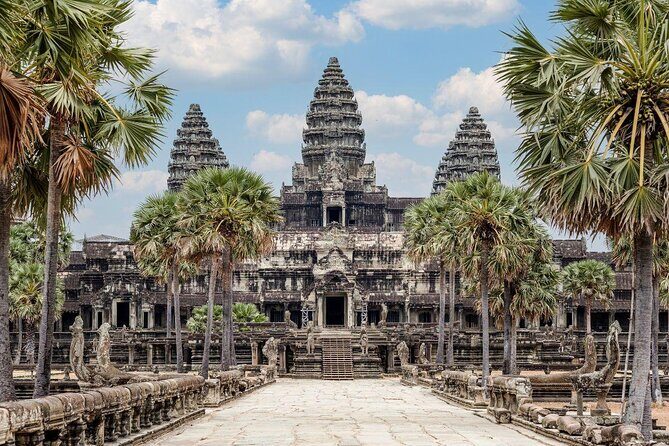
- Angkor Wat: the composition you can feel
- Angkor Thom South Gate: where the city begins
- Bayon Temple: the smiling faces (and the direction they represent)
- Ta Nei: the “quiet in the jungle” pause
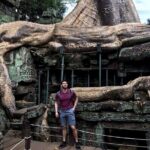
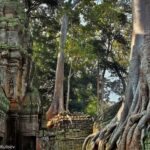
- Ta Prohm: tree roots that feel like living architecture
- Prasat Kravan: smaller, brick-built, and surprisingly detailed
- Day 1 reality check
- Day 2 sunrise Angkor Wat plus Banteay Srei and the “temple chain”
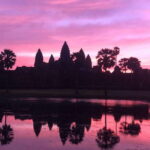
- Angkor Wat at first light: how to position for the reflection pool
- Banteay Srei: pink stone and precision carvings
- Preah Khan: a university temple and father-to-son devotion
- Neak Pean: the medical design idea
- Ta Som: roots grabbing the entrance
- Banteay Samre and Eastern Mebon: strong symmetry and axes
- Day 2 reality check
- Day 3 Phnom Kulen and Beng Mealea: sacred mountain and the Indiana Jones-style ruin
- Prasat Beng Mealea: ruins that feel untouched
- A quick slice of Siem Reap countryside
- Day 4 Preah Vihear and Koh Ker via Anlong Veng: history beyond the postcards
- Anlong Veng and Ta Mok’s House
- Preah Vihear: the temple on the mountain ridge near Thailand
- Koh Ker: the ancient capital of Jayavarman IV (with a very short scheduled stop)
- Back to Siem Reap
- Price and value: what $444 buys you (and what you’ll pay separately)
- Guide quality: Mr Hok’s flexibility and photo help
- Comfort and practical rhythm: water, snacks, and breakfast boxes
- Who should book this tour (and who should think twice)
- Should you book this 4-day Angkor Wat & Preah Vihear tour?
- FAQ
- Are temple admission tickets included?
- What time is the Angkor Wat sunrise start?
- Do you get pickup from Siem Reap hotels?
- What’s included in the tour besides transportation?
- Are meals included?
- Can I cancel for a full refund?
Key highlights to look for
- 4:30 AM Angkor Wat sunrise positioned around the reflecting pool for the classic mirror effect
- Jungle-temple contrast on Day 1 with Ta Nei and Ta Prohm’s tree-root ruins
- Banteay Srei’s pink stone detail plus a strong temple day after the sunrise
- Phnom Kulen sacred sites paired with the “ruins in nature” feel of Beng Mealea
- Anlong Veng before Preah Vihear with breakfast boxes and a look at Ta Mok’s House
- Mr Hok as the steady anchor: flexible, kind, and photo-helpful in real-world reports
How the 4-day route works (and why it feels efficient)
This tour is built around two ideas: hit the most famous Khmer sites while they are calm, and pair them with lesser-visited temples so your photos don’t all look the same. You’ll also spend a lot of time outside, which is part of the deal with Angkor and the wider region. The good news is that the tour includes an air-conditioned vehicle, water, and towels, which makes the heat much easier to handle.
Timing is the real backbone here. Day 2 starts at 4:30 AM for sunrise at Angkor Wat, and Day 4 starts at 5:30 AM for Preah Vihear. If you’re the type who hates early mornings, you’ll still see the monuments, but the payoff is bigger when you’re there for the first light.
Also, this is described as a private tour/activity where only your group participates. That typically means you’re not stuck waiting on strangers to finish buying snacks or using the restroom. In practice, you’ll still have other visitors around the temple gates, but the pacing can feel smoother.
A few more Siem Reap tours and experiences worth a look
Day 1 Angkor Wat, Angkor Thom South Gate, Bayon, Ta Nei, Ta Prohm, Prasat Kravan
Day 1 is the “big Khmer set” day. You start with pickup at 8:00 AM and head straight into Angkor Wat, then move outward through Angkor Thom and on to several temples with very different vibes.
Angkor Wat: the composition you can feel
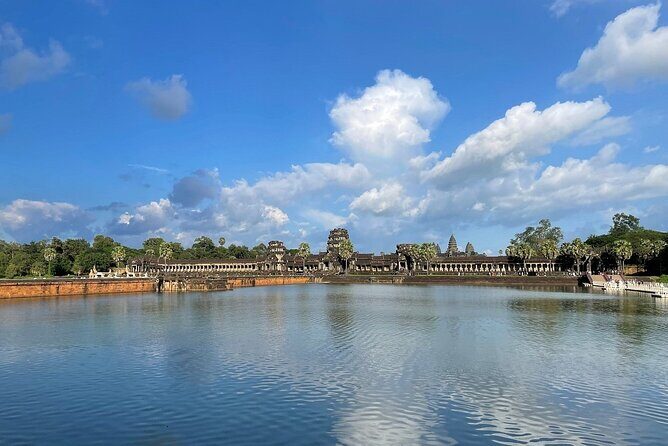
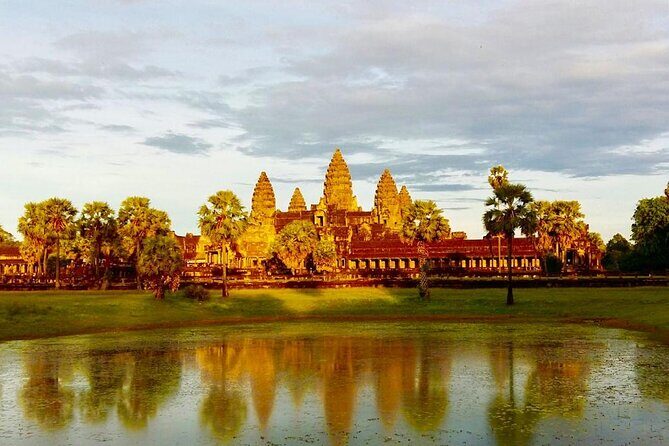
Angkor Wat is the largest religious monument in the world and is known for being exceptionally well preserved. What matters for you on a visit is not just scale. It’s the way everything is laid out: temple-mountain elements plus later galleried temple design. The site is meant to represent Mount Meru, the home of the devas in Hindu mythology. When you stand there, you start noticing why that symbolism influenced the balance of the whole complex.
You’re scheduled for about 2 hours here. That’s enough time to walk key areas and still have a moment to just look back at the overall layout, instead of rushing through details. Since Angkor tickets are not included, you’ll want to budget for them separately.
Angkor Thom South Gate: where the city begins
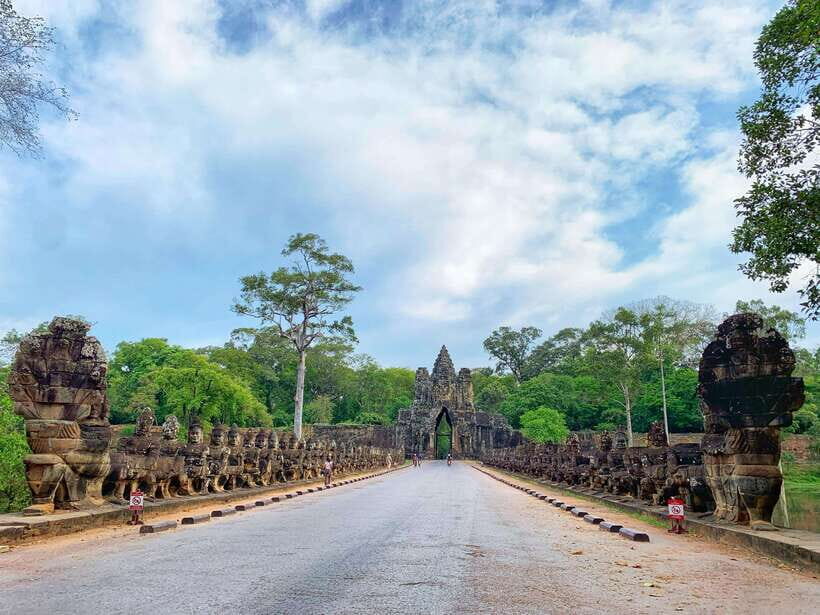
From there you go to Angkor Thom South Gate, part of the last capital of the Khmer Empire. The city is wrapped by a massive wall and moat, and it’s entered through five monumental gates. This is one of those stops where the “architecture lesson” helps: you start seeing how the Khmer kings designed movement, not just monuments.
You’ll get about 1 hour for this zone, which fits well after Angkor Wat. It also helps break the day so you’re not staring at one huge complex nonstop.
Bayon Temple: the smiling faces (and the direction they represent)
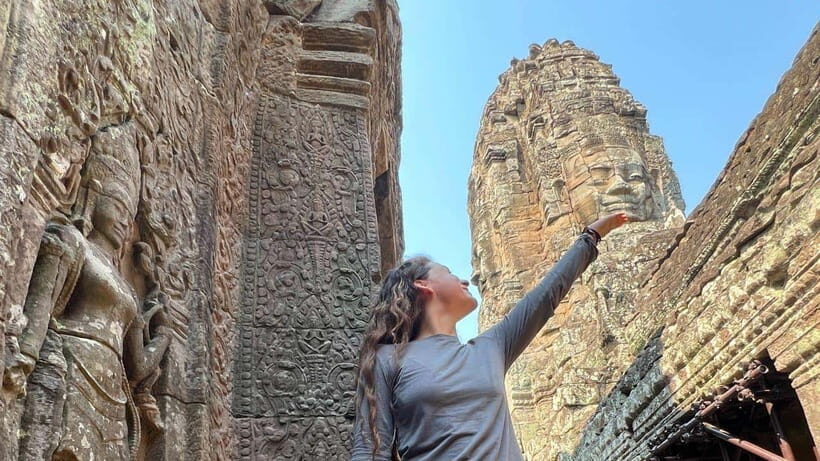
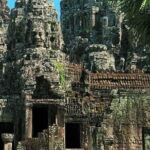
At the center of Angkor Thom is Bayon Temple, built by King Jayavarman VII. The famous feature is the set of stone faces on 49 towers, each showing a four-direction theme. The story presented here connects those directions with different deities and with Lokesvara or Jayavarman VII, depending on the interpretation you follow on-site.
You get about 1 hour. For me, Bayon works best when you slow down and compare faces from different angles. The faces look consistent, then suddenly they don’t. It’s a neat reminder that Khmer design wasn’t only about beauty; it also cared about how people move around the temple.
Ta Nei: the “quiet in the jungle” pause
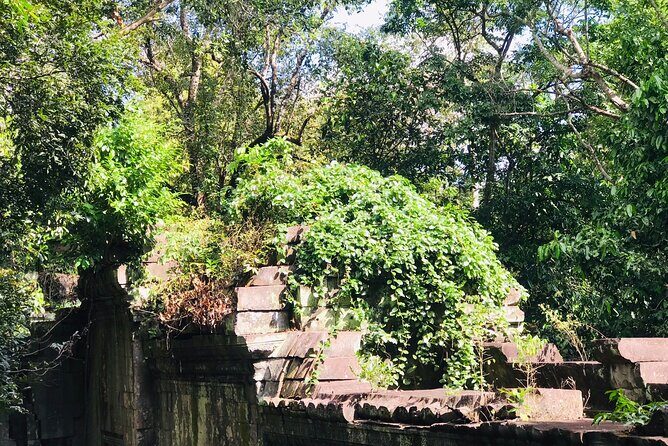
Then you head to Ta Nei, a jungle temple that’s described as peaceful and good for escaping crowds. This is where the day turns softer. The ruins are surrounded by dense rainforest, and you might notice animals and birds around the trees.
You’ll have about 30 minutes. That time limit is actually an advantage. It keeps you fresh and still lets you enjoy the “less crowded” feeling instead of burning through daylight.
Ta Prohm: tree roots that feel like living architecture
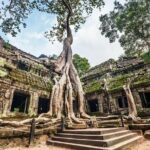
After the quiet stop, you switch to Ta Prohm, one of the most famous Angkor temples. It’s known for ruins swallowed by roots and trees. The tour notes its connection to the Tomb Raider filming location, but you don’t have to care about movies to get the point: the structure looks dramatic because nature is actively part of the scene.
You get about 1 hour. This is also a good place to aim for photos without spending forever in one spot. If you take five minutes to circle and find a different angle of the roots, you’ll come away with more variety.
Prasat Kravan: smaller, brick-built, and surprisingly detailed
The day ends at Prasat Kravan, a brick temple dedicated to Lord Vishnu and built by King Harshavarman I in 921. It’s less famous than the headline names, which is why it can feel refreshing. The site is oriented to the east and was cleared from vegetation around 1930 by French scholars Henri Marchal and Georges Trouvé.
You’re scheduled for 30 minutes. That’s about right because Prasat Kravan rewards attention to carvings and form, not long wandering. The inside carvings are described as strong, including depictions of Vishnu and Mother Lakshmi.
Day 1 reality check
Day 1 stacks six stops, so you’ll be moving a lot. The trade-off is variety: big set-piece, city gate, famous faces, jungle calm, iconic roots, then a smaller detailed brick temple. If you’re the kind of traveler who loves contrast, it’s a win.
Day 2 sunrise Angkor Wat plus Banteay Srei and the “temple chain”
Day 2 is the signature day. You start at 4:30 AM so you can catch sunrise at Angkor Wat. The plan includes returning to the hotel for breakfast and refreshment afterward, which matters because temple days eat your energy fast.
Angkor Wat at first light: how to position for the reflection pool
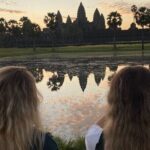
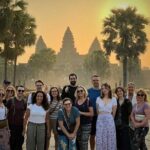
The sunrise part is scheduled around the reflecting pool in front of the main temple. You’re guided to position yourself behind the reflection pool for that classic mirrored view. Even if you don’t consider yourself a sunrise person, this is the one stop where the early wake-up has a visible payoff: fewer people, cooler air, and better photo conditions.
Banteay Srei: pink stone and precision carvings
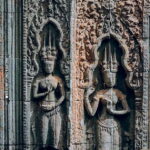
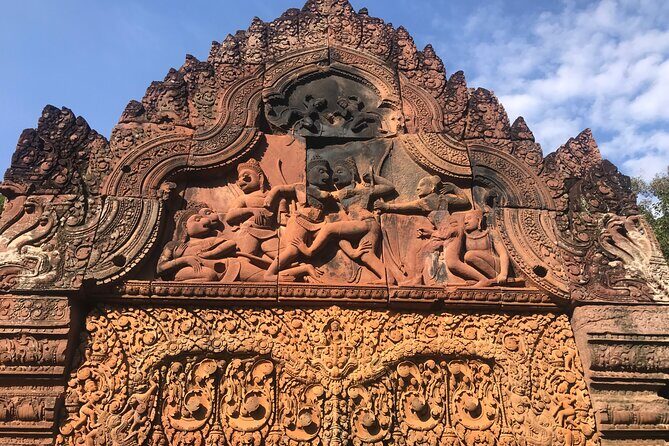
After breakfast you go to Banteay Srei, about 37 km north of Angkor Wat. It’s called the most beautiful pink stone temple in Cambodia and is known for being in very good condition for its size. The tour frames it as a real jewel of Khmer art because the carving work is so fine and intricate.
You have about 1 hour here. I like that this temple is smaller but more detailed. It gives your eyes a break from the huge central complexes and helps you appreciate the Khmer craft side instead of just scale.
The tour also shares an interesting local claim: some people believed it must have been built by women because of the delicacy of the carving work. It’s a story, not a scientific fact, but it adds character to the visit.
Preah Khan: a university temple and father-to-son devotion
Next is Preah Khan, built by King Jayavarman VII in 1191, dedicated to his father Dharanindravarman II, represented by Lokesvara in the central sanctuary. The tour notes that during the middle period a stupa was erected in place for Lokesvara, and it also says Preah Khan served as a University of Fine Art and Culture under Jayavarman VII’s reign.
You get about 1 hour. If you like temples with backstory beyond architecture, this is one of the strongest stops. It’s not only a ruin; it’s connected to how knowledge and art were organized during that era.
Neak Pean: the medical design idea
Then you go to Neak Pean, located in the center of Jayatadak lake. It means the entwined serpents, and the tour explains the design was originally linked to medical purposes. The idea was that entering the pools could balance elements and help cure disease.
Four connected pools represent Water, Earth, Fire, and Wind, tied into a larger water system. The tour also describes four great animals (elephant, bull, horse, lion) associated with quarters. It’s a lot of symbolic logic packed into one spot, which I find makes your visit feel more “designed,” not accidental.
Ta Som: roots grabbing the entrance
Ta Som is a Mahayana Buddhism temple. The tour highlights the east gate and specifically mentions that it’s still grabbed by trees and roots. It’s a shorter stop at 30 minutes, but it fits perfectly after Neak Pean: you get water symbolism, then immediately a different kind of “nature taking over stone” feel.
Banteay Samre and Eastern Mebon: strong symmetry and axes
Next is Banteay Samre, dedicated to Suriyavarman II’s family and friends. It’s described as well preserved with big carvings and a calm atmosphere. The tour calls it a Hindu temple in the Angkor Wat style, and says it was excellently restored by Maurice Glaize from 1936 to 1944.
Finally comes Eastern Mebon, built by Rajendravarman II in 952. It’s a temple mountain combining brick, laterite, and sandstone, dedicated to Shiva and honoring the king’s parents. The tour emphasizes the temple’s alignment with cardinal directions and ties its placement to other sites like Pre Rup and Phimeanakas.
These two stops together help you see Khmer planning as a system. You’re not only looking at temples; you’re seeing how the cities and monuments were placed in relation to each other.
Day 2 reality check
Day 2 also has eight stops plus the return. It’s a full day, but the sunrise creates a natural rhythm: early light, then details. If you’re tired after Day 1, Day 2 forces you into a steady pace, but you’ll still get enough variety to keep it interesting.
Day 3 Phnom Kulen and Beng Mealea: sacred mountain and the Indiana Jones-style ruin
Day 3 changes the mood. You leave the temple zone and go toward Phnom Kulen National Park, described as a sacred mountain with holy waterfalls, a reclining Buddha, a sacred river with thousand lingas, Srash Damrei, and the Bat Cave. You also learn the meaning of Phnom Kulen: it’s called the Lychee Mountain.
The bigger context matters here. The tour explains Phnom Kulen’s symbolic importance as the birthplace of the ancient Khmer Empire. King Jayavarman II proclaimed himself as the God King and initiated the Devaraja cult here. The tour also notes that during the Angkorean era the relief was known as Mahendraparvata, or Mountain of Great Indra.
You get about 2 hours. That’s enough time to see the main sacred points without feeling like you need a guidebook inside your head the whole time.
Prasat Beng Mealea: ruins that feel untouched
After Phnom Kulen, you go to Prasat Beng Mealea, about 66 km from Siem Reap by road. It’s famous as a remote jungle temple where the ruins remain in their original condition, and the tour stresses it’s untouched by major restoration and conservation projects.
It opened to visitors in the early 2000s after land mine clearance. That detail matters for your safety mindset, because it frames why the site is more “rough edges” than carefully restored.
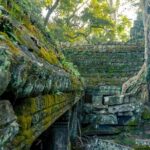
The tour’s description is very visual: an Indiana Jones feeling, piles of falling stones, dark galleries, and a sarcophagus-looking urn. The key advice is simple: exercise caution when you’re inside.
You’re scheduled for about 1 hour. That’s about right because this temple is more maze and atmosphere than clean, obvious sightseeing lines.
A quick slice of Siem Reap countryside
The day ends with a 30-minute look at Siem Reap countryside. The tour frames daily life around farming and fishing, with agriculture shaped by Cambodia’s flooding conditions. It also lists crops like rice, potatoes, cashews, bananas, mangoes, durian, peppers, sugar palms, jackfruit, oranges, and vegetables.
Even though it’s short, I like this stop because it reminds you Angkor wasn’t built in a vacuum. It was part of a lived rural economy.
Day 4 Preah Vihear and Koh Ker via Anlong Veng: history beyond the postcards
Day 4 is early and intense. You’re picked up at 5:30 AM and the tour asks you to request breakfast boxes from your hotel. There’s a stop in Anlong Veng for breakfast and refreshment, and it also serves as a historical transition point.
Anlong Veng and Ta Mok’s House
Anlong Veng is described as the last stronghold capital of the Khmer Rouge Army before 1998. The tour also notes that Pol Pot died in the area. Then you visit Ta Mok’s House, presented as a popular historical site for tourists.
This part isn’t about temples. It’s about understanding why the region’s story is complicated. If you’re sensitive to heavy history, you’ll want to mentally prepare before you go.
Preah Vihear: the temple on the mountain ridge near Thailand
After Anlong Veng, you head to Preah Vihear Temple, described as an incredible Hindu temple on top of the Dangrek Mountain Range, very close to the Thailand border. The tour says you can see the Thai army from the Cambodian side.
You have about 3 hours at Preah Vihear. That time is important because it’s not just a quick glance. You need time for viewpoints and for walking between levels while taking in the scale of the cliffside setting.
The temple ticket is not included, so budget for entry.
Koh Ker: the ancient capital of Jayavarman IV (with a very short scheduled stop)
Next is Koh Ker Group Temple, described as the ancient capital city of King Jayavarman IV, who relocated his city from Angkor in 921 A.D. The tour notes the site was called Chhoarkoki or Lingapura and that hundreds of Hindu temples were built during 921–944.
The schedule lists Koh Ker as about 2 minutes. I’d treat that as a “quick photo and orient” moment rather than a full visit, unless your guide adjusts the plan once you’re there.
Back to Siem Reap
After that, you transfer back to your hotel in Siem Reap. It’s a good closing structure because after Preah Vihear, you’ll want a shower, dinner, and an early night.
Price and value: what $444 buys you (and what you’ll pay separately)
At $444 per person for roughly 4 days, this tour’s value comes from the parts that are hard to organize alone: early starts, tight route planning, and transportation with AC plus basic refreshment support.
Here’s what’s included:
- Air-conditioned vehicle
- Senior English tour guide
- Cool water and towels
- Some local snacks and beers
And these are not included:
- Preah Vihear ticket
- Koh Ker Temple ticket
- Angkor ticket
- Accommodation
- Meals and personal expenses
- Tips for guide and driver
So the real budgeting question is simple: can you handle paying for multiple temple entries in addition to the tour cost? If yes, the all-in logistics can feel like a good deal. If no, you may find the total bill climbs quickly, especially on a route that includes both Angkor and Preah Vihear.
One more value point: group discounts and a mobile ticket are mentioned. That can reduce friction if you’re traveling with friends or want a smooth ticket handoff.
Guide quality: Mr Hok’s flexibility and photo help
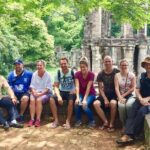
The name Mr Hok shows up clearly in the feedback you provided. Multiple people describe him as flexible, informative, kind, and understanding. One report says he took over an itinerary that was already set up and still managed to make it work with what the family requested. Another mentions that he gave an incredible experience and helped with great photos.
I think this matters for a tour like this. Angkor is famous, but it’s also crowded and timing-sensitive. A guide who’s good at reading what you want—more photos vs. more walking, slower pace vs. faster pace—can turn a checklist trip into a trip that feels personal. The “family home” hospitality is another sign that this is more than a mechanical service.
Comfort and practical rhythm: water, snacks, and breakfast boxes
Small comfort items do a lot on long temple days. This tour includes cool water and towels, plus some local snacks and beers. You’re not promised full meals, but you are given enough support to keep moving between temples.
The one special detail that stands out is Day 4 breakfast boxes. On a 5:30 AM start, it’s smart to have something ready in the morning, especially once you’re in Anlong Veng before Preah Vihear.
Bring a hat, sunscreen, and comfortable shoes. For jungle ruins like Ta Nei and Beng Mealea, traction matters more than you think.
Who should book this tour (and who should think twice)
Book it if:
- You want Angkor Wat sunrise and a full Khmer highlights circuit in 4 days
- You like contrast: major temples plus jungle ruins plus mountain sacred sites
- You’re okay with early mornings and a packed itinerary
Think twice if:
- You hate waking up before dawn, because Day 2 and Day 4 both start well before sunrise
- You want a relaxed pace with lots of free time between stops
- You don’t want to pay extra for major temple tickets, since Angkor/Preah Vihear/Koh Ker entries are not included
This works best for couples, small groups, and independent travelers who still like a plan. If you’re traveling with kids or someone with mobility limitations, you’ll want to double-check your comfort level with walking in temple areas, especially jungle and ruin sections.
Should you book this 4-day Angkor Wat & Preah Vihear tour?
I’d book it if your priority is seeing the “big Khmer story” from Angkor Wat sunrise to Preah Vihear, with smart spacing of famous temples and quieter ruins. The included AC transport, water, towels, and English guide make the logistics easier than DIY, and the Mr Hok feedback points to real flexibility and helpful photo moments.
I would not book it if you’re expecting all tickets included or if you need lots of downtime. The tour is full, and the best moments come from the earliest departures.
If you’re planning this route anyway, this kind of organized pacing is often the difference between a day that feels like a stamp collection and a day that feels like you actually understood what you were looking at.
FAQ
Are temple admission tickets included?
No. The tour does not include the Angkor ticket, Preah Vihear ticket, or Koh Ker Temple ticket.
What time is the Angkor Wat sunrise start?
Day 2 starts at 4:30 AM for sunrise at Angkor Wat.
Do you get pickup from Siem Reap hotels?
Yes. Pickup from your hotel in Siem Reap is included, with Day 1 pickup at 8:00 AM and Day 4 pickup at 5:30 AM.
What’s included in the tour besides transportation?
Included features are an air-conditioned vehicle, a senior English tour guide, cool water and towels, and some local snacks and beers. The tour also mentions a mobile ticket and group discounts.
Are meals included?
No. Meals are not included, though there are some snacks provided and you’re asked to get breakfast boxes from your hotel on Day 4.
Can I cancel for a full refund?
You can cancel up to 3 days in advance for a full refund, based on the experience’s local time cutoff. Canceling less than 3 full days before the start time is not refunded.