Angkor is easier to grasp with this museum. With prepaid admission (so you skip the ticket line) and a self-guided layout, this stop turns Angkor Temples into something you actually understand. You choose your arrival time, you wander at your pace, and you spend about 2 hours in the galleries without feeling rushed.
My two favorite parts are how the exhibits are organized as a smooth, single-direction story—and how clearly the museum links Khmer art to Khmer beliefs. I especially like the themed galleries, including an Exclusive Gallery focused on Cambodia’s Buddhism, plus galleries labeled for the Khmer Empire’s origins and its beliefs.
One thing to watch: the museum has a strict dress code (knees must be covered). Also, the advertised price can look high if you do not double-check what your voucher covers versus add-ons like audio.
In This Review
- Key highlights you’ll feel fast
- Angkor National Museum admission: what you’re really buying
- Getting from JTB office to the museum without stress
- The entrance experience: prepaid passes and a smooth start
- Galleries that make the Khmer story make sense
- The Briefing Hall: set your mental map first
- Exclusive Gallery: Buddhism in Cambodia
- Gallery A: Khmer Empire origins
- Gallery B: Khmer beliefs
- The remaining exhibits: Angkor Temples and the Khmer Empire
- Self-guided timing: how to pace yourself for 2 hours
- Audio headsets: worth considering if you want depth
- Practical details: hours, dress code, and what to bring
- Opening hours
- Dress code
- What to bring
- Who it suits
- Price and value: why $132 can make sense (and when to question it)
- Is this ticket good for your Angkor plan?
- Should you book Angkor National Museum admission?
- FAQ
- What’s included with Angkor National Museum admission here?
- How long should I plan to spend at the museum?
- Is the museum visit self-guided?
- What are the opening hours for 2025?
- Is the audio guide included in the price?
- What dress code do I need to enter?
- Can I get a refund if my plans change?
Key highlights you’ll feel fast
- Prepaid ticket entry helps you walk in without waiting for museum passes
- One-way pickup from JTB office makes the start easy and predictable
- A single-direction gallery flow means you can follow the storyline without guessing
- Themed sections cover Khmer Empire origins, beliefs, and an Exclusive Buddhism gallery
- Optional audio headsets are often worth it if you want more context
- Knees covered dress code is enforced, so plan what you wear
Angkor National Museum admission: what you’re really buying
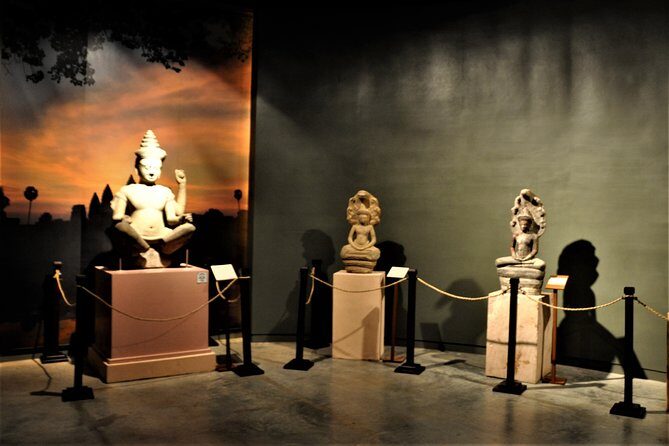
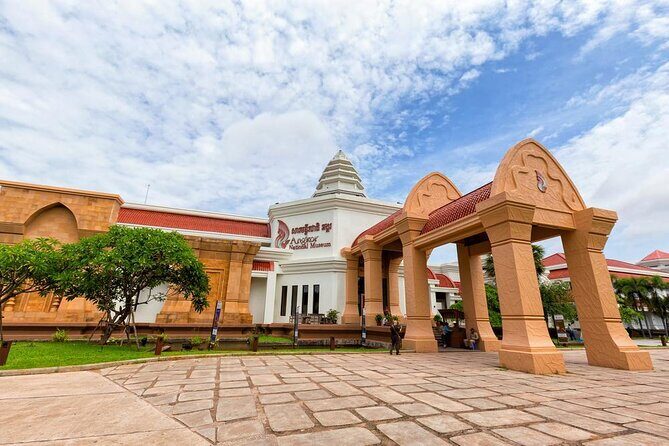
This is museum admission for the Angkor National Museum in Siem Reap, designed to pair well with an Angkor Temples day. If you’ve stared at carvings at Angkor Wat and felt like you need a translator for the whole scene, this is the practical fix. You’ll get context for the art, the people, and the ideas behind it.
The ticket is set up for flexible entry. You pick an arrival time that works, then go in with your prepaid admission ticket. You can stay as long as you like, but the trip is commonly planned around about 2 hours, which is a sweet spot for seeing the main galleries without exhaustion.
Price is $132 per person for this package, and here’s how I think about value: you’re paying for (1) the museum fee and (2) a one-way pickup from the JTB office. What’s not included can matter a lot for the final cost—especially if you expect audio to be included automatically.
You can also read our reviews of more museum experiences in Siem Reap


Getting from JTB office to the museum without stress
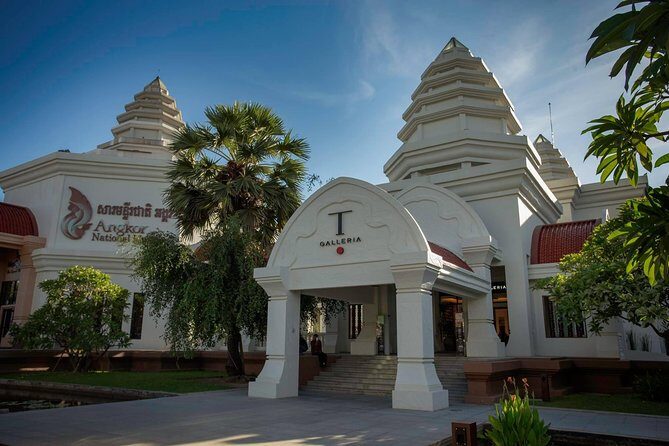
You meet staff at the JTB (Cambodia) office and then get a one-way transfer to the museum. That matters more than it sounds. Siem Reap traffic can be unpredictable, and an organized pickup helps you arrive ready to go in, rather than losing time to logistics.
There’s also a practical cap here: this activity lists a maximum of 20 travelers. Smaller groups usually mean less chaos when you redeem vouchers and find your way inside.
One caution: the package includes pickup to the museum, but it does not promise return transportation. So plan how you’ll get back—taxi, tuk-tuk, hotel transport, or whatever is easiest once you’re finished.
The entrance experience: prepaid passes and a smooth start
The museum visit begins with a voucher redemption step at Angkor Museum. If you have your confirmation voucher ready, your entry should feel organized. The whole point of prepaid admission is simple: less waiting, more looking.
Once you’re inside, your first stop is the Briefing Hall, basically the museum’s overture. This is where the staff-made story starts, and it sets you up to understand what you’re about to see rather than treating each statue like a random win.
After that, the galleries run in a flowing single direction. This is a big quality-of-life detail. You don’t have to think about where to go next—you follow the path, and the themes build on each other.
Galleries that make the Khmer story make sense
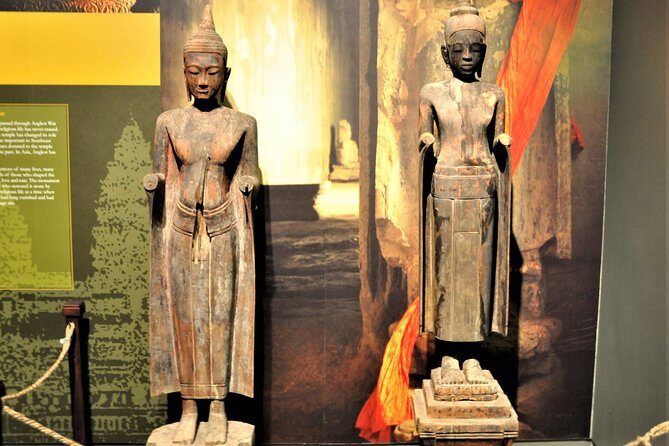
The museum is built around themed galleries rather than a giant free-for-all. That approach is why the visit works so well as a companion to the temples. You’ll see the art, then you’ll learn the why behind it.
The Briefing Hall: set your mental map first
If you only skim one area, make it the Briefing Hall. It gives you the context you’ll reuse when you’re standing in front of carved stone and temple-style motifs later. I like this start because it reduces the mental clutter. You’re not trying to decode everything at once.





Exclusive Gallery: Buddhism in Cambodia
The Exclusive Gallery focuses on Cambodia’s Buddhism. This part is helpful if you’re trying to connect religious ideas to what you see at Angkor. Even if you only catch the main themes, you’ll walk through the museum with better eyes.
Gallery A: Khmer Empire origins
Gallery A is about the Khmer Empire’s origins. This is where the museum shifts from objects to story. You start seeing how the empire’s rise connects to the art styles and temple culture you associate with Angkor.
Gallery B: Khmer beliefs
Gallery B tackles belief systems. This matters because Khmer art isn’t just decoration. It reflects ideas about power, morality, and the sacred world—and once you notice that, the carvings stop looking like museum pieces and start looking like messages.
The remaining exhibits: Angkor Temples and the Khmer Empire
After those anchor galleries, the rest of the exhibits cover the Angkor Temples and Khmer Empire themes. You’ll keep encountering artifacts excavated from archaeological sites around Angkor, and you get a sense of how the museum plays the role of preserver and interpreter.
In plain terms: you learn enough to make your temple visit feel less like a highlight reel and more like a connected story.
Self-guided timing: how to pace yourself for 2 hours
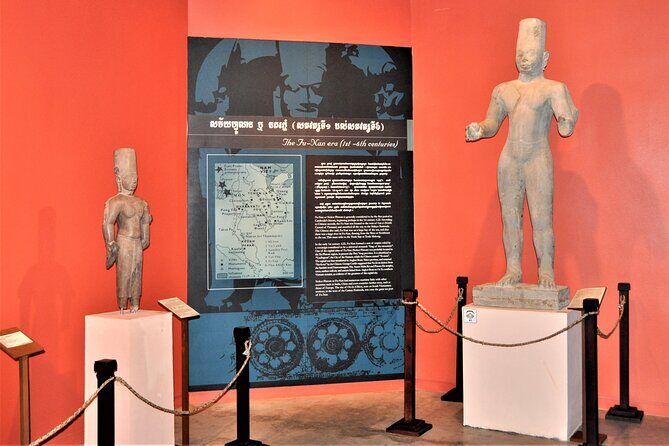
This is a self-guided admission. That’s a big advantage if you like moving at your own speed. You can linger at the carvings that catch your eye and skip faster through sections that feel less relevant.
A practical pacing idea:
- If you enjoy reading, plan closer to 2 hours to avoid rushing.
- If you prefer quick viewing and rely on audio or visual clues, you can likely do it faster, but you may miss connections.
In the positive notes I’ve seen, people often highlight how the visit works well without pressure. You’re not stuck following a script every minute.
Audio headsets: worth considering if you want depth
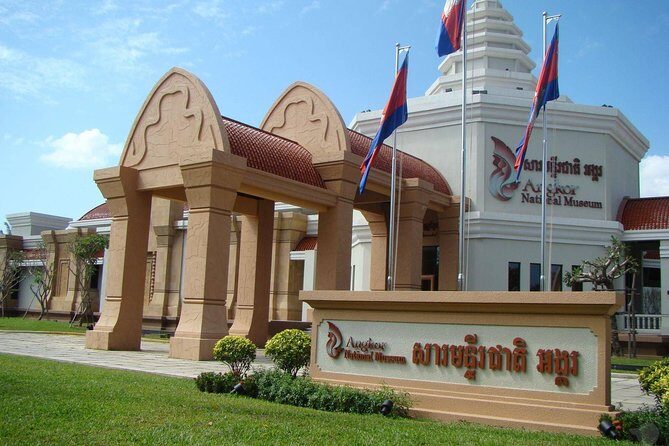
Audio is not included in the package. The tour & audio guide is listed as not included, so if you want that extra layer, you may need to arrange it separately. The upside is clear: audio headsets can help you get more out of each gallery instead of guessing what you’re looking at.
I’d treat audio as optional. If you’re the kind of person who likes short explanations while you’re standing in front of artifacts, it can make the whole museum feel more alive.
Practical details: hours, dress code, and what to bring
Opening hours
For 2025, the museum is listed as open Monday to Friday, 8:00 AM to 5:00 PM. If you’re traveling on a weekend, build your schedule around those hours.
Dress code
This one is non-negotiable. Knees must be covered for both men and women. If you show up in shorts, you might be refused entry. I’d pack light, breathable pants or wear long bottoms even on hot days—this is one place you don’t want a wardrobe gamble.
What to bring
Bring your confirmation voucher. You’ll meet staff at the JTB (Cambodia) office, and they’ll guide you to the voucher redemption step at the museum.
Who it suits
Most travelers can participate, and children must be accompanied by an adult. If you’re traveling with kids, it can still work, but you’ll likely want to keep breaks in mind since galleries involve lots of looking and reading.
Price and value: why $132 can make sense (and when to question it)
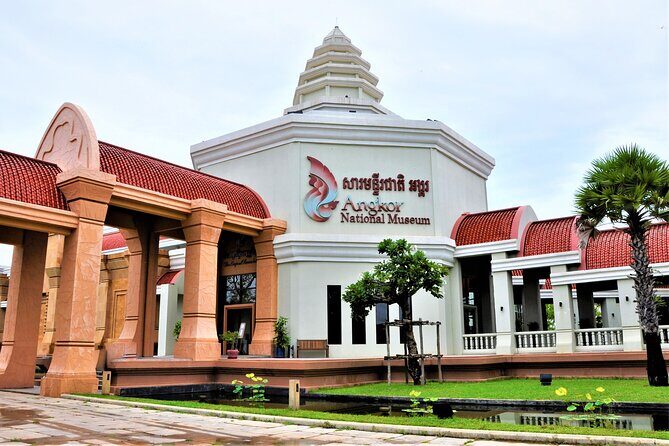
At $132 per person, you should evaluate value, not just sticker shock. For this package, you’re getting:
- The Angkor National Museum fee
- One-way pickup from the JTB office
So the “value math” improves if you would otherwise pay for a taxi ride and museum admission on your own. It also improves because prepaid entry reduces idle time.
Where price confusion can happen is with add-ons. Audio headsets are commonly treated as extra, and tips are also not included. So if you compare prices, make sure you’re comparing apples to apples: museum fee only versus museum fee plus audio.
If you want to keep costs under control, skip audio and read signage closely. If you want more context, plan for audio as your optional upgrade.
Is this ticket good for your Angkor plan?
This museum works best when you use it to shape your temple day. If you’re going to Angkor Temples next (or already did), you’ll likely get more from the sculptures and temple layout afterward.
It also fits a range of travel styles:
- Solo travelers who want quiet pacing
- Couples who like self-guided flexibility
- Anyone who wants to understand Khmer art beyond the postcard level
If you’re only in Siem Reap for one packed day, you’ll have to manage your time. But if you can spare a morning or afternoon slot, it’s one of the most efficient ways to connect temples to meaning.
Should you book Angkor National Museum admission?
Yes—if you want your Angkor temples to feel less confusing. This is a smart add-on because it gives context quickly, and the prepaid entry plus JTB pickup reduces friction.
I’d particularly recommend it if:
- You like self-paced museums
- You plan to visit Angkor Temples and want better understanding first
- You’re okay following a single-direction gallery path for about 2 hours
I’d hesitate if:
- You hate reading signage and need a guided walkthrough to feel satisfied
- You don’t want to follow the knee-covering dress rule
- Your schedule is so tight you can’t commit to the museum’s Monday–Friday hours
If you can meet the dress code and you’re ready for an organized, self-guided museum story, this ticket is a strong value way to upgrade how you see Angkor.
FAQ
What’s included with Angkor National Museum admission here?
Your package includes the Angkor National Museum fee and a one-way pickup from the JTB office to the museum.
How long should I plan to spend at the museum?
The visit duration is listed as about 2 hours (approx.), depending on how fast you move through the galleries.
Is the museum visit self-guided?
Yes. This is a self-guided experience, so you can explore at your own pace through the themed galleries.
What are the opening hours for 2025?
For 2025, the listed hours are Monday to Friday, 8:00 AM to 5:00 PM.
Is the audio guide included in the price?
No. Tour and audio guide costs are listed as not included, so audio headsets may be an extra expense.
What dress code do I need to enter?
Knees must be covered for both men and women. If you don’t comply, entry may be refused.
Can I get a refund if my plans change?
Yes. There’s free cancellation, and you can cancel up to 24 hours in advance for a full refund. If you cancel less than 24 hours before the start time, the amount paid is not refunded.