REVIEW · SIEM REAP
Angkor Wat Bike Tour with Lunch Included
Book on GetYourGuide →Operated by The Guide Cambodia Travel · Bookable on GetYourGuide
Pedal through Angkor before the crowds. This 7-hour bike tour strings together the biggest hits—Angkor Wat, Ta Prohm, Bayon, and Angkor Thom—plus a lunch stop and hotel pickup. You’ll ride a real course, not just wander between distant gates.
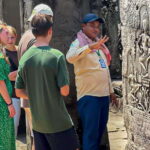
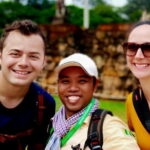
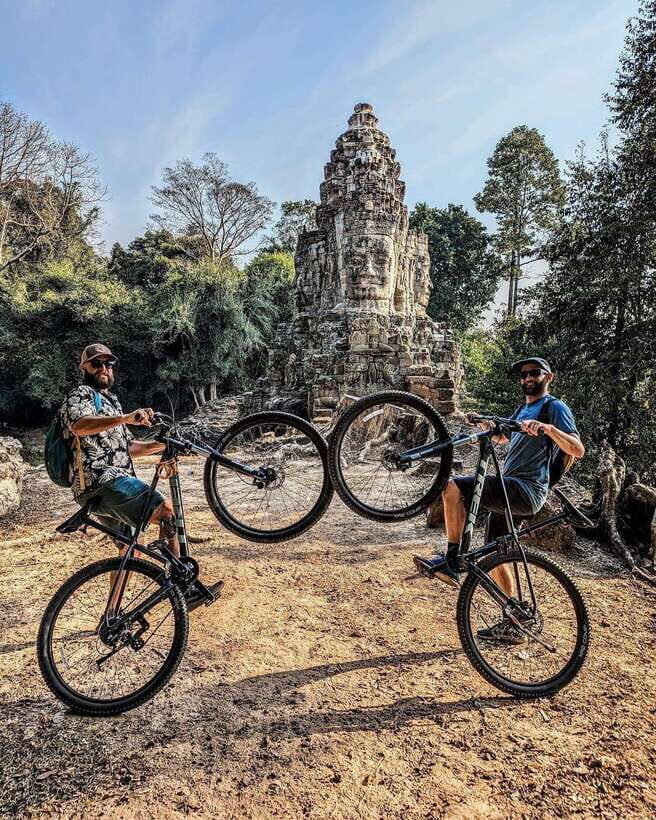
What I really like is how the tour uses modern Giant mountain bikes with disc brakes, large gear ranges, and front suspension. And the guide side is a big deal: guides like Pok and Meam do a great job connecting temple details to what you’re actually looking at, and they’re especially useful with photos along the way.
One thing to plan for: the temple pass isn’t included, so your day has an extra purchase to handle. Also, you’re biking on hard-packed dirt with some paved sections, so it’s not a casual stroller pace.
In This Review
- Key points worth knowing before you go
- A 7-hour Angkor route that feels built for real pacing
- Bikes, safety, and the terrain you’ll cover
- Angkor Wat first: where the day’s tone gets set
- Ta Prohm: roots, ruins, and the movie connection
- Lunch at 11:30: a break that keeps you on schedule
- Ta Nei Temple: the jungle ruins stop that spreads out the crowds
- Angkor Thom’s East Gate, Bayon faces, and Jayavarman VII
- Terrace of Elephants: watching the center of the action
- Price and logistics: what $55 buys you (and what it doesn’t)
- Who this tour fits best
- Should you book this Angkor Wat Bike Tour with Lunch Included?
- FAQ
- What’s the duration of the Angkor Wat bike tour with lunch?
- How much does it cost?
- Is lunch included?
- What’s included in the price besides the guide?
- Do I need a temple pass?
- What kind of bikes do you ride?
- Is the tour flexible if my plans change?
Key points worth knowing before you go
- Small group size (8 max) keeps the ride and photo stops from turning into a traffic jam.
- Hotel pickup and drop-off by tuk-tuk or car makes the day feel smooth right from 8:30 am.
- Giant bikes with disc brakes and suspension mean you’ll handle the dirt roads with less strain.
- Ta Prohm, Bayon, and Angkor Thom are packed into one route so you don’t waste time backtracking.
- Lunch plus water and fresh fruit helps you stay fueled for the second half.
- Support transportation follows along, which adds comfort if you need a breather.
A 7-hour Angkor route that feels built for real pacing
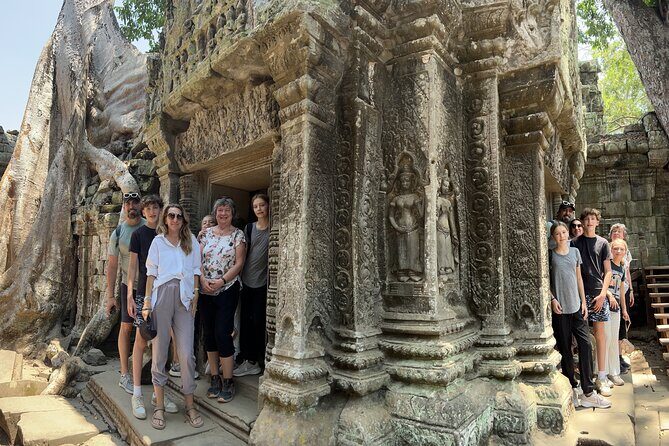
This is a full morning-to-afternoon tour that starts at 8:30 am with hotel pickup in a tuk-tuk or car. You’re out long enough to see multiple temple zones, but structured enough that you won’t feel like you’re guessing your way around Angkor’s vast layout.
The small group limit of 8 matters more than it sounds. Fewer people means easier stops at viewpoints, and you’re more likely to get practical answers from your guide instead of listening in the back of a crowd.
You also get a defined rhythm: big monuments first, then quieter jungle sections after lunch, then the Angkor Thom core with Bayon and the elephant terrace. That sequence helps because your eyes start “reading” carvings and symbols faster as the day goes on.
You can also read our reviews of more cycling tours in Siem Reap
Bikes, safety, and the terrain you’ll cover
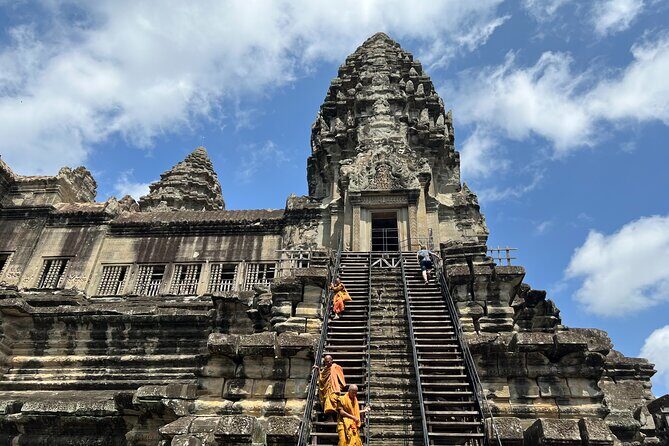
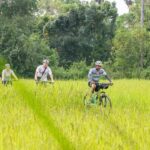
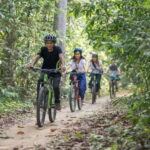
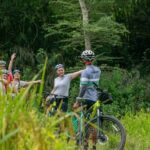
You bike on hard-packed dirt roads with some paved sections, and the overall traffic on these routes is described as minimal. That’s a good match for the bike spec here: modern mountain bikes with front suspension, disc brakes, and good gearing for changing surfaces.
Helmets are included, along with a bottle of water. That little bundle helps because you won’t be scrambling for basics right after pickup.
There’s also support transportation. You don’t have to pedal every single meter like you’re training for a race. The support vehicle means the tour can keep moving while still letting you ride at a comfortable effort level.
Practical tip: if you’re nervous about shifting gears or braking on dirt, take a few minutes at the start to get comfortable. With disc brakes, you’ll have more control than you might expect on loose ground.
Angkor Wat first: where the day’s tone gets set
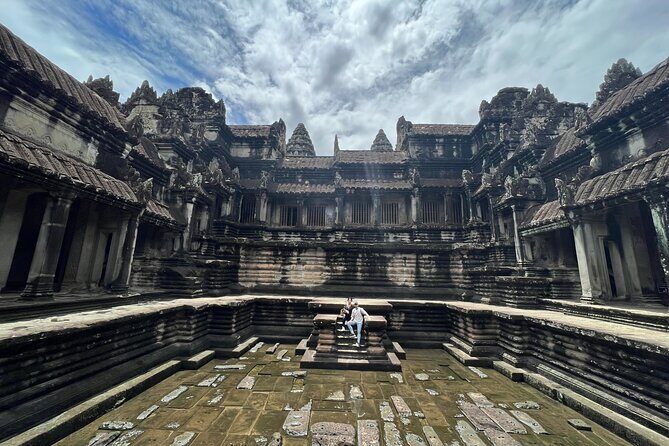
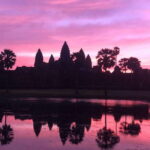
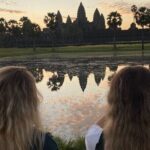
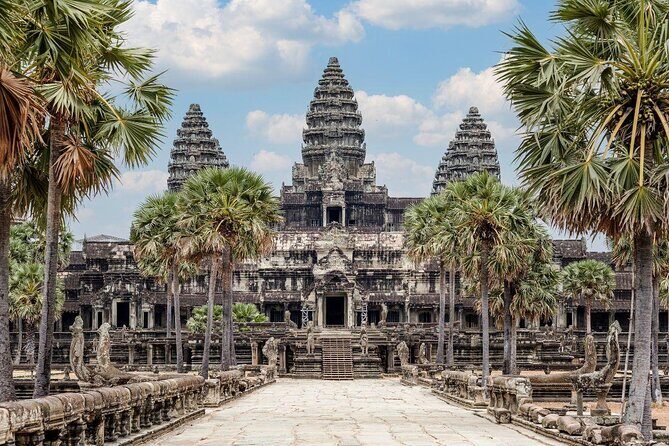
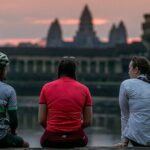
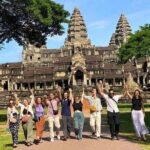
The tour begins at Angkor Wat, described as the greatest of the Khmer temples and a masterpiece of the entire Khmer tradition. Even if you don’t know the exact meanings of every carving, you’ll feel the scale immediately—this is the place where Angkor’s “language” becomes obvious.
You’re there early enough to get your bearings before the day gets thick. And because this tour is built around cycling, it’s easier to go from one temple zone to another without losing the day to long detours.
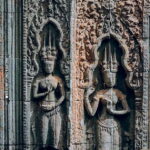
What to look for: stone carvings and the visual storytelling style you see across the complex. Your guide can point out details that most people miss when they’re just taking photos and moving on.
A possible drawback here is crowd energy. Angkor Wat is a major draw, so you still need patience. The upside is that your day’s structure keeps you from staying stuck in one place too long.
Ta Prohm: roots, ruins, and the movie connection
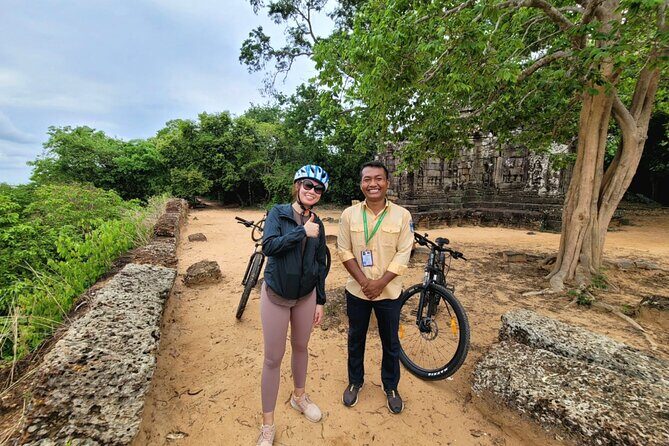
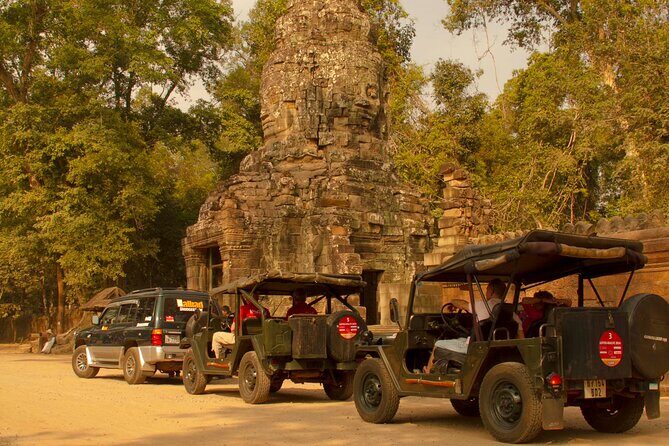
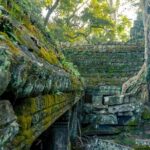
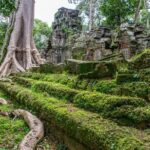
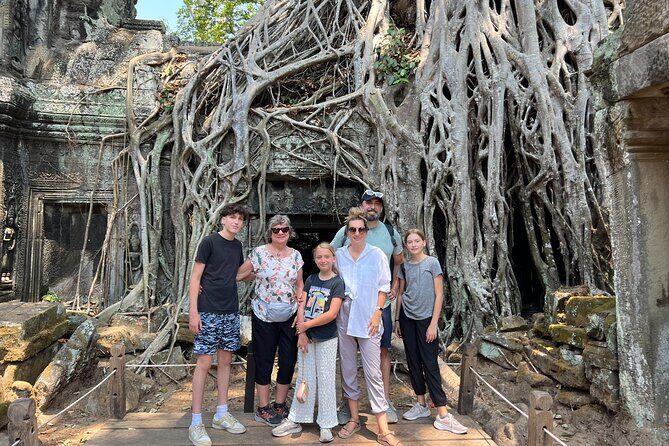
After Angkor Wat, the plan is to start cycling and head toward Ta Prohm around 10:00 am. This is the temple where trees intertwine their trunks with the ancient structures—an image that looks dramatic in person, not just on postcards.
You’ll also get the fun film tie-in: Ta Prohm is known as a filming location for a Tomb Raider movie starring Angelina Jolie. Even if you’re not a movie fan, it helps as a memory hook. You can point at the scene and think, yes, this is why the set designers went looking here.
The biking element helps. Ta Prohm tends to feel crowded inside the main areas, but arriving by bike lets you experience the route leading in through a more varied, atmospheric journey.
One small consideration: for some stops, you’ll want to keep your eyes up and your footing steady. The tour involves cycling through mixed surfaces, and temple areas require walking and standing in spots that can be uneven.
Lunch at 11:30: a break that keeps you on schedule
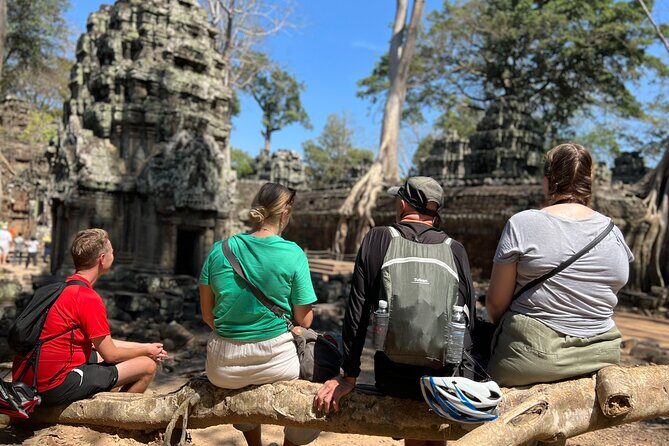
At 11:30 am, you’ll stop for lunch at a local restaurant. This is not a vague “snack and go” break. The stop is described as clean, and the entrees are considered very good.
You get water with your tour basics, then you’ll fuel up for the second half when the ride gets into less-visited terrain. Lunch timing matters here. If you push the big sightseeing too far without a real break, the second half becomes slower and less enjoyable.
After the meal, you’ll have enough momentum to ride on without feeling stuffed or exhausted. That balance is part of why this tour works well for people who are staying a short time in Siem Reap and want an efficient Angkor day.
A few more Siem Reap tours and experiences worth a look
Ta Nei Temple: the jungle ruins stop that spreads out the crowds

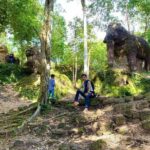
Around 1:00 pm, the cycling continues to Ta Nei Temple, described as a ruined temple in the jungle that many tourists can’t see. This is the part of the route that changes your pace from “main monument mode” to “wandering-with-purpose mode.”
Because it’s quieter and less central than the big names, you’ll likely feel a different atmosphere. The jungle setting changes how you look at stone—your eyes notice edges, erosion, and fragments that might not stand out as much when everything around you is a wall of tour groups.
This stop is also a good reminder that Angkor isn’t only the famous silhouettes you see in travel photos. Some of the best moments happen when you step into a less obvious pocket.
Practical expectation: you’ll still be moving—this is a bike tour. If you love taking time and lingering, you’ll need to balance that desire with the tour’s flow and end time.
Angkor Thom’s East Gate, Bayon faces, and Jayavarman VII
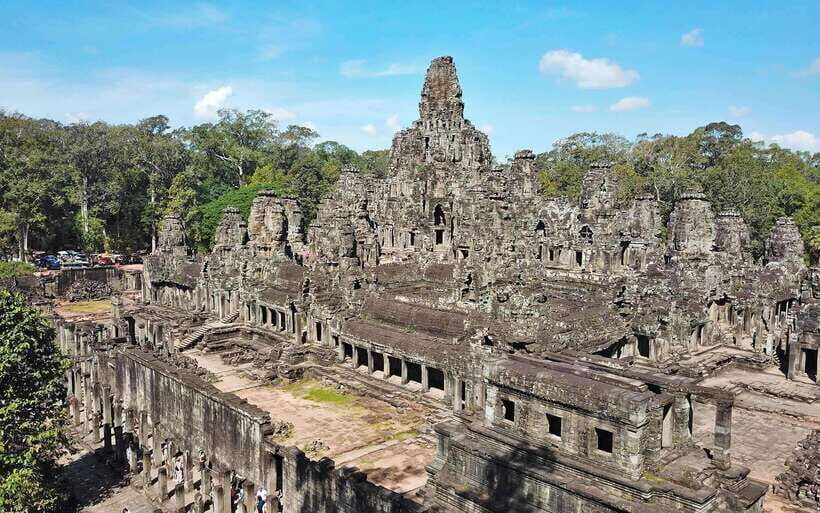
Next comes the east gate of Angkor Thom, followed by Bayon Temple. You reach this segment around 2:00 pm. Bayon is built around the famous stone faces: smiling heads of the Buddha, shown from multiple angles across the temple.
This stop isn’t just about the photo. The route description frames Bayon as the state temple of the Mahayana Buddhist king Jayavarman VII and highlights the stone facing of Avalokiteshvara. That gives you a way to connect what you see to what the temple represented in its time.
Why this matters: when you understand even a few anchor points, the carvings start to feel less random. You stop thinking of Bayon as one huge face photo and start noticing how the temple layout guides your movement.
Terrace of Elephants: watching the center of the action
After Bayon, the tour takes you to the Terrace of Elephants, described as the main terrace where the king sits to observe elephant training. You’re seeing a specific Angkor political-and-ceremonial setting, not just a standalone ruin.
This also helps the day end with weight. By the time you reach this terrace, you’ve covered big names, forest-time, and then the dense icon world of Angkor Thom. The Terrace of Elephants gives you a final “here’s how power worked” moment.
And then the timing stays considerate: the tour ends around 3:00 pm.
Price and logistics: what $55 buys you (and what it doesn’t)
At $55 per person for a 7-hour day, this is strong value if you want a guided Angkor overview without spending the whole time on tuk-tuk transfers. Your included package covers the parts that add up fast:
- professional English-speaking guide
- modern Giant bikes with helmet
- water, lunch, and fresh fruits
- support transportation
- hotel pickup and drop-off by tuk-tuk or car
The big missing piece is the temple pass. Plan for that cost separately.
To judge value fairly, think about what you’re not paying for: bike rental, helmet, and guided routing between major temple zones, plus the structured lunch break. If you were to do Angkor alone, you’d still be renting bikes or hiring transport and paying for your own guide time.
One more logistics detail worth noting: the tour runs with a start time (8:30 am) and a small group limit. If you’re traveling with tight plans or limited time in Siem Reap, this schedule can be a lifesaver.
Who this tour fits best
This bike tour makes sense if you:
- want a guided Angkor overview with fewer long transfers
- like being active without doing a full-day endurance ride
- appreciate a guide who can explain what you’re seeing (Pok and Meam are specifically noted for strong communication and photo help)
- would rather see a mix of iconic temples and a quieter jungle ruin
It might be less ideal if you:
- want a slow, linger-forever temple day (this is still a paced route)
- don’t feel comfortable with cycling on hard-packed dirt
- haven’t budgeted for the temple pass
Should you book this Angkor Wat Bike Tour with Lunch Included?
If your goal is a smart Angkor day with real structure, I’d lean yes. The combination of quality bikes, a professional English guide, and included lunch and fruit turns this into a low-stress way to cover multiple temple zones in one go.
Book it especially if you’re short on time in Siem Reap and you want to leave feeling you understood the complex, not just photographed it. The small group size and support transportation also help keep the experience practical.
Only pause if you’re trying to minimize extra costs, since the temple pass isn’t included, or if cycling on mixed surfaces doesn’t fit your comfort level. Otherwise, this is a very workable way to see Angkor while staying out in the open air for the right reasons.
FAQ
What’s the duration of the Angkor Wat bike tour with lunch?
The tour lasts 7 hours, starting at 8:30 am and ending around 3:00 pm.
How much does it cost?
It’s $55 per person.
Is lunch included?
Yes. Lunch is included at a local restaurant during the middle of the tour, and fresh fruits are provided at the end.
What’s included in the price besides the guide?
Included items are a professional English-speaking guide, modern mountain bikes (Giant) with disc brakes and front suspension, helmet, bottle of water, lunch, fresh fruits, support transportation, and hotel pickup/drop-off by tuk-tuk or car.
Do I need a temple pass?
Yes. The temple pass is not included, so you’ll need to arrange it separately.
What kind of bikes do you ride?
You’ll use modern, high-quality Giant mountain bikes with large gear sets, disc brakes, and good front suspension, plus a helmet.
Is the tour flexible if my plans change?
You have free cancellation up to 24 hours in advance for a full refund, and you can reserve now and pay later.