REVIEW · SIEM REAP
Angkor Wat Day Tours And Sunset
Book on Viator →Operated by Tip Top Tuk Tuk · Bookable on Viator
You can feel Angkor Wat before you even arrive. This day tour strings together Khmer highlights in a tight, private tuktuk schedule, then hands you the best payoff: sunset over the temples. It’s the kind of structured day that helps you see a lot without feeling rushed, even with an 8-to-9-hour time frame.
What I like most is how the route hits the big hitters in smart order. You get a focused first stop at Angkor Wat (with plenty of time to look up close), and you also get the jungle-temple contrast at Ta Prohm, famously tied to the Tomb Raider look.
The one thing to keep in mind is that the day can feel long and you’ll be on your feet a lot. Also, temple entrance fees are not included, so your final cost will depend on paying the full-day pass (37 USD per person).
In This Review
- Key things that make this tour work
- Siem Reap pickup at 9:30 and the private tuktuk rhythm
- Angkor Wat: the first stop and why timing matters
- Banteay Kdei: monk cells, tree roots, and the Bayon ramp-up
- Ta Prohm: Tomb Raider energy without the long detour
- Ta Keo: the unfinished pyramid with dramatic views
- Bayon Temple: 54 towers and the story carved on stone
- Phnom Bakheng and sunset: the payoff view over Angkor Wat
- Price and value: what 18 USD per group really buys
- The driver experience: what the best reviews highlight
- What to wear and how to handle the day
- Who this tour fits best
- Should you book Angkor Wat Day Tours And Sunset?
- FAQ
- What time is pickup in Siem Reap?
- How long is the tour?
- Are temple entrance fees included?
- Is there a tour guide included?
- Is the tour private?
- What should I wear to the temples?
Key things that make this tour work
- Private pickup and hotel drop-off in Siem Reap, with a driver who handles the driving so you can focus on temples
- Angkor Wat first, when the site is still fresh and your photos tend to look cleaner
- Ta Prohm with the Tomb Raider effect, plus the contrast of Ta Keo’s unfinished pyramid
- Banteay Kdei and Bayon for the “tree roots on stone” look and the 54 tower faces
- Phnom Bakheng for sunset, an old hilltop temple with direct views toward Angkor Wat
- Temple information included, but you should plan on learning from your driver’s explanations more than a formal guide
Siem Reap pickup at 9:30 and the private tuktuk rhythm
This tour runs like a proper day trip: you’re picked up from your Siem Reap hotel at 9:30 am, and the vehicle is set up for a group of up to 4. The private setup matters. You’re not stuck waiting for other people to return, and it makes it easier to move at the pace that matches your walking comfort.
The driver is English-speaking and the tour includes cool bottled water plus temple information. That’s a nice baseline, because Angkor is big and signage is not always your friend. Having someone local who can point out what you’re looking at keeps the day from turning into a checklist.
This is also an all-weather schedule. If it rains, you still go, so dress for Cambodia’s weather swings. Comfortable walking shoes are a must—temple walkways and stairs can be uneven, and you’ll cover a lot of ground.
You can also read our reviews of more evening experiences in Siem Reap

Angkor Wat: the first stop and why timing matters
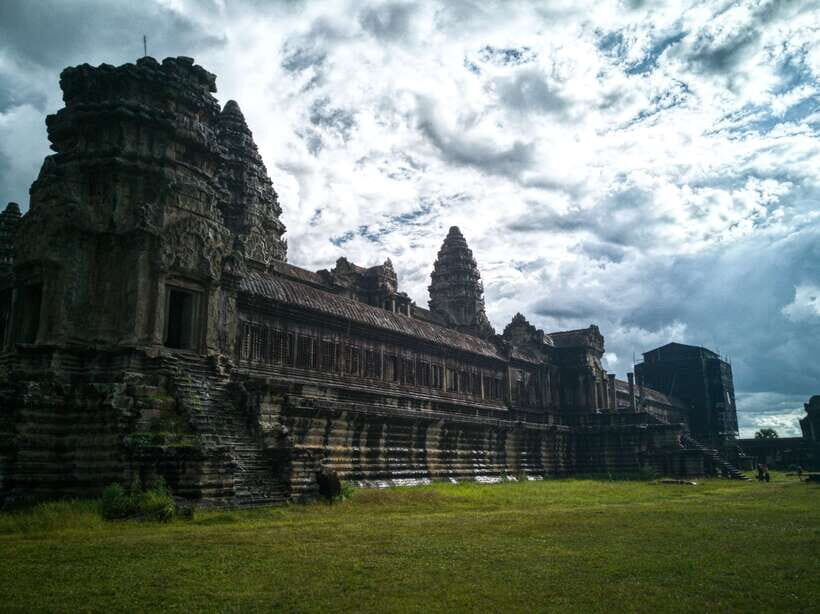
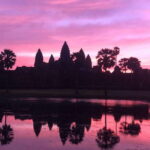
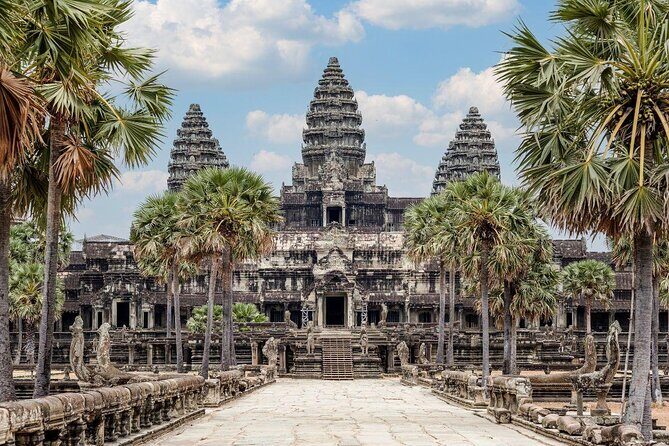
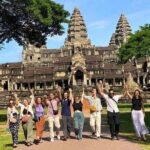
Angkor Wat is the star, and you start there. You spend about 2 hours at the temple complex, and you’ll be looking at one of the world’s largest religious structures—roughly 400 acres (160 hectares)—with Khmer architecture at its high point. The site dates to the first half of the 12th century (around 1113 to 1150).
What I love about tackling Angkor Wat first is that your eyes get trained early. You’ll notice the changes in scale: wide causeways, layers of courtyards, and the way the whole design guides your movement. Even if you’ve seen photos, being in the actual space makes the proportions feel real.
You’ll also get a feel for why this place matters beyond aesthetics. The temple is both a spiritual center and a statement of power from the Khmer Empire era. If you enjoy history through visuals, this is where you can connect the dots fastest.
Consideration: the temple entrance ticket is not included, and you’ll want to budget for the full-day temple pass at the standard rate listed for this tour. Plan for that so you don’t lose momentum mid-day.
Banteay Kdei: monk cells, tree roots, and the Bayon ramp-up
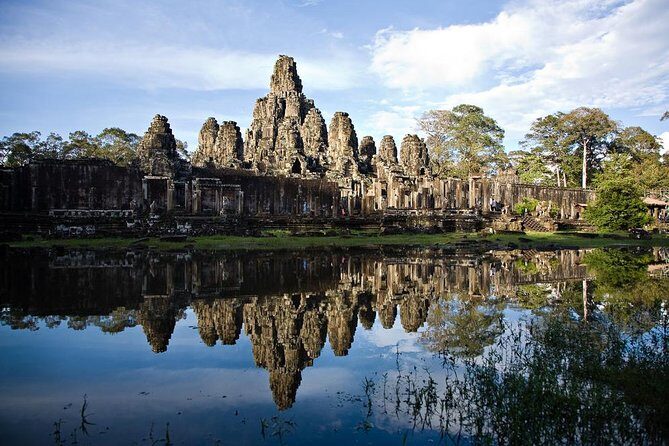
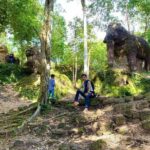
Next up is Banteay Kdei for about 45 minutes. This is the stop where Angkor starts looking like a living puzzle. The temple is known as the citadel of monks’ cells, and it’s partially swallowed by nature—especially the “silk cotton tree roots weaving through stone” effect.
You don’t just get pretty ruins here. You get a sense of how time changes architecture in Cambodia. The roots and broken walls create a different kind of frame around the temple remains, so your photos look more organic than the perfectly cleaned-up areas.
Then the day keeps building toward the next big spectacle: Bayon. Even though Bayon is its own stop later, Banteay Kdei sets your expectations for what comes next: more faces, more towers, and more carvings tied to Khmer life and beliefs.
Ta Prohm: Tomb Raider energy without the long detour
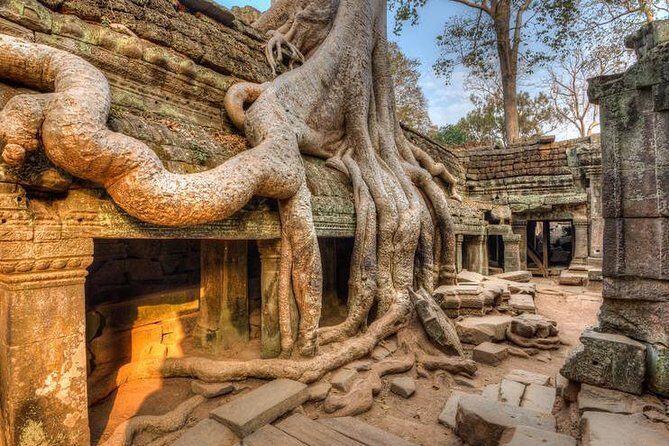
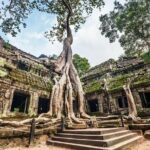
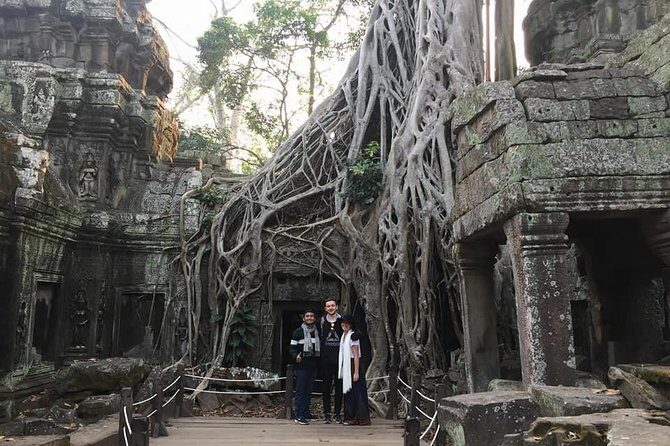
You’ll have about 2 minutes at Ta Prohm in the schedule, which tells you one thing: this isn’t a “slow photography session” version of Ta Prohm. It’s a quick hit, meant to get you to the classic view and the most recognizable jungle-overgrown areas.
Ta Prohm is the temple people instantly recognize because it became the Tomb Raider look, made famous through the 2001 film connection. Even if you’re not a movie fan, Ta Prohm works because the temple and trees feel like they’re fighting for the same space.
Practical tip: Go in knowing you’ll want at least one decent wide-angle photo and one close-up detail shot. If you try to do everything in a super short window, you’ll rush. If you focus on just a couple of key angles, you’ll leave happier.
Ta Keo: the unfinished pyramid with dramatic views
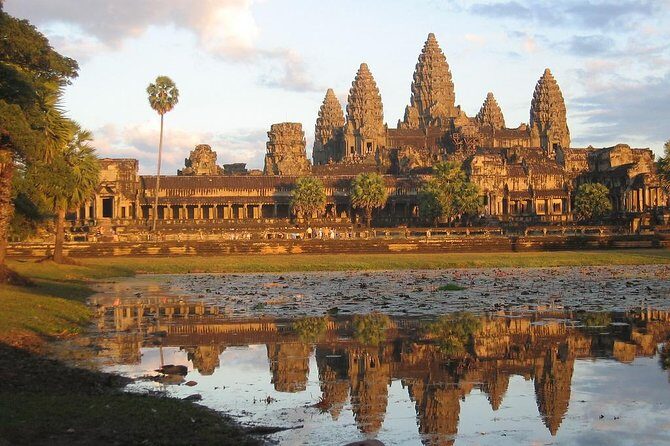
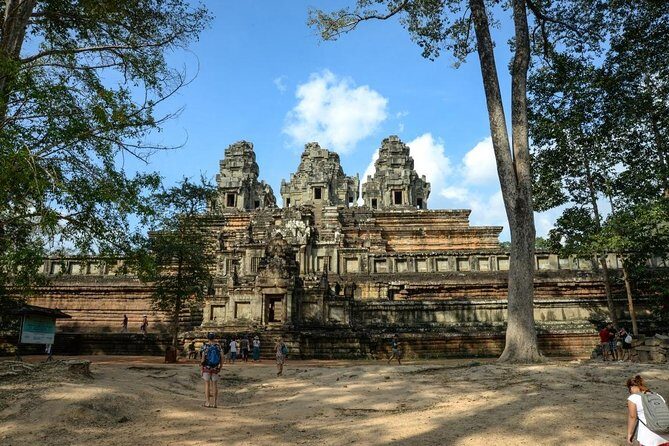
After Ta Prohm comes Ta Keo for around 30 minutes. This one is different from most Angkor temples because it was never finished. You get a square, layered-pyramid shape that feels more severe and less “completed,” which can be a refreshing change after all the restoration and detailed towers.
The benefit of Ta Keo is the climb. The terraced structure gives you higher vantage points, and that matters because Angkor often reads best from above. You’ll get views over the jungle areas around the temple, which gives the whole site a wider context.
Consideration: if you dislike stairs or slopes, keep your pace steady and take breaks. This is one of the spots where your body notices the day more.

Bayon Temple: 54 towers and the story carved on stone
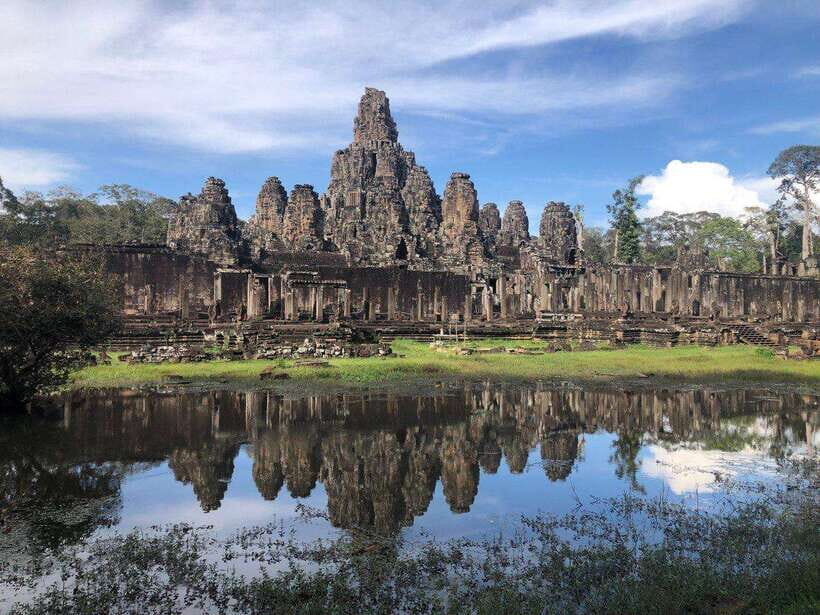
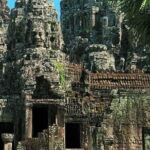
You spend about 2 hours at Bayon Temple, and this is where the tour gives you real “wow” plus meaning. Bayon was the first and only Buddhist temple constructed by the Angkor (Khmer) Empire, and the design is packed with story.
The most famous element is the 54 towers decorated with more than 200 enigmatic smiling faces. You’ll feel that effect quickly—faces on every side means you never really step into a single “front view.” Instead, the carvings seem to watch you from all directions as you move through the complex.
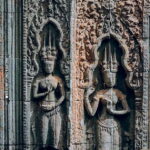
Bayon also has bas-reliefs depicting major events like battles and scenes from everyday life. That’s a big deal for value. You don’t just see monuments; you start seeing how life looked and what people recorded as important.
This is a great place to slow down slightly. If you give your eyes a few minutes, the reliefs start to make sense as snapshots of a world that existed centuries ago.
Phnom Bakheng and sunset: the payoff view over Angkor Wat
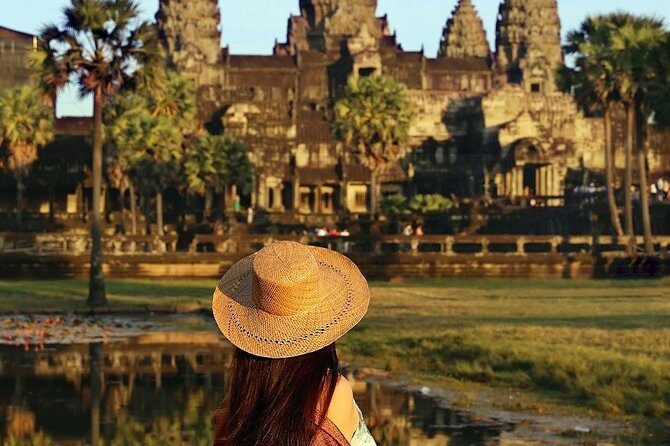
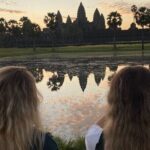
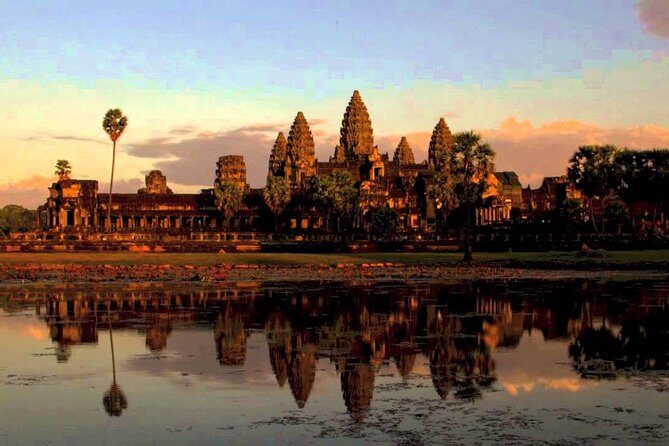
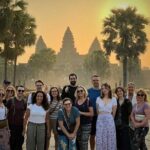
The final stop is Phnom Bakheng, timed for sunset viewing, and it lasts about 2 hours. Phnom Bakheng is a hilltop temple built hundreds of years before Angkor Wat, and it’s also one of the best sunset spots because it overlooks Angkor Wat itself.
This is the emotional reason to book the tour. The view from the hill changes as the light fades, and your photos get better as the sky shifts. The temple silhouettes and the softening shadows feel like the Angkor you’ve seen in postcards—but better, because you’re there while it’s happening.
A gentle reminder: sunset viewpoints mean you’ll want to plan your stamina. The hilltop area involves walking and likely some stairs. Wear shoes you can grip, and keep water handy even though you get bottled water earlier in the day.
Price and value: what 18 USD per group really buys
The headline price is 18 USD per group (up to 4), with an average booking time of about 10 days in advance. That’s a low starting point, and it makes sense because this price covers the vehicle and core tour services, not the temple entry.
Here’s the key part: temple entrance fees are not included. The tour lists a 1-day temple pass at 37 USD per person covering all the temples. So the realistic cost for a group looks like:
- Your 18 USD per group for the tour itself
- Plus 37 USD per person for the entrance pass
Also, there’s no formal tours guide included. You do get an English-speaking driver and temple information, which can be enough if you’re comfortable learning from a driver’s explanations. If you want a deep, structured guide lecture, you might find yourself wanting more than what’s listed as included.
Still, for many people, the value is strong. You’re getting a full day routing with hotel pickup/drop-off, and you’re paying less for the vehicle portion than you would if you booked multiple separate transfers.
The driver experience: what the best reviews highlight
The most praised part of this tour is the human factor: how the driver shows up, explains what you’re seeing, and makes you feel safe in Siem Reap traffic.
Several reviews single out drivers named Chung, Chuong/Chuon, and Chour Sin for being friendly, cooperative, and very knowledgeable about Khmer history and temple context. One review praises a driver who reached the hotel early and guided carefully, while another emphasizes that the driver knew good times and spots to visit to reduce crowd pressure.
There’s also a theme of comfort and safety. Reviews mention feeling completely safe and at ease, and one even notes that the driver helped with extra local plans like Pub Street and dinner suggestions outside the tour timeline. Another highlights a driver who acted as a photographer type—helping with shots and details—and even finding someone after they got turned around.
What you should take from that: this tour can be as good as the driver you get. The tour provides the structure, but the experience quality depends on the person in the tuktuk. If you’re booking, be clear about what you care about: fewer crowds, photography, or deeper temple explanations.
What to wear and how to handle the day
This is smart-casual territory. The dress code asks for shoulders covered and trousers or knee-length pants/skirts. You’ll also want to respect that these are ancient religious grounds, so skip anything too short or too revealing.
Then go practical:
- Bring comfortable walking shoes
- Dress for heat and rain since it operates in all weather
- Keep a light layer for temple shade and AC breaks between stops
- Pace yourself, especially if you plan to climb at Ta Keo and then walk at Phnom Bakheng
Because the tour lasts 8 to 9 hours, your body matters as much as your itinerary. Moderate physical fitness is recommended, and that matches reality: you’re not sprinting between stops, but you are moving for hours.
Who this tour fits best
This is a great fit if you want:
- A single-day circuit through Angkor highlights, without planning the route yourself
- A private experience for up to 4 people
- A driver-led day with temple context, plus a classic sunset finish
It’s also ideal for first-timers. Angkor can feel overwhelming because everything looks impressive. Starting at Angkor Wat and then building toward Bayon and the sunset viewpoint helps you understand what you’re seeing as the day progresses.
If you want a slow, in-depth art-history tour where you spend extra time reading carvings and learning every detail, you might prefer a tour with a dedicated guide. Since this one doesn’t list a separate guide, you’ll need to be okay with learning through the driver and temple information.
Should you book Angkor Wat Day Tours And Sunset?
Yes—if you want an efficient, feel-good Angkor day with a sunset that actually delivers the payoff. The private pickup, the planned sequence of temples, and the fact that the driver is English-speaking make this a solid value play, especially when you’re traveling in a group of 2 to 4.
I’d book it if you:
- Want to see Angkor Wat, Ta Prohm, Bayon, and end at Phnom Bakheng
- Like learning from a driver and prefer structure over wandering
- Are comfortable handling temple walking and some climbing
I’d hesitate if:
- You strongly want a formal tours guide for deep explanations (since one is not included)
- You don’t want to pay on top for the entrance pass at 37 USD per person
If you’re planning your first Angkor day, this tour hits the right mix of iconic sights plus practical pacing.
FAQ
What time is pickup in Siem Reap?
Pickup is at 9:30 am from your Siem Reap hotel. The driver then takes you through the temple route and back afterward.
How long is the tour?
The duration is listed as 8 to 9 hours (approx.).
Are temple entrance fees included?
No. Temple entrance fees are not included. The tour lists a 1-day pass at 37 USD per person covering all the temples.
Is there a tour guide included?
A tours guide is not included. You’ll have an English-speaking driver and you’ll receive temple information.
Is the tour private?
Yes. This is a private tour/activity with only your group participating (up to 4).
What should I wear to the temples?
Dress smart casual. Cover shoulders and wear trousers or knee-length pants or skirts. Bring comfortable walking shoes, since you’ll do a lot of walking.