Sunrise at Angkor feels unreal. This private tour is built around a very early start, getting you into Angkor Wat when the light is soft and the reflections are at their best. Then you keep going through the big Angkor landmarks, with time in the iconic gates and faces that most people rush past.
I really like the private setup here. You get hotel pickup and drop-off in an air-conditioned vehicle, plus cold drinking water before temple time gets sweaty and crowded. I also like that the guide is licensed and speaks English, so the stones come with stories instead of just a photo-op.
One drawback to keep in mind is timing. If pickup runs late, the sunrise viewing spot can get tough fast, and the guide’s English level may not be consistent.
In This Review
- Key points worth knowing
- 4:30 AM Sunrise: How the Morning Plan Works
- Entering Angkor Wat Before the Crowds
- South Gate of Angkor Thom: The Wall and the Faces
- Bayon Temple and Its 49 Towers
- Ta Prohm: When Trees Take Over the Stones
- The Countryside Add-Ons: Grape Wine, Wat Damrei Sor, Phnom Banan
- Bamboo Train and Battambang Clues: Confirm the Full Plan
- Price and Value: Is $49 a Good Deal?
- Pickup, Transport, and the Reality of a Private Group
- English Guide Quality: What to Watch For
- Practical Tips for a Smooth Sunrise Day
- Who This Sunrise Tour Suits Best
- Should You Book This $49 Private Sunrise Tour?
- FAQ
- What time does this sunrise tour start?
- How long is the tour?
- Is the entrance fee included?
- What’s included in the price?
- How big is the group for a private tour?
- What’s not included besides entrance fees?
Key points worth knowing
- 4:30 am start to catch dawn light at Angkor Wat
- Private group (min 1, max 15) with only your party joining you
- Licensed English-speaking guide to explain what you’re seeing
- A/C transport + cold water to stay comfortable on an early morning
- Countryside add-ons like grape wine tasting and viewpoints at Wat Damrei Sor and Phnom Banan
4:30 AM Sunrise: How the Morning Plan Works
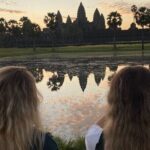
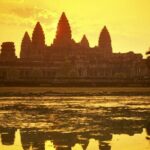
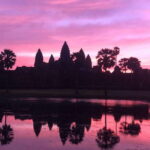
This tour starts at 4:30 am, which is early enough that you’ll feel it in your bones, not just your calendar. The payoff is that you’re aiming for the best early color at Angkor Wat, when the temple surfaces look smoother and the reflections have a chance.
The structure is simple and easy to follow: pickup, then temple time in a tight loop, with each stop allotted about an hour (except the first one at Angkor Wat). That matters because sunrise days at Angkor can feel like a race. A planned route helps you spend energy on seeing, not on guessing.
One more practical note: the broader tour description talks about northwest rural Cambodia and even Battambang. Your experience may feel more like a focused Angkor morning with countryside add-ons, so it’s smart to confirm your exact day’s flow with the operator when you book.
You can also read our reviews of more private tours in Siem Reap
Entering Angkor Wat Before the Crowds
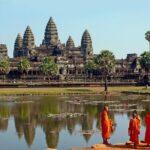
Angkor Wat is the headline, and sunrise is the whole point. At this hour, the stone glows differently, and the temple’s famous reflections in the water have their best shot when the air is calm. You’ll spend about 2 hours here, which gives you time to settle in, look around, and catch the changing light.
Because entrance fees are not included, you’ll want to budget for the ticket separately. You’ll also want to think about what you’ll carry before sunrise—something warm for the early hours, plus a small bag you can keep close while you wander.
A private sunrise tour is often worth it for one reason: you’re not stuck waiting for a big group. You can pause when the light is right and move on before the crowd crush builds into a constant stream.
South Gate of Angkor Thom: The Wall and the Faces
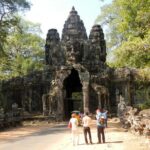
After Angkor Wat, you head to the Angkor Thom South Gate, a dramatic entry packed with symbolism. You’ll see the 108 status of Deva and Asura, and the gate is framed by a very strong defensive wall meant to protect the city.
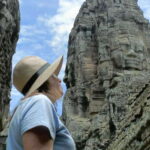
This stop also includes the four faces of Buddha—one of those details that’s easy to miss if you’re just rushing from point to point. With about 1 hour here, you should be able to look up, notice the carvings, and understand how the gate fits into the larger Angkor Thom complex.
What I like about this segment is the pace. It’s not just a quick look at a doorway. It’s a chance to slow down and read the design, especially with an English-speaking guide explaining what the carvings represent.
Bayon Temple and Its 49 Towers
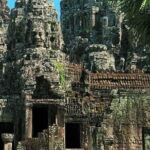
Next is Bayon Temple, known as the mountain of victory, with 49 towers and over 200 faces of Buddha. This is the stop where Angkor shifts from wide views to a more intense, almost staring-at-you feeling. The faces are repeated from different angles, so your perspective changes constantly as you walk.
You’ll get about 1 hour at Bayon. That’s a good chunk of time because the best views aren’t just from one spot. The guide’s commentary helps too, because the towers and faces can seem repetitive until someone explains what you’re looking for.
The challenge at Bayon is practical: people tend to cluster around the most obvious angles for photos. If you want fewer photo bottlenecks, keep moving slightly off the main line and watch how the faces line up as you shift around the temple courtyards.
Ta Prohm: When Trees Take Over the Stones
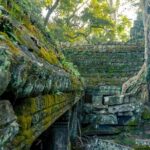
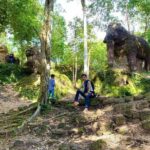
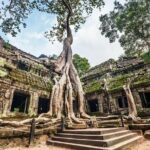
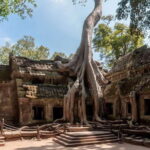
Ta Prohm is famous as the Tomb Raider temple and also as the jungle temple, because trees and roots grow through and around the structures. If you’ve seen photos, you already know the look. The surprise is how much texture you see up close when the roots wrap columns and walls.
You’ll spend about 1 hour here, which is enough time to walk the key areas without feeling rushed. The best approach is to look in three layers: the big view of the building, the roots where they meet stone, and the carvings that show the work done before the jungle moved in.
Be ready for crowds and for uneven footing. Sunrise tours start early, so you might be tempted to move faster than you should. Take a breath, watch your step, and slow down when you notice a particularly unusual root pattern.
A few more Siem Reap tours and experiences worth a look
The Countryside Add-Ons: Grape Wine, Wat Damrei Sor, Phnom Banan
Here’s where the tour tries to feel more than just temples. The highlights include a stop at an orange farm, where you can taste locally-produced Cambodian grape wine. That’s a small cultural detour that breaks up the temple intensity and gives you a sense of rural northwest Cambodia beyond Angkor.
The tour also includes Wat Damrei Sor pagoda and Phnom Banan, a hilltop temple with panoramic views. A viewpoint stop is one of those underrated travel moments. You’ll see why people come to these places—because the setting gives meaning to the temples. Even if you’re not a panorama person, it helps reset your brain after hours of close-up stone details.
Because the exact timing of these countryside stops isn’t spelled out in the short itinerary list, treat this part as something you’ll likely fit after the main Angkor circuit. In other words, you should expect a longer stretch of the day once you move beyond Angkor Wat and Angkor Thom.
Bamboo Train and Battambang Clues: Confirm the Full Plan
The tour description also points to Battambang, a French colonial city, plus a ride on a bamboo train. That’s exciting because it adds a very different kind of Cambodia experience: local life and a transport tradition tied to the countryside.
But the time window listed for the experience is about 6 hours, which is tight if you’re doing a deep dive into a far-out route. So this is where you should do a little homework before you go. When you book, ask the operator to confirm which of the Battambang and countryside elements are included on your exact departure.
If those add-ons are in your final schedule, this is a smart combination: sunrise at the most famous temple, followed by a more hands-on cultural moment. If they’re not, you’ll still have a strong Angkor-focused morning, but you’ll want to adjust expectations.
Price and Value: Is $49 a Good Deal?
At $49.00 per person, this private sunrise tour can feel like great value—especially because hotel pickup and drop-off, an air-conditioned vehicle, a licensed guide, and cold drinking water are included. For many visitors, that “ground support” is what makes the early start manageable.
The trade-off is that entrance fees are not included, and meals aren’t included either. That means your total cost may climb depending on ticket prices and what you choose to eat later. Still, the base price covers the hardest parts to coordinate yourself at dawn.
Also, since this is a private tour with min 1 pax and max 15 pax, your value can improve if you’re traveling with others and sharing the cost. If you’re solo, it can still be worth it, but compare it against other sunrise options that might include tickets or meals.
Pickup, Transport, and the Reality of a Private Group
You’re picked up from your Siem Reap hotel and travel in an air-conditioned vehicle. That’s a genuine comfort benefit because early mornings can get warmer fast once you’re out walking the temple grounds.
The group size has a ceiling of 15. Even with a cap that high, it remains a private experience for your group only. The upside is flexibility: you’re not forced into a huge crowd pace like on some group tours.
Now for the key practical point: sunrise depends on punctuality. If the driver is late, you might lose your chance at the best viewing spot. When you confirm your pickup, ask what time they’ll be at your door and be ready a few minutes early.
English Guide Quality: What to Watch For
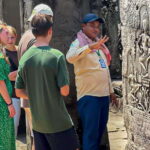
A licensed English-speaking guide is part of the plan, and the right guide can make Angkor feel readable instead of random. The difference shows up in how quickly you understand what you’re seeing—why gates and towers were built, what the carvings mean, and what details to focus on at each stop.
That said, one review pointed to an average English level. So if language matters a lot to you, don’t hesitate to message the operator before booking and ask what kind of English skills you can expect from the guide assigned to your group.
Even with a decent guide, sunrise temples can be loud with movement. Your best strategy is to ask a few clear questions early, then listen for the names and symbols the guide repeats. You’ll remember more and feel like you got your money’s worth.
Practical Tips for a Smooth Sunrise Day
A sunrise tour like this is mostly about prep. Wear something light but bring a layer for the early hours—temperatures can shift fast before midday heat arrives. Bring a small towel or tissue pack because Cambodia temple days can get dusty, even when you’re only walking for an hour at a time.
Plan for uneven ground at Ta Prohm and keep your phone secure when crowds thicken. If reflections matter to you at Angkor Wat, arrive ready to stand still for a few minutes. The early minutes are often the best minutes.
Also, since mobile tickets are included, make sure your phone battery is charged. If you rely on Wi-Fi to open tickets, don’t. Use offline access when possible so nothing slows you down at the entrance.
Who This Sunrise Tour Suits Best
This tour fits best if you want a private Angkor circuit without the stress of organizing transport and timing yourself. The early start is perfect for people who care about light and reflections, not just ticking boxes.
It’s also a good fit for couples and small groups who want a flexible pace—time at Angkor Wat first, then a clear sequence through Angkor Thom South Gate, Bayon, and Ta Prohm. Add-on countryside stops like orange farm wine tasting and viewpoint temples make it feel less like a one-note morning.
If you’re the kind of visitor who expects top-tier English guidance every minute, build in a little margin. The plan is solid, but guide quality can vary.
Should You Book This $49 Private Sunrise Tour?
I’d book this if you want a simple, private early start, hotel pickup, and a structured Angkor route with enough time at each big stop to actually see details. The included A/C transport and cold water also make the very early morning feel less punishing.
I’d think twice if you’re very sensitive to pickup punctuality and language quality. Sunrise is unforgiving, and if you end up starting behind schedule, you may lose some of the best light and reflection time. If you can, confirm pickup timing clearly and ask about the guide’s English level.
If you want temples plus countryside and bamboo train-style experiences, ask the operator to confirm exactly what’s on your day, since the broad description mentions Battambang while the core temple circuit is tightly timed.
FAQ
What time does this sunrise tour start?
It starts at 4:30 am.
How long is the tour?
The duration is about 6 hours.
Is the entrance fee included?
No. Entrance fees are not included.
What’s included in the price?
Hotel pickup and drop-off, a licensed tour guide, an air-conditioned vehicle, and cold drinking water are included. A mobile ticket is also included.
How big is the group for a private tour?
It’s private for your group only, with a minimum of 1 person and a maximum of 15 people.
What’s not included besides entrance fees?
Meals and other personal expenses are not included.