REVIEW · SIEM REAP
Angkor Wat Tour, Explore The Main Temples With Tour Guide
Book on Viator →Operated by Angkor Wat Merge Tour · Bookable on Viator
Sunrise mornings in Siem Reap feel extra worth it. This guided Angkor Wat tour takes you through the park’s best-known faces and most photogenic ruins, with an English-speaking guide steering the day so you don’t miss the story behind the stones. You’ll ride in an air-conditioned minibus, stop at multiple temple sites, and get water along the way.
What I really like is the temple-by-temple guidance—you’re not just wandering, you’re learning what you’re seeing and how the sites connect. I also like that it starts with early pickup and builds toward Angkor Wat first, which is a smart way to experience the grounds before the day fully ramps up.
One consideration: you pay entrance fees separately (and the tour can involve a good amount of walking). If you want a super-casual pace or you dislike stairs and uneven temple paths, plan accordingly.
In This Review
- Key Highlights Worth Booking For
- Siem Reap Pickup and the Comfortable Ride Between Temples
- Angkor Wat First: How the Morning Sets the Tone
- Banteay Kdei: The Citadel of Chambers You Can Hear Yourself Think In
- Ta Prohm: Where Tree Roots Make Ruins Feel Alive
- Bayon Temple and the Faces of Avalokiteshvara
- Tonle Om Gate and the Causeway Stop at Angkor Thom
- Price and Logistics: What the $12.50 Really Buys
- How Hard Is It, and Who Will Like This Pace
- Timing Tips for an 8-Hour Angkor Highlights Day
- Should You Book This Angkor Wat Main Temples Tour?
- FAQ
- What is the duration of the Angkor Wat main temples tour?
- How much does the tour cost per person?
- Are hotel pickup and drop-off included?
- What temples are included in the tour?
- Is the entrance fee included in the tour price?
- Does the tour include transportation?
- Is water included?
- Is there an English-speaking guide?
- Is there a limit on group size?
- Can I cancel for a full refund?
Key Highlights Worth Booking For

- Air-conditioned shared transport between major Angkor sites, plus water included
- Early start from Siem Reap so you reach Angkor Wat in the morning light
- English-speaking guide who adds context and personal storytelling
- Main-temple hit list: Angkor Wat, Banteay Kdei, Ta Prohm, Bayon, and Tonle Om Gate area
- Small-ish group cap (up to 30 people) keeps the day from feeling chaotic
- Guide-led photo moments, including help snapping pictures as you move between stops
Siem Reap Pickup and the Comfortable Ride Between Temples
This is a shared day trip that runs around 8 hours and begins with hotel pickup in Siem Reap. You’ll board an air-conditioned minibus, which matters here because Angkor’s temple circuit eats up time fast. Between sites, that AC break can be the difference between a fun day and a cranky one.
The tour includes pickup and drop-off, plus water during the day. It also includes an English-speaking tour guide, so you get more than a signboard interpretation. The guide is a big deal on this route, because Angkor’s temples can look similar at a glance. With a guide, you get help sorting out what’s ceremonial, what’s defensive, what’s Buddhist, and what reflects different eras of building.
Group size stays capped at up to 30, which usually keeps things organized during entry lines and transitions. And because this is a guided highlights circuit (not a deep archaeological study), you’ll move efficiently from one major landmark to the next.
You can also read our reviews of more guided tours in Siem Reap
Angkor Wat First: How the Morning Sets the Tone
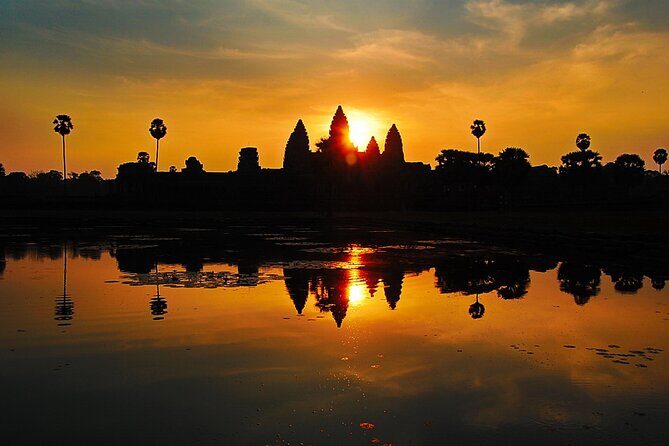
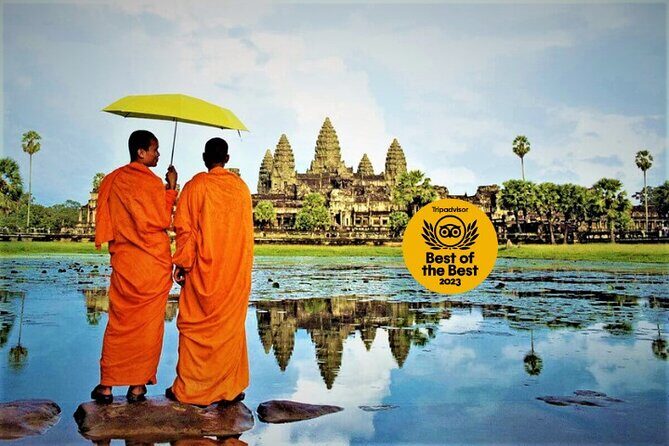
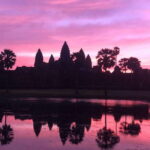
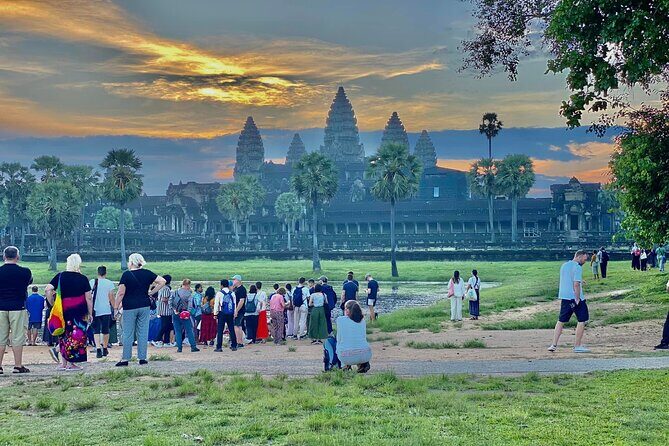
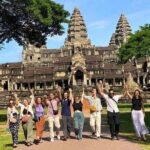
Angkor Wat is the headliner, and this tour places it at the start of your temple day. You’ll have about 3 hours at the park’s main site area. You’ll also handle the entrance tickets on arrival—the tour price doesn’t include the site admission fee.
I love this setup because starting with Angkor Wat helps you get your bearings fast. The scale alone can overwhelm you if you’re seeing it for the first time. With a guide, you’re more likely to notice the big visual logic: how the layout draws your eye, how the carvings and structures connect, and why the site feels so intentional.
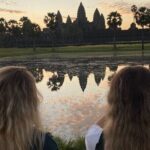
There’s also a practical side to going early. One review specifically mentioned sunrise at Angkor Wat as beautiful, and that tracks with why so many people plan their Angkor mornings this way. Even if sunrise isn’t your main goal, early hours tend to make the whole experience more manageable.
Do note: Angkor Wat is a physical place. Expect stairs, ramps, and long walking segments inside the temple grounds. Wear shoes you can trust on uneven stone and take your time climbing—one careful step beats one rushed slip.
Banteay Kdei: The Citadel of Chambers You Can Hear Yourself Think In
After Angkor Wat, you head to Banteay Kdei, typically for about 1 hour. This temple is described as the “Citadel of Chambers,” and it has a different mood than the big flashier stops. Where Angkor Wat feels monumental and busy, Banteay Kdei feels quieter and more focused.
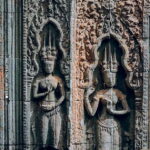
This is a good choice for your day because it breaks up the rhythm. You’re not just repeating the same style of carved stone. Instead, you get a late-12th-century Buddhist monastery atmosphere, plus details that make you slow down. The temple’s unique carvings are a key reason to include it. Even with limited time, this stop can be the one where your brain starts connecting patterns—how decoration, structure, and religious purpose work together.
A drawback: because the scheduled visit here is shorter than Ta Prohm or Angkor Wat, you need to stay attentive. The guide can help you spot the best carvings quickly, so if you drift into autopilot mode, you might miss some of the payoff.
Ta Prohm: Where Tree Roots Make Ruins Feel Alive
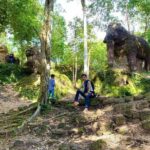
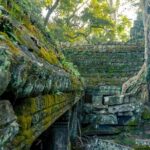
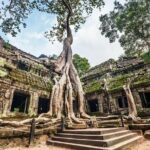
Next up is Ta Prohm, usually around 2 hours. This is one of the most recognizable temples in Cambodia because of the dramatic tree roots threading through the ruins. It’s photogenic in a way that’s hard to explain until you’re standing there. The tour gives you time to wander and absorb it rather than speed through for a single picture.
One of the best things about Ta Prohm on a guided circuit is that the guide helps frame what you’re looking at. The temple is famous for being left largely unrestored, and that’s exactly what gives it its character—the structure looks like it’s holding a living natural takeover. You’ll probably catch yourself shifting your angle repeatedly, because the roots create changing patterns depending on where you stand.
For your comfort and timing, remember this stop can feel more exposed than other temple areas. You’ll want to keep water in mind and move with purpose when it gets crowded in the photo hotspots. If you care about photos, this is the temple where you’ll want to be patient and let the guide show you a few angles before the group funnels into the same spots.
Bayon Temple and the Faces of Avalokiteshvara
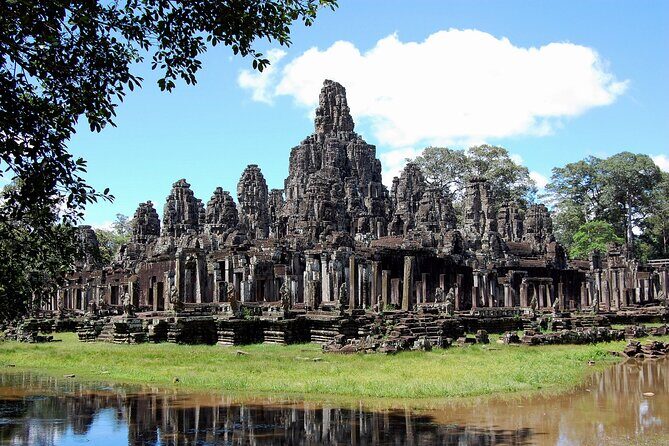
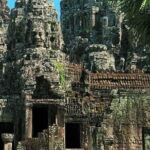
Then you reach Bayon Temple, in the center of Angkor Thom, with about 1 hour on site. Bayon is known for its 54 towers, each decorated with four massive, serene faces of Avalokiteshvara. Even if you’ve seen pictures, those towers hit differently in person. The faces turn the temple into something more like a set of quiet guardians than a pile of stone.
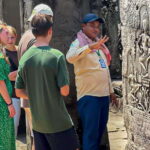
This stop is where a guide really earns their spot. Without context, you might look at the faces and then move on. With context, you start noticing how the temple’s art and layout communicate religious ideas, and how the site fits into the broader Angkor Thom setting.
The guide also helps with carvings you might otherwise gloss over. The day includes time to look at those surface details and connect them back to what the temple represents. If you’re learning on the go, Bayon is one of the most rewarding places to practice seeing symbolism instead of just scenery.
If there’s a downside, it’s crowd pressure during peak hours. You can counter that by using the guide’s pacing: stop where they indicate, listen for what matters, and then take your own time after you’ve got the key landmarks figured out.

Tonle Om Gate and the Causeway Stop at Angkor Thom
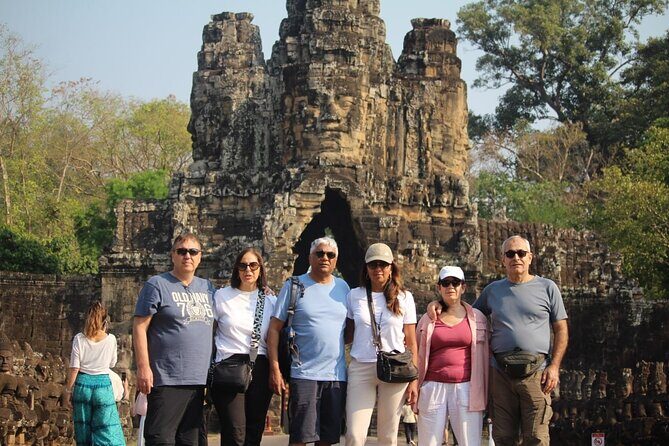
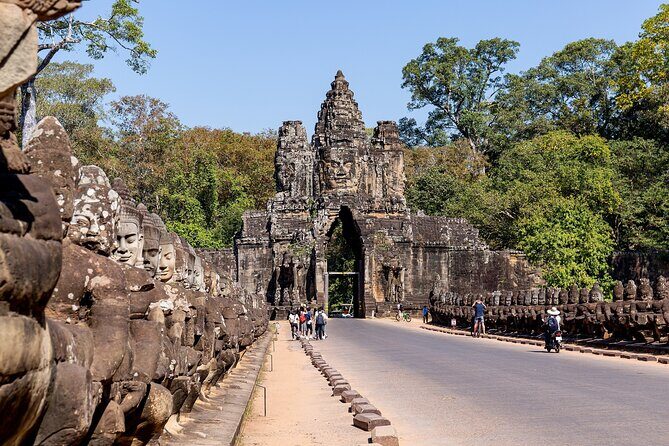
The final scheduled temple-area stop is around 30 minutes at the Tonle Om Gate, which is described as the South Gate of Angkor Thom. You’ll pause at this grand entrance area, flanked by a dramatic causeway lined with statues of gods and demons.
This is a great closing beat for the day because it shifts you from individual temple details back into the bigger “city entrance” feeling. The gate structure and causeway are designed to feel theatrical, and in a short visit you can still get the visual impact.
Because the time is brief, treat this as a stop for orientation and atmosphere, not a slow deep look. You’ll likely spot the most important sculptural elements quickly, and the guide can point out what to focus on so you don’t feel like you’re standing there waiting for the next move.
Price and Logistics: What the $12.50 Really Buys
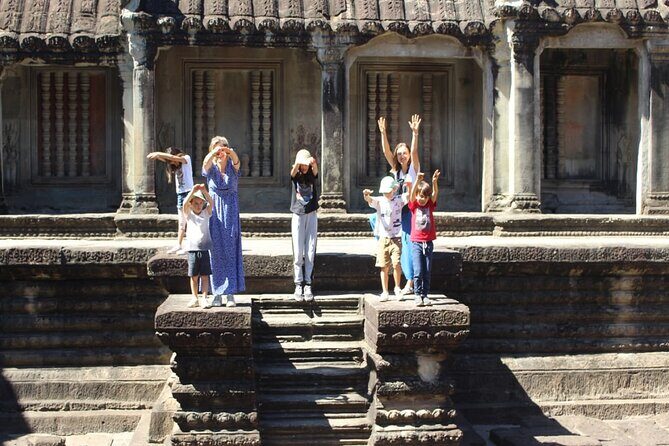
On paper, the tour price is $12.50 per person, with an 8-hour shared group format and included extras like transportation, water, and an English-speaking guide, plus pickup and drop-off. That’s a strong deal for getting a structured day in place.
But the big catch is the entrance fee: $37.00 per person isn’t included. When you add them together, your all-in cost for the day becomes about $49.50 per person, not counting any snacks you buy on the way.
Still, it can be good value, because you’re paying for the guide’s ability to connect the dots across multiple temple stops, not just for transit. If you tried to do this independently, you’d likely spend time figuring out routes, ticketing, and temple timing while also missing interpretation.
This is where the tour’s format helps you. The mobile ticket and guided route keep the day moving, and the group discount angle can make it even better if you’re traveling with a friend or two.
How Hard Is It, and Who Will Like This Pace
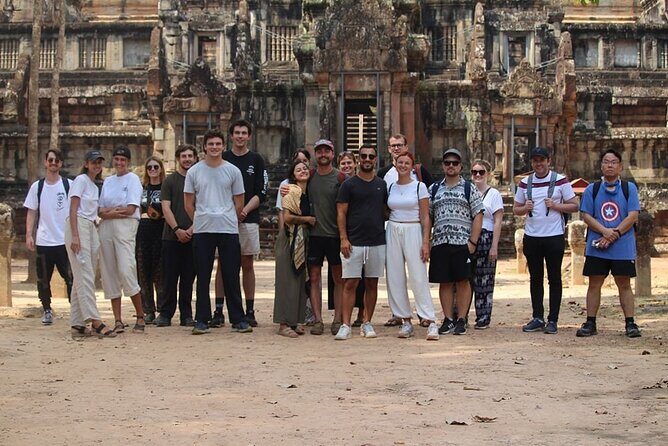
This is the kind of day that looks easy on a map and feels bigger on your legs. The route stacks major sites—Angkor Wat, Banteay Kdei, Ta Prohm, Bayon—and ends with the gate stop. That means a lot of walking, repeated stair climbing, and long stretches standing and looking up.
One review highlighted that the tour is physically challenging but worth it. I’d take that seriously if you’re planning based on comfort, not just curiosity. If you want to linger for long periods inside each temple complex, the schedule may feel tight. If you like a clear itinerary that hits the highlights in a single day, this tour is built for you.
This tour suits you best if:
- you’re visiting for the first time and want the big Angkor highlights
- you value an English-speaking guide to explain what you’re seeing
- you want a set plan that reduces decision fatigue in a crowded UNESCO site
It might not be ideal if you want a slow, independent wander with no schedule.
Timing Tips for an 8-Hour Angkor Highlights Day
Because the tour starts with early pickup, your biggest job is to be ready when they come for you. The day is structured around temple time slots, so showing up late can mess with the pacing for the whole group.
A smart way to enjoy the day is to think in “chapters.” Each stop is a chapter:
- Angkor Wat sets your visual base
- Banteay Kdei slows you down and adds carvings
- Ta Prohm brings the dramatic nature-and-ruins vibe
- Bayon gives you the central faces and city feeling
- Tonle Om Gate closes the loop with ceremonial entrance energy
Also, drink your included water and plan for time in between stops. Even with a minibus between temples, transitions add up.
Finally, if your guide is named Mao (he’s mentioned in the feedback), consider this a bonus. At least some guides on this route are the type who share lots of helpful context and can take or help with photos as you move through each stop.
Should You Book This Angkor Wat Main Temples Tour?
Book it if you want a guided Angkor highlights day that’s efficient, easy to follow, and led by an English-speaking guide. The combination of early Angkor Wat, major stops like Ta Prohm and Bayon, plus transportation and water included makes it a practical way to see a lot without spending your whole day figuring things out.
Skip it or choose a different style if you’re looking for a low-walking pace or you dislike the idea of paying the $37 entrance fee on top. This tour is built for people who want the big temples, the main photo moments, and enough explanation to understand what’s going on.
If that sounds like your style, this is a solid, value-minded choice for a first Angkor visit.
FAQ
What is the duration of the Angkor Wat main temples tour?
It runs for about 8 hours.
How much does the tour cost per person?
The tour price is $12.50 per person.
Are hotel pickup and drop-off included?
Yes, pickup and drop-off from your Siem Reap hotel are included.
What temples are included in the tour?
You’ll visit Angkor Wat, Banteay Kdei, Ta Prohm, Bayon Temple, and you’ll also stop at Tonle Om Gate (South Gate of Angkor Thom).
Is the entrance fee included in the tour price?
No. The admission ticket is listed as $37.00 per person and is not included.
Does the tour include transportation?
Yes. Transportation is included, using an air-conditioned minibus.
Is water included?
Yes, water is included.
Is there an English-speaking guide?
Yes, the tour includes an English speaking tour guide.
Is there a limit on group size?
Yes. The tour has a maximum of 30 travelers.
Can I cancel for a full refund?
Yes. You can cancel up to 24 hours in advance for a full refund. If you cancel less than 24 hours before the start time, you will not be refunded.