REVIEW · SIEM REAP
Explore The Kampong Pluk Floating Village
Book on Viator →Operated by Cambodia Voluntour - Day Tours · Bookable on Viator
A lake village on stilts can feel like magic. This tour is interesting because the term floating is more myth than magic trick. You’ll see why families build around huge seasonal water changes on Tonle Sap and what that means for daily life and work.
I especially like the chance to slow down at stilted houses and learn how a subsistence fishing family lives. I also love the boat time along the lake margins, because that’s when the whole place makes practical sense instead of just looking scenic.
One drawback to consider: timing can be a little fragile if pickup doesn’t line up perfectly. I’d treat the day like an adventure, not a train schedule.
In This Review
- Key highlights you should know before you go
- Kampong Phluk’s big lesson: “floating” is an engineering system
- Morning on Tonle Sap Lake (8:00–12:00): the place that changes everything
- The stilt village visit: what you’ll see up close
- Boat time on the lake margins: the practical highlight
- Artisan School and Old Market: a useful add-on, not the main event
- Price and value: what $166 is really paying for
- Timing, weather, and the one logistics hiccup to plan for
- Who should book this tour, and who might skip it
- Should you book Explore The Kampong Pluk Floating Village?
- FAQ
- What time does this tour start?
- How long is the tour?
- Where is the tour located?
- Is pickup included?
- Are tickets included?
- How big is the group?
- What happens if the weather is bad?
- Can the tour be refunded if I cancel?
- Does the tour include time at Old Market?
- What else is visited besides the floating village?
Key highlights you should know before you go
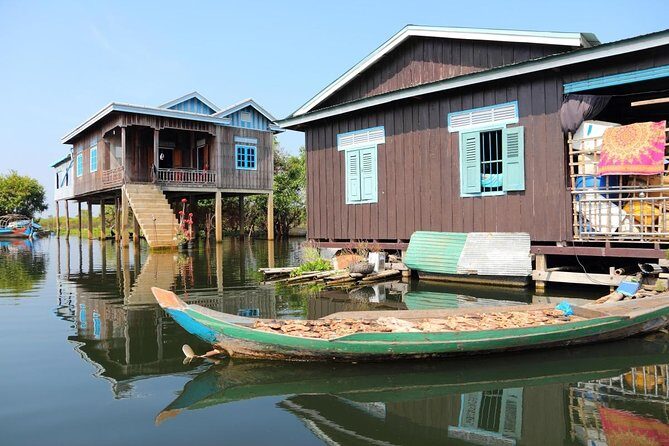
- “Floating” that’s really 8-meter stilts: you’ll understand the engineering behind the illusion when the water rises.
- Tonle Sap Lake first (8:00–12:00): you start on the lake itself, then move into the village experience.
- Boat ride along the margins: it’s the easiest way to get a real sense of where families live and fish.
- Visit stilted houses and see daily life: you get more than photos; you get context about how people survive on the water.
- Optional village focus depends on water levels: the plan can shift toward more genuine stilted areas like Chong Kneas.
- Artisan School + Old Market on the way back: you get a cultural and shopping stop before returning to your hotel.
Kampong Phluk’s big lesson: “floating” is an engineering system
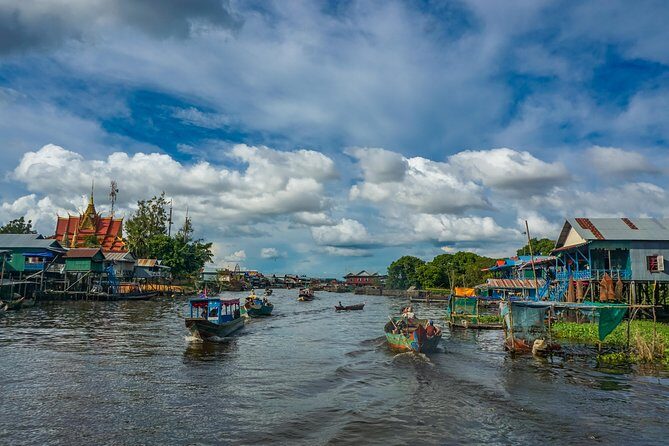
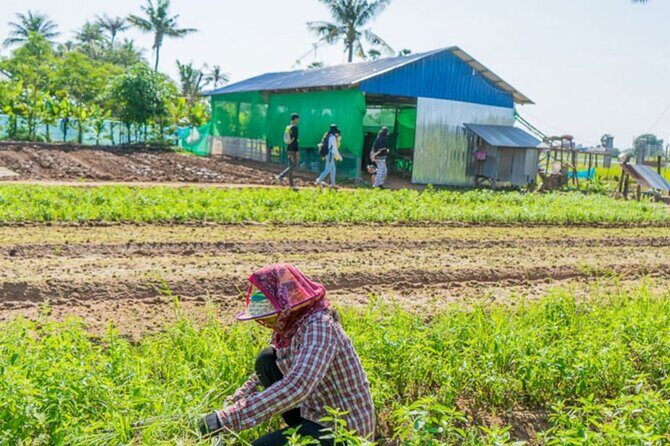
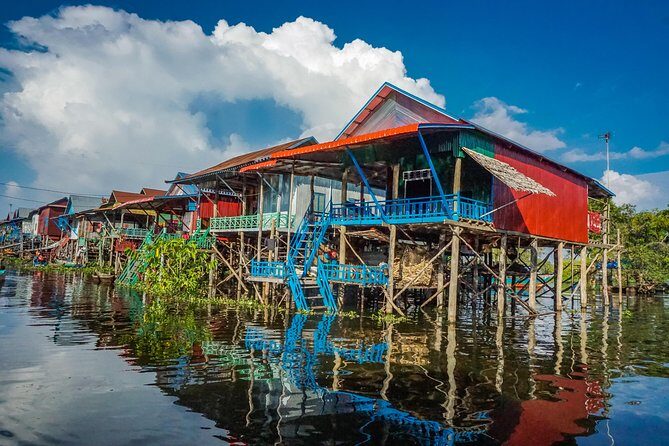
Kompong Phluk (often spelled Kampong Pluk) sits on Tonle Sap, Cambodia’s largest lake. The word floating sounds dreamy, but here it’s really about tall structures—about 8 meters high—built on stilts. During the rainy season, the lake rises and covers those supports, and that’s when the homes look like they’re floating.
This matters because it explains the logic of life on the lake. Houses aren’t built for postcards; they’re built to handle movement, not just weather. In other words, the lake isn’t a backdrop—it’s part of the schedule.
And you’ll also learn why these settlements are placed where they are. The homes are built in the middle of the lake to help fishermen and rice farmers gather more easily during harvest season. That single detail turns a visit from sightseeing into understanding.
You can also read our reviews of more tours and experiences in Siem Reap.
Morning on Tonle Sap Lake (8:00–12:00): the place that changes everything
You’ll start in the morning at 8:00 and spend about four hours in the Tonle Sap area, with the core window running from 8:00 AM to 12:00 PM. The big idea here is to see Tonle Sap as the living engine of the region.
This lake is described as the richest freshwater fishing ground in the world, and it produces an ever-changing scene. That “changing” isn’t just visual. Tonle Sap’s seasons dramatically affect water levels, and the communities around the lake cope by building homes either on floating rafts or tall stilts. That’s why this tour doesn’t treat the village as the only destination—it starts with the lake itself.
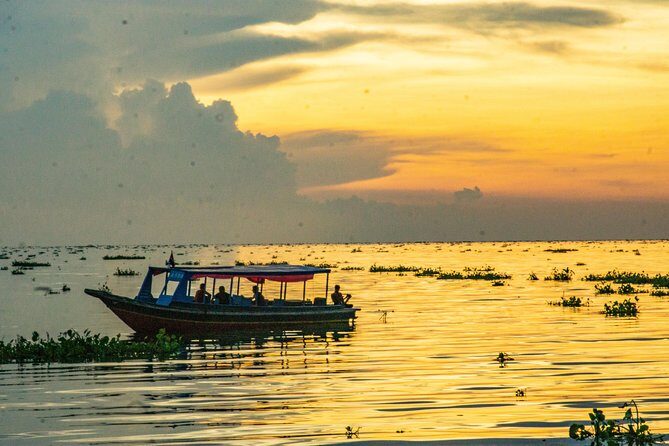
You’ll be traveling by boat along the margins of the lake, which is practical for you. Boats let you watch how the shoreline works—where life is happening, how close homes and activity are to the water, and why stilted housing is the sensible solution. If you only view Kampong Phluk from a dock, you miss the way the region breathes with the seasons.
The stilt village visit: what you’ll see up close
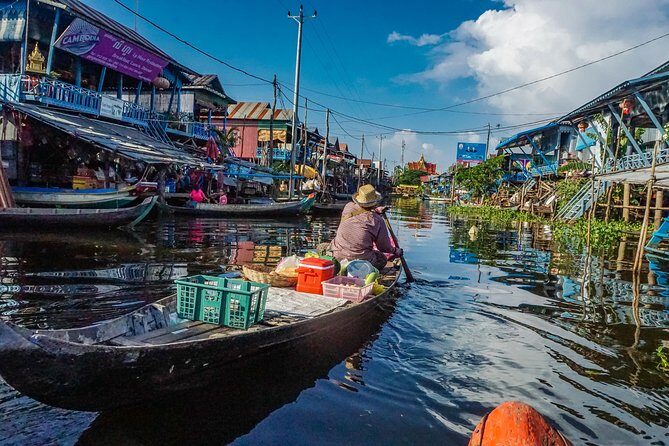
After you’re out on the water, you’ll pause around the stilted houses to learn how a subsistence fishing family lives. This is one of the most praised parts of the experience because it turns the village from a name into a human place with routines.
A lot of people go looking for floating huts. I think you’ll get more value if you go looking for how families manage daily needs—especially when the water level swings. The homes being raised on very tall stilts isn’t a minor feature. It’s the reason families can keep living there year-round, even as conditions change.
You’ll also have time to walk through areas of the village. That sounds simple, but walking is what lets you notice the small details of the community layout and how children and families move through daily space. It’s also where respectful observation feels easiest: you’re at eye level instead of just looking from a distance.
One thing to keep in mind: the exact village emphasis can shift with water levels. The tour notes that you can get away from the more tourist-heavy village area of Kampong Pluk and head toward more genuine stilted communities like Chong Kneas, depending on conditions. Translation for your day: you might think you’re going to one place, and end up going where the water allows the best experience.
Boat time on the lake margins: the practical highlight
If you’re wondering what the best “wow” moment is likely to be, it’s usually the boat ride. It’s not just fun; it’s functional. Boats put you in the right position to understand how the village relates to fishing and harvest activities without needing a lecture.
As you move along the margins, you’ll get glimpses of how the stilted homes and daily life sit in relation to the water. You also see that “floating village” is really a seasonal map. When the lake rises, the homes become part of the water world; when it lowers, you can see more of the structure and land connections.
For you, this is also the easiest way to photograph without turning the day into a constant stop-start sprint. The rhythm is smoother: travel by boat, brief stops for viewing and learning, then move again.
Artisan School and Old Market: a useful add-on, not the main event
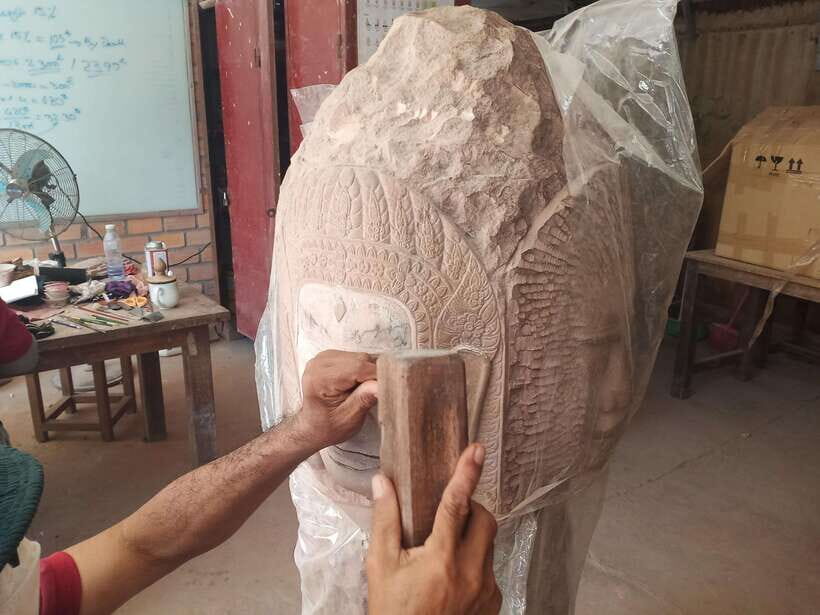
On the return side of the tour, you’ll visit an Artisan School and then get dropped at the Old Market, with time for shopping before heading back to your hotel. These stops shift the tone from lake life to craft and local commerce.
Why this works for your trip: you’re in Siem Reap already, and it’s helpful to have a final block of time where you can pick up souvenirs without turning the whole day into shopping. The Artisan School adds a bit of cultural depth, and the Old Market gives you flexibility for what you actually want to buy.
Just keep expectations realistic. The lake portion is the heart of the value here. If you’re hoping for a long, detailed studio visit, don’t assume that. Think of Artisan School and Old Market as a bonus loop to round out your morning.




Price and value: what $166 is really paying for
At $166 for about 5 hours (approx.), this isn’t a budget half-day. But it can be good value if you care about the Tonle Sap context and not just “see a floating village.”
Here’s what you’re paying for, based on what’s included:
- A guided experience with pickup offered
- Mobile ticket
- Admission ticket included
- A focused morning block on Tonle Sap Lake
- Boat time and village viewing
- Artisan School + Old Market return stop
Also note the group size: maximum of 10 travelers. That small number matters more than people expect. It usually means you can hear explanations better and don’t feel swallowed by a crowd when you’re trying to look closely at stilted houses.
For context, $166 is often a fair price when boat transport, admission, and a guided structure are part of the package. If you’re the type who wants unplanned wandering only, you might compare this with do-it-yourself options. But if you want the “why” behind what you see, this format tends to be worth it.
Timing, weather, and the one logistics hiccup to plan for
This tour runs with a start time of 8:00 am. It also has a weather requirement: it needs good weather, and if it’s canceled due to poor conditions, you’ll be offered a different date or a full refund.
That’s important because boat travel depends on the day. If rain or wind affects conditions, the schedule can shift. Build this into your day planning so you’re not trying to squeeze in something else right after.
One more consideration: at least one earlier booking experience described a guide not fulfilling the booking at the correct time, leading to a rearranged plan later (about six hours later) despite confirmations. I can’t promise your day will go that way, but it’s a solid reason to be proactive.
My practical advice: keep your pickup phone-ready, confirm your pickup window the day before, and give yourself a little buffer in your Siem Reap schedule. This kind of tour is worth doing, but it’s not the same as a fixed flight.
Who should book this tour, and who might skip it
This tour suits you if you:
- Want real context about Tonle Sap’s seasonal water changes and why villages are built on stilts
- Like boat-based sightseeing that’s more than just a photo stop
- Prefer smaller group experiences (up to 10)
- Want a morning adventure that ends with craft and shopping time
You might skip it if you:
- Are extremely time-sensitive and dislike any possibility of delay
- Want a long, detailed workshop-style craft visit rather than a shorter stop
- Prefer to avoid any walking in village areas (comfortable footwear helps)
Should you book Explore The Kampong Pluk Floating Village?
I’d say yes if your goal is understanding, not just sightseeing. The combination of Tonle Sap Lake context, stilt-house viewing, and boat time is the real engine of the experience. The added Artisan School and Old Market stop is a nice bonus for how the day is structured.
But book it with eyes open: weather matters, and pickups can sometimes be messy. If you plan your day with a buffer and confirm timing ahead of time, you’ll be set up for one of the more meaningful half-days around Siem Reap.
FAQ
What time does this tour start?
It starts at 8:00 am.
How long is the tour?
It lasts about 5 hours (approx.).
Where is the tour located?
It takes place in Siem Reap, Cambodia, with the main experience at Tonle Sap Lake and Kampong Phluk.
Is pickup included?
Yes, pickup is offered.
Are tickets included?
Yes, admission ticket is included, and you’ll receive a mobile ticket.
How big is the group?
The tour has a maximum of 10 travelers.
What happens if the weather is bad?
The tour requires good weather. If it’s canceled due to poor weather, you’ll be offered a different date or a full refund.
Can the tour be refunded if I cancel?
Yes. You can cancel up to 24 hours in advance for a full refund.
Does the tour include time at Old Market?
Yes. You’ll be dropped at the Old Market for shopping before returning to your hotel.
What else is visited besides the floating village?
After the lake and village portion, the tour includes a stop at an Artisan School and then Old Market.