REVIEW · BATTAMBANG
Half day morning bicycle tour to Explore local livelihood and test local snacks
Book on Viator →Operated by Battambang tours by bun · Bookable on Viator
Snacks taste better when you meet the makers. This half-day morning bike tour takes you out past rice paddies and into village life, where you can watch real everyday work and then eat what you just learned about. I especially liked the mix of practical village stops and the constant snack sampling, because it turns Battambang into something you can taste and understand.
Two of my favorite parts were visiting Wat Samrong Khnong and getting hands-on with how bamboo sticky rice cake and other snacks are made, then cycling on to see Wat Ek Phnom and its big Buddha statue. One possible drawback: expect some bumpy riding and a dirty road stretch early on, so come ready for dust and keep your expectations realistic.
In This Review
- Key things I’d bet on
- Morning Pedal Through Battambang’s Working Countryside
- Early Stop: Wat Samrong Khnong and the Village Production Stops
- How Sticky Rice Bamboo Cake Gets Made (and Why the Tasting Matters)
- Snack Sampling as a Cultural Shortcut
- The Hard Part: Khmer Rouge History at Wat Samrong Khnong
- Second Stop: Wat Ek Phnom and the Big Buddha Statue
- Bike, Timing, and What to Wear in Real Life
- Price and Value: What You Get for $23.98
- Who Should Book This Battambang Bike and Snack Tour
- Should You Book This Battambang Half-Day Bike Tour?
- FAQ
- How long is the bike tour?
- What’s included in the price?
- Do I need to arrange lunch?
- Is hotel pickup offered?
- What happens if the weather is bad?
- What’s the maximum group size?
Key things I’d bet on
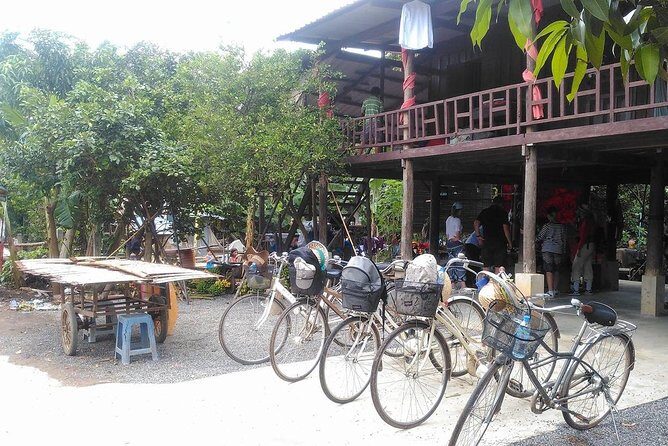
- A guided countryside route that’s more than just scenery
- Blacksmith time to see how tools like knives and hoes are made
- Khrolan bamboo sticky rice cake preparation and a chance to taste it
- Village-made snack sampling along the way, not just one stop
- Khmer Rouge history explained by your local guide at the pagoda site
- Wat Ek Phnom with an Angkor-era temple feel and an older temple story
Morning Pedal Through Battambang’s Working Countryside
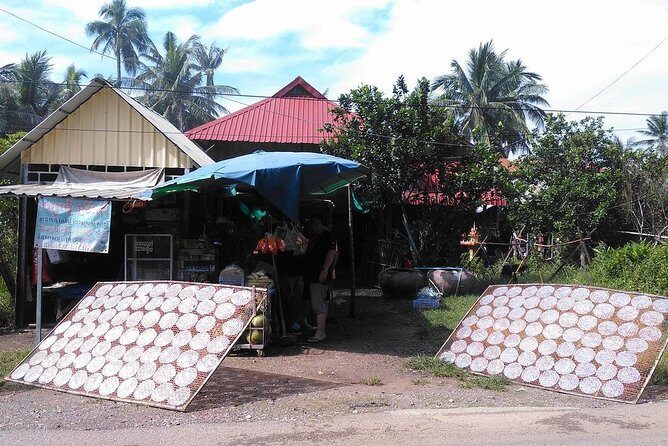
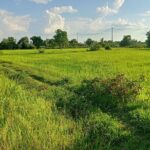
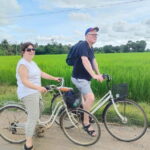
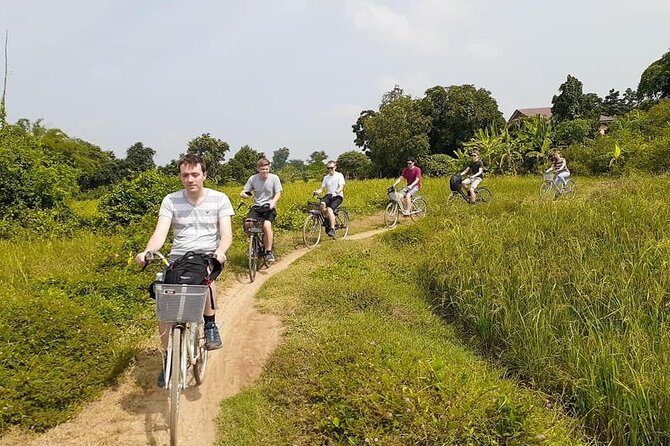
Battambang has a way of making you slow down. On this tour, you’re not stuck staring at monuments for hours. Instead, you’re on a bicycle, moving at a human pace through farmland, small lanes, and village activity. The ride itself is the point: you get to see how people work and how food moves from ingredients to snacks.
You start in the morning with pickup from your hotel, then get a short briefing before you head out. The tour runs about 5 hours, so you still have the rest of the day to eat lunch, wander the market, or just rest your legs. If you like travel that feels grounded in daily life instead of only landmarks, this one fits.
The vibe is also very people-first. Your guide brings context to each stop, from practical village production to the difficult history connected to the Khmer Rouge. And because the schedule is structured around small activities, you’re not constantly searching for something to look at.
One small detail that matters: the tour includes bottled water, but lunch is not included. So plan your day so you can comfortably eat afterward.
A few more Battambang tours and experiences worth a look

Early Stop: Wat Samrong Khnong and the Village Production Stops
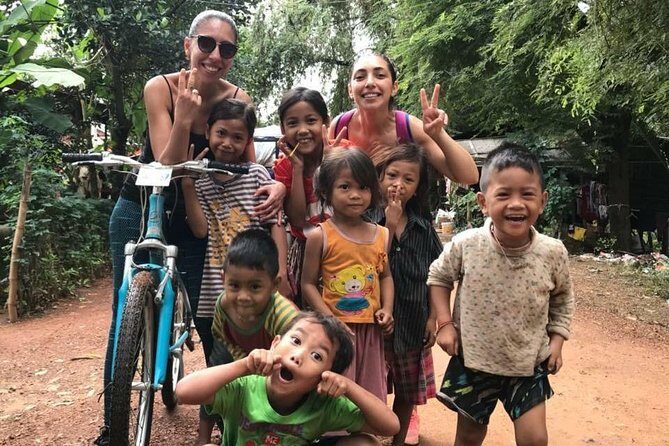
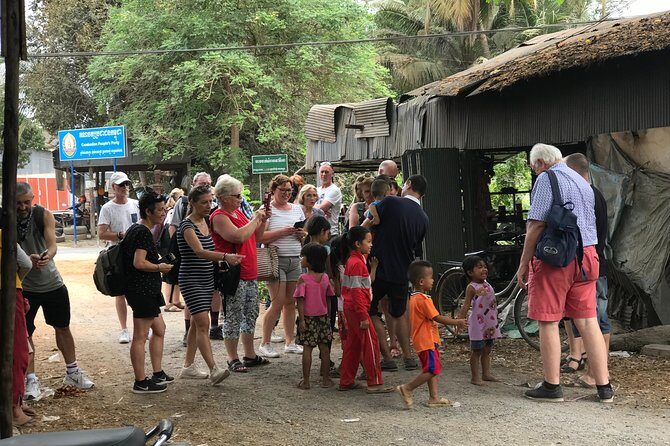
The tour’s first major phase centers on Wat Samrong Khnong, where you’ll combine temple time with village workshops nearby. This is where the tour feels most like a window into local livelihood, because the sights aren’t just decorative. They’re working.
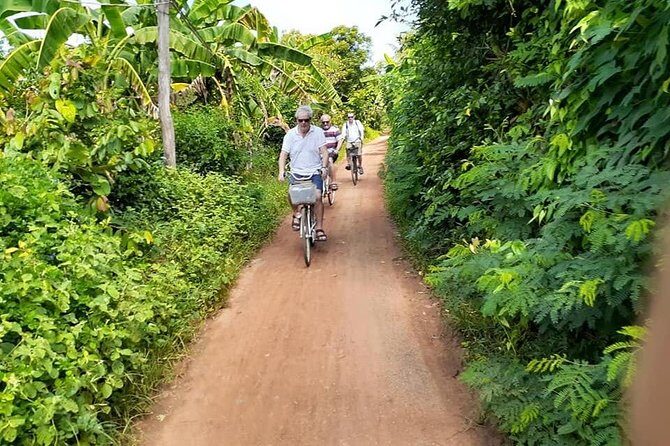
Early on, you ride along a small road that can be dirty. That’s not a problem if you’re comfortable on a bicycle route and you bring the right mindset. It does mean you’ll want closed-toe shoes and you’ll probably want to wipe down your hands and legs at some point later.
Then you hit a blacksmith stop. Here you can see how tools are made, including knives, sickles, axes, and hoes. It’s a surprisingly vivid contrast to the modern life most visitors are used to. Even if you don’t speak Khmer, the process is visual: shaping, finishing, and the way tools get made for everyday use. It also helps you understand why village life depends on skills like this, not just on farming.
After the blacksmith viewing, you continue along the same road line for a few kilometers to the next stop: a sticky rice bamboo cake production area. This is where the tour starts turning from observation into tasting.
How Sticky Rice Bamboo Cake Gets Made (and Why the Tasting Matters)
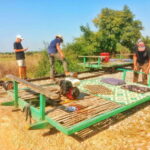
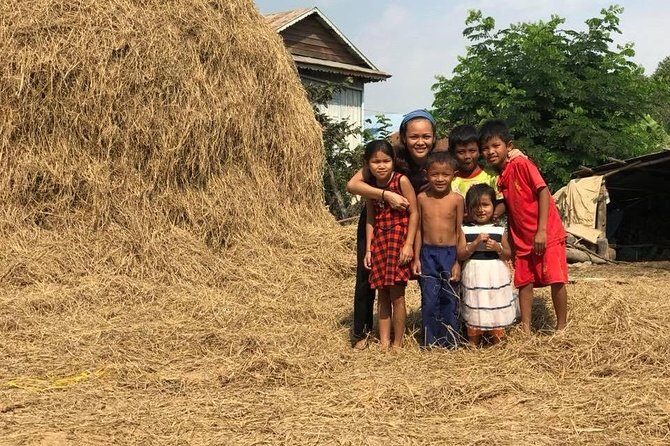
The centerpiece snack stop is the sticky rice bamboo cake, often called khrolan. You’ll watch how it’s made using fresh ingredients such as sticky rice, coconut milk, sugar, salt, and black soy beans. It’s cooked in bamboo, which gives the whole process a distinct, earthy character.
What I like about this stop is that it’s not presented as a single photo-op moment. You’re there long enough to understand the basic inputs and the method. And then you get the important part: you can taste what you’ve just seen prepared.
This is a smart way to do a food experience. When you taste right after learning, the flavors make sense. You connect texture and sweetness with the ingredients you just saw. That connection is hard to get when you only arrive at a shop and point at food on a menu.
Snacks aren’t limited to one item either. Along the way, you’ll test snack samples such as bamboo sticky rice cake, spring rolls, and dry banana. In practice, that means you’re not waiting for a single big tasting moment. You’re eating small portions as the route unfolds, so you stay energized while you move.
There’s also a donation to the local family included. That matters because it nudges your experience away from pure consumption and toward supporting the people doing the work. You’ll still enjoy the snacks, but you’re not pretending the tour is free.
Snack Sampling as a Cultural Shortcut
Eating on a tour can go two ways: either it feels like a generic buffet, or it feels like an introduction. This one leans toward the second option.
Because you’re sampling village snacks across multiple small moments, you get a quick sense of what local households make and share. You’re not trying to memorize a dozen names. You’re noticing patterns: sticky, crunchy, savory, sweet. You start to understand how common ingredients (like rice and coconut milk) can show up in very different forms.
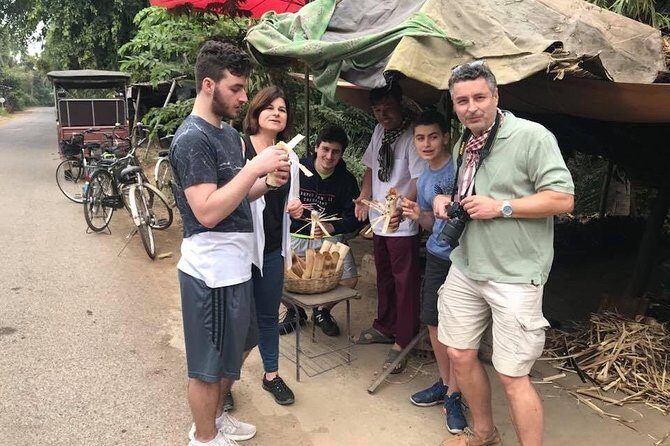
And there’s a social factor too. These snacks are made for people, not for tourists. Even when you’re tasting as a visitor, the rhythm of the day is still centered on local work and hospitality. That warm welcome is part of the experience, not an add-on.
If you’re the type who likes food travel but hates feeling like you’re only following a checklist, this tour’s snack flow is a good compromise. You get variety without feeling rushed, and you get it while riding through the countryside.
The Hard Part: Khmer Rouge History at Wat Samrong Khnong
The tour includes a difficult education component connected to the Khmer Rouge. At Wat Samrong Khnong pagoda, you’ll learn about the horrors of the regime through your local guide. This is not the kind of story you can skip without missing a big reason to come.
I found this section important because your guide isn’t just handing you dates and names. They’re connecting the history to a real place you can see. When you’re there on foot or bike, the setting becomes harder to reduce to a story you already heard.
Also, the guide’s role matters for this topic. In one example, a guide named Reed explained details in very good English, which can make a heavy subject easier to process. When the explanation is clear, you can focus on listening rather than decoding.
If you’re visiting with kids or you prefer light, upbeat history only, this might not be your best fit. But if you want to understand Battambang beyond postcard life, this stop is a key part of the experience.

Second Stop: Wat Ek Phnom and the Big Buddha Statue
After the Samrong Khnong portion, the ride turns back toward the city with a temple stop: Wat Ek Phnom. This is where you get a different type of atmosphere.
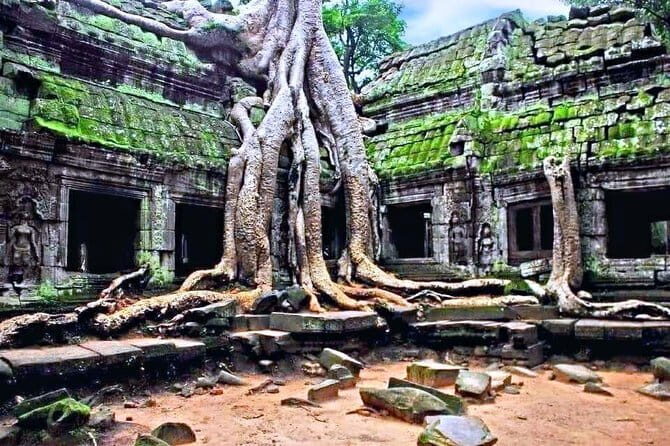
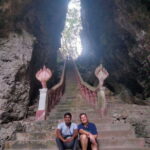
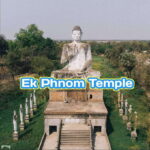
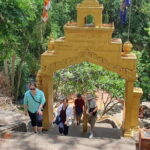
Wat Ek Phnom is an old temple built thousands of years ago before Angkor Wat. You’ll also see a big Buddha statue. Even if you’ve visited other Angkor-era sites, it helps to see how Battambang’s temple story fits into the broader Cambodian timeline.
This part of the tour is about walking, looking, and getting your breath back after the biking. It’s also one of the calmer moments in the schedule. You finish your visit, then continue cycling back and get dropped off at your hotel.
Entrance fees for Wat Ek Phnom are included, so you don’t have to manage that on the day.
Bike, Timing, and What to Wear in Real Life
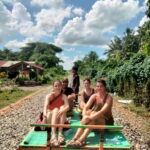
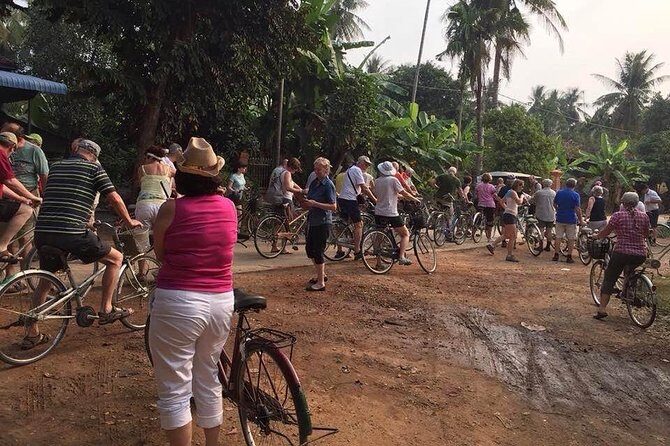
You’re on a bicycle for the core of the tour, and that changes how you experience everything. You can pause when you want. You can feel the air and notice small changes in the path. You also learn quickly that a morning bike ride in Battambang is not the same as a paved-cycle experience.
Plan for dust and uneven surfaces. The route includes a dirty road stretch early, and even if the rest is manageable, your bike ride will still involve contact with the real countryside.
I’d wear:
- closed-toe shoes (because paths and snack stops are not always floor-clean)
- light long sleeves if you don’t love sun on your arms
- sunglasses and something to wipe sweat or dust
The tour timing helps you manage heat. Starting in the morning and wrapping by late morning/early afternoon keeps it cooler than a later outing.
As for group size, the tour caps at 15 travelers. That usually means you won’t feel lost in a crowd, and it’s easier for a guide to keep the pace comfortable.
Price and Value: What You Get for $23.98
At $23.98 per person, this tour isn’t aimed at luxury. It’s built around a simple formula: you’re paying for a guided route, a bicycle, bottled water, temple entry at Ek Phnom, and a full round of snack samples.
Where the value becomes real is in what’s included:
- Bicycle use for the ride
- Bottled water
- Snack samples along the way, including bamboo sticky rice cake, spring rolls, and dry banana
- A donation to a local family connected to the snack making
- Entrance fee for Wat Ek Phnom
Then you add the experience layer: seeing tools made at a blacksmith workshop, learning food preparation from fresh ingredients, and hearing Khmer Rouge history from a local guide. Those context pieces are hard to recreate on your own, especially if you don’t know what to look for.
The one thing you should budget separately is lunch or any personal expenses. Since lunch isn’t included, you’ll likely want to plan a meal after the tour while you’re still near the city.
Who Should Book This Battambang Bike and Snack Tour
This is a strong match if you:
- want to see village life beyond the usual temple circuit
- enjoy food travel that includes making and tasting, not just buying
- like guides who can explain culture and history clearly
- prefer a half-day activity that doesn’t steal your whole day
It may be less ideal if you:
- hate biking on dusty or uneven roads
- want a purely upbeat tour with no heavy historical content
- are expecting a long lunch break (there isn’t one built in)
If you’re traveling solo, it can still be worth it. One note from past guests is that the tour ran even when booked by just one person, and that matters when you don’t want to gamble on minimum numbers. Still, keep in mind that schedules can vary, so it’s wise to book with a little flexibility.
Should You Book This Battambang Half-Day Bike Tour?
Yes, if your idea of value is meeting real people, tasting real food, and getting context that’s hard to self-plot. The ride past rice paddies and villages gives you a grounded view of Battambang, and the snack-making stop at khrolan plus the blacksmith visit make it feel specific, not generic.
I’d book it with clear expectations: expect morning cycling with some dusty stretches, expect multiple snack samples instead of a sit-down meal, and expect the Khmer Rouge history portion to be heavy. If that works for you, this is a smart way to spend your morning and learn a lot without burning the entire day.
FAQ
How long is the bike tour?
It runs for about 5 hours.
What’s included in the price?
The tour includes a bicycle, bottled water, entrance fee for Ek Phnom, and snack samples to test along the way (including bamboo sticky rice cake, spring rolls, and dry banana). There’s also a donation to the local family connected with the snack stop.
Do I need to arrange lunch?
Lunch or personal expenses are not included, so you’ll want to plan your meal after the tour.
Is hotel pickup offered?
Yes, pickup is offered in the morning.
What happens if the weather is bad?
The tour requires good weather. If it’s canceled due to poor weather, you’ll be offered a different date or a full refund.
What’s the maximum group size?
This activity has a maximum of 15 travelers.