REVIEW · SIEM REAP
Local French Speaking Guide Angkor Wat Small-Group Tour
Book on Viator →Operated by Angkor Wat Tour Services · Bookable on Viator
Angkor Wat feels like a whole world in one stone complex. This tour is interesting because you’ll get a French-speaking guide to make sense of what you’re seeing, plus air-conditioned transport so you’re not stuck overheating between stops. Two things I really like are the smooth pickup-to-drop-off plan and the way the route connects Angkor Wat to Angkor Thom and then to the “Jungle Temple” of Ta Prohm.
One thing to keep in mind: the experience depends on the guide’s real ability to work in French. There are cases where language didn’t match expectations, so if French is important to you, it’s smart to confirm at booking.
In This Review
- What you’ll get out of the French guidance
- The one practical catch: entrance fees and timing
- Key highlights that matter
- What You’re Actually Paying For (and what adds up)
- Getting picked up and staying comfortable in the heat
- Angkor Wat at the Archaeological Park: where the story starts
- Practical tip for Angkor Wat
- Angkor Thom: South Gate to Bayon (the maze gets understandable)
- Ta Prohm’s Jungle Temple look: what to watch for
- Timing, dress code, and heat-smart habits
- Small-group experience: why it changes your Angkor day
- Who should book this French-language Angkor tour
- Should you book this Angkor Wat tour with a French guide?
- FAQ
- Is the Angkor entrance ticket included?
- How long is the tour?
- Do I get pickup from my hotel?
- What language is the guide?
- Are meals included?
- What vehicle will I ride in?
- Can I cancel and get a refund?
What you’ll get out of the French guidance
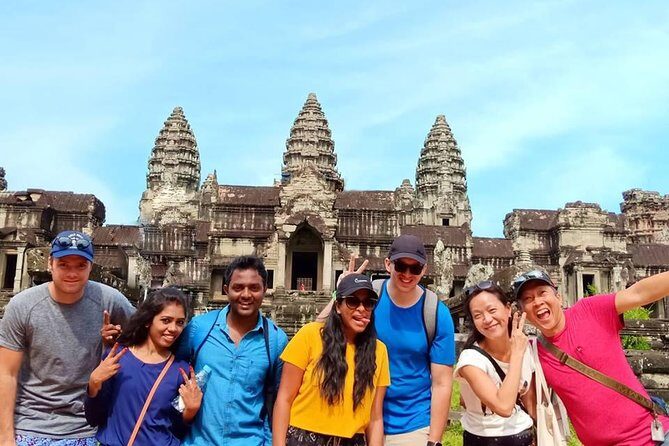
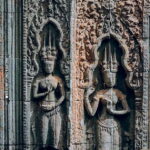
When the guide is truly fluent, you’ll notice the difference fast. Instead of just pointing at carvings, you get explanations tied to how the Khmer Empire built, worshipped, and organized these spaces. That’s especially helpful at Angkor Thom, where the symbolism can feel like a maze unless someone walks you through it.
The one practical catch: entrance fees and timing
The tour price doesn’t include the Angkor entrance ticket, which is a major cost you’ll need to plan for. Lunch is also on your own budget, so if you’re trying to keep the day tight and affordable, bring water (even though bottled water is included) and don’t assume a quick meal stop will be covered.
You can also read our reviews of more guided tours in Siem Reap
Key highlights that matter
- French-speaking guide who can explain the Khmer Empire as you move through the temples
- Angkor Wat → Angkor Thom → Ta Prohm in one day, instead of the usual “only one site” approach
- Small-group feel with bottled water and air-conditioned transport between stops
- South Gate and major Angkor Thom sights like Bayon, Elephant Terrace, and Terrace of Leper King
- Ta Prohm’s overgrown ruins and the story behind why it’s nicknamed the Jungle Temple
What You’re Actually Paying For (and what adds up)
At $52, this is positioned as a value-friendly guided day in Siem Reap. What you’re really buying is time saved and context delivered: pickup from your hotel, a guide who works in French, bottled water, and transport to keep the day moving.
The big add-on is the entrance ticket. Entrance fees are listed separately at $37 per person, and you’ll purchase them during the start of the tour. That means your realistic total cost is closer to the tour price plus the ticket, plus whatever you spend on lunch and drinks.
So is it still good value? For many people, yes—because the guided portion is doing real work. Without a guide, Angkor can turn into a “pretty stones” blur. With a French guide, you’re more likely to leave with clear ideas about what you saw: temple layouts, religious symbolism, and how these sites relate across the wider Khmer period.
One practical note: the day runs about 6 to 7 hours, with lunch break at your own expense. If you’re the type who hates time pressure, plan for a day that’s full but not rushed. If you like structure, you’ll appreciate that the route has a logical flow.
Getting picked up and staying comfortable in the heat
The tour is designed for an easy start. Pickup from your Siem Reap hotel is included, and you’ll be dropped back at the end. It also runs on a vehicle sized for your group: tuk-tuk for 1–2 people or a minivan if you’re 3+.
Why that matters: Angkor isn’t close enough to treat like a walkable neighborhood. Between sites, comfort changes your experience. The tour uses an air-conditioned vehicle to help you cool down between stops, which is a big deal in Cambodia’s heat.
Also, you don’t have to sort out the day’s basic logistics. The guide helps you get going at the first temple area, including time to get entrance tickets. You’ll still want to budget for what’s not included, but you won’t be scrambling.
And yes, the guide will need a seat on your transportation. That’s a small detail, but it can affect how the group fits into smaller tuk-tuk-style setups.
Angkor Wat at the Archaeological Park: where the story starts
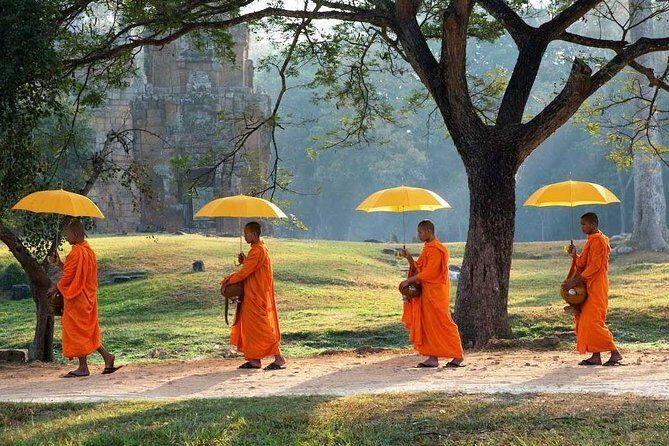
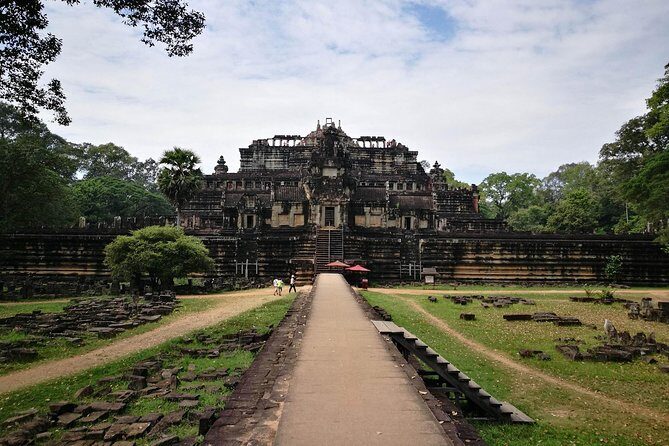
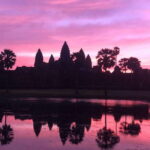
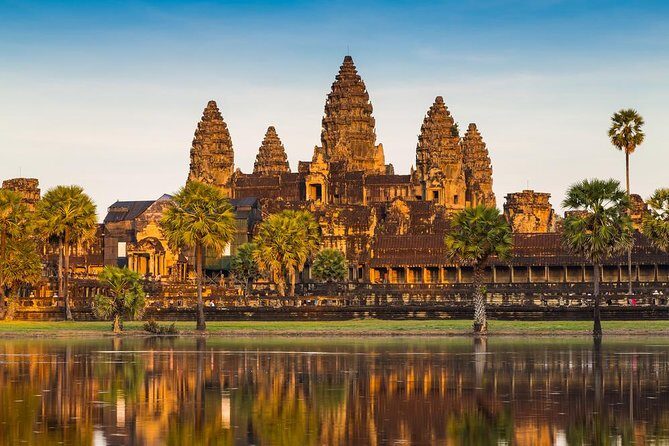
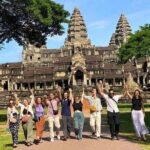
Your tour begins at the Angkor Archaeological Park, where the guide starts with the entry process and then you head into the temples with a proper narrative. Angkor Wat is the obvious headline here—people come for it in huge numbers—but the difference on a guided day is how you move beyond the postcard view.
You’ll follow your guide through the preserved ruins, starting by focusing on the much-photographed temple of Angkor Wat. The guide’s explanations are meant to connect the site to the Khmer Empire, so you’re not just looking at architecture—you’re learning the purpose and meaning behind it.
What I think you’ll like most in this part is the pacing. You’re not expected to “figure it out” alone. The guide keeps you oriented as the complex unfolds, and the context tends to make carvings and layout feel purposeful instead of random.
The one drawback to be aware of: if French language isn’t delivered well, this first stop can become less satisfying because it’s where most of the foundational explanations happen. You’ll still see amazing temples, but you may lose the thread that ties everything together.

Practical tip for Angkor Wat
Wear clothes that meet the dress rule: shoulders and knees covered. It’s not just etiquette—this is a place where you’ll feel uncomfortable if you’re too bare. Also, bring a hat or something for sun protection, because even with short breaks, you’re out in the open.
Angkor Thom: South Gate to Bayon (the maze gets understandable)
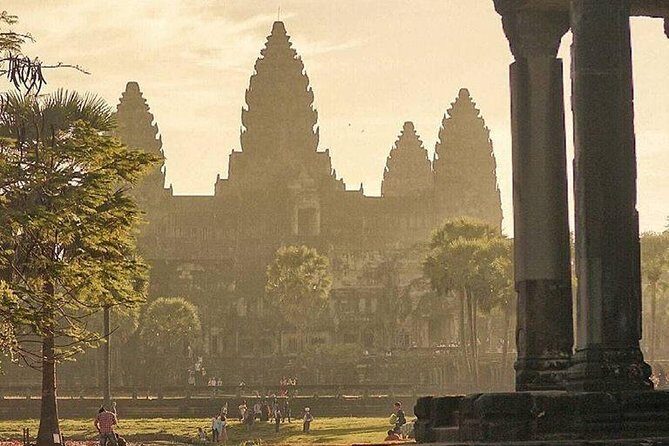
After Angkor Wat, the route shifts to Angkor Thom, and this is where a good guide earns their keep. The first major checkpoint is the South Gate, and then you move into the walled temple complex.
A key advantage here is that the sights are clustered and connected:
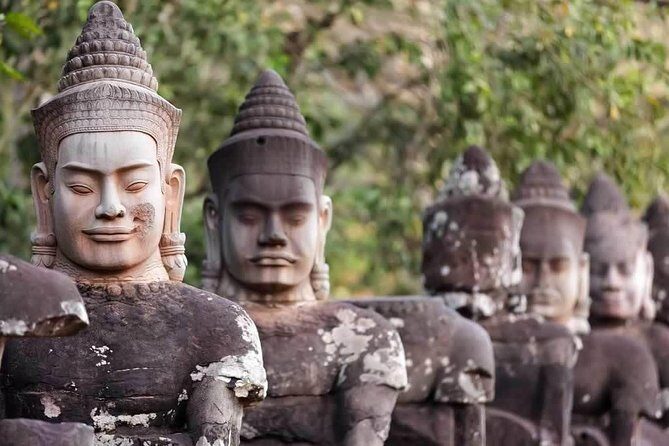
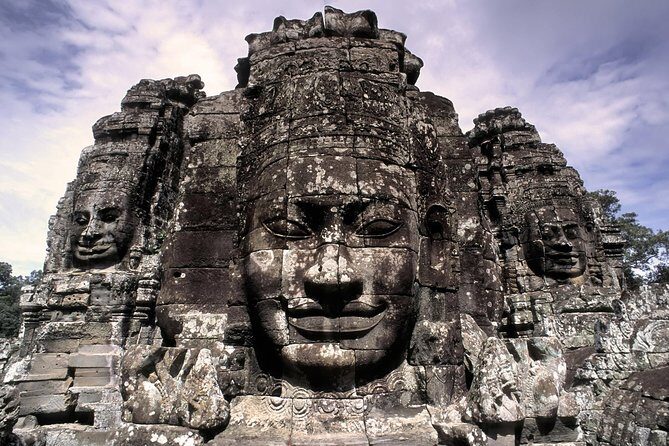
- Bayon Temple, famous for its faces and symbolism
- Elephant Terrace, which adds an architectural and historical layer
- Terrace of Leper King, another stop that helps you understand how these spaces were designed for ceremony and storytelling
Without guidance, Angkor Thom can feel like a complicated place to navigate. With guidance, it becomes more like a guided walk through a spiritual and political world.
You’ll also get a sense of how Angkor Thom functions as a major center. The tour doesn’t treat each temple as an isolated photo stop. It connects them so you understand why the walls, gates, and terraces matter.
This is also where I like that the tour keeps you moving efficiently. In a 6–7 hour day, you want the time spent inside the core sights, not waiting around. The structure of the route helps you do that.
One caution: this part of the day can involve more walking on uneven surfaces. The tour notes moderate physical fitness is required, so if you have mobility issues, factor that in before you book.
Ta Prohm’s Jungle Temple look: what to watch for
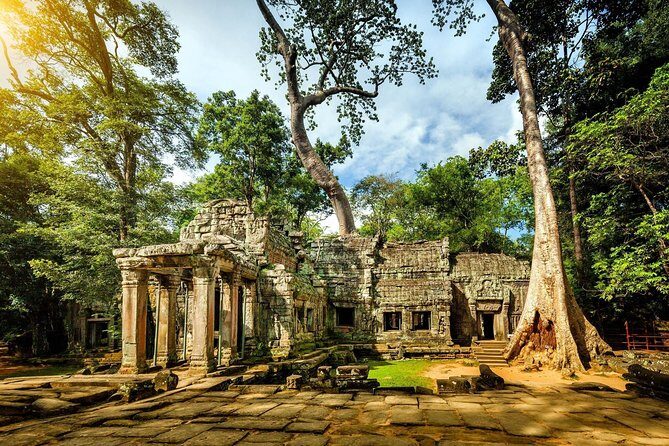
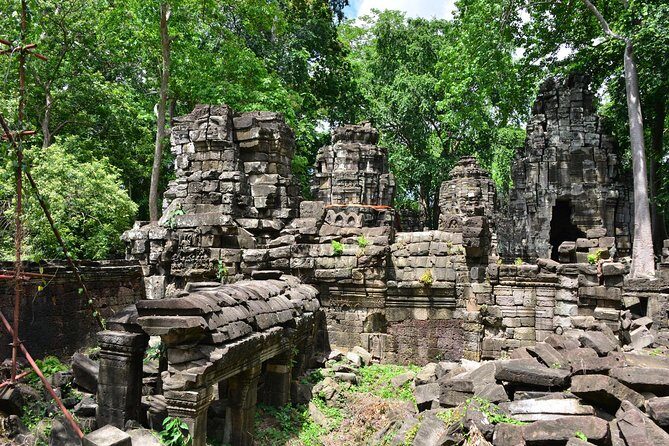
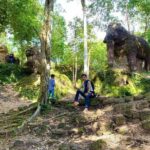
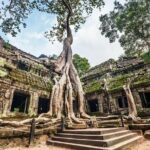
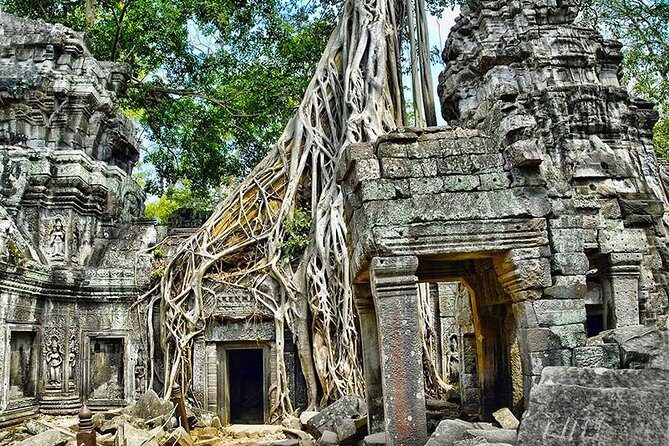
Then comes Ta Prohm, often called the Jungle Temple, and it’s easy to see why. The ruins look dramatic because nature has reclaimed them in a very visible way—big roots, thick growth, and structures that seem half swallowed by the forested setting.
What’s valuable here isn’t only the visuals. It’s the contrast with the earlier temples. Angkor Wat and Angkor Thom feel organized and preserved. Ta Prohm feels tangled, almost accidental in its beauty. That contrast is exactly why it works well in a single tour day.
Your guide will help you “read” what you’re seeing—why the site is famous, and what makes the overgrown ruins stand out from other temple complexes. If you’ve visited temples before without context, this stop can still land well because the visual story is strong even when you’re only catching parts of the explanation.
And you’ll appreciate that the tour includes a break for lunch (own expense) before Ta Prohm, so you’re not trying to do your most atmospheric stop while hungry.
Timing, dress code, and heat-smart habits
This isn’t a “start at 9, end at 3” kind of tour where you can coast. It’s a focused day that stacks three major experiences.
Here’s how to make it feel easier:
- Plan for about 6 hours in the field, with some added time depending on the day
- Dress for covered shoulders and knees
- Bring sun protection, because you’ll still be outdoors even with an air-conditioned ride between stops
- Keep expectations realistic about lunch: since it’s not included, you’ll want to bring cash and/or plan what you’ll do for food
Also, it helps to have a moderate fitness level. Some of the walking is unavoidable, and surfaces can be uneven. If you’re used to city walking, you’ll likely be fine; if you’re not, choose comfortable shoes you’re confident will grip well.
Small-group experience: why it changes your Angkor day
The tour is advertised as a small-group tour, which matters more than you might think at Angkor. Big buses can turn your visit into a photo line. Small groups make it easier for the guide to manage pace, stop when something needs attention, and keep you from feeling lost.
It also supports a calmer feel at busy spots like Bayon and Angkor Wat. You’ll still be in a popular UNESCO site, but your time inside tends to feel more like a conversation than a queue.
Another plus is the focus on language. Since the tour is French-speaking, the explanations can be more detailed and comfortable than what you might get if you’re relying on mixed-language audio. One review highlighted a guide named Marina for speaking very well French and matching the tour to the group’s needs and preferences. That kind of guide quality is exactly what turns a good day into a great one.
So here’s the key question for you: do you want explanations that make sense in French? If yes, this is a strong fit.
Who should book this French-language Angkor tour
This tour suits you if you want:
- A guided way to understand Angkor Wat and Angkor Thom, not just see them
- Explanations delivered in French, especially if you’re more comfortable in that language
- A single-day route that includes Ta Prohm as well, so you see the preserved-meets-overgrown contrast
It’s also a good option if you like structure. The itinerary is built around the core temple sequence, so you’re not reinventing the day.
It may be less suitable if:
- You need guaranteed flawless French fluency every second of the day
- You have limited mobility and feel uncomfortable with uneven walking
- You’re looking for a bargain where entrance tickets are included (they’re not)
And for families: children must be accompanied by an adult, and the dress code still applies. If you’re traveling with kids, plan breaks and pace yourselves.
Should you book this Angkor Wat tour with a French guide?
If you’re choosing between a self-guided day and this kind of guided experience, I’d lean toward booking it—mainly because the guide language and commentary change how you experience Angkor. Paying extra for a guide often saves you from leaving with only vague impressions.
Here’s my simple decision checklist:
- If French is your main language, this is likely the most comfortable way to connect with what you’re seeing.
- If you’re sensitive to language mismatches, verify expectations at booking so you’re not stuck translating on the spot.
- If you’re okay budgeting for the entrance fee ($37 per person) and lunch on your own, the value can make sense quickly. You’re getting transport, a guide, and a full temple circuit in one day.
If you want one thoughtful move before you go: think of this as a guided interpretation of a UNESCO site, not just sightseeing. When the guide is strong, Angkor becomes easier to understand—and that’s when it stops being just impressive and starts being meaningful.
FAQ
Is the Angkor entrance ticket included?
No. Entrance fees are not included, and you pay separately (listed as $37 per person).
How long is the tour?
It runs about 6 to 7 hours (with 6 hours noted for the tour length).
Do I get pickup from my hotel?
Yes. Pickup and drop-off from your Siem Reap hotel are included.
What language is the guide?
The tour includes an experienced French-speaking guide.
Are meals included?
Lunch and drinks are not included. Bottled water is provided during the tour.
What vehicle will I ride in?
For 1–2 people, it’s typically tuk-tuk. For 3+ people, it’s by minivan.
Can I cancel and get a refund?
No. This experience is non-refundable and cannot be changed for any reason.