REVIEW · SIEM REAP
Private Day Angkor Wat Temple and Banteay Srei Temple Tour
Book on Viator →Operated by Angkor Guide Tour · Bookable on Viator
Five walls, jungle roots, and perfect carvings. This private Angkor Wat day in Siem Reap strings together the big-name temples and a few finer details you’d miss on your own. You’ll ride comfortably in an air-conditioned vehicle, then spend the day walking through places where Hindu stories and Buddhist legends overlap in stone.
What I love most is the human touch. My favorite part was how guides like Chanra handle planning and questions ahead of time—he communicates by WhatsApp and can adjust what you focus on. The second thing I really liked: the tour can be flexible with how you move through the sites. One guest had a companion on crutches, and the guide arranged ways to get closer (including a moped or tuk tuk options) so the temples weren’t just a walk-and-hope situation.
One thing to watch: the price you see for the tour does not include the temples pass. You’ll need to budget for that 1-day pass on top of the tour cost, and you should expect a full day of uneven stone paths and stairs.
In This Review
- Key takeaways before you go
- Why This Private Angkor Wat and Banteay Srei Day Feels Worth It
- Who it’s for
- Ta Prohm, Pre Rup, and the First Wave of Angkor’s Stories
- Practical note for both stops
- Angkor Thom’s South Gate and Bayon: 173 Faces and a Big Causeway
- Baphuon, Phimeanakas, and the Royal Terrace Corridor
- The main limitation here
- Banteay Srei: Small Temple, Razor-Sharp Details
- Photo and viewing tip
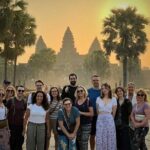
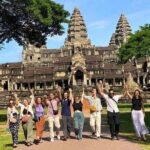
- Angkor Wat’s Five Walls and the Meru Connection
- Logistics That Keep This Day Comfortable (and Not Miserable)
- Mobility and pacing
- Price and Value: $43 Tour Cost vs. the Temples Pass
- Who Should Book This Private Temple Tour?
- Practical Tips for Getting More From Your 8.5 Hours
- Should You Book This Private Angkor Wat and Banteay Srei Tour?
- FAQ
- What is the duration of the Private Day Angkor Wat Temple and Banteay Srei Temple Tour?
- Does the tour include the temples admission ticket?
- Is pickup and drop-off included?
- Is this a private tour or shared group?
- Which temples and areas are included in the day?
- What are the operating hours for the tour?
- What is the cancellation policy?
Key takeaways before you go
- Private, all-your-group route so you can set a comfortable pace
- English guide storytelling, including clear context for Hindu and Buddhist symbolism
- A smart sweep of Ta Prohm, Angkor Thom, Angkor Wat, and Banteay Srei in one day
- Comfort extras like cool water and towels during the day
- Budget for the temples pass since it’s not included in the tour price
- Real customization is possible, especially when you coordinate in advance (Chanra uses WhatsApp)
Why This Private Angkor Wat and Banteay Srei Day Feels Worth It
Angkor is famous for a reason, but it can also be exhausting. You’re dealing with long distances, intense heat, and the reality that some temple paths are not exactly flat. This tour works because it’s built around a full-day “hits-and-details” approach, and it’s private—meaning you’re not trapped in a rigid pace that doesn’t match your legs, your camera habits, or your curiosity.
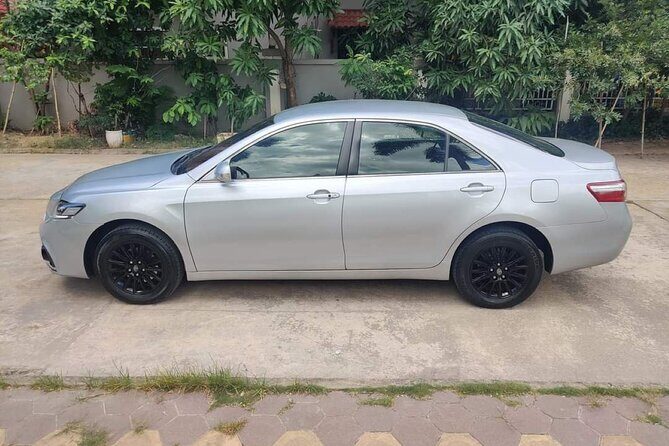
You also get an English guide, plus an air-conditioned vehicle. That sounds basic, but it matters. You’ll be bouncing between temple zones, and having real transport time instead of constant tuk tuk bargaining changes the feel of the day. Small comfort items like cool water and towels are a nice touch when you’re out in the sun for hours.
Most importantly, you’re not just walking through temples as background scenery. The guide context helps you notice what you’re actually looking at: the cosmic symbolism of Angkor Wat’s layout, the fine carving focus at Banteay Srei, and the “nature taking over” drama at Ta Prohm.
You can also read our reviews of more private tours in Siem Reap


Who it’s for
This is a strong choice if you want:
- a one-day plan that hits multiple must-sees without stress
- explanations in plain English, not just wandering
- a private format where your guide can adjust
Ta Prohm, Pre Rup, and the First Wave of Angkor’s Stories

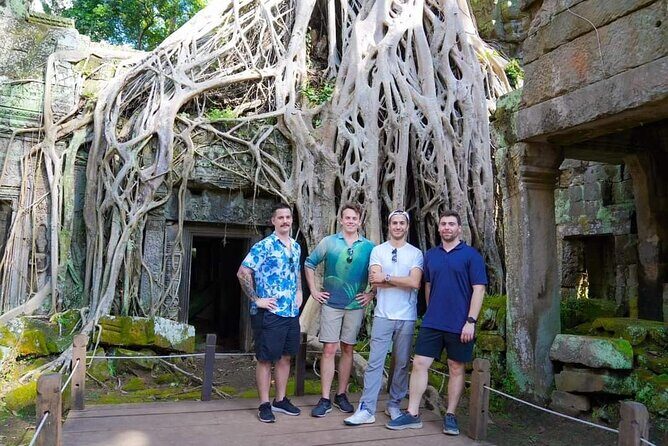
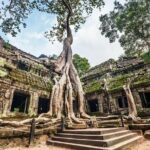
The day begins with Ta Prohm, known for the way the jungle and the temple share the same space. Ta Prohm’s older name was Rajavihara, meaning monastery of the King, and it was built as a Mahayana Buddhist monastery and university. Construction is dated to 1186 AD, but the reason you’ll remember it isn’t the paperwork—it’s the scene.
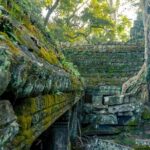
Vines creep over the ruins. Tree roots sprawl across the ground and wrap themselves around stone structures, creating a kind of labyrinth. It feels like the temple is half preserved and half reclaimed, and that contrast is the whole point of Ta Prohm. Even if you’ve seen photos, being there changes the scale. You’ll likely find yourself slowing down to follow root lines and shadowed corners where the stones meet the greenery.
Next up is Pre Rup, a state temple built for King Rajendravarman in the late 10th century (either 961 or 962 AD). It was built just 9 years after East Mebon—an interesting reminder that Angkor wasn’t a slow tourist project. It was a fast-moving world of kings, building, and power.
Pre Rup is shorter in the schedule, around 20 minutes, so treat it like a quick lesson: you’re there to catch the form, not to linger all day. You’ll get more time later for longer temple experiences, especially Angkor Wat.
Practical note for both stops
Ta Prohm and Pre Rup have you outdoors and in sun for stretches. Wear shoes you don’t mind getting dusty, and bring a hat or something that shades your face. The tour includes cool water and towels, which helps, but you’ll still want to manage your pace.
Angkor Thom’s South Gate and Bayon: 173 Faces and a Big Causeway
After your first temple wave, you move into Angkor Thom, the walled city area. You’ll start at the South Gate, approached via a grand causeway that crosses a moat about 100 meters wide. Along the sides, you’ll see naga balustrades—myths made into stone railings—designed to flank the route into the city.
As you enter, the architecture starts to feel like a system. The gate isn’t just an entrance; it’s a statement about power and order. That’s a theme you’ll keep seeing as the day goes on.
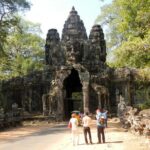
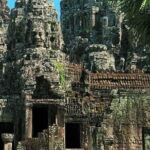
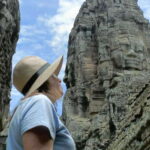
Then you’ll reach Bayon, famous for its towers covered with 173 gigantic faces. There’s still debate about who those faces represent, and the local interpretation you might hear is that some connect them to the Four Faces of Prohm. Either way, the effect is the same: you’ll keep feeling like someone is watching you from every angle.
Bayon is a great place for a guided explanation because it changes how you photograph. Instead of taking random shots, you start to look for the line-of-sight angles, the way faces stack on towers, and the repetition of features that makes the whole complex feel symmetrical even when you’re walking through it.

Baphuon, Phimeanakas, and the Royal Terrace Corridor
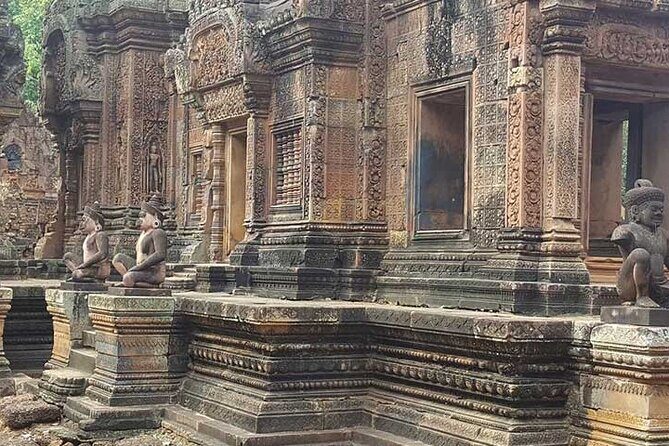
From Bayon, the route continues deeper into Angkor Thom with a series of royal enclosure stops.
Baphuon is the state temple of King Udayadityavarman II. It sits between the Royal Palace and Prasat Bayon, which matters because you’re not just visiting a standalone temple—you’re moving through the former heart of royal space. The sandstone monument is part of why this area feels heavier, more official. It’s the king’s world, not the jungle’s.
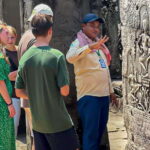
You’ll also pass Phimeanakas, a temple within the royal enclosure. This is one of those places where the guide’s storytelling helps. Even the description hints that everyone loves a good story here. If you want context beyond a quick look, this is the stop where it helps to pay attention to what your guide says as you move around.
Then you step into the Royal Terraces area, including:
- Terrace of the Elephants
- Terrace of the Leper King
The Terrace of the Elephants was built by King Jayavarman VII in the late 12th century. It stretches more than 300 meters from the Baphuon area to the Leper King terrace. That length is hard to absorb until you walk parts of it and see the carvings and the long “wall-like” effect.
The Terrace of the Leper King completes the pair. Together, these terraces form the eastern boundary of the Royal Palace grounds and face the parade grounds. When you stand in the right spots, you can feel how the space was designed for movement—processions, ceremony, and crowds. It’s not just art; it’s stagecraft.
The main limitation here
This segment is more walking than some people expect, even though individual stops are shorter (often 15–30 minutes). If your legs tire early, tell your guide right away. This tour has shown it can adjust how you get close to the action.
Banteay Srei: Small Temple, Razor-Sharp Details
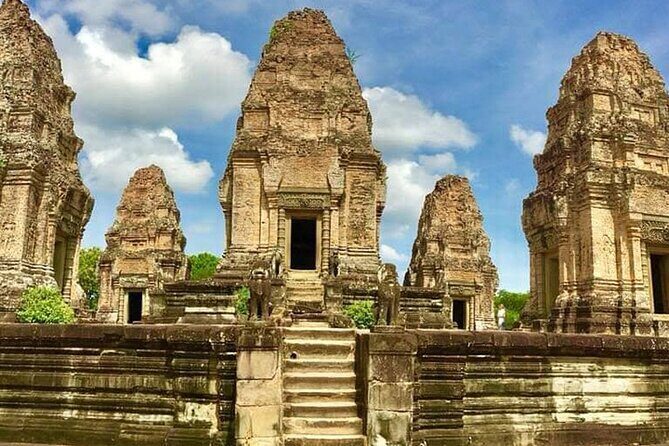
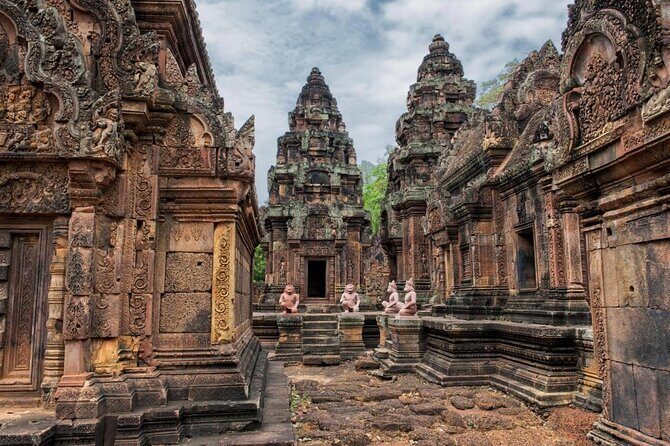
Then you get one of Angkor’s best contrast points: Banteay Srei, often called the Pink Ladies Temple. It’s smaller than many of the big Angkor sites, and that’s exactly why it’s so memorable.
Banteay Srei dates to the 10th century and is dedicated to the Hindu god Shiva. It’s also known as a jewel of Khmer art, with motifs and figures of gods rendered through detailed carving. From a viewer’s perspective, the value of Banteay Srei is that you don’t feel rushed by size. You can slow down and look at the craftsmanship.
It’s located near the hill of Phnom Dei, about 25 km northeast of the main Angkor area. That distance is one reason it feels different from the cluster around Angkor Thom and Angkor Wat. It has a more focused, almost “art museum” feel: you’re here for close reading.
Photo and viewing tip
Bring your camera settings down a notch and look for the fine carving zones rather than only the overall view. The stones here reward patience. If you’re only snapping wide shots, you’ll miss the reason Banteay Srei gets attention in the first place.
Angkor Wat’s Five Walls and the Meru Connection
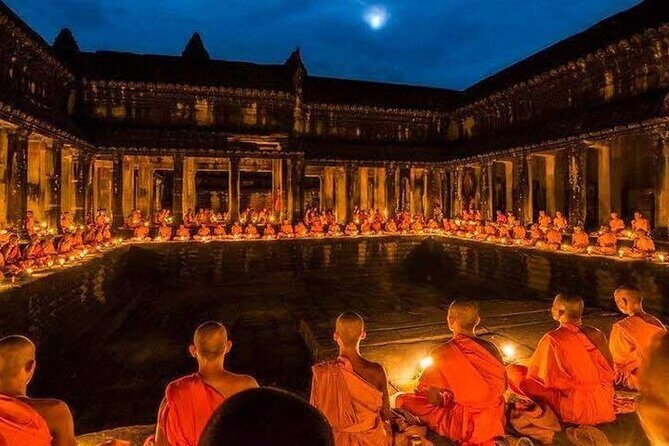
The day’s centerpiece is Angkor Wat, and the schedule gives it real time—around 3 hours. This is where the day becomes more than a checklist.
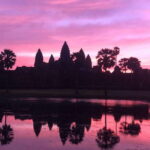
Angkor Wat has 5 concentric rectangular walls, with moats alongside. This design symbolizes a cosmic chain of mountains and ocean. The central tower represents Mount Meru, described as the center of the Hindu and Buddhist universe. That may sound like big mythology, but your guide’s explanation makes it practical: you start to see why the temple’s layout feels structured, like a model of the world.
What I like about visiting Angkor Wat on a guided private day is that the guide helps you understand what you’re looking at while you’re still in motion. You’re not stuck waiting for a lecture after you’re done seeing. You learn the meaning, then you look for it in the stone layout.
Plan on splitting your time between:
- the major exterior views that communicate the symmetry
- the interior areas where details and carvings become more important
Angkor Wat is huge in scale, so 3 hours is enough to see a lot without feeling like you’re racing. Still, you should wear shoes you trust. Stone steps and uneven ground are part of the deal.
Logistics That Keep This Day Comfortable (and Not Miserable)
This tour includes an air-conditioned vehicle, parking fees, roads tolls, and an English tour guide. You also get cool water and towels, plus pickup and drop-off at the airport.
Why that matters: Angkor days can turn into a series of mini-stress events—finding the right driver, negotiating distance, timing breaks, and trying to get from one zone to another fast enough. Here, the transport and guiding are bundled, which keeps you on task.
Also, the day is timed inside temple opening hours: 8:00 AM to 4:00 PM. The total tour duration is about 8 hours 30 minutes, so the schedule is designed to fit without you losing half the day to closing time.
Mobility and pacing
One of the most encouraging details from real experiences is that guides can adapt. If you have a mobility issue, you’ll want to say something early. A companion on crutches had the day arranged so they could drive closer and use a moped/tuk tuk for parts of the route. Even if you don’t have mobility needs, it’s a good reminder: ask your guide for the shortest path between stops.
Price and Value: $43 Tour Cost vs. the Temples Pass
The tour price is $43 per person, and it’s a private day experience (so you’re not sharing with strangers). That’s a meaningful value if you compare it to the hassle cost of cobbling together your own drivers and guide.
But the big budget item is the temples admission. The tour does not include the 1-day temples pass, listed at $37 per person. That means your day’s likely baseline is around $80 per person once you add the pass.
Is it worth it? For me, yes—if you value:
- an English guide who explains meaning as you walk
- air-conditioned transport and comfort stops
- a private route that you can adapt
If you’re traveling as a DIY planner who’s happy to use a simple guidebook and figure out routes on your own, you might spend less total money. But you’ll likely spend more time. And at Angkor, time is part of the cost.
Who Should Book This Private Temple Tour?
This private Angkor day is a good match if you:
- want a full Angkor overview without jumping between different tour groups
- like guided context, especially when symbols and layout matter (Angkor Wat’s cosmic design)
- prefer comfort during long temple transfers (AC vehicle, cool water, towels)
- want flexibility in how you move around the sites
It may be less ideal if you:
- hate walking and steps with no flexibility
- want a very deep, slow study of only one temple complex (this is a multi-stop day)
- are trying to minimize all added costs beyond the tour price (because the temples pass is extra)
The sweet spot is a traveler who wants the big temples and the meaningful details, in one organized day.
Practical Tips for Getting More From Your 8.5 Hours
Here’s how to make this day feel smooth rather than rushed.
- Wear supportive shoes. Stone can be slippery and uneven.
- Bring sun protection. The day is outdoors at multiple stops.
- Use your guide as a tool. Ask what to prioritize at Angkor Wat and Bayon so your photos and viewing match the story.
- Plan for breaks. Even short temple stops add up. Use the vehicle time to cool down.
- If you have mobility concerns, ask early. You can request adjustments like getting closer with vehicles (including moped/tuk tuk options).
And one more simple trick: keep your camera ready, but don’t treat every spot as a photo stop. The best moments at Ta Prohm and Bayon often come from pausing and looking longer than you think you need to.
Should You Book This Private Angkor Wat and Banteay Srei Tour?
I’d book this if you want a well-paced, private Angkor day that covers the key zones without leaving you to manage transport, timing, and meaning. The combo of Ta Prohm’s jungle drama, Angkor Thom’s faces and royal terraces, and Angkor Wat’s symbolic layout makes for a complete one-day story.
It’s also a smart buy for people who like communication and customization—especially if you connect with your guide in advance. If you’re the type who wants to tailor the focus, that’s where this tour can really shine.
Just don’t forget the temples pass budget, and accept that it’s still a full day with walking. If that’s okay with you, this is an efficient, comfortable way to see a lot of Angkor with real context.
FAQ
What is the duration of the Private Day Angkor Wat Temple and Banteay Srei Temple Tour?
The tour lasts about 8 hours 30 minutes.
Does the tour include the temples admission ticket?
No. The Temples Pass is not included. The 1-day pass is listed at $37 per person.
Is pickup and drop-off included?
Yes. Pickup is offered, and the tour includes pick up and drop off at the airport.
Is this a private tour or shared group?
It’s private. Only your group participates.
Which temples and areas are included in the day?
You’ll visit Ta Prohm, Pre Rup, Banteay Srei, Angkor Thom South Gate, Bayon, Baphuon, Phimeanakas, the Terrace of the Elephants, the Terrace of the Leper King, and Angkor Wat.
What are the operating hours for the tour?
The tour runs Monday through Sunday from 8:00 AM to 4:00 PM.
What is the cancellation policy?
Cancellation is free. You can cancel up to 24 hours in advance for a full refund. If you cancel less than 24 hours before the experience starts, the amount paid is not refunded.