REVIEW · SIEM REAP
Private Half-Day Tour to Kampong Phluk Flooded Forest and Floating Villages
Book on Viator →Operated by Journey2 Angkor · Bookable on Viator
Floating villages on stilts steal the show. This half-day trip strings together Ro Lus Market, Kampong Phluk’s flooded mangroves, and a real floating community on Tonle Sap, so you see how Cambodians live with water instead of trying to outrun it. I love that it feels off the main tourist circuits, and I especially like how a guide such as Sim can explain what you’re seeing in plain English, from daily life to why these areas matter.
The best part is that it’s private, so you’re not stuck in a slow-moving crowd. My one main caution: the headline price doesn’t cover everything—there’s an extra admission fee for the floating village and a short boat ride fee you’ll want to factor into your total.
In This Review
- Key highlights you’ll care about
- Kampong Phluk in a half-day: what makes it feel different
- Price and logistics: is $35 good value?
- The flow of your day: how the pacing actually works
- Stop 1: Ro Lus Market on the Rolous River
- Stop 2: Kampong Phluk flooded forest and Tonle Sap views
- Stop 3: Kampong Phluk Floating Village—life on stilts
- Your guide is the real multiplier (Sim-style explanations)
- Practical stuff you’ll thank yourself for
- Should you book this private Kampong Phluk tour?
- FAQ
- How long is the private half-day tour?
- How much does the tour cost?
- Is hotel pickup and drop-off included?
- Is this tour private?
- What’s included in the price?
- What extra fees should I expect?
- Can I cancel for a full refund?
Key highlights you’ll care about
- A compact route (about 4 hours) that still covers market + flooded forest + floating village
- Ro Lus Market on the Rolous River, a quick taste of local buying rhythms morning and late afternoon
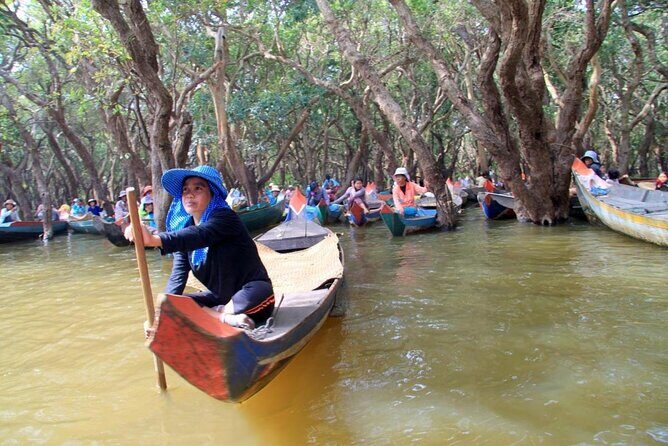
- Flooded forest at Kampong Phluk, with mangrove and Tonle Sap scenery that changes with the seasons
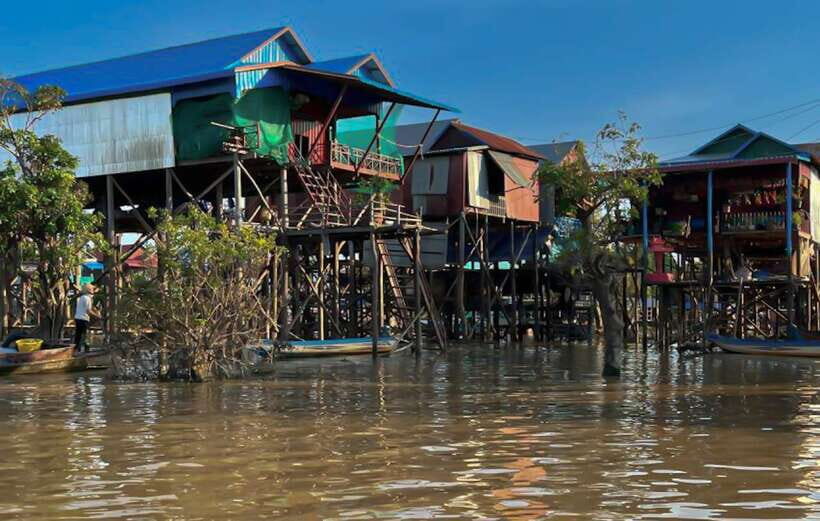
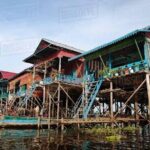
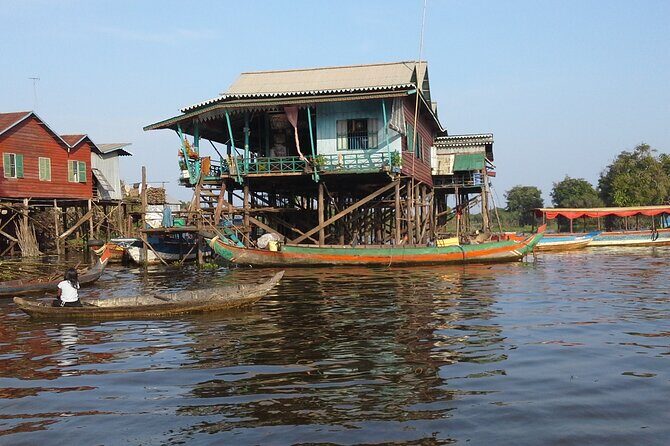
- Kampong Phluk Floating Village on stilts (6–9 meters), built to live with wet-season water
- A guide who can adjust timing, which matters a lot if you’re catching a flight
Kampong Phluk in a half-day: what makes it feel different
Tonle Sap is the kind of place where the map stops being the main story. In the wet season, water rises and the landscape reshapes itself—forests flood, homes float, and daily life adapts. That’s exactly why this itinerary works. You get the big natural setting at Kampong Phluk, then you zoom in on the human side at the floating village.
I like that the day isn’t just photos and shortcuts. Even though it’s short, it’s built around real spots where local people gather. The Ro Lus Market stop grounds you in Khmer life before you head out to the water world.
And because this is a private tour, you can move at a pace that fits you. No waiting for a group to argue about where to stand. Your guide can also manage the timing so you’re not stuck late—useful if your schedule is tight.
You can also read our reviews of more private tours in Siem Reap
Price and logistics: is $35 good value?
At $35 per person for a roughly 4-hour private outing, the value comes from what’s included versus what’s extra. You’re paying for a full mini-day with a guide and transport, plus bottled water and hotel pickup/drop-off.
Included:
- English-speaking tour guide
- Private comfortable vehicle
- Hotel pickup and drop-off
- Bottled water
Not included:
- Floating village admission: $2 per person
- Short boat ride fee: $20 per booking
Here’s how I think about the math. The base price covers the drive out of Siem Reap, the guided interpretation, and getting you to the key areas. The extra fees are relatively small on a per-person basis, but the boat ride fee is per booking, so it matters if you’re traveling solo versus as two or more people.
One more practical point: Kampong Phluk itself and the Ro Lus Market stop are listed with free admission tickets. So you’re mostly paying for the floating village experience (and the boat ride that supports it), which keeps the total from ballooning.
The flow of your day: how the pacing actually works
This tour is designed as a sequence—three stops, with time set aside for each one:
- Ro Lus Market (about 1 hour)
- Kampong Phluk (about 2 hours)
- Kampong Phluk Floating Village (about 1 hour)
That structure is handy. You start with a land stop where you can walk and look around. Then you move into the flooded forest area where the main experience is the setting and the guide’s explanations. Finally, you top out with the floating village, where the stilted homes and fishing lifestyle make the whole day click.
Since the tour is only half a day, you’ll want to approach it with the right mindset. This is not the kind of trip where you’d expect long, slow wandering. It’s more like: see the key places, understand what you’re looking at, and then get back to Siem Reap without losing your evening.
Stop 1: Ro Lus Market on the Rolous River
Ro Lus Market is a local market stop on the bank of the Rolous River, and it’s timed for the rhythm locals use to shop—villagers visit in the morning and late afternoon. Even though you’re there for about an hour, it’s a great way to shift from “tour mode” into real daily life.
What I like about this kind of market stop is that it tells you how the area functions before you reach the water. You’re not just watching scenery; you’re seeing how people live off the same region you’re about to explore.
Practical tips for this stop:
- Bring your attention, not just your camera. Look at how vendors arrange goods and how people move through the market lanes.
- Expect walking and uneven ground. If you’ve been hopping from temples all week, this is your reminder to wear flat, comfortable shoes.
- If you get offered samples or items to buy, treat it as a cultural moment rather than a bargaining contest. Keep it relaxed.
This stop is also listed as free admission, so it’s a low-cost way to add real texture to the day.
Stop 2: Kampong Phluk flooded forest and Tonle Sap views
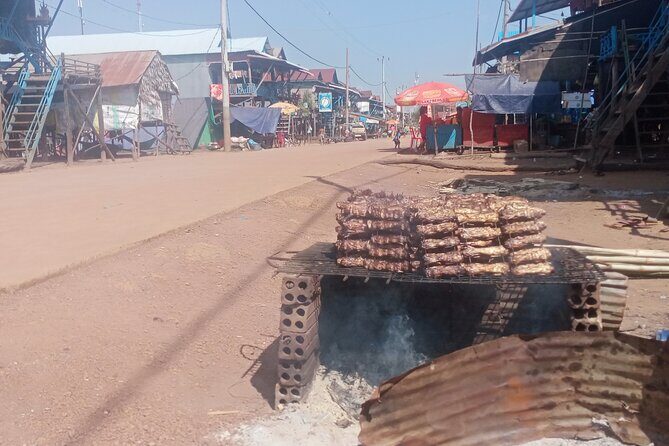
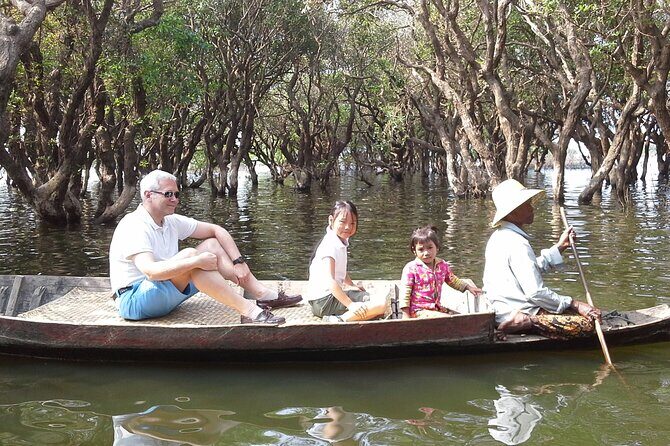
Then comes the heart of the setting: Kampong Phluk. The area is known for flooded mangrove trees and forests, and it ties directly into Tonle Sap—described here as the 2nd largest freshwater lake in the world.
Why that matters for your experience: you’re seeing a landscape that isn’t static. The water level changes seasonally, so what looks like an outdoor world in the dry season can become a water-and-forest system in the wet season. Even within a few weeks, the vibe can shift.
In the time you have here (about 2 hours), you’ll focus on:
- the flooded mangrove and forest feel
- the relationship between the lake and surrounding life
- whatever explanations your guide shares to connect the dots
One consideration: the flooded forest areas can be visually intense, but they can also be hot and bright. If you’re sensitive to sun, plan for it—water is provided, but you’ll still want to manage your time outside.
Also, since your day stays compact, you won’t get “hours and hours” of wandering. This stop is best if you enjoy guided context and prefer seeing more variety rather than repeating the same view from the same spot.
A few more Siem Reap tours and experiences worth a look
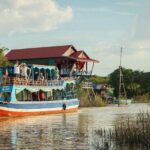
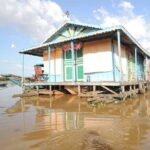
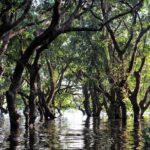
Stop 3: Kampong Phluk Floating Village—life on stilts
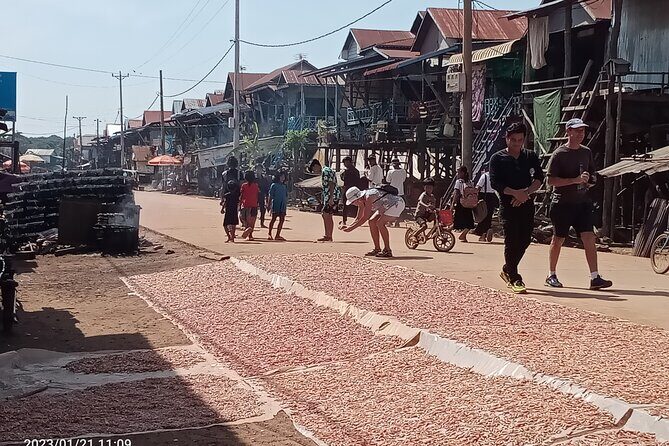
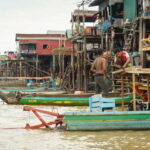
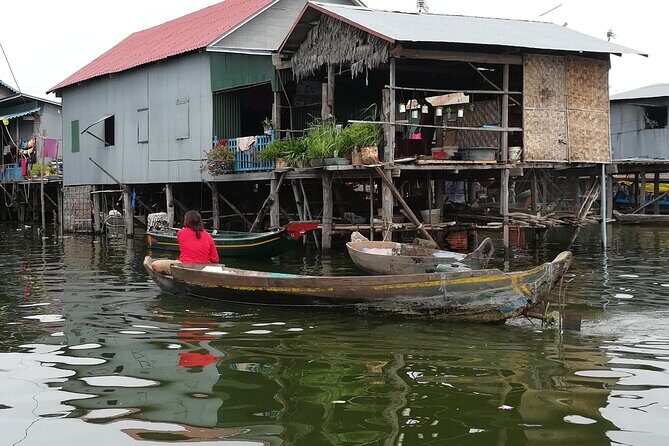
The final stop is the one most people come for: Kampong Phluk Floating Village. Here you’re in the middle of a community that depends heavily on fishing—especially shrimp—during the wet season.
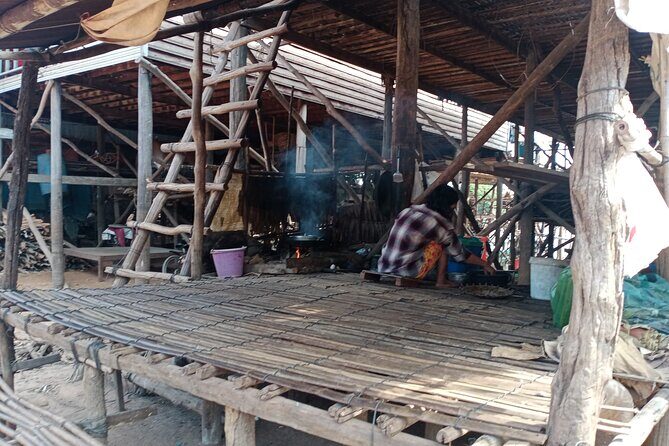
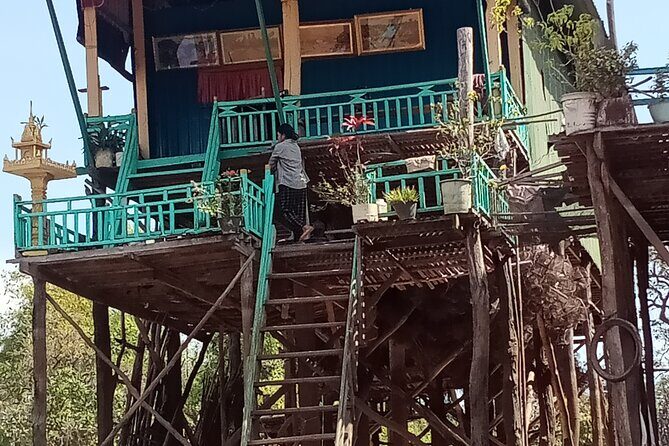
The most striking detail is the construction. Many houses and buildings are made on stilts, described as 6 to 9 meters high, so homes stay above the rising water. That single fact makes the whole place make sense. It’s not that the village is floating by choice—it’s floating because the environment demands it.
You’ll also want to understand what you’re seeing beyond the postcard angle:
- Stilts aren’t just architecture; they’re survival strategy for wet-season water
- Fishing seasons shape routines, not just livelihoods
- The village layout reflects how people move, work, and live in a water-dependent economy
This stop is about 1 hour, and it includes extra costs:
- Floating village admission is listed at $2 per person (not included in the base price)
- There’s also a short boat ride fee of $20 per booking (not included)
That boat fee is something I’d plan for early, not last minute. If you’re traveling with someone, it can be a nicer way to spread the total. If you’re solo, it still may be worth it, but mentally add it in so you don’t feel surprised when the bill comes together.
Your guide is the real multiplier (Sim-style explanations)
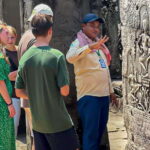
The reviews strongly point to one thing: the guide’s communication style turns the day from sightseeing into understanding.
In practical terms, a guide such as Sim can make a huge difference in two ways:
1) English clarity. You should be able to follow what’s happening without guessing.
2) Context beyond the stop list. Instead of only describing the village as a static scene, a good guide connects it to broader Cambodia and the way local life runs.
One more skill that shows up in the feedback: flexibility. On days when travel schedules get tight, having a guide who can adjust timing matters. If you’ve got a flight or another commitment back in Siem Reap, this is the kind of tour that’s more likely to keep you on track.
In other words, you’re not just paying for transportation. You’re paying for interpretation—how to read the market, the flooded forest, and the stilted houses as parts of one system.
Practical stuff you’ll thank yourself for
A few details can make your experience smoother.
Wear flat shoes. You’ll be on your feet and walking at least at the market, plus navigating your way around the area during the other stops. The tour explicitly recommends flat, comfortable shoes.
Expect a short day, not a long expedition. At about four hours, you’ll see a lot, but you won’t have the luxury of lingering endlessly. Keep your pace flexible and let your guide decide how to manage time.
Bring a calm, respectful attitude for the floating village. This is a working community that depends on fishing. Treat it like you’d treat a neighborhood back home: look, learn, and don’t act like it’s a theme park.
Plan for the extra fees up front. The floating village admission and the short boat ride fee are clearly listed as additional. Doing the mental math before you go helps you enjoy the experience instead of checking the price mid-moment.
Should you book this private Kampong Phluk tour?
I’d book it if you want a half-day, structured way to see Tonle Sap area life without losing a full day in transit. It’s a good match if you care about culture and how people adapt to their environment—not just temple walls and stone carvings.
You might skip it if you’re the type who wants a super slow pace, lots of free time to roam, or deep nature time without guided stops. With only about four hours total, you’re sampling the highlights, not doing an all-day immersion.
If you’re short on time, traveling as a pair or small group, and you appreciate clear English explanations, this private route can feel like smart value: you get transport, a guide, pickup convenience, and three distinct scenes—market, flooded forest, and stilted floating village—stitched into one efficient day.
FAQ
How long is the private half-day tour?
It runs about 4 hours (approx.).
How much does the tour cost?
The price is $35.00 per person.
Is hotel pickup and drop-off included?
Yes, hotel pickup and drop-off are included.
Is this tour private?
Yes. It’s a private tour/activity, and only your group participates.
What’s included in the price?
Included items are an English speaking tour guide, a private comfortable vehicle, hotel pickup and drop-off, and bottled water.
What extra fees should I expect?
Kampong Phluk Floating Village has an admission fee of $2.00 per person, and there is also a short boat ride fee of $20.00 per booking (both not included).
Can I cancel for a full refund?
Yes. You can cancel up to 24 hours in advance for a full refund. If you cancel less than 24 hours before the experience starts, the amount paid is not refunded.