REVIEW · SIEM REAP
Seat-In-Coach: Small Circuit tour with Sunrise at Angkor Wat
Book on GetYourGuide →Operated by Angkor T.K. Travel & Tours · Bookable on GetYourGuide
Sunrise at Angkor changes the math of mornings. This Angkor Wat sunrise circuit is built around the early light and then keeps going through Angkor Thom and Ta Prohm, so you get the iconic wow moments before midday heat. The big trade-off is timing: hotel pickup runs between 4:20 AM and 5:00 AM, so plan on sacrificing sleep.
I especially like the route focus. You hit Bayon with its 216 stone faces, then continue to Ta Prohm, the jungle temple people associate with the Tomb Raider look—no wandering in circles for hours.
The experience also shines when your guide leans into timing and photos. Guides such as Touch, Phylom, Phyrom Hoeum, Kim, and SoK have been singled out for guiding people to strong viewpoints and keeping the morning moving with good energy.
In This Review
- Key moments worth planning for
- Why the 4:20 AM start can be worth it
- The temple pass reality: what $30 doesn’t cover
- Angkor Wat at first light: Suryavarman II’s big statement
- Angkor Thom complex and Bayon’s 216 faces
- Ta Prohm jungle ruins: the Tomb Raider vibe in real life
- Timing, pace, and how guides shape your day
- What you’re really paying for in the $30 seat-in-coach
- Who this sunrise circuit fits best
- Should you book this Angkor Wat sunrise tour?
- FAQ
- What time is hotel pickup?
- How long is the tour and when does it end?
- Which temples are included?
- Do I need to buy the Angkor Temple Pass?
- What clothing is required to visit the temples?
- Is there free cancellation?
Key moments worth planning for
- Early pickup (4:20 AM to 5:00 AM) so you’re inside Angkor Wat for sunrise light
- Bayon Temple’s 216 faces across 54 towers, four faces per tower
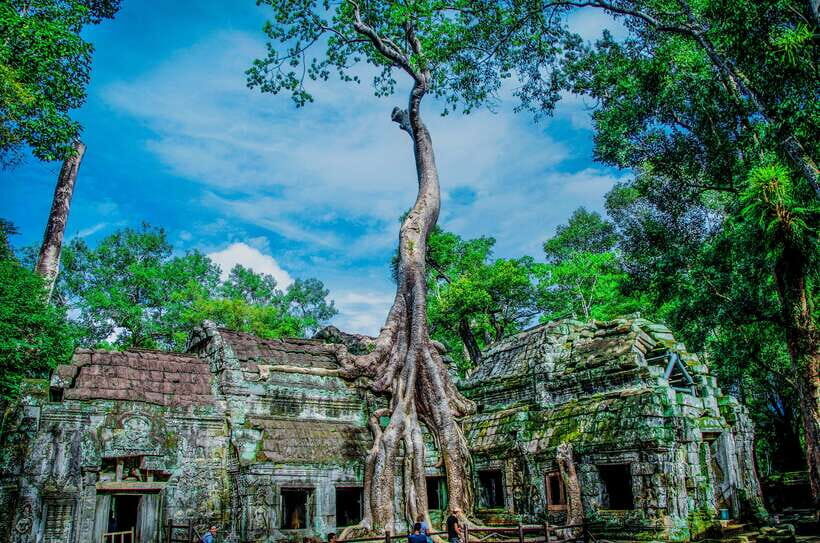
- Ta Prohm’s jungle setting where stone and vines grow together, famous from Tomb Raider
- Guide-led photo timing with suggested spots to frame the best angles
- A real dress-code check: long pants covering the knee and a shoulder-covering shirt
Why the 4:20 AM start can be worth it
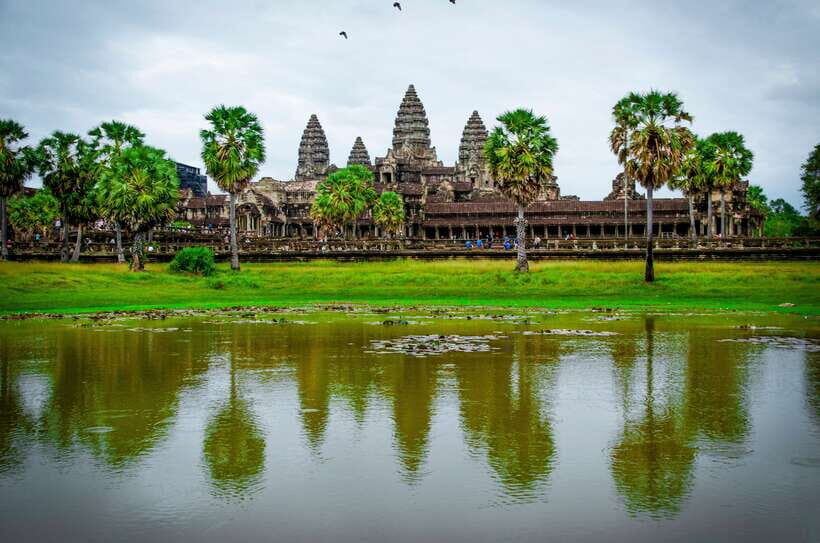
This tour is scheduled for sunrise, which means everything starts early. Pickup is from your hotel lobby between 4:20 AM and 5:00 AM, and the goal is simple: be at Angkor Wat when the sky turns and the crowds are still manageable. If you’ve ever visited Angkor later in the morning, you know how quickly the whole place fills in.
What makes this timing valuable isn’t just the sunrise itself. It also buys you calmer temple viewing. After the light show, you move right into the next stops—Angkor Thom complex, then Bayon, then Ta Prohm—so you’re not stuck commuting or waiting between highlights.
Do you need to be the kind of person who likes early mornings? Not necessarily. You just need to treat it like a morning exercise: set your alarm, bring water, wear the right clothes, and accept that you’ll be tired for a while. The payoff is seeing these stone sites at a different emotional temperature than the usual late-day crush.
A few more Siem Reap tours and experiences worth a look

The temple pass reality: what $30 doesn’t cover
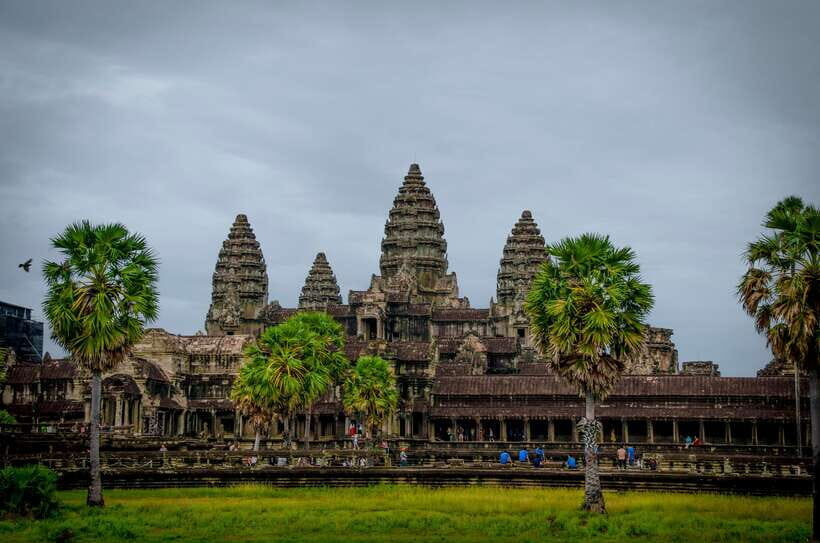
The price advertised for the tour is $30 per person, but the Angkor Temple Pass is not included. The pass is listed separately at $37 per person (for a one-day pass). The practical takeaway is that your true base cost is closer to $67 total, before any extras.
Here’s why that matters: the tour still handles the parts that reduce friction. You’ll purchase your pass and enter with your guide, which helps avoid the confusion of where to go at an hour when everything feels half-asleep. And since the pass is required for temple entry, paying attention to it up front keeps the sunrise plan from turning into a scramble.
My advice: budget for the pass the same way you budget for airfare. The tour is priced like you’re paying for transport, an English-speaking guide, and a smart route through three major sites. The pass is the separate temple access fee you must add to your total.
Angkor Wat at first light: Suryavarman II’s big statement
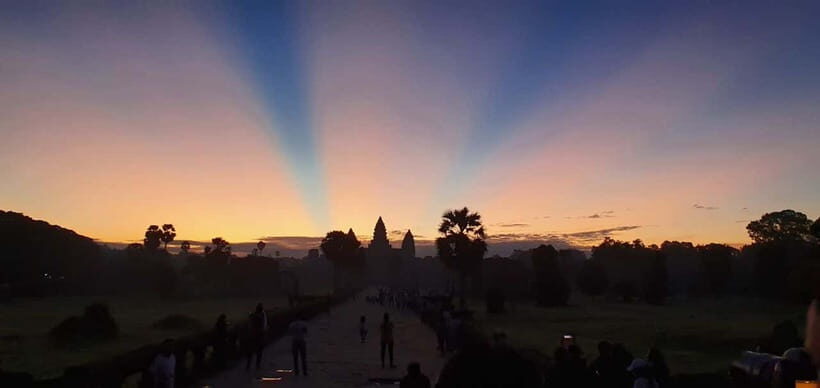
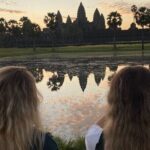
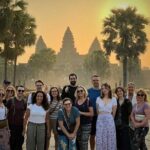
Angkor Wat is where this whole day begins. The tour takes you inside the Angkor Wat Temple Complex so you can watch sunrise over one of Cambodia’s most respected ancient monuments. Angkor Wat’s origin is tied to the first half of the 12th century under King Suryavarman II, and the sheer size is part of the experience: the structures don’t just impress you, they overwhelm you in a way that’s hard to fake in photos.
What you’ll feel during sunrise viewing is different from daytime sightseeing. Morning light flattens shadows, brings out details in stone, and makes the whole complex look more balanced than it does when the sun is high. Even when weather doesn’t cooperate perfectly, being there early still helps you get better viewing conditions than you’d get if you rolled in after breakfast.
One practical note: the tour includes an English-speaking guide plus a refreshment drink and cold towel. That’s not just comfort—it’s useful when you’re awake before dawn and about to walk through stone paths in full heat later. Wear your required temple clothing and let your guide handle the timing.
Also, sunrise can be weather-dependent. If skies are overcast, you might not get the same dramatic light you were hoping for—but arriving early still makes the temples feel less chaotic and gives you time to explore with breathing room.
Angkor Thom complex and Bayon’s 216 faces
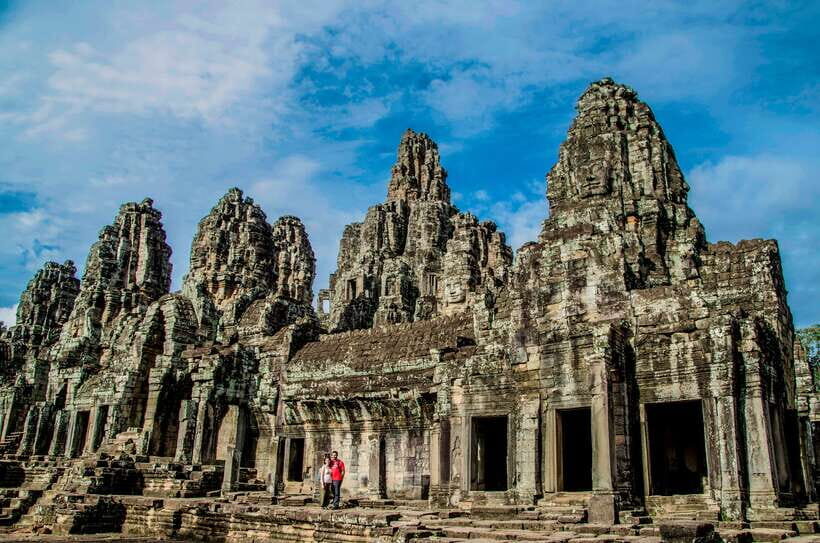
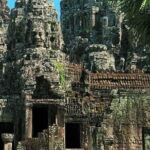
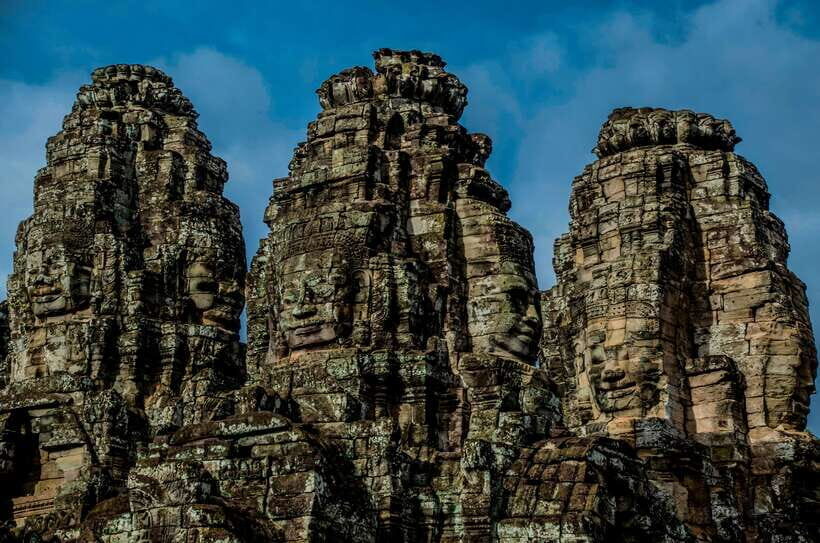
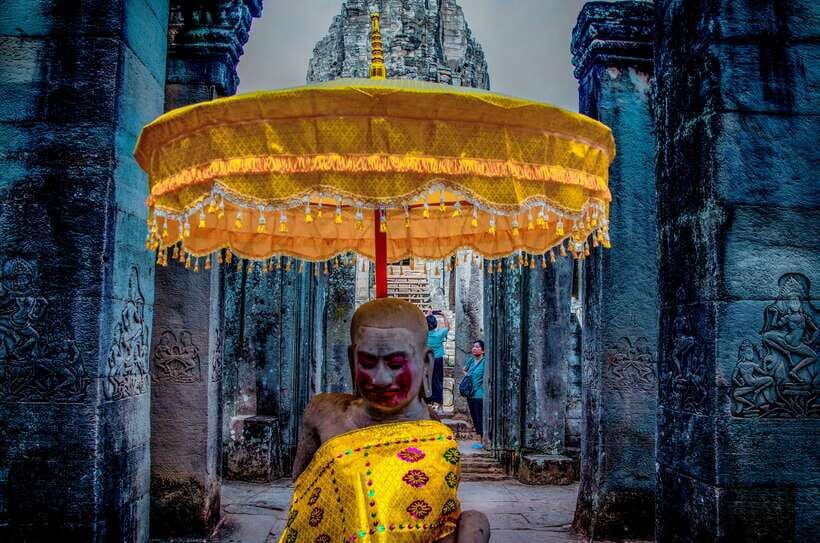
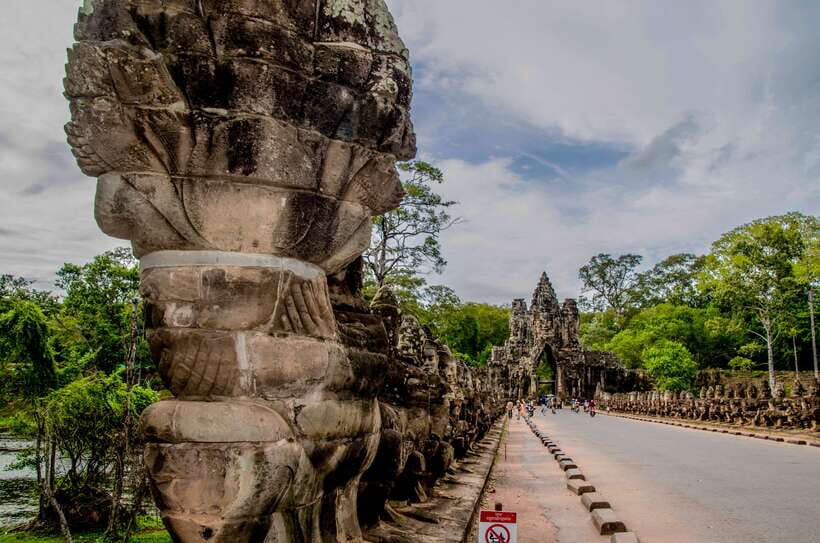
After Angkor Wat, you continue into the Angkor Thom complex, then focus on Bayon. Bayon is the temple people recognize instantly: it’s famous for giant stone faces carved into towers. The details are part of why this stop is so memorable. Bayon has 54 towers, and each tower has four faces, for a total of 216 faces.
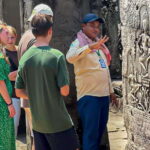
What I like about Bayon in a guided format is that it’s easy to get lost visually on your own. When you’re staring up at the faces, you can miss the patterns and the layout. A guide helps you read the temple faster: where to stand, what to look for, and how to move so you spend less time circling and more time actually seeing.
There’s also a photo rhythm here. People crowd into the same angles, especially around the most iconic face towers. A good guide can steer you toward viewpoints that give you stronger compositions and less time waiting behind other phones.
And yes, Bayon can get busy. Still, this tour’s schedule is built to move you through the key spots across the morning, which helps you avoid the worst peak congestion. If you’re sensitive to crowds, it’s worth knowing that Bayon is one of the most popular stops in the whole park.
Ta Prohm jungle ruins: the Tomb Raider vibe in real life
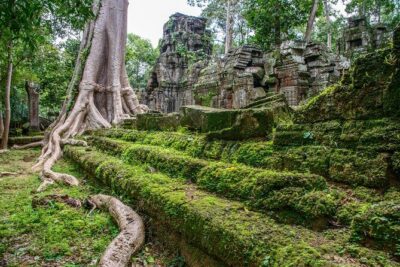
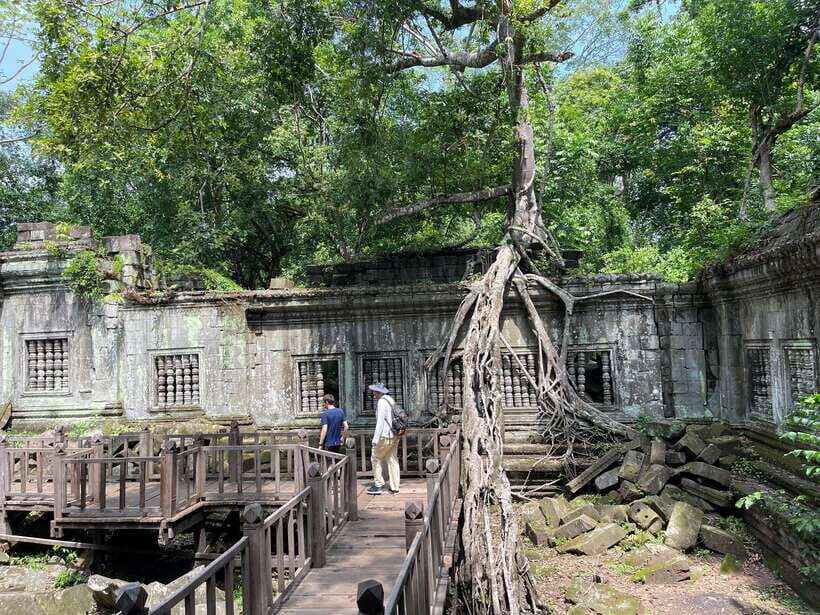
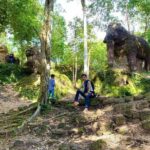
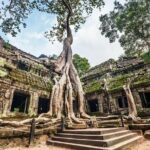
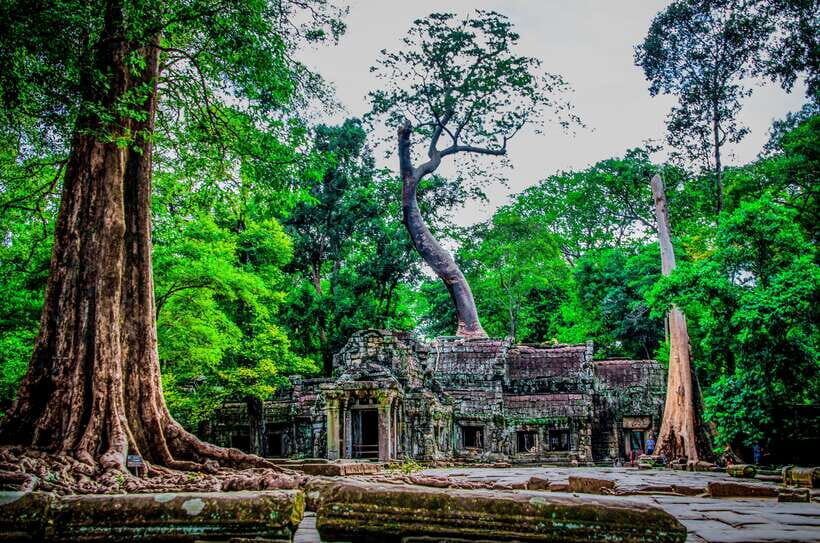
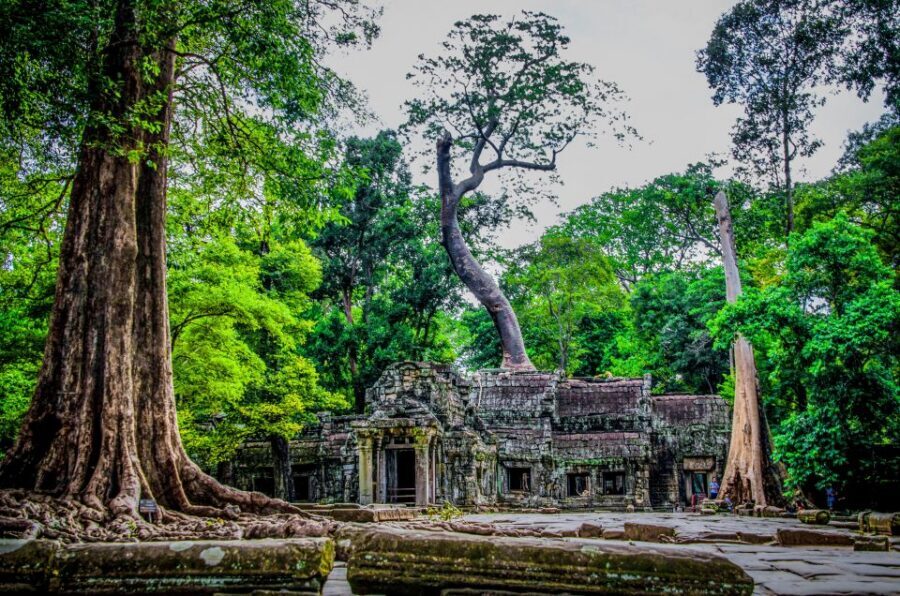
The last major temple on the route is Ta Prohm, known for its jungle-clad ruins where stone structures are tangled with tree roots and vines. This is the stop with the strongest pop-culture pull. Ta Prohm is widely associated with the Tomb Raider look, and walking through it in person really does match that eerie, myth-ruin feeling people remember from the movie scene.
What’s special here is the texture. The temple doesn’t feel like a neatly restored monument. It feels like time is actively still happening to it. The vines and roots create natural framing, and the “messy beauty” is the point. Because it’s a famous photo stop, you’ll likely see more people hovering around the same areas, but the setting itself helps you find your own angles even when it’s crowded.
The tour structure also helps. By the time you reach Ta Prohm, you’ve already had the early-light wow at Angkor Wat and the face-tower impact at Bayon. Ta Prohm then shifts the mood from perfect symmetry to wild entanglement, so the day doesn’t feel repetitive.
If you love photography, this is the one that rewards you the most. Roots can create leading lines. Vines add foreground detail. And the guide’s timing can matter because the light and crowd density change quickly across the morning.

Timing, pace, and how guides shape your day
This is a 7-hour experience, and it’s designed to cover three major stops without turning into a day-long temple marathon. Pickup happens early, and the tour ends with a return transfer to your hotel at 12:00 PM.
That pace is part of the value. Angkor is huge, and if you try to piece together everything alone, you can lose hours to navigation, ticket confusion, and long waits. A seat-in-coach setup with a small circuit-style route helps you focus on the temples instead of logistics.
The other big factor is your guide. Different guides emphasize different things. Some guides lean into photo planning and viewpoint suggestions; others keep context short and practical so you have time to wander. Several guides named in feedback—Touch, Phylom, Phyrom Hoeum, Kim, and SoK—have been praised for energy, photography ideas, and helping people find good spots.
There are also a couple of things to keep in mind:
- English can be easier or harder depending on the guide, so if you care about deeper explanations, ask questions early.
- The tour is action-packed, but many runs still leave enough time to explore on your own at each temple.
If you want the best experience, go in with a simple game plan: ask one or two questions about what you’re looking at, then spend most of your time walking and looking up.
What you’re really paying for in the $30 seat-in-coach
On paper, $30 is a bargain. In real life, the price makes more sense when you separate what’s included and what isn’t.
Included:
- Mini van or tour bus transportation
- English-speaking guide
- Refreshment drink and cold towel
- Temple visits for Angkor Wat, Angkor Thom complex, and Ta Prohm
Not included:
- Angkor Temple Pass (one-day pass listed at $37 per person)
So the $30 is mostly paying for being moved efficiently, getting inside with a guide, and receiving small comfort support during a long early morning. For many people, that’s a fair trade: your time is expensive, and you avoid the common hassles that can wreck a sunrise plan.
Value also comes from the order of the day. Sunrise at Angkor Wat sets the emotional tone. Bayon gives you one of the most distinctive architectural scenes in the park. Ta Prohm changes the visual theme completely. You get a sweep of styles—formal symmetry, face-tower storytelling, then jungle entanglement—without needing separate days.
What you should bring to make the most of it:
- Long pants that cover your knee and a shoulder-covering shirt (this is required)
- A camera or phone you’re comfortable using early in the morning
- Water planning, since you’ll be active before noon and temperatures can rise fast
Who this sunrise circuit fits best
This tour fits best if you want the big Angkor icons in one efficient morning and you’re okay with the early start.
You’ll likely enjoy it if:
- You’re visiting Siem Reap for a limited time and want sunrise at Angkor Wat plus two additional signature temples
- You prefer a guided route that helps you move between sites without wasting time
- You want strong photo opportunities and you’ll take direction on where to stand
It might feel less ideal if:
- You hate waking up before dawn
- You want long, slow, deeply detailed explanations at each temple (this format is more about coverage and momentum)
- You’re very uncomfortable with crowds at Bayon and Ta Prohm, which are popular by nature
Should you book this Angkor Wat sunrise tour?
If sunrise is on your Angkor checklist, this is a strong way to do it. The route hits Angkor Wat, then Bayon’s 216 faces in the Angkor Thom complex, and ends at Ta Prohm—a line-up of sights that makes sense together visually and emotionally. The English guide plus transport plus included small comforts (drink and cold towel) help you focus on the temples instead of the logistics.
Book it if you can handle the 4:20–5:00 AM pickup and you’re okay paying the separate $37 temple pass. If you’d rather sleep in and don’t care about sunrise, you might be better with a later departure where you can take more time.
Either way, do yourself a favor: plan your clothing ahead. The temple dress code is real, and it’s easier to get ready the night before than to find a solution at 4:30 in the morning.
FAQ
What time is hotel pickup?
Pickup is scheduled from your hotel lobby between 4:20 AM and 5:00 AM.
How long is the tour and when does it end?
The tour runs for 7 hours and finishes with a transfer back to your hotel at 12:00 PM.
Which temples are included?
The tour includes Angkor Wat, the Angkor Thom complex (including Bayon), and Ta Prohm.
Do I need to buy the Angkor Temple Pass?
Yes. The Angkor Temple Pass is not included. The one-day pass is listed at $37 per person, and you purchase it before entering.
What clothing is required to visit the temples?
You must wear long pants that cover the knee and a shirt that covers the shoulders.
Is there free cancellation?
Yes. You can cancel up to 24 hours in advance for a full refund.