REVIEW · SIEM REAP
Sharing Trip to Angkor Temple with sunset
Book on GetYourGuide →Operated by Tour Guide Team Phnom Penh · Bookable on GetYourGuide
Angkor looks unreal until you’re walking through it. This day tour strings together Angkor Wat, Angkor Thom, and Ta Prohm with an English guide who helps you see the place instead of just photographing it.
I especially liked the smooth start and finish: hotel pickup and drop-off and a separate entrance that helps you bypass some waiting. My other favorite part was how the guide turns carvings, wall layout, and temple purpose into something you can actually picture as you walk.
The only real drawback is the heat and the amount of walking. Even with shade in spots and water on hand, you’re outside a lot, so plan for long, sunny stretches and bring the right clothes.
In This Review
- Key things that make this Angkor tour worth your time
- A one-day Angkor plan that actually works in the heat
- Where your day starts: hotel pickup, air-conditioned travel, and a guide who sets the tone
- Angkor Wat: walk in early, look longer
- Angkor Thom and the Southern Gate: a city defended by walls and water
- Bayon Temple: 216 faces and the art of picking angles
- Baphuon and the reclining Buddha: a long story of damage and rebuilding
- Phimeanakas: shaded steps, jungle views, and stone that feels alive
- Terrace of the Elephants and the Royal Palace esplanade: where power gets translated into stone
- Ta Prohm near sunset: roots, moss, and why this temple became famous
- Lunch stop and what you should budget for food
- Price and value: the $19 cost is only the start
- What to bring so the day feels easier (not just possible)
- The main challenge: walking in heat and dust
- Who this Angkor tour is best for
- Should you book this Angkor temples day trip?
- FAQ
- How much does the Angkor temple tour cost?
- Are temple ticket fees included?
- What’s included in the tour price besides the guide?
- What temples are visited during the day?
- How long is the tour?
- Do I need to pay for lunch?
- What language is the tour guide?
- What should I bring for the day?
- Are there dress rules inside temples?
- Is this tour suitable for kids, wheelchairs, or visually impaired travelers?
- What cancellation options do I have?
Key things that make this Angkor tour worth your time
- Hotel pickup, drop-off, and skip-the-line entry to keep your day efficient in Siem Reap heat
- English guide with temple-by-temple explanations, including what you’re looking at on the walls
- Angkor Thom route from the South Gate, with a moated city you can still see today
- Bayon’s 216 faces and specific photo angles so your pictures look intentional, not random
- Baphuon and the reclining Buddha reconstruction story, including the long disruption from war
- Ta Prohm at golden hour, with Spung tree roots and moss for serious explorer photos
A one-day Angkor plan that actually works in the heat
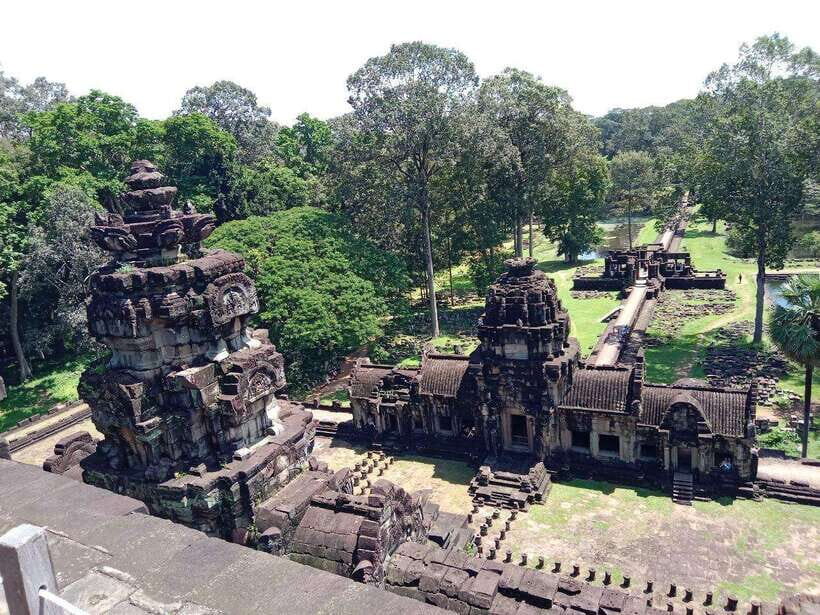
This is a full-day Angkor temples outing from Siem Reap Province, built around the smartest idea in town: go early. The temples are iconic, but they’re also popular. Starting sooner helps you beat the worst heat and reduce time lost to crowds, so you spend more of the day moving through temples and less time standing around.
You’ll be outdoors most of the time. The tour sets you up with the basics you’ll need to stay sane: cold water and wipes along the way, plus reminders about what to wear. Still, you should come ready for sun, dust, and long steps between sites.
You can also read our reviews of more evening experiences in Siem Reap

Where your day starts: hotel pickup, air-conditioned travel, and a guide who sets the tone
You’re collected right from your hotel lobby, then transferred by air-conditioned vehicle. That matters more than people think. After a long day of walking, the easiest win is having transportation that keeps you from baking on the drive between temples.
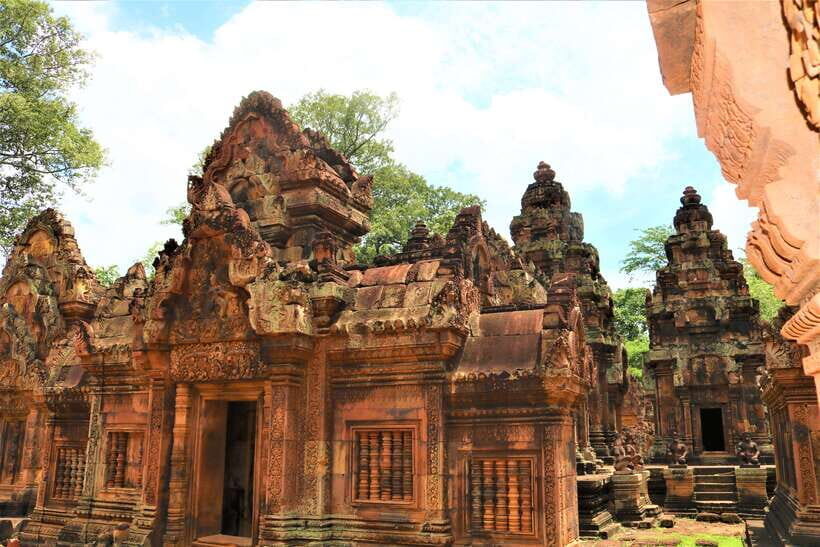
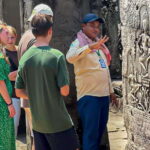
A licensed English guide runs the show. The tour focuses on more than names. You get context for each monument—why it’s shaped the way it is, what the carvings mean, and how the site fits into Khmer civilization, history, and society. It’s the difference between seeing Angkor and understanding it enough to enjoy it twice.
Angkor Wat: walk in early, look longer
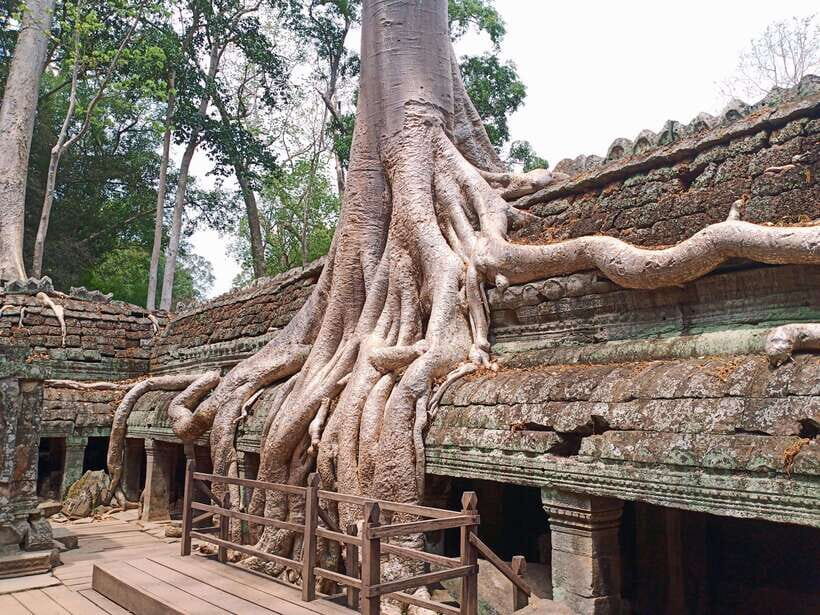
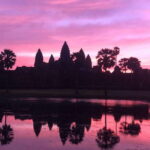
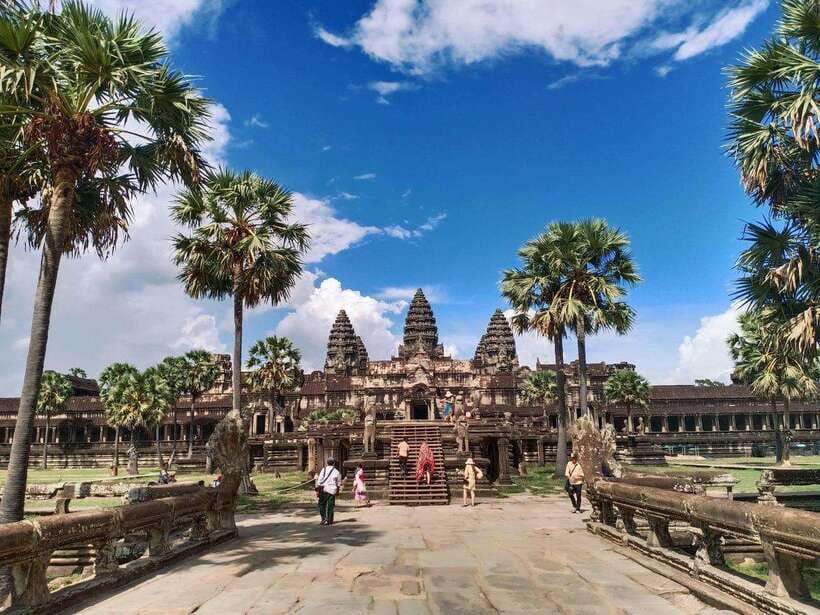
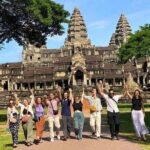
Angkor Wat is the stop most people dream about. It’s also the one that can feel overwhelming if you only skim it. Here, you’ll spend about 2.5 hours with a guided visit and photo stops.
You’ll hear how it started as a Hindu temple complex and later became Buddhist. That shift is part of why it’s so powerful to visit in person: the architecture holds layers. Angkor Wat is also the largest religious monument in the world and a symbol of Cambodia, appearing on the national flag—so you’re not just visiting a temple, you’re walking through the country’s identity.
Practical tip: bring your camera, but also slow down. Angkor Wat rewards people who stop at a few key viewpoints and let the details come into focus—especially the galleries and the way light hits stone surfaces.
Angkor Thom and the Southern Gate: a city defended by walls and water
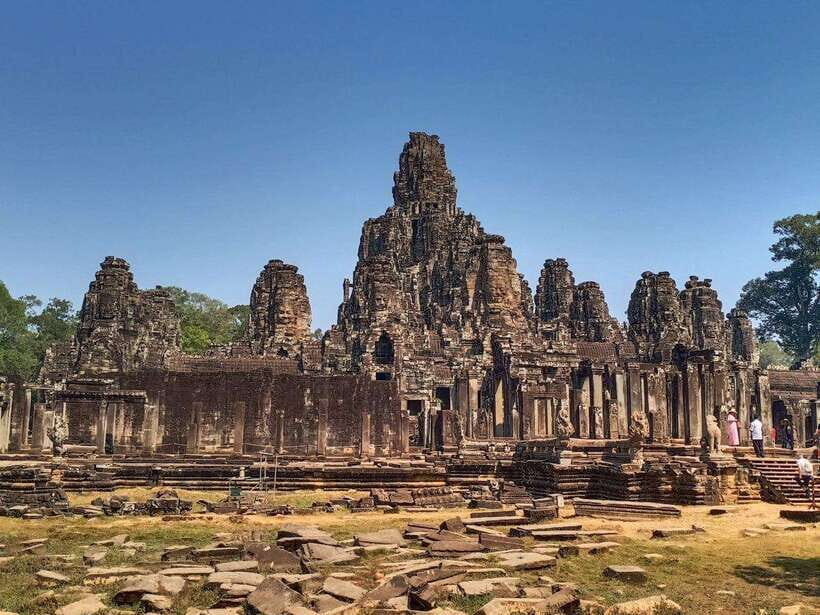
Next comes Angkor Thom, entered through the South Gate. This is where Angkor shifts from “one temple” to “an entire ancient city.” Expect photo stops and a guided walk that helps you understand the layout as you go.
The wall is described as rising about eight meters high, and the laterite perimeter is roughly 3 by 3 kilometers. There’s also a moat that’s still flooded today. When you see that scale in real life, it hits you how seriously the builders treated defense, movement, and ceremonial space all at once.
If you’re the kind of traveler who likes to know what you’re standing inside, this part is a great payoff. The guide helps you translate the geometry into something you can navigate with your eyes.
Bayon Temple: 216 faces and the art of picking angles
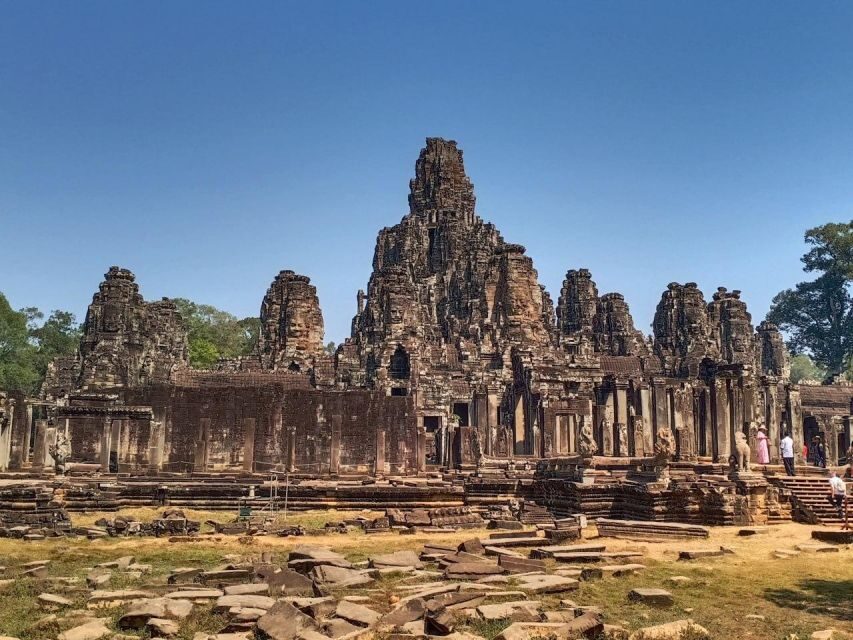
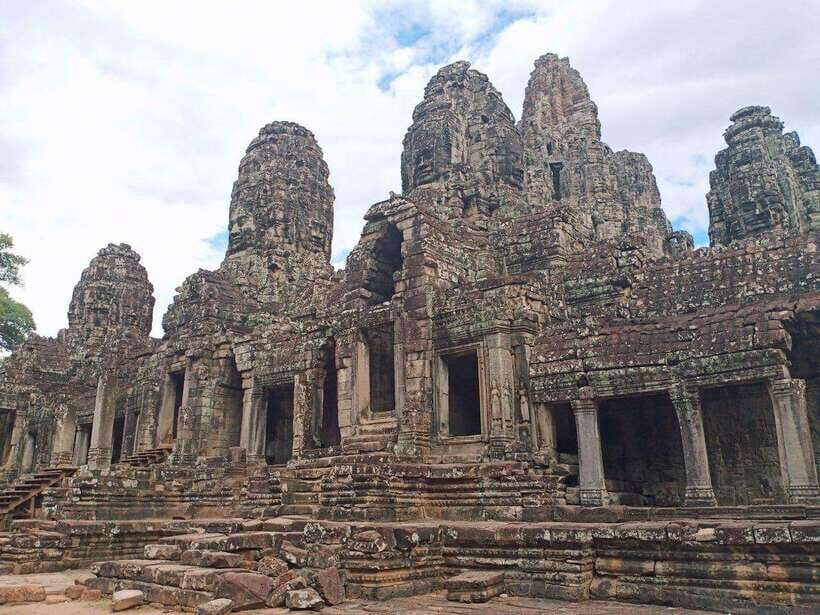
Bayon is the emotional center of Angkor Thom. The famous detail here is the 216 enigmatic faces watching in different directions, like the temple is constantly checking your position.
You’ll likely spend around 1.5 hours at Bayon. The guide points out the best angles for photography here, and that’s huge. Bayon photos can look flat or random if you’re just shooting from wherever you stand. With direction, you can catch the faces where they feel most alive, and where carvings and stone textures read clearly.
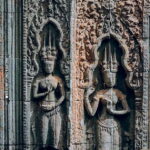
Also, take a moment to focus on the galleries. You’ll get explanations about the intricate carvings, so you know what you’re looking at rather than just counting reliefs.
Baphuon and the reclining Buddha: a long story of damage and rebuilding
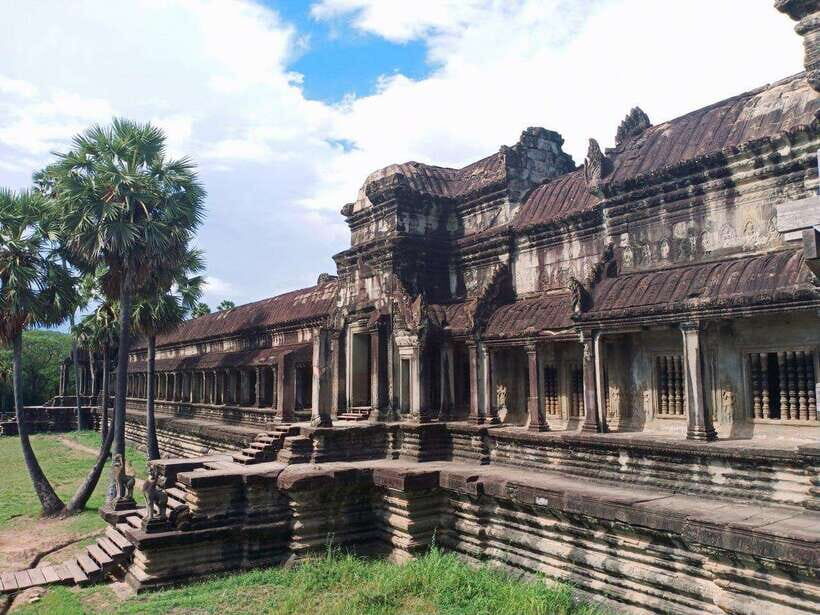
From Bayon you move to Baphuon, with a guided visit and time to explore the causeway. The causeway concept matters here: it’s part of how you experience the temple’s verticality and shifting sightlines as you move.
A key moment is the giant reclining Buddha. What makes this stop stand out is the human story behind it. The reclining figure was disrupted for decades and only put back together in 2011 after a 37-year interruption caused by the war.
So when you look at the Buddha now, you’re also looking at survival and restoration. That gives the scene extra weight beyond its visual impact.
Phimeanakas: shaded steps, jungle views, and stone that feels alive
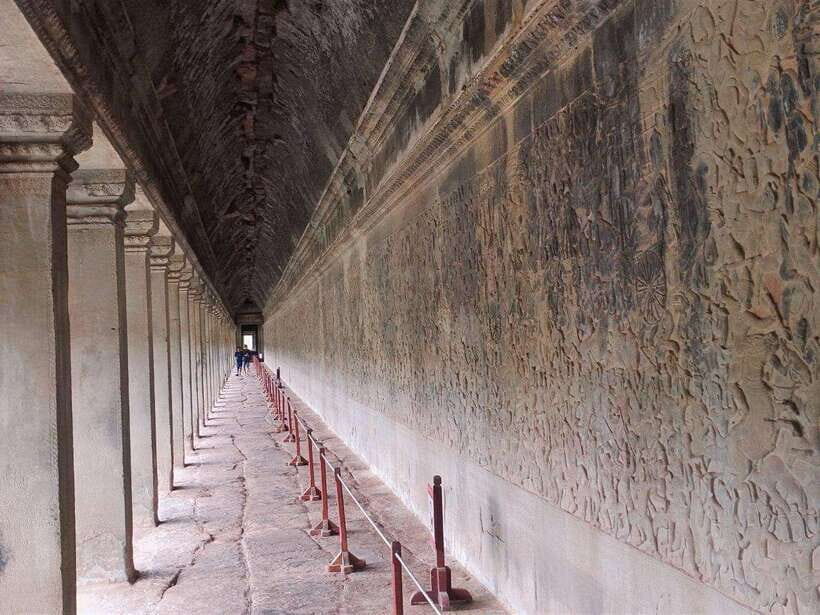
Phimeanakas sits in a more shaded, jungle-like setting. You’ll climb steep steps to reach viewpoints, and the reward is a view that feels like you’re looking out over treetops instead of just over a courtyard.
This stop is shorter than Angkor Wat but still meaningful, about 30 minutes of guided time. Expect a guided explanation and time for photos, but also expect that physical effort. If you don’t love steep stairs, bring a steady pace and take breaks when you can.
Terrace of the Elephants and the Royal Palace esplanade: where power gets translated into stone
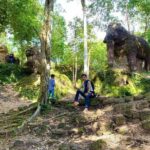
Then you’ll head to the area commonly called the Terrace of the Elephants. It’s part of the broader royal palace esplanade concept, so it’s less about one single icon and more about how the Khmer elite staged authority through monumental space.
You’ll get guided stops and photo opportunities here too, around 30 minutes. And the tour continues into a shaded area at Preah Palilay, which helps you reset before the most “cinematic” temple of the day.
This is also a good moment to drink water and slow down. You’ll feel the momentum shift as the day moves toward late afternoon.
Ta Prohm near sunset: roots, moss, and why this temple became famous
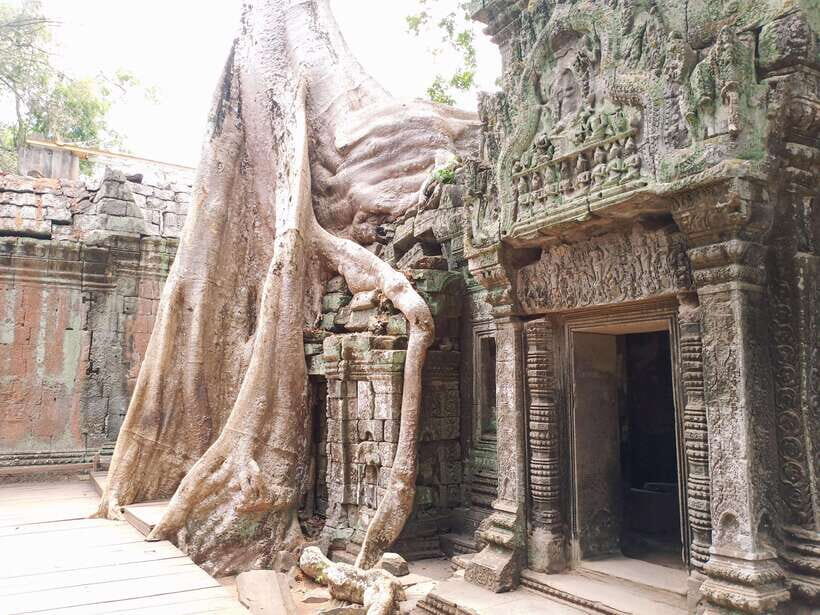
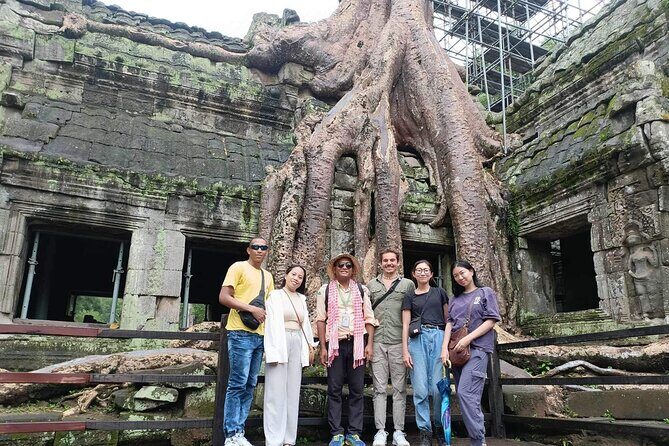
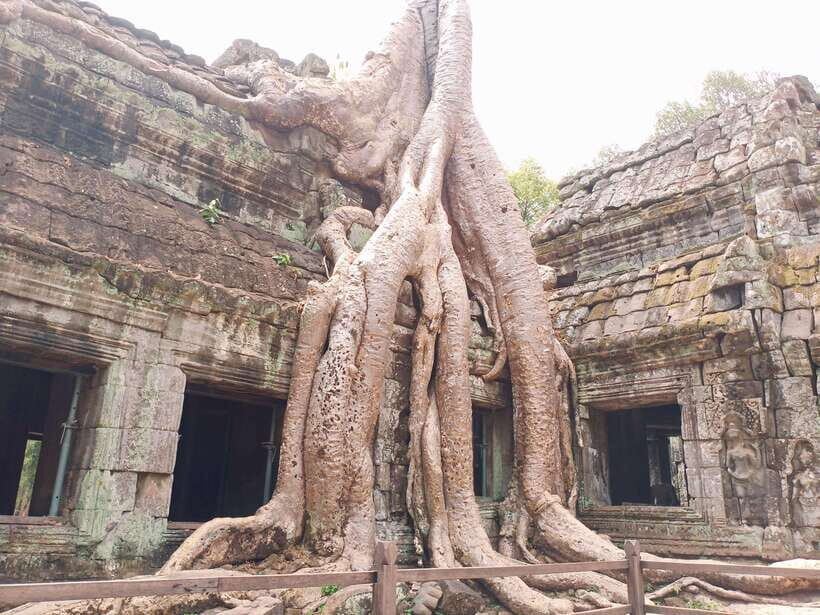
Ta Prohm is the one most people recognize. It gained major 21st-century fame through the movie Tomb Raider, and today it keeps that spotlight while still being a serious Khmer temple site on its own.
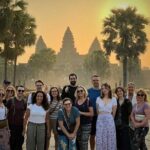
You’ll visit in the afternoon with time to explore and photograph. The tour includes a reminder to catch sunset opportunities here, and the setting is made for it: stone, shadow, and those famous roots.
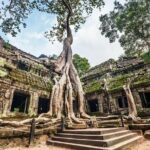
The detail to look for is the relationship between the Spung tree roots (Tetrameles nudiflora) and ancient stones covered with moss. It’s not just a cool photo. It’s a live example of how nature can grab hold of human works over time, and how the temple feels both abandoned and protected at once.
Bring your camera and power bank if you can. Late-day photos can drain batteries fast, especially if you’re trying to shoot sunset light and not just portraits of stone.
Lunch stop and what you should budget for food
Lunch isn’t included in the tour price. You’ll have a break for lunch during the day, and your meal cost is typically in the USD 7–10 range.
In practice, this works well because it gives you a chance to sit down, hydrate, and recharge before the final temple stretch. The one thing to do is keep cash ready for lunch, since the tour instructions specifically call out bringing cash.
Price and value: the $19 cost is only the start
The advertised tour price is $19 per person, and that’s the number you’ll feel good about first. But Angkor days usually break into three buckets: the tour, temple entry, and food.
- Tour price: $19
- Temple ticket: $37 (not included)
- Meals: roughly USD 7–10 (not included)
So the real picture is closer to paying for a guided day plus entry fees that remain a big part of the cost. Where the tour earns its value is in what’s wrapped up in that $19: hotel pickup and drop-off, air-conditioned transport, a professional licensed English guide, cold water and wipes, travel insurance, parking, and toll roads. It’s also built to help you skip some waiting through a separate entrance.
If you hate logistics and want a guided route that reduces wasted time, this format is strong value. If you’re traveling super independently and already plan to manage everything yourself, you might compare prices with other options—though the convenience here is real.
What to bring so the day feels easier (not just possible)
This tour is practical about what you need. Use it.
Bring:
- sun hat, sunglasses
- sunscreen
- long sleeves and long pants (you’ll also need temple-appropriate coverage)
- comfortable closed-toe shoes
- camera, power bank
- cash
- insect repellent (biodegradable)
Also, note the temple rule: cover your knees and shoulders while visiting religious monuments. If you show up underdressed, you can end up scrambling for fixes at the worst time.
The main challenge: walking in heat and dust
The best praise for this tour is also a warning sign: it’s a long temple circuit. Even when the tour keeps moving and the guide stays helpful, you’ll be walking for hours in sunny conditions with dusty paths.
One review-style lesson I’d borrow is this: build your expectations around heat. Have water often. Take short pauses when you feel yourself getting slow. If you’re sensitive to sun or you tire fast, wear your most breathable layers that still meet the dress rule (long-sleeved top, long pants) and use your hat.
If you think long walking might be tough for your body, it’s worth reconsidering this exact format. The tour isn’t designed as a gentle stroll.
Who this Angkor tour is best for
This experience fits you best if:
- you want a structured day with temple context, not just wandering
- you like photography and want guidance on angles (especially at Bayon and Ta Prohm)
- you appreciate convenience like hotel pickup and air-conditioned driving between sites
- you’re okay with sun and a lot of outdoor walking
It may not fit you well if:
- you’re traveling with children under 10
- you use a wheelchair or need accessibility support
- you have specific visual-impaired needs
- you’d rather do Angkor at a slower pace with fewer stops
Should you book this Angkor temples day trip?
I’d book it if you want an efficient, guide-led day that hits the big hitters: Angkor Wat, Bayon, Baphuon, and Ta Prohm with a sunset-style photo window. The biggest strengths are the convenience (pickup/drop-off and skip-the-line entry) and the way the guide explains what you’re looking at, so the monuments feel less like random ruins and more like a coherent story.
I’d think twice if heat and long walking are your biggest travel enemies. If you decide to go, make it easier on yourself: wear proper coverage, bring your hat and sunscreen, hydrate early, and expect you’ll spend more time outside than you might imagine.
If you want Angkor with momentum and real guidance, this one is a very solid choice.
FAQ
How much does the Angkor temple tour cost?
The tour price is $19 per person, but temple entry tickets and meals are not included.
Are temple ticket fees included?
No. The temple ticket is listed as USD 37 and it is separate from the tour price. The tour does include a separate entrance to help you skip the line.
What’s included in the tour price besides the guide?
Transport by air-conditioned vehicle, a professional licensed English guide, travel insurance, toll roads, car parking, cold waters and wipes, and hotel pickup and drop-off are included.
What temples are visited during the day?
You’ll visit Angkor Wat, Angkor Thom (including the South Gate), Bayon, Baphuon, Phimeanakas, the Terrace of the Elephants area, and Ta Prohm.
How long is the tour?
It’s a full day tour with a duration of 1 day.
Do I need to pay for lunch?
Yes. Meals are not included, and the listed meal range is USD 7–10. There is a break for lunch during the day.
What language is the tour guide?
The tour guide is English-speaking.
What should I bring for the day?
Bring sunglasses, a sun hat, sunscreen, long-sleeved shirt, long pants, a camera, cash, biodegradable insect repellent, and a power bank.
Are there dress rules inside temples?
Yes. You’re asked to cover your knees and shoulders when visiting religious monuments.
Is this tour suitable for kids, wheelchairs, or visually impaired travelers?
It’s not suitable for children under 10, wheelchair users, or visually impaired people.
What cancellation options do I have?
Free cancellation is offered up to 24 hours in advance for a full refund.