REVIEW · SIEM REAP
Siem Reap: 1-Hour Cambodian Buddhist Water Blessing
Book on GetYourGuide →Operated by Beyond. Unique Escapes · Bookable on GetYourGuide
A monk’s water ritual is a fast way to reset. In Siem Reap, this Cambodian Buddhist water blessing at Wat Arang Pagoda brings you into a real, working temple setting—not just another photo stop. I especially like how it explains the meaning of the ceremony as you go, and how you can participate in one of two styles of blessings (light sprinkling or a longer water pour).
One thing to consider: if you really want to hear every word of the chanting, the water itself can get loud, and you may not always have full control over which blessing style you get.
In This Review
- Key points to know before you go
- The Wat Arang ceremony: a break from Angkor mode
- How your blessing works, step by step
- Two blessing styles: gentle sprinkling vs full water pouring
- Option 1: Chanting with a light water sprinkling
- Option 2: A longer ritual with blessed water poured over your head
- A heads-up on choice
- What to wear and what to bring (so the ritual feels easy)
- The red wrist ties: the small souvenir that actually means something
- The pagoda tour after the blessing (and why it’s not just filler)
- Market visit: why it’s a smart add-on
- Price and value: what $37 covers in real terms
- Who this water blessing is best for
- Practical expectations: timing, photos, and participation level
- Should you book this Wat Arang Buddhist Water Blessing?
- FAQ
- Where does the water blessing take place?
- How long is the experience?
- What language is the guide?
- Do I get hotel pickup and transport?
- Are there different types of blessings?
- Will I need to change clothes?
- What’s included in the price?
- Is a market visit included?
- What if I need to cancel?
Key points to know before you go
- Wat Arang Pagoda in the countryside south of Siem Reap gives the ceremony a less-touristy feel
- Two blessing styles: a gentle chant-and-sprinkle or a longer head-pouring ritual
- A sarong and a protocol-first guide help you stay respectful and keep clothes as dry as possible
- Your wrist gets red blessing ties at the end—small, meaningful, and very visible
- Market visit included, which adds local life context beyond the pagoda grounds
- Guide support is a big part of the value (many guides are fluent in English and handle photos for you)
The Wat Arang ceremony: a break from Angkor mode
Siem Reap is built around temples. That’s awesome—but after a few mornings of stone and sun, you may want something that feels more human and less archaeological. This water blessing scratches that itch.
The setting matters. You’re taken to Wat Arang Pagoda in the countryside just south of Siem Reap, where monks live and conduct ceremonies as part of daily temple life. Instead of being a spectator, you become part of a ritual meant for well-being: good luck, safe travel, and long life.
I also like the pace. The whole experience runs about 2 hours, with the actual water blessing described as a 1-hour ritual segment. That’s long enough to feel like something is happening, but short enough to fit cleanly between temple days.
A few more Siem Reap tours and experiences worth a look
How your blessing works, step by step
Here’s what the experience is designed around, so you can show up calm and not guessing what comes next.
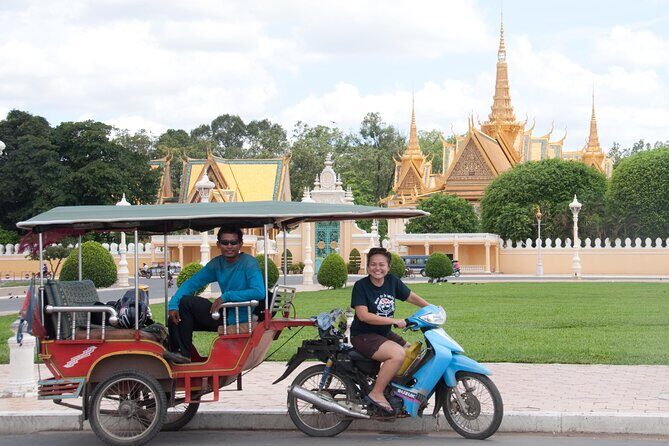
You’ll meet your English-speaking guide, then head by tuk-tuk to the pagoda. Once you arrive, you’ll get guided through basic temple etiquette and what to do during the ceremony. This is one of the practical reasons the tour is worth it: you’re not walking into a ritual blind.
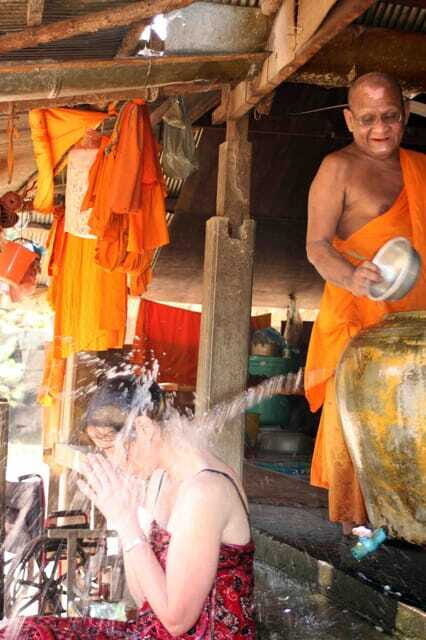
During the blessing, monks chant and perform the water ritual in front of you. The ceremony is meant to bring spiritual good will, and it ends with a clear physical sign that the blessing took place: red ties placed on your wrist.
Many guides also encourage questions and will help translate any monk interaction afterward. In one example, guides like Mr. Sokha have been described as explaining the process well and helping connect what the monk shared with your understanding. Another guide, Lee, has been noted for guiding participants through the ceremony correctly and then walking them around the pagoda afterward.
Two blessing styles: gentle sprinkling vs full water pouring
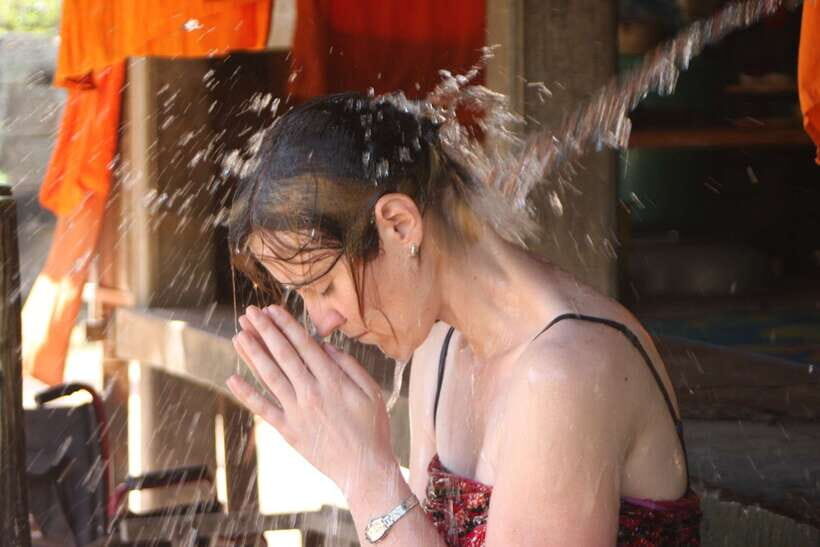
This is the heart of the experience, and it helps to go in knowing what each option feels like.
Option 1: Chanting with a light water sprinkling
In the gentler style, monks chant harmoniously while offering good wishes like good luck, safe travel, and long life. You’ll receive a light sprinkling of water as part of the blessing.
If you’re cautious about getting wet, this is the one you’ll likely prefer. It’s also a good pick if you want the ritual energy without the surprise factor of heavier buckets.
Option 2: A longer ritual with blessed water poured over your head
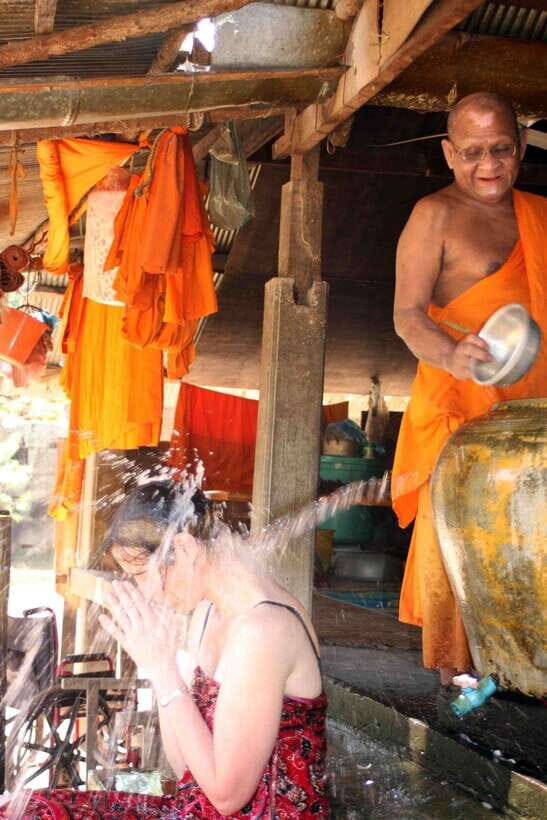
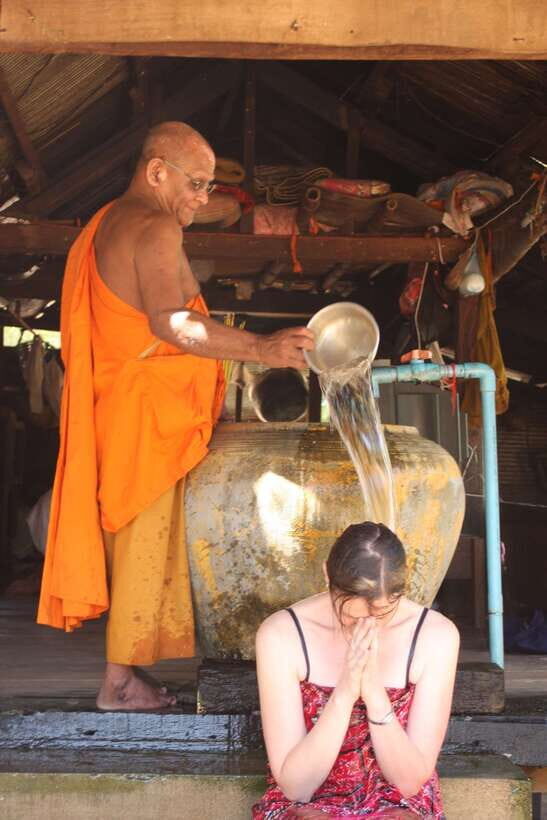
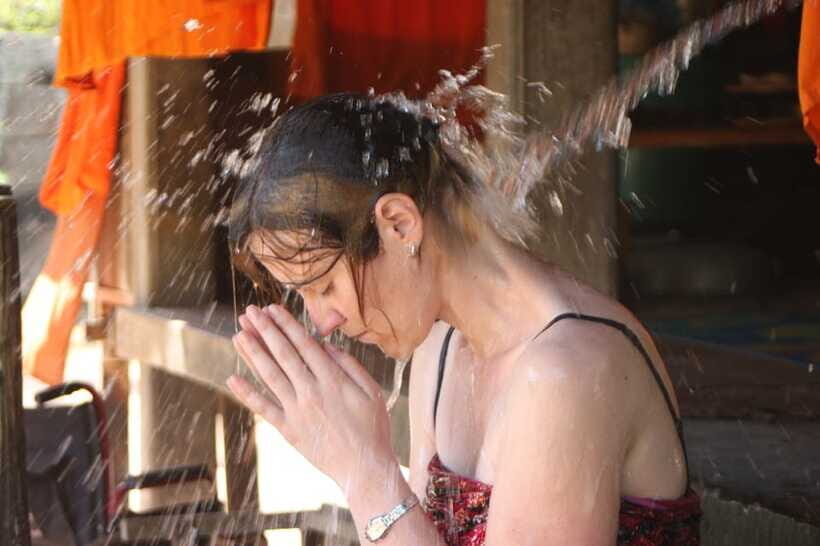
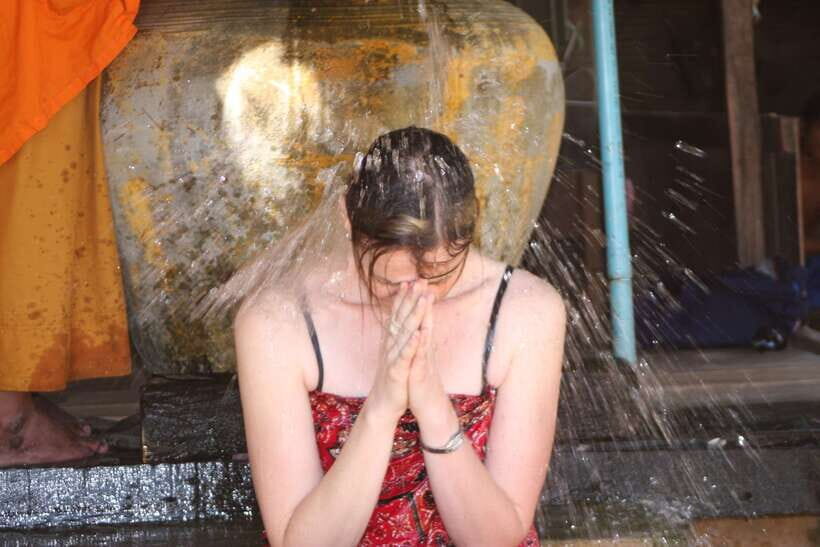
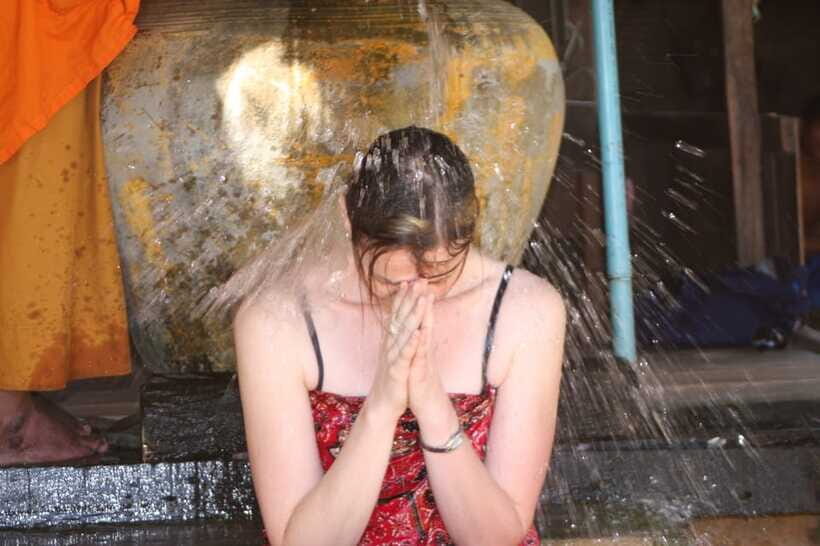
The second option is longer and more dramatic. It involves vessels of blessed water being poured over your head while monks chant.
For this ritual, you’re provided a sarong to change into so your clothing stays dry. Still, don’t expect the experience to be dry in practice. Even with the sarong, the whole point is contact with the water as part of the ritual.
One practical tip from real participant feedback: if you do the longer ritual, bring extra underwear. Some people also find it helpful to have an extra towel on hand beyond what’s provided, especially if your hair takes longer to dry.
A heads-up on choice
The experience is presented as offering two forms of blessings. In most cases, you can choose. But there are also reports that the selection isn’t always as flexible as you’d hope, so keep your mind open when you arrive.
What to wear and what to bring (so the ritual feels easy)
This tour is built around participation, so your clothing plan matters more than you might think.
- You’ll be given a sarong for changing when needed, especially for the head-pouring ritual.
- Expect heat in Siem Reap. The water can feel refreshing, but you’ll still want to plan for drying afterward.
- If you’re doing the longer option, plan for the possibility you’ll get fully soaked in the process.
I like that the tour handles some key logistics for you—like providing the sarong—because it avoids the awkward moment of trying to improvise temple clothing on a schedule. But your best move is to pack smart anyway: an extra layer of underwear, and if you’re particular about hair, consider bringing something that helps you dry faster.
The red wrist ties: the small souvenir that actually means something
Lots of tours end with a photo and a receipt. This one ends with something you can’t accidentally forget.
After the blessing, your wrist is adorned with special red ties that signify the blessing performed. It’s not just decoration. It’s part of what makes the ceremony feel complete and personal, even though it’s happening in a communal temple setting.
If you like rituals that have physical markers—things you can feel and see later—this will land well.
The pagoda tour after the blessing (and why it’s not just filler)
The blessing itself is the headline, but the rest of your time at the pagoda is part of the value. This is where you often get a clearer understanding of what you just participated in.
Guides frequently take you around the temple grounds and explain how the monastery works, what monks do, and how Buddhist beliefs shape daily life at the pagoda. In a couple of accounts, the guide also talked about Buddhism and then helped arrange translation or conversation with the monk after the ceremony.
One thing I appreciate: the visit isn’t framed as a sales pitch for belief. Some participants have described the ceremony as spiritual and meaningful without feeling like it’s pushing faith on you. Instead, it’s presented as a tradition people participate in for well-being.
Even if you’re not religious, this can be a satisfying cultural experience because it answers the practical question you’ll have in your head: what is actually going on here?
Market visit: why it’s a smart add-on
This tour includes a market visit, and it’s more than a quick street stop for snacks.
The market visit gives you context. It connects the pagoda day to everyday Siem Reap life: where people buy ingredients, how locals shop, and what a normal day looks like beyond temple gates.
If you’re in town mainly for major sights, a local market detour is a good way to balance things out. It also helps fill the time between travel and ceremony in a way that feels grounded.
And yes, it’s handy that you’re not left on your own to figure out what to look for. Your guide can point out what matters.
Price and value: what $37 covers in real terms
At $37 per person, this can look expensive if you compare it to a DIY visit to a temple. But it’s not the same thing.
You’re paying for a bundle:
- English-speaking guide
- tuk-tuk transfer
- sarong
- donation to the pagoda
- market visit
And that guide time is doing real work. The ceremony includes instructions you need in order to participate correctly. The guide also helps with photos and videos during the ritual in many accounts—taking photos for you so you can actually be present.
If you’re the type who wants cultural experiences without guesswork, the cost makes more sense. If you’re the type who likes to figure everything out on your own, you might choose a smaller, self-guided temple outing instead.
Who this water blessing is best for
This experience fits best with travelers who:
- Want a functioning temple ritual, not just ruins and sightseeing
- Like ceremonies with clear participation (you do the steps, not just watch)
- Can handle getting wet and then drying off
- Enjoy learning from an English-speaking guide with specific temple knowledge
- Appreciate a small, meaningful ending like the red wrist ties
It may be less ideal if you:
- Hate being wet or dislike surprise soaking
- Want a quiet, meditative vibe where you can hear every chant word clearly (some participants found the water noise made chanting harder to catch)
- Expect full control over which blessing style you get
Practical expectations: timing, photos, and participation level
A few real-world details will help you manage expectations.
Timing: You’re looking at around 2 hours total, with the water blessing described as about 1 hour. Some accounts suggest the full end-to-end experience may run closer to an hour and a half, depending on the flow of the day and group timing.
Photos: Many people appreciate that the guide handles photos and videos during the ceremony, so you’re not juggling a camera while following instructions.
How you participate: Expect a guided rhythm—listen to what the monks are doing, follow your guide’s cues, and don’t overthink your posture. The whole point is respectful participation.
Should you book this Wat Arang Buddhist Water Blessing?
My quick decision guide:
Book it if you want a spiritual-culture break in Siem Reap that’s genuinely participatory. The combination of monk chanting, either a sprinkling or head-pouring blessing, the sarong, the red wrist ties, and an included market visit makes it feel like more than a short gimmick.
Skip it or approach it with open expectations if you’re strongly averse to getting soaked, or if you’re hoping to hear every chant syllable without distraction from the water. Also consider that while the experience offers two blessing styles, real-life choice may not always be perfectly flexible once you arrive.
If you’re tired of temple crowds and want something calmer, stranger in a good way, and still very Siem Reap, this is a strong pick.
FAQ
Where does the water blessing take place?
The blessing happens at Wat Arang Pagoda in the countryside just south of Siem Reap, in Siem Reap Province, Cambodia.
How long is the experience?
The total experience is listed as 2 hours, with the water blessing described as a 1-hour ceremony.
What language is the guide?
The tour includes a live English-speaking guide.
Do I get hotel pickup and transport?
Yes. Pickup is included from your hotel, and you’ll travel by tuk-tuk.
Are there different types of blessings?
Yes. You can choose between two forms: a shorter chant with a light water sprinkling, or a longer ritual where blessed water is poured over your head.
Will I need to change clothes?
You’ll be provided a sarong. For the longer head-pouring ritual, the sarong is used so your clothing stays dry.
What’s included in the price?
The price includes an English-speaking guide, tuk-tuk transfer, sarong, donation to the pagoda, and a market visit.
Is a market visit included?
Yes. The experience includes a market visit as part of the day.
What if I need to cancel?
Free cancellation is available up to 24 hours in advance for a full refund.