REVIEW · SIEM REAP
Siem Reap: Angkor Wat Small-Group Full Day Tour and Sunset
Book on GetYourGuide →Operated by Passion Indochina Travel Co.,Ltd. · Bookable on GetYourGuide
Angkor hits different when you pace it right. I love how this day stacks the biggest wow-makers, from the Bayon stone faces to the tree-root chaos of Ta Prohm. One thing to factor in: the sunset plan is at Phnom Bakheng, and it may not feel like a front-row seat at Angkor Wat itself.
I also like the practical flow: hotel pickup, cold water and towels, an English-speaking guide, and a circuit that keeps you from bouncing around the grounds randomly. If you’re lucky with your crew, guide Bunhak and driver Nol were specifically praised for being friendly and helpful. Just know you’ll pay extra for the Angkor pass, and lunch is a separate cost even though there’s time scheduled for it.
In This Review
- Key points at a glance
- The Big Picture: A Small-Group Angkor Day That Stays Human
- Picking Up, Settling In, and Getting the Most From the Morning
- Angkor Thom: Where the Circuit Starts to Make Sense
- Bayon Temple and the Stone Faces You’ll Never Stop Noticing
- Terrace of Elephants and the Royal Palace Area
- Ta Prohm: The Temple That Looks Like a Film Set
- Lunch Plus Phum Preah Dak: Khmer Life Beyond the Stones
- Angkor Wat: The Main Event, Done With a Good Order
- Phnom Bakheng Sunset: Worth It, With Smart Expectations
- Price and Value: How $32 Adds Up (Or Doesn’t)
- What’s Included vs. What You Must Bring
- Who This Tour Suits Best (and Who Might Want a Different Plan)
- Should You Book This Siem Reap Angkor Wat Small-Group Tour?
- FAQ
- Do I need an Angkor pass for this tour?
- Is lunch included in the price?
- How long is the tour from pickup to drop-off?
- Is hotel pickup and drop-off included?
- What language is the tour guide?
- Is the transportation comfortable?
- What should I bring for the temples?
- Is there anything I cannot wear?
- What is included besides the guide and transport?
Key points at a glance
- A tight Angkor circuit in one day: Angkor Thom, Ta Prohm, and Angkor Wat in a logical order
- Sunset from Phnom Bakheng: dramatic viewpoint, but expect a climb and early planning
- Village culture in Phum Preah Dak: palm cake and palm sugar making, plus real local atmosphere
- Photo-heavy temples, but guided: stone faces, terraces, and cause-and-effect details you can actually follow
- Comfort touches included: cold water, cold towels, and a licensed driver in a minivan
The Big Picture: A Small-Group Angkor Day That Stays Human
This is the kind of Angkor day that works because it respects your time and your legs. A full Angkor pass can feel like a blur of stone, trees, and heat. Here, you get a guided route that groups the most famous sights together, then adds a village stop so the day doesn’t become one long temple photo session.
The “small-group” part matters more than it sounds. With fewer people, you typically get clearer explanations at each stop and less waiting around while everyone regroups. You also spend less energy figuring out where you’re supposed to be next, which is half the battle at Angkor.
The overall rhythm is simple: start early enough to beat crowds and heat, cover the major temples in the afternoon and late day, then climb for sunset. At 10 hours, it is a full day. If you’re prone to getting cranky when tours run long, pack patience and water, and plan your energy accordingly.
You can also read our reviews of more evening experiences in Siem Reap

Picking Up, Settling In, and Getting the Most From the Morning
You’ll start with hotel pickup in Krong Siem Reap, with a reminder to wait in the lobby about 10 minutes before the scheduled pickup. The ride is in a luxury minivan with insurance, plus a white-glove licensed driver. That doesn’t just sound fancy. It reduces the annoying parts—no endless transfers between vehicles and less hassle getting to the gates.
You’ll get cold drinking water and cold towels along the way, which I consider essential in this part of Cambodia. Temple touring is mostly walking and standing in sun, and you feel it fast. Small comfort items like that can be the difference between enjoying explanations and just trying to survive the day.
One practical note: in real-world scheduling, you might feel like the day starts earlier or runs tighter than you expected. If your pickup feels a bit early, don’t automatically panic. It can be the buffer time for traffic and getting positioned for the temple route.
Angkor Thom: Where the Circuit Starts to Make Sense
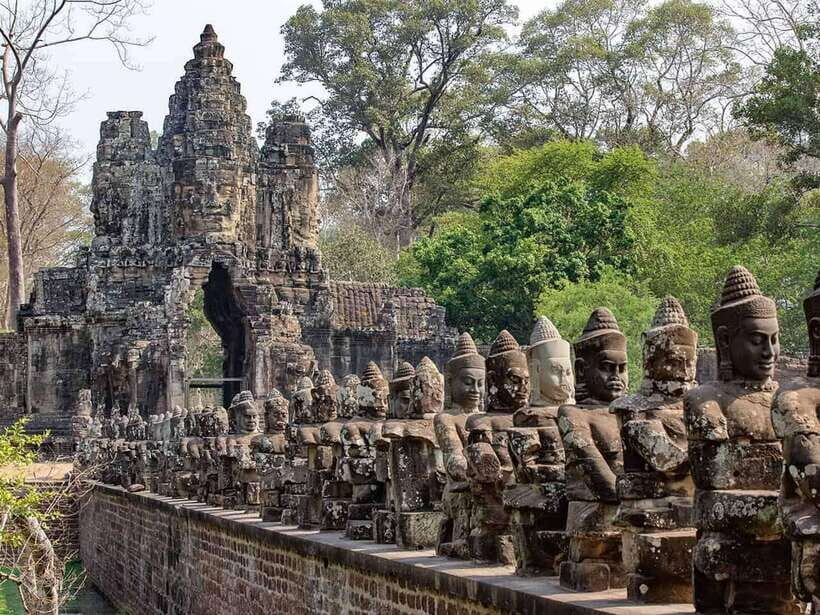
Angkor Thom is the fortified “Great Royal City” built in the 12th century by King Jayavarman VII. This part matters because it’s not just one temple—it’s an entire defensive layout you can read like a map if your guide points out the key features.
You’ll travel there first, then you’ll see the imposing statue of Avalokiteshvara, which also appeared in the Tomb Raider films. Even if you’re not a movie fan, it’s a useful anchor. It helps you orient yourself visually before you start moving temple to temple.
From there, your route moves into the heart of the city’s religious center. This is where the guides earn their keep: you get context for why Bayon looks like it does, and why certain terraces and buildings are grouped together.
If you like temples for the meaning—not just the scenery—Angkor Thom is a strong start. If you’re mainly chasing the most famous photo spot, you’ll still be satisfied. It’s just the kind of famous that rewards paying attention.
Bayon Temple and the Stone Faces You’ll Never Stop Noticing
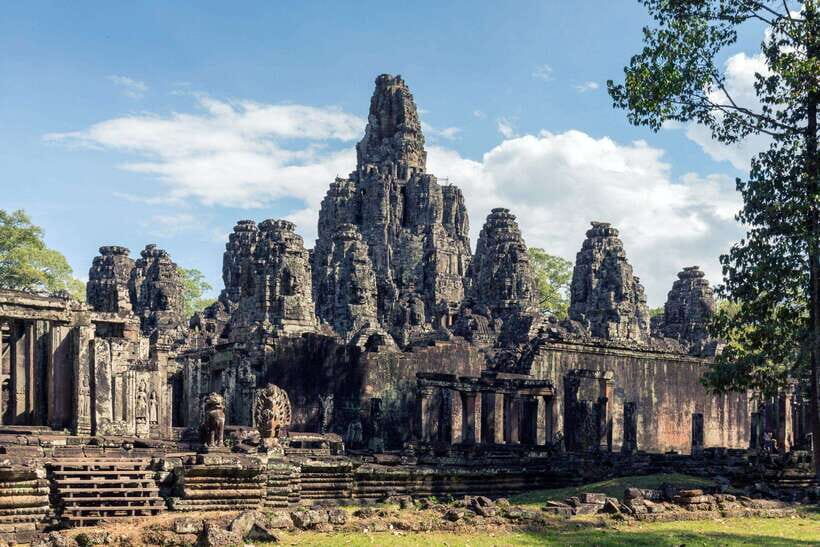
Bayon Temple is decorated with hundreds of stone faces. That sounds like a simple description, but in person it hits differently. The faces are everywhere, and your brain keeps trying to figure out their direction and mood—especially as the light shifts.
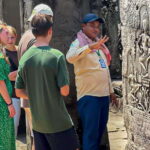
Your guide will help connect what you’re seeing to the broader Khmer story, so you don’t just wander from one face to the next. I like that this isn’t treated as a quick stop. You’re given time to actually look, not just move.
Practical tip: wear clothes you’re comfortable in for sun and dust. These temples are open-air, and your patience will last longer if you’re not fighting discomfort.
Terrace of Elephants and the Royal Palace Area
Next comes the Terrace of Elephants, once tied to the royal palace area. This is one of those stops where you can either skim and move on—or slow down and notice the carving and layout. With a guide, it tends to become more than background texture.
You’ll also pass by Phimeanakas, the Terrace of the Leper King, and Baphuon Temple. That sounds like a laundry list, but it’s actually valuable. Each place shows a different layer of Angkor Thom’s religious and political life.
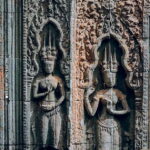
If you’re someone who loves detail, don’t be shy about spending an extra minute looking at the edges and worn carvings. That’s where you start seeing how time has treated the stone—and how Khmer artisans shaped their spaces to last.
The drawback? If you’re the type who wants a quick walk-through, this part can feel like it takes a while. That said, it’s still one of the best uses of time because it gives shape to the bigger picture before you head to the more chaotic, tree-choked sights.
A few more Siem Reap tours and experiences worth a look

Ta Prohm: The Temple That Looks Like a Film Set
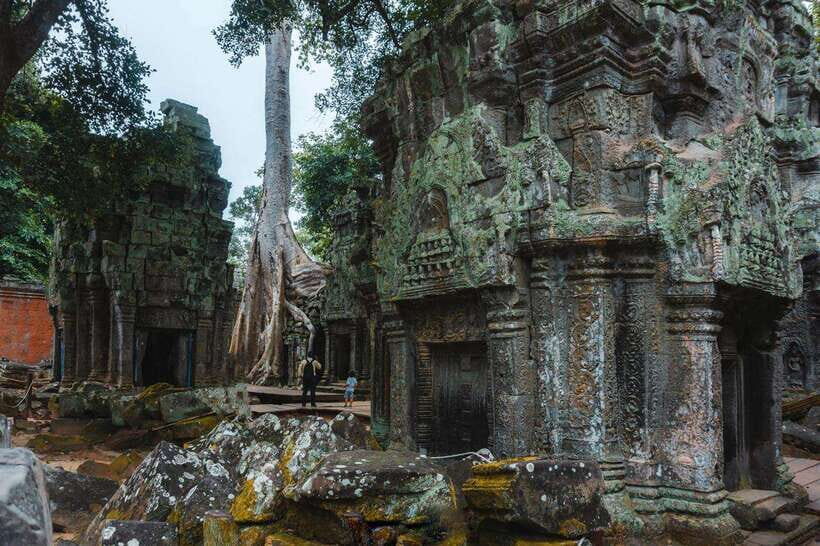
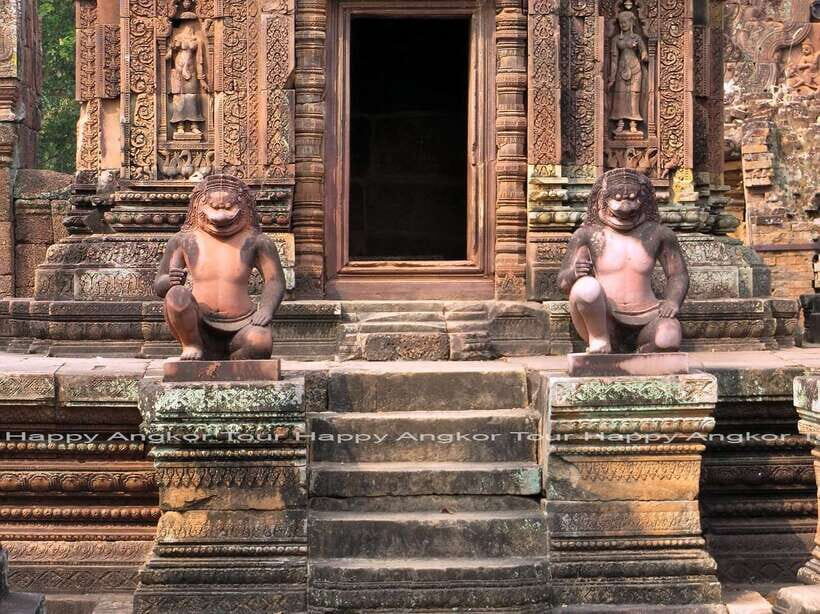
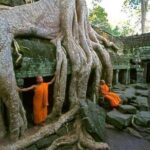
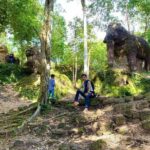
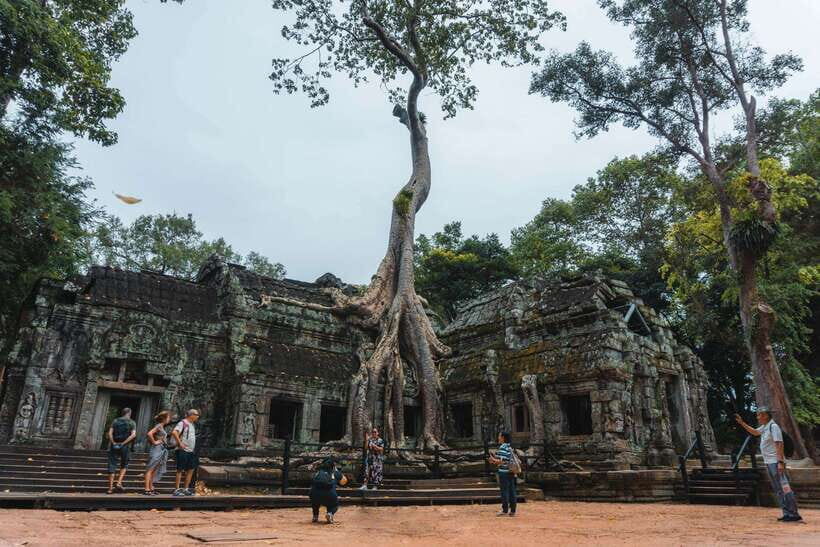
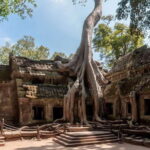
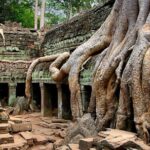
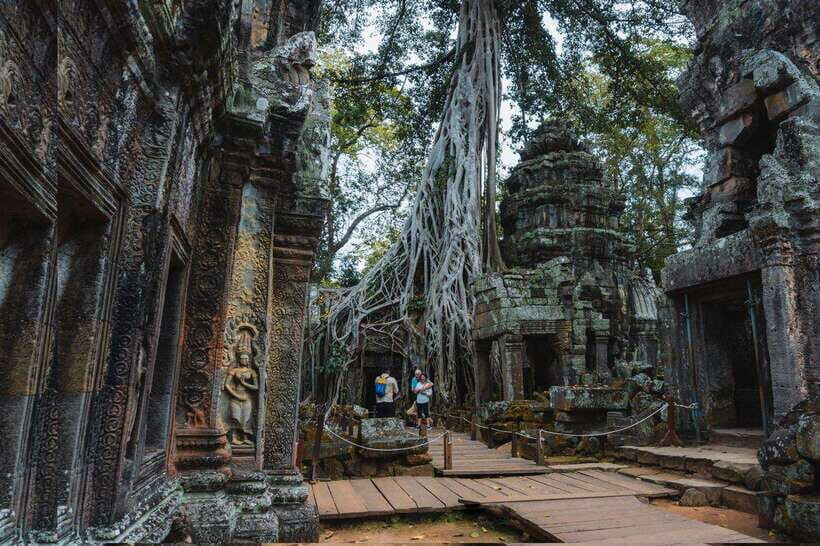
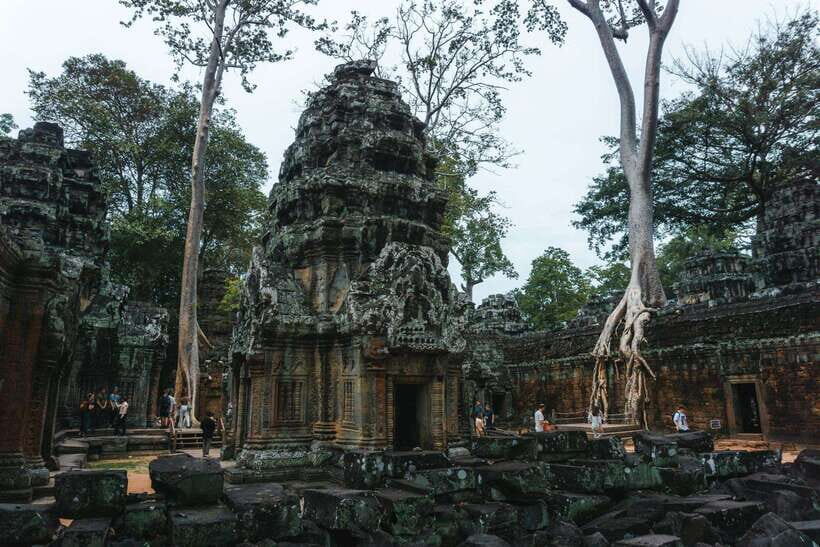
Then you drive to Ta Prohm, left in its original state and famously overgrown with trees and roots. This is the temple most people recognize instantly from Tomb Raider, but it’s still worth seeing even if you’ve seen the movie scenes before.
The main appeal is the contrast: stone architecture surrounded by living growth. When the roots weave over walls and steps, it changes how you move. You start walking slower because every corner looks different from the last.
This stop also tends to be where the photos get more interesting. The shots aren’t just “temple in the jungle.” They’re “architecture being rewritten by nature,” and you notice new angles as you circle through.
A little reality check: Ta Prohm can also be crowded, hot, and dusty. Your best tool is your guide’s timing and your own shoe choice. Comfortable shoes matter here more than anywhere else.
Lunch Plus Phum Preah Dak: Khmer Life Beyond the Stones
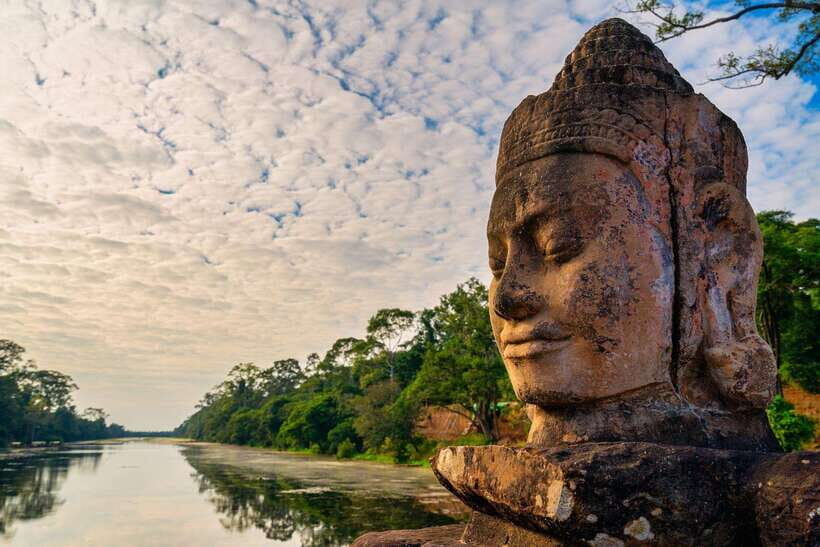
Midday includes lunch time at a local restaurant, but lunch itself is not included in the listed price. Have cash ready, because at least one prior booking noted lunch required cash payment. I’d treat that as a strong hint, not a maybe.
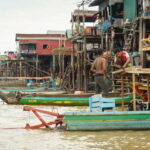
After lunch, you visit Phum Preah Dak, an authentic village where you can learn how locals make palm cake and palm sugar. This is one of the best parts of the day because it’s not staged for visitors in the same way as a market stop.
What you’re really buying here is perspective. You’ll be looking at temple carvings and thinking about religion, power, and community. Then you see the everyday side: cooking methods, local ingredients, and how knowledge moves through households.
If you care about respectful interaction, this is also a good moment to slow down. Ask questions gently. Observe first. Keep your voice friendly and your camera use thoughtful.
Angkor Wat: The Main Event, Done With a Good Order
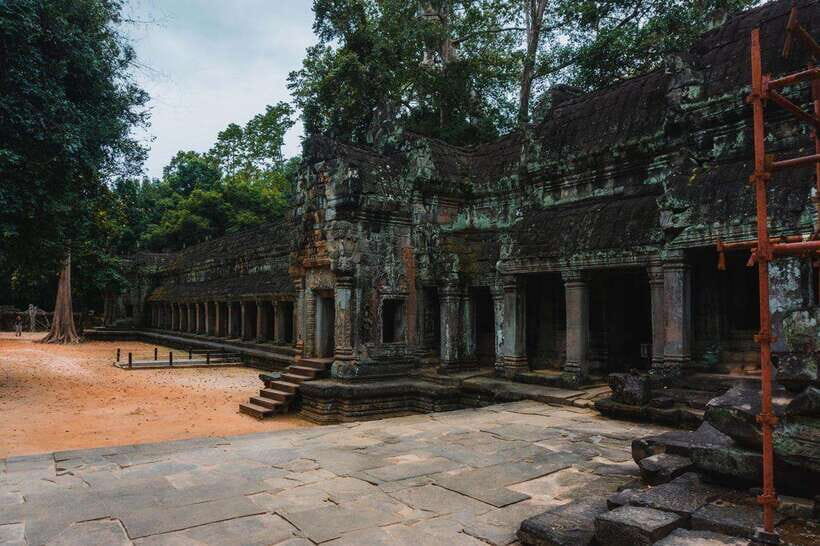
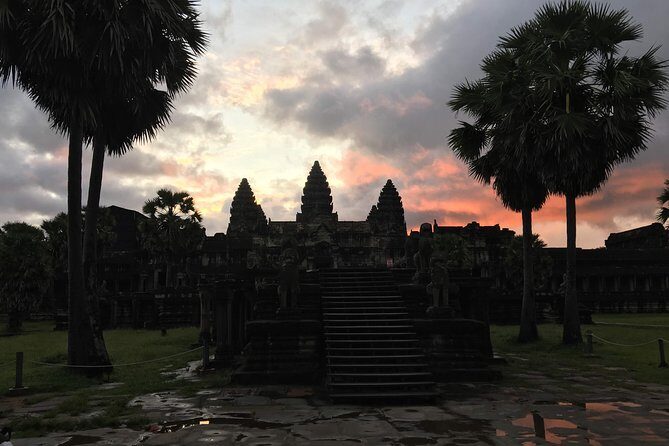
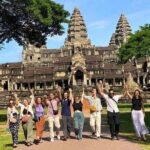
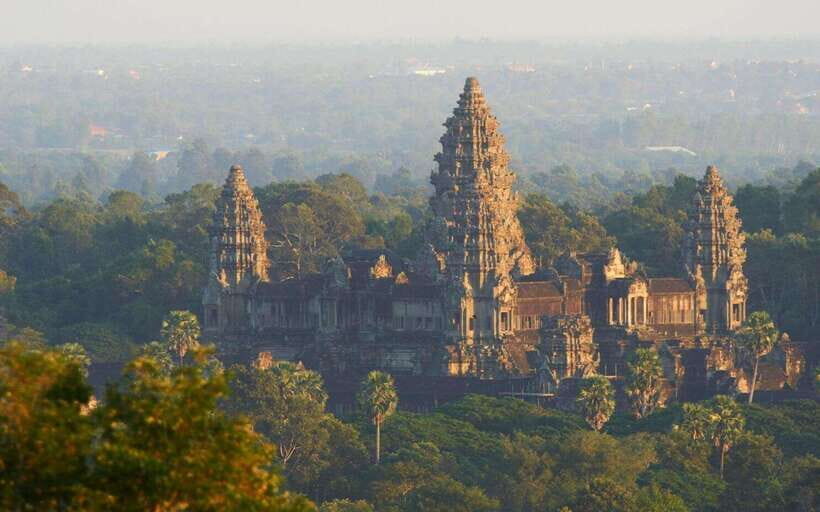
In the afternoon you’ll visit Angkor Wat, the largest sacred building in the world and an icon of Khmer civilization. Even if you’ve seen it in postcards, your first clear look tends to feel bigger than your expectations.
Dense jungle views and layered sightlines make the place feel deeper than a single courtyard. You don’t just see structures—you see how the temple’s layout guides movement and attention.
This is where I like the tour order. You finish the Angkor Thom area, then shift to Ta Prohm, then land at Angkor Wat. By the time you arrive, you’re already thinking in terms of design, symbolism, and the way Khmer temples guide your senses.
One thing to remember: Angkor Wat is huge. If you try to sprint for every highlight, you’ll miss the details that make it rewarding. Let the guide steer you, and focus on understanding how the spaces relate.
Phnom Bakheng Sunset: Worth It, With Smart Expectations
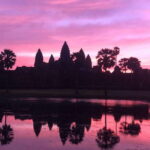
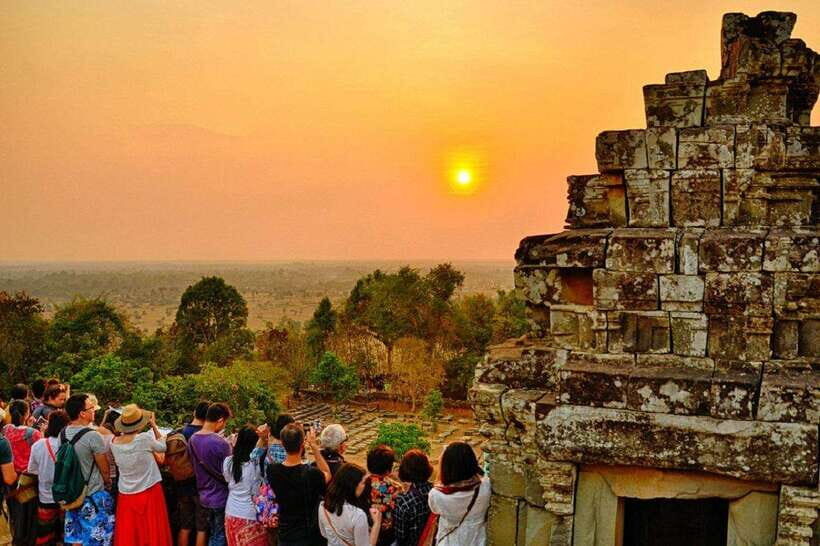
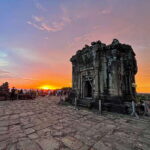
Finally, you climb Phnom Bakheng to watch the sunset before returning to your hotel. Sunset viewpoints here can be spectacular, but they come with real logistics. You should expect a climb and some time spent getting into position.
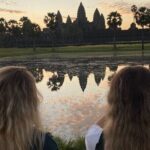
Also, a key expectation check: this sunset is not the same as having a sunset on the Angkor Wat terraces. Some people find that distinction important. If sunset at Angkor Wat is your dream, understand that this tour’s sunset plan is tied to Phnom Bakheng’s viewpoint instead.
That said, sunset in this area isn’t only about where you stand. It’s about the changing light across the temple silhouettes and the broader Angkor landscape. When you’re prepared for the climb and don’t assume a perfect Angkor Wat backdrop from the start, you’ll enjoy it more.
Pro move: go slowly on the ascent. Bring a sun hat even if you think sunset means cooler air. The climb starts in daylight, and your forehead will thank you.
Price and Value: How $32 Adds Up (Or Doesn’t)
The tour price is $32 per person for about 10 hours, including hotel pickup and drop-off, a luxury minivan with insurance, a white-glove licensed driver, an English-speaking guide, and cold water and towels. On paper, that’s solid value for a full-day Angkor circuit.
But here’s the math that actually matters:
- Angkor pass is not included and is listed at $37 per pax
- Lunch is not included (you’ll pay at the restaurant)
So your real budget is closer to the tour price plus the Angkor pass, with lunch on top. Still, you’re getting guided time at multiple major sites, transport between them, and the added village visit. That village stop is a good value add because it turns the day from pure sightseeing into something more human.
Also remember the “small-group” angle. If the group stays tight, you benefit from better pacing and more focused explanations, which you don’t always get on larger buses.
If you want the best value: book the day you can commit to fully. Try not to schedule it as a filler. Angkor makes more sense when you’re not racing to get back for dinner plans.
What’s Included vs. What You Must Bring
This tour takes care of the comfort basics: pickup and drop-off, licensed driver, English guide, and cold drinking water plus cold towels. That means you can pack lighter and spend more energy enjoying the sites.
You still need to bring the essentials:
- Comfortable shoes (you’ll walk)
- Sun hat
- Sunscreen
- Comfortable clothes
- And keep in mind short skirts are not allowed
If you’re thinking about what can make or break the day, it’s footwear and sun protection. Temples are not the place for cute sandals.
For Angkor logistics, you also need the Angkor pass on the day you enter. Since the pass is not included, plan that ahead so you don’t lose time at the gate.
Who This Tour Suits Best (and Who Might Want a Different Plan)
This tour is a strong fit if you want one guided day that covers the greatest hits: Angkor Thom, Bayon, Terrace of Elephants, Phimeanakas, Ta Prohm, Angkor Wat, and a sunset climb at Phnom Bakheng. It’s also a good match if you like a structured route and want help understanding what you’re seeing.
You’ll probably feel most satisfied if you:
- Like walking but prefer not to plan every leg of the route yourself
- Want English explanations to connect the dots
- Appreciate a village stop like Phum Preah Dak, not just temples
If you hate long days or you’re very sensitive to timing changes, consider that 10 hours is a lot in the heat. One prior booking described how the day felt longer than expected. You may still have a great experience, but go in knowing you’re committing to a full-day rhythm.
Should You Book This Siem Reap Angkor Wat Small-Group Tour?
I’d book it if you want the classic Angkor lineup in one day, with a guide doing the heavy lifting on context and route flow. The best part for most people is the balance: big temples plus a village stop, and comfort touches like cold water and towels that keep you functional.
I’d think twice if:
- You expect the sunset to happen right at Angkor Wat itself
- You don’t want to pay extra for the Angkor pass and lunch
- You prefer ultra-flexible pacing where you can roam without a schedule
If your goal is a well-paced Angkor introduction with standout stops and a human culture break, this tour is a sensible choice.
FAQ
Do I need an Angkor pass for this tour?
Yes. The Angkor pass is not included and is listed at $37 per pax.
Is lunch included in the price?
Lunch is not included. Lunch time is part of the day, but you’ll pay for it separately at the restaurant.
How long is the tour from pickup to drop-off?
The duration is 10 hours, including hotel pickup and drop-off.
Is hotel pickup and drop-off included?
Yes. Pickup & drop-off at your hotel in Krong Siem Reap is included.
What language is the tour guide?
The tour includes an English-speaking guide.
Is the transportation comfortable?
You’ll travel by luxury minivan with insurance, with a white-glove licensed driver.
What should I bring for the temples?
Bring comfortable shoes, a sun hat, sunscreen, and comfortable clothes.
Is there anything I cannot wear?
Short skirts are not allowed.
What is included besides the guide and transport?
Cold drinking water and cold towels are included.