REVIEW · SIEM REAP
Siem Reap: Full Day Angkor Wat Temple Experience with Sunset
Book on GetYourGuide →Operated by ASEAN ANGKOR GUIDE · Bookable on GetYourGuide
Angkor Wat in one long day can feel unreal. This full-day route takes you through Angkor Thom, Bayon, Ta Prohm, and ends with a sunset climb to Phnom Bakheng, with an A/C ride, cool towels, and a guided storyline tying the sites together. The main drawback is simple: it is a 10-hour day in heat, so you’ll want to be ready for stairs, sun, and a strict dress code.
What really makes this outing work is the pacing and the hands-on details. I like that you’re not just dropped at temples; you get help spotting what matters and you keep moving between stops without feeling rushed. If you hate long days or you know your body hates stairs, plan carefully for the sunset climb.
In This Review
- Key highlights at a glance
- A 10-hour Angkor run that still feels human
- Morning start: Angkor pass + Angkor Thom’s South Gate drama
- Bayon faces and the royal-city maze you can actually enjoy
- Ta Prohm: where tree roots take back the stones
- A lunch break that keeps the day moving
- Angkor Wat in the afternoon: the main icon does not disappoint
- Phnom Bakheng sunset: stairs, timing, and the pay-off view
- Dress code, bags, and what to bring for comfort (not just rules)
- Price and logistics: value is real, but Angkor pass is the big line item
- Who this tour suits best (and who might prefer another plan)
- Should you book this full-day Angkor Wat with sunset?
- FAQ
- Is the Angkor temple pass included in the $25 tour price?
- How long is the tour?
- What time do you get picked up from your hotel?
- What’s included in the price?
- Is lunch included, and is vegetarian food possible?
- What language is the tour guide speaking?
- What should I bring for the day?
- What dress code rules do I need to follow?
- Are large bags or luggage allowed?
- Is there a small-group limit?
- What’s the cancellation policy?
Key highlights at a glance
- Angkor Thom first, so the day starts with the fortified Great Royal City and its big, dramatic gates
- Bayon’s face towers, with stone smiles that feel different once you’re close
- Ta Prohm in original, root-choked form, plus time to enjoy it beyond the photo stops
- A real lunch break with a vegetarian option and chances to recharge in the A/C
- Phnom Bakheng sunset with a guided plan to get you to the viewpoint in time
A 10-hour Angkor run that still feels human
Angkor is big. Your first instinct might be to pick one temple and stay awhile. This tour does the opposite: it strings together the most important stops from the Angkor era in a single day, then makes time for a sunset you’ll actually remember.
The trick is how it’s paced. You’ll have a clear order, enough time at each place to walk, look up, and take photos, and then a final push for sunset rather than a rushed scramble. And between stops, the practical stuff matters a lot in Siem Reap: water on tap and cool towels that cool you down fast.
Still, it’s 10 hours. That means walking time adds up, and it’s all under strong sun. If you come in with a plan to move at your own pace, you’ll do well. If you want a slow cultural stroll only, you might feel the schedule pressure.
You can also read our reviews of more evening experiences in Siem Reap

Morning start: Angkor pass + Angkor Thom’s South Gate drama
You’re picked up from your hotel between 8:00 and 8:20 a.m. (depending on the pickup window listed for your area). You’ll wait in the lobby a bit early—then head out right away to get the Angkor temple pass sorted before you enter the complex areas.
A key detail: the tour price is low, but the Angkor pass is separate. That pass is required for the Angkor temples, so build it into your budget from the start. Once you’re through that first hurdle, the day clicks into gear.
The first major temple zone is Angkor Thom, the fortified “Great Royal City” built in the 12th century. What I love here is the gate experience: you’re not just seeing ruins, you’re entering a royal boundary. At the South Gate, you’ll spot the imposing figure of Avalokiteshvara, a statue that many people recognize from pop culture. Seeing it in person is different from seeing it in a clip—you get scale, stone texture, and the way the gate forces you to look straight ahead.
Bayon faces and the royal-city maze you can actually enjoy
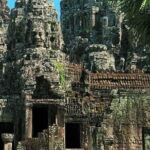
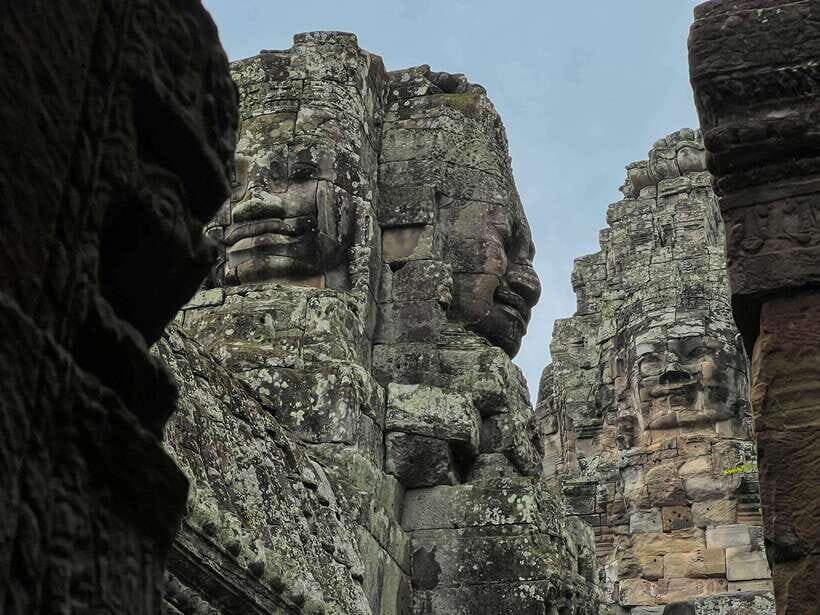
After Angkor Thom, you move to Bayon Temple, famous for its hundreds of stone faces. Up close, the faces don’t feel like decoration. They feel like a crowd that’s been waiting for centuries, watching from every direction as you weave through the stone corridors.
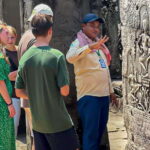
This stop is often the emotional center of an Angkor day. You can stand in one spot and feel like the “expression” shifts as you walk around. Your guide helps by pointing out what to look for so you’re not just counting heads and moving on.
Then you continue within Angkor Thom’s inner world, hitting key structures such as:
- Terrace of the Elephants, tied to palace life
- Phimeanakas, a royal temple structure
- Terrace of the Leper King (Preah Ponlea Sdach Komlong), another dramatic carved terrace
- Baphuon, described here as the largest Hindu temple within Angkor Thom
What makes this area valuable is the contrast between Hindu and Buddhist influences. The stone layout can look confusing if you only rely on instincts. With a guided walkthrough, the sites start to feel connected instead of like separate photo backdrops.
Ta Prohm: where tree roots take back the stones
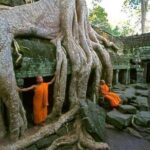
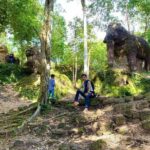
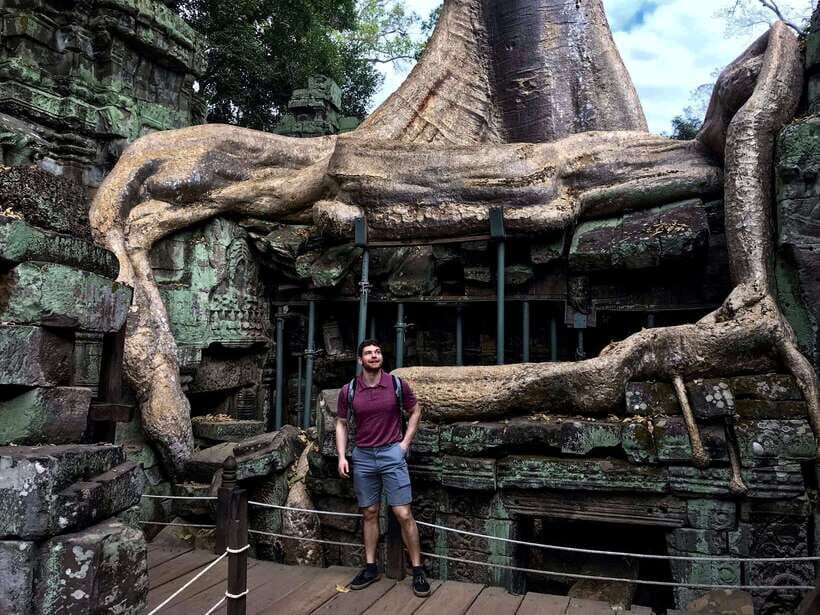
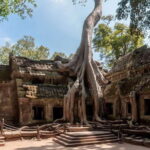
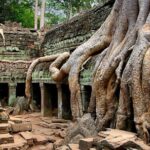
Next comes Ta Prohm, the jungle temple left in its original, partially wild state. If you like your ruins a little chaotic, this is the one. The huge tree roots and the way nature folds into the architecture create scenes you can’t fully predict.
Ta Prohm also carries that movie-history layer—this temple has been used as a backdrop, so you may find familiar angles as you walk the paths. Still, the best part is the slower moments: pausing to see how the root system works along walls, watching how shadows move across stone, and letting the place be what it is instead of trying to force it into a single storyline.
This is also the point in the day where you’ll be glad you planned for comfort. The heat is real. Wear breathable clothes that meet the dress code, use insect repellent, and keep your hat close. When you’re cooked, everything shrinks: the carvings, the photos, even the joy. The cool-towel and water rhythm helps you avoid that.
A lunch break that keeps the day moving
You’ll have lunch at a local restaurant, and there’s a vegetarian option available if you let the team know ahead of time. The format here is one of the smartest parts of the day: you don’t just stop to eat; you stop to reset.
In Siem Reap, that matters because food can turn from pleasant to stressful if your timing is off or you’re too hot to enjoy it. This lunch break is timed to keep you functional for the afternoon’s main event: Angkor Wat and the later sunset climb.
If you’re the type who gets cranky after long drives, this is your buffer. Sit, cool off a bit, and refuel. I also recommend keeping your bag light so you can move quickly between stops without wrestling with zippers and straps.
A few more Siem Reap tours and experiences worth a look
Angkor Wat in the afternoon: the main icon does not disappoint
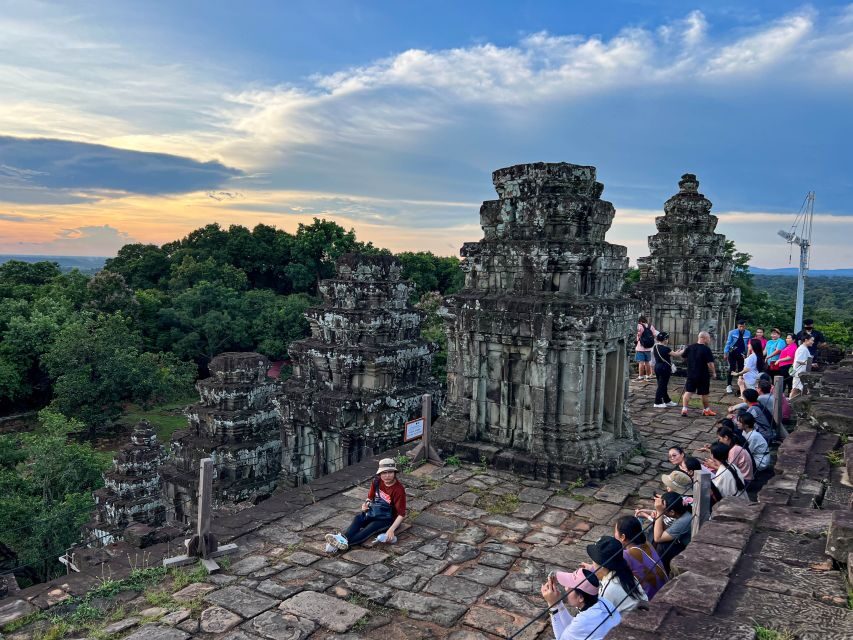
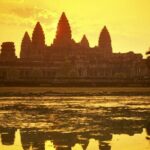
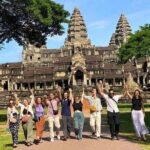
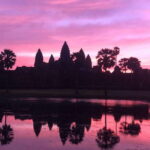
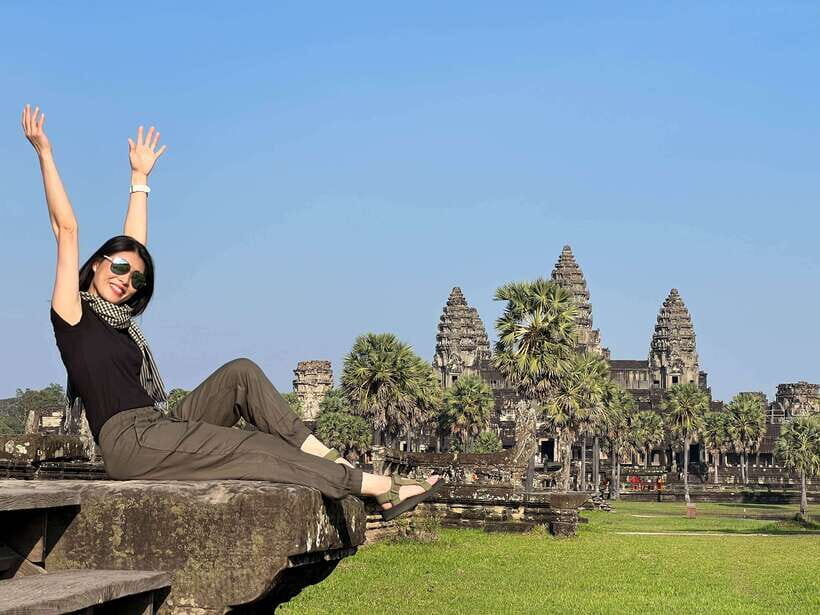
By the time you reach Angkor Wat, you’re ready for it. Angkor Wat isn’t just famous because it’s big. It’s famous because it’s built like a symbol—still tied to Khmer religious meaning even after centuries of change.
You’ll see details that make it feel almost engineered:
- Dedicated to Vishnu, and built as a major sacred site
- A giant moat around the temple complex
- Five towers that connect to the Cambodian flag’s symbolism
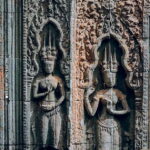
- Hundreds of wall decorations
- The long bas-relief that stretches with continuous storytelling imagery
One of the most satisfying things is that you can keep finding new angles. From the ground, you see layers of carvings and structural alignment. From higher points, your view expands and the dense jungle beyond the temple starts to frame the whole scene.
The pace you choose matters here. If you rush Angkor Wat, you’ll miss the tiny cues—how carvings repeat, how lines guide the eye, where the sun lands on stone. If you slow down a bit, you’ll get that feeling of stepping inside a timeline.
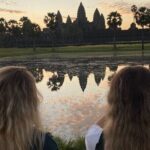
Phnom Bakheng sunset: stairs, timing, and the pay-off view
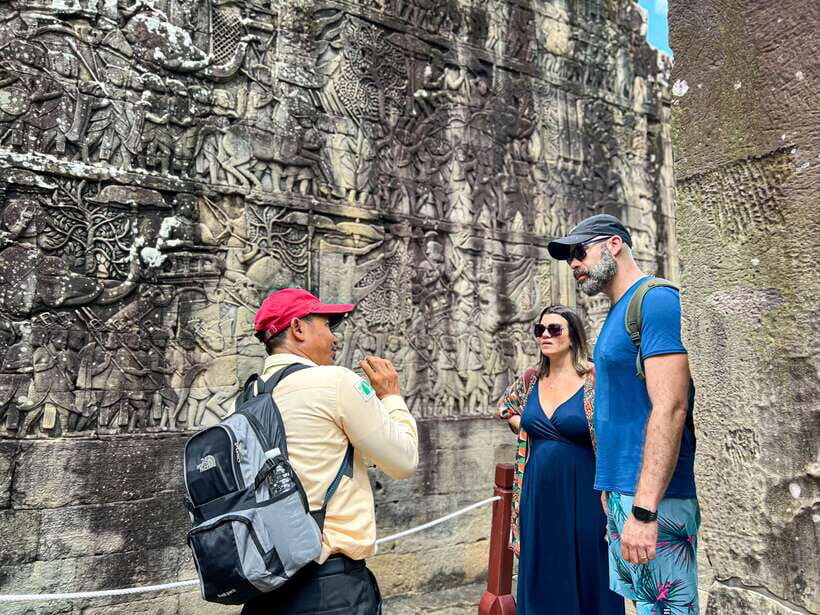
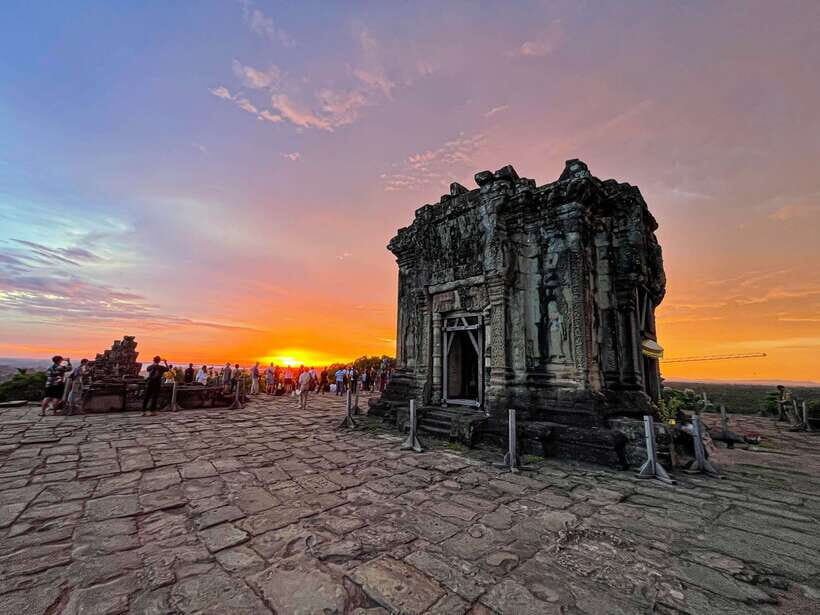
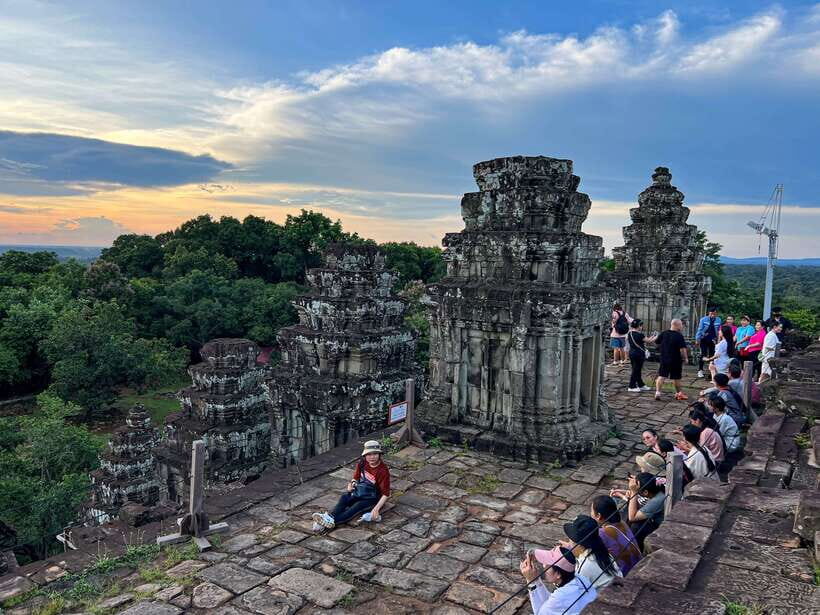
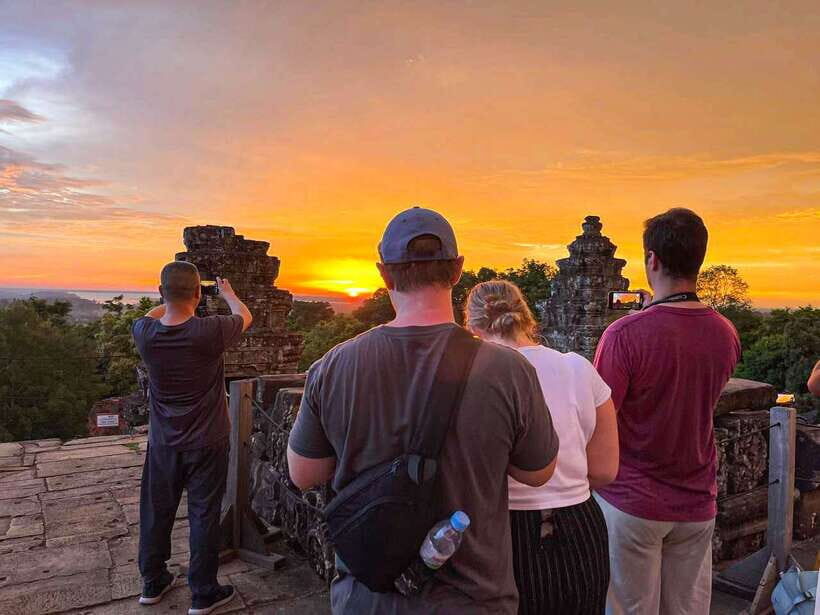
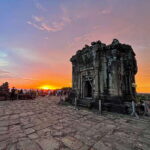
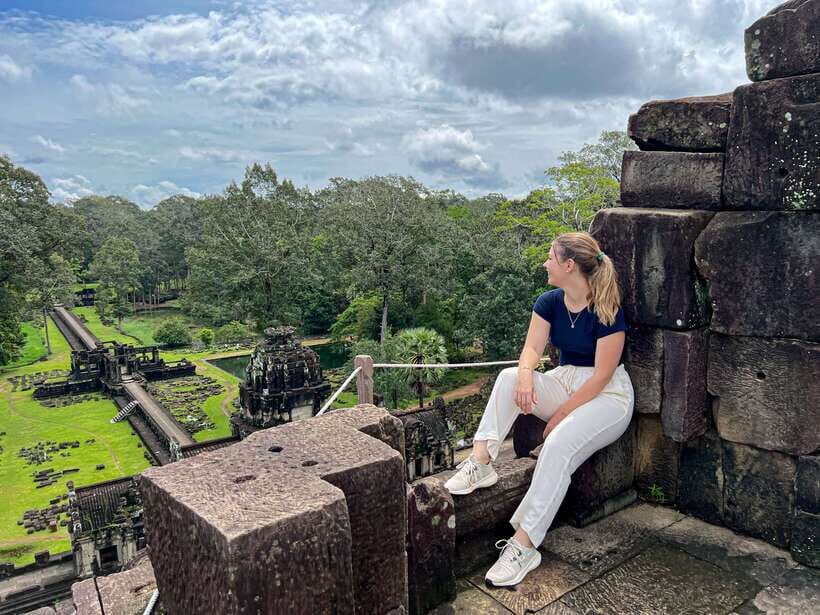
The final act is Phnom Bakheng for sunset. This is where you go from “temples as architecture” to “temples as atmosphere.” From the top, you get that layered view: Angkor’s geometry in front, and the thick surroundings around it.
But here’s the practical consideration: the viewpoint involves walking and climbing. Even if you’re fit, stairs in the afternoon heat can wear you down fast. I’d treat this like an actual workout portion of the trip, not a casual stroll.
To make it smoother:
- Start early in the climb window your guide gives you
- Keep your water and a small towel handy
- Wear shoes with grip and accept that stone can be slippery
If you’re worried about the climb, you can still enjoy Angkor Wat earlier. The sunset is special, but the day works even if your body needs to take it slower.
Dress code, bags, and what to bring for comfort (not just rules)
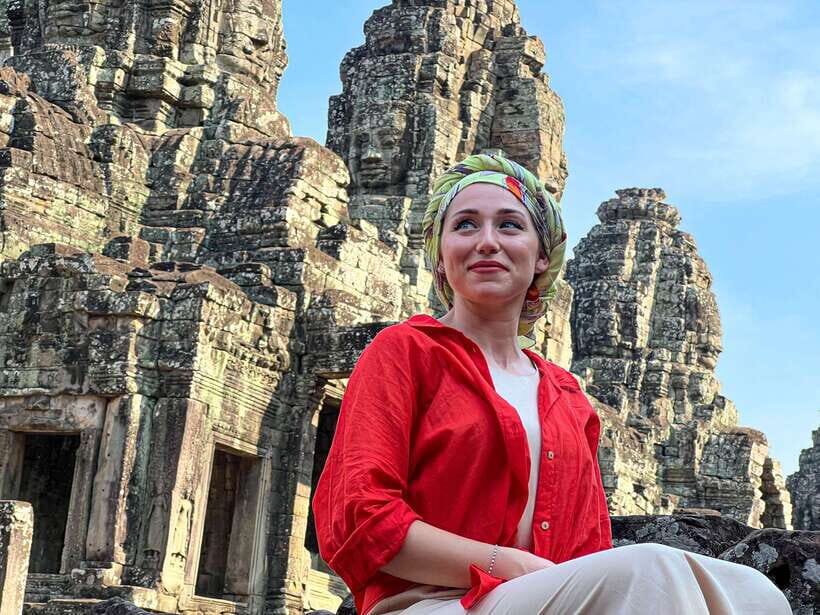
This is an easy tour to enjoy, but you do need to follow the rules so you don’t get stuck at the gate. You’re not allowed to wear short skirts or sleeveless shirts, and your knees and shoulders need to be covered.
Also note:
- No luggage or large bags
- Bring sunscreen, a hat, and insect repellent
- Comfortable footwear matters because you’ll be walking between temple zones for hours
A small daypack or side bag is ideal. Keep it simple: water, sunscreen, repellent, camera, and your phone essentials if you need them.
Price and logistics: value is real, but Angkor pass is the big line item
The tour runs about $25 per person, and it’s set up as a full-day package. What you get for that money is the hard part of Angkor: English-speaking guidance, A/C transport, hotel pickup and drop-off, lunch, and the comfort extras like unlimited bottle water and cool towels.
The one big add-on is the Angkor temple pass at $37 per person, not included in the tour price. That means your day is really closer to $62 per person once you add the pass (before soft drinks). Still, in practice, it often feels like good value because the pass covers access, while your tour covers the day management: transportation, timing, and interpretation.
If you’re traveling solo, paying for a guide and vehicle can be more efficient than sorting tuk-tuks and ticketing on your own. If you’re traveling as a couple, it’s often a low-stress way to do the major hits in one shot.
Who this tour suits best (and who might prefer another plan)
This fits well if you want:
- A one-day overview of Angkor’s most important temples
- An English guide who can explain what you’re seeing as you go
- A plan that ends with sunset rather than leaving you scrambling last minute
- The comfort basics in Siem Reap heat: A/C ride, water, cool towels
It may not be ideal if:
- You have mobility limits and stairs are a serious concern, especially for the Phnom Bakheng climb
- You dislike long structured days with multiple stops
- You’re traveling with kids under 10, since the small-group option isn’t suitable for that age range
Should you book this full-day Angkor Wat with sunset?
I’d book it if you want the best “temple hits” day with minimal hassle. The standout advantage for me is how it pairs iconic sights with comfort and interpretation: you don’t just see Angkor Wat; you understand why each stop fits the bigger Khmer story, then you close the day with a viewpoint payoff.
If you’re the type who can handle a long day and you’re willing to follow the dress code, this is a strong value. If your priority is a slow, lightly guided wander, you might prefer a shorter route focused only on Angkor Wat and one other temple.
FAQ
Is the Angkor temple pass included in the $25 tour price?
No. The Angkor temple pass costs $37 per person and is not included. You need to have the pass before starting the Angkor temple part of the tour.
How long is the tour?
The duration is listed as 10 hours.
What time do you get picked up from your hotel?
Pickup is between 8:00 a.m. and 8:20 a.m., and you should wait in the hotel lobby about 10 to 15 minutes before pickup time.
What’s included in the price?
Included are an English-speaking professional tour guide, A/C transportation, hotel pickup and drop-off, unlimited bottled water and cool towels, and lunch (with a vegetarian option available).
Is lunch included, and is vegetarian food possible?
Lunch is included, and a vegetarian option is available if you tell them in advance.
What language is the tour guide speaking?
The tour is conducted in English.
What should I bring for the day?
Bring sunscreen, a hat, insect repellent, and a camera if you want photos. Comfortable footwear also helps because you’ll be walking between temple areas.
What dress code rules do I need to follow?
You should keep knees and shoulders covered. Short skirts and sleeveless shirts are not allowed.
Are large bags or luggage allowed?
No luggage or large bags are allowed for this experience.
Is there a small-group limit?
For the small-group option, the tour limits the group size to 14 participants.
What’s the cancellation policy?
You can cancel up to 24 hours in advance for a full refund.