REVIEW · SIEM REAP
Siem Reap Shared Full-Day Guided Tour of Angkor Temples
Book on Viator →Operated by Vamos Camboja Turismo · Bookable on Viator
Angkor is better with a plan. I love the small-group pace and the way the day is shaped around stories that make the stones make sense, thanks to a professional English-speaking guide. One thing to budget for: the Angkor Archaeological Park entrance ticket (USD 37) and lunch are not included, so your day costs more than the $25 tour fare.
The timing also feels practical. You’re picked up at your hotel around 8:30–9:00 AM, get moving quickly, and cover the big hits with enough time at each stop to actually look, not just pose for photos. You’ll still walk a fair bit, and Angkor’s heat can be real, so plan on comfortable shoes and a water habit.
One more consideration: the temple dress code is strict, especially for Angkor Wat. Have something on hand that can cover shoulders and knees, because the wrong outfit can slow you down right at the entry gates.
In This Review
- Key highlights worth your attention
- Price and what your $25 tour really includes
- Getting picked up, buying your pass, and starting on time
- Dress code at Angkor Wat: don’t let clothing slow you down
- Angkor Thom South Gate and Bayon: the faces that reset your brain
- Baphuon plus the Terrace stops: what to notice in the details
- Ta Prohm: budget time for the trees and the feeling
- Lunch at Srah Srang: planned break, not a random stop
- Angkor Wat: two hours that can feel either rushed or perfect
- Transport that fits your group size: tuk-tuk vs air-conditioned comfort
- How this day flows: why the sequence is useful
- Who should book this and who should choose differently
- The bottom line: should you book this Angkor full-day guided tour
- FAQ
- Is pickup included?
- Is the Angkor Archaeological Park entrance ticket included?
- What temples does the tour cover?
- Is lunch included?
- What transport will I use?
- What should I wear to enter the temples?
Key highlights worth your attention
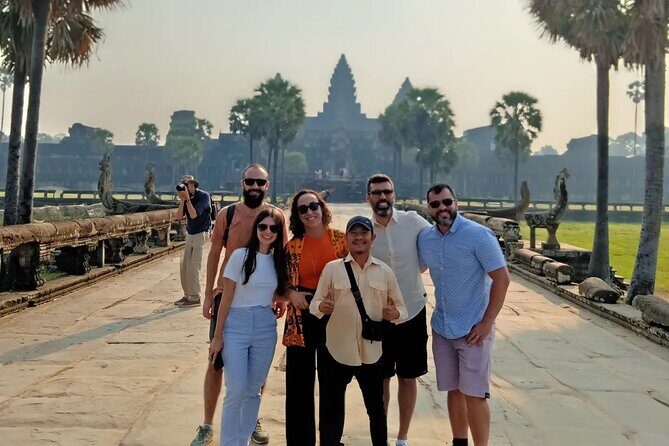
- Premium small-group option (max 6 people) for less waiting and more guide time per person
- English-speaking guide with clear explanations that help you read what you’re seeing
- Smart mix of temples: Angkor Thom highlights plus Ta Prohm and Angkor Wat
- Scheduled stop lengths that give you time at Bayon and Angkor Wat, without turning the day into a race
- Cold water on tour plus local lunch stop arranged by your guide
- Tuk-tuk or air-conditioned van depending on group size, so you start the day more comfortable
Price and what your $25 tour really includes
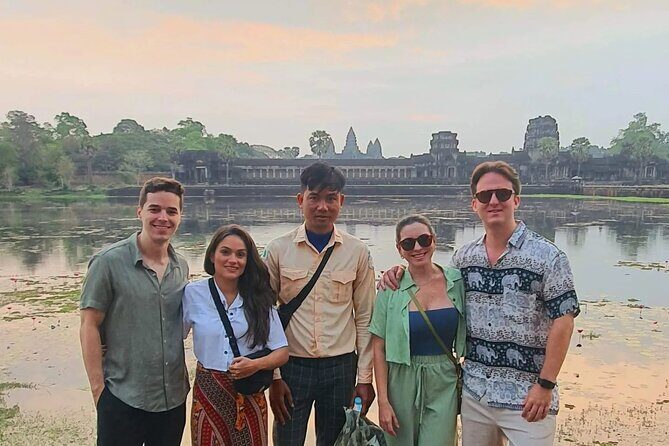
The headline price is $25 per person, which is a great entry point for a full day with hotel pickup and a guide. But the math matters because the big line-item is the Angkor Archaeological Park entrance ticket, which is USD 37 per person for a 1-day pass and is not included in the tour price.
So for most people, you’re really looking at about $62 total before lunch, plus whatever you spend for lunch and snacks. That still can be strong value, especially if you choose the premium small-group option, where you generally get less crowding and more attention from your guide.
Also note: the tour price covers the guide, transport, transfers, and the visits listed in the day plan. What it does not cover is your temple ticket and lunch. If you budget in advance, the day feels like a smooth buy rather than an add-on surprise.
You can also read our reviews of more guided tours in Siem Reap
Getting picked up, buying your pass, and starting on time
Pickup is built in: your guide meets you at your hotel reception at 8:30–9:00 AM, and you’ll depart around 9:00 AM with an approximate return around 5:00 PM. If you’re selecting a sunrise option, pickup shifts earlier (around 4:30–5:00 AM), so make sure you truly want that early start.
At the beginning of the tour you’ll go to the ticket office to purchase the temple pass, though online purchase is an option. The tour recommends having your entrance ticket sorted in advance so you have enough time to explore once you arrive. That’s good advice. At Angkor, time lost at ticketing can steal time from the best temples.
One small practical tip: wear what you plan to enter temples in right away. With dress code requirements (more below), you don’t want to scramble with a scarf right when you’re trying to get through the gates.
Dress code at Angkor Wat: don’t let clothing slow you down

Most temples at Angkor require you to cover knees and shoulders. You can use a scarf for that. For Angkor Wat, it’s stricter: you must wear pants or a skirt that covers the knees and a shirt that covers the shoulders. Items like miniskirts, shorts, tank tops, and other revealing clothing aren’t allowed.
This is one of those rules that affects how enjoyable the day feels. If you show up underdressed, you’ll spend time finding a fix while your group waits. If you’re unsure, pack a light long-sleeve layer and bring a scarf you can pull on quickly. It also helps with sun later, when you’ll be outside for long stretches.
Angkor Thom South Gate and Bayon: the faces that reset your brain

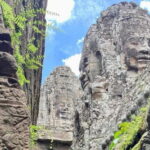
The day’s anchor start is Angkor Thom South Gate, where the famous giant smiling stone faces greet you. It’s one of those first moments where a guide’s timing matters. Right as you’re oriented, you get context for what you’re seeing and why it’s meant to feel welcoming.
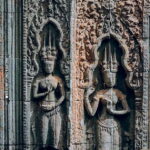
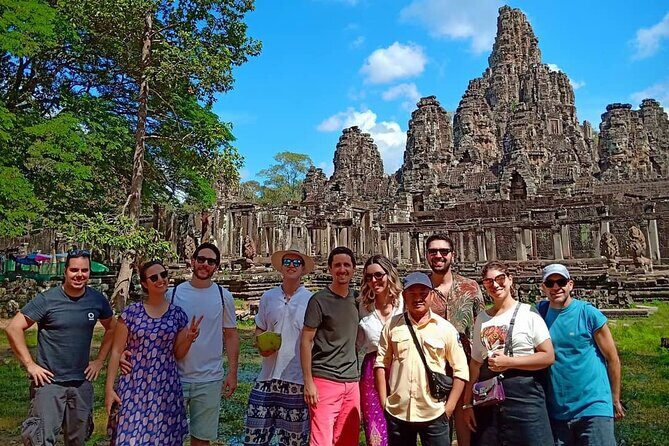
From there you move to Bayon Temple, often called the Temple of Smiling Faces. The center of Angkor Thom is where the faces feel almost everywhere, and the biggest value of a guided day is learning how to look at the carvings rather than just photographing them. This stop gets about 45 minutes, which is enough time to slow down and trace details if your guide encourages it.
A good sign during this part of the day: when your guide explains what you’re standing in front of, not just what it is. People like Buth and Vannah have been praised for making temple history understandable and for pointing out what to notice while you’re there. Even if you don’t have the same guide, the approach is the same: you want a guide who turns stone into story.
Baphuon plus the Terrace stops: what to notice in the details

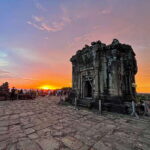
Next is Baphuon Temple, a pyramid-shaped monument that dates to the 11th century and was originally dedicated to Shiva. It’s sometimes described as the Bronze Tower, and the temple’s massive form helps you grasp how Angkor’s builders used scale to communicate power.
You’ll spend about 45 minutes here, which is perfect for getting your bearings and then returning to your favorite angles. If you’re the type who likes photos, this is one of the better spots because the structure offers strong lines from multiple directions.
Then come two short but memorable stops:
- Terrace of the Elephants: a roughly 350-meter ceremonial platform associated with King Jayavarman VII, used for royal viewing during processions and public ceremonies. It’s a stretch long enough that you can feel the platform’s scale instead of just walking past it.
- Terrace of the Leper King: a more mysterious stop, named after a moss-covered statue. It’s believed to represent Yama, the god of death.
These two terraces are about noticing positioning: where people would stand, how processions would move, and how the temple complex is designed for visibility. The stops are brief (around 15 minutes each), so focus on what your guide points out rather than trying to read every carving yourself.
A few more Siem Reap tours and experiences worth a look

Ta Prohm: budget time for the trees and the feeling
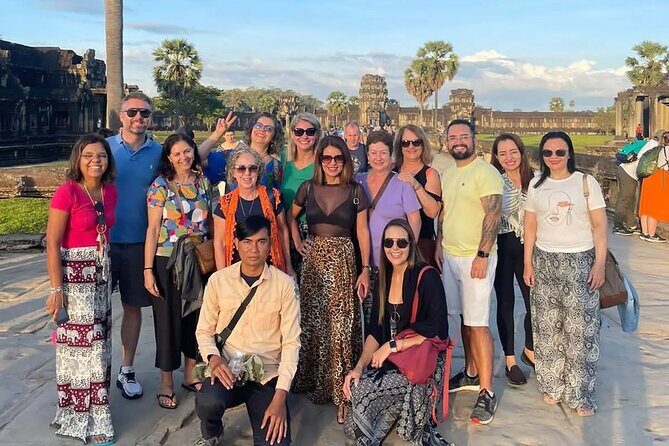
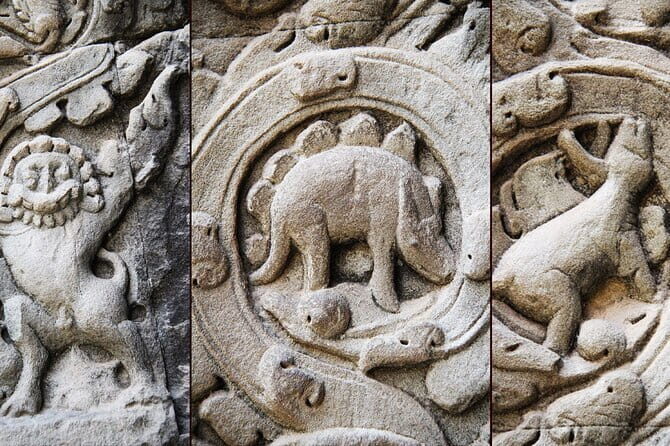
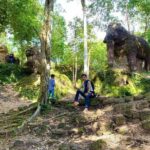
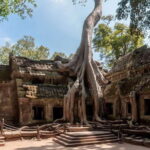
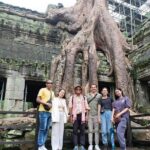
Ta Prohm is the part of the day that feels cinematic. It’s famous for its jungle-like setting, and it’s the one that many people recognize right away because of pop-culture references.
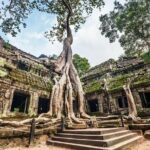
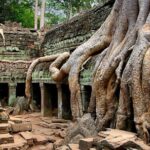
You get about 1 hour here, which is the right length. Ta Prohm isn’t just about one viewpoint. You’ll want to look at the way roots wrap around stone, watch where paths pull you, and take a slow walk between open areas and shaded corners.
This stop is also where heat can catch you. If you’re tempted to rush, don’t. Spending the full hour actually pays off because the details change as you move: you’ll see different root patterns, different angles on carved surfaces, and different impressions of how the temple and nature interact.
Lunch at Srah Srang: planned break, not a random stop
Lunch is built into the day near Srah Srang, with an about 1-hour break. Lunch itself is not included, but your guide will point you to a nearby restaurant.
This is worth noting because Angkor days can go two ways: either you grab something quick with no local context, or you slow down with a stop that keeps you moving on schedule. Here, you get a middle ground. You’re not left wandering for food while everyone waits.
Given the heat and walking, treat lunch as part of pacing, not just fuel. If you’re aiming for a good Angkor Wat experience later, don’t load up on heavy meals that knock you out mid-afternoon.
Angkor Wat: two hours that can feel either rushed or perfect
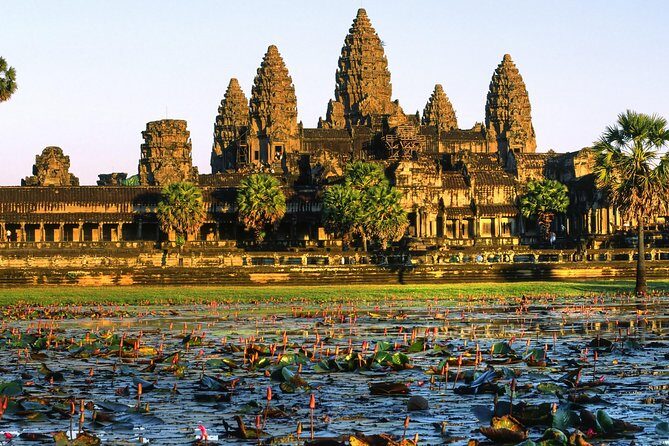
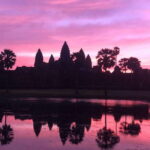
Your big finale is Angkor Wat, the iconic jewel of the complex. It’s the largest religious monument in the world, and the site can overwhelm you fast if you don’t get oriented.
You’ll have about 2 hours here. That’s enough time to see the main temple areas and also find a moment to slow down and really look at symmetry, corridors, and the way the structure frames the sky. A guided day helps because you’re not guessing what matters most, so you spend less time walking in circles.
Also, remember the entry clothing rule. Angkor Wat requires pants or a skirt covering the knees and a shoulder-covering shirt. If you’ve prepared for the dress code earlier in the day, this part stays smooth.
If you’re the kind of person who loves architecture and scale, Angkor Wat is where you’ll feel it. If you’re more into storytelling, ask your guide to connect the temple layout to the ideas behind it. Even within a limited time window, that makes the place click.
Transport that fits your group size: tuk-tuk vs air-conditioned comfort
Transport changes depending on your group size. For 1–2 people, you ride by tuk-tuk. For 3 people and up, you use an air-conditioned van or minibus.
That detail matters more than it sounds. Tuk-tuks can be fun, but in midday heat they can feel like a rolling sauna. The air-conditioned transport for larger groups helps you arrive to each site with less fatigue, especially before Angkor Wat.
For a day like this, comfort is value. You’re already spending hours on stone paths and bright sun. A little air-conditioning between temples goes a long way.
How this day flows: why the sequence is useful
The order you visit helps you build understanding as you go. You start with the entry and core city impressions (Angkor Thom South Gate, Bayon), then move outward to major monuments and terraces (Baphuon and the viewing platforms), then shift to the atmospheric jungle scene (Ta Prohm), and finish with the most iconic structure (Angkor Wat).
That sequence reduces the feeling of jumping between unrelated stops. You’re building a mental map of Angkor, not just ticking off famous names.
You also get fairly short segments at some sites and longer time where it counts most. Bayon and Angkor Wat get the more generous blocks. Ta Prohm gets the longer time that matches its visual complexity. The terraces are fast, but their scale and key associations are easy to grasp with a guide’s pointers.
Who should book this and who should choose differently
This tour fits best if you want the main highlights without being stuck in a massive crowd. The premium small-group option (up to 6 people) is especially good for couples, small families, and anyone who wants more personal attention without paying for a fully private guide.
Choose it if:
- you like a guide who explains what you’re looking at
- you want a full day but still need manageable stop times
- you care about fewer delays between sites
- you’re comfortable planning around the temple ticket and dress code
Consider a different style if:
- you want a slower, more flexible pace with lots of independent exploration time
- you don’t want to worry about clothing rules or advanced planning for the entrance pass
- you’re hoping lunch is included (it isn’t)
The bottom line: should you book this Angkor full-day guided tour
I’d book it if you want a structured Angkor day that feels efficient without turning into a sprint. The combination of hotel pickup, a professional English-speaking guide, and a route that hits Angkor Thom plus Ta Prohm and Angkor Wat makes a lot of sense for first-timers.
Just go in knowing the two big add-ons: the USD 37 entrance ticket and lunch. If you sort your pass ahead of time and pack the right clothing for Angkor Wat, the $25 tour price starts to look like real value rather than a discount that hides costs.
If you’re aiming to get the most out of your limited time in Siem Reap, this is a solid choice.
FAQ
Is pickup included?
Yes. Your guide meets you at your hotel reception between 8:30 and 9:00 AM, and the tour departs around 9:00 AM. You’ll also be dropped back at your hotel near the end of the day.
Is the Angkor Archaeological Park entrance ticket included?
No. The USD 37 per person entrance ticket for a 1-day pass is not included. You’ll need to buy it separately (and the tour recommends having it before starting).
What temples does the tour cover?
You’ll visit Angkor Thom South Gate, Bayon Temple, Baphuon Temple, Terrace of the Elephants, Terrace of the Leper King, Ta Prohm, Srah Srang (for lunch), and Angkor Wat.
Is lunch included?
Lunch is not included. The tour includes a lunch break near Srah Srang, and your guide recommends a nearby restaurant.
What transport will I use?
Transport depends on group size: 1–2 people ride by tuk-tuk, and 3 or more people use an air-conditioned van/minibus.
What should I wear to enter the temples?
Most temples require covering knees and shoulders (a scarf can help). For Angkor Wat, you must wear pants or a skirt covering the knees and a shirt covering the shoulders. Miniskirts, shorts, and tank tops are not allowed.