REVIEW · SIEM REAP
Small-Group Full Day Angkor wat Guide tour with Sun set
Book on GetYourGuide →Operated by Angkor Wat Share Tours · Bookable on GetYourGuide
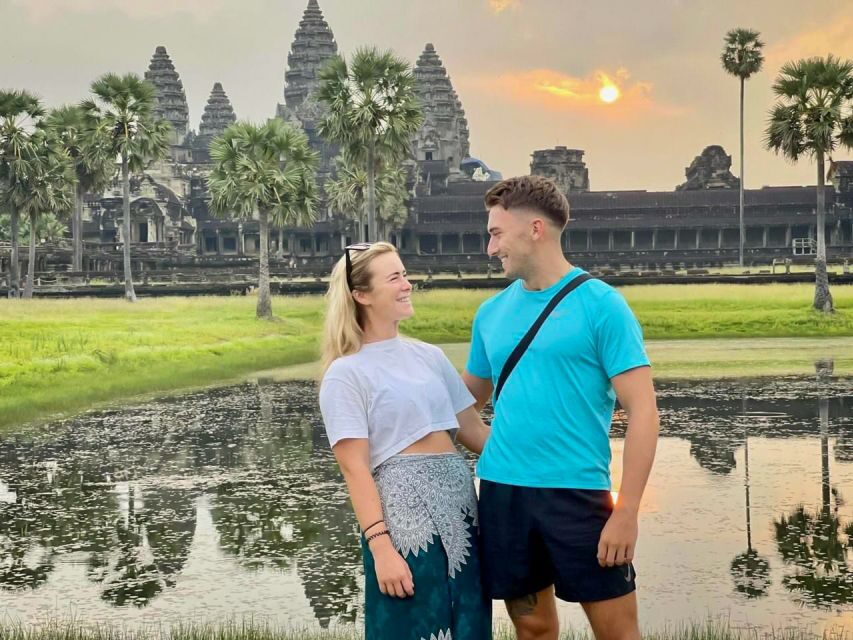
Angkor changes shape when you visit with a guide. This full-day, small-group route covers Angkor Wat, Ta Prohm, Angkor Thom, and more, then finishes with sunset from Phnom Bakheng.
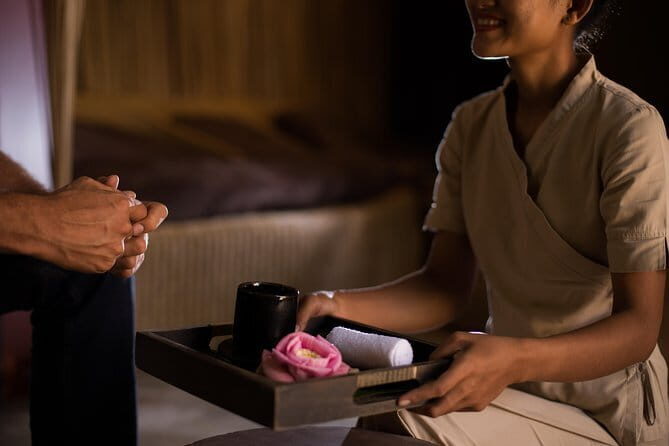
I especially like how the day is paced around stories, not just stamps on a ticket. Guides such as Vone and Kosal get praised for humor, clear explanations, and even photo help. Plus, you get air-conditioned transport with cool water and wet towels, which matters a lot in the Khmer heat.
One consideration: the tour price does not include the Angkor Pass. You’ll need to pay the $37 temple pass on the day, and lunch is also on your own.
In This Review
- Key things that make this Angkor day feel worth it
- The smart way to see Angkor: six temples plus a sunset plan
- Pickup, the air-conditioned ride, and why timing starts the day
- Angkor Wat with a guide: more than the postcard view
- Ta Prohm and the jungle path: where the roots take over
- Banteay Kdei and lunch: your mid-day breath before more stairs
- Ta Keo: the unfinished pyramid that still dominates
- Angkor Thom and Bayon: southern gate faces and the calm center
- Phnom Bakheng for sunset: the final view you’ll remember
- Price and value: $14 tour price, plus the Angkor Pass reality check
- What to bring (and what actually helps on temple days)
- Who this tour suits best (and who might want a different style)
- Should you book this Angkor Wat full day with sunset?
- FAQ
- How long is the tour?
- Does this tour include hotel pickup and drop-off?
- Is the guide English-speaking?
- Which temples are included?
- Do I need to pay for temple tickets?
- Is lunch included?
- What transport is provided?
- What should I wear?
- What should I bring for comfort?
- Is free cancellation available?
Key things that make this Angkor day feel worth it
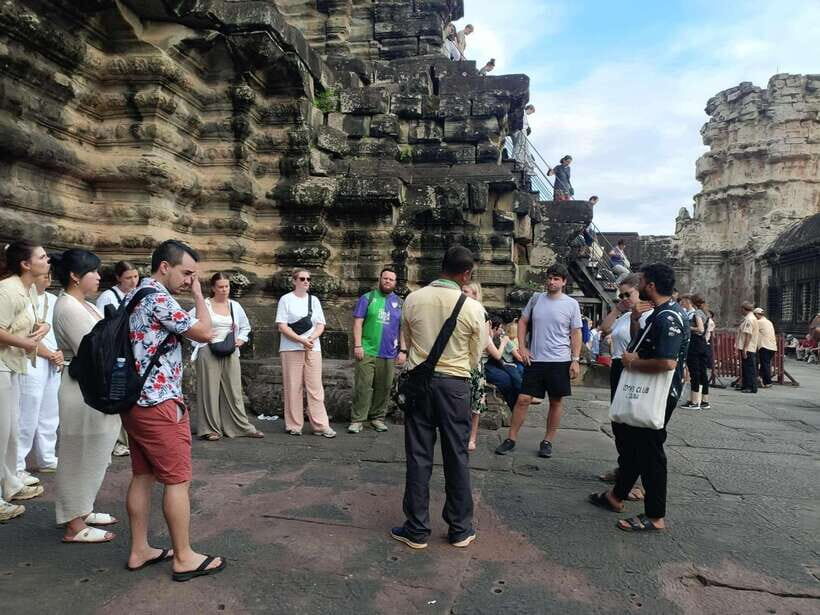
- A real guide voice, with multiple guides highlighted by name for humor and answering questions all day
- Air-conditioned transport, plus cool water and wet towels that keep the day from turning into a slog
- Six major stops, including Angkor Wat, Ta Prohm, Angkor Thom, Bayon, Ta Keo, and the Phnom Bakheng sunset viewpoint
- Jungle-lined Ta Prohm, where roots and branches really do make the temple feel alive
- Photo timing help, with guides aiming for calmer moments so you’re not just trapped in crowds
- Sunset payoff, finishing above Angkor’s temple zone instead of rushing away right after the main sights
The smart way to see Angkor: six temples plus a sunset plan
Angkor Wat is the big one, sure. But the best part of this day is that it doesn’t feel like you only “do one temple” and then escape. You get a full circuit: Angkor Wat first, then Ta Prohm and the bigger capital-city complex of Angkor Thom, then Bayon, Ta Keo, and finally the view from Phnom Bakheng.
Your guide is there for the part most visitors miss. Temple carvings are not random. They’re tied to gods, kings, and Khmer religious life. When someone points out the meaning behind what you’re looking at, the stone stops being just pretty and starts making sense. That’s why people keep recommending specific guides by name. Vone, Kosal, Mr John, and Coco show up repeatedly for being funny while also sticking to facts and dates.
The practical upside is simple: you don’t have to figure out route logic, which gate to enter, or what to notice first. The bus takes you between sites, and your guide tells you what to focus on while you’re there. In a place this large, that matters.
You can also read our reviews of more guided tours in Siem Reap
Pickup, the air-conditioned ride, and why timing starts the day
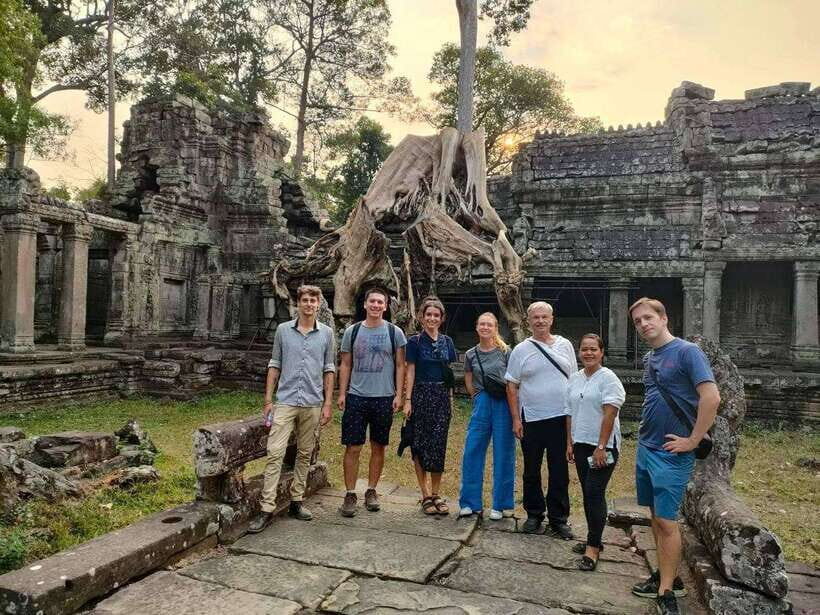
You’ll be picked up from your accommodation in Krong Siem Reap, and the day begins with a short coach ride. The schedule has multiple transfer blocks (including about 45 minutes early on), so you’ll want to show up ready rather than rushing out the door at the last second.
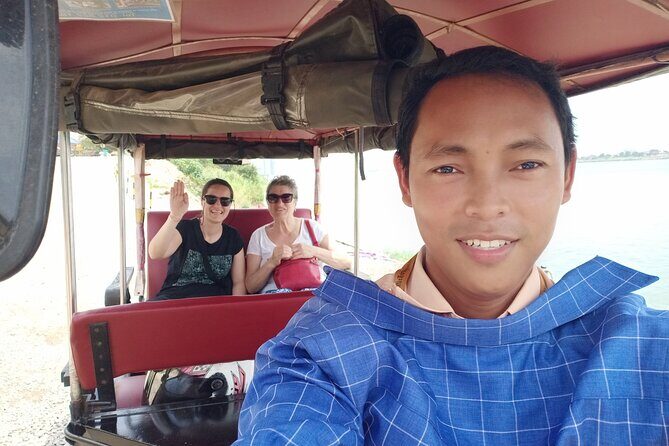
The ride setup is one of the tour’s quiet strengths. You’re in an air-conditioned mini van/coach, and you get cool water / wet towel. Reviews also call out cold water being provided often, which is a real comfort in peak heat and bright sun. Even if you start strong, the Khmer midday sun can wear you down fast.
Dress code is also practical, not picky: shoulders and knees need to be covered. That means you’ll want a light shirt (not a tank) and long pants or a breathable alternative that covers your knees.
Angkor Wat with a guide: more than the postcard view
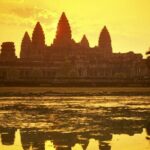
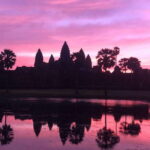
Angkor Wat is where most people start, and this tour gives you a guided chunk of time there. You’re looking at the world’s largest religious monument, with Hindu and Buddhist influence layered through the centuries.
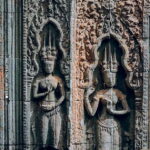
What I like about this approach is the flow: you cross the moat and pass the outer wall, then move through galleries lined with bas-reliefs. Those stone carvings can feel overwhelming if you don’t know what you’re seeing. With a guide, you can follow the themes: epic mythology, royal battles, and the way Khmer builders used art as storytelling.
Angkor Wat also rewards the person who asks questions. This tour is built for that. Multiple reviews emphasize that guides answer questions patiently and keep things entertaining, not lecture-y. If your English is solid, you’ll likely enjoy the Q&A moments. One review notes that an accent can occasionally be harder to catch, but the guide was happy to repeat, so don’t be shy about asking again.
A drawback to plan around: even with a guide, Angkor Wat is huge. Two hours can feel fast if you love slowing down for photos and details. If that’s you, think of this as a “best-of plus context” visit, and plan to return later for a longer wander at your favorite spots.
Ta Prohm and the jungle path: where the roots take over
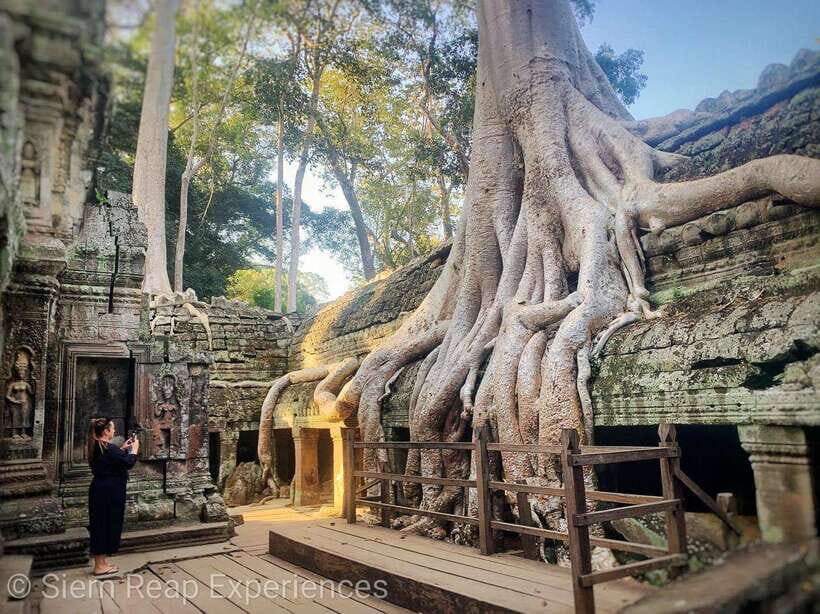
Next comes Ta Prohm, famous for the look where tree roots and branches grow through the temple structures. This is the moment where Angkor feels almost cinematic. The tour includes guided time here plus the walk along the jungle-lined approach.
This stop is special because it breaks the clean geometry of the rest of the Angkor complex. Instead of only straight lines and symmetry, you get tangled stone and living plant growth. It’s the kind of scene you’ll want to photograph from multiple angles, and a good guide can help you choose where to stand so you’re not fighting the crowd.
One timing note from reviews: guides often try to get to temples at calmer moments. That means your Ta Prohm visit might feel easier than you’d expect, depending on the day.
Banteay Kdei and lunch: your mid-day breath before more stairs
Between the morning temples and the afternoon circuit, there’s a break built in. Your schedule includes a stop at Banteay Kdei paired with a lunch window (about an hour), and lunch is on your own.
This is the smart moment to refuel. By mid-day, you’ve already walked enough to feel the heat, and temples are not shaded like city streets. A lunch break makes the later stops more enjoyable instead of just “surviving to the end.”
If you’re picky about what you eat, I’d keep it simple: hydration matters, and you’ll already be bringing sunscreen, sunglasses, and insect repellent anyway. If your stomach is sensitive, consider eating earlier rather than later during the hour so you can manage your energy for the next climbs.
A few more Siem Reap tours and experiences worth a look
Ta Keo: the unfinished pyramid that still dominates
Ta Keo is the kind of temple that surprises people. It’s a towering pyramid temple that was left unfinished, yet it commands attention immediately. The tour includes guided time plus a walk, giving you a chance to follow connections and lesser paths around the site.
What’s valuable here is that Ta Keo isn’t just “another Angkor building.” It has that unfinished feel, which makes the massive sandstone structure feel raw and heavy. It also gives your guide room to explain how Khmer architects and priests designed these spaces to connect with other temples.
In practical terms, this is a good stop for people who like walking a bit beyond the main viewing points. The more comfortable your shoes are, the better you’ll enjoy it, because temple grounds mean uneven stone and short climbs.
Angkor Thom and Bayon: southern gate faces and the calm center
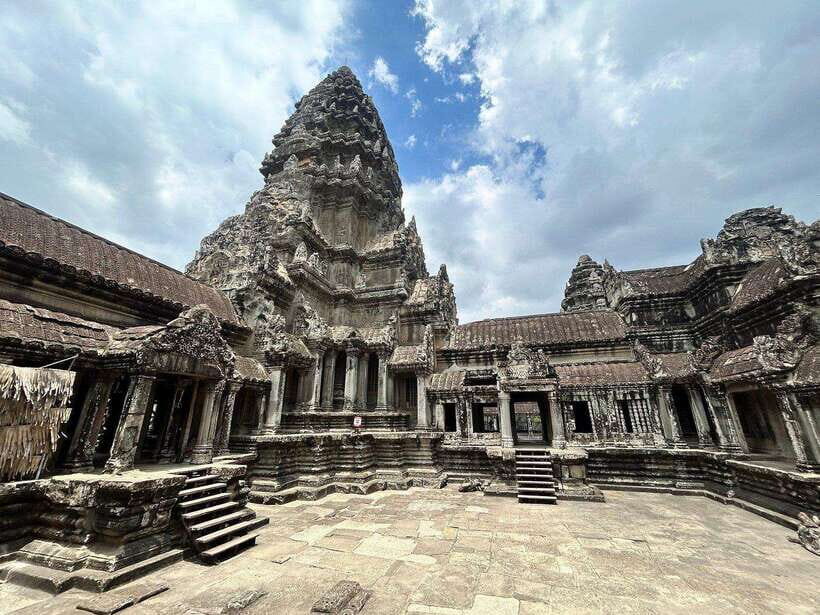
Then you shift to Angkor Thom, the final and grandest capital of the Khmer Empire. The southern gate is the headline moment on approach, lined with a causeway flanked by stone figures—gods and demons frozen in time.
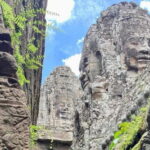
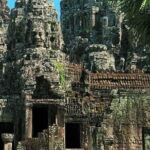
After that, the schedule brings you to Bayon. Bayon is known for its serene stone faces that look outward from central towers. The feeling here is different from Angkor Wat. Where Angkor Wat can feel grand and formal, Bayon feels closer and more watchful, like you’re inside a city’s heartbeat.
This part of the tour is where having a guide really pays off again. Those faces are not just decoration; your guide can connect what you’re seeing to the broader religious and political story of the Khmer period.
And this is a good place to pace yourself. Bayon’s towers and corridors can pull you into a slow loop of looking up, looking around, and repeating. Your guide keeps you moving at a pace that still gives you time to absorb the carvings and architecture.
Phnom Bakheng for sunset: the final view you’ll remember
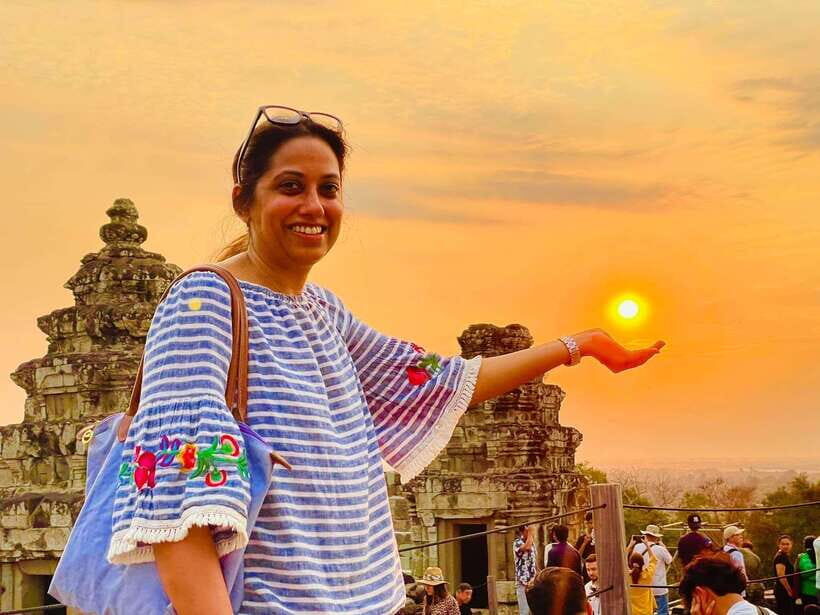
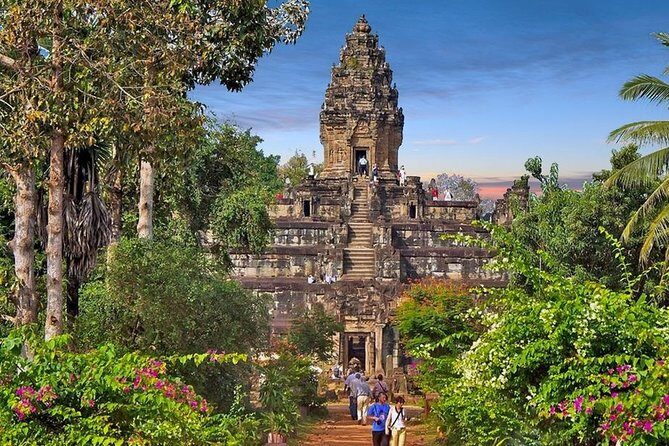
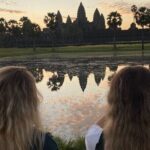
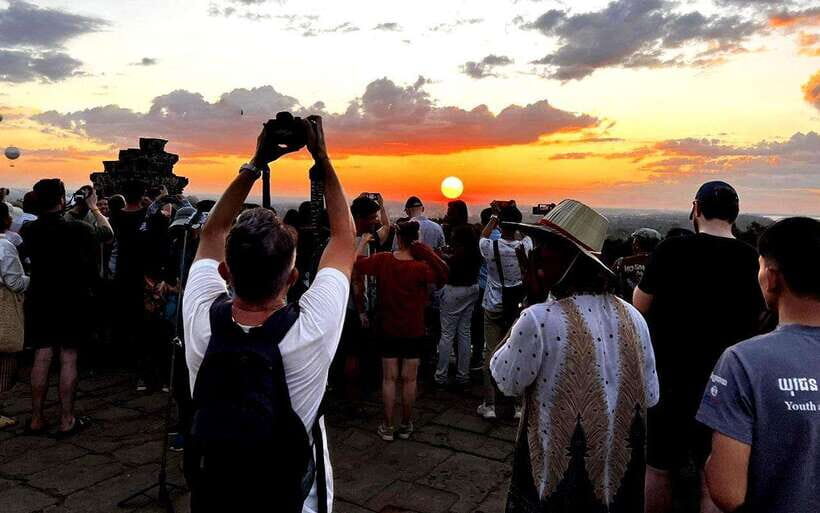
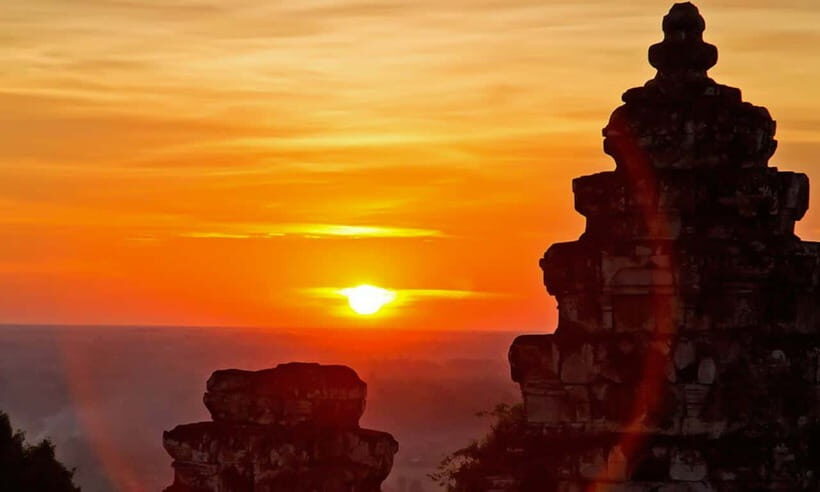
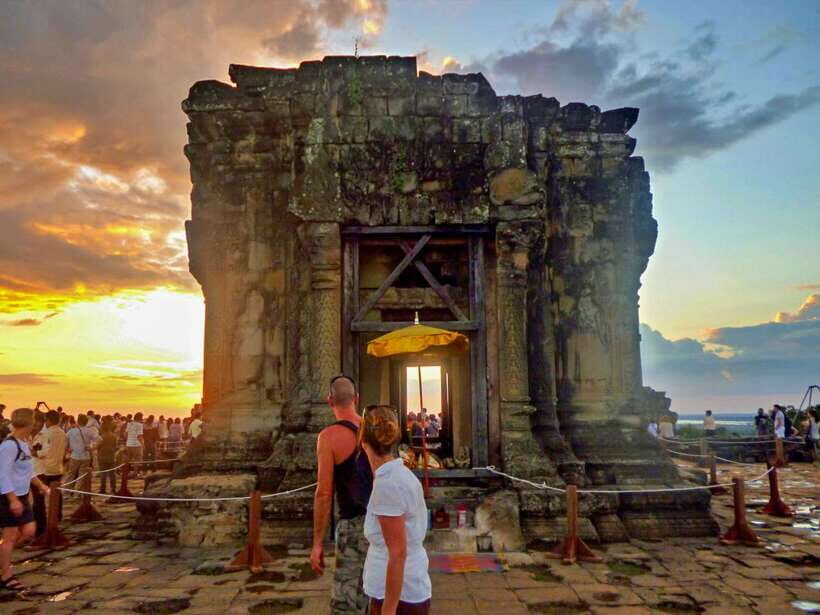
The day ends on Phnom Bakheng hill, with a guided sunset viewing. This is where Angkor becomes more than monuments. From above, the temple zone looks like a map made of stone and forest edges, and the light changes everything—especially after you’ve spent hours in hard sun at ground level.
This stop is also a nice “wrap-up” because it doesn’t demand the same kind of detailed reading as the galleries and bas-reliefs. Instead, you can let the day settle in and enjoy the perspective.
Keep expectations realistic: Phnom Bakheng is a climb. If you’re not used to stairs and uneven ground, go slow, take breaks, and lean on your guide if you need help pacing. The payoff is worth it, but the hill is part of the deal.
Price and value: $14 tour price, plus the Angkor Pass reality check
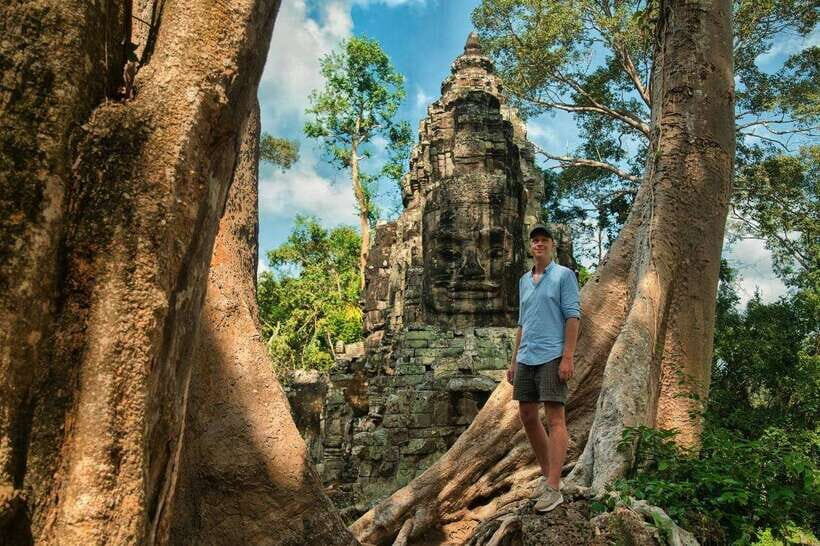
The listed tour price is $14 per person, and it covers hotel pickup/drop-off, an English-speaking guide, air-conditioned mini van/coach, six main temple stops, plus cool water and wet towels.
Then there’s the unavoidable extra: the Angkor Pass, $37 payable on the day of your visit. Tickets are not included in the tour price.
So how does that change value? If you already plan to visit multiple temples anyway, the tour can be a great way to turn your pass into the most efficient day possible. You’re paying for guided time, transport, and the route structure that helps you see the key sites without spending energy figuring everything out.
If you’re the type who hates paying additional ticket costs and prefers total freedom, you might feel nicked by the pass payment step. But for most first-timers, it’s a fair trade: the pass gives you access, and the guide helps you make the access meaningful.
What to bring (and what actually helps on temple days)
You’ll want the basics for sun, bugs, and long walking. The tour advises:
- sunglasses, camera
- insect repellent and sunscreen
- a sun hat
- comfortable walking shoes
A small tip from how the day is described and how guides operate: bring a plan for water and heat. You’ll receive cool water and wet towel during the tour, but you’ll still want to protect your skin and eyes. This is one of those days where comfort is not a luxury.
Also remember: alcohol and drugs are not allowed. And non-folding wheelchairs are not allowed, so plan accordingly if you have mobility needs.
Who this tour suits best (and who might want a different style)
This is a strong fit for first-time Angkor visitors who want:
- an organized route through the main temples
- a guide to explain religion, symbolism, and architecture
- a sunset viewpoint without having to plan it yourself
- air-conditioned transport to recover between sites
It also suits people who like humor in their history. Reviews repeatedly mention guides cracking jokes while answering questions, including Vone, Kosal, and others. If you’re looking for a purely quiet, self-paced photography day, you might find the guided structure feels a bit busy.
Pace is the main potential tension. One review notes it can feel rushed between temples when you want to take lots of photos. That doesn’t mean the day is chaotic; it means you should plan to prioritize. If you love photographing every carving, consider asking your guide for a few photo moments and tell them what matters most to you.
Should you book this Angkor Wat full day with sunset?
Yes, if you want a first-time-friendly Angkor day that covers the essentials without turning into logistics homework. The combination of six major temple stops, an English-speaking guide, air-conditioned transport, and a true sunset ending makes it a practical way to get your bearings fast.
Book it especially if:
- you care about understanding what you’re seeing, not just collecting photos
- you’d rather have someone time the day than you guessing
- you prefer guided Q&A, with guides like Vone, Kosal, Mr John, and Coco getting praise for exactly that
Consider a different option if:
- you’re extremely photo-first and want long, unstructured time at each site
- you dislike added costs like the Angkor Pass, even though it’s standard for visiting
- you want a totally independent route with no guide explanations
If you book, bring covered clothing, strong walking shoes, and your sunscreen. Do that, and this is the kind of day that makes Angkor feel personal instead of just massive.
FAQ
How long is the tour?
The duration is listed as 8 to 10 hours.
Does this tour include hotel pickup and drop-off?
Yes. Hotel pick-up and drop-off are included, starting from your accommodation in Krong Siem Reap.
Is the guide English-speaking?
Yes. The tour includes an English-speaking live guide.
Which temples are included?
The included main temples are Angkor Wat, Angkor Thom, Bayon, Ta Keo, Ta Prohm, and Phnom Bakheng hill for sunset.
Do I need to pay for temple tickets?
Yes. Temple pass tickets are not included, and an additional $37 Angkor Pass is payable on the day of your activity.
Is lunch included?
No. Meals are not included. There is a lunch break, but lunch is at your own expense.
What transport is provided?
You’ll ride in an air-conditioned mini van/coach for the day.
What should I wear?
Dress code requires shoulders and knees to be covered.
What should I bring for comfort?
Bring sunglasses, a camera, insect repellent, sunscreen, and a sun hat, plus comfortable walking shoes.
Is free cancellation available?
Yes. Free cancellation is available up to 24 hours in advance for a full refund.