REVIEW · SIEM REAP
1 Day Private Angkor Wat Tour
Book on Viator →Operated by Private Angkor Wat Tour · Bookable on Viator
Angkor in one day is a push, but it’s also a sweet spot. This private tour is built to cover the big-name highlights—Angkor Wat, Ta Prohm, Bayon, and Banteay Srei—without wasting hours guessing your way around.
What I like most is the focus on the key temples’ details, not just walking in circles. You also get an English-speaking guide (I saw guides listed like Rain and Chek/Cham Chek) who points out what to look for and how the sites connect. The main catch to plan for: the temple pass and most admissions aren’t included, so you’ll need to budget for tickets separately.
In This Review
- Key things I’d bank on before you go
- How this 1-day private Angkor route really works
- 8:00 AM pickup and the pacing of a long, hot day
- Angkor Wat: why this stop deserves your best attention
- Ta Prohm: jungle-overgrown temple time (and how not to rush it)
- Baphuon Temple: a calmer stop with a strong story
- Angkor Thom and Bayon: South Gate demons to smiling faces
- Banteay Srei: pink sandstone carvings to finish strong
- Price and value: is $100 per person fair for a one-day sprint?
- Practical tips so your day feels smooth (not chaotic)
- Who this private Angkor Wat day tour suits best
- Should you book this 1-day private Angkor Wat tour?
- FAQ
- What time does the tour start?
- Where does the tour start and end?
- Is the temple pass included?
- Are admissions included for all temples?
- Is lunch included?
- What’s included in the price?
- What happens if weather is poor?
Key things I’d bank on before you go

- Private pacing: You’re not stuck behind slow walkers or sprinting with strangers.
- Guide-led temple reading: Expect explanations of why places matter, not just where they are.
- Angkor Wat + Bayon faces: Two of the most recognizable Angkor experiences in one day.
- Ta Prohm’s jungle feel: You’ll see the “tree-and-stone” mood that makes this stop unforgettable.
- Banteay Srei ticket note: The plan lists Banteay Srei admission as free, which is a nice perk.
- Air-con comfort: Your transport is described as private, with water provided.
How this 1-day private Angkor route really works
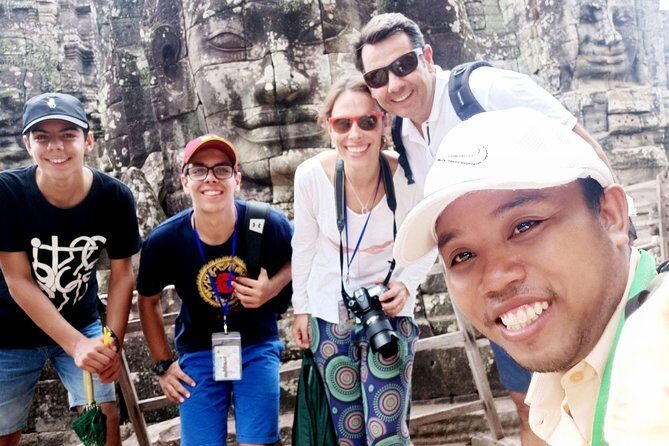
This is a tight circuit, designed for people who want the headline temples fast, but still want to understand what they’re looking at. The day is scheduled to start at 8:00 am from 9V7C+4G8, Krong Siem Reap, and you return back to the meeting point afterward.
The practical win of doing it privately is simple: you can move at a pace that matches your eyes and your legs. That matters at Angkor, where you can easily spend half your day turning your head and saying, Wait, where do we go next?
You’ll hit the major Angkor complex zones: Angkor Wat, Ta Prohm, Baphuon, Angkor Thom (including Bayon), and Banteay Srei. The visit times listed for stops are around 1 to 2 hours each, which is about right for absorbing the carvings and layout without feeling like you’re on a conveyor belt.
If you’re the type who likes photos, this day also suits you. Several guest notes mention guides who are handy with camera angles and picking good spots—helpful when the temples are crowded and the light changes fast.
You can also read our reviews of more private tours in Siem Reap


8:00 AM pickup and the pacing of a long, hot day
The start time matters more than you might think. Starting in the morning helps you get cooler walking hours and better odds for photos before the crush builds.
The tour includes private transportation plus bottled water, which is exactly what you want when you’re moving temple-to-temple under strong sun. Comfortable shoes are strongly recommended in the tour info, and I agree—that advice is not just “nice to have.” Stone is uneven. Roots are everywhere. Your feet will do the complaining long before your brain gets tired.
Also, plan your day around realistic stamina. Even with a guide handling navigation and timing, you’re still covering multiple temple areas, so it’s a good fit for people who don’t need a slow, relaxed museum pace.
Angkor Wat: why this stop deserves your best attention
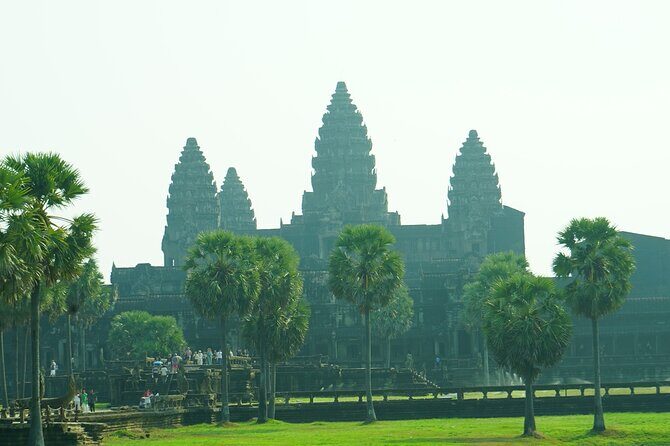
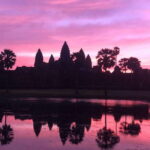
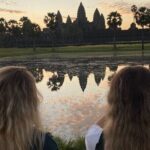
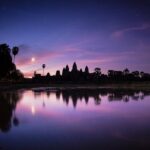
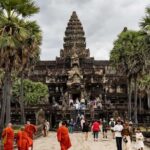
Angkor Wat is the big one, and for good reason. The plan sets aside about 2 hours here, and that’s a smart amount of time if you want more than a quick glance at the skyline from the moat path.
You’ll get the chance to see Angkor Wat’s scale and its refined layout—plus the temple’s carvings, which are the kind of detail that only becomes obvious when someone shows you what to notice. The tour description calls it the best preserved and the most religiously significant of the Angkor temples, and in practice that shows in how the carvings and overall composition hold together compared with other sites.
Two things to watch for as you walk:
- Proportions: Angkor Wat feels “designed,” not random. Straight lines, symmetry, and layered spaces help your brain understand the temple’s order.
- Relief details: Take your time at the carving zones. Even 30 seconds longer at a panel can make the difference between seeing decoration and actually understanding it.
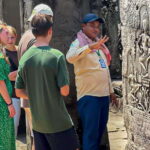
A bonus from the guide side: multiple guest messages specifically praise Rain for being enthusiastic and passionate, and for steering people to the right spots while explaining meaning. Another mention highlights Chek/Cham Chek guiding people so they wouldn’t wander aimlessly—exactly the kind of help you want at a place where every corner looks dramatic.
Ta Prohm: jungle-overgrown temple time (and how not to rush it)
Ta Prohm is famous for its “untamed” look. The tour schedule allows about 2 hours, and that’s enough time to take in the temple atmosphere rather than just speed through.
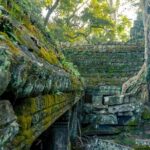
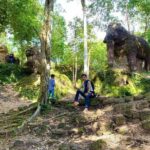
Here’s the attraction: much of the jungle hasn’t been cleared, so trees and roots mingle with the stone. That mix changes the feeling of the whole place. Angkor Wat can feel formal and monumental; Ta Prohm feels like time got tangled in the masonry.
If you like photos, Ta Prohm is a magnet, but it can also turn into a bottleneck if you rush to the most obvious spots and then get stuck waiting. A good guide helps here by steering you where to stand and when to move so you keep the best angles without fighting the crowd.
One practical note: admission tickets aren’t included for Ta Prohm in the tour info, so keep your ticket plan organized.
Baphuon Temple: a calmer stop with a strong story

After Ta Prohm, the plan includes Baphuon Temple for about 1 hour. This is the kind of stop I like because it often feels less “photo-chase” and more “slow understanding.”
The description mentions that Baphuon is the original temple, later converted into a Buddhist temple, with a big Buddha carving behind. That transformation is one of the things you’ll keep noticing throughout Angkor—sites evolve, religions and styles shift, but the stone stubbornly remains.
There’s also mention of a local lunch being part of the day. The important detail: lunch is listed as not included in the tour pricing info, so you’ll likely pay for your meal at the restaurant you’re taken to or stop nearby.
If you’re trying to manage energy, Baphuon is a useful reset. Use the hour to rest your legs a little, then mentally switch from Ta Prohm’s jungle drama to Angkor Thom’s big layout.
A few more Siem Reap tours and experiences worth a look



Angkor Thom and Bayon: South Gate demons to smiling faces
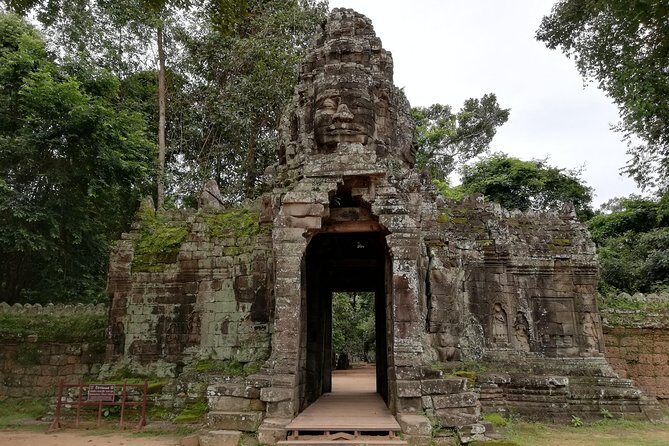
Angkor Thom covers a huge area, and the tour focuses on two of its best-known experiences: the South Gate approach and Bayon.
At the South Gate, the tour description points out a causeway lined with statues of demons and gods, each carrying giant Naga. That’s a very specific detail, and it’s the kind of thing you’ll miss if you just walk through without guidance. Seeing it with context turns the gate from impressive scenery into part of a larger mythic scene.
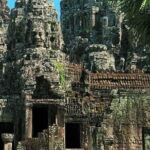
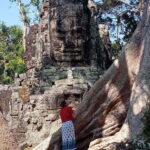
Then you move into Bayon, which is described as one of Angkor’s most popular and compelling areas—full of giant stone faces smiling enigmatically from multiple angles. The plan gives Bayon about 1 hour, plus the overall Angkor Thom time is listed as 2 hours.
Here’s how I’d pace Bayon for the best payoff:
- Spend time circling one section rather than bouncing between too many corners.
- Let the faces change perspective as you move. The effect is partly visual trick and partly design.
This is also where having a guide who explains what you’re seeing really matters. Some guest notes praise guides for making sense of the importance of certain spots and for answering questions clearly in English. That kind of guidance is especially helpful when the faces feel mysterious and you’re not sure what to look for first.
Banteay Srei: pink sandstone carvings to finish strong
Your last temple stop is Banteay Srei, often called the jewel of classical Khmer art. The plan lists it for about 1 hour, and the tour info says it has free admission.
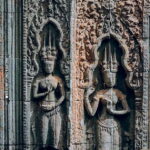
Banteay Srei is built in pink sandstone, and the key attraction is the carving style: exquisitely preserved works with unusual delicacy. This is one of those places where the “small details” are the whole show. You’ll want to slow down here and actually look at the motifs rather than treating it like a quick stop.
Also, because it’s a finishing point, it works well psychologically. After hours of big gates and face towers, Banteay Srei’s precision feels like a cool-down—still impressive, just more intimate.
Price and value: is $100 per person fair for a one-day sprint?
At $100 per person, this tour isn’t trying to be the cheapest way into Angkor. It’s priced like a practical shortcut: you pay for a private English guide, private transportation, and bottled water, and you don’t have to figure out routing across multiple temple areas.
That value math usually works when:
- You only have one day and want the major hits.
- You’d rather spend your time looking at carvings than reading a map.
- You care about explanations (not just photos).
But keep your budget honest. The tour info clearly states temple pass isn’t included, and most admissions aren’t included either. So your final spend will likely be more than the headline $100 once you add the required entry tickets and any meals.
One small bright spot: Banteay Srei admission is listed as free. That can help offset part of the ticket cost for the day.
Also, the experience info mentions mobile ticket and group discounts. If you’re booking with multiple people, it’s worth asking what discount applies to your group size, since private tours can sometimes price differently depending on the booking arrangement.
Practical tips so your day feels smooth (not chaotic)
Here’s what I’d do if I were planning this day myself:
1) Wear shoes that handle uneven stone. The tour specifically recommends comfortable shoes. Treat that as a rule, not a suggestion.
2) Bring sunscreen and shade habits. Sunscreen is recommended, and you’ll be exposed for long stretches. I also like a hat and sunglasses, even if the tour doesn’t mention them—basic sun protection makes temple time more enjoyable.
3) Keep your ticket plan simple. Since temple passes and admissions (except Banteay Srei in the info) aren’t included, have your ticket info ready. You don’t want to lose momentum at a ticket counter while your guide’s waiting.
4) Plan for lunch costs. The schedule suggests a lunch break, but lunch is listed as not included. Decide early whether you want something local and simple or something more familiar.
5) Use the guide for photos and “what am I looking at?” Several notes mention the guide being great at photography angles and pointing out the best places. Ask during the ride where you should stand at each stop so you’re not guessing.
And one more small thing: your tour starts at 8:00 am, so treat that like a hard deadline. Getting a slow start turns a one-day Angkor visit into a long day of tired foot shuffles.
Who this private Angkor Wat day tour suits best
This fits well if you:
- Have limited time and want to see multiple iconic temples in one day.
- Want a guide-led experience with clear English explanations.
- Prefer private transport and a managed schedule over DIY navigation.
It’s also a good match for anyone who gets overwhelmed at big sites. Angkor is visually stunning, but it can feel like sensory overload without someone helping you connect the dots—why the gate is shaped that way, what the faces represent, and how the different temples relate.
Should you book this 1-day private Angkor Wat tour?
Yes, I’d consider booking it if you’re aiming for maximum Angkor highlight coverage in limited time and you value explanations while you walk. The strongest reasons are the private structure, the English-speaking guiding (with names like Rain and Chek/Cham Chek mentioned), and the way the route focuses on major temples rather than random stops.
I would pause and budget carefully if you don’t want to deal with temple pass and admission fees on top of the $100. Also, this is a packed day—if you want a relaxed pace with lots of breaks, you might feel rushed.
If you want an efficient Angkor day that still feels thoughtful (not just a photo sprint), this one is a solid choice.
FAQ
What time does the tour start?
The tour start time is 8:00 am.
Where does the tour start and end?
It starts at 9V7C+4G8, Krong Siem Reap, Cambodia, and it ends back at the same meeting point.
Is the temple pass included?
No. The tour info lists the temple pass as not included.
Are admissions included for all temples?
Admissions are listed as not included for Angkor Wat, Ta Prohm, Baphuon, and Bayon. Banteay Srei admission is listed as free.
Is lunch included?
No. Lunch is listed as not included, though there is time set aside for lunch during the day.
What’s included in the price?
Included items are an English speaking tour guide, private transportation, and bottled water.
What happens if weather is poor?
The experience requires good weather. If it’s canceled due to poor weather, you’ll be offered a different date or a full refund.