REVIEW · SIEM REAP
3-Day ‘Temples & Tonle Sap’ Tour
Book on Viator →Operated by Asia Voyage Tour · Bookable on Viator
Your feet will earn their temples. This tight 3-day Siem Reap tour strings together Angkor’s biggest icons and lesser-hit ruins, with hotel transfers and guided context to keep it from feeling like a checklist.
What really makes it worth considering is the included motorized boat ride for Tonle Sap, plus the straightforward “you show up, we handle the logistics” flow.
The one catch: you’ll still need to buy Angkor temple passes and plan for meals, and the days involve lots of walking (it’s not a stroll).
In This Review
- Key things I’d highlight
- How this 3-day plan keeps Angkor from eating your vacation
- Day 1 at Angkor: Angkor Thom highlights, then Angkor Wat in full daylight
- Phnom Bakheng: the hilltop temple moment (and why timing is everything)
- Day 2: Sunrise return at Angkor Wat, then a compact cluster of temples
- Banteay Srei and the smaller stops: where Angkor gets personal
- Day 3 Tonle Sap: Kompong Phluk and Roluos temples in one day
- Markets and artisans: finishing your trip with Siem Reap flavor
- Price and value: what you’re really paying for at USD 250
- Who should book this tour (and who should think twice)
- Quick practical tips so your days feel better
- Should you book the Temples & Tonle Sap 3-Day Tour?
- FAQ
- What does the tour include?
- Is Angkor Wat and Angkor Thom included?
- Do I need to buy temple passes separately?
- Is the Tonle Sap boat ride included?
- What time does the tour start each day?
- Are meals included?
- What’s the total duration?
- Is pickup available if I’m staying near public transportation?
- Who is the tour not suitable for?
- Can I cancel for a full refund?
Key things I’d highlight
- Two big Angkor days, not one rushed marathon: you’ll see major sights spread across Day 1 and Day 2 instead of cramming everything into Day 1.
- Sunrise at Angkor Wat: the schedule builds in a second visit for the famous early light.
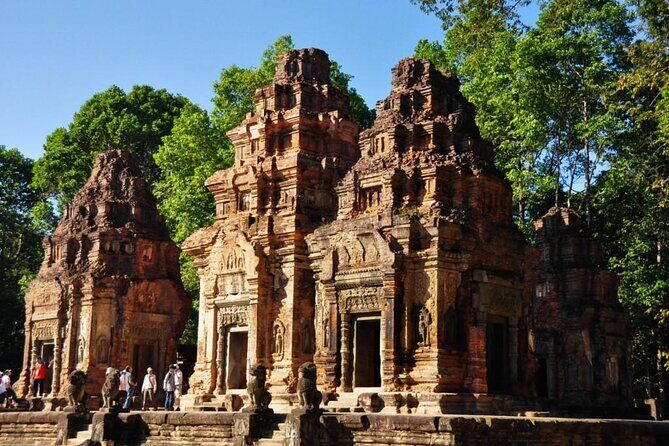
- Roluos temples for a quieter Khmer feel: you get early temple structures that feel less like a theme-park line.
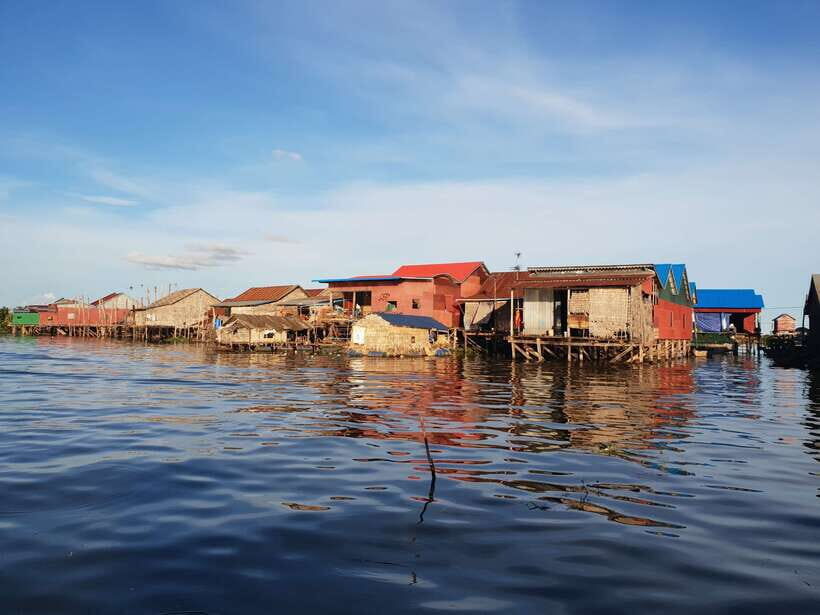
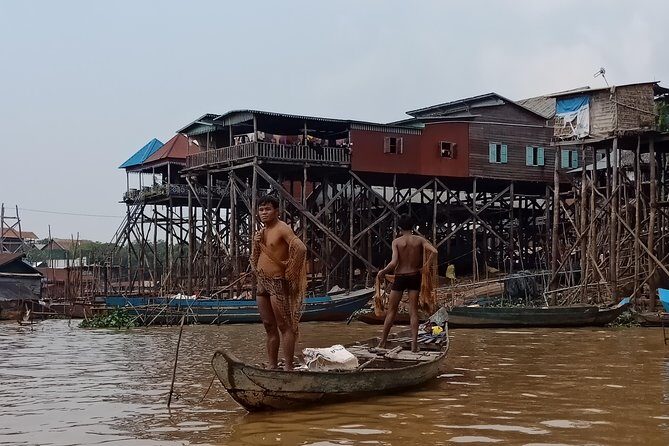
- Tonle Sap from the water at Kompong Phluk: villages largely on stilts tied to fishing in the wet season.
- Comfort touches matter: air-conditioned vehicle, bottled water, and cold towels are included.
- Arrive early with a fixed start time: the vehicle departs at 8:30 am from your hotel.
How this 3-day plan keeps Angkor from eating your vacation
Angkor can be stressful if you’re trying to piece it together yourself—tickets, routes, timing, and the ever-present question of whether you’ll still be stuck in a traffic bottleneck when you want photos. This tour is built to remove that friction.
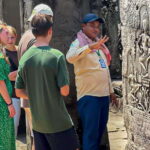
You start each day with hotel pickup and drop-off, plus an air-conditioned vehicle for the rides between temple zones. Add a professional English-speaking guide, and you get the “what you’re looking at” answers as you go, not after you’re back in your room with jet-lagged confusion.
The route is also designed for variety. Day 1 is classic Angkor Thom and the big-grand sweep of Angkor Wat. Day 2 adds more temples and the famous sunrise return. Day 3 shifts to the Tonle Sap and then circles back through Siem Reap with a market stop.
A few more Siem Reap tours and experiences worth a look
Day 1 at Angkor: Angkor Thom highlights, then Angkor Wat in full daylight
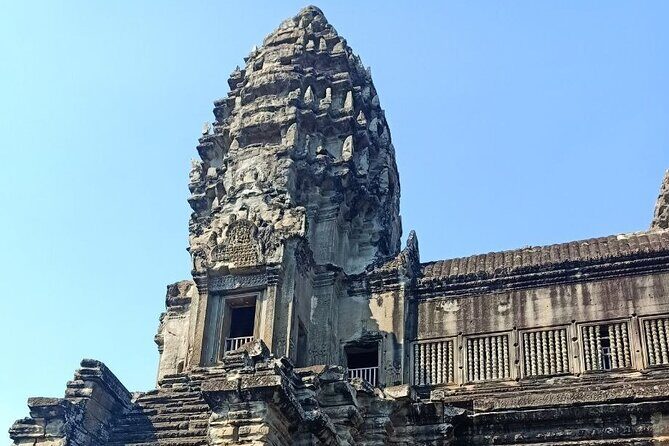
Day 1 starts at the Angkor Archaeological Park area, where you’ll pick up your temple pass. The guidance here is practical: buy an Angkor pass for at least three days, with options listed as USD 62 for a 3-day pass (or USD 72 for a 7-day pass). One pass per person. That matters because Angkor’s ticketing is tied to dates, not “sight-by-sight” entry.
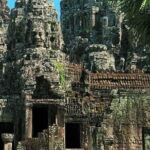
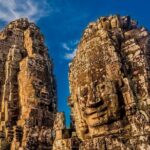
Once you’re inside, Bayon Temple is your first major “wow.” Bayon (Prasat Bayon) is the richly decorated Khmer temple associated with King Jayavarman VII. Expect the famous stone faces and a sense that the whole structure is about power and belief, not just pretty carvings. The guide’s explanations help you read the temple layout rather than only snapping photos.
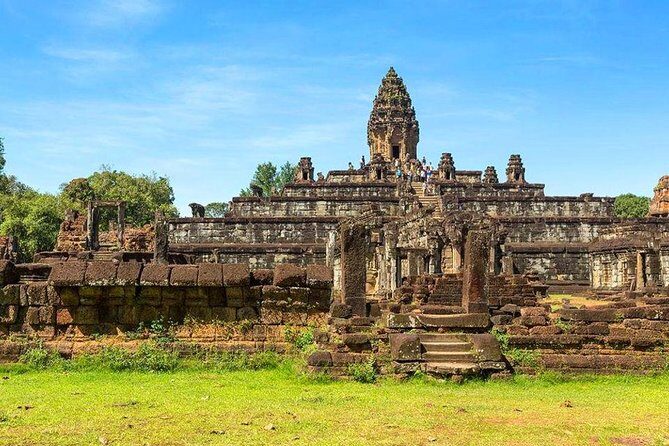
Next comes Baphuon Temple, positioned in Angkor Thom northwest of Bayon. It’s a three-tiered temple mountain built as the state temple of Udayadityavarman and dedicated to Shiva. Even if you don’t know the Sanskrit details, you’ll feel the scale shift—this is the kind of site where angles and terraces make a big difference.
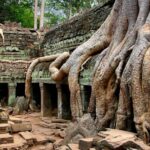
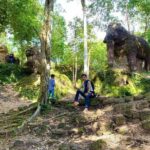
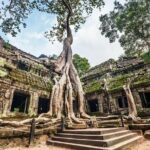
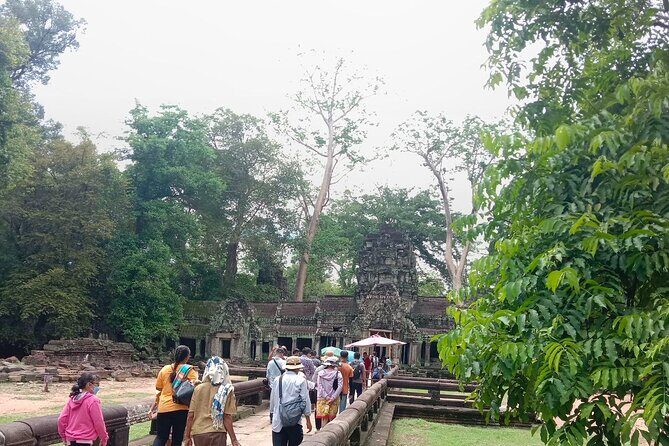
Ta Prohm follows, and this one always delivers on atmosphere. It’s the modern name for a temple originally called Rajavihara, built in the Bayon style around the late 12th and early 13th centuries. If you’ve seen photos where tree roots mingle with stone, this is where that look comes from. The key tip: go slowly here. The “magic” isn’t just the big photo spots; it’s the small visual rhythm of stone, roots, and shadows.
From there, you’ll stop at the Terrace of the Elephants, part of the Royal Terraces along the eastern boundary of the Royal Palace grounds. It’s shorter than Angkor Wat, so it can feel like a palate cleanser. But it’s still important for understanding the ceremonial spaces that framed royal life.
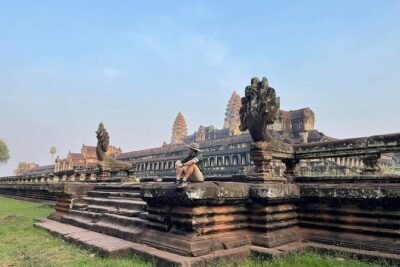
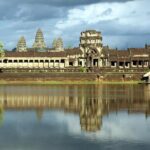
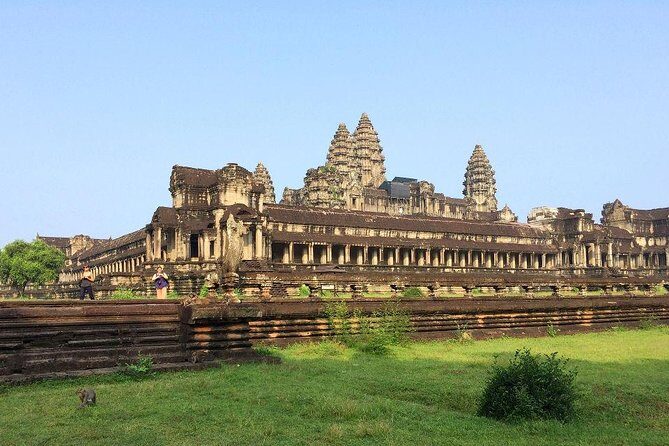
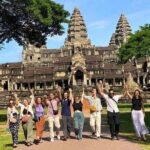
Then you close the day at Angkor Wat, after lunch. Angkor Wat is huge—on a site measuring 162.6 hectares—and it’s the largest religious monument in the world. It was originally built as a Hindu temple dedicated to Vishnu, and its later Buddhist connections are part of why it’s so culturally layered. With a tour guide timing you through the complex, you’ll spend your daylight at the right places instead of wandering in circles.
Phnom Bakheng: the hilltop temple moment (and why timing is everything)
After Angkor Wat, the schedule includes Phnom Bakheng, a Hindu and Buddhist temple-mountain built at the end of the 9th century under King Yasovarman. It sits on top of a hill, which gives it a dramatic “surrounded by trees and sky” feeling.
This stop is popular, so you’ll want to treat it like a scene: you’re there for views and atmosphere more than for a long museum-style visit. The tour gives you the structure, but your success still depends on how you manage time on-site. Plan on moving steadily and keeping your attention on the hilltop viewpoints rather than trying to cover every inch.
If you’re sensitive to heat, this is one of the days where you’ll feel the sun. Bring a light layer or hat, and use the cold towels and water provided as part of your own rhythm—not only when you’re already worn down.
Day 2: Sunrise return at Angkor Wat, then a compact cluster of temples
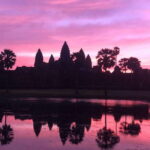
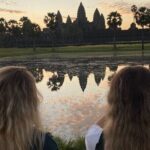
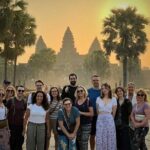
Day 2 begins with a second visit to Angkor Wat, specifically for sunrise. That double-dip is the smart part of this tour: you get the iconic early light without losing the ability to see Angkor Wat properly again later.
Once the sunrise segment is done, you return to the guest hotel for breakfast. This is more than comfort. It’s also sanity. Angkor days stack fatigue fast, and having a real break helps you enjoy Day 2 instead of just surviving it.
After breakfast, the itinerary shifts to a clustered set: Preah Khan, Neak Poan, Ta Som, and East Mebon. These are close enough to feel like one themed route rather than a “drive, stop, run, repeat” system. Preah Khan can feel more intimate than Angkor Wat’s scale, and the mix of water features and temple shapes keeps the route interesting.
Neak Poan is especially worth paying attention to because it’s tied to water symbolism and temple design. Ta Som is another solid reminder that “less famous” often means “more walkable and less chaotic.” East Mebon rounds it out, giving you that steady sense of how Khmer temple-building evolved through different reigns and styles.
Banteay Srei and the smaller stops: where Angkor gets personal
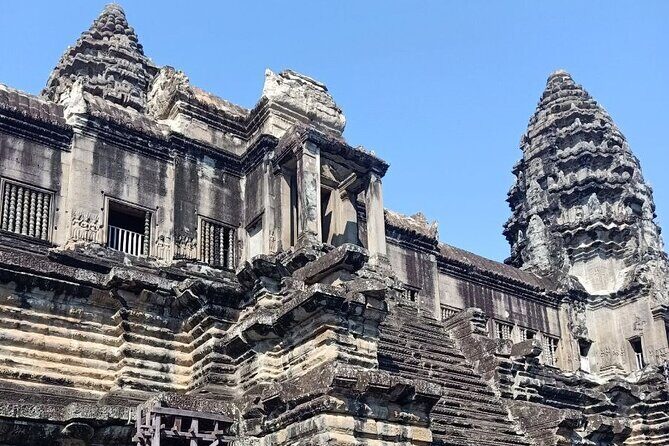
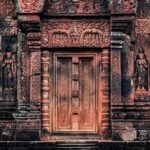
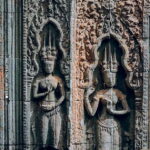
After lunch, you head to Banteay Srei, often nicknamed the ladies temple. It’s a 10th-century temple dedicated to Shiva near Phnom Dei, about 25 km northeast of the main complex area. The name “ladies temple” is a familiar label, but what matters for your experience is that it’s generally less frantic than the biggest Angkor icons. It also tends to feel more delicate in the way carvings and proportions come across.
From there, the schedule includes Banteay Samré, which sits near the East Baray and is built in the Angkor Wat style. It’s a one-hour stop, so think of it as a focused look: enough time to appreciate the design and photos, not enough time to pretend you’ll “master” every stone.
Banteay Kdei comes next. Meaning “A Citadel of Chambers,” it’s also known as “Citadel of Monks’ cells” and is a Buddhist temple. If you liked the calmer feel of Ta Som and smaller compounds on this route, Banteay Kdei is a good fit. It gives you that Khmer “details and rooms” feeling without needing a full day.
Day 3 Tonle Sap: Kompong Phluk and Roluos temples in one day
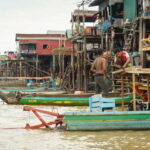
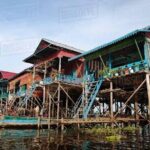
Day 3 is where the tour stops being only Angkor. You go to Kompong Phluk, a group of villages largely built on stilts on Tonle Sap. The local name given here—Harbor of the Tusks—pairs nicely with the reality that this community depends heavily on fishing for survival. The wet season from May to October is when fishing ramps up.
The big point: seeing Tonle Sap from the water gives context you can’t get from the shore. That motorized boat ride is included, so you don’t need to negotiate vendors or worry about whether you’re getting the right vessel for the route. Just keep an eye on comfort—boat rides can mean sun, spray, and uneven seating. Pack accordingly.
After the water-side experience, you return to temples at the Roluos Group. This is where the tour adds value for people who don’t only want the “poster temples.” These are among the earliest permanent Khmer structures, dating from the late 9th century, marking the beginning of the classical period. The mix of older stonework and foundational temple styles can feel refreshing after days spent at the most famous complexes.
Expect time for a real look, not a race. The schedule gives about three hours for the Roluos temples, which is enough to slow down and actually notice shapes and construction choices.
Markets and artisans: finishing your trip with Siem Reap flavor
On the way back, you get a couple of market-style stops: Phsar Leu (the top market) and Phsar Chas (the old market), plus Artisans d Angkor. This is a practical way to end without turning your last hours into a chore.
These stops can be useful if you want small reminders to take home—things linked to local craft rather than standard tourist souvenirs. They also break the temple rhythm with something more everyday.
If you like photos with real life in them, markets are also good for that. Just keep your expectations grounded: markets are for browsing, not a guaranteed “buy everything” mission.
Price and value: what you’re really paying for at USD 250
USD 250 for three days sounds reasonable in this part of the world, mainly because several cost drivers are included: hotel pickup and drop-off, an air-conditioned vehicle, a professional English-speaking guide, the motorized boat fee, bottled water, and cold towels.
The biggest exclusion is the Angkor temple pass. For a 3-day visit, the listed cost is USD 62 per person (or USD 72 for 7 days). Meals aren’t included either, so plan on budgeting for lunch on temple days.
If you add it up in your head, the tour is really selling you time and coordination: less time planning, fewer decisions mid-day, and a guide to interpret what you’re seeing. That value matters most if you only have a short stay in Siem Reap and want to maximize meaningful stops without the stress spiral.
Who should book this tour (and who should think twice)
This is a strong match for you if:
- You want a structured Angkor plan with sunrise built in.
- You’d rather pay for coordination than spend vacation hours figuring out tickets and routes.
- You like variety: temples plus Tonle Sap plus a market finish.
- You prefer an English-speaking guide to help connect carvings and temple layout to meaning.
I’d think twice if:
- You have less than average fitness or you can’t walk normally. The schedule is active, and the days involve temple compounds where uneven ground is common.
- You’re hoping for a slow, leisurely sightseeing pace with lots of free time. This tour is more “cover the highlights with expert timing.”
Quick practical tips so your days feel better
- Buy your temple pass early and keep a close eye on the number of days you’re covered for, since the tour spans multiple temple entry days.
- Wear comfortable shoes. Angkor ground can be uneven, and you’ll want your feet to stay happy.
- Use the included water and cold towels early. Heat fatigue is real.
- Bring sun protection for both the temple plateaus and the boat ride day.
Should you book the Temples & Tonle Sap 3-Day Tour?
If you want a time-saving, guide-led Angkor experience that also includes Tonle Sap by boat, I’d book it. The strongest reasons are the sunrise return at Angkor Wat, the well-paced mix of major temples and earlier sites at Roluos, and the fact that key logistics (transport, guide, transfers, boat fee, and basic comfort) are already covered.
If you’re the type who loves total freedom and you already have a solid plan for temple passes, you might be able to DIY it for less. But if your goal is to see a lot without sweating timing and tickets, this tour is built for that exact job.
FAQ
What does the tour include?
It includes hotel pickups and drop-offs, an air-conditioned vehicle for tours, a professional English-speaking guide, the fee for a motorized boat ride, bottled water, and cold towels.
Is Angkor Wat and Angkor Thom included?
Yes. You’ll visit major Angkor sights including Bayon Temple, Baphuon Temple, Ta Prohm, Terrace of the Elephants, Angkor Wat, and Phnom Bakheng.
Do I need to buy temple passes separately?
Yes. Temple passes (3-day) are not included. The tour guidance lists USD 62 for a 3-day pass (or USD 72 for a 7-day pass).
Is the Tonle Sap boat ride included?
Yes. A motorized boat ride is included on Day 3.
What time does the tour start each day?
The meeting start time is 8:30 am, and the vehicle departs from your hotel at the tour start time.
Are meals included?
No. Meals, soft drinks, and alcohol are not included.
What’s the total duration?
The tour runs for 3 days (approx.).
Is pickup available if I’m staying near public transportation?
The tour offers complimentary hotel pickup and drop-off, and it notes that it’s near public transportation. The vehicle departs from your hotel at the tour start time.
Who is the tour not suitable for?
It notes it is not suitable for those who have less than average fitness or who cannot walk normally, and it is not available for children under 3 years old.
Can I cancel for a full refund?
Yes. Cancellation is free, and you can cancel up to 24 hours in advance for a full refund. If you cancel less than 24 hours before the start time, the amount paid is not refunded.