REVIEW · SIEM REAP
4-Day Tour(The Amazing Face, Jungle of Temple & Holy Clay)
Book on Viator →Operated by Hidden Angkor Tour · Bookable on Viator
This Angkor plan keeps it personal. You get a 4-day private, customizable route from Angkor Thom’s giant faces to Angkor Wat sunrise and the wilder jungle of Beng Mealea, guided by English-speaking experts like Buntheun.
Two things I really like: first, the way the schedule balances the big-name sights with smaller stops that make the day feel more human, not like you’re being herded. Second, you’re not stuck only in temples; the itinerary also includes a real slice of Siem Reap life—boat time at Kampong Phluk and a visit to Artisans d’Angkor—so the trip feels rounded instead of temple-only.
One key consideration: the Angkor entrance pass is not included, and meals aren’t included either, so your final cost will depend on how many days you choose for the pass and where you eat.
In This Review
- Key highlights worth planning for
- Siem Reap Angkor in 4 days: what the private pace gets you
- Angkor Thom South Gate to Victory Gate: the sculpted city inside the city
- Ta Prohm and the quieter temples: when the jungle does the work
- Banteay Srei: pink sandstone carvings without the giant-site rush
- Kampong Phluk boat time plus Psar Chaa and Artisans d’Angkor
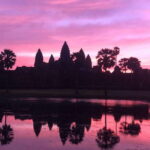
- Angkor Wat sunrise at 4:30 am: the payoff of early starts
- The Roluos group: Bakong, Preah Ko, and Lolei for calmer wandering
- Koh Ker and Beng Mealea: farther out means more adventure
- Pre Rup sunset option: your last light at the right height
- Price and what you’re truly getting for $274
- Practical tips that will save your day (and your photos)
- Should you book this 4-day Angkor tour?
- FAQ
- Is hotel pickup included?
- Are entrance tickets to Angkor included?
- Are meals included during the tour?
- Is the sunset at Pre Rup included?
- What should I wear to temples?
- Can I cancel and get a full refund?
Key highlights worth planning for
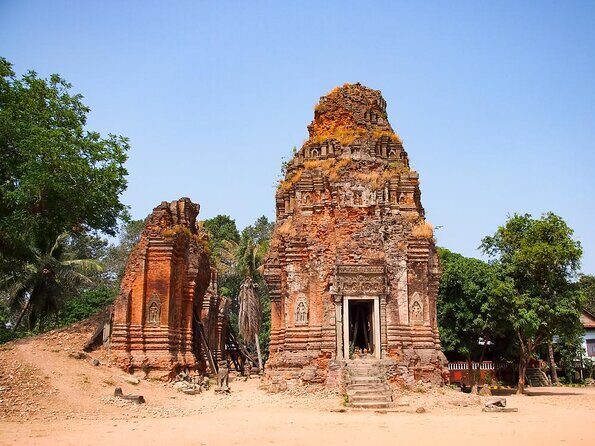
- Private by default: it’s set up for just your group, so you can keep a steady pace and ask questions without waiting in line with strangers.
- Angkor Wat sunrise timing: the tour starts at 4:30 am, then you move straight into the main complex while it’s still calm.
- Mix of styles: Day 1 leans grand and sculptural (Bayon, terraces), while Day 4 leans adventurous (Koh Ker and Beng Mealea).
- Jungle photo stops: Ta Prohm’s tree-in-temple vibe and Beng Mealea’s overgrown ruins are built for great photos.
- Local culture stops: Kampong Phluk’s boat routine plus Psar Chaa market time and Artisans d’Angkor.
- Optional sunset addition: a free sunset option at Pre Rup (listed as Phre Rub Temple) if you want those views.
Siem Reap Angkor in 4 days: what the private pace gets you
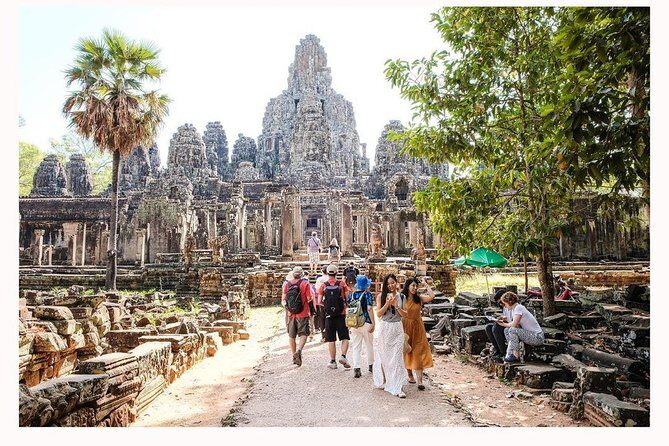
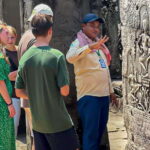
This tour is designed around the idea that Angkor works best when you’re not racing every hour. You travel in an air-conditioned vehicle with a professional driver, and you’re paired with a professional English-speaking guide, which matters because these temples are full of symbols that make more sense with explanations.
Pickup is offered, and return transfers are included only if you’re staying in Siem Reap (inside the city). If your hotel pickup time isn’t confirmed right away, you should expect the operator to confirm as the date gets closer—so plan to keep your phone reachable.
The biggest practical win of a private format is control. Even when the itinerary is packed (it is), you’re not stuck in a rigid line with a dozen other groups. Your guide can slow you down for carvings, speed you past spots that don’t interest you, and keep the day moving in a way that feels manageable rather than chaotic. And yes, you’ll still see plenty of people at the headline sites—Angkor is popular—but you’ll spend more time walking through temples than standing around.
A few more Siem Reap tours and experiences worth a look
Angkor Thom South Gate to Victory Gate: the sculpted city inside the city
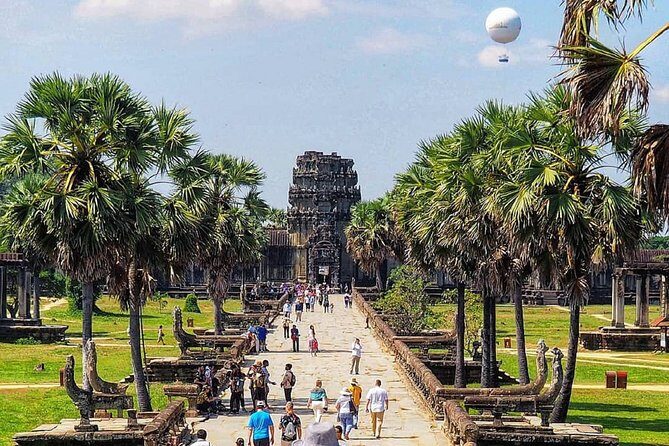
Day 1 is all about the Angkor Thom core, and it’s a strong starter. You begin at the Angkor Thom South Gate, famous for the big causeway storytelling: 54 stone figures sit along the railings, tied to the Hindu myth theme of the Churning of Ocean. This is one of those entrances that instantly sets a tone—you feel like you’ve stepped into a purpose-built myth machine.
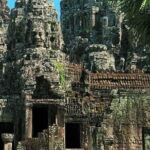
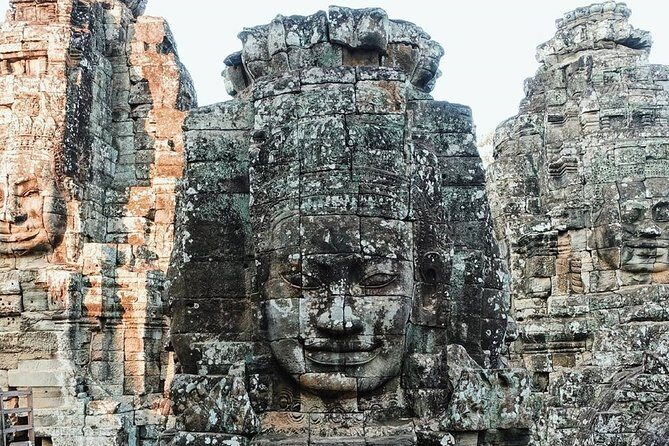
From there you move to Bayon Temple, with its giant stone faces looking in all directions. You’re not just seeing one view; Bayon is a whole rhythm of towers and angles. The visit is long enough to take in the layout, not just a quick glance.
Next comes Baphuon Temple, a three-tiered temple mountain associated with Udayadityavarman II and dedicated to Shiva. It’s shorter in time than Bayon, so treat it like a chance to notice form and tiers before you move on.
Then you get two terrace stops that many people rush past at the end of a long day, but that are actually worth your attention:
- Terrace of the Elephants stretches along the heart of Angkor Thom with carved elephants and garudas across a long wall.
- Terrace of the Leper King has a dramatic name and a detailed double-terrace design, with myth figures carved into the walls.
After that, you step into a cooler, shaded break at Preah Palilay, in a forest setting. The eastern gopura has Buddhist-themed carvings, and this stop works well because it changes the mood. It’s not just more stone faces; it’s a reminder that Angkor’s spiritual layers overlap.
Day 1 closes with Ta Prohm, then a few more temples (Ta Nei and Ta Keo) before finishing at the Victory Gate of Bayon Temple. That last gate stop is a neat way to land the day: you leave Angkor Thom feeling like you walked the circuit, not just picked a few highlight photos.
Ta Prohm and the quieter temples: when the jungle does the work
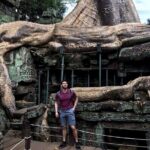
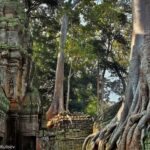
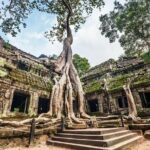
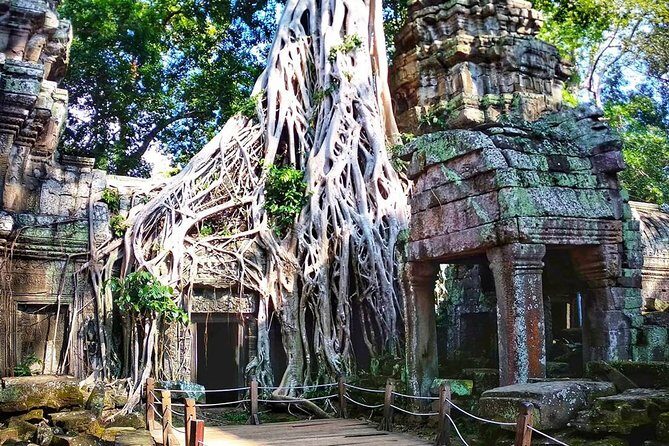
Ta Prohm is the classic “trees in temple” experience, and the tour gives you enough time to actually wander. Expect the monastic complex to feel wide and sprawling, with less temple restoration than some other sites—so you’re seeing ruins in a more natural state. This is also why photos work here: you’re not only photographing stone, you’re photographing the way roots and branches have claimed structure.
After Ta Prohm, you head to Ta Nei, a jungle temple with Jayavaraman VII artistry. The tone is similar—green, textured, and atmospheric—but it’s less about the famous icon and more about the craft.
Then comes Ta Keo, a sandstone temple-mountain dedicated to Shiva. It’s noted as the first to be constructed wholly of sandstone, and the time slot is long enough to appreciate how stark and monumental it feels compared with the more ornate sites.
A small but useful detail: the day includes lunch at a local restaurant around Sras Srang or back at the hotel, rather than only a single fixed restaurant stop. Meals are on your own (more on cost later), but having lunch positioned logically can save time and reduce stress.
Banteay Srei: pink sandstone carvings without the giant-site rush
Day 2 morning switches gears to Banteay Srei, often called the pink temple of women because of the pink sandstone and its association with feminine beauty. This temple is smaller than Angkor Wat, but it’s beloved for delicate carving and great preservation. The visit is long—about 3 hours—which gives you the best chance to notice the detail that makes Banteay Srei feel different from the larger, heavier temples.
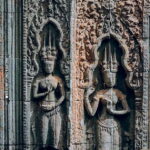
You’ll see the apsara carvings as part of the decorative focus. If you’ve been staring at huge stone faces all day, Banteay Srei can feel like a reset: less monumental scale, more fine workmanship.
Then you go to Banteay Samre, built in the Angkor Wat style with a relatively low-rise layout. It’s described as being around the same time as Angkor Wat, and you can see that influence in the towers and railings. What I like about this stop is the restoration angle: it was extensively restored by taking it apart and reconstructing it. That gives you a different viewing experience than “pure ruin,” and it helps you understand how the building was meant to look.
Lunch happens back at the hotel or in the temple area, and it’s on your own. So if you’re hungry after the morning temples, plan to grab something filling but not too heavy. You’ll still have an afternoon with travel and activities.
Kampong Phluk boat time plus Psar Chaa and Artisans d’Angkor
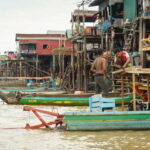
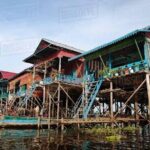
Day 2 afternoon is where the tour becomes more than temples. Kampong Phluk floating village includes a scenic boat ride and a look at fishermen’s daily routine. It’s also linked to Tonlé Sap Lake, one of Southeast Asia’s big natural highlights. This is the part of the day where you stop thinking in temple blocks and start thinking in daily life—how people live with water and seasonal changes.
There’s also a floating restaurant option mentioned for dining, and the idea here is that you eat in the setting, not just near it. If you’re short on energy, you can keep your pace gentle and focus on the boat views and village scenes.
After that, the schedule moves to Psar Chaa, the old market. This is a straightforward shopping stop, and it’s designed for variety: silks, silverworks, carvings, statuary, and handcrafts. If you like gifts and you want more choice than a single souvenir shop, this is the right type of stop.
Finally, you finish with Artisans Angkor (Artisan d’Angkor), which is a training ground for unschooled rural youth making handicrafts as a way to earn a living. It’s one of the most meaningful “not-just-tourist” stops in the itinerary because it’s tied to skills and work, not only selling souvenirs.
Angkor Wat sunrise at 4:30 am: the payoff of early starts
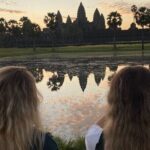
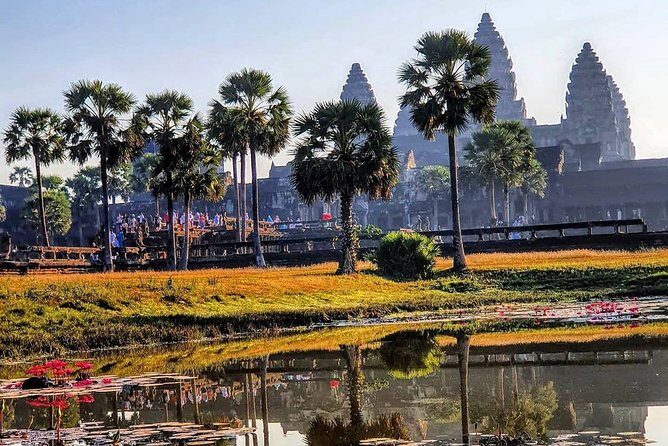
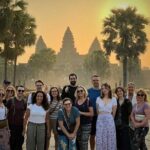
If you only do one early morning in Siem Reap, make it count. Day 3 starts around 4:30 am for sunrise at Angkor Wat. The plan is to be set up early, then after sunrise you can have breakfast at a restaurant in front of Angkor Wat before the main temple tour.
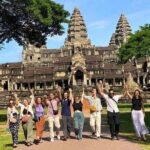
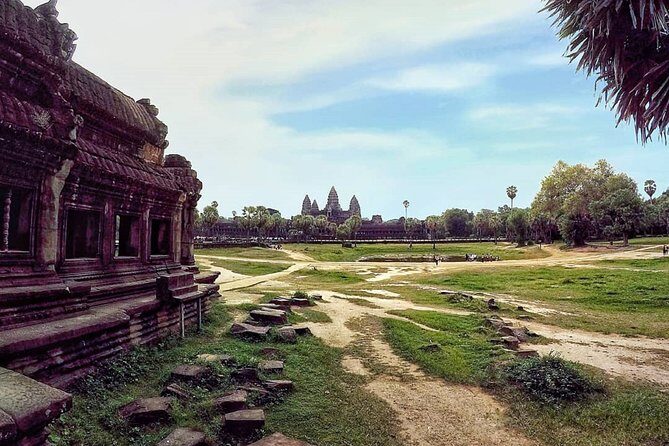
Angkor Wat is a massive three-tiered pyramid crowned by five beehive-like towers, rising about 65 meters. It’s associated with Suryavarman II and dedicated to Vishnu. When you’re there at dawn, the scale hits harder. You’re not just noticing the carvings—you’re taking in the geometry, the long axis of the complex, and the way light changes the stone color.
The Angkor Wat portion is listed as 4 hours, so this isn’t a rushed sweep. You get time to walk the main areas and still have moments where you can stop and really look.
Then you go back to your hotel for lunch. That break matters. Even if you love temples, you’ll likely start feeling the heat by mid-day. A proper lunch pause helps you keep energy for what comes next.
The Roluos group: Bakong, Preah Ko, and Lolei for calmer wandering
After lunch, the tour shifts to the Roluos group, starting with Bakong. Bakong is described as the first of the large mountain temples in Angkor, built at the end of the 9th century. This area is tied to Hariharalaya, an early Khmer capital. In other words, it’s not just “another temple”—it’s part of the story of where the empire’s major centers evolved.
Then you visit Preah Ko, built in the late ninth century (879) and dedicated to Shiva, serving as a funerary temple for royal ancestors. The stop is about 45 minutes, which is a realistic amount of time for careful viewing without dragging the day.
Next is Lolei, also built in the 9th century and dedicated to Shiva. It used to be an island temple, built in an area where the water has long since dried. The tour gives it 45 minutes, and that’s enough to appreciate why Lolei feels more relaxed than some of the headline Angkor sights.
Lolei is also noted as being visited less than other temples near Angkor Wat. That matters because it can help you get back to the temple-walking mindset instead of constantly scanning for the next big-photo stop.
Koh Ker and Beng Mealea: farther out means more adventure
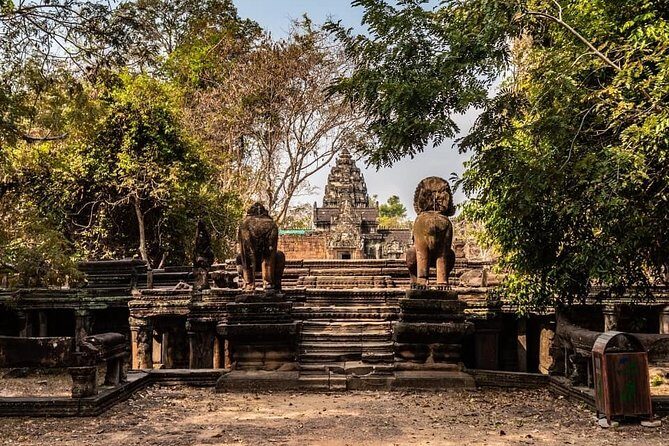
Day 4 is the “go beyond Angkor Wat” portion, and it’s where the itinerary starts to feel like a quest. You travel to Koh Ker Temple first. Koh Ker served as a temporary capital during internal strife in the Khmer kingdom, linked to King Jayavarman IV. This is one reason Koh Ker feels different: it isn’t only about the peak glory of Angkor Wat; it’s about a shifting political story.
The Koh Ker visit is listed at 3 hours, so you’re not just driving past. You also travel through villages on the outskirts of Siem Reap, which adds a real sense of distance and day-to-day life beyond the main Angkor circuit.
Lunch is included in the plan as a local restaurant near Koh Ker, but it’s still on your own time-wise because meals aren’t included in the tour package. The good news is you’re already positioned for food near where you are, not trying to force a meal back in town.
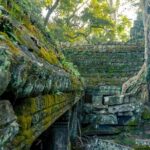
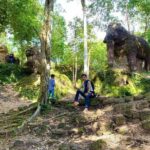
Then you head to Beng Mealea, about 60 kilometers from Siem Reap. This is a jungle-covered Hindu temple site where overgrowth covers more than a square kilometer. Restoration is described as very little, so you walk through archaeological remains with a sense of exploration. It may not have the same iconic sculptures as some restored complexes, but that’s often what makes Beng Mealea memorable: you feel like you’re seeing Angkor as it exists now, not only how it looked in an ideal reconstruction.
The Beng Mealea stop is 2 hours, which is perfect for moving slowly on paths, looking at stone blocks, and taking in how the jungle has shaped the space.
Pre Rup sunset option: your last light at the right height
The final stop is Pre Rup (listed as optional sunset at Phre Rub Temple). This temple is described as an architecturally and artistically superior temple mountain, with beautifully carved false doors on the upper level. It’s also positioned for an excellent view of the surrounding countryside, which is why it’s ideal for sunset.
The time slot is about 1 hour. If you take the sunset option, you’ll want to time it so you aren’t rushed at the top. At the end of four days, this kind of payoff stop is smart because it gives the trip a feeling of closure: you’ve seen faces, terraces, sunrise geometry, and jungle ruins, then you finish with a viewpoint.
Price and what you’re truly getting for $274
The tour price is $274.00 per person for approximately 4 days, which can be good value if you factor in what’s included: a professional English-speaking guide, an air-conditioned vehicle, and basic comfort items like cool water and cool wet towel.
What makes the cost feel reasonable is that you’re not only buying transport. You’re buying interpretation. Angkor’s symbolism can turn into random stone if you don’t understand what you’re looking at. And because this is private, you’re not paying for the privilege of waiting around.
Two things can add to your total cost. First, the Angkor Archaeological site entrance pass is not included. This pass is purchased separately at the main gate, and it should be shown at sights. The pass gives access to sights around Angkor, and children under 12 are free.
Second, meals are excluded (breakfast and lunch are on your own). Some days include a suggested breakfast after sunrise and a lunch at a nearby restaurant, but you still budget for your own food.
So my practical take: if you already plan to buy an Angkor pass anyway and you don’t mind paying for meals, this price can make sense—especially for a small group. If you’re trying to keep costs extremely tight, the pass plus food will be where you feel the difference.
Practical tips that will save your day (and your photos)
Angkor weather and temple rules are real things, not vibes.
Dress code: shoulders must be covered and clothes must fall below the knees. If you show up in anything too short, too bare, or with disrespectful prints, you may be refused entrance. Plan light layers that still meet the rule.
Heat protection: the tour info strongly recommends sunglasses, a hat or cap, and sunblock with high SPF, even if it’s cloudy. Khmer stone can feel hot fast, and your day starts early on sunrise morning.
Device care: electronics can suffer from natural elements. Keep your camera and phone protected and wrapped so dust or humidity doesn’t turn your day into a charging-panic.
Time for breaks: this itinerary is packed with multiple stops each day. The included cool water and cool wet towel help, but you’ll still want water habits and a steady pace.
Should you book this 4-day Angkor tour?
Book it if you want private pacing with a guide who can explain what you’re seeing, plus a mix of temple icons and more adventurous jungle ruins. I especially think it suits you if you like contrast: big faces and terraces on Day 1, smaller carving-focused temples in the middle, then Koh Ker and Beng Mealea at the end.
Skip or reconsider if you don’t want to handle planning around the entrance pass and meal costs, or if you prefer to set your own stops with no schedule at all. This tour is flexible, but it’s still built as a structured route.
If your priority is early light at Angkor Wat, plus a realistic amount of walking and seeing, this one is a solid fit.
FAQ
Is hotel pickup included?
Pickup is offered, and return transfers are inclusive only for customers staying in and inside Siem Reap. You’ll need to provide your correct hotel information.
Are entrance tickets to Angkor included?
No. The entrance pass to the Angkor Archaeological Site is not included. You purchase it at the main gate, and it gives access to sights around Angkor.
Are meals included during the tour?
No. During the full-day tour, breakfast and lunch are excluded and paid on your own.
Is the sunset at Pre Rup included?
The sunset option at Phre Rub Temple (Pre Rup) is listed as optional and offered free of charge.
What should I wear to temples?
You need to dress appropriately: clothes should cover shoulders and fall below the knees. Brightly colored clothing and shirts with obscene or disrespectful prints may lead to refusal of entrance.
Can I cancel and get a full refund?
Yes. Free cancellation is available if you cancel at least 24 hours in advance of the experience’s start time for a full refund.