Temples meet a living lake road trip. In one day, you’ll connect Angkor Wat’s carved stories to the everyday rhythms of Tonlé Sap at Kompong Phluk, where water levels shape how people live. It’s a full, practical introduction to why Siem Reap is more than just stone monuments.
I really like that this is run as a true private-style day: air-conditioned pickup from your hotel, an English-speaking driver/guide, and the small comfort touches like cool towels. It keeps the morning moving without the stress of trying to piece together transport on your own.
My second favorite part is the pairing: you get serious temple time at Angkor (Angkor Wat plus Bayon inside Angkor Thom) and then a private boat ride that brings you onto the lake’s floodplain world. One consideration: the Kompong Phluk part is easy to misread if you expect a totally floating town—what you’ll see includes stilt houses and water-season changes, not a single dense floating street.
In This Review
- Key things to know before you go
- How the 9-hour private flow works from Siem Reap
- Getting your Angkor Pass the morning you go
- Angkor Wat with enough time to actually see it
- Angkor Thom: South Gate first, then Bayon
- Kompong Phluk on Tonlé Sap: what the boat ride really gives you
- Lunch and timing: how to avoid the midday scramble
- Price and the real total cost of a $40 day
- What’s included (and why those details matter)
- Who this tour is best for
- Should you book this Angkor Wat & Tonlé Sap private day tour?
- FAQ
- What is the duration of the Angkor Wat and Tonlé Sap private day tour?
- Where does the tour start and end?
- Is hotel pickup included?
- Is the tour private?
- Do I need to buy an Angkor Pass for this tour?
- Are temple entrance tickets included for Angkor Wat and Angkor Thom?
- Is lunch included?
- How long is the boat ride on Tonlé Sap?
- What is included in the price besides transportation and guiding?
- Are there extra fees I should expect?
Key things to know before you go
- Private, hotel-to-hotel comfort with an air-conditioned vehicle and round-trip drop-off
- Angkor Pass is required and you’ll pay/get it at the Angkor Wat Ticket Office in the morning
- Angkor Wat + core Angkor Thom stops (South Gate and Bayon) pack a lot into 9 hours
- 1.5-hour boat time on Tonlé Sap focused on the flooded forest and floating village life
- Lunch is on your own account, so budget time and cash/ATM access
- Floating village expectations need adjusting for Kompong Phluk’s real setup and seasonal water levels
How the 9-hour private flow works from Siem Reap
This tour is built as a long, single-day circuit. You’re set to be ready around 7:30–8:30am for pickup from your hotel in Siem Reap in an air-conditioned vehicle. That timing matters because Angkor sites can get busy, and you’ll want your energy for walking and looking up close at carvings.
From the start, the experience feels organized: you’ll drive to the Angkor Wat Ticket Office first, then head straight into the temple complex. The last big block of the day is the Tonlé Sap area, including a drive to the quay and a boat ride.
If you like days that feel structured—where you’re not constantly asking where to go next—this hits that sweet spot. You’ll also have a driver/guide (English speaking), plus a private setup so you’re not stuck waiting around for other groups to gather.
You can also read our reviews of more private tours in Siem Reap


Getting your Angkor Pass the morning you go
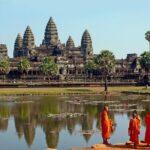
Angkor is not one single ticket with one simple entry. You’ll need an Angkor Pass, and the tour starts by taking you to the Angkor Wat Ticket Office. You’ll pay there and receive your pass before heading into the UNESCO archaeological park.
This is one of those small details that makes your day smoother. If you’ve ever arrived at Angkor with tickets that didn’t quite match the rules, you know how annoying that is. Here, you get the pass first, then you move on.
Also note: the tour materials clearly separate the pass from temple admissions. The Angkor pass is required, and the temple entries at Angkor Wat, the South Gate, and Bayon are listed as not included. So plan your budget around the pass rather than assuming the $40 covers it all.
Angkor Wat with enough time to actually see it
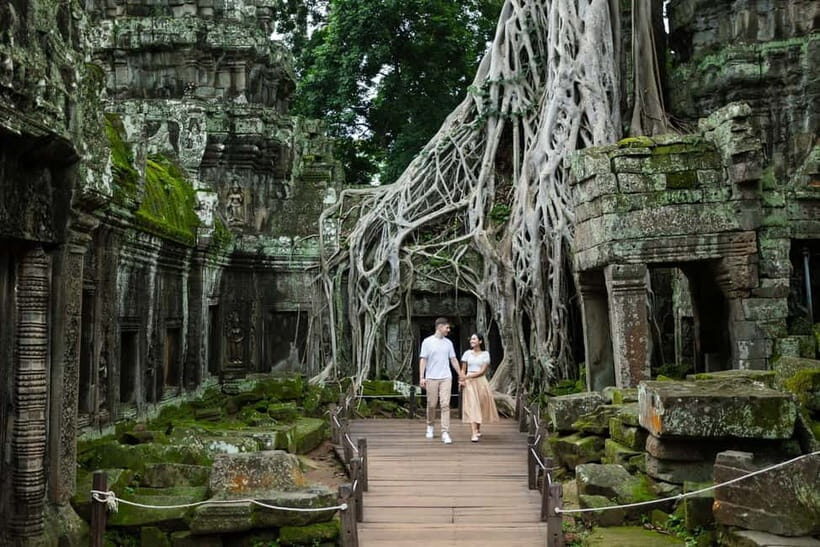
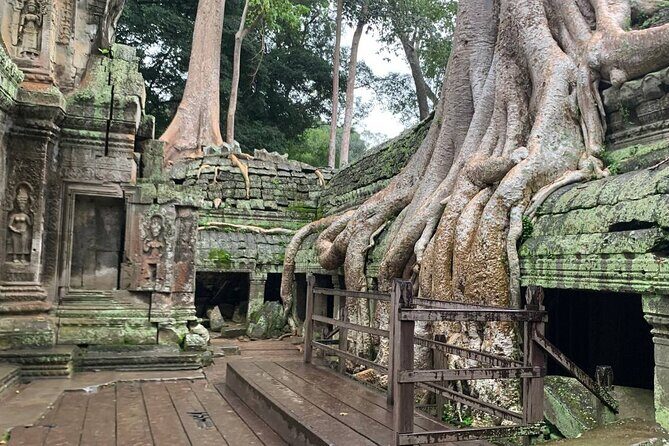
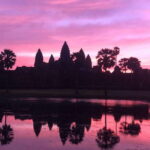
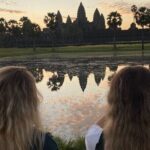
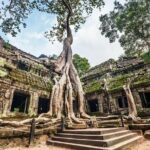
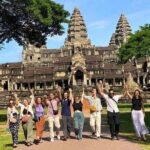
Angkor Wat is the headline. It’s the best-preserved temple complex at Angkor, built in the early 12th century for King Suryavarman II as both a state temple and capital city.
You get about 2 hours here, and that’s a sensible amount. Two hours isn’t enough to master the whole site—but it is enough to get past the first wow-factor and start noticing patterns: how the carvings tell stories, how the layout guides your movement, and how the scale feels different once you’ve walked a bit instead of only photographing from a distance.
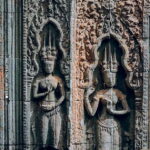
A practical tip for how to use your time: spend the first part orienting yourself—look at the big composition, then switch to close viewing of details. The art on temple surfaces is where the place becomes personal and readable, even if you don’t know Khmer.
One drawback of limited time: if you’re the type who always wants longer temple wandering, 2 hours can feel like a sprint. Still, for a day that also includes Angkor Thom and Tonlé Sap, it’s a fair trade.
Angkor Thom: South Gate first, then Bayon
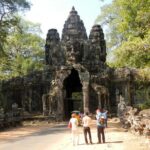
After Angkor Wat, you move into Angkor Thom, a fortified city area reported as 6 square miles (10 km²). You enter at the South Gate, which gives you that classic Angkor approach—causeway, monument, then the sense you’re stepping into something deliberately designed to impress.
You’ll spend around 20 minutes at the South Gate. That sounds short, but it works as a transition stop: enough time to take in the layout and the feel of the entry, then you’re ready to move deeper into the city.
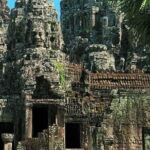
Next comes Bayon Temple for about 1 hour. Bayon is described as a richly decorated Khmer temple, built in the late 12th or early 13th century as the state temple of Mahayana Buddhist King Jayavarman VII.
Bayon is the kind of place where time flies because your eyes keep catching new carvings and architectural details. A full hour is short, but it’s the right length to feel the temple’s character without getting rushed through.
What to watch for: since the day already has big-name stops, Bayon is where you slow down. Look up as much as you look straight ahead. The temple’s decoration is meant to be read visually from multiple angles.
Kompong Phluk on Tonlé Sap: what the boat ride really gives you
After lunch (on your own), you drive about 45 minutes into the countryside. Then you reach the quay and board a boat for a 1.5-hour ride on Tonlé Sap Lake.
This is where the day changes pace. Angkor is solid, stone, and fixed. Tonlé Sap is moving water, seasonal change, and living routines shaped by floods and drought.
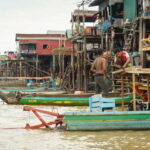
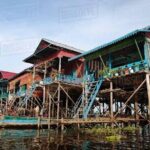
The tour’s focus is explicitly on floating villages and flooded forests. In practice, that means you’re not just sightseeing from a dock. You’re traveling through the water-based world, watching how homes, paths, and activity connect to the lake’s conditions.
Now, about that important expectation note. There’s a real-world mismatch risk with Kompong Phluk if you picture a complete, continuous floating village. The experience can feel more like a mix: stilted structures and sections that connect with the water, rather than one perfect, nonstop floating streetscape. That doesn’t make it bad—quite the opposite. The stilt village sections can be genuinely impressive—but you’ll enjoy it more if you go in expecting a place shaped by seasons, not a theme-park float-city.
Also, since you’re on a boat for 1.5 hours, your comfort matters. It’s a time block you’ll feel physically, so build in an easy lunch pace beforehand.
Lunch and timing: how to avoid the midday scramble
Lunch is not included, and the itinerary leaves it as your own responsibility. That means you should plan lunch so you’re not rushing when it’s time to meet back up.
Because the Tonlé Sap drive and boat time are built into the same long stop, you don’t want to wander far from where your group is headed. If you prefer a low-stress approach, pick something close by and keep your meal simple.
This is also a good moment to check you have small bills or a payment method. The tour does mention a government tax/community development fee and does not include everything, so having cash ready helps reduce last-minute friction.
Price and the real total cost of a $40 day
On paper, the tour lists at $40.00 per person. That’s a strong starting price, especially because you’re getting private-style convenience: hotel pickup and drop-off, an air-conditioned vehicle, and boat time on Tonlé Sap with a guided driver/guide.
But the day has add-ons you should factor in:
- Government tax and community development: $20.00 per person (not included)
- Angkor Pass required at the ticket office: not included
- Temple admissions at Angkor Wat, South Gate, and Bayon: not included
- Tips: not included
So yes, the base rate looks low. The best value move is budgeting for the pass and admissions early, not mentally treating the $40 as the final number.
Where it still feels like good value: you’re combining two major experiences that are hard to stitch together smoothly—Angkor’s main hits plus the lake/floodplain boat experience—without you driving or coordinating multiple vendors. When you factor in the transport and guide time, it can work out as a practical way to see more in less friction.
What’s included (and why those details matter)
Here’s what you’re paying for beyond just the stops:
- Air-conditioned vehicle for pickup and return to your hotel
- Pick-up and drop-off inside Siem Reap
- English speaking driver guide
- Free cool towels during touring
- Boat tour described as private boat tour, with a local boat ride for the lake section
- Mobile ticket feature included
Why these details matter: the comfort and communication reduce the cognitive load of a long day. You’re not trying to interpret signage, hunt down ticket windows, or figure out boat logistics. You just show up, pay for the pass when needed, and follow the flow.
One more practical point: the tour runs as a private experience (your group only). Even if you’re traveling solo or as a couple, that can mean a more flexible pace than you’d get in a larger shared bus day.
Who this tour is best for
This is a smart choice if you:
- Want one organized day that hits both Angkor and Tonlé Sap
- Prefer private-style convenience with hotel pickup and drop-off
- Like the contrast between carved Khmer temple storytelling and modern lake life shaped by floods
It may be less ideal if you:
- Expect Kompong Phluk to look like one continuous floating town street
- Want deep, slow exploration at Angkor. The temple blocks are timed and efficient rather than open-ended
For families, the mix can work well because you’re alternating walking with boat time. Just keep in mind that the day is long, so plan for rest in the car.
Should you book this Angkor Wat & Tonlé Sap private day tour?
I’d book it if your goal is a well-run day that combines Angkor’s big-name highlights with a real lake experience on Tonlé Sap—without you juggling tickets, transport, and tour operators. The value comes from the structure: early pickup, a guided pass pickup, focused temple time, and a boat ride that brings the flooded landscape to your level.
Skip or adjust expectations if you’re the type who needs Kompong Phluk to match a very specific floating village fantasy. Go in knowing it’s seasonal and mixed—stilt homes and water-linked areas rather than a perfect floating city.
If you do book, do the smart prep: budget for the Angkor Pass and the $20 per person government tax/community development fee, and plan lunch so you don’t lose time when the lake part starts.
If you want a single-day sampler that’s practical, comfortable, and genuinely different from just temple-hopping, this is a strong bet.
FAQ
What is the duration of the Angkor Wat and Tonlé Sap private day tour?
The tour is listed as about 9 hours.
Where does the tour start and end?
It starts in Krong Siem Reap, Cambodia and ends back at the meeting point.
Is hotel pickup included?
Yes. You get pick-up from your hotel in Siem Reap in an air-conditioned vehicle, and you also get drop-off back to your hotel.
Is the tour private?
Yes. It’s described as a private tour/activity, meaning only your group will participate.
Do I need to buy an Angkor Pass for this tour?
Yes. The Angkor Pass is required, and you’ll go to the Angkor Wat Ticket Office in the morning to pay and get it.
Are temple entrance tickets included for Angkor Wat and Angkor Thom?
No. The tour lists admission tickets as not included for Angkor Wat, Angkor Thom South Gate, and Bayon.
Is lunch included?
No. Lunch is stated as on your own account.
How long is the boat ride on Tonlé Sap?
You’ll board a local boat for about 1.5 hours on Tonlé Sap Lake.
What is included in the price besides transportation and guiding?
Included items list an air-conditioned vehicle, an English-speaking driver guide, a private boat tour, free cool and cool towels, pick-up, and drop-off, plus a mobile ticket feature.
Are there extra fees I should expect?
Yes. Government tax and community development ($20.00 per person) is not included, and tips are not included either.