REVIEW · SIEM REAP
Cycle the Angkor Backroads with lunch / E-Bike or Tuk Tuk
Book on Viator →Operated by Siem Reaper Travel - Phnom Penh Day Tours · Bookable on Viator
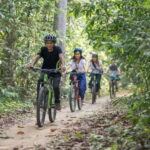
Two wheels beats a rattly car when you want Angkor up close. This small-group bike tour trades traffic for dirt lanes, temple paths, and guide-led stops that help you see more than the usual circuit. I also like that it rolls in an included lunch and the basics you need for a comfortable ride—helmet, snacks, and bottled water. One thing to plan for: temple entrance fees are not included, and the day includes 20–30 km of cycling, so it helps to feel comfortable on mixed paved and dirt roads.
You’ll start with hotel pickup and a bike fitting at Siem Reaper Travel so you’re not scrambling with equipment before the temples. Then the route focuses on the famous hits—Angkor Thom and Bayon, Ta Prohm, and Angkor Wat—plus a relaxing break at Srah Srang. The main drawback for some people is the pace and heat: it can get hot and humid, and if you’re hoping for lots of photo help or highly confident posing tips, the guide style may vary.
In This Review
- Key Points to Know Before You Go
- Why Bike the Angkor Backroads Instead of Waiting for a Vehicle
- Price and What $55 Really Covers in Siem Reap
- Start at 8:00: Pickup, Bike Fitting, and How the Day Gets Rolling
- Bayon and Angkor Thom: The Gate with Elephants and Giant Faces
- Ta Prohm in the Jungle: Where the Ride Changes the Temple
- Srah Srang Lunch Break: A Pond View Reset
- Angkor Wat: Dress Rules, Ticket Planning, and the Big Finish
- Roads, Heat, and How to Pace Yourself for 20–30 km
- Guide Style: What to Expect from the Temple Commentary
- Who This Bike Tour Is Best For (and Who Might Want Another Option)
- Should You Book Cycle the Angkor Backroads with Lunch?
- FAQ
- How long is the Angkor backroads cycling tour?
- What’s included in the tour price?
- Are Angkor entrance fees included?
- What time does the tour start?
- Do I need to be a strong cyclist?
- Is there a cancellation option if plans change?
Key Points to Know Before You Go
- Small group size (max 12): More time with your guide, less waiting around.
- Temple-focused stops: Angkor Thom, Bayon, Ta Prohm, Srah Srang, and Angkor Wat in one outing.
- Real riding distance (20–30 km): This is not a casual stroll; you should be ready to pedal.
- Included support for comfort: Bike + helmet, bottled water, snacks, and lunch.
- Dress rule at Angkor Wat: Shoulders and knees need to be covered.
- Entrance fees not included: You’ll want to budget for tickets for the Angkor Archaeological Park.
Why Bike the Angkor Backroads Instead of Waiting for a Vehicle
Angkor is famous for a reason, but the usual approach can feel like you’re always stuck in the same flow: arrive, stand in a crowd, take pictures, leave. Cycling is different. You’re still visiting the big-name places, but you’re moving under your own power—so the day feels more personal and less chore-like.
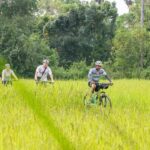
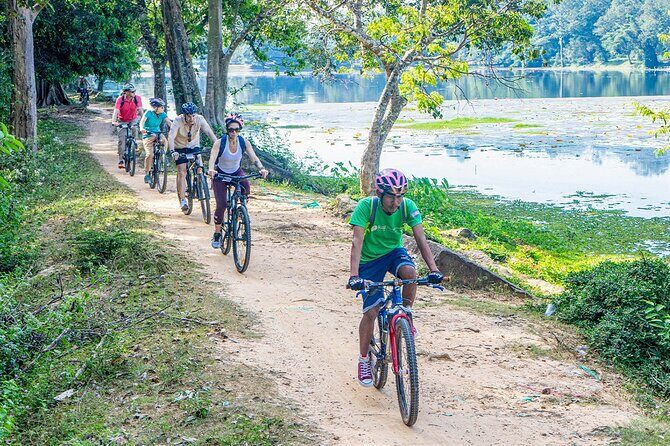
The value of this kind of bike tour is the combination of route flexibility and the fact that you’re not boxed into a vehicle schedule. The tour heads through the Angkor Archaeological Park on a mix of paved roads and dirt lanes, which changes how the temples look and feel. Angkor isn’t just stone. It’s a landscape of water, paths, trees, and walls. Riding makes it easier to notice those details.
There’s also an attitude shift. Instead of rushing between viewpoints, you can settle in as the guide explains what you’re seeing—especially at Angkor Thom and Bayon, where the iconography is dense. One helpful detail: the day includes time at Ta Prohm that lets you experience the jungle-drama vibe rather than just speeding past it.
You can also read our reviews of more cycling tours in Siem Reap
Price and What $55 Really Covers in Siem Reap
At $55 per person for a 7-hour outing, the headline price feels reasonable—mainly because a lot of the expensive “extras” are handled for you. You’re not just buying a ride; you’re buying the whole package: hotel pickup and drop-off, a bike and helmet, an English cycle guide, bottled water and snacks, and lunch.
Here’s how that helps your wallet in practice:
- If you’ve ever tried to arrange bikes and guide time on your own, it adds up fast.
- Hotel pickup means you lose less time to logistics.
- Lunch included means you won’t need to hunt for a meal between temple stops.
What’s not included is the big one you should plan for: entrance fees to Angkor temple complex sites. You’ll want to budget separately so the day stays smooth. That’s the main reason some people feel “surprised” by the total cost later.
Also worth noting: this experience can be booked with mobile ticket confirmation, and it’s often reserved about 18 days in advance. If your trip dates are firm, don’t wait until the last minute.
Start at 8:00: Pickup, Bike Fitting, and How the Day Gets Rolling
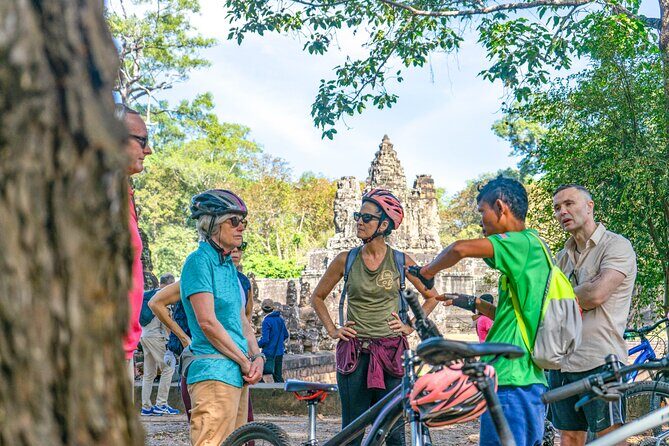
The day starts at 8:00 am. You’re picked up from your hotel and taken to the Siem Reaper Travel office for bike fitting. That matters more than it sounds. Getting the right fit early helps you ride comfortably for hours instead of spending the first 45 minutes adjusting your seat or fighting your handlebars.
At the fitting, you’ll get the bike and a helmet. The tour includes a lunch stop later, plus bottled water and snacks along the way, which is a big deal in Cambodia’s heat.
You should be ready for moderate effort. The day is described as suitable for reasonably fit riders who feel comfortable biking. And with a distance of 20 km to 30 km, it’s best to treat this like a proper outing, not a gentle sightseeing lap.
Bayon and Angkor Thom: The Gate with Elephants and Giant Faces
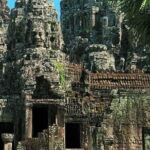
Bayon Temple is where the day’s story turns visual in a hurry. You cycle toward the Angkor Archaeological Park and enter Angkor Thom through an ancient gate carved with elephants and four giant faces. That gate isn’t just decoration—it’s a built-in orientation. It tells you you’re entering a city, not just passing by a temple.
This stop is set aside for about 3 hours. That timing is meaningful because Bayon’s main character is repetition: faces, towers, bas-reliefs, and angles that change as you move. If you rush, you miss the patterns. If you linger, you start noticing the small variations that make the architecture feel intentional.
The guide commentary is part of the benefit here. You get context as you explore, which can turn the temples from scenic backdrops into something you can actually read. If you like understanding what you’re seeing, this is the section where your brain is most likely to enjoy the day.
A practical note: Angkor Thom areas can get busy, but cycling helps you experience the complex with a bit more flow than a vehicle drop-and-wait style. You still need patience, but the day feels more under your control.
Ta Prohm in the Jungle: Where the Ride Changes the Temple
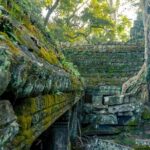
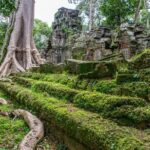
Ta Prohm is the stop most people picture the moment they hear the name. It’s the jungle-enveloped temple area, with trees growing around and through the structures. It was also featured in the Tomb Raider film, which gives you a pop-culture entry point even if you’ve never played a game.
You’ll have about 2 hours here. That’s a solid chunk of time for Ta Prohm because it rewards slow walking. You want to look up, look sideways, and let the light change across the stone. The jungle effect creates shadows and textures that feel different at different times of day.
What cycling adds is perspective. When you’re on foot only, you can end up in a single viewing loop. From a bike tour, the movement between viewpoints feels smoother—you arrive in a way that makes it easier to choose your route through the ruins instead of simply following a mass exit strategy.
For some people, the challenge is heat and humidity. If you stop pacing yourself, the jungle can wear you down faster than the open areas. Your best move is to take it as a walking stop, not a sprint stop.
A few more Siem Reap tours and experiences worth a look
Srah Srang Lunch Break: A Pond View Reset
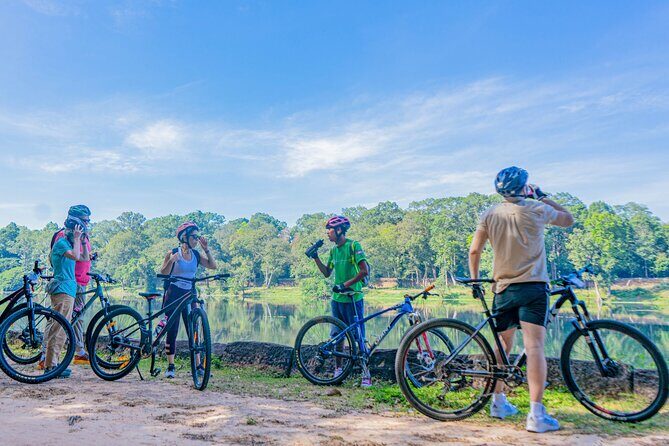
After the temple intensity, you get a breather at Srah Srang. This stop includes lunch in a tropical garden setting with a view over the pond, and it’s scheduled for about 1 hour.
This is more than just a place to eat. In weather like Siem Reap can throw at you, a timed reset matters. It gives your legs a pause and lets you cool off before Angkor Wat, which is the final big climax of the day.
Srah Srang’s position in the itinerary also helps your brain. By the time you get there, you’ve had Bayon’s face-heavy architecture and Ta Prohm’s jungle spectacle. A water-and-garden stop offers contrast, and that contrast makes the final visit feel more vivid.
If you’re the type who needs a snack strategy: use this hour to fully refuel. You still have a major temple ahead.
Angkor Wat: Dress Rules, Ticket Planning, and the Big Finish
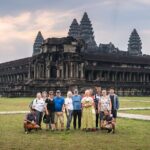
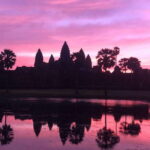
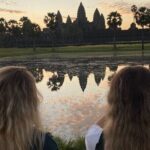
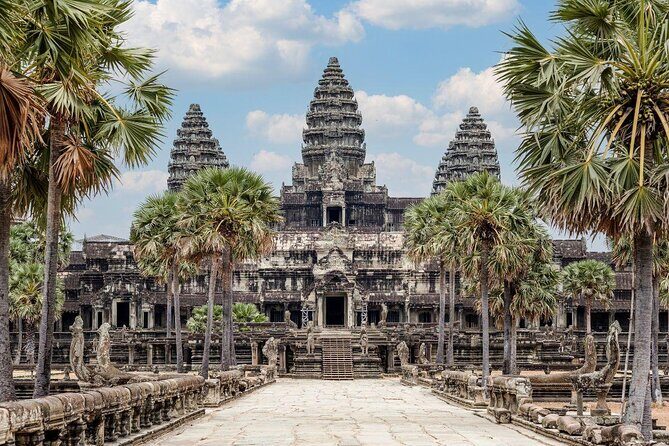
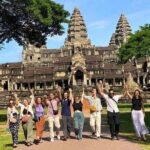
Angkor Wat is the iconic finish. The tour schedules about 2 hours here, after lunch and rest.
A couple practical things to know before you arrive:
- Entrance fees are not included, so have your tickets planned in advance.
- Cambodia is conservative, especially at the main temple. You should wear clothing that covers shoulders and knees.
That dress requirement isn’t a small technicality. It can affect what you bring and whether you can buy a quick cover-up once you’re already there.
Angkor Wat is described as the largest religious monument in the world and a top example of the Khmer architectural tradition. Even if you don’t know every symbol yet, you’ll feel the scale. The complex is large enough that two hours can fly by if you keep chasing only the most obvious viewpoints.
The best approach is to mix big-picture moments with smaller details. In a bike tour format, you have an advantage: you’re not spending all day on transport. You can concentrate your time where your interests actually are—symmetry, towers, courtyards, or the way light hits the stone.
And yes, Angkor Wat can be busy. Still, this tour’s overall flow—especially starting earlier and cycling between sections—helps you avoid the worst of the feel of arriving, waiting, and waiting again.
Roads, Heat, and How to Pace Yourself for 20–30 km
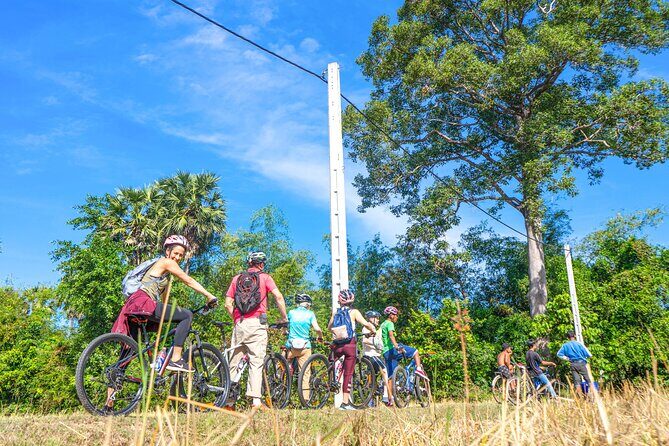
A 20–30 km cycling day sounds straightforward until you hit Cambodia’s heat and humidity. One of the most common realities on this type of route is that the hardest part is rarely the technical biking—it’s the warm weather and the need to keep moving while staying comfortable.
The good news is the tour includes bottled water and snacks, so you’re not totally on your own. Still, you’ll ride in a mix of environments: open areas, temple zones, and shaded lanes when you’re lucky.
Here’s what helps you enjoy the ride instead of just surviving it:
- Start the day calm. You don’t need to go fast to feel like you’re doing something.
- Use breaks intentionally. The lunch stop is your real reset.
- Dress smart for the day. You’ll need covered shoulders and knees at Angkor Wat, so plan for breathable fabric.
If you’re someone who gets restless waiting for others, you’ll probably like this tour’s small-group format. But remember, you’re touring a cultural site, so there are inevitable pauses for entry, walking into temples, and guide explanations.
Guide Style: What to Expect from the Temple Commentary
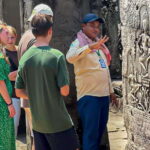
The cycle guide is a major part of the experience. This tour is built around English-speaking commentary, and the guide’s job is to help you connect the visible parts of the temples to what they represent.
In feedback, guides like Son are specifically praised for explaining temples well and adapting to the group. That flexibility can mean a smoother rhythm—fewer bottlenecks and less feeling like you’re being dragged.
Still, not every guide’s focus matches every traveler’s needs. If you want extra coaching on photos and angles, don’t assume it will be a perfect match every time. For best results, think of the guide as an explanation partner, and treat photography as your own experiment.
That’s not a dealbreaker. It just changes how you should approach the day: ask questions when you want context, and use your own eye for the camera work.
Who This Bike Tour Is Best For (and Who Might Want Another Option)
You’ll likely be happy with this tour if you:
- Can ride comfortably for several hours and handle 20–30 km.
- Want an intimate way to see major Angkor sites without spending the entire day in a vehicle.
- Like guided context as you explore temple areas.
- Appreciate that lunch is included and the day includes water and snacks.
You might think twice if:
- You’re not comfortable biking on mixed paved and dirt roads.
- Heat is a major issue for you.
- You’re expecting a totally relaxed, low-effort day.
The itinerary also makes sense for people who want a “greatest hits” Angkor day without feeling like they’re only doing one temple after another. You get a variety of moods: city gate and faces at Angkor Thom, jungle intensity at Ta Prohm, pond-side pause at Srah Srang, and the monumental finale at Angkor Wat.
Should You Book Cycle the Angkor Backroads with Lunch?
If your priority is seeing Angkor with more freedom and less crowd pressure, this is an easy yes. The combination of hotel pickup, bike and helmet, and a guide who helps you understand what you’re looking at gives you real value for $55—especially since lunch and snacks remove two common day-tour hassles.
Book it if you’re comfortable biking and you want a day that feels active but guided. Plan for the one unavoidable cost: temple entrance fees. Also pack for heat and follow the clothing rule for Angkor Wat so you’re not scrambling at the last second.
Don’t book it if you want a completely low-effort outing or you’re not comfortable riding 20–30 km. In that case, you might prefer a more vehicle-based format so you can enjoy the sites without the physical demand.
FAQ
How long is the Angkor backroads cycling tour?
It runs for about 7 hours.
What’s included in the tour price?
Hotel pickup and drop-off, a bike and helmet, an English speaking cycle guide, bottled water and snacks, and lunch are included.
Are Angkor entrance fees included?
No. Entrance fees to Angkor temple complex sites are not included.
What time does the tour start?
The tour starts at 8:00 am.
Do I need to be a strong cyclist?
You should have a moderate physical fitness level and be comfortable biking. The ride is about 20 km to 30 km.
Is there a cancellation option if plans change?
Yes. You can cancel up to 24 hours before the experience starts for a full refund.
If you want, tell me your fitness level and travel dates, and I’ll help you decide how to pace the day and what to budget for entrance fees.