REVIEW · SIEM REAP
Full Day Archeological Tour in Siem Reap with Sun Set
Book on Viator →Operated by Siem Reap Experiences · Bookable on Viator
Seeing Angkor in a single sweep is the point. I like that this tour runs in a small group (max 13) with English-speaking guidance from people like Nic, Vone, and Nick, so you get context instead of just walking in circles. The big consideration: it’s a full day in the heat, and Angkor Wat’s $37 entrance fee is not included (plus food isn’t included).
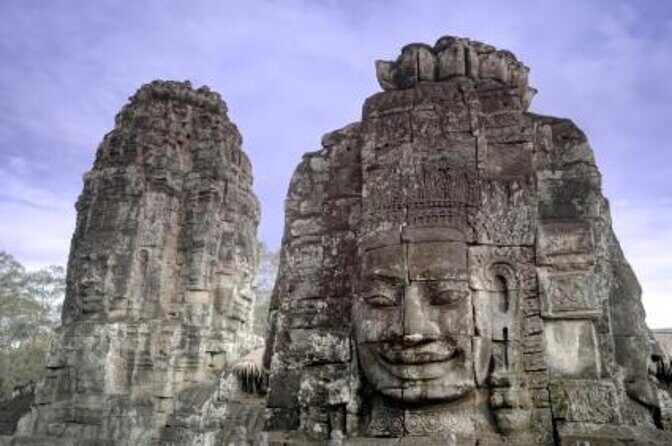
The best part is the flow: start at Angkor Wat, move through the Angkor Thom complex with the South Gate and Bayon’s famous face towers, then head to Ta Prohm with those dramatic tree roots. You end at Phnom Bakheng for sunset views, with a break built in before you climb.
You’ll also feel the difference in the practical details. There’s pickup and drop-off, air-conditioned transport, bottled water, and cool towels to help you make it through without feeling wrecked halfway. If you want maximum temple time with minimal hassle, this is a smart setup.
In This Review
- Key highlights to know before you go
- A 9-hour Angkor day that starts with comfort
- Entering Angkor Wat: the big star and the one fee to plan for
- South Gate of Angkor Thom: a quick photo stop with serious impact
- Bayon Temple: 254 face towers and a lot of interpretation
- Ta Prohm: where the tree roots take over the story
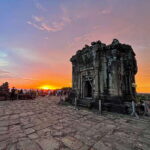
- Phnom Bakheng at sunset: the hilltop finish
- Price and value: $14 plus the one major ticket
- Guide quality makes the day work (Nic, Nick, Vone, Makara)
- What to pack and how to pace yourself
- Who this tour suits best
- Should you book this Siem Reap sunset temple tour?
- FAQ
- What time does the tour start?
- How long is the full-day tour?
- What sites are included during the day?
- What is included in the $14 per person price?
- What entrance fees should I budget for?
- How large is the group?
- What happens if weather is poor or you need to cancel?
Key highlights to know before you go
- Max 13 people: enough space to feel personal, not a cattle-car of strangers
- Air-conditioned ride + water + cool towels: serious comfort help for a long hot day
- Angkor Wat plus Angkor Thom faces: you get the headline sights in one route
- Ta Prohm’s tree-root drama: a very different feel after the carved stone cities
- Sunset at Phnom Bakheng: your day ends with a hilltop temple finish
A 9-hour Angkor day that starts with comfort
This is a long day by design—about 9 hours total—because it tries to fit the core Angkor highlights into one efficient loop. Pickup is offered from your accommodation, typically between 9:00 and 9:30 am, and the start time is 9:30 am. Expect a lot of “watch, walk, pause, shoot, repeat,” with the travel time between sites handled by an air-conditioned minivan.
I really like how this kind of format protects your energy. Angkor is huge, and moving between temples takes time. When you’re not driving yourself, you can focus on the ruins instead of the logistics. Plus, you’re not stuck guessing what you should notice—an English-speaking guide handles the big-picture explanations and keeps the day moving.
The trade-off is that “one day” also means less lingering than you might do if you were staying nearby and taking it slow. If you love wandering without a schedule, this may feel fast. If you want a structured hit list with good context, it’s a great fit.
A few more Siem Reap tours and experiences worth a look
Entering Angkor Wat: the big star and the one fee to plan for
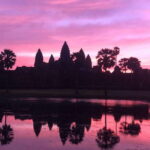
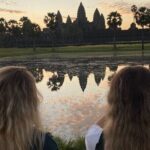
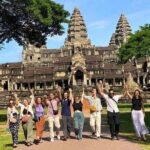
Angkor Wat is where most people want to start, and this tour does exactly that. You’ll spend around 2 hours 30 minutes exploring Angkor Wat itself. That’s enough time to get inside, understand the layout, and still have room to slow down at key areas.
One important budget point: the Angkor Wat entrance ticket is not included and is listed as $37 per person. The tour price is $14, so this is the main “add-on” you should plan for from the start. If you want to understand value here: your ticket spend is going to the major site, while the tour price covers the guided route, transport, and comfort extras. In practice, you’re paying to reduce the friction of seeing all the sites efficiently.
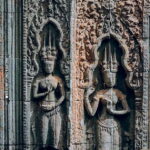
Also, don’t treat Angkor Wat like a casual stroll. It’s an architectural and spiritual centerpiece that rewards looking closely at causeways, carvings, and the way the temple is built up in layers. Even when you’ve seen photos, being there in person hits differently once you realize how much is planned into the geometry and how long the site has functioned as a landmark.
South Gate of Angkor Thom: a quick photo stop with serious impact
After Angkor Wat, you’ll head to the South Gate of Angkor Thom. This stop is shorter—about 20 minutes—so it’s really geared for photos and a fast hit of the gate’s details.
What you should look for during that brief window:
- the 12th-century gate setting and carved faces
- the giant statues at the entrance area
- stone figures that line the causeway leading in
This is not the part of the day where you’ll do deep reading. Think of it as a visual setup. You’re transitioning from the Angkor Wat complex into the larger story of Angkor Thom, and the gate gives you a strong sense of scale and style.
If your goal is photography, this short stop can feel just right. If you’re the type who likes to linger and sketch or read every plaque, you might want more time here. In that case, you’ll likely love the later longer stops more.
Bayon Temple: 254 face towers and a lot of interpretation
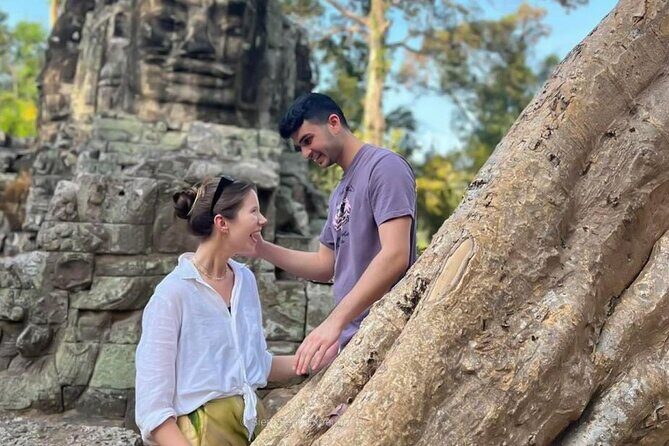
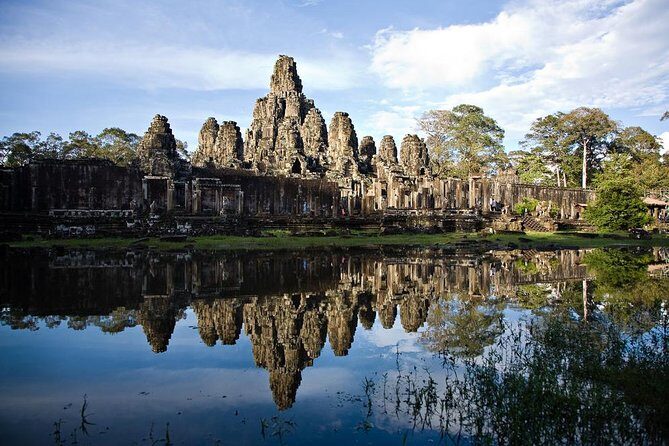
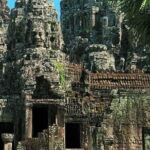
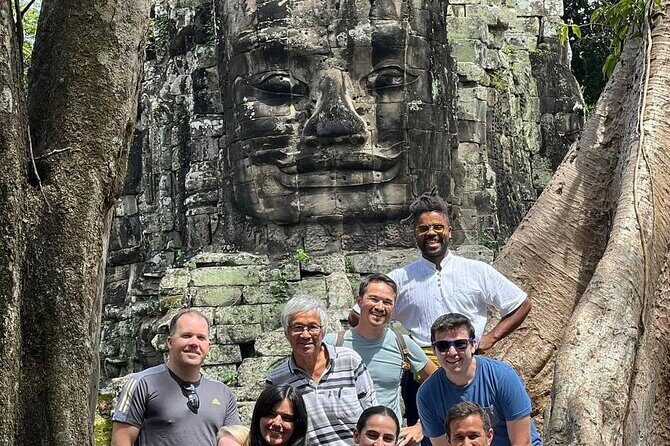
Bayon Temple is where the tour shifts from “iconic ruins” to “why these ruins matter.” You’ll spend about 2 hours at Bayon, and this site is famously marked by 254 tower faces.
Bayon is connected with Buddhism in the Angkor period, and the temple is associated with King Jayavarman VII’s state temple building era (late 12th to early 13th century, as described). Even if you don’t know Khmer art terminology, the guide’s job is to help you see patterns—how the faces repeat across structures and how the site reads as a living presence, not just a pile of stone.
This is also the stop where small-group format helps. When you have time at Bayon, you want the ability to ask questions, to shift your angle, or to step off the main flow without losing the group. A guide can also help you time your own wandering so you’re not stuck waiting around later.
One practical note: Bayon is detailed and can feel visually busy. That’s exactly why the context matters. You’ll enjoy it more if you don’t try to absorb everything at once. Pick a few areas of focus: the tower faces, key carvings, and the way the temple space opens up around you.
Ta Prohm: where the tree roots take over the story
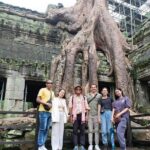
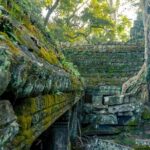
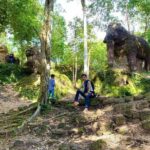
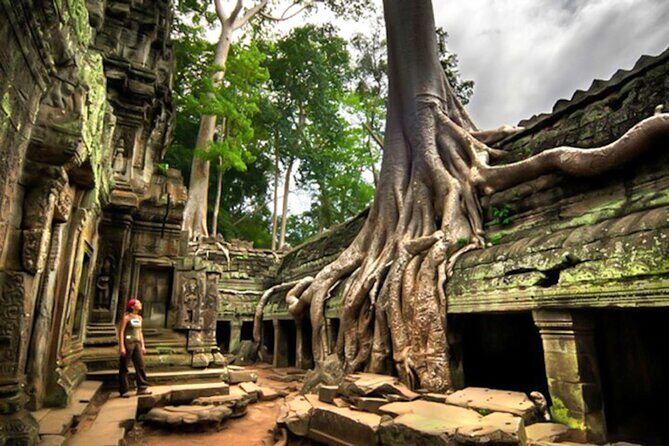
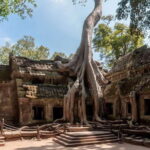
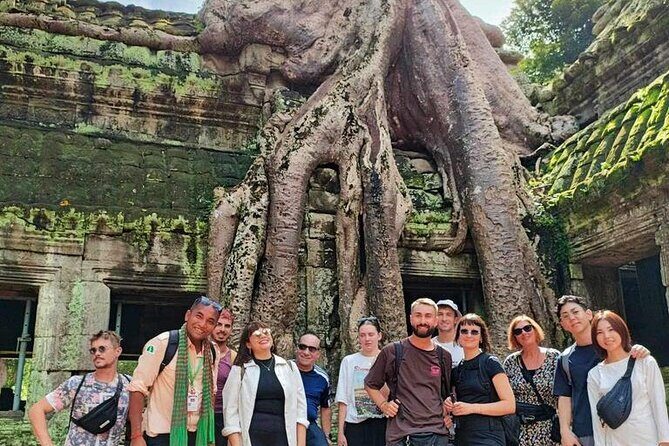
Next is Ta Prohm, where the visual mood changes fast. You’ll spend about 1 hour 10 minutes, and it’s remembered for tree roots tangled through the structures. It’s a very specific kind of magic: less “perfectly ordered geometry” and more “time wrestling back,” with roots and stone fused together.
The temple was originally called Rajavihara, and it’s described as being built in the Bayon style in the late 12th and early 13th centuries. Even with that background, what you’ll feel first is the atmosphere: corridors that look altered by growth, doorways that seem framed by roots, and ruins that feel exposed to the sky.
This stop can be a highlight for people who want something different from the clean-cut temple layouts. After Bayon’s face towers, Ta Prohm gives you texture and drama. If you’re also into photography, it’s one of the easiest places to make your shots look cinematic without special planning.
The only downside is simple: it’s popular, so you’ll still want to move with purpose. With an hour or so, you can do it well—but don’t assume you’ll see every angle like a full-day dedicated visit.

Phnom Bakheng at sunset: the hilltop finish
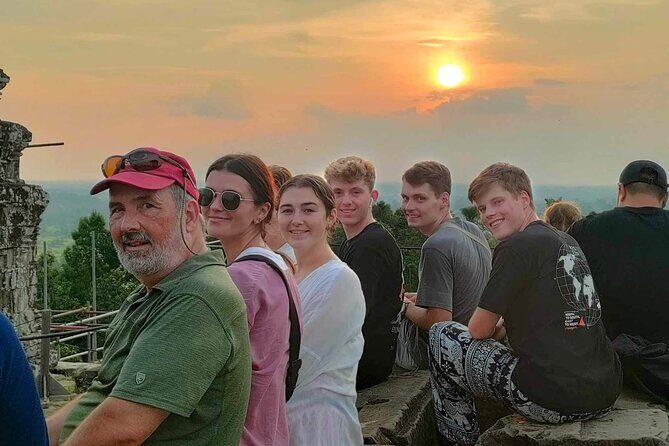
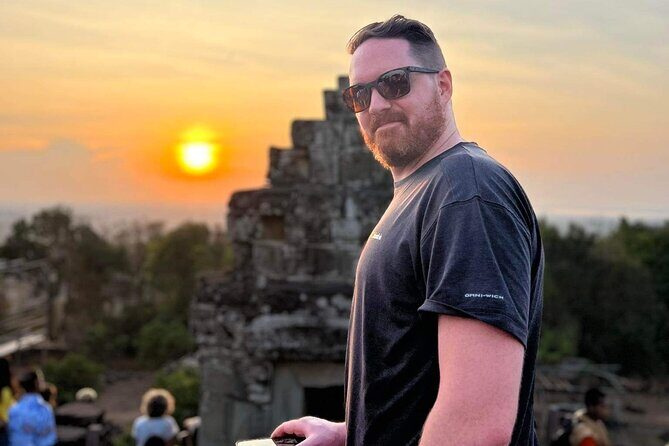
The day wraps up at Phnom Bakheng, a Hindu and Buddhist temple built as a temple mountain. The tour description also notes a break for lunch and rest before heading to the hilltop for sunset.
Plan for this part of the day differently than the temple plazas. You’ll likely want more patience and less rushing once you’re up there. The goal isn’t only to look around—it’s to time your view for the light change. If you’re sensitive to stairs or uneven ground, you’ll feel it here more than at the flat courtyard areas.
I like that the schedule acknowledges the real needs of the day—food break and a moment to rest—because arriving hungry and overheated at sunset ruins the vibe. When the day ends well, the whole tour feels worth it.
Price and value: $14 plus the one major ticket
The tour price is $14.00 per person, and it’s hard to judge value without looking at what you get included. Here’s what’s covered:
- Air-conditioned vehicle
- English-speaking tour guide
- Pickup and drop-off
- Bottled water
- Cool towel
- Local tax
- Mobile ticket
Not included:
- Foods and beverage
- Angkor Wat entrance fee: $37.00 per person
So your realistic “all-in” day cost is closer to $51 per person just from the big ticket. Still, you’re also paying for a guided route that stacks multiple major Angkor sites into a single day without you needing to manage transport, timing, and sequencing. Given how far apart these areas are, that convenience is the value.
If you already have entrance tickets and you’re comfortable driving or hiring a driver yourself, you might be tempted to DIY. But if you want the day to be logical and guided—especially at Bayon and Ta Prohm—that’s where the money starts to feel well spent. The small-group size (max 13) also matters, because you’re not just buying transport; you’re buying attention and context.
Guide quality makes the day work (Nic, Nick, Vone, Makara)
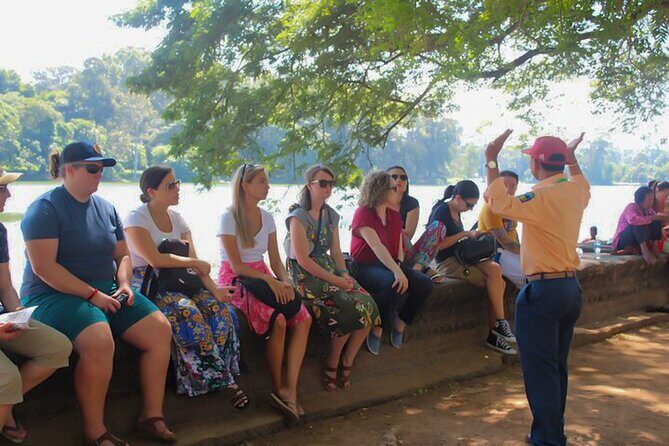
A good Angkor day is equal parts ruins and interpretation. The guide is what turns a list of temples into a story you can follow.
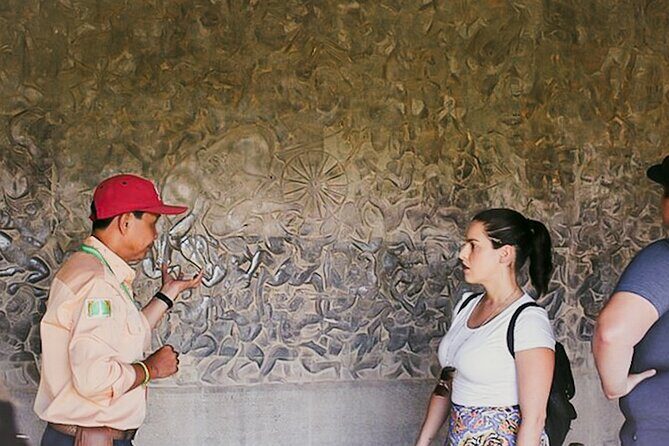
You’ll see names pop up like Nic and Nick, and also Vone and Makara. The common thread in the feedback is that the guides don’t just recite facts. They’re hands-on and caring, they give historical background that helps you connect the sites, and they also build in enough freedom for you to explore on your own between guided points.
One extra advantage: some guides also help with practical photography tips. If you care about getting better shots of the stone faces or the root-framed corridors at Ta Prohm, having someone point out angles and timing can save you time and frustration.
What to pack and how to pace yourself
The day is long, and it’s outdoors. Even with air-conditioning on the ride, you’ll spend hours walking among stone, heat, and humidity.
From what the tour includes (water and cool towels), you can expect the organizers are trying to keep you comfortable. I’d still suggest you plan like the day is warm: a hat, sunscreen, and breathable clothes will make the whole route easier. For the sunset portion, wear shoes that handle uneven ground.
Pacing-wise, remember this: Angkor rewards selective focus. If you try to see everything equally, you’ll feel overloaded. Pick a theme per site—faces at Bayon, root textures at Ta Prohm, symmetry and bas-reliefs at Angkor Wat—then let the rest be bonus details.
Who this tour suits best
This is a great choice if:
- you want the major Angkor hits in one day
- you like guided context but still want some freedom to explore
- you’re traveling with limited time in Siem Reap
- you appreciate comfort perks like bottled water and cool towels
It’s also a good fit for first-timers who feel overwhelmed by Angkor’s size. The tour gives you a clear route and prevents the common mistake of overplanning and under-seeing.
If you’re an Angkor superfan who wants to study every relief panel for hours, you may find the schedule too tight. In that case, you’d probably prefer a slower, more flexible multi-day plan. But for most people, this gives a strong, high-impact introduction.
Should you book this Siem Reap sunset temple tour?
If you’re in Siem Reap for a short window and you want a guided, small-group way to see Angkor Wat, Angkor Thom (South Gate + Bayon), Ta Prohm, and end at Phnom Bakheng for sunset, I think this is a smart booking. The combination of air-conditioned transport, English-speaking guide support, water and cool towels, and a finish that’s timed around sunset makes it feel like more than just a bus ride.
Book it if you want structure, context, and comfort. Skip it if you hate long hot days, or if you don’t want to pay the additional Angkor Wat entrance fee. For everyone else, it’s a solid “one-day Angkor” solution that leaves you with the right kind of memories: big stone, big faces, and that hilltop sunset at the end.
FAQ
What time does the tour start?
The start time is 9:30 am, with pickup at your accommodation typically between 9:00 am and 9:30 am.
How long is the full-day tour?
It runs for about 9 hours.
What sites are included during the day?
You’ll visit Angkor Wat, the South Gate of Angkor Thom, Bayon Temple, Ta Prohm, and finish with sunset at Phnom Bakheng.
What is included in the $14 per person price?
The price includes an air-conditioned vehicle, an English-speaking tour guide, pickup/drop-off, bottled water, cool towel, and local tax. You also receive a mobile ticket.
What entrance fees should I budget for?
Foods and beverage are not included. Also, the Angkor Wat entrance fee is $37 per person and is not included.
How large is the group?
The tour has a maximum of 13 travelers.
What happens if weather is poor or you need to cancel?
This experience requires good weather. If it’s canceled due to poor weather, you’ll be offered a different date or a full refund. Cancellation is free if you cancel up to 24 hours in advance of the start time.