REVIEW · SIEM REAP
Guided Private Tuk Tuk Tour Angkor Wat and Small Circle and Five Extras
Book on Viator →Operated by Angkor-Travel Tours · Bookable on Viator
Early morning, temples without the crush.
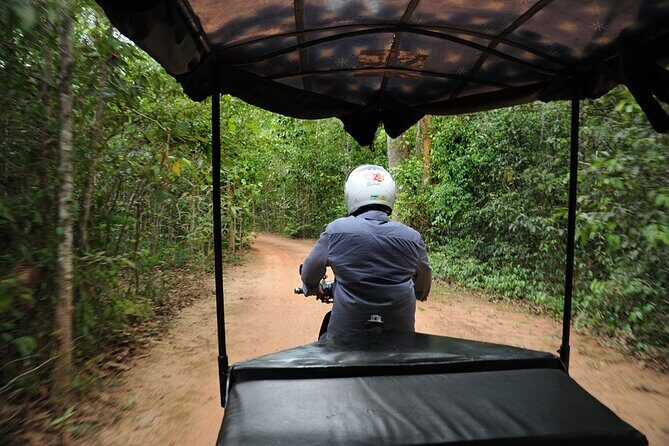
This private tuk tuk tour is built for great light at Angkor Wat twice and for a Small Circle route with extra stops that keeps you moving beyond the usual checklist. I like that the schedule uses smart timing, plus a licensed English-speaking Angkor guide who stays with you at each site while the driver waits in the car park.
The one thing to know is that it’s an intense 11–13 hour day starting at 6:30am, and you’ll still need to buy the Angkor Ticket separately (and lunch isn’t included). If you want a laid-back pace, this may feel like a lot.
In This Review
- Key takeaways before you go
- The “Small Tour” experience, turned up (in a good way)
- Angkor Wat at dawn from the East Gate, then again for late-day photos
- Prasat Kravan and Bat Chum: brick carvings and Buddhist footprints
- Srah Srang: the reservoir with the animal terrace
- Banteay Kdei and Ta Prohm: labyrinth lines and the famous roots
- Ta Nei and Ta Keo: the Indiana Jones feeling and steep stone stairs
- Spean Thma and the temple trio: Chau Say Tevoda, Thommanon, Mangalartha
- Angkor Thom: Victory Gate, East Gate, a 3.5 km hike, and the South Gate
- Back to Angkor Wat late afternoon, then Wat Thmey for Khmer Rouge memorial context
- Lunch at Srah Srang: choose your comfort or adjust the route
- Price and value: what $59 covers, and what you still need to budget
- Who this tour suits best
- Should you book this private tuk tuk Angkor tour?
- FAQ
- What time does the tour start?
- How long is the tour?
- Is pickup included?
- Is the Angkor Ticket included?
- Do I need a separate ticket for each temple?
- Is lunch included?
- What languages are provided?
- Do you visit Angkor Wat more than once?
- Where does the tour end?
Key takeaways before you go
- 6:30am start means calmer Angkor Wat morning time and less time wasted in lines
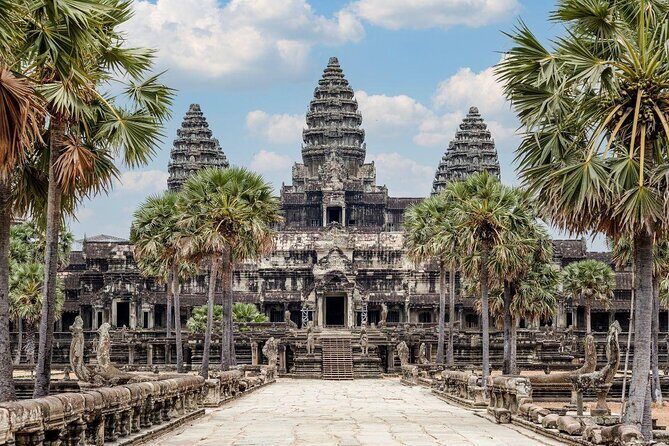
- Angkor Wat twice: first from the East Gate for morning light, then again late afternoon for pond reflections
- Guide-led temple time at each stop, with the driver waiting so you’re not rushed into transit
- Five additional temple stops beyond the standard Small Circle, including a jungle-feeling ruin at Ta Nei
- A 3.5 km hike in Angkor Thom plus big gate views like the Victory Gate and South Gate
- Wat Thmey (Killing Fields) adds a sobering historical stop that breaks up the temple-heavy day
The “Small Tour” experience, turned up (in a good way)
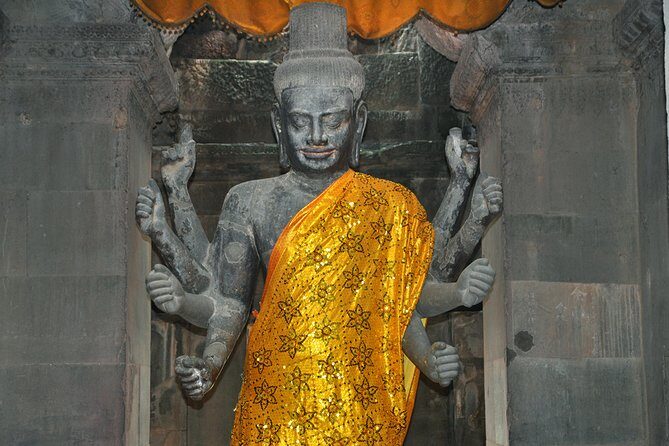
Most Siem Reap day tours follow a similar pattern: a long drive, a cluster of temples, a quick lunch, then everyone heads back. This one feels different because the pacing is intentional. You start early, you revisit Angkor Wat, and you add several extra temple stops that help you understand the range of Angkor architecture—brickwork, inscriptions, bas-reliefs, and the city’s gate system.
Because it’s private, you’re not sharing space with strangers in the tuk tuk. That matters when you’re doing long hours and hopping between temple compounds. And because the driver waits at the car parks while the guide takes you in, the day feels more structured and less chaotic than the typical bus tour shuffle.
You can also read our reviews of more guided tours in Siem Reap
Angkor Wat at dawn from the East Gate, then again for late-day photos
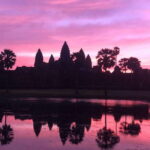
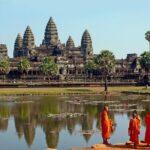
Angkor Wat is the headline, and the schedule is built around light and crowd control. You’ll enter first through the East Gate from a less-frequented approach, so you get Angkor Wat in the best morning brightness. You also won’t miss the iconic view from the West side—you’ll still see Angkor Wat in the way most people recognize, just timed so your eyes catch it early rather than mid-day.
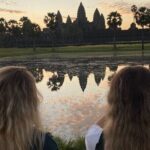
Then, near the end of the day, you return for another round. Late afternoon is when the towers reflect in the surrounding ponds and moats, and you get a longer look instead of a quick “walk-by and go” moment. The tour gives you about an hour at Angkor Wat the second time, which is what makes this plan feel like more than a quick hit.
Practical consideration: Angkor Wat and the rest of the Angkor sites all require an Angkor Ticket. This tour price covers guide and transportation, but the ticket itself is on you.
Prasat Kravan and Bat Chum: brick carvings and Buddhist footprints
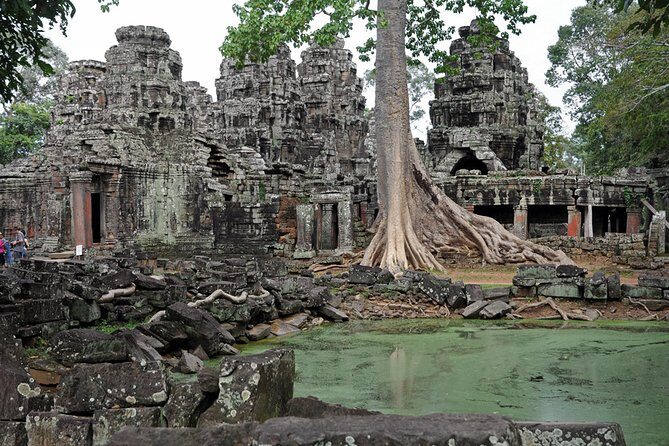
After morning Angkor Wat, the tour shifts into smaller temples that many people skip because they’re not as famous. That’s where this route earns its value.
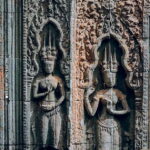
Prasat Kravan is a compact temple with five towers in a line. What makes it special is the scale and quality of its brick carvings—big enough that you can actually notice the details instead of squinting while walking past. These are the kinds of stops that help you see Angkor as a living craft tradition, not just one famous silhouette.
Then comes Prasat Bat Chum, another small set of three towers on a shared platform. The standout here is the large inscriptions. They point to a time when Buddhism had taken a route in Angkor, which adds meaning beyond the visuals. If you enjoy reading what the stones are saying, this is one of the places where a guide’s context really pays off.
Expect these two stops to be short—around 20 minutes each—but they work well as a break from the big temple overload.
Srah Srang: the reservoir with the animal terrace
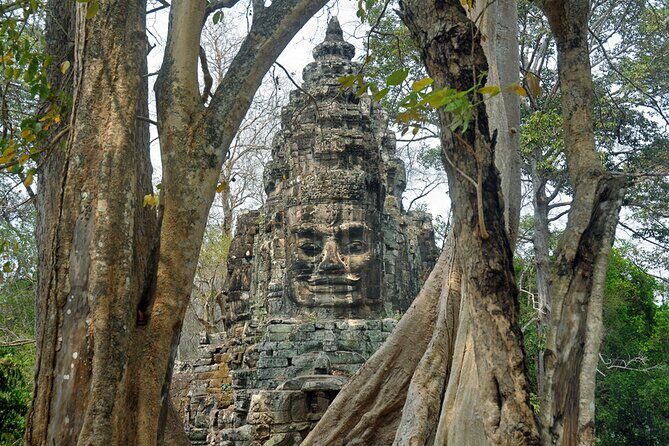
You’ll stop at Srah Srang, a terrace with animal sculptures. It’s not just a photo stop; it’s a chance to understand the waterworks language of Angkor.
The key idea is that Srah Srang is an artificially deepened basin, not a baray (a reservoir in a broader sense). In plain terms: the stone and water system here looks different, and that difference helps you read Angkor’s design choices. Even with limited time, the terrace is picturesque and quick to appreciate.
This is a short stop (about 10 minutes), so treat it like a calm moment—look, photograph, then move on.
Banteay Kdei and Ta Prohm: labyrinth lines and the famous roots
Next you hit two temple compounds that most first-timers recognize—just not always in the order or time windows they expect.
Banteay Kdei is described as the smaller sister of Ta Prohm, but it’s still very large. The layout is labyrinth-like, which can be intimidating if you go without a plan. The guide-led format helps here: instead of wandering, you get a sense of where to look and how to move through the compound.
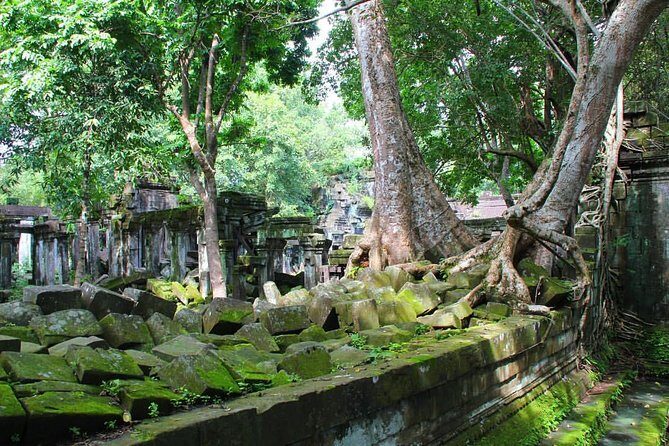
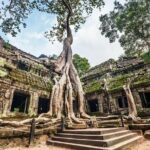
Then you go to Ta Prohm, the “jungle temple” with massive strangler figs over the structures. It’s big. That matters because it’s easy to treat Ta Prohm like a quick stop and miss what makes it memorable: the way roots and branches wrap around stonework, and the overall atmosphere created by that slow takeover.
You’ll have about 1 hour 15 minutes at Ta Prohm, which is enough time to walk around the key areas and still take in the details.
You can also read our reviews of more private tours in Siem Reap
Ta Nei and Ta Keo: the Indiana Jones feeling and steep stone stairs
Two of the most interesting “lesser-known” stops are designed to change your mood.
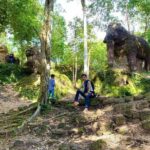
Ta Nei is reachable on gravel roads and tends to be less visited because of that access feel. Once you’re there, the ruins can give you that Indiana Jones vibe—an in-the-jungle sense of discovery rather than a crowded landmark experience. The tour keeps this to about 30 minutes, which works because you want time for the atmosphere without it turning into an endurance test.
Then it’s Ta Keo, a former state temple built like an artificial mountain and shaped as a stepped pyramid. The stairs to the upper platform are extraordinarily steep, and that steepness changes how you experience the temple. You’re not just walking through corridors—you’re climbing into the structure’s geometry.
This stop is around 40 minutes, so you can pace yourself and still get good views from the climbs.
Spean Thma and the temple trio: Chau Say Tevoda, Thommanon, Mangalartha
After Ta Keo, the tour adds more variety by mixing a photo bridge stop with temples that reward close attention.
At Spean Thma, you get a photo stop at a stone bridge from the late Angkor period. The interesting detail is the building technique: carved stones were used from earlier temples. Over time, the riverbed shifted further east, so the bridge sits in a landscape context that feels changed from the original setting.
Then you move into Chau Say Tevoda and Thommanon, which are described as a matched pair—Chau Say Tevoda being the larger, and Thommanon as its sister. Chau Say Tevoda is known for a processional route from the east and lots of pediment carvings tied to mythological themes. Thommanon shares the Angkor Wat-style look in its towers, so it helps you connect architectural eras within the same day.
Finally, Mangalartha is a smaller temple on a steep, tiered platform. It’s from the 13th century and considered the last stone temple built in Angkor. The tour gives it about 15 minutes, and it’s also described as rarely visited, which is exactly why it fits as an extra stop—when you’re already doing a lot of Angkor, these small changes in tone are what keep the day from feeling repetitive.
Angkor Thom: Victory Gate, East Gate, a 3.5 km hike, and the South Gate
The heart of the “city” portion comes with Angkor Thom and its gates. This is where you shift from individual temple compounds into a city-grid experience.
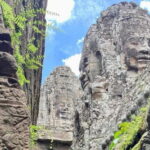
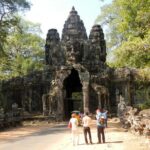
You start with the Victory Gate, the second eastern gate of Angkor Thom. You’ll climb the wall for views, including a perspective toward the southern giant face of the gate. It’s one of those moments where the guide’s navigation matters—getting up there is a different experience from just standing at ground level.
Then you walk along Angkor Thom’s medieval city walls to see the East Gate, described as surprisingly lonely because there’s no road leading to it. That detail matters: it’s the contrast to the more famous gate areas, and it helps you feel the scale of the city.
Next is the 3.5 km hike in Angkor Thom. This is a real time investment in the day, not just a short walk. You’ll see the southeastern Prasat Chrung temple, noted as the best preserved of the corner temples on the city walls.
You finish the Angkor Thom section with time at the South Gate, one of the most iconic gate viewpoints: a face tower and railings formed by rows of giant statues depicting demons and gods. Even if you’ve seen photos, being there helps your brain connect the gate to the larger city plan.
Back to Angkor Wat late afternoon, then Wat Thmey for Khmer Rouge memorial context
Returning to Angkor Wat late in the day gives you a second visual angle after the Angkor Thom experience. This timing also helps you avoid the hottest part of the day, and it sets you up for calmer photo moments at the ponds and moats.
Then the tour shifts from temples to memory at Wat Thmey (Killing Fields). This stop includes a small memorial stupa for victims of the Khmer Rouge and photo boards showing images of people killed there, plus a larger prayer hall on open grounds. It’s short (about 10 minutes), but it’s meaningful because it grounds the day in a modern history reality that’s impossible to appreciate only through temple stones.
Lunch at Srah Srang: choose your comfort or adjust the route
Lunch is not included, but the tour plan builds in a stop at Srah Srang where there are several good restaurant options. This gives you a practical mid-day break without forcing you to sprint back into Siem Reap traffic.
If you prefer a different lunch spot, the driver can drop you at another location, as long as you agree to pay for the extra distance (the extra kilometre). That’s a useful option if you know where you want to eat or if you’d rather shop before the final temple stretch.
Price and value: what $59 covers, and what you still need to budget
At $59 per person, this tour is priced like a full-day guide-and-transport package. It includes private transportation, an English-speaking driver, and a licensed English-speaking Angkor guide. You also get pickup offered, and the tour uses a mobile ticket format, plus group discounts.
What’s not included is equally important: the Angkor Ticket is required for all temples you visit, and the tour notes a 1-day Angkor Ticket price of $37 per person (with multi-day options also relevant). Lunch isn’t included either.
So the real budgeting truth is simple: you’re paying for the day’s structure and expert guidance, but you still need to add the entry ticket and your meal plan.
Who this tour suits best
This tour fits you if:
- You want Angkor Wat twice and you care about timing for light and photos
- You like a guide-led day where someone helps you understand what you’re seeing
- You’re okay with an early start and a long day that includes a real 3.5 km hike
- You want more than the “standard” small circuit, with extra temple stops like Ta Nei and Mangalartha
It may not fit you if:
- You want minimal walking or a relaxed pace
- You’re trying to keep costs ultra-low, since ticket and lunch are separate
Should you book this private tuk tuk Angkor tour?
I’d book it if your priority is smart timing plus strong context. The double Angkor Wat plan is the big payoff, and the combination of fewer-crowd-feel stops (like Ta Nei and the lonely East Gate) with a structured hike makes the day feel complete rather than rushed.
Skip it (or consider another option) if you’re sensitive to long days. With an 6:30am start and multiple temple compounds plus climbing and a hike, this isn’t a half-day mood. Also be sure you’re ready to budget for the Angkor Ticket and lunch on your own.
If that sounds like your style, this is a strong value way to see Angkor without feeling stuck in tourist traffic.
FAQ
What time does the tour start?
It starts at 6:30 am.
How long is the tour?
The tour runs about 11 to 13 hours.
Is pickup included?
Pickup is offered, and the start point is listed at Jeep Tour Siem Reap Angkor (Little Pub St area). Drop-off can be back at the meeting point or in Siem Reap town center.
Is the Angkor Ticket included?
No. The Angkor Ticket is not included. The tour requires a ticket valid for the temples you visit (and it lists 1 day at $37 per person).
Do I need a separate ticket for each temple?
You need an Angkor Ticket that is valid for the temples on your ticket type (the tour notes that a one- or multiple-day Angkor Ticket is required for each temple).
Is lunch included?
No. Lunch isn’t included. There are restaurant options near Srah Srang, and the driver can also drop you at another location if you agree to pay for extra distance.
What languages are provided?
The tour includes an English-speaking driver and a licensed English-speaking Angkor guide.
Do you visit Angkor Wat more than once?
Yes. You visit Angkor Wat twice: once early in the morning from the East Gate, and again late afternoon for pond reflections.
Where does the tour end?
It ends back at the meeting point, or the driver can drop you at your hotel or another point in Siem Reap town centre.