REVIEW · SIEM REAP
Khmer Gourmet Cooking Class
Book on Viator →Operated by Khmer gourmet cooking class · Bookable on Viator
A few hours in Siem Reap can taste like a real home-cooked Khmer meal. This class is built around fresh market ingredients and a simple, guided flow: you pick a menu, cook a starter, main, and dessert, then sit down and eat. It is also genuinely practical if your days are packed and you want something local without committing to a half-day tour.
What I really like is the focus on doing. You learn how dishes come together from scratch, not just how to reheat them later. I also like that it is private for your group, so the chef can slow down for questions and explain steps in plain English.
One thing to consider: the kitchen is part training space and part restaurant setup, and a couple of guests noted it can run quite hot, with ventilation issues on their visit. If you are sensitive to heat (or bugs), come prepared and ask how the room will be set up that day.
In This Review
- Khmer Gourmet Cooking Class at a Glance
- Market Walk in Siem Reap: Where Your Ingredients Actually Come From
- Picking Your Menu: Starter, Main, Dessert, and Real Khmer Favorites
- In the Kitchen With Chef Narong and Other Instructors: How the Teaching Works
- Your 2.5-Hour Khmer Cooking Timeline: From Market Senses to Finished Plates
- The Meal Itself: Portions, Plating, and Why You’ll Likely Want to Return for Seconds
- Price and Logistics: What $21.50 Really Buys You
- Who Should Book This Cooking Class (and Who Might Skip It)
- Should You Book Khmer Gourmet Cooking Class in Siem Reap?
- FAQ
- How much does the Khmer Gourmet Cooking Class cost?
- Where does the class take place?
- How long is the cooking class?
- Is this class private?
- Do you get picked up from your hotel?
- What do you cook during the class?
- Do I need any cooking experience?
- Is there a market visit?
- Do you receive anything at the end of the class?
- What is the cancellation policy?
Khmer Gourmet Cooking Class at a Glance
- Market first, then cooking: You select fruit, vegetables, herbs, and spices before you touch the pots.
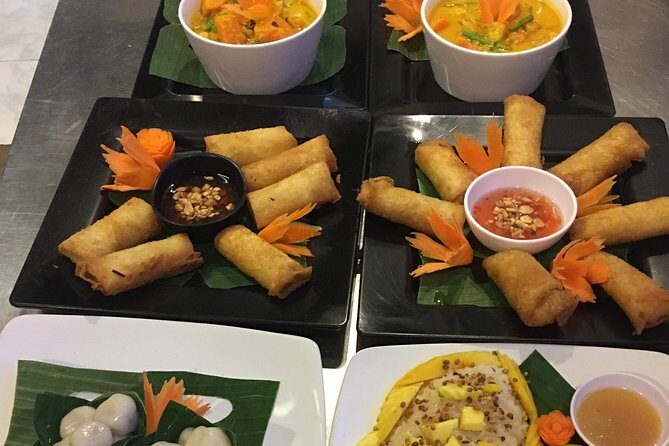
- 3-course menu format: Starter, main, and dessert, chosen from an option list (6 menus).
- Private group experience: Only your group joins, with more attention from the teacher.
- Chef-led hands-on teaching: Station work, step-by-step guidance, and a clean kitchen setup.
- Certificate and recipe link: You leave with a memento plus a way to repeat the dishes at home.
- Short but full: About 2.5 hours, yet you end up with plenty of food to share (or not).
Market Walk in Siem Reap: Where Your Ingredients Actually Come From
Most cooking classes start when you step into the kitchen. This one starts earlier, with the fun part: the market. You head out to a local market area (often described as the old market area), where you get a chance to see produce, herbs, and aromatics used in Khmer cooking.
This is not just a sightseeing stroll. It is ingredient education. You get a sense of what is fresh, what smells strong, and what you will likely taste in your dishes later. One of the best moments is learning how herbs and spices are used together, instead of thinking of them as separate flavors.
A big practical plus here: the market walk makes the rest of the day feel easier. If Siem Reap markets feel intimidating, this kind of guided context helps you get your bearings fast.
What to watch for:
- Go in with an appetite. You will cook and then eat what you make.
- Wear comfortable shoes for uneven surfaces and lots of walking.
- If you hate being outdoors in the heat, bring water and consider sitting when you get a chance during the ingredient explanations.
You can also read our reviews of more cooking classes in Siem Reap
Picking Your Menu: Starter, Main, Dessert, and Real Khmer Favorites
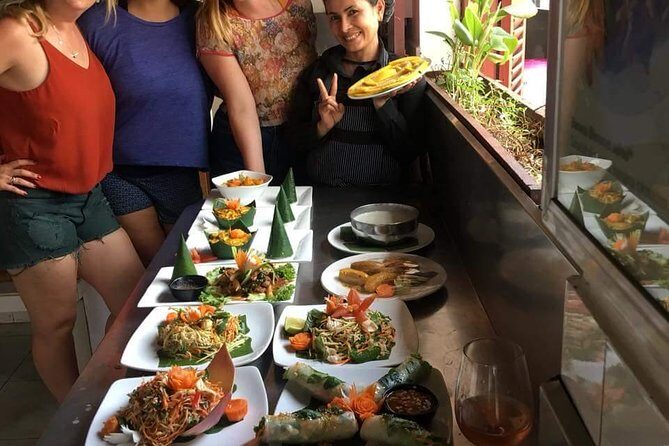
After you choose your menu (from 6 options), the class follows a clear 3-course path: starter, main course, and dessert. In practice, this is a smart format for a short evening. You get variety without the time drag of learning one dish for three hours.
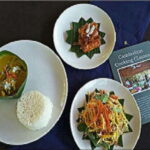
From examples served and cooked during the class, you may run into favorites like:
- Fried spring rolls (a classic starter style)
- Chicken amok or other amok-style curries (often described as a highlight)
- Beef lok lak
- Banana flambe
- Mango sticky rice
Even if you do not recognize the names, this is still a great deal. You are not paying for a vague cooking lesson. You are paying for a structured outcome: you will eat a full meal you helped create.
How the choosing matters for value: you can match the dishes to your tastes and comfort level. If you want something comforting and familiar, pick a main that feels closer to what you already like. If you want to stretch, pick a dessert or starter that looks new to you.
In the Kitchen With Chef Narong and Other Instructors: How the Teaching Works
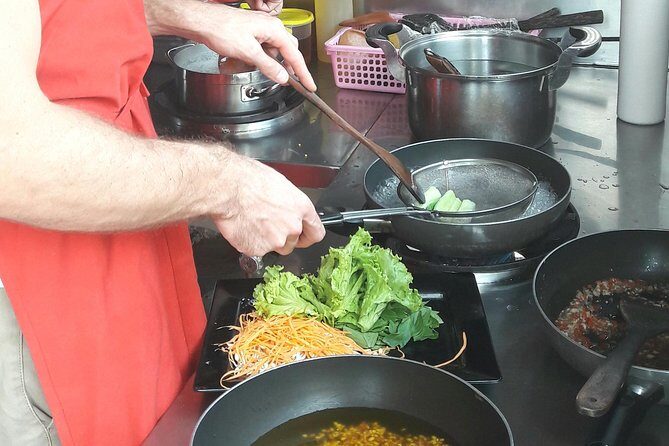
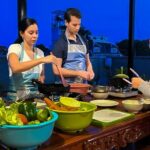
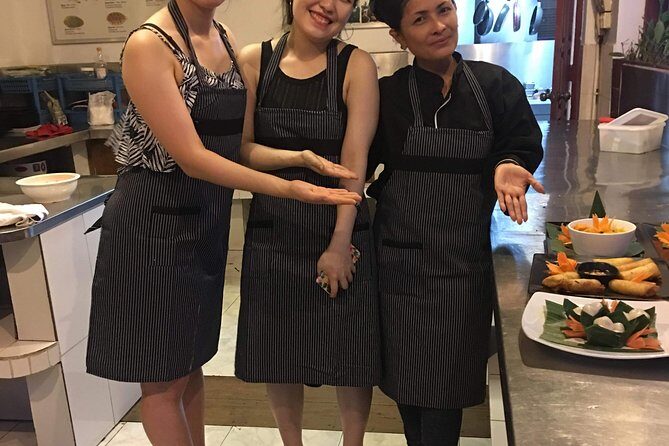
Once back at the cooking space (located in the city, in the Pub Street area for many arrivals), you switch from watching to doing. Guests consistently mention a clean, organized setup, often with stainless work areas, aprons, and chef hats. You get assigned cooking stations at least part of the time, and even when your turn is shared, you are still learning the method—not just performing a single quick task.
English instruction is a common strength. Several guests specifically called out instructors like Chef Narong and Naphom as patient and clear. That matters because Khmer cooking depends on timing and smell as much as it depends on measurement.
A helpful way to think about the class: it teaches technique. You learn what to chop, what to sauté, how to build flavor, and when to stop. When the chef walks through each step, you start connecting ingredients to outcomes. That is what makes the recipe useful after your trip, not just entertaining while you are there.
One practical note from the experiences: the space can involve some stairs, and the setup may be a little tight. If you want an easy physical flow, wear slip-resistant shoes and give yourself a little extra time when going up.
Your 2.5-Hour Khmer Cooking Timeline: From Market Senses to Finished Plates
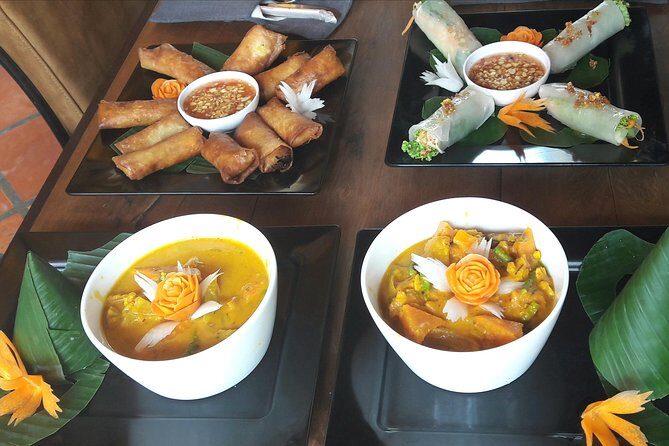
The overall duration runs about 2 hours 30 minutes. In some sessions it can stretch closer to 3 hours, but the experience stays fast and focused. Here is how the time typically feels.
First stretch: menu choice and market walk
You start by selecting what you will cook. Then you head out to see the ingredients, including herbs and spices you may not use often at home. This part sets up your understanding so the cooking steps make sense.
Middle stretch: prep and cooking
You prepare your starter, main, and dessert. The teaching style is step-by-step, with the chef demonstrating key steps and then guiding you as you cook. Multiple guests mention it is easy to follow even with no cooking experience, which is exactly what you want in a short class.
Final stretch: tasting and finishing
When the food is ready, you sit down and eat your work. Many guests say there is more than enough food for the group, so pace yourself. One good strategy is to keep tasting during cooking, but still save some space for the final meal.
What you leave with beyond the meal
Several experiences mention a certificate at the end and a link to the recipes. That is a real value add: it makes your memory more useful, and it helps you cook again later without guessing.
The Meal Itself: Portions, Plating, and Why You’ll Likely Want to Return for Seconds
The most reliable outcome across guests is simple: the food is delicious. Guests describe it as one of the best meals they ate in Cambodia, and many say it is a treat because they cooked it from scratch. That is the main difference between a cooking class and a food tour. Here, you create the flavors, not just taste them.
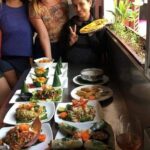
Portion size also tends to surprise people in a good way. A 3-course meal in a class setting can become a lot of food, and more than one guest mentioned they could not finish everything. If you are planning this for a busy trip, this matters. You can often skip the rest of dinner plans.
Plating gets attention too. Some guests mention the food is beautifully presented. That does not mean it is fancy. It means it is taken seriously, which adds to the satisfaction when you sit down to eat.
One caution: heat and bugs are occasional concerns in cooking rooms
A couple of negative notes stand out. One guest described a very hot kitchen, with fans and air-conditioning not working well. Another mentioned insects landing or crawling in food. Those comments are not universal, but they are worth factoring in. If you are booking during the hotter part of the day or you are very sensitive, bring water and consider asking what the ventilation and food-handling setup looks like that night.
A few more Siem Reap tours and experiences worth a look
Price and Logistics: What $21.50 Really Buys You
At $21.50 per person, this class is priced like a value dinner that happens to include a market visit and real instruction. You are not just paying for ingredients. You are paying for chef time, market guidance, and the ability to eat a full 3-course meal.
Why it feels like good value:
- Market walk + cooking lesson + full meal in one package
- Private group format, which usually costs more in other countries and cities
- Recipe access after the class, so it sticks with you
Pickup and timing
Pickup is offered and can be arranged through your hotel. Many guests report prompt pickup via tuk-tuk and that it saves time in the evening. Since the class starts in the city area, the day stays simple, and you do not need a long commute.
Mobile ticket and quick confirmation
You get confirmation at booking time, and you can use a mobile ticket. That kind of setup makes it easier if your schedule is tight.
Small watch-out
One guest noted that return transport was not included as expected after class ended, and the situation became uncomfortable while waiting for a tuk-tuk. The lesson here is simple: when you book, clarify pickup vs drop-off and confirm the plan in writing or by message before the evening. For most people, this runs smoothly, but it is a detail worth tightening.
Who Should Book This Cooking Class (and Who Might Skip It)
This is a great fit for you if:
- You want a local Siem Reap experience that is shorter than the big tours
- You enjoy hands-on activities more than watching from the sidelines
- You like food with a story, starting at the market and ending at your plate
- You want a private class where the chef can respond to your questions
It may be less ideal if:
- You get uncomfortable in hot rooms and you are booking in warm weather
- You are very sensitive to insects in food environments (you can still book, but consider asking about food cover/handling)
- You expect a super-luxury kitchen setup with lots of personal cooking time for every minute (some guests mention turn-taking depending on group size)
Solo travelers also tend to enjoy it, because private format and station work can make it feel less like a class and more like a conversation with cooking.
Couples and small groups are perfect too. Many guests loved that the experience felt tailored to them, with plenty of time to learn and then eat together.
Should You Book Khmer Gourmet Cooking Class in Siem Reap?
If you are choosing between a standard dinner and a short cultural activity, I would book this. The combination of market ingredient selection, a true 3-course outcome, and a private group format makes it one of the most efficient ways to understand Khmer cooking while actually getting fed.
My call comes down to two things: it is practical for busy schedules, and it is enjoyable even if you have never cooked at home. If you want to take something real home, the certificate and recipe link are a smart bonus.
Just do one small thing before you go: confirm the full transport plan (pickup and whether drop-off is handled). Then show up hungry, bring comfortable shoes, and get ready to cook and eat your way through an authentic Khmer menu.
FAQ
How much does the Khmer Gourmet Cooking Class cost?
The price is $21.50 per person.
Where does the class take place?
The class is in Siem Reap, Cambodia.
How long is the cooking class?
It runs about 2 hours 30 minutes (approx.), though some experiences may run closer to 3 hours.
Is this class private?
Yes. It is listed as a private tour/activity, so only your group participates.
Do you get picked up from your hotel?
Pickup is offered, and hotel pickup can be arranged.
What do you cook during the class?
You cook a starter, main course, and dessert, based on the menu you choose.
Do I need any cooking experience?
No cooking experience is required. Guests specifically mention that the instructions are easy to follow.
Is there a market visit?
Yes. You go to a market to select ingredients like vegetables, fruits, and spices before cooking.
Do you receive anything at the end of the class?
Guests mention receiving a certificate at the end, and some say it includes a link to the recipes.
What is the cancellation policy?
Free cancellation is available up to 24 hours in advance for a full refund. Within 24 hours, no refund is provided.