REVIEW · SIEM REAP
One day of bicycle tour
Book on Viator →Operated by Happy Angkor Wat Tour · Bookable on Viator
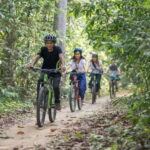
This is Angkor, but on two wheels. The route is built to skip the crush and send you down jungle paths and dirt roads that feel more local than tour-bus standard.
I especially like the pacing: you get Angkor Thom highlights (Terrace of the Elephants, Terrace of the Leper King, and Bayon’s smiling faces) before the day fully heats up with visitors. Then the big win is timing—Angkor Wat is scheduled when crowds are at a minimum, so the place feels calmer and more personal.
One thing to think about: this is for people with moderate fitness and actual bike-riding comfort. If you don’t know how to ride a bike, or if you have small kids (unless they’re properly trained), or you’re pregnant, this isn’t the best match.
In This Review
- Key things that make this tour worth your time
- A bike-first way into Angkor: less queue, more mood
- The morning plan: from South Gate into Angkor Thom
- Terrace of Elephants and Leper King: the best place to slow down
- Bayon’s smiling faces: why this stop feels different by bike
- Ta Prohm on jungle-clad paths: the in-between moments count
- The early lunch break: a reset that protects the rest of your day
- Angkor Wat at minimum crowds: the day’s quiet moment
- What the $100 price really buys you (and what costs extra)
- Guide-led experience: the name that keeps showing up
- Who this tour fits best (and who should skip it)
- Transportation and group setup: private, but not lonely
- Timing notes: what the 7 am start means for your day
- Tips, tickets, and small admin you should budget for
- What you’ll like most: a temple day with breathing room
- Should you book this bicycle temple tour?
- FAQ
- How long is the bicycle tour?
- What time does the tour start in Siem Reap?
- What temples and areas are included?
- Is Angkor temple admission included in the price?
- What’s included in the tour price?
- What is not included?
- Do I need moderate fitness or bike experience?
- Is this tour private?
Key things that make this tour worth your time
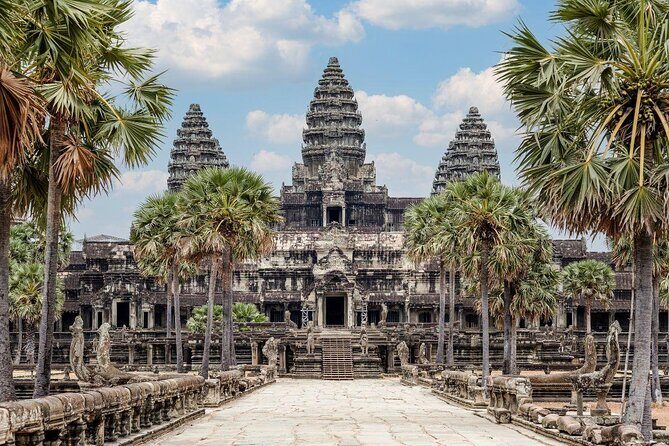
- A “quiet-first” Angkor route that avoids the main-temple stampede and often leaves you with long stretches with hardly anyone around
- About 10 km of cycling across classic Angkor sights, plus dirt roads that feel like a shortcut the locals use
- Structured temple order starting with Angkor Thom gates, then Ta Prohm, then Angkor Wat later in the day
- English-speaking guide plus private transportation, so the day feels organized without feeling like a cattle drive
- Angkor Wat in softer hours, when you can actually slow down and look without constantly turning into a human queue
- Named guide experience shows up often, including Mr. Bunleat (aka HAT tours) and Sokun in feedback for this style of service
A bike-first way into Angkor: less queue, more mood
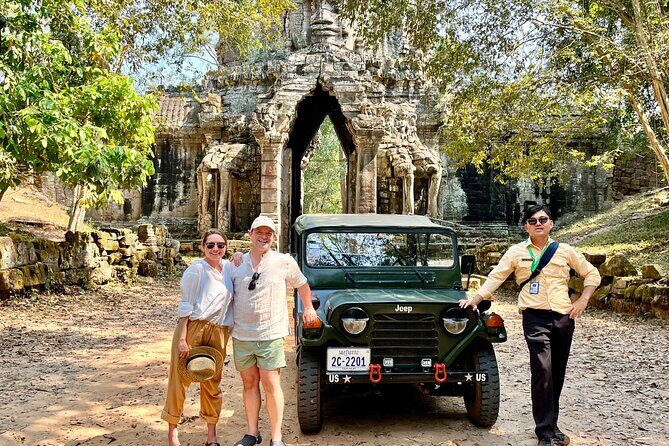
If you already know the basic Angkor checklist, this tour is for a different reason: it changes how the sites feel. Instead of bouncing between temple entrances like a slideshow, you travel along jungle paths and dirt roads that cut between the big names, which makes the whole complex feel bigger and more lived-in.
The route also aims to protect your attention. The operator specifically designed it to avoid the throngs that pack into the main temples only, and that design shows up in the rhythm: you pause, you move, you look around, then you roll on again before the next wave arrives.
A few more Siem Reap tours and experiences worth a look
The morning plan: from South Gate into Angkor Thom
The day starts early at 7:00 am. First, you’re transported to the south gate of Angkor Thom, which is a smart way to begin: you don’t spend your best energy crossing the area just to reach the starting point.
From there, you ride through the Angkor Thom zone in a logical loop:
- Terrace of Elephants
- Terrace of the Leper King
- The Bayon temple area, with its smiling faces
- Then riding onward toward the west gate of Angkor Thom
What I like about this setup is that the sights aren’t thrown at you randomly. You’re given a route that builds from one big visual to the next, while also giving you breaks to take in details without losing the flow to constant regrouping.
Terrace of Elephants and Leper King: the best place to slow down
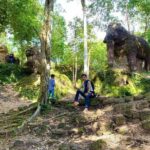
These two terraces are the kind of spots where crowds can flatten the experience. On a standard itinerary, you see them like you’re racing a timer. Here, the pacing is gentler, and that matters because the terraces reward quiet looking—texture, angles, and the storytelling carved into the stone.
The practical side: this isn’t a long grind. It’s part of the early Angkor Thom run, so you’re getting your structure-and-detail fix before the day gets heavier with visitors.
Bayon’s smiling faces: why this stop feels different by bike
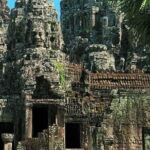
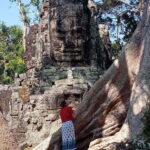
Bayon can feel overwhelming if you approach it as a quick stop. On this ride, you move into the Bayon area after going through the terraces, which makes the temple faces feel like a payoff rather than a sudden wall of stone.
The bike element changes your vantage too. You’re not stuck in one spot waiting for your turn to see the best angle. You can reposition along the route and take breaks where you want, which helps you actually notice what’s going on with the expressions and the layout.
Ta Prohm on jungle-clad paths: the in-between moments count
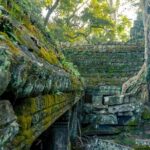
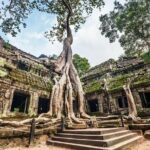
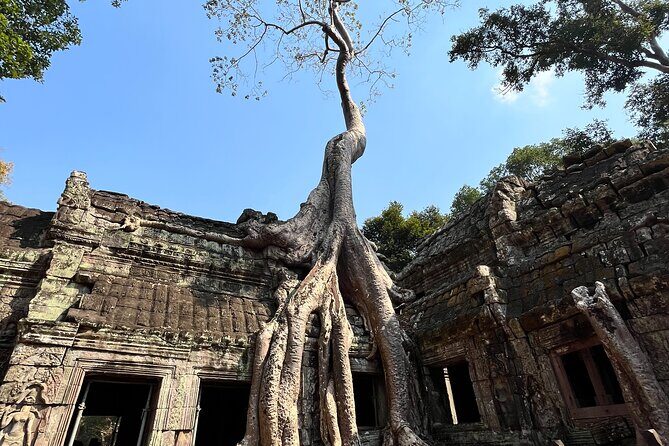
After the Angkor Thom sequence, you roll onward to Ta Prohm, the jungle-clad temple that most people think of first when they picture dramatic Angkor. The value here isn’t only Ta Prohm itself—it’s the ride time between the major points.
This is where the tour’s “hidden wonders” promise becomes real. You’re not just being delivered to a temple gate; you’re traveling along sections that feel less like a direct tourist corridor and more like the working routes around the complex.
And Ta Prohm works better when your brain isn’t already exhausted from a packed day. You reach it as part of a sequence, which helps the setting feel atmospheric instead of just crowded.
The early lunch break: a reset that protects the rest of your day
You get an early lunch after Ta Prohm. Lunch isn’t included in the price, but the schedule is still practical: it gives you a reset before you go to the day’s biggest draw—Angkor Wat.
This matters because the second half of the itinerary is where many people hit their patience wall. Starting Angkor Wat after a break makes it much easier to enjoy the atmosphere rather than just survive the logistics.
Angkor Wat at minimum crowds: the day’s quiet moment
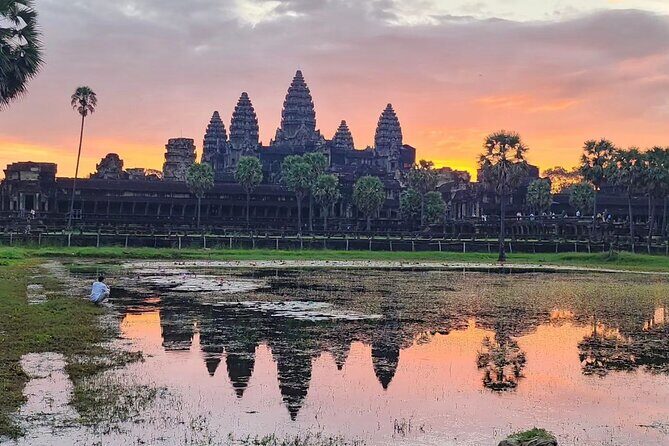
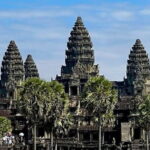
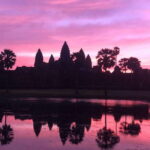
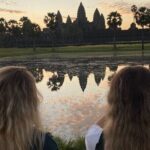
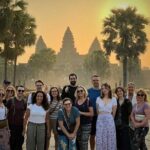
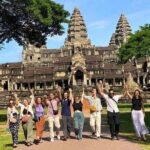
The tour’s main temple stop is Angkor Wat, and the schedule is built for serenity. The plan has you visit during a time when crowds are at a minimum, which is the difference between trying to see and actually looking.
This is also where the bike format helps. You arrive without feeling like you’re starting a race. The calmer timing means you can take in the massive geometry and the sense of symmetry without constantly recalculating where the next group is pushing through.
If you’ve ever visited Angkor Wat in peak periods, you know how hard it can be to appreciate the stonework when you’re constantly boxed in. Here, the tour design gives you more breathing room so your photos aren’t just about luck—they’re about having the space to frame what you want.
What the $100 price really buys you (and what costs extra)
At $100 per person for a 7–9 hour day, this isn’t the cheapest way to do Angkor. But the value comes from the mix: you’re getting private transportation, an English-speaking guide, and drinking water—plus a route design that tries hard to avoid the biggest crowd concentrations.
Here’s the key cost split:
- Included: private transportation, English-speaking tour guide, drinking water
- Not included: breakfast, lunch, coffee/tea
- Not included: the one-day temple ticket (about $37 per person)
- Not included: travel insurance and tips to the driver and guide
When you add the temple ticket, the all-in cost becomes more realistic. Still, you’re paying for time, guidance, and a route that’s meant to be kinder to your attention span.
If you like temples but hate standing still with hundreds of strangers, this pricing starts to make sense fast.
Guide-led experience: the name that keeps showing up
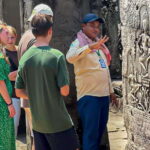
A big part of a temple day is interpretation: what you’re looking at, why it matters, and how to read the stone. In feedback for this service style, strong guide names come up—Mr. Bunleat (aka HAT tours) and Sokun.
I can’t guarantee which guide you’ll have on your exact date. But I can say this: the inclusion of an English-speaking guide is a strong sign that the day won’t be just navigation. It’s set up for someone to guide your eyes as much as your route.
Who this tour fits best (and who should skip it)
This ride is described as gentle, but it’s still cycling. You should have moderate physical fitness, and you should know how to ride a bike. The route involves about 10 km total of cycling as part of the day’s temple loop.
It’s also not recommended for:
- People who don’t know how to ride a bike
- Pregnant women
- Small kids, unless they’re properly trained
There’s also a comfort note in the itinerary: if you’ve had enough cycling, the guide can help you adjust mid-day. The exact mechanics aren’t spelled out, but the intention is clear—this isn’t a “no matter what” situation if your body needs a break.
Transportation and group setup: private, but not lonely
The tour is set up as private—only your group participates. That matters in Angkor more than most places. Temple days can get chaotic when you’re stuck matching the speed of strangers. A private format makes it easier to keep a steady pace, ask questions, and pause when something catches your eye.
Pickup is offered, and private transportation is included. Practically, that reduces the time you spend figuring out how to get between the points that make this route work.
Timing notes: what the 7 am start means for your day
Starting at 7:00 am is both a benefit and a tradeoff. The benefit is simple: you’re early enough to access the temple complex before the heaviest crush. The tradeoff is the day will feel long—7–9 hours—and you’ll want to plan for an early wake-up and a full afternoon/evening afterward.
If you prefer late starts and slow mornings, this might feel like too much structure.
Tips, tickets, and small admin you should budget for
This one is straightforward to plan, as long as you budget for the extras:
- Bring money or payment method for the $37 one-day temple ticket
- Plan lunch since it’s not included
- Set aside money for tips to the driver and tour guide (they ask for separate tips)
Also, the tour includes drinking water, which helps you avoid the “where do I buy a bottle right now” scramble at key stops.
What you’ll like most: a temple day with breathing room
If you want Angkor but you don’t want the stress, this is the sweet spot. The tour is designed so that in-between major sights, you can often find stretches with very few people around. That alone changes how you experience the stone, the jungle vibe, and the sense that Angkor is more than a list.
You also get a balanced arc: Angkor Thom’s famous terraces and Bayon’s faces, then Ta Prohm’s dramatic setting, and finally Angkor Wat during quieter hours.
Should you book this bicycle temple tour?
Book it if:
- You want a calmer Angkor day that avoids the worst crowd patterns
- You’re comfortable cycling and can handle about 10 km
- You value an English-speaking guide and a structured route
- You’d rather ride between temples than only stand at entrances
Skip it if:
- You don’t ride bikes confidently (or at all)
- You’re bringing kids who aren’t trained cyclists
- You’re pregnant or you want a more universally accessible format
If your ideal day is temples plus movement, with a guide helping your eyes catch what matters, this is a strong choice.
FAQ
How long is the bicycle tour?
It runs about 7 to 9 hours.
What time does the tour start in Siem Reap?
The meeting/start time is 7:00 am.
What temples and areas are included?
The day focuses on Angkor Thom (south gate, Terrace of Elephants, Terrace of the Leper King, Bayon, west gate), then Ta Prohm, and finally Angkor Wat.
Is Angkor temple admission included in the price?
No. The one-day temple ticket is not included and is listed at $37 per person.
What’s included in the tour price?
Included items are private transportation, an English-speaking tour guide, and drinking water.
What is not included?
Not included are breakfast, lunch, coffee and/or tea, the temple ticket, travel insurance/personal insurance, and tips for the driver and tour guide.
Do I need moderate fitness or bike experience?
Yes. You should have moderate physical fitness, and it’s not recommended for people who don’t know how to ride a bike.
Is this tour private?
Yes. It’s listed as a private tour/activity, meaning only your group participates.