REVIEW · SIEM REAP
Private 03 Day Tour-Discovery of Angkor Temples Siem Reap
Book on Viator →Operated by Private Tour Guide-Cambodia · Bookable on Viator
Three days in Angkor means you don’t rush. This private tour links big names like Angkor Wat with lesser-visited ruins, plus breaks that actually help in the heat. You also get time for local crafts at Les Artisan d’Angkor and a proper look at Psar Chaa old market.
I like the comfort extras here: cold towels, free drinking water, and hotel lobby pickup and drop-off each day. I also like the way guides keep the day moving with context, and I saw that firsthand with guides named Chansip, Dara, and Neang, all praised for being kind, careful, and ready to explain what you’re seeing.
One consideration: temple entry varies by stop, and a temple pass isn’t included, so you’ll want to budget for that and expect a bit of walking and sun even with breaks.
In This Review
- Key highlights at a glance
- Why this 3-day Angkor plan feels easier than DIY
- Meeting your guide and staying comfortable in Siem Reap heat
- Day 1: Bakong, Preah Ko, Lolei, artisans, and Psar Chaa market
- Prasat Bakong (late 9th century)
- Preah Ko (built for royal family)
- Lolei on an islet
- Les Artisan d’Angkor: carving, lacquering, silk painting
- Psar Chaa (Old Market) for real shopping time
- Day 2: Banteay Srei, Banteay Samre, Pre Rup, Neak Pean, Ta Som, and Preah Khan
- Banteay Srei (the pink sandstone carving temple)
- Banteay Samre (often overlooked)
- Pre Rup (brick-built temple)
- Neak Pean (small island temple with a lotus-like plan)
- Ta Som (Bayon-style Buddhism)
- Preah Khan (huge monastic complex)
- Day 3: Angkor Thom South Gate, Bayon, Baphuon, Ta Prohm, and Angkor Wat
- Angkor Thom South Gate and the snake-pulling story
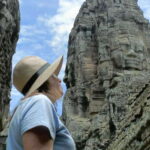
- Bayon Temple: 200 large faces plus daily-life bas-reliefs
- Baphuon (Siva temple by Udayadityavarman II)
- Phimeanakas, Elephant Terrace, and Leper King Terrace
- Ta Prohm: the jungle-temple feel with huge roots
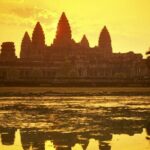
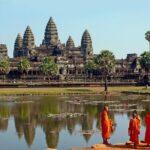
- Angkor Wat: the big finish and Cambodia’s symbol
- Price and value: why $245 can work (or not) for you
- Who should book this Angkor private tour
- Should you book this 3-day Angkor tour?
- FAQ
- How much does the Private 03 Day Tour cost, and how long is it?
- What’s included with the tour from my hotel?
- Are temple passes and food included?
- Is admission included for every temple stop?
- Is this tour private or shared?
- Which guides have been mentioned in feedback?
- Is free cancellation available?
- Is the tour suitable for everyone physically?
Key highlights at a glance
- Hotel-lobby pickup and drop-off so you start calm and end back at your door
- Private English-speaking guide for clear explanations of Khmer monuments
- Free water and cold towels during long hot temple days
- A smart mix of major and overlooked temples, not just the usual quick hits
- Les Artisan d’Angkor for hands-on style learning (carving, lacquering, silk painting)
- Psar Chaa old market for browsing and bartering, with shopping time built in
Why this 3-day Angkor plan feels easier than DIY
Angkor can overwhelm you fast. Even if you love ruins, it’s easy to get lost in ticket lines, route confusion, and the heat. This tour keeps things simple: you’re picked up each day, driven between sites, and guided through what matters so your brain stays on the stories, not logistics.
The private format is the big advantage. You’re not stuck following a large group pace, and you can pause when you want photos, shade, or extra explanation. That matters a lot at Angkor, where the best parts are often in the details—carvings, layout, and symbols—rather than just the biggest towers.
There’s also a solid “real Cambodia” mix beyond temples. You get a stop at an artisan school where crafts like wood and stone carving, lacquering, silver plating, and silk painting are part of the visit. Then you finish with Psar Chaa old market time, where bargaining is part of the experience.
You can also read our reviews of more private tours in Siem Reap
Meeting your guide and staying comfortable in Siem Reap heat
This is a 100% private tour for the number of people you book. Your guide is an English-speaking private guide, and you ride in a private vehicle with a driver and petrol included. You’ll also have traveler insurance included, which is a nice safety net for a long day out.
Comfort is handled like it matters, not like a marketing line. You get cold towels and plenty of pure drinking water during the day. In Siem Reap’s weather, that’s not a small thing. The guides you’ll see mentioned in feedback—like Chansip and Neang—were praised for repeatedly encouraging water breaks, which is exactly what you want when you’re walking on uneven stone and exposed paths.
You should still plan your body for a moderate amount of physical effort. The tour is listed as suitable for moderate physical fitness, which usually means you’ll be moving between temples, climbing some steps, and spending time outdoors. Bring comfortable shoes and a hat. You’ll thank yourself later.
Day 1: Bakong, Preah Ko, Lolei, artisans, and Psar Chaa market
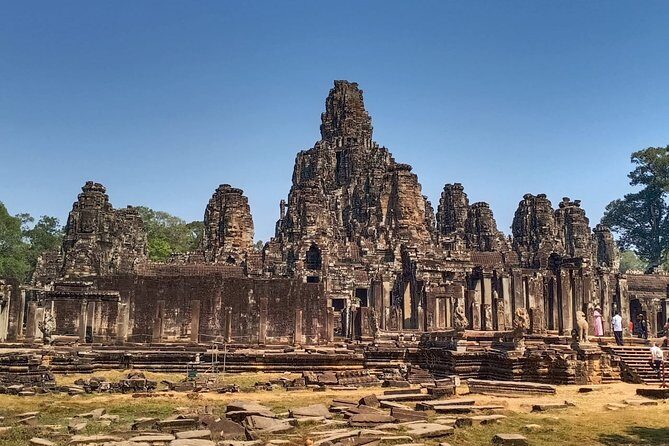
Day 1 is a strong setup day. You start with a temple that helps you get the “big picture” of early Angkor power—then you add smaller sites, crafts, and local market life so the day doesn’t feel like one long stone marathon.
Prasat Bakong (late 9th century)
Bakong is your opening stop, built in 881 by King Indravarman I and dedicated to Shiva. It’s a good first temple because it’s easier to understand with a guide: you’ll hear about Khmer religious ideas and how rulers used temple-building to project power. The admission for this stop is listed as free.
If you’re new to Angkor, this is where you start learning the visual language—levels, layout, and how the temple sits within its setting.
Preah Ko (built for royal family)
Next is Preah Ko, built in 879 for the king’s parents, maternal grandparents, and a previous king, Jayavarman II, plus his wife. This stop is shorter (about an hour), but it adds another layer: Khmer monuments weren’t only about gods. They were also about family, memory, and legitimacy.
Admission at this stop is not included, so plan for an additional fee via temple access.
Lolei on an islet
Then you go to Lolei, built on an islet in the center of a large reservoir that’s now rice fields. Lolei is a quieter kind of wow—less “mass tourism” feeling and more “wait, look at that placement.” It’s a nice transition from the denser temple complexes into something more spacious in your head.
Admission at Lolei is not included.
Les Artisan d’Angkor: carving, lacquering, silk painting
After temples, you switch to Les Artisan d’Angkor, where the visit focuses on crafts and workshops. You’ll see (and learn about) wood and stone carving, lacquering, silver plated items, and silk painting. Admission here is included, and it’s one of the best ways to connect the dots between what you see on temple walls and the skills people still practice.
This stop is valuable because you stop treating Angkor as only something ancient. You start seeing it as a tradition of making—tools, materials, and patience.
Psar Chaa (Old Market) for real shopping time
Day 1 ends with Psar Chaa old market, about an hour. This is your browse-and-buy portion, and the tour includes admission here. If you enjoy bargaining, this is where it fits naturally. If you don’t, you can still enjoy the textures: stalls, colors, and the everyday rhythm of Siem Reap.
Tip: set expectations. You’re shopping for memories here, not treasures for resale.
Day 2: Banteay Srei, Banteay Samre, Pre Rup, Neak Pean, Ta Som, and Preah Khan
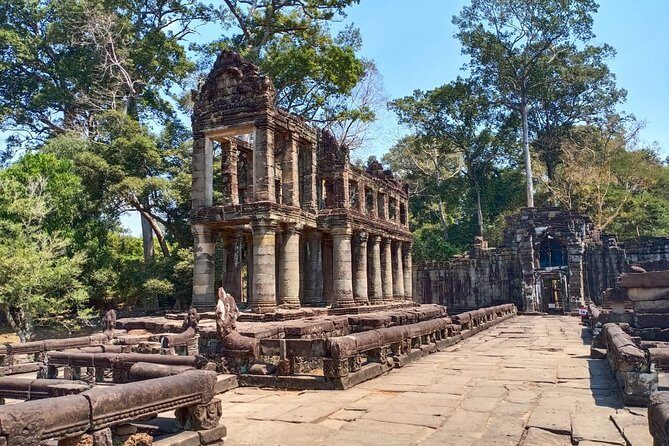
Day 2 goes deeper into variety. You’ll see temples that are different in shape and mood, plus a mix of included and not-included entries. The payoff is that you don’t repeat the same “big gate, big tower” feeling over and over.
Banteay Srei (the pink sandstone carving temple)
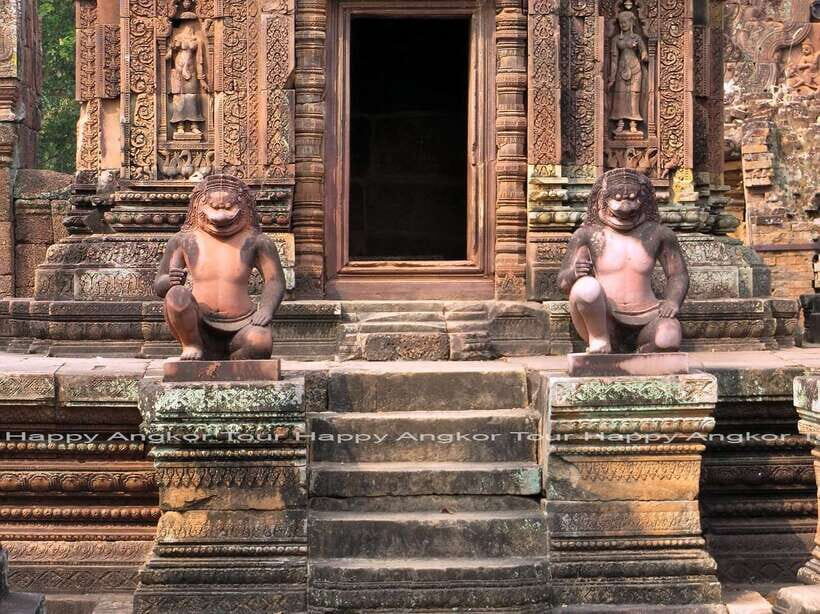
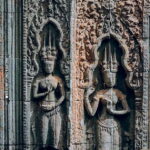
Banteay Srei is the headline on this day: built in the late 10th century, compact, and known for delicate carvings in warm pink sandstone. It looks different from many other Angkorian temples, and that’s the point. You’re training your eye to recognize style differences rather than only chasing the most famous names.
Admission here is not included.
Banteay Samre (often overlooked)
Banteay Samre is described as gorgeous but often overlooked. That usually means fewer crowds and more time to actually look at what the carvings and structure are doing. It’s also a good reminder that “major” in Angkor often depends on who you’re asking.
Admission at Banteay Samre is included.
Pre Rup (brick-built temple)
Pre Rup is a brick-built temple, and it’s a classic Angkor stop for understanding how materials change the feel of a site. It’s a one-hour stop, which helps keep your energy for the next transitions.
Admission is not included.
Neak Pean (small island temple with a lotus-like plan)
Neak Pean is a small temple on an island in the middle of the last baray associated with the Angkor region. The layout is described as an axis of a cross or lotus pattern of eight pools. That kind of design talk makes more sense with a guide, because you can see how the central temple relates to the water geometry around it.
Admission here is included.
Ta Som (Bayon-style Buddhism)
Ta Som, built in the late 12th century by Jayavarman VII, is classic Bayon-style and linked to Buddhism. It’s not as instantly recognizable as Angkor Wat, which is why it’s great for a second day: you learn that Angkor isn’t only one religion or one ruler’s signature style.
Admission is included.
Preah Khan (huge monastic complex)
Preah Khan is a huge monastic complex that originally served as a Buddhist monastery and school, engaging over 1,000 monks. That scale is easy to miss if you show up like a “photo tourist.” With a guide, you can understand the site’s role in daily life, not only temple ceremony.
There’s also a practical perk: on the drive back to Siem Reap, you may pass villages and have chances for rural photo opportunities along the way. Admission at Preah Khan is included.
Day 3: Angkor Thom South Gate, Bayon, Baphuon, Ta Prohm, and Angkor Wat
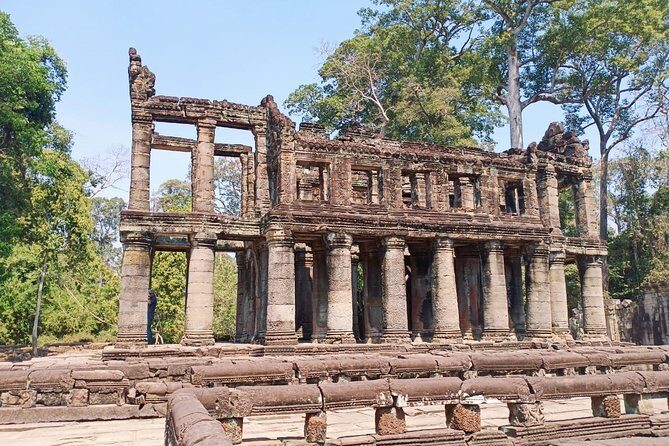
Day 3 is where Angkor starts feeling like a full-on monument city. You’ll hit the iconic complex—Angkor Thom—then move toward Ta Prohm and end with Angkor Wat.
Angkor Thom South Gate and the snake-pulling story
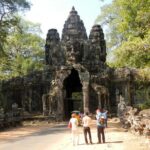
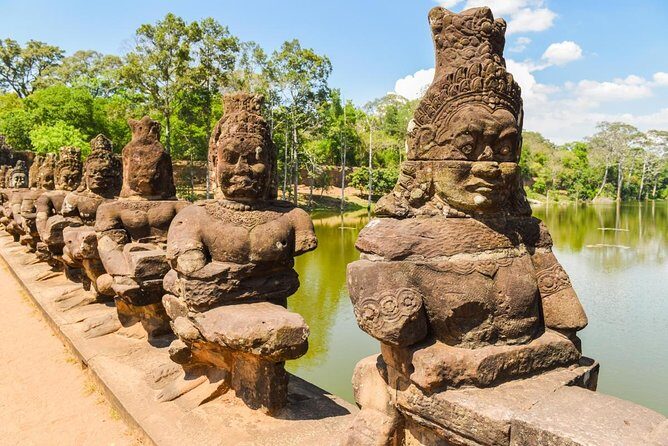
You start at the South Gate of Angkor Thom. The scene on both sides is described as 54 devas pulling the head of the snake Shesha on one side, and 54 asuras pulling the tail on the other. This is one of those places where a guide’s explanation makes the carvings feel like a story, not just decoration.
This stop is short (about 30 minutes) and admission is included.
Bayon Temple: 200 large faces plus daily-life bas-reliefs
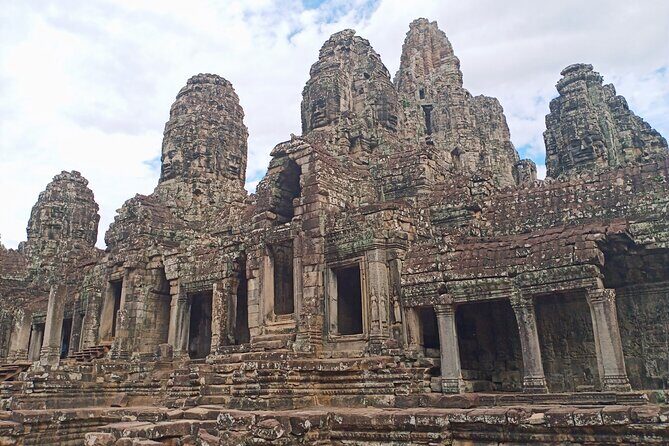
Bayon Temple is known for its over 200 large faces carved on towers. The bas-reliefs include genre scenes like markets, fishing, festivals, cockfights, jugglers, and also history scenes with battles and processions. It’s a strong stop for seeing Angkor as entertainment, work, and belief all together.
Admission at Bayon is not included.
Baphuon (Siva temple by Udayadityavarman II)
Baphuon, built around 1060 by King Udayadityavarman II and dedicated to Shiva, fits as a Hindu-era counterpoint. It’s about an hour, enough time to appreciate the structure without feeling stuck.
Admission is included.
Phimeanakas, Elephant Terrace, and Leper King Terrace
Then you move through a cluster of smaller but meaningful sites:
- Phimean Akas (built late 10th to early 11th century)
- Terrace of the Elephants, used as an audience hall
- Terrace of the Leper King, described as a treatment place
Each stop is listed as short, with included admission for these parts. This is where your guide can help you connect functions—ritual, ruling, judgment, care—to architecture.
Ta Prohm: the jungle-temple feel with huge roots
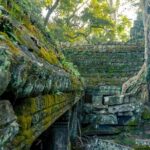
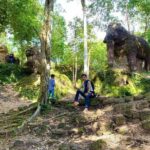
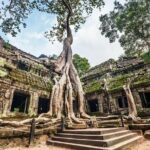
Ta Prohm is often the emotional favorite. The temple is described as shrouded in dense jungle, with fig, banyan, and kapok trees sending gigantic roots over stones, probing walls and terraces apart. You’ll see trunks twisting among stone pillars, creating the look of a natural roof over manmade structure.
This stop is about 2 hours, and admission is included.
Angkor Wat: the big finish and Cambodia’s symbol
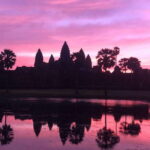
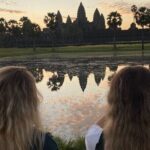
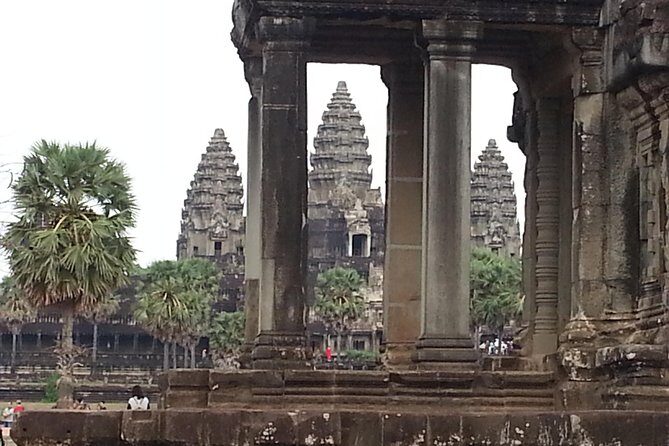
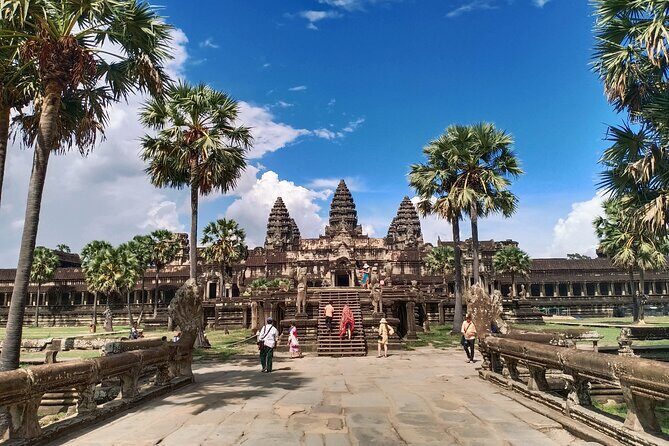
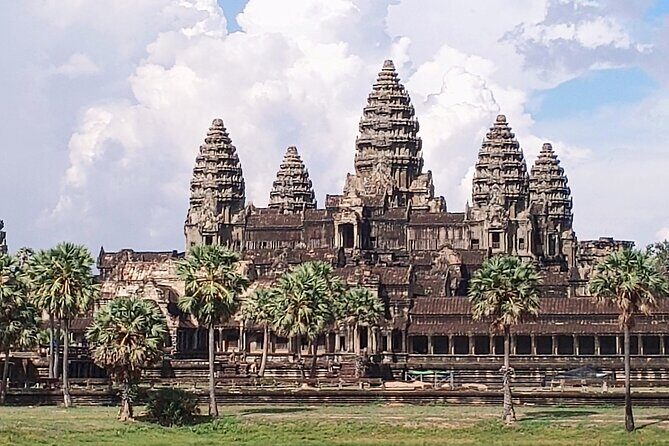
Finally comes Angkor Wat, built in the early 12th century by Khmer King Suryavarman II as his state temple and mausoleum. It was first Hindu, then later Buddhist, and it’s described as the largest religious monument in the world, also appearing on Cambodia’s national flag. This is the best-preserved temple at Angkor, and it’s the one that stayed a major religious center since its foundation.
Angkor Wat is a top end to the tour. It takes longer to process than people expect. Even if you’ve seen photos, the scale lands differently when you’ve already built context across the first two days.
Admission at Angkor Wat is not included.
Price and value: why $245 can work (or not) for you
At $245 per person for about 3 days, this price is mainly for three things: private guiding, private transport, and included comfort items. In other words, you’re paying to reduce friction and get explanations as you go.
If you’re traveling as a small group, private transport often becomes good value because you avoid splitting seats with strangers and you don’t lose time to group logistics. The cooling touches matter too. In hot weather, getting water and cold towels at the right times keeps the day from turning into a survival mission.
Where you need to be realistic: temple entry fees and food are not included. Temple passes aren’t included, and some individual stops also list admission as not included. So your total budget will go up a bit. Still, if you want the benefit of a dedicated guide for multiple days, the price can feel fair.
Also note the tour is moderate fitness. If you’re not up for steps and walking on uneven ground, a shorter, more selective plan could be less tiring.
Who should book this Angkor private tour
This fits you best if:
- You want multiple days at Angkor instead of a rushed day-trip
- You like explanations of Khmer monuments and how rulers used temples
- You prefer a private driver and guide with hotel pickup and drop-off
- You want more than the usual photos, including artisan craft and old market time
- You’ll appreciate a mix of Hindu and Buddhist temple sites
You might want a different approach if:
- You’re only interested in one or two signature spots and don’t want to spend the days moving between sites
- You hate bargaining or don’t want market stops, even though you can simply browse
- You don’t plan to budget for temple entry fees on days that list admissions as not included
Should you book this 3-day Angkor tour?
Yes, if you want Angkor with context and with less stress. The strongest reason to book is the blend of private guiding, comfort support (cold towels and free drinking water), and a temple mix that includes both big names and quieter sites like Preah Khan and Banteay Samre.
Before you commit, do two quick things: confirm how many people are in your group and review your budget for temple entries and temple pass. With that sorted, you’ll be set up for a more relaxed, more meaningful Angkor experience—especially if you care about what you’re looking at, not only what you’re photographing.
FAQ
How much does the Private 03 Day Tour cost, and how long is it?
The tour costs $245.00 per person and runs for approximately 3 days.
What’s included with the tour from my hotel?
You get pickup and drop-off at your hotel lobby, private transportation, a private English-speaking tour guide, traveler insurance, pure drinking water, and cold towels.
Are temple passes and food included?
Food and drinks are not included, and temple passes are not included either.
Is admission included for every temple stop?
No. Some stops list admission as included, while others list admission as not included. You’ll want to plan for that in your budget.
Is this tour private or shared?
It’s a private tour/activity, and only your group will participate.
Which guides have been mentioned in feedback?
Specific guide names mentioned include Chansip, Dara, Neang, and Buth Chasip.
Is free cancellation available?
Yes. Free cancellation is available up to 24 hours in advance for a full refund.
Is the tour suitable for everyone physically?
It’s listed as requiring moderate physical fitness. If you know you struggle with walking and steps, you may want to choose a shorter or less active plan.