REVIEW · SIEM REAP
Private Kulen Mountain-Banteay Srei and Kampong Phluk Village
Book on Viator →Operated by Travel to Inspire · Bookable on Viator
Kulen Mountain day trips can be a nice reset from the Angkor crush. This private outing strings together temples, waterfalls, and a floating village in one smooth route, so you spend less time figuring out transport and more time seeing real life around Siem Reap. I like the combination of pink-sandstone temple details and nature stops with real local texture, from mountain scenery to stilted homes on Tonlé Sap Lake. The one thing to plan for is the extra cost of entrance, boat, and the Kulen Mountain ticket, which can add up on top of the tour price.
A big practical win is the hotel pickup and air-conditioned vehicle, plus water and cold towels to keep you comfortable during a long day. The guide is English-speaking, and the pacing feels designed for people with mixed interests, not just one kind of sightseeing. The main consideration is time: expect around 5 to 7 hours, with walking at temples and national-park areas, so comfy shoes matter more than you’d think.
In This Review
- Key things I’d note before you go
- Why this route feels like a real break from the Angkor crowds
- Price and what those add-on tickets really mean
- The private pace: pickup, comfort, and a guide who can slow down
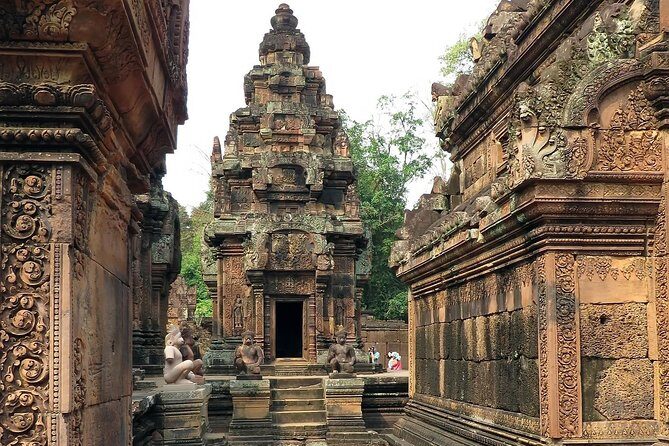
- Stop 1: Banteay Srei and the world of pink sandstone carving
- Stop 2: Phnom Kulen National Park for waterfalls, thousand lingas, and Big Buddha
- Stop 3: Kampong Phluk floating village on Tonlé Sap Lake
- The value beyond sightseeing: education support
- What to pack and how to handle the practical bits
- Who should book this tour
- Should you book Private Kulen Mountain–Banteay Srei and Kampong Phluk?
- FAQ
- How long is the tour?
- What is included in the $79 price?
- What entrance fees do I need to pay separately?
- Are hotel transfers included?
- Do I need special clothing for temples?
- Can I swim at the waterfall?
Key things I’d note before you go
- Hotel transfers included so you can start and end without fuss
- Private group setup means your timing and questions stay your own
- Three very different stops: carvings at Banteay Srei, nature at Kulen, and village life at Kampong Phluk
- Add-on fees are separate: temples ($37), boat ($22), and Kulen Mountain ticket ($20)
- You can swim at the Kulen waterfall area, if conditions and your comfort allow
- 50% of profits support education for underprivileged students, so this isn’t just sightseeing
Why this route feels like a real break from the Angkor crowds
If your days in Siem Reap are mostly about the big temples, this tour gives you a different kind of story. You’ll leave the busiest tourist corridors and head into a mountainous area near town, then finish on Tonlé Sap Lake. That shift in scenery helps your brain cool down. Instead of another stone monument, you’re looking at sandstone formations, waterfall energy, and everyday life in Khmer fishing communities.
I also like how the day doesn’t force one theme. Some parts are about sacred architecture and carving details, while other parts are about landscapes and community rhythms. If your group has different tastes, this format keeps everyone from feeling like they’re dragging the others along.
One more thing: it’s a private tour, so you’re not stuck in a big shuffle with constant waits. You still need to respect time at each site, but you’re not managing your own schedule between far-flung places.
You can also read our reviews of more private tours in Siem Reap
Price and what those add-on tickets really mean
The tour price is $79 per person, and it runs about 5 to 7 hours. What’s important is what’s included versus what isn’t.
Included covers the essentials: an English-speaking local guide, an air-conditioned vehicle, drinking water and cold towels, and hotel pickup/drop-off. It also includes the social impact piece: 50% of profits support underprivileged student education.
Not included are the biggest site costs:
- Temple entrance fees: $37 per person
- Boat fee (for Kampong Phluk): $22 per person
- Kulen Mountain ticket: $20 per person
Add those three together and you’re looking at $79 in additional fees. That means your total all-in day can land around $158 per person, before any personal spending. For many people, that can still be good value because you’re paying for guided time, vehicle logistics, and a full circuit that would be harder to stitch together on your own safely and efficiently.
The private pace: pickup, comfort, and a guide who can slow down
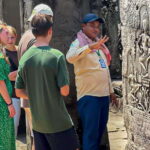
This is set up as a private experience, meaning only your group participates. That matters more than it sounds. You get to ask questions in the moment, and you’re not competing with a rotating line of people for the guide’s attention.
Expect hotel pickup and drop-off, plus an air-conditioned vehicle. For a day that mixes temple time with park and lake time, that transport comfort helps you arrive feeling functional instead of already tired.
You’ll also get drinking water and cold towels, which is a simple detail that makes a real difference in Cambodia’s heat. I’ve found that the days that feel comfortable enough to enjoy are usually the days where hydration and shade are built in.
Stop 1: Banteay Srei and the world of pink sandstone carving
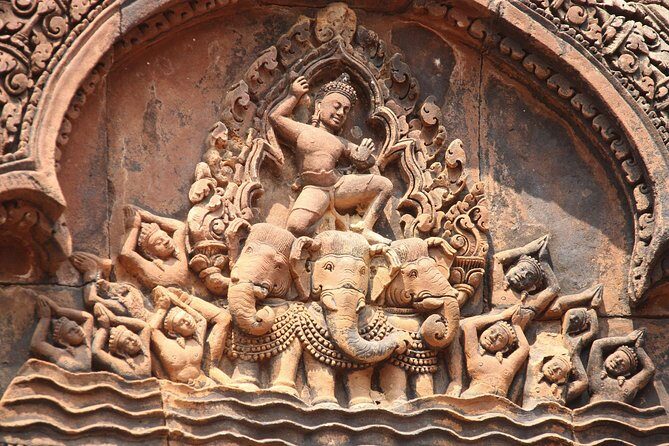
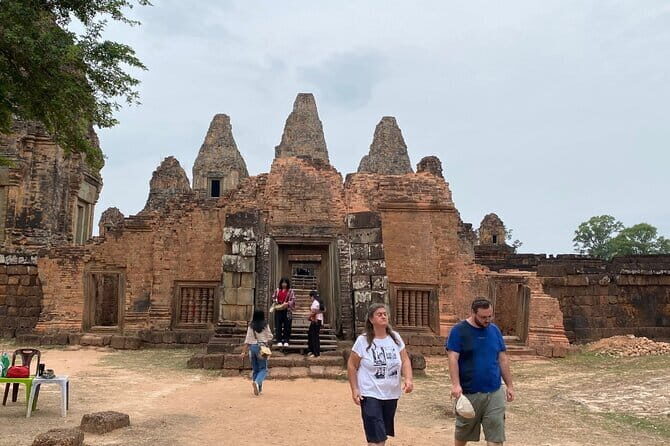
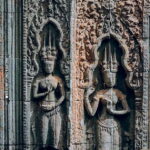
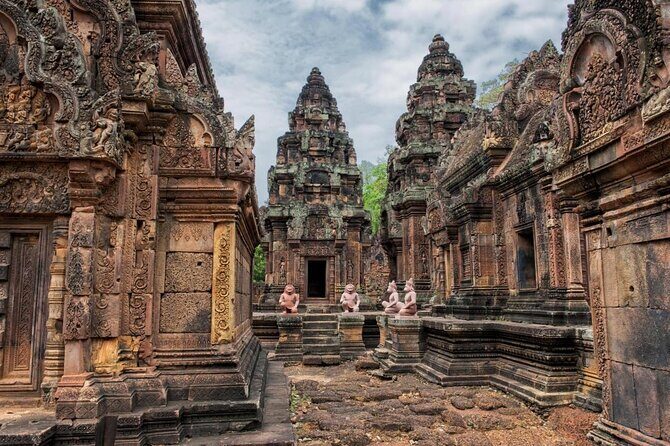
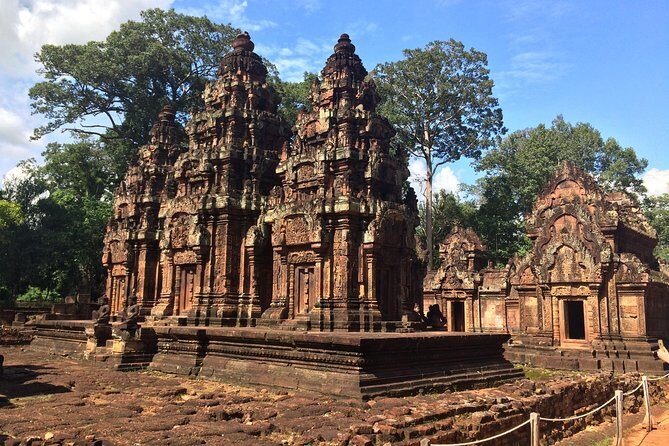
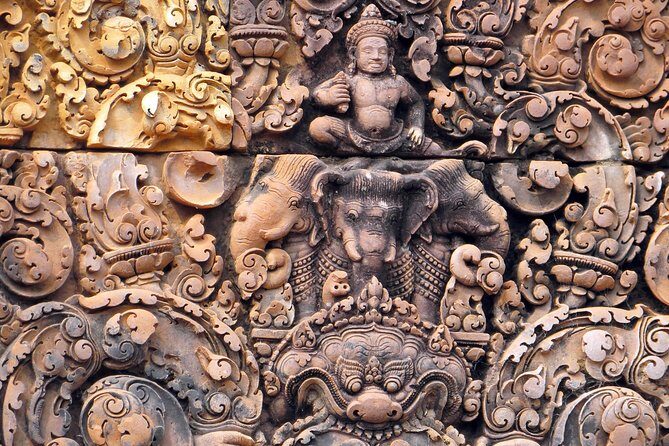
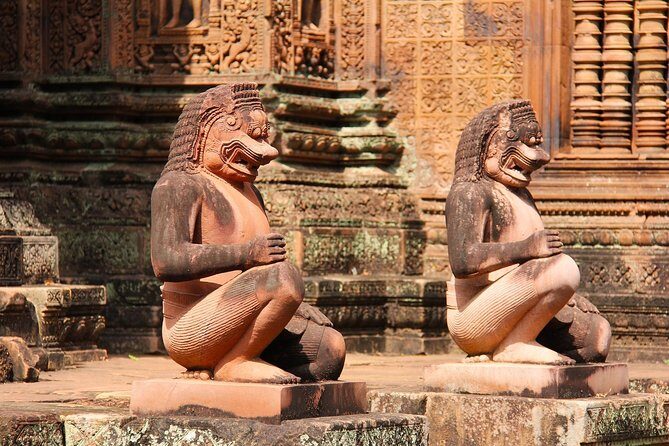
Your first main stop is Banteay Srei, with about 1 hour on site. This temple is known for its pink sandstone and its fine carving work. The most helpful way to think about it: this isn’t just a place to stand and look up. It’s a place where you can slow down and notice patterns, figures, and the tight work in the stone.
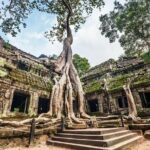
It’s often described as having carving detail so sharp that it stands out even among the famous Angkor-area temples. The structure here dates to the 10th century, which gives it that satisfying sense of depth—this isn’t a modern replica or a quick roadside ruin.
Practical note: temple entrance is not included (listed at $37 per person), so bring budget for that. Also, you’ll need to follow the site dress rule: cover your knees and shoulders when entering temples. This is one of those “easy to forget” requirements, especially on hot days when people want light clothes. Plan outfits that keep you comfortable and compliant.
What I’d do at this stop is give yourself time to look at the carvings from different angles. Even without being an expert, your eyes start to catch how much work is packed into the stone once you stop treating the temple like a single photo-op.
Stop 2: Phnom Kulen National Park for waterfalls, thousand lingas, and Big Buddha
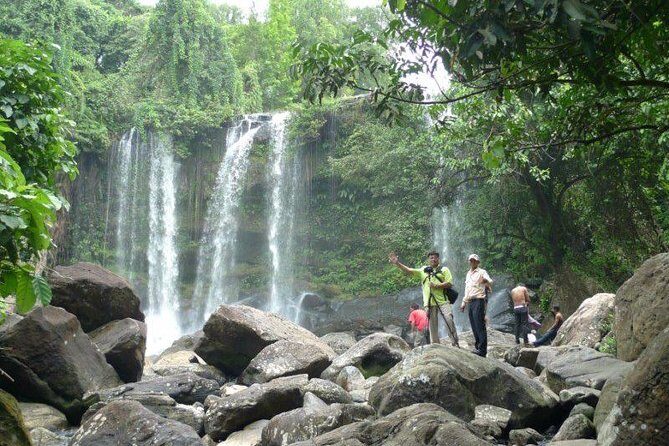
Next comes Phnom Kulen National Park, with around 3 hours. This is the nature and sacred-symbols section of the day, and it’s a good match for people who want more than temples.
Here’s what to expect in the time you’re given:
- A waterfall area (and yes, you can swim there)
- Thousand lingas, which are a striking visual set of stone religious symbols
- A Big Buddha status viewpoint or focal point
- Time to see local people in the park area
Kulen Mountain itself is formed from sandstone, and it was used as a quarry during the Angkorian period. That detail matters because it changes the way you look at the stone landscape. Instead of treating the mountain like a generic green backdrop, you can connect the natural material to the art and building materials of the region’s older temple culture.
One consideration: you’ll be moving around in park settings. Even with a guide, you should wear comfortable walking shoes. If you plan to swim, remember that you’ll want to manage wet-to-dry transitions so you don’t end your day uncomfortable. The tour provides water and cold towels, but it doesn’t replace the need to wear gear that can handle some dampness.
Also, the Kulen Mountain ticket is not included and is listed at $20 per person. So once again, plan for an add-on to make the day complete.
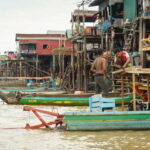
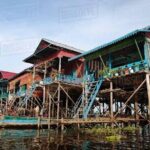
Stop 3: Kampong Phluk floating village on Tonlé Sap Lake
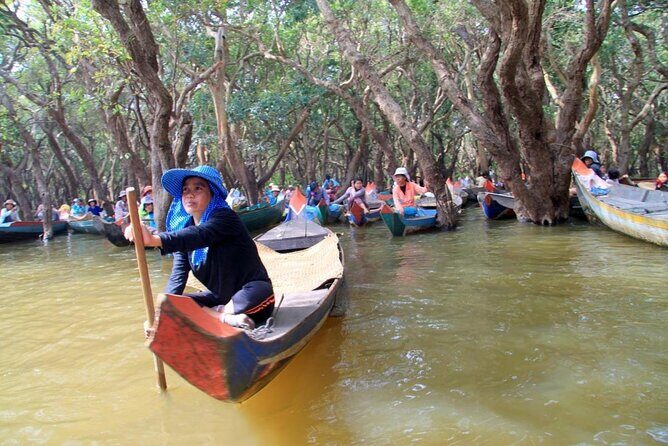
You’ll finish at Kampong Phluk, a floating village on Tonlé Sap Lake near Angkor Wat. This stop is about 3 hours, and it’s set up to show you village life rather than only temple stones.
The core idea: Kampong Phluk’s stilted houses rise and fall with water levels, creating the impression of floating. That water-level rhythm is the key to understanding the place. It’s not just a gimmick for tourists. It’s how the community adapts to seasonal changes.
The village is home to Khmer fishermen, so you can expect a lived-in atmosphere tied to the lake. This is where the day shifts again—from mountain symbols and waterfall energy to waterline routines.
There’s a separate boat fee ($22 per person) for this stop. That tells you to budget for water-based access as part of the experience. If you’re not thrilled by boat rides, this is still worth taking seriously, because it’s part of how you reach the best angles and viewpoints on the lake.
Also note that temple dress code doesn’t apply the same way here as at sacred sites, but you’ll still want clothes you can move around in, since you’re likely to spend time looking, walking around viewpoints, and possibly transferring between areas.
The value beyond sightseeing: education support
One reason I like this tour is that it’s not framed as only entertainment. 50% of profits support underprivileged students in education. That means your day’s costs aren’t entirely absorbed by logistics and overhead. It’s a practical form of local impact that you can feel good about.
This doesn’t mean the tour is automatically perfect. It just gives the day a clearer purpose. When a tour is already a bit of a splurge once you add entrance and boat fees, I like knowing there’s a real portion of profit tied to education support.
What to pack and how to handle the practical bits
This is a full day with different environments. Based on the tour rules and general comfort needs, I’d keep your packing simple and smart:
- Comfortable walking shoes (recommended)
- Light layers that let you cover knees and shoulders for temple stops
- No valuables if you can avoid it (the tour advises not to bring valuables)
You’ll have drinking water and cold towels provided, which helps with heat management. Still, wearing breathable clothing for the temple and park parts will make the day easier.
If you’re planning to swim at Kulen’s waterfall, think about changing needs. The tour doesn’t mention changing facilities or towel supply beyond cold towels, so you should plan your own swim basics accordingly.
Who should book this tour
This fits best if you want a single day that covers multiple types of experiences without micromanaging transport.
I’d point you toward it if:
- You want more than Angkor temples in your Siem Reap visit
- Your group has mixed interests—some like culture, some like nature, some like villages
- You’d rather be guided through the stops than trying to coordinate everything yourself
- You care about a day trip that includes education support via the tour’s profit-sharing
It’s also helpful if you don’t want to bounce between far locations on your own. Hotel pickup and drop-off remove a lot of stress. The private format also makes the day feel smoother, even with three separate stops.
Should you book Private Kulen Mountain–Banteay Srei and Kampong Phluk?
Yes, if you’re after a complete, guided day circuit that’s built to take you beyond the Angkor postcard loop. The biggest reason to book is the combination of variety in one outing: Banteay Srei’s pink sandstone carving, Kulen’s waterfall plus thousand lingas and Big Buddha, and Kampong Phluk’s Tonlé Sap stilted village life.
The main reason you might hesitate is the pricing structure. The base tour is $79, and then you should expect major add-ons: $37 for temples, $22 for the boat fee, and $20 for the Kulen Mountain ticket. If you budget for that, the day becomes much easier to evaluate. With guidance, transport, and the education support component, the value can feel fair rather than nickel-and-dimed.
If you want a day that feels intentional—cultural plus natural plus community—this is a strong choice. Just wear your most comfortable shoes and keep the dress-code rule in mind for the temple stop.
FAQ
How long is the tour?
It runs about 5 to 7 hours.
What is included in the $79 price?
You get an English-speaking local guide, an air-conditioned vehicle, drinking water and cold towels, hotel pickup and drop-off, and 50% of profits supporting underprivileged student education.
What entrance fees do I need to pay separately?
Temple entrance fees are listed at $37 per person. The Kulen Mountain ticket is $20 per person. A boat fee for Kampong Phluk is $22 per person.
Are hotel transfers included?
Yes, hotel pickup and drop-off are included.
Do I need special clothing for temples?
Yes. You must cover your knees and shoulders when entering the temples.
Can I swim at the waterfall?
The park stop notes that you can swim at the waterfall area.