REVIEW · SIEM REAP
Siem Reap: Angkor Wat Small-Group Day Tour and Sunset
Book on GetYourGuide →Operated by BREKSA TRAVEL · Bookable on GetYourGuide
Angkor, but with a smarter route. This Siem Reap small-group day tour strings together Angkor Wat, Angkor Thom, Ta Prohm, and ends with sunset from Bakheng mountain. I love that it’s built around a tight, logical order instead of wandering randomly, and I also love the comfort extras like chilled water and cool towels that keep you going.
The guide work is a big part of why this feels worth it. Names you may hear from your day include Mony and Makara, and the best guides (like Sam) also help with photos while you learn what you’re actually looking at. One key consideration: the Angkor temple pass is not included, so you’ll need to factor in the extra cost ($37 per person) and get it ready before the tour starts.
In This Review
- Key Highlights You’ll Feel Right Away
- How This Tour Works in Real Time (and Why It Matters)
- Pickup, Pass Pickup, and the Start Line You Don’t Want to Miss
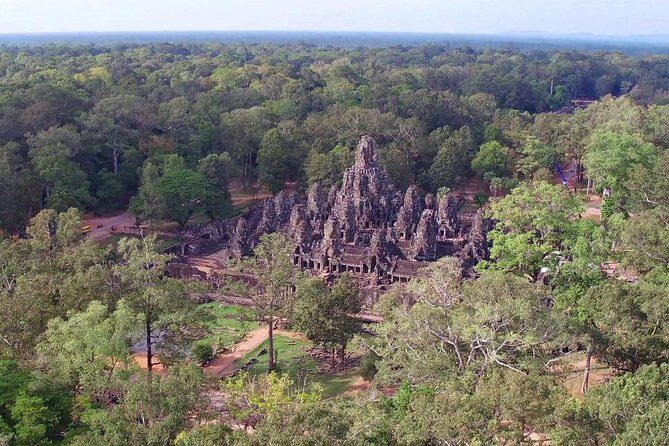
- Angkor Thom: Faces, Fortifications, and the Stuff Behind the Movie Moments
- South Gate and the Avalokiteshvara Statue
- Bayon Temple: Hundreds of Stone Faces
- Terrace of Elephants and the Royal Complex
- Ta Prohm: Why This Temple Still Feels Like It Was Interrupted
- Lunch at a Local Restaurant (Including Vegetarian)
- Preah Dak Village: Palm Cake and Palm Sugar, Up Close
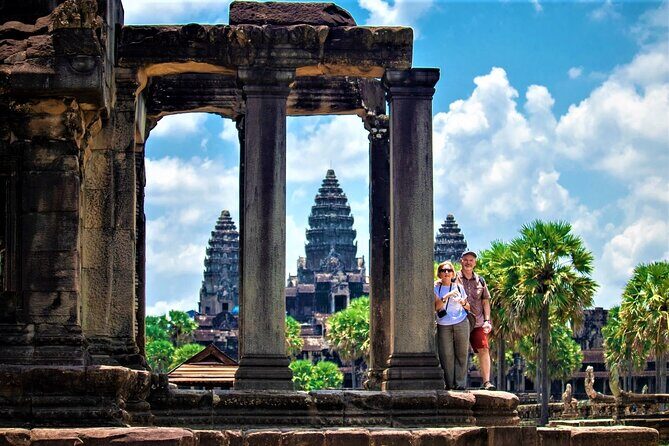
- Angkor Wat: The Main Icon, Read With Your Guide
- Phnom Bakheng Sunset: The Climb Finish
- Comfort and Transport: Small Details That Make the Big Difference
- Price and Value: What You’re Actually Paying For
- Who This Tour Fits Best (and Who Should Skip It)
- Tips to Make Your Day Smoother
- Should You Book This Angkor Wat Small-Group Day Tour With Sunset?
- FAQ
- Is the Angkor temple pass included?
- What time do you get picked up from Siem Reap hotels?
- How large is the small group?
- Is lunch included, and is there a vegetarian option?
- What clothing is required for the temples?
- What should I bring for the day?
- Is this tour suitable for young children or older adults?
Key Highlights You’ll Feel Right Away
- Small-group pace (up to 14 people) keeps the day from feeling like cattle herding
- Cold water and ice-cold towels show up often, which matters in real Khmer heat
- Real temple story-telling as you move through Angkor Thom face-by-face and carving-by-carving
- Ta Prohm in its original mood with roots and jungle framing the stones
- Preah Dak village hands-on stop for palm cake and palm sugar making
- Sunset from Bakheng gives you that iconic finish after a full day of temples
How This Tour Works in Real Time (and Why It Matters)
This is a long day in the Angkor Archaeological Park zone, so the real value isn’t just seeing five-plus famous sites. It’s the way the route is stitched together: you start early, hit Angkor Thom first, then rotate to Ta Prohm and the village in the middle, and finish with Angkor Wat followed by sunset at Bakheng.
You’ll be picked up from your hotel between 8:00 a.m. and 8:30 a.m. From there, the plan is to go directly to buy your Angkor temple pass before you jump into the temples. Then the day rolls on with a professional English-speaking guide and an A/C minivan or minibus.
What you’ll likely notice fastest is that the day has built-in pacing. You get breaks, you have water on hand, and the guide doesn’t treat temples like photo stops only. Guides like Saroun and David are praised for explaining what you’re looking at and for adjusting timing so you spend less time stuck in heavy crowds and more time actually appreciating details.
You can also read our reviews of more evening experiences in Siem Reap

Pickup, Pass Pickup, and the Start Line You Don’t Want to Miss
The day begins with a simple rule: arrive ready. Your driver picks you up from the hotel lobby, and you should be waiting about 10 minutes before the scheduled pickup time.
A big part of your planning comes from the pass situation. The tour price is $28 per person, but the Angkor pass is $37 per person and it’s not included. The tour requires you to have the pass before you start, so you’ll want to move quickly at the beginning instead of trying to handle it later.
Practical tip: if you wear the wrong outfit, or forget sunscreen and insect repellent, you’ll feel it fast later. The tour also has a dress code: cover your knees and shoulders, and avoid shorts. Keep that in mind when you pack, because Angkor days are not the time for trial-and-error clothing.
Angkor Thom: Faces, Fortifications, and the Stuff Behind the Movie Moments
After the pass, the tour heads straight into Angkor Thom, the fortified Great Royal City built in the 12th century by King Jayavarman VII. This is where a guided day starts to feel different from a do-it-yourself day, because the guide frames the place with meaning instead of just coordinates.
South Gate and the Avalokiteshvara Statue
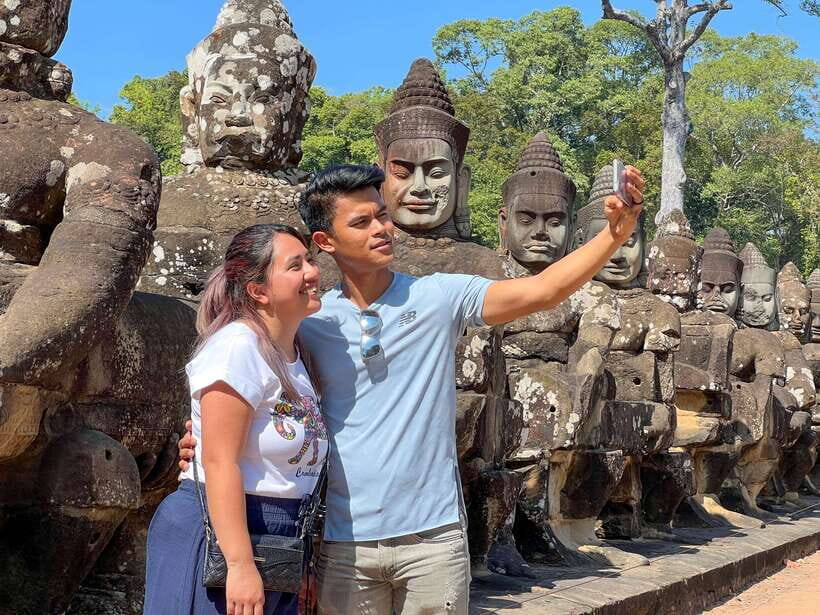
At the South Gate, you’ll see the imposing statue of Avalokiteshvara. This is the kind of detail that people recognize from pop culture, including the Tomb Raider connection, but what’s more interesting is how it fits into the city’s layout and symbolism. A good guide helps you connect the art to the setting, not just point at it for a quick picture.
Bayon Temple: Hundreds of Stone Faces
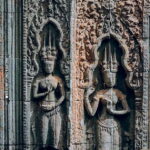
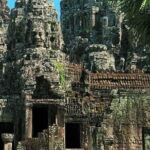
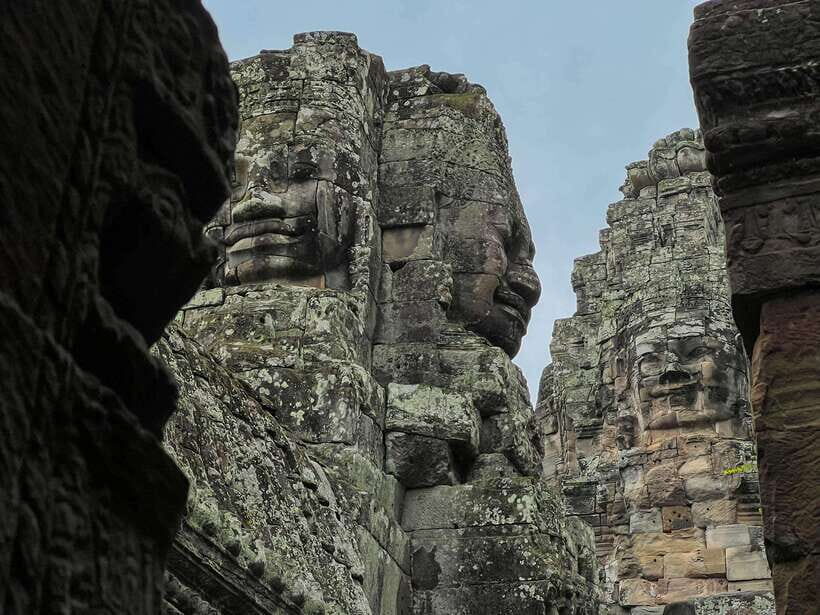
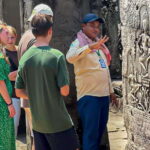
Next up is Bayon, with its Buddhist-style architecture and hundreds of carved faces. This is one of those temples that can look like repeating decoration if you don’t slow down. With a guide, you learn how to read the space: where you are matters, and so does the angle of the carvings and towers.
Terrace of Elephants and the Royal Complex
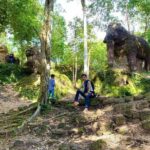
You’ll also explore the Terrace of Elephants, plus Phimeanakas, the Terrace of the Leper King, and Baphoun—described as the largest Hindu temple in Angkor Thom.
Here’s what makes these stops valuable: you’re seeing different kinds of royal and religious functions in one circuit. Even if you don’t become an Angkor expert by lunchtime, you’ll leave with a clearer picture of how the Khmer kings used architecture as both power display and sacred space.
The only caution I’ll mention is physical. This portion includes lots of standing, climbing steps, and walking between points. In hot season, that can feel like work. The upside is that you start with momentum early, and the tour’s comfort support helps.
Ta Prohm: Why This Temple Still Feels Like It Was Interrupted
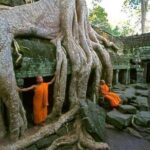
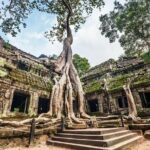
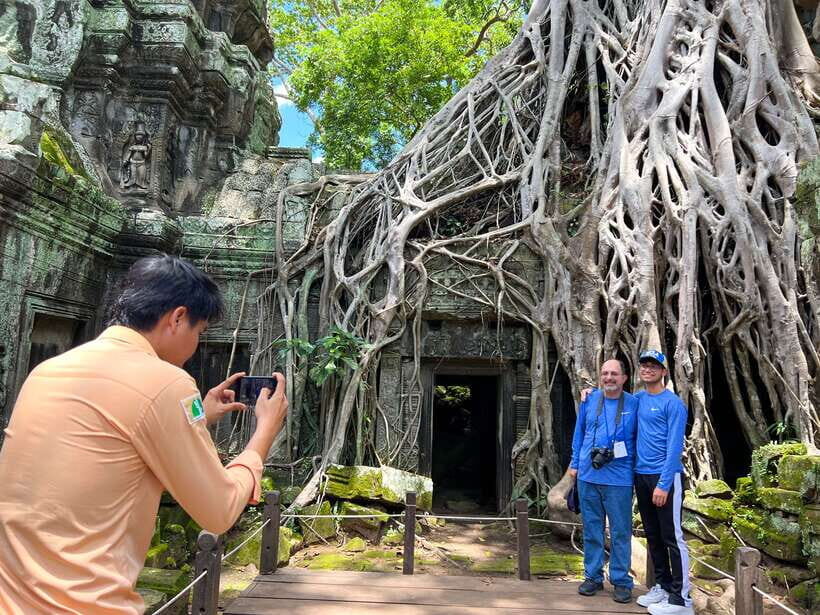
After Angkor Thom, you drive to Ta Prohm, the jungle temple left in its original state. You’ll see huge roots wrapped around stone, with vegetation growing right through the setting. It looks dramatic from a distance, but the best moments happen when you pause and look at the way the structure and nature share the scene.
This temple is also linked in pop culture through the Tomb Raider backdrop, but the real appeal isn’t the movie reference. It’s the texture of the place—stone surfaces that feel weathered, framed by vines and roots that make the whole space feel less restored and more human.
Ta Prohm can be a big crush point because it’s famous, so having a guide who manages timing helps. The more you can avoid peak congestion, the more you can take your time.
Lunch at a Local Restaurant (Including Vegetarian)
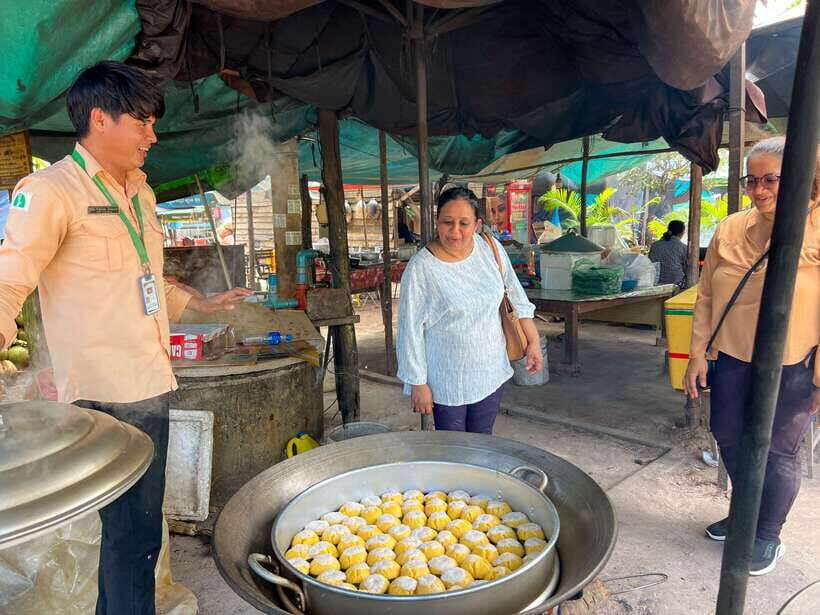
Lunch is included. The tour stops at a local restaurant and describes the meal as cooked by a local chief, with a vegetarian option available if you let them know in advance.
This matters more than it sounds. Angkor days are long and you’ll be doing repetitive walking across multiple temple zones. A solid meal keeps your energy steady for the afternoon, when you’re likely to hit your second wave of fatigue.
If you’re vegetarian, do tell the operator ahead of time so they can plan accordingly. The tour explicitly notes that vegetarian options exist, but like many travel meals, it’s easiest when you communicate early.
Preah Dak Village: Palm Cake and Palm Sugar, Up Close
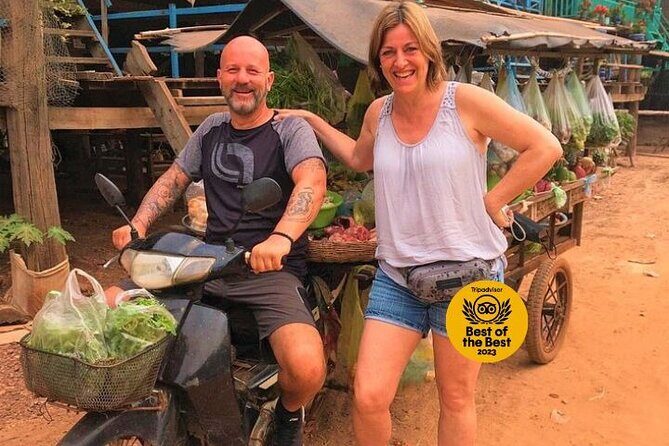
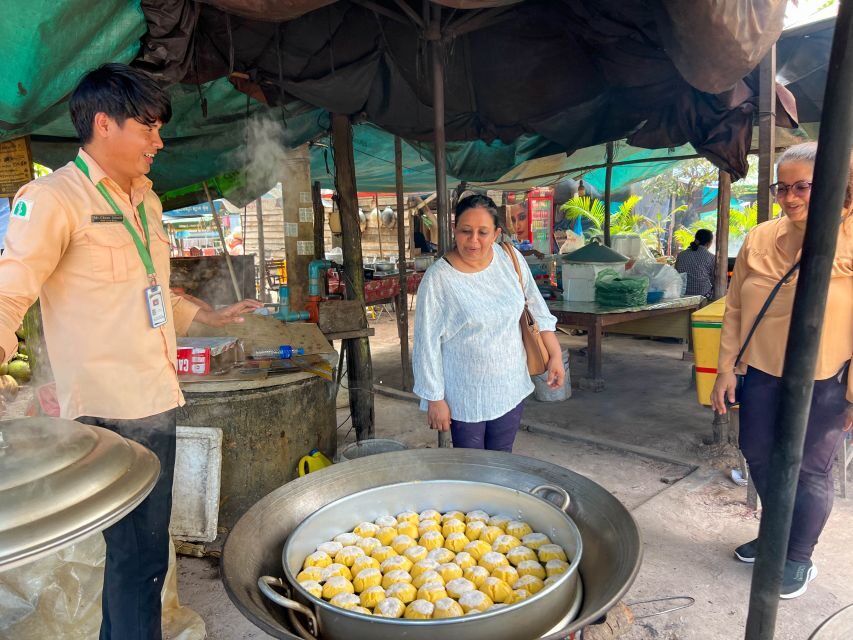
After lunch, you’ll visit Phum Preah Dak, described as one of the more authentic village experiences. This part is a nice change of pace because you’re no longer in stone-and-moat mode.
A key activity here is learning how locals make palm cake and palm sugar. You also get a sense of how everyday life connects to what you see across Cambodia. This isn’t just a look-and-leave stop. It’s the kind of practical, hands-on cultural interruption that makes the day feel more balanced.
From a travel-writer point of view, I like this stop because it prevents Angkor from becoming a single-topic marathon. You still get the grand monuments, but your brain gets a reset before the final push to Angkor Wat and sunset.
Angkor Wat: The Main Icon, Read With Your Guide
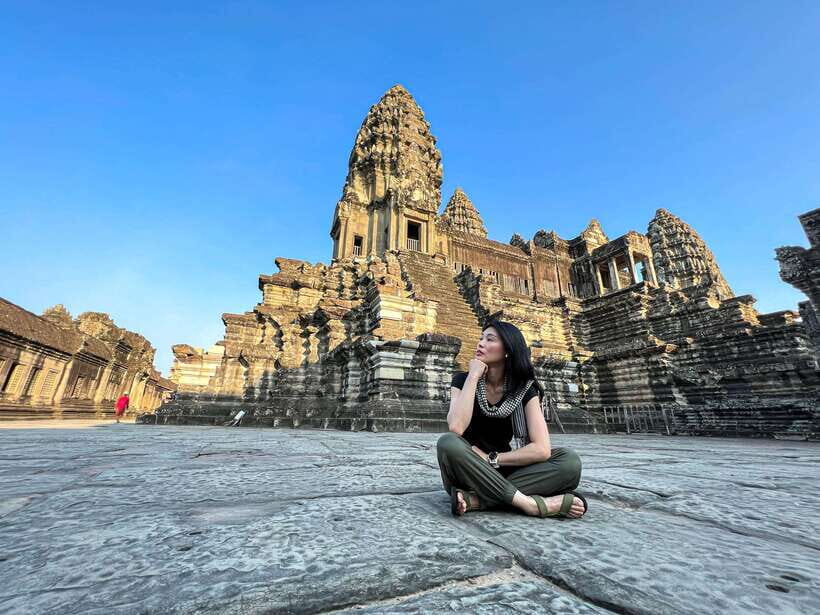
In the afternoon, the tour visits Angkor Wat, the largest sacred building on the planet and an icon of the Khmer civilization.
You’ll learn that Angkor Wat was built by King Suryavarman and dedicated to Vishnu. The description also highlights the carved decoration density and that Angkor Wat contains what’s considered the longest bas-relief in the world. Even if you don’t count every scene, the guide helps you notice the structure of the artwork: how walls and reliefs create a kind of narrative system.
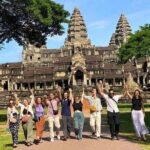
Angkor Wat is surrounded by a giant moat, and the complex is built around its five towers—shaped in a way that even connects to the look of the Cambodian flag. When you climb later (near the sunset finish), the whole compound makes more sense because you understand where you’re standing and why.
One strong point: your guide isn’t just pointing out the famous areas. Guides like David, Jan, and Raman are praised for giving background tied to the design, which helps you avoid the common feeling of seeing something monumental but not really understanding it.
Phnom Bakheng Sunset: The Climb Finish
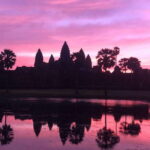
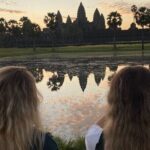
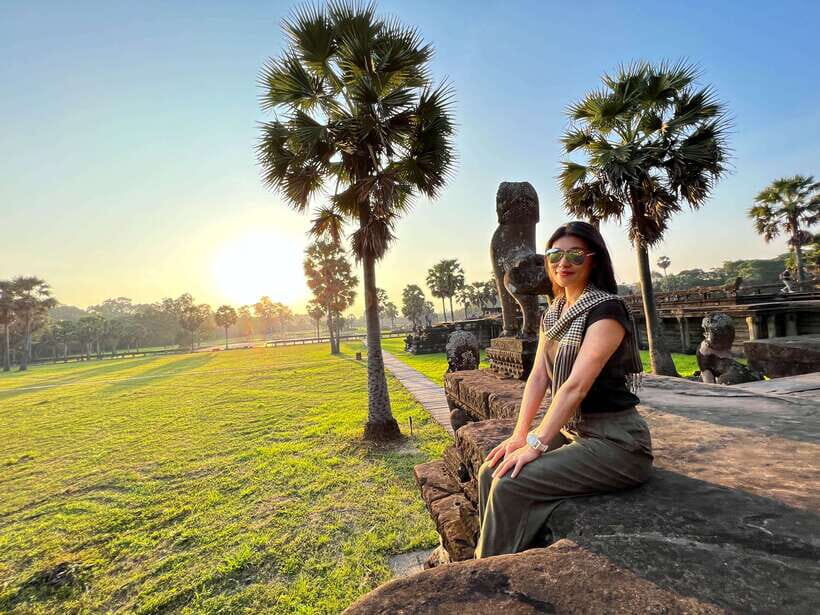
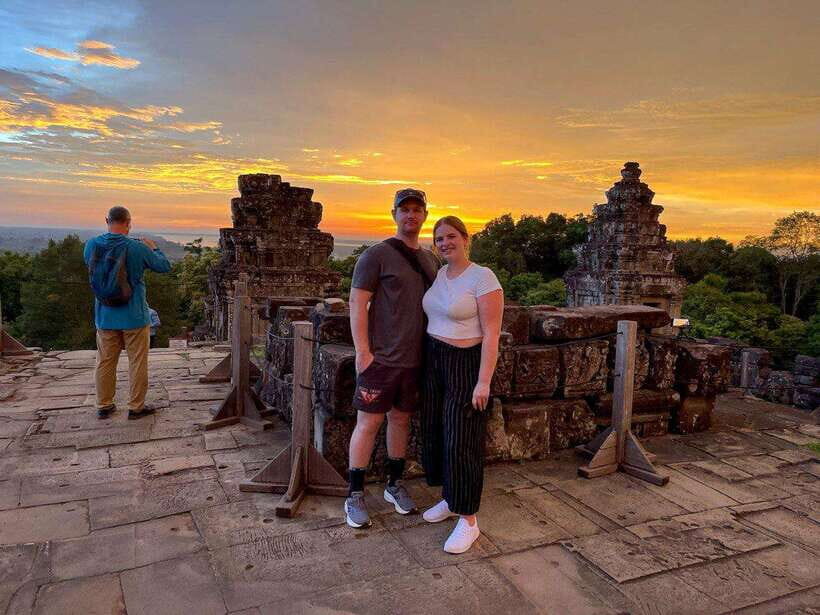
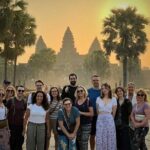
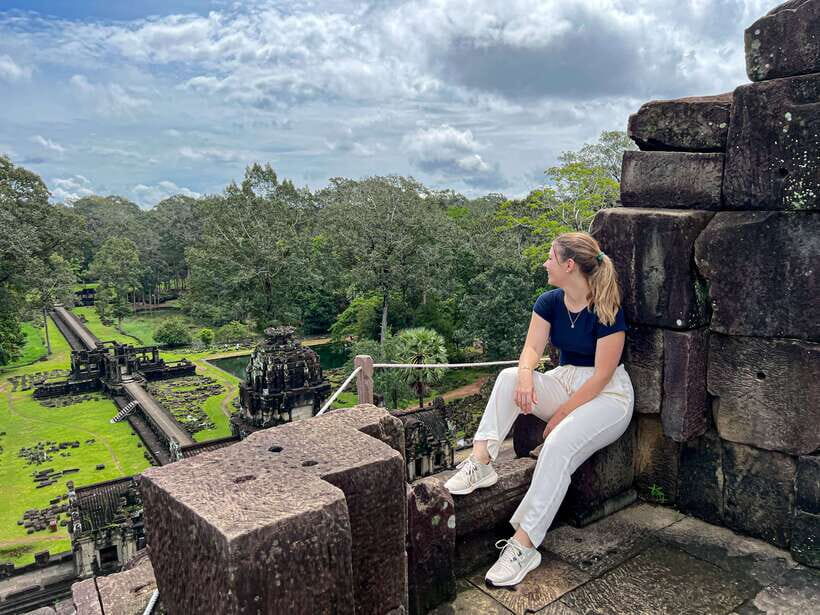
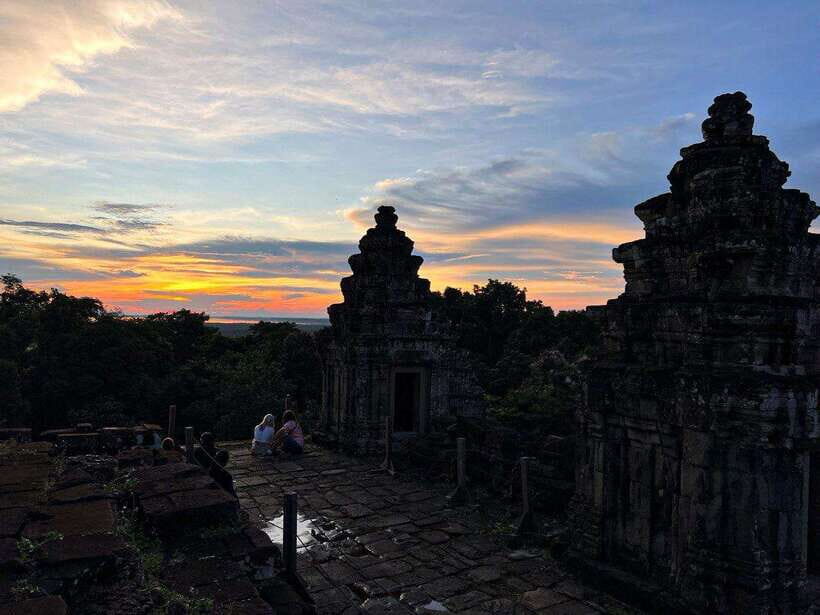
The day ends with sunset at Phnom Bakheng. This is the part many people wait for because it’s visually dramatic: temple silhouettes against sky color, with the jungle and surrounding grounds doing the rest.
The practical side: you are climbing up to the viewpoint. Wear shoes you trust, and use sunscreen. If your outfit doesn’t match the dress code earlier, you might regret it here because you’ll be in the sun longer than you expect.
Once the sunset moment lands, you’ll transfer back to your hotel. That matters because the day is long, and the “done” feeling is real after you’ve walked, climbed, and sat in transport multiple times.
Comfort and Transport: Small Details That Make the Big Difference
This tour includes A/C transportation and tends to be praised for comfort and service style. A recurring detail in guides and drivers you might meet (like Mr. Kim, Mr. Kim’s noted attention, or drivers such as Mr. Theara and Chann in past days) is the pattern of keeping you cool and hydrated.
You get a cool bottle of water and towels, and the tour notes ice water and towels as part of the comfort rhythm. In Siem Reap’s heat, that can be the difference between powering through the afternoon and feeling wrecked.
Also, small-group size helps. The tour is limited to 14 participants to make the day more personal. In practice, this often means you can hear the guide better and stop for photos without losing the whole group.
Price and Value: What You’re Actually Paying For
Let’s put the numbers in plain terms.
- Tour cost: $28 per person
- Angkor pass: $37 per person
- Total basics: about $65 per person, not counting soft drinks
For that, you get:
- Hotel pickup and drop-off
- A professional English-speaking guide
- Transportation with A/C
- Water and towels
- Lunch (vegetarian option available)
If you’ve done Angkor before without a guide, you know the pass and transport are already a big chunk of the day. So the question becomes: is it worth paying for the guide and the packed structure?
For most people, it is, because the guide turns “I saw temples” into “I understand what I saw and why it looks like that.” The tour also helps with timing, and the comfort supports help you physically stick with the route. In a heat-heavy day like this, that combo is what you’re really buying.
Who This Tour Fits Best (and Who Should Skip It)
This small-group Angkor day tour is a strong fit if you want:
- A guided sweep through Angkor Thom, Ta Prohm, and Angkor Wat
- A middle-of-day cultural stop at Phum Preah Dak
- Sunset at Phnom Bakheng
- A schedule that tries to cut down on wasted time
It’s not suitable for children under 10, and it’s also noted as not suitable for people over 70. If you’re in those groups, you’ll likely be happier with a less physical, more flexible plan.
It also helps if you’re comfortable covering your shoulders and knees. If you hate dress codes on principle, this one may annoy you, especially early in the day when you’re still fresh and trying to stay comfortable.
Tips to Make Your Day Smoother
Bring the items the tour calls for: sunglasses, a sun hat, an umbrella, and sunscreen. Also carry insect repellent if you tend to get bitten.
Wear clothing that meets the dress code: no shorts and keep knees and shoulders covered. And wear shoes that handle uneven temple ground and stairs. People tend to underestimate how often you’ll step up, step down, and shift stance while waiting for the next viewpoint.
Finally, when the guide offers a moment to position for photos, take it. Guides like Sam and Saroun are specifically praised for help with photography angles, which can turn a flat snapshot into something that feels like the place.
Should You Book This Angkor Wat Small-Group Day Tour With Sunset?
I’d book this if you want an organized, guided Angkor day that balances the big monuments with a village stop, and you value comfort details like chilled water and towels. The small-group setup makes it more manageable than big bus tours, and the guide focus on what you’re seeing is what turns the day into more than a checklist.
I’d think twice if you’re trying to keep costs ultra-low, since the Angkor pass is extra and required. I’d also plan carefully if you’re sensitive to long walks and climbing, since it’s a full 10-hour day with a sunset climb finish.
If you want a single day that covers the core Angkor hits without feeling like chaos, this is a solid choice.
FAQ
Is the Angkor temple pass included?
No. The Angkor temple pass costs $37 per person and is not included in the tour price. You need to have the pass before the tour starts.
What time do you get picked up from Siem Reap hotels?
Pickup is included, and your pickup time is between 8:00 a.m. and 8:30 a.m. You should wait in the hotel lobby about 10 minutes before pickup.
How large is the small group?
For the small-group option, the tour is limited to up to 14 participants to keep the experience more personal.
Is lunch included, and is there a vegetarian option?
Yes. Lunch is included, and there are vegetarian options. If you’re vegetarian, you should let the operator know in advance.
What clothing is required for the temples?
You must cover knees and shoulders. The tour notes that visitors are not allowed to wear shorts, and short skirts are not allowed.
What should I bring for the day?
You should bring sunglasses, a sun hat, an umbrella, and sunscreen. Insect repellent and comfortable shoes are also recommended.
Is this tour suitable for young children or older adults?
The tour is not suitable for children under 10 and it’s also noted as not suitable for people over 70.