REVIEW · SIEM REAP
Siem Reap: Private Custom Angkor Wat Tour with Local Guide
Book on Viator →Operated by Siem Reap Locals · Bookable on Viator
Angkor looks better when someone explains it. This private tour in Siem Reap pairs an English-speaking local guide with an easy tuk tuk ride between major sights, plus cold water and towels. I also like the flexible timing, so you can match your energy to the temples. The main drawback: temple admission and the Angkor Park pass are not included, so you’ll want to budget for tickets.
If you choose a shorter option, you’ll get a focused hit—great when you only have half a day. If you go longer, you’ll stitch together the big classics like Angkor Wat, Angkor Thom (Bayon), and Ta Prohm, and you may add farther stops on a grand circuit. One thing to consider up front: you should have moderate physical fitness, since you’ll be walking through historic temple grounds.
The standout detail from the feedback I’ve seen is guide quality. One guide specifically named Sopheak earned top praise for being both personable and very strong on Cambodia and temple history—exactly what turns stone carvings into something you can actually picture.
In This Review
- Key things I’d bookmark before you go
- Private Angkor by tuk tuk: value for $45 a person
- Picking the right length: 3-4 vs 6-8 vs 8 hours
- 3-4 hours: quick temple highlights
- 6-8 hours: full morning/afternoon circuit
- 8 hours: grand circuit and beyond
- Stop 1: Angkor Wat first—scale, reliefs, and what 3 hours lets you notice
- Stop 2: Bayon at Angkor Thom—why the last capital feels different
- Stop 3: Ta Prohm—monster trees, roots, and the scene it creates
- Stop 4: Preah Palilay—your quieter 30-minute pause
- If you go longer: how Preah Khan or Banteay Srei change the day
- Tickets and timing: plan for the Angkor Park pass
- Comfort details that make a temple day easier
- How the local guide changes what you see
- Physical pace and heat reality (what moderate fitness really means)
- Who this private Angkor tour fits best
- Should you book this private Angkor Wat tour?
- FAQ
- How long is the private custom Angkor Wat tour?
- What does the tour cost?
- Is pickup included?
- Do I need to pay for temple tickets?
- What’s included with the guide and tour?
- Is this tour private?
- What’s the cancellation policy?
Key things I’d bookmark before you go
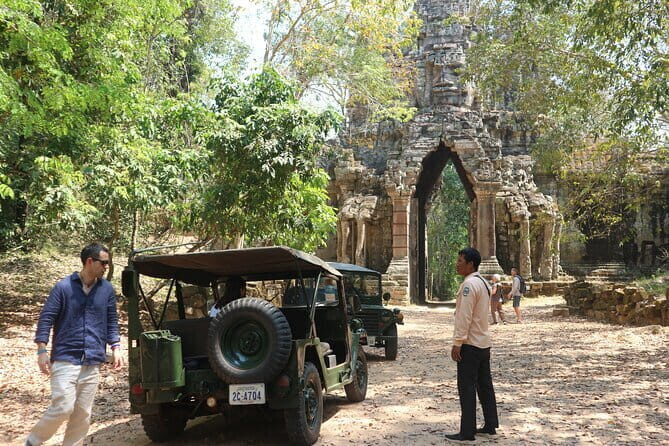
- Private, only your group: more freedom with pace and photos, and fewer awkward crowd pauses
- Local English guide focus: history and meaning, not just directions
- Tuk tuk round-trip + pickup: reduces logistics stress in Siem Reap
- Flexible route lengths: quick highlights or full morning/afternoon or grand circuit
- Comfort add-ons: cold drinking water and cold towels during the day
Private Angkor by tuk tuk: value for $45 a person
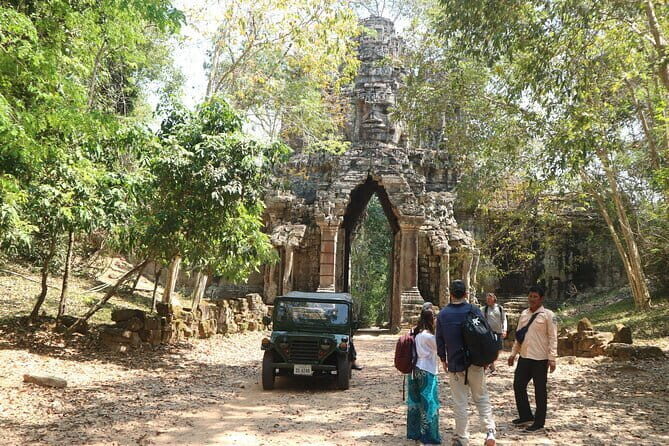
At $45 per person, this is a pretty straightforward value for a private Angkor day. You’re not just buying access to temples—you’re buying a smooth route, an English-speaking guide, and transportation in a traditional tuk tuk. For many people, that combination saves time and confusion, especially if it’s your first trip to the Angkor region.
The included perks also help more than they sound. Cold drinking water and cold towels matter when you’re moving around under the Cambodian sun. Pickup is offered, and the tour is designed to be easy to start without you having to coordinate extra transport.
The one cost you must plan for is admissions. The tour price doesn’t include temples pass for Angkor Park, and it also notes that admission tickets aren’t included for the temple stops. So treat the $45 as the guide + vehicle + time package, and budget separately for temple entry.
You can also read our reviews of more guided tours in Siem Reap
Picking the right length: 3-4 vs 6-8 vs 8 hours
The route options let you choose a temple experience that fits your day, not the other way around. You’ll see three common styles:
3-4 hours: quick temple highlights
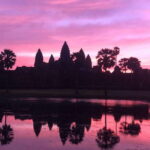
This shorter choice is for smart, focused sightseeing. It’s ideal if you want one major nearby experience—think Angkor Wat exterior and main reliefs—or if you’re aiming for a famous view like sunrise or sunset. You get the key sights without burning your whole day.
This is also a good option if your travel plan is tight or you’re arriving in Siem Reap late. It helps you avoid the classic mistake: going too long, then trying to do “one more temple” when your legs are done.
6-8 hours: full morning/afternoon circuit
This is the sweet spot for most first-timers. You typically cover the essential trio: Angkor Wat, Angkor Thom, and Ta Prohm. The logic is simple: you get the big names in a connected route, with enough time to actually notice carvings and layout instead of rushing like you’re on a factory line.
8 hours: grand circuit and beyond
Going longer opens the door to more distant, less crowded sights. In the longer option, you may add places like Preah Khan or Banteay Srei (the pink sandstone temple). That’s where you’ll likely feel the difference between “I saw Angkor” and “I understood Angkor.”
If you pick the grand circuit, plan your expectations. Your day becomes temple-focused, not “breaks and wandering.” That’s great if you’re here for history, but it’s not the right pace for a casual half-tour.
You can also read our reviews of more private tours in Siem Reap

Stop 1: Angkor Wat first—scale, reliefs, and what 3 hours lets you notice
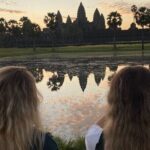
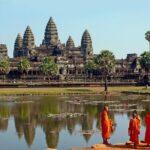
Angkor Wat is the anchor of any Angkor visit, and starting here makes sense. This tour gives you about 3 hours at Angkor Wat, and that time is long enough to do more than take a postcard loop.
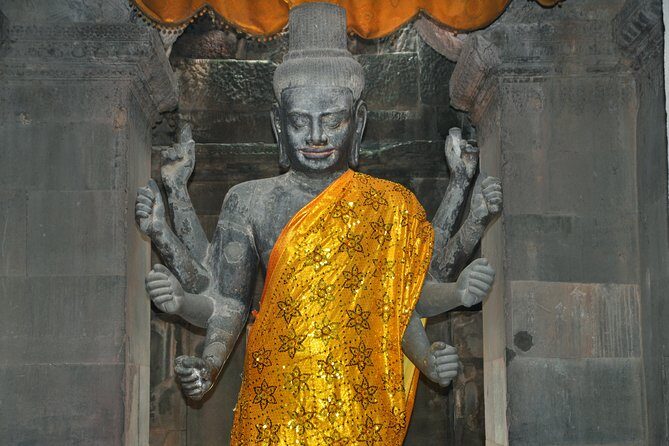
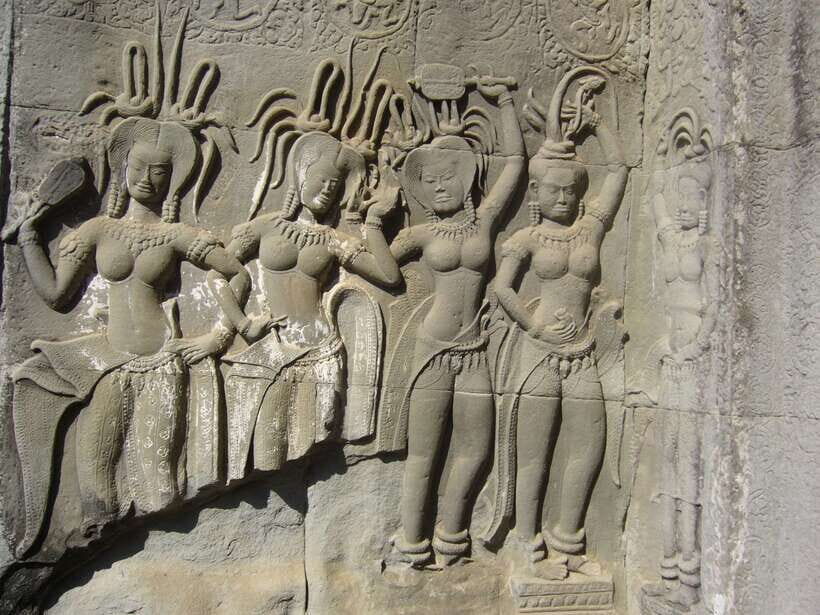
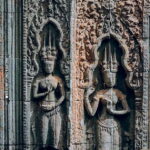
You’ll be looking at a megastructure with intricate reliefs that tell legendary episodes and Hindu myths. The important part isn’t memorizing story names. It’s that the guide can connect what you see to the bigger Khmer worldview—why certain images appear, how the temple layout supports the story themes, and what “main reliefs” really means when you’re standing in front of them.
A practical tip for this first stop: arrive ready to slow down. Angkor Wat rewards patient looking. If you try to sprint, you’ll mostly see walls. With time, you start seeing scenes—people, animals, and symbolism working together.
One drawback to keep in mind: admission isn’t included for this stop, so factor that into your schedule. You don’t want to lose your prime morning momentum waiting at the ticket stage if you haven’t planned ahead.
Stop 2: Bayon at Angkor Thom—why the last capital feels different
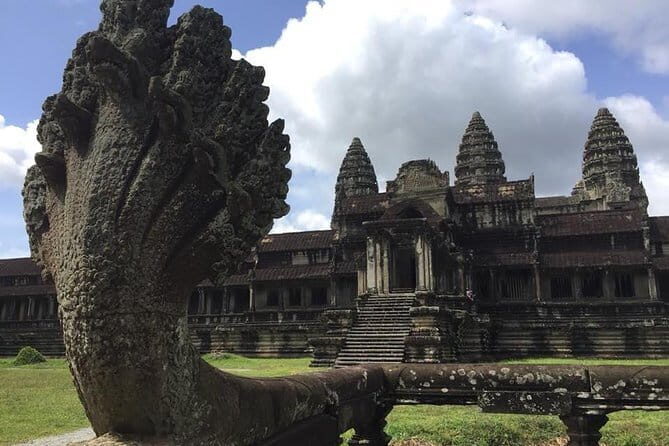
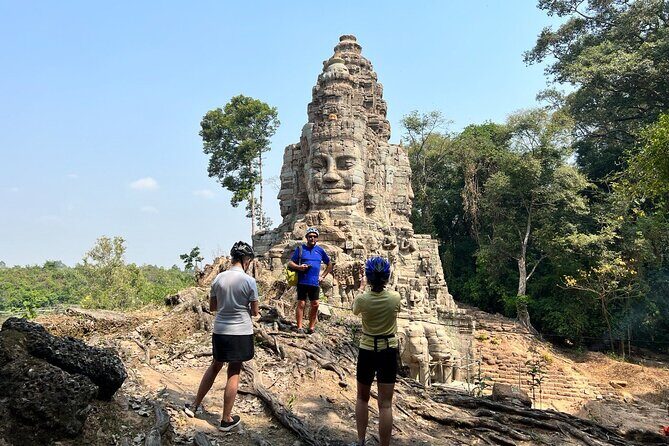
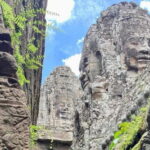
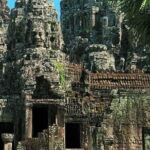
Next on the route is Bayon Temple, centered in Angkor Thom, the last ancient Khmer capital. You’ll have around 1 hour here, which can feel short until you realize Bayon’s whole trick is visual impact. Those gigantic smiling faces aren’t just decoration; they dominate your sense of direction inside the complex.
This is also a stop where a guide’s explanation matters a lot. Bayon is easy to photograph but harder to interpret without help. With an English-speaking local guide, you can get clarity on how Bayon fits the city layout and what the iconography suggests.
For many people, Bayon is where you feel the shift from grand ceremonial space into a more human, immediate atmosphere. The faces make it feel like the temple is aware of you. Even if you’re not into myth or symbolism, the scale and density of the carvings still land.
Budget reality check: the tour states admission tickets aren’t included for this stop too. So your best move is to treat temple entry as a fixed cost you’ll pay regardless of which temples you prioritize.
Stop 3: Ta Prohm—monster trees, roots, and the scene it creates
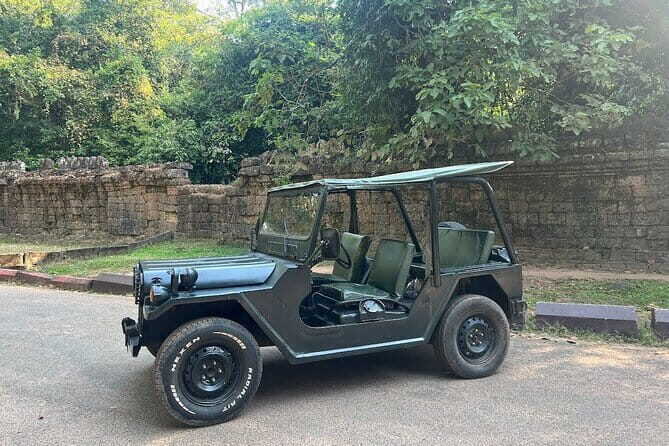
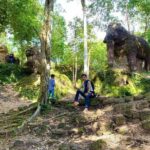
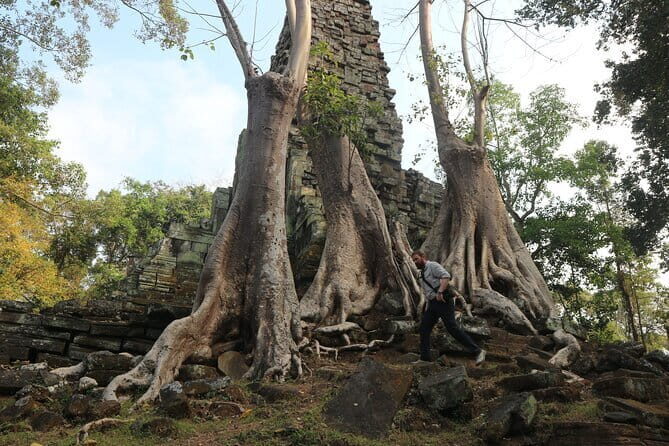
Then comes Ta Prohm, the one many people associate with Tomb Raider. The atmosphere is the point. You’ll be walking through a landscape where massive roots and overgrown monster trees have swallowed portions of the structure.
You’ll get about 1 hour here. That’s enough time to take in the main photo angles, but it’s also long enough to notice how the architecture and the vegetation interact. It can look chaotic from a distance. Up close, it’s strangely structured.
This is a great stop for anyone who likes “atmosphere” as much as “history.” Ta Prohm is emotional. It’s also a reminder that Angkor isn’t just old stone—it’s a living ecosystem of growth and preservation challenges.
One consideration: the roots can make some surfaces feel uneven. You don’t need to be an athlete, but you should be comfortable walking on temple grounds with a moderate fitness level.
Stop 4: Preah Palilay—your quieter 30-minute pause
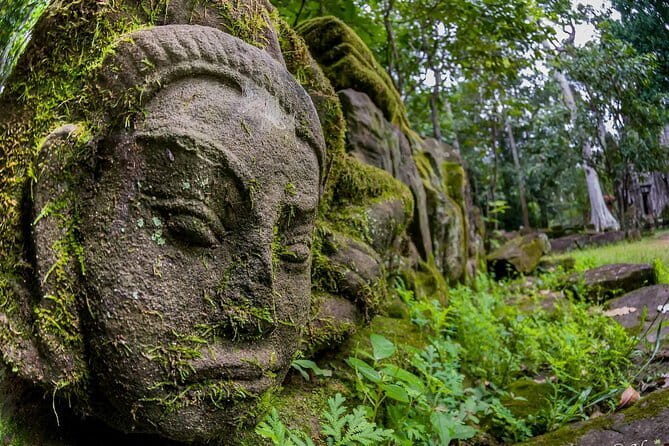
After the big names, the tour includes Preah Palilay for 30 minutes. This is described as a lesser-seen stop—exactly the kind of time slot that changes how you remember the day.
Short stops like this are valuable because they break up the intensity. You get a moment to cool down your brain, catch a different architectural style, and avoid the “I’m temple-doomed” feeling that can happen when every stop is a headline.
Even with just half an hour, the guide can point out what to notice so you don’t treat it like a random detour. The payoff is a more complete sense of Angkor beyond only the top-three attractions.
Like the other stops, admission isn’t included, so again: plan for the Angkor Park pass and you won’t be stuck adjusting your pace later.
If you go longer: how Preah Khan or Banteay Srei change the day

If you choose the 8-hour style, the tour can extend beyond the headline circuit. That’s where you may add Preah Khan or Banteay Srei.
This matters because the major temples can be crowded and intense. Longer routes help you spend more time away from the busiest areas and give your day more texture. You’re not just repeating the same visual theme at higher speed—you’re seeing more variation.
Banteay Srei gets special attention because of its pink sandstone and detailed carving work. Preah Khan brings a different mood—another large temple space where you can feel the complexity of the Angkor system.
The key benefit of these extra stops is pacing. If your day is already full of big structures, it’s easy to “collect” temples instead of understanding them. A longer circuit gives you space to let explanations land.
Tickets and timing: plan for the Angkor Park pass
Admission is not included for the temples on this tour. The tour specifically notes that the temples pass for Angkor Park is not included.
So what should you do? Treat entry tickets as a must-book step in your overall plan, and don’t count on paying “on the fly” without time cost. If you’re doing a sunrise or sunset-focused shorter tour, the ticket stage timing can affect when you actually reach the view point.
Also remember: each stop listed has admission tickets not included. That doesn’t mean you’ll buy separate tickets for each temple—often an Angkor Park pass covers multiple sites—but you still need to ensure you’ve got the pass sorted before your day becomes a series of detours.
If you’re the type who likes knowing costs before you commit, this is the one part where you should sit down and check the current pass requirements for your dates.
Comfort details that make a temple day easier
This tour includes the essentials that keep a long day from turning miserable: cold drinking water and cold towels, plus an English-speaking guide. Pickup is offered, and the tour operates near public transportation, which can be comforting if you need an easy backup plan.
The transportation method is a traditional tuk tuk with round-trip service. That’s practical in Siem Reap because it keeps your time focused on temple time. When the schedule is tight, a reliable route between sites is worth more than it sounds.
One more comfort point: the tour is private, so you’re not stuck matching someone else’s pace. You can pause for a better angle, take a break without apologizing, and move at a rhythm that suits your body.
How the local guide changes what you see
The guide experience is the real reason this tour has a top rating. One guide named Sopheak was praised for being knowledgeable and personable, with strong knowledge of Cambodia and temple history.
That matters because Angkor is big and symbolic. Without a guide, you might see walls and faces. With a good guide, you start seeing how the temple stories show up in relief scenes, how the city plan relates to the temples, and why certain places feel like key chapters rather than random stops.
An English-speaking guide also helps in a very practical way: when you’re standing there, you can ask quick questions and get answers on the spot. That’s better than reading a guidebook after the fact.
If you care about history but don’t want a lecture, this style is often the best fit. It’s explanations woven into the walk, not a classroom experience.
Physical pace and heat reality (what moderate fitness really means)
The tour asks for moderate physical fitness. That’s a fair warning, not a deal-breaker.
You’re likely to spend time walking on uneven temple ground and moving between areas with stairs, paths, and surfaces that don’t always feel smooth. The guide and tuk tuk help with transport between stops, but you still need enough stamina to enjoy the temples without constantly stopping.
Heat is also the silent factor in Siem Reap. That’s where the cold water and cold towels help you recover between sights. Still, I’d plan your day with a slower pace than you’d use at home.
If you’re prone to fatigue, consider the 3-4 hour option or choose fewer circuit stops. You’ll get more satisfaction from one well-paced temple visit than from a rushed checklist.
Who this private Angkor tour fits best
This tour is a strong match if you want:
- A private experience with only your group
- An English-speaking local guide focused on context and temple meaning
- Flexibility between a quick temple highlight and a longer circuit
- Transportation that keeps the day simple, using a traditional tuk tuk and pickup
It’s also a good choice for couples, small families, and friends who don’t want to squeeze into crowded tour groups. Private pacing is where you’ll feel the value most, especially at places like Ta Prohm where you’ll want time to look, reposition, and breathe.
If you’re traveling super budget-tight and only care about getting the cheapest ticket access to Angkor, you might compare against group tours. This one is priced for comfort, guide time, and route convenience.
Should you book this private Angkor Wat tour?
I’d book it if you want a guided Angkor day that feels organized and not stressful—especially if you like explanations that turn carved stone into something you can picture. The $45 price makes sense when you factor in private tuk tuk transportation, cold water and towels, and a guide who can speak English and connect the dots for Cambodia’s temple culture.
Skip it—or at least double-check your plan—if you don’t want to think about temple entry tickets, since the Angkor Park pass and admissions aren’t included. Also choose your duration carefully: if you’re not up for a full temple-focused day, the shorter option will protect your energy.
If your priority is seeing the classics—Angkor Wat, Bayon, and Ta Prohm—without rushing, this private route is a solid way to get there.
FAQ
How long is the private custom Angkor Wat tour?
It runs about 4 to 8 hours, and you can also choose custom options such as 3-4 hours, 6-8 hours, or an 8-hour grand circuit style.
What does the tour cost?
The price is listed as $45.00 per person.
Is pickup included?
Yes, pickup is offered, and the tour includes round-trip travel by traditional tuk tuk.
Do I need to pay for temple tickets?
Yes. Temples pass for Angkor Park is not included, and admission tickets are not included for the listed temple stops.
What’s included with the guide and tour?
Included items are an English speaking guide, round trip by traditional Tuktuk, and cold drinking water and cold towels.
Is this tour private?
Yes. It’s described as a private tour/activity, with only your group participating.
What’s the cancellation policy?
You can cancel for a full refund up to 24 hours in advance of the experience start time. If you cancel less than 24 hours before, the amount paid is not refunded.