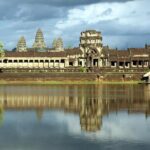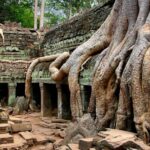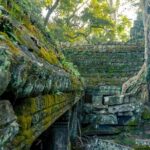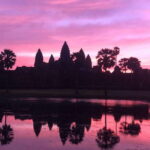
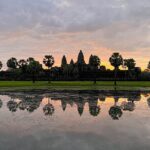
Angkor looks different at first light. This Siem Reap Temple and Waterfall itinerary layers early Angkor Wat sunrise with a tight set of Khmer landmarks across three days, using door-to-door A/C transport so you’re not stuck figuring out rides between temples. You’ll cover the big names (Angkor Wat, Angkor Thom, Ta Prohm) plus satisfying extras like Phnom Kulen and Tonlé Sap.
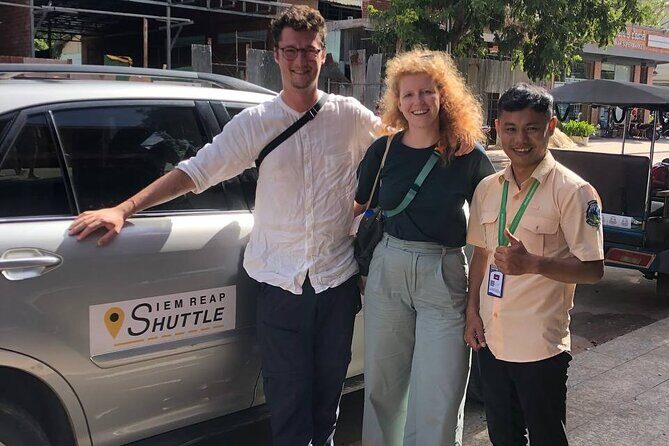
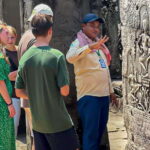
What I really like is the human side: the guides. Peacock Asia Tours has impressed people with guides such as Boy and Makara, and you’ll also see driver support credited by name (including Chantha). The tone tends to be professional and kind, and at least one guide is also called out as being great at taking photos for you.
One thing to plan for: the trip is great value on transport and guiding, but you still need to budget for temple tickets and your own lunches. Also, day 3 starts at 5:00 am, so set your alarm and expect an early morning no matter how you feel about mornings.
In This Review
- Key highlights you’ll actually feel during the trip
- Why this 3-day Angkor tour works without public transport
- Day 1: Angkor Thom gates, Bayon faces, and Angkor Wat sunset
- South Gate of Angkor Thom and the Bayon Temple focus
- Prasat Baphoun and Prasat Pimeanakas: royal-area stops
- Lunch break and a breather at Angkor Park
- Angkor Wat in the afternoon: choose your sunset viewpoint
- Day 2: Phnom Kulen waterfall day, Banteay Srei pink sandstone, and Tonlé Sap
- Morning at Phnom Kulen: waterfall, river of 1000 lingas, and a reclining Buddha
- Afternoon at Banteay Srei: the pink sandstone temple
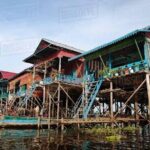
- Tonlé Sap floating village and floating market
- Day 3: 5:00 am Angkor Wat sunrise plus Ta Prohm and Pre Rup
- Sunrise at Angkor Wat: the 5:00 am start is the point
- Ta Prohm: the Tomb Raider filming temple, before the crowd thickens
- Preah Khan, Neak Poan, Ta Som: a quieter circuit
- Pre Rup sunset: royal state temples built in the 10th century
- Price and value: what you’re paying $171.50 for
- Tickets, dress code, and timing tips that prevent misery
- Dress code: cover up, but keep it breathable
- Heat and humidity: light layer strategy
- Early start days: build the night before
- Floating village on Tonlé Sap: the best break between monuments
- Who this tour fits best (and who should tweak the plan)
- Should you book the Siem Reap Temple and Waterfall 3-Day Tour?
- FAQ
- What’s the duration of the tour?
- What does the $171.50 per person price include?
- What’s not included in the tour price?
- What time does the tour start on day 1?
- What time is Angkor Wat sunrise on day 3?
- Do I need a temple ticket?
- Is this tour private?
Key highlights you’ll actually feel during the trip
- Angkor Wat sunrise timing that starts at 5:00 am, so you see the complex before the day crowd wave
- Angkor Thom essentials in one pass: South Gate, Bayon with its hundreds of smiling faces, and key royal-area temples
- Phnom Kulen waterfall day with Khmer-site context like the river of 1000 lingas and a reclining Buddha image
- Banteay Srei for its pink sandstone look and very detailed Khmer art style
- Tonlé Sap floating village and market as a contrast to the temple grind
- Private pacing: you won’t be swallowed by a huge group march
Why this 3-day Angkor tour works without public transport
Siem Reap is temple country, but the temples aren’t next door to each other. If you rely on public transport, you’ll spend a lot of energy just getting from point A to point B. This tour solves the practical problem with private pickup and drop-off in Siem Reap, plus an A/C vehicle and basic comfort extras like cool water and cool towels.
The other big advantage is that it’s a private tour for just your group. That means the schedule can match your pace—less waiting around, fewer awkward stops where nobody knows what’s going on, and more time to actually look. It also tends to make the “temple day” feel less like a checklist and more like a story of how Khmer power, religion, and daily life connected.
A few more Siem Reap tours and experiences worth a look
Day 1: Angkor Thom gates, Bayon faces, and Angkor Wat sunset
Day 1 has a classic “royal city first” flow, which is smart. You start at the South Gate of Angkor Thom, then move through three main inner-city temple stops. This is where you get the “who lived here and why it mattered” context, before you hit the religious mega-monument later.
South Gate of Angkor Thom and the Bayon Temple focus
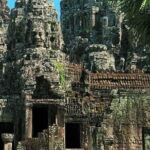
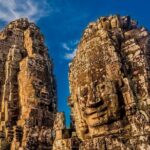
The South Gate is your entry into the heart of Angkor Thom. From there, you visit Prasat Bayon, a Buddhist state temple built in the late 12th century and dedicated to Avalokiteshvara. You’ll notice the famous sculptural faces—hundreds of smiling faces—so the site immediately feels alive, even if you’re just starting your Angkor rhythm.
There’s also a historical layer tied to the reliefs. The Bayon’s carvings are described as depicting true-life scenes, including war history involving invaders coming from the Champa Kingdom. That’s a detail that helps you look more carefully at the walls instead of only admiring them from far away.
Prasat Baphoun and Prasat Pimeanakas: royal-area stops
Next you head toward:
- Prasat Baphoun, described as a pyramid-shaped temple and linked with a rainbow bridge.
- Prasat Pimeanakas, right next to the royal swimming pool.
Even if you only glance at these briefly, the “royal area” context makes the next big move feel more meaningful.
Lunch break and a breather at Angkor Park
After the morning temple run, the tour pauses for lunch in Angkor Park and gives you time to rest. This matters because temple fatigue builds fast: standing, climbing, walking, and hot-weather hydration. A mid-day break helps you enjoy Angkor Wat later rather than just survive it.
Angkor Wat in the afternoon: choose your sunset viewpoint
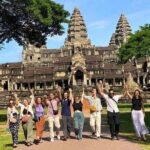
In the afternoon, you go to Angkor Wat—the famous religious monument everyone plans their Cambodia trip around. The tour then sets you up for sunset at either Phnom Bakheng or Pre Rup.
This is a good practical setup. Angkor Wat itself is the headline, but the sunset view stage is where you get the emotional payoff—light, shadows, and long lines of stone and trees. If you’re the type who likes photos, this is also when the “just one more picture” urge hits hardest.
Tip for your planning: sunset timing can feel crowded in peak seasons, so a guided schedule that gets you there when you’re supposed to arrive is a real quality-of-life upgrade.
Day 2: Phnom Kulen waterfall day, Banteay Srei pink sandstone, and Tonlé Sap
Day 2 splits the day into two very different moods: nature-and-faith at Phnom Kulen, then Khmer art at Banteay Srei, and finally a water-world contrast on Tonlé Sap.
Morning at Phnom Kulen: waterfall, river of 1000 lingas, and a reclining Buddha
You start at 8:00 am for Phnom Kulen and its waterfall. The drive includes views of Khmer people going about daily life along the way, which helps you feel less like you’re only traveling between “things on postcards.”
Phnom Kulen is described as the first main shrine and a key site tied to the birth of the Khmer empire. On-site highlights include:
- the waterfall
- the river of 1000 lingas
- a large reclining Buddha image
Those details matter because Phnom Kulen isn’t just scenery—it’s a place with specific sacred elements. If you like understanding what you’re seeing, this stop gives you enough anchors to avoid getting lost in generic “wow, temples” mode.
Afternoon at Banteay Srei: the pink sandstone temple
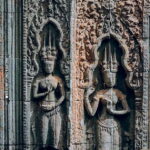
After lunch, there’s time to relax a bit before Prasat Banteay Srei. This is the tour’s Khmer art focus temple, described as made of pink sandstone and often called the jewelry of Khmer arts. It’s also described as a smaller-scale temple on lower land near the Angkor area.
Why this stop works on day 2: after you’ve spent the morning with grand landscape and water, the compact intricacy of Banteay Srei gives your eyes a different job. Instead of scanning for the biggest structure, you look at carvings and shape details.
Tonlé Sap floating village and floating market
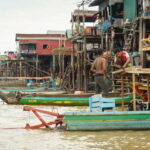
Day 2 ends on Tonlé Sap, with a floating village and the floating market. This is a smart contrast to temple-heavy days. It reminds you that Cambodia’s life is happening right now, not just in ruins.
Even if you’ve never visited a floating market before, you’ll likely feel the difference immediately: the pace is different, the setting is water-based, and the sounds and daily routines aren’t tied to a monument schedule.
Practical note: bringing a light layer helps, since water areas can feel cooler or breezy even when Siem Reap is hot and humid.
Day 3: 5:00 am Angkor Wat sunrise plus Ta Prohm and Pre Rup
Day 3 is the “best light, busiest sites” day—and the tour handles that by starting early.
Sunrise at Angkor Wat: the 5:00 am start is the point
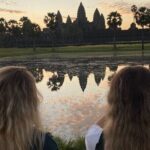
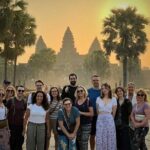
You get picked up from your hotel in Siem Reap at 5:00 am to catch sunrise at Prasat Angkor Wat. This early start is why you’re doing a guided tour at all: sunrise timing can be hard to manage on your own, and once the day crowd wave hits, your “look slowly” plan gets harder.
After sunrise, the tour takes you to a local restaurant for breakfast. That’s more important than it sounds. You’ll be walking around temples in the morning heat soon, and breakfast right after sunrise means you’re not wandering hungry.
Ta Prohm: the Tomb Raider filming temple, before the crowd thickens
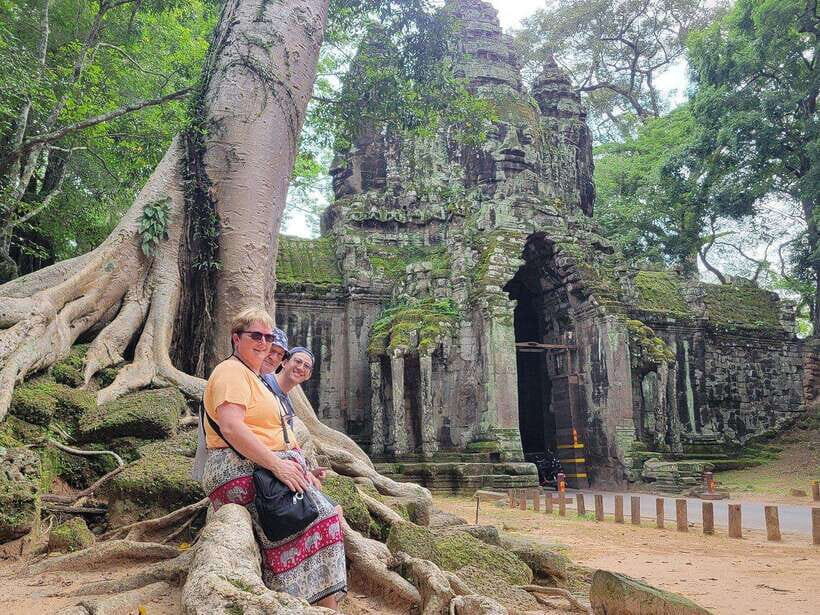
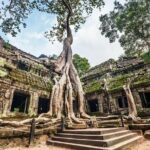
Next up is Ta Prohm, known as the temple featured in the Tomb Raider movie. The key detail is that the itinerary is built to visit before huge crowds arrive, which helps the site feel less like a traffic route and more like a place to absorb.
Ta Prohm also has a very visual vibe—roots, stone, and a slightly unreal look that makes it memorable even if you’ve seen photos before.
Preah Khan, Neak Poan, Ta Som: a quieter circuit
After Ta Prohm, you move along the circuit to:
- Prasat Preah Khan, described as the biggest ancestor temple built by the Buddhist king in honor of his father
- Prasat Neak Poan, the holy pool right in the middle of the reservoir
- Prasat Ta Som, on the bank of the water reservoir
These three stops keep day 3 from turning into only “biggest headline sites.” They also let you slow down and notice the layout and water connections Khmer architects built into the landscape.
Pre Rup sunset: royal state temples built in the 10th century
The last temple stop is Pre Rup, a royal state temple built in the 10th century. It’s described as a biggest brick sanctuary that’s still standing after hundreds of years.
Ending here can feel like a nice full-circle moment: you started with early religious monument light (Angkor Wat sunrise), worked through Ta Prohm and the reservoir temples, and then finish with a temple that’s built to impress in evening light.
Price and value: what you’re paying $171.50 for
At $171.50 per person, the price feels reasonable for a private, multi-day temple and waterfall circuit—especially because it includes the parts that usually cost time and energy: pickup/drop-off in Siem Reap, A/C transport, and a guided schedule across multiple sites.
But here’s the clear value math:
- Included: transportation (car/van/minibus with A/C), pickup & drop-off, cool water and cool towels.
- Not included: entry fees and tickets, lunch, and personal expenses.
The tour ticket note matters. It says the temple ticket is required: $37 per person for a single day. Since your itinerary spans multiple temple days, don’t assume the ticket cost is “one-time and done.” You’ll want to confirm which pass matches your exact entry days so you don’t get surprised at the gate.
My practical take: this tour is best viewed as paying for timing + access + guidance. You’re buying the ability to hit the right places on the right schedule, not just “getting transported around.”
Tickets, dress code, and timing tips that prevent misery
You’ll have a lot of success with two planning points: temple rules and heat management.
Dress code: cover up, but keep it breathable
The guidance is straightforward:
- Wear clothes suitable for temple visits.
- Shorts and T-shirts are only acceptable if they’re long enough (knee length) and shoulder-covered.
- No tank tops.
- The guidance also says no scarf or shawl.
This can feel strict, but it’s common temple etiquette. Use light cotton and treat clothing like part of your gear. You’ll walk and climb, so breathable fabrics win.
Heat and humidity: light layer strategy
The guidance notes that hot and humid conditions are typical, with nicer weather in November, December, and January. Even in “nicer” months, mornings can be comfortable while afternoons heat up fast.
So: hydrate, use the cool towels when offered, and plan to take the lunch/rest breaks seriously.
Early start days: build the night before
Day 3 starts at 5:00 am. If you’re staying far from the pickup point, or you lose track of time in Siem Reap at night, you can end up stressed. Go to bed earlier than you think you should. Sunrise isn’t forgiving.
Floating village on Tonlé Sap: the best break between monuments
Tonlé Sap on day 2 isn’t just “another stop.” It’s your palate cleanser after temple mornings. The itinerary includes the floating village and the floating market, which means you’re watching daily life shaped by water conditions.
This segment can also be a good energy reset. Temples ask your body to walk, stand, climb, and focus. The floating village asks you to slow down visually and watch how people organize life around the water.
Bring patience and keep your camera settings ready. Lighting can shift quickly near water.
Who this tour fits best (and who should tweak the plan)
This is a strong choice if you:
- want private pacing instead of being squeezed into a big group
- care about seeing sunrise and sunset without improvising transport
- like a mix of famous Angkor names and less-trodden Khmer areas like Phnom Kulen
- prefer having a guide handle the route so you can focus on photos and details
It may be less ideal if you:
- already have your own driver and want total freedom (you’d be paying for structure)
- hate early mornings—day 3’s 5:00 am start is real
- want everything included with no extra budgeting (entry tickets and lunch aren’t included)
Also, the tour notes that most travelers can participate, and it’s designed as a private group activity.
Should you book the Siem Reap Temple and Waterfall 3-Day Tour?
If your goal is to see major Angkor highlights plus a meaningful nature-and-water day—without the hassle of figuring out rides—you should book this. The schedule is built around the two hardest parts of temple travel: getting to the right places in time and managing the day-by-day flow between sites.
My one “only do this if” checklist:
- You’re comfortable budgeting for temple tickets and lunch on top of the $171.50 price.
- You can handle a very early wake-up on day 3.
- You’ll wear temple-appropriate clothing so you don’t get turned away.
If that sounds like you, this 3-day plan is a solid way to experience Siem Reap with less stress and more real sightseeing value.
FAQ
What’s the duration of the tour?
The tour runs for 3 days (approx.).
What does the $171.50 per person price include?
It includes pickup and drop-off in Siem Reap, A/C car/van/minibus transportation, and cool water and cool towels.
What’s not included in the tour price?
Entry fees and tickets, lunch, and personal expenses are not included.
What time does the tour start on day 1?
The meeting time listed is 8:00 am in Siem Reap for the start of the tour.
What time is Angkor Wat sunrise on day 3?
Day 3 pickup starts at 5:00 am from your hotel to see Angkor Wat sunrise.
Do I need a temple ticket?
Yes. A temple ticket is required, listed as $37 per person for a single day.
Is this tour private?
Yes. It’s a private tour/activity with only your group participating.