Sunrise at Angkor Wat kicks things off right. I love the pre-dawn hotel pickup that lines you up for the first light over the main towers, and I love the English-speaking guide who keeps the temples understandable instead of just wow. The tradeoff: you start very early, so if you hate mornings, plan for it.
This is also a strong value combo: one full day centered on Angkor’s big names, then a second day in the hills at Phnom Kulen, with stops for sacred sights and a waterfall picnic with local food. You’ll ride in an A/C minivan or minibus, get cool water and towels, and stay in a small group (max 14), which helps the pace feel human.
The only real “watch this” is the money side. The tour price is $79 per person, but the Angkor pass is extra ($37), while Kulen Mountain admission is included. If you’re budgeting, it helps to add those together up front so nothing surprises you.
In This Review
- Key highlights you’ll feel fast
- Morning mode: Angkor Wat sunrise done the practical way
- A quick consideration
- Beyond the postcard: Angkor temple circuit in daylight
- Srah Srang for breakfast (and a breather)
- Pre Rup for brick-structure drama
- Ta Prohm: the jungle temple with attitude
- Bayon and the faces of Angkor Thom
- Terrace of the Elephants and the Leper King
- South Gate: the grand exit point
- Phnom Kulen day: rural life, sacred river spots, and views
- Poeng Ta Kho: the cliff viewpoint moment
- 1000 Lingas and the sacred water setting
- Preah Ang Thom: the reclining Buddha
- Timing note for your expectations
- The picnic at Phnom Kulen waterfall: a real break, not a restaurant detour
- One consideration
- Guides, drivers, and the little details that make it feel smooth
- What you really pay for: $79 plus the Angkor pass reality
- Who should book this 2-day combo (and who might want something else)
- Should you book? My practical verdict
- FAQ
- FAQ
- What time is pickup for Angkor Wat sunrise?
- Is the Angkor pass included in the tour price?
- What meals are included across the two days?
- Is Kulen Mountain admission included?
- How big is the group for this tour?
- Is transportation included, and is it air-conditioned?
Key highlights you’ll feel fast
- Angkor Wat sunrise timed with an early pickup window, so you’re not racing the crowds
- Tops of Angkor Thom added in a logical circuit (Bayon, Ta Prohm, terraces, and the south gate)
- Phnom Kulen waterfall picnic with local dishes at the end of a long, scenic day
- Small group size (max 14) for better guide attention and easier movement through sites
- A/C transportation plus water and towels, which matters in Siem Reap heat
- Guides who also help with photos, with names like Mony/Moni, Seila, Sam, Ho, and Sotin showing up often in feedback
Morning mode: Angkor Wat sunrise done the practical way
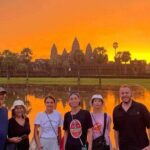
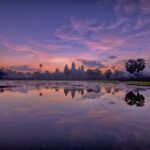
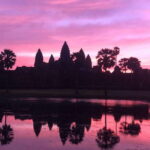
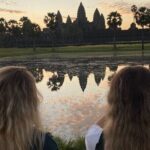
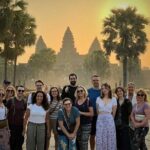
Most Siem Reap temple tours sell sunrise. This one earns it with timing. You’re picked up from your hotel before sunrise, typically between 4:30 am and 5:00 am, then driven to Angkor Wat with enough time to get your bearings before the light show begins.
Here’s what makes sunrise worth paying for: Angkor Wat feels different at first light. The air is cooler, the stone looks sharper as the sun clears the horizon, and your photos come out with less haze than later in the day. More importantly, you’re there before the full day crowd energy. That means you can actually slow down and take in details, instead of rushing photo to photo.
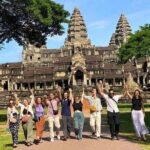
You’ll spend about two hours around Angkor Wat during this early session. Some of the magic here is just the rhythm—watch the sky shift, then settle into the temple’s geometry as the shadows move. And if you’re new to Angkor, a good guide makes a big difference. The strongest feedback I saw emphasized guides who explain what you’re seeing as you go, not just recite facts.
A few more Siem Reap tours and experiences worth a look

A quick consideration
That early start is the main drawback. You’ll want an easy, early dinner the night before and a calm morning routine so you don’t arrive half-awake. If you’re the type who needs coffee before thinking, bring that energy—or at least arrive ready to go.
Beyond the postcard: Angkor temple circuit in daylight
After sunrise, the day shifts into classic Angkor sightseeing. The route hits temples that most people want to see, but it also builds in short stops so you’re not staring at stone for hours without a break.
Srah Srang for breakfast (and a breather)
The day includes a stop at Srah Srang, a reservoir area tied to royal-era waterworks. You also get a short break in the village for breakfast with local food. This matters more than it sounds. Temple days in Cambodia can turn into a grind: sweat, walking, and waiting. The breakfast stop gives you a reset before you climb deeper into the Angkor highlights.
On the food side, you’re not stuck with a bland option. One standout detail from feedback was that the meal included Khmer noodle soup and traditional desserts like palm cake. Even if you’re not a huge “try everything” eater, it’s a nice way to experience Cambodian flavors during the most tourist-saturated part of your trip.
Pre Rup for brick-structure drama
Next comes Pre Rup, known for its brick temple character. This is one of those temples where the structure doesn’t feel like a flat monument. It feels carved and stacked, and it’s a great match after Angkor Wat’s limestone scale. Plan for some walking and steps, and use the guide’s pacing—this is the kind of site you appreciate more when you slow down and let shapes come into focus.
Ta Prohm: the jungle temple with attitude
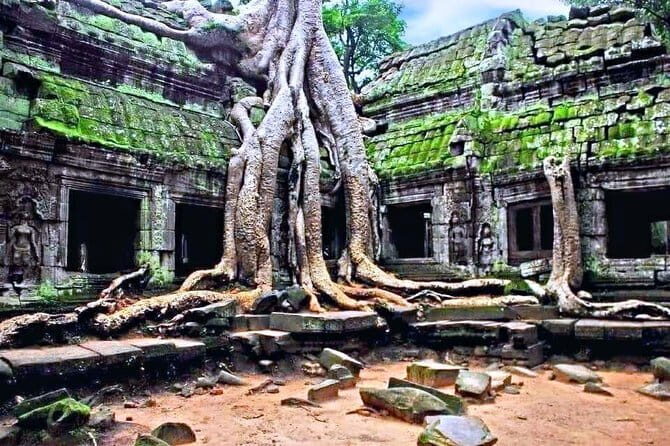
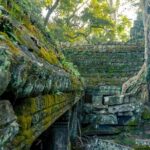
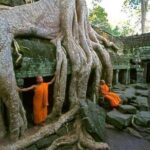
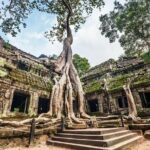
Then you reach Ta Prohm, famous for its jungle setting—trees and huge roots reaching through the architecture. This is the moment many people came for, and it’s also the one where crowds can turn photos into a traffic jam.
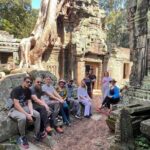
A good guide helps here by managing the flow. Instead of you trying to invent your own route, you get directed to the angles that show the scale and keep the story clear. Ta Prohm also works as a break from the more orderly-looking temples. It feels wild, almost out of control, which is exactly why it’s memorable.
Bayon and the faces of Angkor Thom
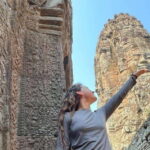
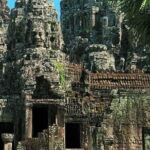
Next up: Bayon, with the famous smiling faces. This stop is where Angkor’s “myth meets power” vibe becomes obvious. Bayon’s stone faces don’t just sit there—they dominate the space you’re standing in, making the temple feel alive from every direction.
A quick lesson that’s genuinely helpful: Bayon is all about perspective. If you only take one photo from one spot, you miss how the faces line up across platforms. Your guide can help you position yourself so you get the full effect without playing hopscotch in the middle of other visitors.
Terrace of the Elephants and the Leper King
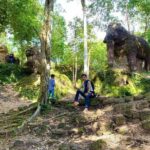
The circuit continues through two quieter but still iconic areas of Angkor Thom: the Terrace of the Elephants and the Terrace of the Leper King. Even with short time windows, these stops are useful because they show how Angkor wasn’t only about temples—it was also about ceremonial space and royal display.
These terraces also tend to be less “pose for the big shot” and more “look at the carvings and imagine the function.” If you like archaeology vibes, this part scratches that itch without demanding a museum visit.
South Gate: the grand exit point
The day ends with Angkor Thom South Gate, a world-famous landmark tied to King Jayavarman VII. This is a fitting wrap because gate architecture gives you a sense of how the city was planned—entry, procession, and control. Even if you don’t know the dates and dynasties, the scale communicates authority fast.
After the temple run, you transfer back to your accommodation.
Phnom Kulen day: rural life, sacred river spots, and views
Day two shifts your scenery from temple stones to jungle hills and countryside energy. The pickup time moves to a more normal travel day schedule: between 8:00 am and 8:30 am. The ride out is part of the experience because you get glimpses of rural routines and daily life, not just monuments.
You’ll then spend about 1.5 hours at Phnom Kulen National Park, which gives you time to settle in before the more specific stops.
Poeng Ta Kho: the cliff viewpoint moment
One of the best “wow for the effort” stops is Poeng Ta Kho (often described as an amazing cliff). This is where you get commanding views—deep jungle below and mountain silhouettes around you. It’s also the kind of stop that makes photos feel worth the day-long walking. The views are the reward for being up for more than temples.
1000 Lingas and the sacred water setting
Next is 1000 Lingas, linked with a Sacred River and ancient Hindu symbols. You also get a spot connected with multi-level falls that can feel ideal for refreshing and cooling off—at least in the way the site is described.
Even if you’re not a religion-history person, this works because it’s physical. You see symbols carved along water and you understand why sacred sites often attach to rivers: water equals life, and it draws people back again and again.
Preah Ang Thom: the reclining Buddha
You also visit Preah Ang Thom, known for the largest 16th-century reclining Buddha statue in Cambodia. A reclining statue changes how you experience the space. Instead of looking straight up at towering forms, you read the scene from a different angle—long, laid-back, and still powerful.
Timing note for your expectations
Day two includes several stops, each with its own pacing. Some are short (like viewpoints and statue time), others are longer. It helps to go with the flow rather than trying to “win” every stop with a maximum photo count. This day rewards calm attention.
The picnic at Phnom Kulen waterfall: a real break, not a restaurant detour
The highlight on the second day for comfort is the Phnom Kulen Waterfall stop with a picnic lunch. This is where the tour earns its “picnic” name.
You get around two hours at the waterfall area, so it’s not just a quick snack break while someone counts minutes. You can slow down, eat, and enjoy the sound and coolness that comes with waterfall locations. The food is local, and the point isn’t fine dining—it’s relief. After temple steps and cliff viewpoints, you want something simple and satisfying.
This is also the moment where the small-group feel shows up again. In a group of up to 14, you tend to find your own rhythm faster, rather than spending lunch lining up and bumping shoulders.
One consideration
Waterfall areas can be slippery depending on conditions. The tour includes water and towels, which helps, but you’ll still want to be mindful while walking around.
Guides, drivers, and the little details that make it feel smooth
A tour can be “good on paper” and still feel exhausting in real life. The feedback here points to a strong pattern: friendly, organized guiding and calm transportation.
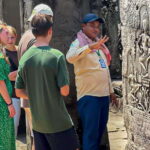
Specific guide names that show up in the feedback include Seila, Sam (written in one place as Sam Made), Mony/Moni, Sotin, and Ho. People also highlight drivers—like Tra—plus the fact that guides help with photos, not just pointing at temples.
That matters for you if you’re traveling with a phone camera and you want photos that look like you planned the shot, not like you caught it by accident. Having someone who understands where light and angles work saves time and frustration.
On the logistics side, you get A/C transportation and a cool bottle of water and towels, which sounds minor until you’re standing in heat and need hydration fast. And with a maximum of 14 travelers, you avoid that mass-tour feeling where the guide keeps talking but nobody gets close enough to hear.
What you really pay for: $79 plus the Angkor pass reality
Let’s talk value plainly.
The base price is $79 per person. Included in that price: breakfast, picnic lunch, a professional English-speaking guide, A/C transportation, cool water and towels, and Kulen Mountain admission ticket.
Not included: the Angkor pass ($37 per person) and soft drinks.
So the real temple-entry cost for most people becomes $79 + $37. Even then, you’re not just buying access—you’re buying:
- a sunrise start at Angkor Wat,
- a full guided loop through major Angkor sites,
- transport across two days,
- and food breaks that keep the schedule from turning into a stress marathon.
If you were trying to piece this together yourself, you’d still need early transport, an English guide (for the explanations), and admissions management. This tour bundles those pieces.
Who should book this 2-day combo (and who might want something else)
This tour is a great fit if you:
- want Angkor Wat sunrise plus a full Angkor circuit in a guided format,
- like having food included so you can focus on the sights,
- prefer small-group movement over giant buses,
- and you want a second day that’s more than temples—Phnom Kulen waterfall picnic and scenic stops.
It’s less ideal if you:
- hate waking up before sunrise and can’t tolerate an early pickup,
- or you’re planning to keep the budget ultra-tight and don’t want to pay the additional Angkor pass.
Should you book? My practical verdict
Book it if you want the easiest path to seeing the best-known Angkor sites with a guide, then getting out into the hills for Phnom Kulen and a real waterfall meal moment. The combination of sunrise timing, included meals, A/C transport, and guide support for photos and explanations is the value engine here.
If the only thing you care about is saving money and you’re comfortable planning temples, admissions, and sunrise timing on your own, you might find a cheaper DIY setup. But if you’d rather spend energy on sights instead of logistics, this is the kind of tour that makes a complicated place feel organized.
FAQ
FAQ
What time is pickup for Angkor Wat sunrise?
Pickup is typically between 4:30 am and 5:00 am before sunrise, with the day starting very early.
Is the Angkor pass included in the tour price?
No. The Angkor pass is not included and costs $37.00 per person.
What meals are included across the two days?
You get breakfast on Day 1, and on Day 2 you get a picnic lunch at the Phnom Kulen waterfall.
Is Kulen Mountain admission included?
Yes. The tour includes the Kulen Mountain admission ticket.
How big is the group for this tour?
The tour has a maximum of 14 travelers.
Is transportation included, and is it air-conditioned?
Yes. The tour includes A/C transportation (minivan/minibus) plus pickup from your hotel and transfers back at the end of each day.