REVIEW · SIEM REAP
2-Day Best of Angkor Wat and Tonle Sap Lake Tour
Book on Viator →Operated by Green Era Travel · Bookable on Viator
Angkor moves fast, so you need a plan. This private 2-day Siem Reap tour strings together the big hits with hotel pickup and guided temple stops that keep you focused instead of lost among the ruins.
Two things I really liked right away: you start from your hotel in an air-conditioned vehicle, and the guide keeps each site moving at a smart pace. You also get a real sense of how each temple connects to Khmer power, not just a list of stone carvings. Our guide Sophy also felt especially attentive, with descriptions that made the Bayon and Ta Prohm stops easier to understand on the spot.
One consideration: the Angkor Pass is required and not included in the $99 price, so you’ll need to plan for that extra cost at the ticket office, plus follow the temple dress rules. If you show up in the wrong clothes, you’ll lose time fast.
In This Review
- Key highlights you’ll feel on the ground
- First Look: what this 2-day route actually delivers in Siem Reap
- Angkor Wat: starting at 8:00 and getting the Angkor Pass done
- Angkor Thom South Gate: the scale hits you before the explanations do
- Bayon Temple: Jayavarman VII’s state temple in the center of it all
- Terrace of the Elephants and the Leper King: carvings with a job to do
- Ta Prohm: jungle drama, controlled time, and smart expectations
- Kampong Phluk and Tonlé Sap: a second day that changes your perspective
- Price and value: what $99 covers and what you still need to budget
- Getting the dress code right before you arrive
- Timing, pacing, and how you’ll feel by the end of Day 1
- Who should book this Siem Reap 2-day tour
- Should you book this 2-day Angkor Wat and Tonlé Sap tour?
- FAQ
- What’s included in the 2-day tour price?
- What extra costs should I expect?
- What time does pickup happen on each day?
- Is this tour private or shared with strangers?
- How does the Tonlé Sap floating village day work?
- What dress code do I need for the temples?
- Can I cancel and get a full refund?
Key highlights you’ll feel on the ground
- Hotel pickup plus a private air-conditioned vehicle means less stress before you even reach the first temple
- Angkor Wat + Angkor Thom core loop covers the most important highlights in one well-structured Day 1
- Bayon and Jayavarman VII’s state temple context helps the sculptures make sense
- Terrace of the Elephants and the Leper King carvings add variety beyond the big-name temples
- Private boat trip on Tonlé Sap with a guided visit gives you a different side of Cambodia
- Temple dress code is strict: trousers or knee-length skirt/dress for entry
First Look: what this 2-day route actually delivers in Siem Reap

If you’re short on time in Siem Reap, you want two things: clear guidance and efficient routing. This tour is built around that. Day 1 focuses on the Angkor Archaeological Park UNESCO zone, hitting Angkor Wat and then moving into Angkor Thom’s key monuments. Day 2 shifts gears to water life around Tonlé Sap, with a boat ride to Kampong Phluk floating villages.
The “best of” part isn’t about skipping everything. It’s about choosing stops that give you quick context. The guide’s job here is not just storytelling. It’s helping you read the site layouts, understand what you’re looking at, and avoid spending your limited time wandering aimlessly in the heat.
A few more Siem Reap tours and experiences worth a look

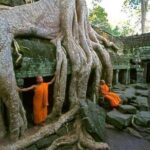
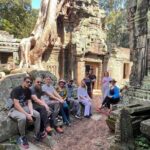
Angkor Wat: starting at 8:00 and getting the Angkor Pass done
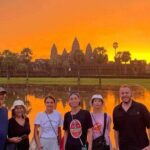
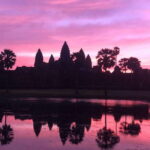
Day 1 begins with pickup around 8:00 am from your hotel in Siem Reap, in a private air-conditioned vehicle. That matters more than it sounds. Angkor days can drain you fast, and starting comfortable gives you a better shot at enjoying the morning light and the early pace.
Next you’ll head to the Angkor Wat Ticket Office. This is where you pay and get your Angkor Pass, which is required. The pass is listed as $37 per person and is not included in the tour price, so plan for it.
What you’ll do at Angkor Wat itself is a guided visit paced for a first-timer. You get about 3 hours here, which is enough time to:
- see the temple’s main spaces without rushing through them
- understand the symbolism and the way Khmer kings framed power through architecture
- ask questions while you’re standing in front of the real details
Potential drawback: Angkor Wat is a major, high-demand site. Even with a guide and a plan, expect crowds and the usual hot-and-sunny conditions. The upside is that your time is structured, so you’re not stuck guessing where to go next.
Angkor Thom South Gate: the scale hits you before the explanations do
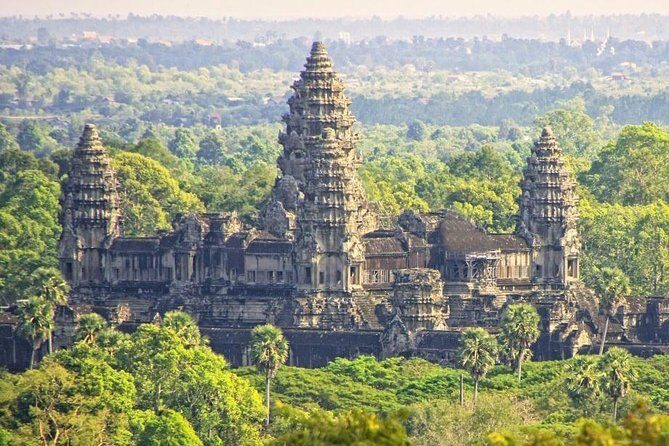
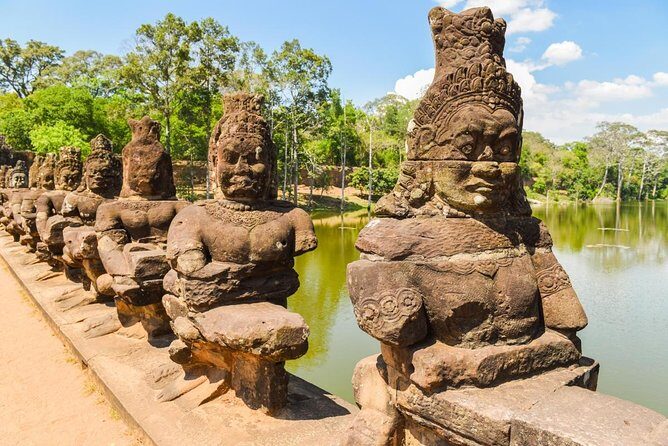
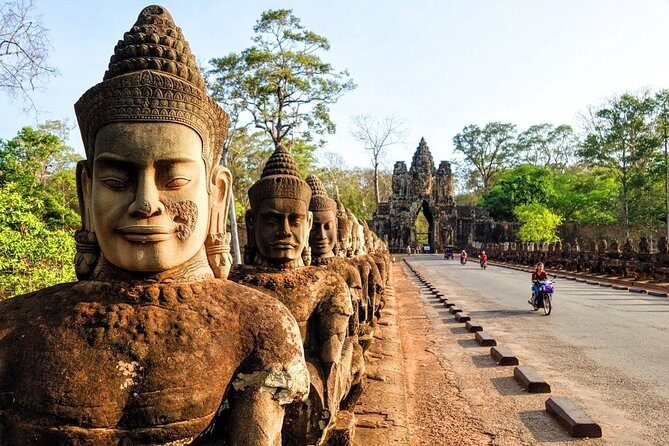
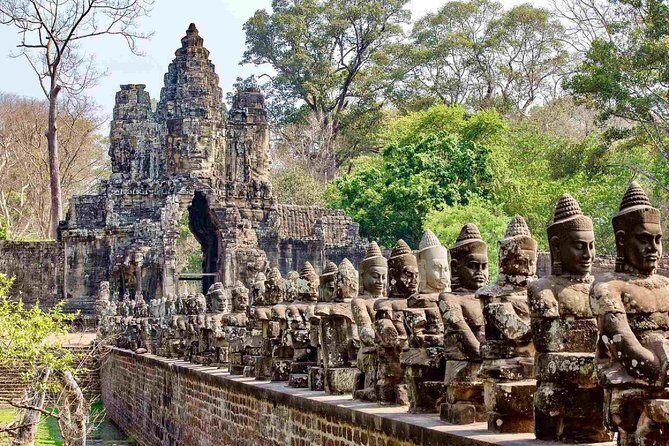
After Angkor Wat, the tour moves to Angkor Thom South Gate. This is only about 30 minutes, so think of it as a strong visual entry point rather than a long, slow visit.
The big selling point here is scale. You’ll see walls described as about 6 meters wide, 8 meters high, and 13 kilometers long, surrounding the complex. That’s the kind of detail that makes the city feel less like “a temple stop” and more like a designed world. Your guide’s explanations help you connect what you see in front of you—walls, monuments, the sense of defense and order—with the Khmer idea of kingship and ceremony.
Because it’s short, you should treat this stop as a briefing. You’ll be using that mental map for what comes next.
Bayon Temple: Jayavarman VII’s state temple in the center of it all
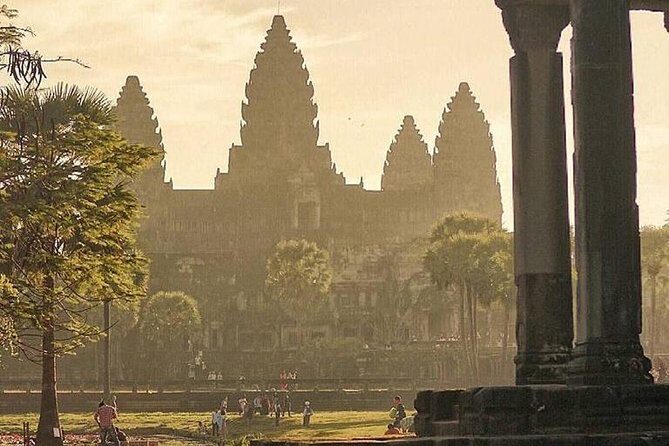
Next comes Bayon Temple, with about 45 minutes on the schedule. Bayon is one of those places where people either feel overwhelmed or suddenly get it, depending on whether they understand the context. Here, the context is the point.
Your guide frames it as a richly decorated Khmer temple built in the late 12th or early 13th century, associated with Mahayana Buddhist King Jayavarman VII. That matters because Bayon isn’t just impressive stone. It’s tied to a specific moment in Khmer history and the king’s religious and political messaging.
What you’ll get from the guided approach:
- a clearer sense of why the temple is centered and how the layout guides your movement
- a better ability to spot key sculptural themes instead of only noticing faces or textures
- fewer “blank moments” where you’re just hoping someone explains what you’re seeing
Practical tip from how this kind of stop works: wear sun protection and take short pauses if you need them. Bayon is visually intense, and the guide’s job is to keep you steady, not sprinting you through exhaustion.
Terrace of the Elephants and the Leper King: carvings with a job to do
Then you’ll head to Terrace of the Elephants, scheduled at about 1 hour. This is one of the best stops for understanding how Angkor used architecture for theater.
You’ll learn it served as a platform where the king could welcome back his victorious army. That one line changes how you view it. It’s not just an old step-and-stone platform. It’s a stage for power.
Your guide also includes the Terrace of the Leper King, known for detailed carvings. The key value here is variety. You move from Bayon’s busy ceremonial feel to a terrace meant for public meaning. If you like ruins where the stones seem to have a purpose beyond decoration, this stop is a strong payoff.
If there’s a drawback, it’s that terraces can feel repetitive if you’re exhausted. But with a guide keeping you anchored to what to notice, it stays interesting instead of becoming “more stairs.”
Ta Prohm: jungle drama, controlled time, and smart expectations
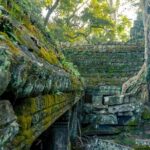
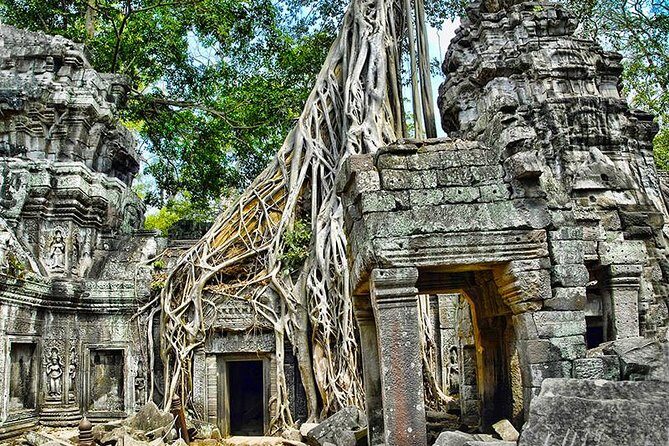
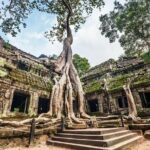
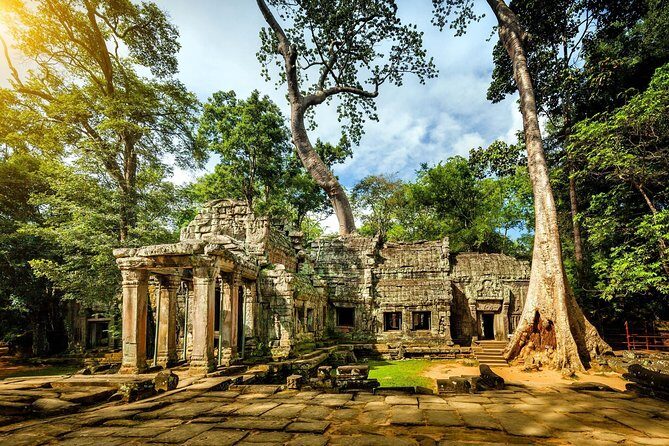
The final Day 1 temple stop is Ta Prohm, also about 1 hour. Ta Prohm is famous for the way nature holds on. It’s a 12th-century temple, and it was left—controversially—by French archaeologists so you could see the destructive power of jungle growth.
That description sounds dramatic, and it is, but the practical reason to include Ta Prohm in this exact route is balance. After the “big planned” feel of Angkor Wat and Bayon, Ta Prohm shows a different relationship between humans and time. You see how the site breathes with vines, roots, and shade.
What you should keep in mind:
- walking can involve uneven ground and shaded areas
- it can be cooler under trees, but you’ll still be moving in a humid environment
- photos are common here, but your guide will help you see beyond the obvious angles
By the end of Ta Prohm, you’ll likely feel both impressed and a little stone-saturated. That’s normal. The next day’s boat trip is a smart break from “more temple.”
Kampong Phluk and Tonlé Sap: a second day that changes your perspective
Day 2 starts again with pickup at 8:00 am, then a drive of about 45 minutes into the countryside. You’ll reach a quay and board a local boat for a 1.5-hour ride to Tonlé Sap Lake.
This is the moment where the tour stops being only about ancient temples and starts showing a living Cambodia. The floating villages at Kampong Phluk are visited with a guided approach, with the tour positioned as an insight into a unique way of life.
One thing I like about this structure: it’s not a quick “we see boats, we go back” add-on. The boat ride is part of the experience. It’s how you actually get to Tonlé Sap instead of just staring at water from the shore.
What to expect during the ride and visit (without overpromising specifics): you’ll move through the water landscape of the Tonlé Sap region, then you’ll transfer that scenery into an explanation of how communities live around the lake. It’s a calmer rhythm than Day 1, and that shift is valuable if you want your trip to feel like a real two-day arc.
A small practical note: because the second day involves a boat, you’ll want to take the same “comfortable gear” attitude—closed-toe shoes, lightweight layers, and a hat you trust in open air.
Price and value: what $99 covers and what you still need to budget
The tour price is $99 per person for two days. That’s not just “a guide.” The inclusions are meaningful:
- hotel pickup and drop-off
- a private air-conditioned vehicle
- an English-speaking guide
- a private boat trip at Tonlé Sap
- cold bottled water in the car
What’s not included:
- Angkor Pass at $37 per person (required)
- food and drinks
- travel insurance
So your realistic planning number is about $99 + $37, or around $136 per person, before meals. For a private, two-day package that combines temple guiding with a boat day, that can be solid value—especially when you consider the costs and time you’d spend trying to piece this together on your own.
The “private vehicle + guided stops” part is the value that’s hard to replicate. Angkor is not a casual DIY day unless you’re ready to work with maps, time slots, and long lines. Here, you get a plan and a driver.
Getting the dress code right before you arrive
Cambodia’s temples are welcoming, but they’re also strict about coverings. For this tour, you’ll want to follow the rule:
- only trousers or a knee-length skirt/dress is permitted
This matters because it can affect entry at multiple stops. If you’re wearing shorts, you might be turned away or forced to scramble for a workaround.
Pack-wise, I’d treat this like you’re dressing for a long day in heat:
- breathable trousers or lightweight long pants
- a shirt that covers appropriately
- a hat and sunscreen
- comfortable shoes for walking and terraces
Also note the fitness note: the tour says you should have moderate physical fitness. If you get tired on steps or long walks, plan for slower pace and more water breaks.
Timing, pacing, and how you’ll feel by the end of Day 1
This itinerary is structured, not random:
- Day 1 runs through core Angkor sights with set durations (3 hours, then shorter focused visits, ending with 1 hour at Ta Prohm)
- Day 2 is one main water experience, anchored by the 45-minute drive and 1.5-hour boat ride
In practice, Day 1 is the heavy one. You’ll cover multiple temple zones back-to-back. The advantage of a guided route is that you spend less time deciding and more time understanding.
If you’re the type of person who gets impatient when you’re told what to look at, you might still enjoy this. The guide’s role is to give you a reason for each stop, so you don’t just see stone. You learn where to focus your attention.
Who should book this Siem Reap 2-day tour
This tour fits well if you:
- want a guided highlights route instead of a DIY day
- like learning how Khmer rulers connected temples, religion, and public ceremony
- want a real contrast day with Tonlé Sap floating life
- prefer pickup convenience and a private vehicle in the heat
It’s also a good pick for families, since the tour states children must be accompanied by an adult, and the pacing is guided rather than “figure it out.”
If you’re someone who wants hours of free time at each temple without a schedule, this might feel structured. But if you want your two days to add up into a coherent Angkor story, it’s a smart way to spend your time.
Should you book this 2-day Angkor Wat and Tonlé Sap tour?
I’d recommend booking if you want an efficient, guided route that covers Angkor’s most important monuments and then gives you a meaningful second day on Tonlé Sap. The combination of temple guiding and a private boat ride is the big reason the value works.
The main reason not to book is budgeting and logistics: you must add the required Angkor Pass cost, follow the temple dress code, and accept that Day 1 is physically active with lots of walking on uneven ancient surfaces. If you can handle those, you’ll get a trip that feels planned and teaches you what you’re seeing.
If you’re deciding today, this is also one of those tours that tends to get planned early. When a trip is booked about 185 days in advance, it usually means people trust the structure and the timing.
FAQ
What’s included in the 2-day tour price?
The tour includes an experienced English-speaking guide, hotel pickup and drop-off, a private air-conditioned vehicle, a private boat trip on Tonlé Sap Lake, and cold bottled water on the car.
What extra costs should I expect?
You’ll need to pay the required Angkor Pass at the ticket office, listed as $37 per person. Food and drinks are not included, and travel insurance is not included.
What time does pickup happen on each day?
Pickup is at 8:00 am each day, from your hotel in Siem Reap.
Is this tour private or shared with strangers?
This is described as a private tour/activity, meaning only your group participates.
How does the Tonlé Sap floating village day work?
You drive about 45 minutes to a quay, then board a local boat for about a 1.5-hour ride to Tonlé Sap Lake. You’ll have a guided visit to the Kampong Phluk Floating Village.
What dress code do I need for the temples?
Only trousers or a knee-length skirt/dress is permitted.
Can I cancel and get a full refund?
Yes. You can cancel up to 24 hours in advance for a full refund. If you cancel less than 24 hours before the experience start time, the amount paid is not refunded.