REVIEW · SIEM REAP
2-Day Eight Temple Tour with Optional Sunrise
Book on Viator →Operated by Angkor Pura Tours · Bookable on Viator
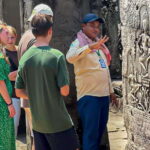
Angkor gets better when you skip the hassle. This two-day private eight-temple tour in Siem Reap brings in private guide Sam and private transport, so you spend less time figuring logistics and more time actually looking at stone carvings and temple views. I like that you can move at your own pace without crowds slowing you down, and the guide’s storytelling style makes the places easier to grasp. One trade-off: food and drinks aren’t included, and you may still need to budget for a 3-day temple pass.
The tour covers a strong mix of famous and less-fussed stops, from the steep climb at Pre Rup to the jungle drama of Ta Prohm, then on to Angkor Wat and Bayon. You’ll get cold water, a mobile ticket, and hotel pickup in Siem Reap, plus an optional sunrise add-on if you want to start early. Just plan to follow the dress rule—shoulders and knees covered—so you’re not stuck outside temples.
In This Review
- Key Things I’d Bet on Before You Book
- Price and Value: What $98 Really Buys You
- Private Hotel Pickup and Mobile Ticket: Less Hassle, More Looking
- Day 1: Pre Rup’s Mountain-Temple Climb and the Big Countryside Views
- Banteay Samre and Banteay Srei: Khmer Architecture in Two Very Different Moods
- Ta Prohm and Banteay Kdei: Jungle Ruins and the Quiet Power of Monks’ Cells
- Day 2: Angkor Wat, Optional Sunrise, and Why Morning Still Matters
- Preah Khan and Bayon: Less Restored Moments and the Face-Tower Experience
- What You’ll Likely Love Most (And One Thing to Watch)
- Who Should Book This Eight-Temple Tour?
- Should You Book This Tour in Siem Reap?
- FAQ
- How long is the eight-temple tour?
- Which temples are included?
- Is this a private tour?
- Do you get hotel pickup in Siem Reap?
- What’s included in the price besides the guide?
- Is food or drinks included?
- Do I need an Angkor temple pass?
- What is the dress code for temple visits?
- Can I cancel for free?
- Where does the tour start?
Key Things I’d Bet on Before You Book
- Private tour, your pace: No crowd bottlenecks holding you up.
- Guide Sam’s impact: Strong storytelling and great photo angle help.
- Eight major stops in two days: A packed, efficient route without feeling rushed at every step.
- Cold water included: Small detail, big help in Siem Reap heat.
- Mix of temple styles: Mountain temple, pink sandstone, jungle-overgrown ruins, and face-tower icons.
- Optional sunrise: Choose early starts depending on your energy level.
Price and Value: What $98 Really Buys You
At $98 for about two days, you’re not paying just for temple entry. You’re paying for the part that normally eats time on an Angkor trip: a guide, private transport sized for your group, and a smoother flow between sites. Cold water is included too, which matters more than it sounds on day one when you’re walking in the heat.
The main things NOT included are also clear, which helps you budget like a grown-up:
- Food and drinks
- Accommodation
- A 3-day temple pass ($62 per person)
So the value math is simple: if you already know you’ll pay for meals and you’ll need that temple pass, the tour price still makes sense because it bundles the hard-to-organize parts. You’re effectively outsourcing planning, routing, and interpretation, which is what you want when you’re on a tight schedule or you’d rather spend time watching stonework than studying maps.
If you’re the type who enjoys temples but doesn’t want to wrestle with timing, this price is pretty reasonable for what you get—especially with the private structure that helps you avoid the usual standstill moments.
A few more Siem Reap tours and experiences worth a look

Private Hotel Pickup and Mobile Ticket: Less Hassle, More Looking
This is a private tour, meaning only your group participates. That one line changes the vibe. Instead of being one face in a long line, you can pause when you want, keep walking when you’re ready, and change pace without asking permission.
Hotel pickup in Siem Reap is included, which saves you the morning scramble. You also get a mobile ticket, which typically helps you move through entry steps faster than juggling paper at the last second (and yes, that matters when you’re trying to catch good light at popular places).
A small practical win: the tour includes cold water. It won’t make the heat disappear, but it keeps you functional, especially if you’re doing a steep climb like Pre Rup.
The one logistical “gotcha” is that your day is still shaped by what you choose to see most closely. If you’re the fast-walker who wants broad views, you’ll glide. If you’re the slow-linger type who reads every carving, plan for extra time and expect the day to feel full—but that’s the point of doing a strong eight-stop route.
Day 1: Pre Rup’s Mountain-Temple Climb and the Big Countryside Views
Pre Rup is the kind of temple that earns your effort. It’s called a mountain temple because of the steep climb to the towers at the top, and you’ll feel that climb immediately—this is not a flat stroll.
Why it’s worth it: once you’re up there, the views open into the surrounding countryside. It’s one of those moments where you finally understand the scale of Angkor beyond the temple walls. Also, Pre Rup is one of the earlier temples built by Khmer kings, which gives it a strong sense of origin and development in the Angkor story. It’s a popular temple, but the private setup helps you control your timing instead of being trapped in a slow-moving crowd.
How I’d handle it: wear shoes you trust for uneven stone steps, and don’t rush the climb. Give yourself time to breathe before you reach the top—because the better you feel, the longer you’ll stay to look and compare carvings and layout.
Then the day moves on, building momentum from that first “wow” view: you’re going from elevation and perspective to architecture and detail, so you’ll feel the route change gears in a good way.
Banteay Samre and Banteay Srei: Khmer Architecture in Two Very Different Moods
After Pre Rup, Banteay Samre is a shift in tone. It’s described as a stunning example of Khmer architecture built in a similar style to Angkor Wat. That similarity is useful for first-timers because it helps you spot design patterns. If Angkor Wat feels like a blur when you first see it, Samre gives your brain some structure beforehand.
It’s also a practical stop length-wise. You can easily spend time exploring the towers and detailed carvings without feeling like you’re running late for the next location.
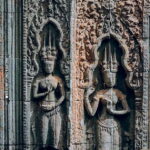
Then comes Banteay Srei, and this one changes everything visually. This temple is made from pink sandstone from quarries in the Kulen Mountain range. The color alone gives you instant recognition, and the carvings are famously intricate.
There’s also a legend tied to the work: if the story is true, the carvings were carved by women. Whether you take the legend literally or enjoy it as a piece of cultural lore, it adds meaning to what you’re seeing. You’ll likely find your attention getting drawn to details more than usual here, because the stone and carving style practically demand close looking.
One thing to keep in mind: this part of day one is about detail and texture. If you’re only skimming, you’ll miss what makes it special. If you enjoy pausing and letting your eyes adjust, Banteay Srei can become a personal highlight.
Ta Prohm and Banteay Kdei: Jungle Ruins and the Quiet Power of Monks’ Cells
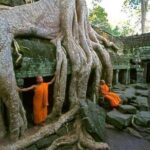
Ta Prohm is the temple most people connect with instantly, mainly because it was used as a set for Tomb Raider starring Angelina Jolie. Even if you’re not a movie person, it’s still one of the most striking ways to experience Angkor’s relationship with nature.
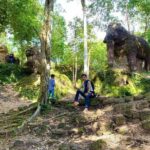
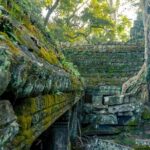
Ta Prohm has been left to the elements, and the jungle is growing through the middle of the building. That’s the point: it doesn’t try to look finished. You see crumbling stone, root-like presence, and the sense that time is still working on the structures. It’s dramatic, but it’s also oddly calming once you stop moving.
A drawback to plan for: photos at Ta Prohm can be tricky if you’re trying to shoot fast in uneven light. Slow down, find one angle, and take a few frames rather than racing around. This is where a guide helps; in particular, Sam’s photography skills and instincts for photo angles came through in one review, and that kind of practical guidance can save you time while improving your results.
Right near Ta Prohm is Banteay Kdei, known as the Citadel of Chambers or the Citadel of Monks’ Cells. It’s a Buddhist temple and a popular stop on the trail. Where Ta Prohm is about chaos and vines, Kdei feels more about the internal feel of stone chambers and religious function.
If you want contrast, this is a strong pairing. You move from jungle-overgrown drama to a temple that lets you focus on structure and the idea of monastic spaces.
A few more Siem Reap tours and experiences worth a look
Day 2: Angkor Wat, Optional Sunrise, and Why Morning Still Matters
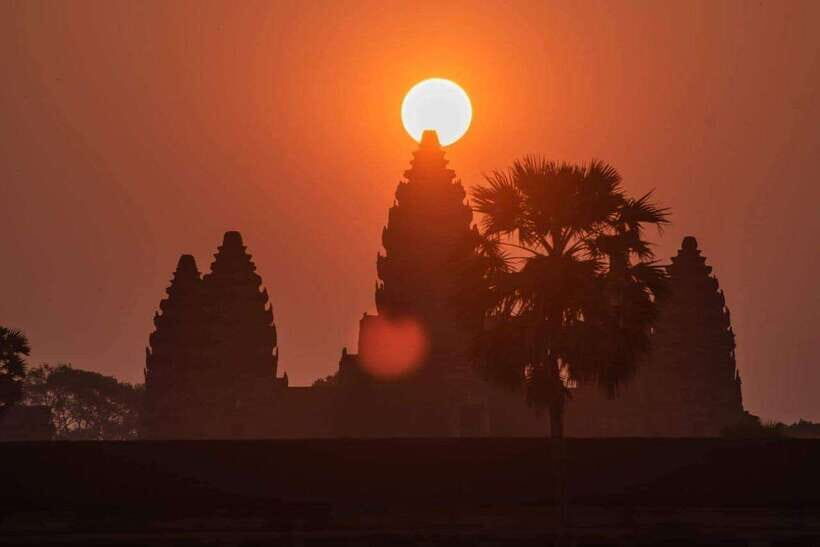
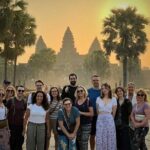
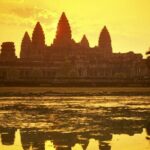
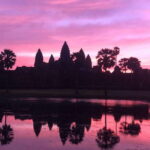
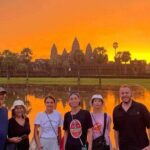
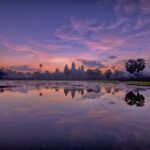
Day two is built around Angkor Archaeological Park’s top draw: Angkor Wat. It attracts over 2 million visitors per year and is the largest temple built during the Khmer empire. That scale can be hard to process at first glance, so it’s smart that your second day starts here while you’re still mentally fresh from day one.
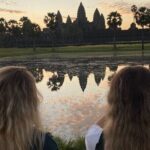
The optional sunrise is available, and this is one of those places where early light changes the experience. Even without specific timing details, the basic logic holds: sunrise often means softer light and a better chance for photos before the busiest periods. If you’re not a morning person, you can still plan a regular start—but deciding now, before you’re standing there tired, makes everything smoother.
Angkor Wat isn’t just a big building. It’s an architectural statement. Spend time orienting yourself: look at layout cues, then work your way into details. The guide’s stories help connect what you see to why the temple matters, which makes the stone less abstract.
When you’ve had your fill, the tour moves you forward again, this time toward temples that feel more open to change and time.
Preah Khan and Bayon: Less Restored Moments and the Face-Tower Experience
Preah Khan is another 12th-century temple built by King Jayavarman VII. What makes it different is that it’s been left to the elements. Visitors can still reach and explore it safely, but very little restoration work has taken place.
That difference matters because it changes how you interpret the place. It’s not about perfect symmetry or polished surfaces. It’s about layers—what weather and time have done—and how the original form still communicates power.
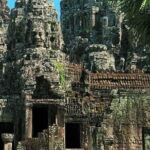
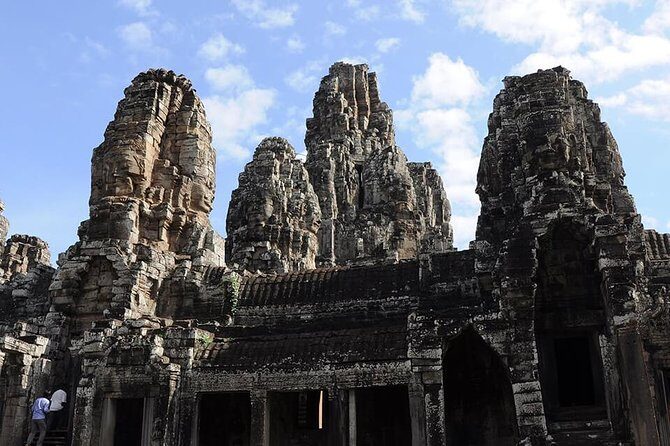
Then you arrive at Bayon, the majestic temple many people end up loving. It has remnants of Hindu inscriptions as well as both Mahayana and Theravada Buddhist inscriptions. That mix tells a story of religious change across time, and it keeps Bayon from feeling like a one-note stop. You’re not just seeing a temple. You’re seeing how belief systems layered onto existing sacred spaces.
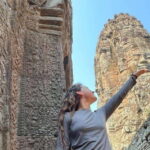
Bayon also delivers on the famous visual style most visitors come for. You’ll spend a few hours exploring nooks and crannies, and that time is important. The best results come when you slow down and notice how the faces, carvings, and angles shift as you move.
If you only did one day, you’d get an impressive snapshot. Doing day two this way gives you the range: grand iconic geometry at Angkor Wat, then more timeworn and varied spaces at Preah Khan and Bayon.
What You’ll Likely Love Most (And One Thing to Watch)
Based on how the tour is set up, the top strengths are pretty consistent:
- Your guide’s ability to make the stones make sense. Sam’s master-storyteller style is exactly the kind of help that turns random carvings into meaningful scenes.
- The private pacing. The promise of no crowds holding you up isn’t marketing fluff. When you’re not trapped in a slow group rhythm, you can choose when to pause, when to move, and when to take photos.
- Efficient coverage. Eight temples in two days is a lot, but the structure keeps it feeling organized instead of chaotic.
The one thing you should watch is energy and timing. This is a tight two-day run, and you’ll be walking, climbing, and dealing with temple heat. Pre Rup’s steep climb is a real factor, and the jungle and stone surfaces at Ta Prohm mean you’ll want comfortable footwear and patience.
If you can handle an active day, you’ll feel rewarded. If you’re hoping for a slow, relaxed vacation pace, consider whether two full days is too much.
Who Should Book This Eight-Temple Tour?
This tour fits best if you:
- Want a strong first Angkor experience without stress
- Prefer a private guide who can shape what you notice
- Like doing photos but don’t want to guess where to stand
- Have limited time in Siem Reap and want a coherent route
It may not fit you as well if you:
- Want food included (you’ll need to plan meals)
- Hate early mornings unless the optional sunrise is skipped
- Prefer fewer temples and more downtime
Overall, it’s a smart choice for first-timers who want variety: mountain views, pink sandstone carvings, jungle-overgrown ruins, and the major icons of Angkor Wat and Bayon.
Should You Book This Tour in Siem Reap?
If you’re weighing options, I’d book this one if you value a guided, private flow over DIY planning. At $98, you’re paying for the practical stuff that makes Angkor feel manageable: hotel pickup, private transport, cold water, and an eight-temple route with a guide who can turn temple stops into stories you actually remember.
If you already have a temple pass and you can budget for meals, the value gets even better. The route is full, but it’s the kind of full that feels purposeful—each stop has a different personality, so you don’t end up seeing the same temple type over and over.
If you’re unsure, here’s my simple test: can you handle two days of active walking and want a guide? If yes, this is a solid bet.
FAQ
How long is the eight-temple tour?
The tour runs for 2 days, approximately.
Which temples are included?
The tour includes Pre Rup, Banteay Samre, Banteay Srei, Ta Prohm, Banteay Kdei, Angkor Wat, Preah Khan, and Bayon.
Is this a private tour?
Yes. It’s private, so only your group participates.
Do you get hotel pickup in Siem Reap?
Yes. Private transport includes convenient pick-up from your Siem Reap hotel.
What’s included in the price besides the guide?
A tour guide, cold water, and suitable transport for the group size are included. You also get a mobile ticket.
Is food or drinks included?
No. Food and drinks are not included.
Do I need an Angkor temple pass?
A 3-Day Temple Pass is not included. The cost is listed as $62 per person.
What is the dress code for temple visits?
Guests must cover their shoulders and knees to enter the temples.
Can I cancel for free?
Yes, free cancellation is available. You can cancel up to 24 hours in advance for a full refund.
Where does the tour start?
The tour starts in Siem Reap, Siem Reap Province.