REVIEW · SIEM REAP
2 Days Temples with Sunrise-Small Group
Book on Viator →Operated by Tourme ANGKOR · Bookable on Viator
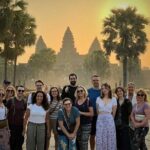
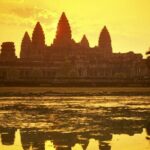
Sunrise at Angkor changes your mood. I liked Sok’s clear explanations and the way this small group keeps things moving without feeling rushed, especially on the big day at Angkor Wat. The one catch: you still need to budget for the temple pass and you’ll want a torch for the pre-dawn start.
This tour works well if you want the highlights without spending weeks piecing together bus schedules. You get hotel pickup and drop-off, an air-conditioned vehicle, mineral water, and a licensed English-speaking guide who’s focused on how to see the temples efficiently (including routes that help you dodge the worst crowd pressure).
Plan for early mornings and temple basics. You’ll pay the $62 temple pass on the day of the activity, temple entry has a dress code (shoulders and knees covered), and comfortable shoes matter because the walking adds up across two days.
In This Review
- Quick highlights before you commit
- Price and what you’re really paying for
- The “small group” feel on the road (and why it matters at Angkor)
- Day 1: Outside-Angkor Thom temples that set the tone
- Pre Rup: a hilltop Hindu temple start
- Banteay Srei: tiny temple, serious carving skill
- Preah Khan: roots, ruins, and a different kind of beauty
- Neak Pean: a Buddhist temple on an artificial island
- Day 2: Sunrise at Angkor Wat and the rest of the classic hits
- How to do Angkor Wat sunrise without feeling lost
- Srah Srang: breakfast and a calmer Angkor moment
- Ta Prohm: the jungle framing that looks almost unchanged
- Terrace of the Elephants and the Terrace of the Leper King: short, but iconic
- Bayon Temple: more than 200 faces and the feeling of being watched
- What the guide and pacing do for your experience
- Practical tips that make a real difference
- Who this tour fits best
- Should you book this 2-Day Temples with Sunrise tour?
- FAQ
- What’s the starting time for the tour?
- Is hotel pickup and drop-off included?
- Do I need to buy a temple pass?
- Is sunrise at Angkor Wat included?
- Should I bring anything specific?
- What about meals?
- What’s the dress code for temple visits?
- Are children allowed?
- How flexible is cancellation?
Quick highlights before you commit
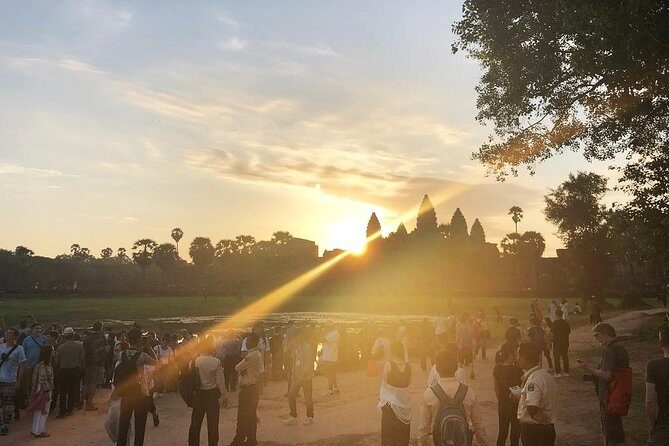
- Angkor Wat sunrise setup with pre-dawn timing and entry from the less crowded eastern side
- Small group limit (max 15), so you can actually hear the guide and ask questions
- Sok’s temple storytelling paired with a driver who handles the in-between details
- A tight two-day circuit hitting both classic Angkor and standout temples outside Angkor Thom
- Banteay Srei’s detailed carvings plus the jungle-feeling stop at Ta Prohm
- Day 2 torch tip for seeing Angkor Wat in the dark before sunrise
Price and what you’re really paying for
The advertised price is $43 per person for two days, which is honestly a fair base rate for a guided, air-conditioned, hotel-to-temple-to-hotel experience. The real budget question is the temple pass: the tour notes an additional $62 per person for a 2–3 day temples pass, payable on the day.
So if you’re budgeting “all-in,” think in terms of about $105 for the guide + vehicle + sunrise timing, plus the required site access fee. That’s the trade-off with Angkor: almost no matter what tour you pick, the temple pass is unavoidable once you want multiple key sites. The value here is that your time is structured around the best photo window (sunrise) and the route is compact enough that you’re not burning half the day commuting.
Also, this is a maximum of 15 travelers. For Angkor tours, that matters more than people expect. When the group is smaller, you waste less time waiting, and your guide can keep the pace while still explaining what you’re seeing.
A few more Siem Reap tours and experiences worth a look

The “small group” feel on the road (and why it matters at Angkor)
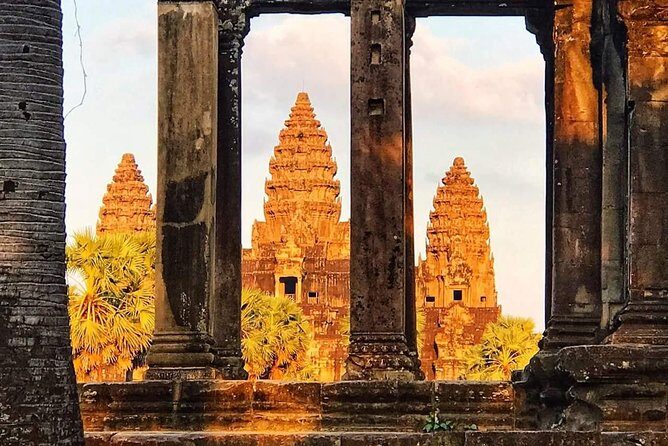
You’re picked up and dropped off at your hotel, then moved around in an air-conditioned vehicle with mineral water. That sounds basic, but on a temple circuit it becomes the difference between enjoying the temples and just surviving the day.
This one also pairs your guide with a driver who takes care of the in-between stuff. In my notes, the nicest part wasn’t just transport—it was the feeling that nobody was improvising. You get help across the stops so you can focus on the temples, not the logistics.
And because it’s limited to 15 people, you’ll have more breathing room at the stops. Some tours are basically a buffet line. This one feels more like a planned route where you still have time to pause, look up close, and understand what you’re staring at.
Day 1: Outside-Angkor Thom temples that set the tone
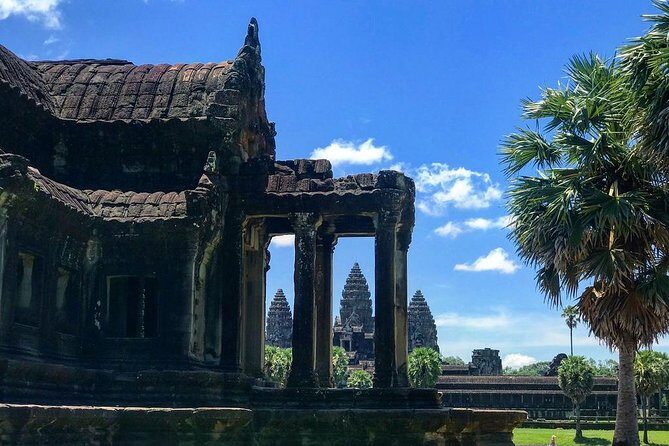
Day 1 is built around temples outside the Angkor Thom area. That matters because it breaks the usual pattern where everyone stacks the same “big ticket” sites back-to-back. You start with hilltop drama, move into delicate carving work, then finish with atmospheric ruins and water-engineering features.
Pre Rup: a hilltop Hindu temple start
Your day opens with Pre Rup, a Hindu temple associated with King Rajendravarman as the state temple. It’s a strong starting choice because you get an immediate sense of Khmer temple design—brick and stone layers, clear sacred geometry, and the way these structures sit in the landscape.
Even if you’re not a “temple person,” Pre Rup is worth it because it’s expressive. The setting helps you orient yourself for the rest of the circuit: you learn what to look for—doorways, tiers, and the way carvings and stairways guide your eye upward.
Watch for the practical bit: admission isn’t included for this stop, and the walking is real. Wear shoes you trust. You’ll be grateful later when you’re moving between uneven stone and sandy paths.
Banteay Srei: tiny temple, serious carving skill
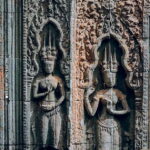
Next comes Banteay Srei, and this is where the tour earns its place on your calendar. It’s described as smaller and made from sandstone, but what grabs you is the precision: the reliefs are regarded as some of the finest and most skillfully crafted in Cambodia.
This stop is perfect for slowing down. You’ll find yourself looking at the details instead of just photographing the big view. If you care about craftsmanship—faces, scenes, and intricate ornament—this is the one to linger at.
The timing helps too. You get about 1 hour here, which is enough time to do a careful look without feeling like you’re stuck.
Admission is noted as free for this one, which is also a nice bonus for your budget planning.
A few more Siem Reap tours and experiences worth a look
Preah Khan: roots, ruins, and a different kind of beauty
After lunch-time driving, you head to Preah Khan, a temple that feels like a set built for atmosphere. It’s ruined, but that’s the point: you see crumbling stone structures threaded through with tree roots.
This stop is valuable because it shows you how Angkor changed over time. You’re not only looking at a preserved monument. You’re seeing what happens when architecture meets decades (or centuries) of nature.
If you’re the type who likes temples with mood—shade, textures, and the feeling that the place is breathing—Preah Khan will land well. Just note that admission isn’t included here, so your temple pass still matters for your day-to-day costs.
Neak Pean: a Buddhist temple on an artificial island
Day 1 ends with Neak Pean, an artificial island with a Buddhist temple on a circular island in Jayatataka Baray. This is a nice change of pace because it’s more about water and symbolism than towering walls and huge courtyards.
You’ll have about 50 minutes, which is enough to understand the layout: the island concept, the temple placement, and why water matters in Khmer sacred design. If you tend to get temple-fatigued after a long day, Neak Pean helps reset your brain.
Day 2: Sunrise at Angkor Wat and the rest of the classic hits
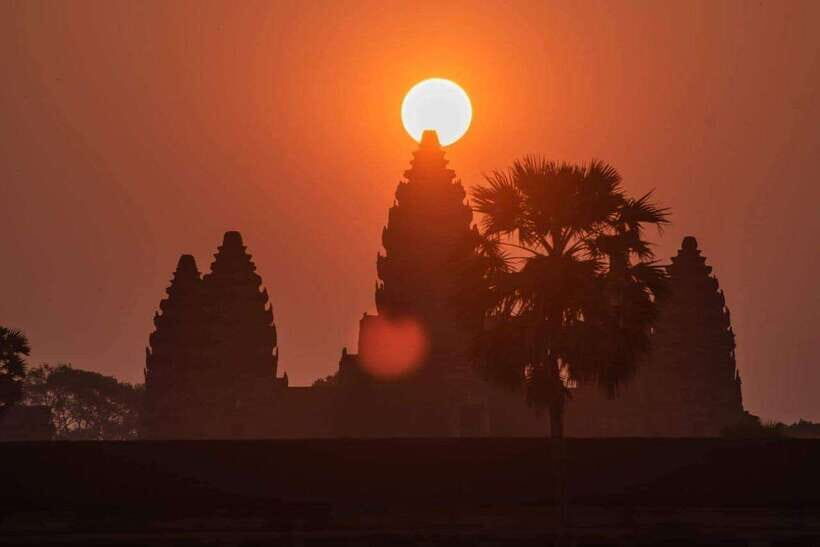
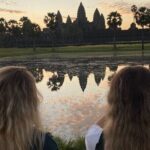
Day 2 is the big one, starting with a pre-dawn departure for Angkor Wat sunrise. This is where the tour’s planning shows. The experience is timed so you enter the temple in darkness, using a torch, and you approach from the less-visited eastern side.
How to do Angkor Wat sunrise without feeling lost
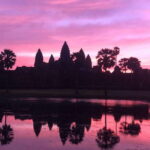
Angkor Wat is huge, and arriving at the right time helps you get oriented fast. Going in the dark changes how you see it: first you notice structure and silhouette, then the details show up as light climbs the sky.
The tour suggests bringing a torch, which is smart. Even if your phone flashlight works in a pinch, a real torch keeps your hands freer and makes it easier to read steps and pathways. From there, you creep along cloistered galleries before the light hits the main spaces.
You get about 2 hours 5 minutes on site. That’s enough time to do the sunrise moment, then move with purpose instead of just drifting around while everyone around you freezes for one photo.
Srah Srang: breakfast and a calmer Angkor moment
After sunrise, you head to Srah Srang and end the tour area at Angkor with breakfast flow. The tour guidance notes breakfast at a Khmer local restaurant, with a reminder that you can also request take-away from your hotel or order there.
What I like about placing breakfast here is that it keeps Day 2 from turning into one endless temple stomp. Srah Srang is also a reminder that Angkor wasn’t only about temples—it was a whole engineered world, including water features.
Admission is noted as free here, which helps keep the budget feeling controlled after the pricey sunrise access.
Ta Prohm: the jungle framing that looks almost unchanged
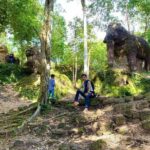
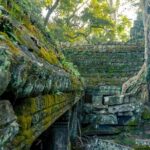
Next is Ta Prohm, described as jungle-enveloped and one of the most atmospheric temples in Angkor. This is the stop that many people picture before they even get there—tree roots, broken stone, and a feeling of motion like the jungle is reclaiming the edges.
You also get specific context: Ta Prohm once housed 2,740 monks, and it’s noted that the temple today looks much as it did in the early 1850s. That historical anchor matters. It turns the scene from just spooky photos into a place with lived context.
You’ll have about 1 hour, which feels about right. If you try to do this stop too fast, you miss the point. The best photos come from slow angles—watching how roots frame doorways and how stone textures cut through the greenery.
Admission isn’t included for this one, so plan around the temple pass.
Terrace of the Elephants and the Terrace of the Leper King: short, but iconic
You pass by two famous terraces: the Terrace of the Leper King and the Terrace of the Elephants. You’re not asked to spend ages here, which is fine because they’re best as quick anchors in your mental map.
These terraces are useful because they show you the storytelling style of Khmer temple sculpture—whole scenes and figures integrated into architecture. Even if you’re only catching them briefly, they help you connect Bayon’s faces and Angkor Wat’s formal geometry with a broader visual language.
Admission is noted as free, which again helps you pace your spending.
Bayon Temple: more than 200 faces and the feeling of being watched
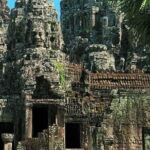
The final stop is Bayon Temple, a 12th-century site known for its central towers covered with more than 200 enormous faces. This is a strong closing choice. The longer you spend at Bayon, the more you feel the place shifting—faces seem to turn as you move.
You’ll have about 1 hour here. That’s enough time to go from the wow moment to actually observing how the expressions, angles, and spacing create depth.
Admission isn’t included for this stop either, so the temple pass becomes your key ticket to finishing the story.
What the guide and pacing do for your experience
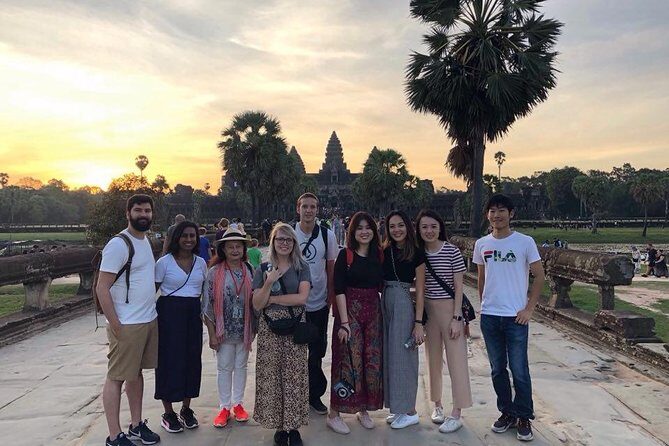
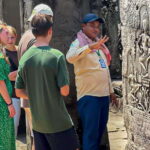
A good guide turns temples into understanding. Here, the guide’s role is big. I noticed the way explanations connect details—what a temple is, who it belonged to, why it’s arranged a certain way—so you’re not just looking at stone.
I also liked the small-team vibe. With Sok leading and a driver working between stops with helpful care like water and even a flannel between each stop, the day stays comfortable enough to focus on sight, not heat stress.
That also matters with early starts. Sunrise at Angkor can feel like a sleep debt tax. The tour advises you to request a wake-up call at your hotel, which is the kind of practical step that prevents the worst-case scenario: missing the sunrise you paid for.
Practical tips that make a real difference
A few things can make or break your comfort and speed.
Bring a torch for sunrise. The tour specifically asks for it for the Angkor Wat pre-dawn entry.
Follow the dress code. Shoulders and knees must be covered inside temples. Casual clothing usually works, but plan ahead so you’re not doing the awkward wrap-around scramble on site.
Wear shoes for uneven stone. The tour recommends comfortable walking shoes, and they’re right. You’ll move between temple steps, roots, and worn surfaces over two days.
Budget the temple pass early. Temple entry is not included in the base price. You pay the additional $62 on the day, and it’s required for multiple stops.
Plan for early mornings. Day 1 starts at 8:00 am, but Day 2 is pre-dawn for sunrise. If your hotel is slow with wake-up calls, ask for it anyway.
Who this tour fits best
This is a great fit if you:
- want a compact two-day Angkor experience that hits major sites and a few outside-Angkor Thom temples
- prefer an English-speaking guide who keeps things focused
- like a small group where you can hear the explanations and don’t lose time to big crowds
- are willing to handle a required temple pass and early starts
It might be less ideal if you:
- hate early mornings and want a purely relaxed schedule
- expect meals to be fully covered—meal details are not included as a general item, and breakfast is handled via the tour flow
- want everything fully included with no extra on-site payments (the pass is extra)
Should you book this 2-Day Temples with Sunrise tour?
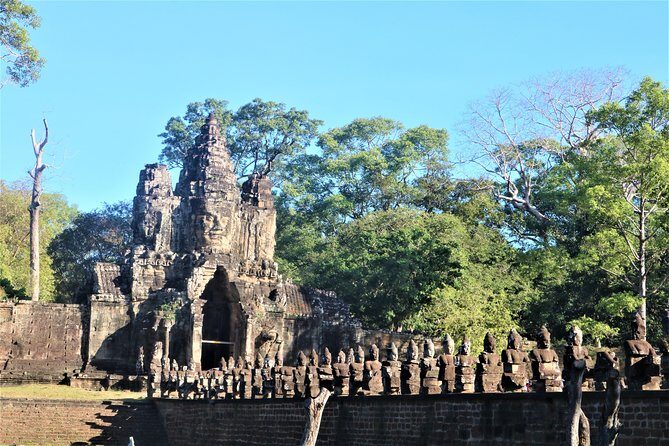
I’d book it if you value structure. Angkor can get overwhelming fast. This tour keeps your days tight, covers the temples most people want, and adds the smart mix of outside Angkor Thom stops like Pre Rup and Banteay Srei.
The strongest reasons to choose it are sunrise at Angkor Wat with a less-crowded approach, the small group cap, and the guide setup you’ll feel in how smoothly the day runs. Just go in with the right expectations: you’ll pay the $62 temple pass, you’ll need a torch for the sunrise timing, and you’ll walk more than you think.
If those points don’t scare you, you’ll get a lot of temples for the money—and you’ll actually understand what you’re seeing, not just collect photos.
FAQ
What’s the starting time for the tour?
The tour start time is listed as 8:00 am. Day 2 includes a pre-dawn departure for sunrise at Angkor Wat.
Is hotel pickup and drop-off included?
Yes. The tour includes hotel pickup and drop-off.
Do I need to buy a temple pass?
Yes. A 2–3 day temples pass costs $62 per person and is payable on the day of your activity. Temple entry is not included in the base price.
Is sunrise at Angkor Wat included?
Yes. Day 2 includes sunrise at Angkor Wat and pre-dawn departure from your hotel.
Should I bring anything specific?
The tour advises bringing a torch for the pre-dawn sunrise entry at Angkor Wat. It also recommends comfortable walking shoes.
What about meals?
Meals are listed as not included. The tour flow includes breakfast after sunrise at Angkor (with guidance about using a breakfast pack from your hotel or getting it at a local restaurant).
What’s the dress code for temple visits?
You’ll need shoulders and knees covered inside temples. Casual clothing works as long as it meets that requirement.
Are children allowed?
Children must be accompanied by an adult, and younger than 5 years old are not allowed.
How flexible is cancellation?
Cancellation is free up to 24 hours in advance for a full refund. If you cancel less than 24 hours before the start time, the amount paid is not refunded.