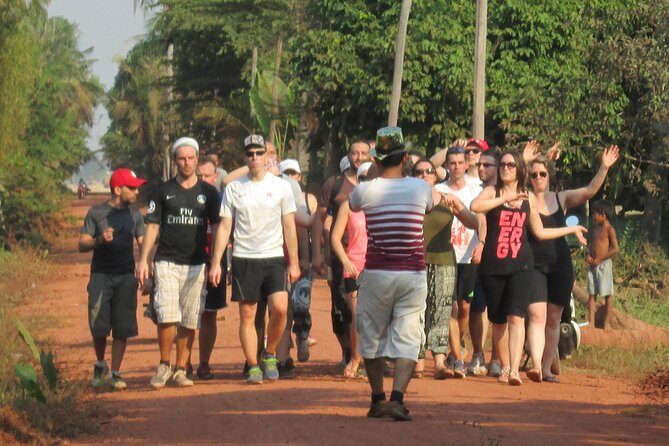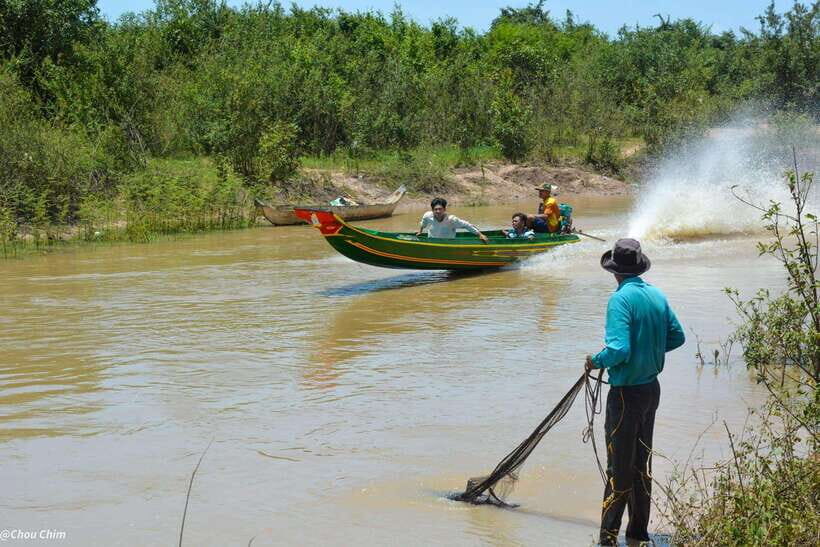
Pedal through Angkor’s back roads, minus the crowds. This Angkor Jungle Biking Adventure in Siem Reap is built for movement—bike 25–40 km on shaded paths and quiet temple roads while your guide, often Leap, turns Khmer architecture into something you can picture. I like the active format because it helps you see more angles of the temples without feeling stuck in one spot, and it also buys you time to stop often and soak in the jungle setting around the stone.
One watch-out: Angkor park entry isn’t included, and you’ll also pay for your own lunch while you’re out (there are local options along the way). If you’re not used to moderate physical effort, plan for a steadier pace rather than racing the pedals in the heat.
In This Review
- Key things that make this Angkor bike day feel different
- Getting picked up in Siem Reap and set up with the right bike
- The rhythm of the day: timing, distances, and what to expect at the pace
- Entry at Angkor Wat: how the first temple time sets the mood
- Ta Nei Temple: small, late-12th-century details near the baray
- French Dam (ទំនប់ទឹកបារាំង): a water-and-birds pause
- Bayon Temple: learning why the faces feel so present
- Angkor Thom South Gate: restored heads and the main-road approach
- Ta Prohm: the tree-temple experience and why it stays memorable
- What you actually get included (and what you need to pay for)
- Price check: is $61.75 a good deal for Angkor by bike?
- The guide factor: why names like Leap and Sok matter
- Small practical tips to make your day easier
- Should you book this Angkor Jungle Biking Adventure?
- FAQ
- FAQ
- Is pickup and drop-off included?
- How long is the tour?
- What’s included in the price?
- Are Angkor tickets included?
- Do I have to pay for lunch?
- Do I need a certain fitness level?
- Is this a private tour?
Key things that make this Angkor bike day feel different
- Private, guided, and practical: pickup/drop-off at your hotel, English-speaking guide, and a mountain bike with helmet
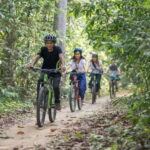
- Back-trail riding (25–40 km): shaded jungle routes and lesser-used temple roads instead of the main busier corridors
- Big temples plus in-between stops: Angkor Wat, Ta Nei, Bayon, Angkor Thom South Gate, and Ta Prohm, with extra scenery stops
- Crowd-free perspective: you’ll spend time off the main foot-traffic patterns and stop where others often just pass
- Built-in comfort breaks: bottled water and snacks during the ride (with lunch available at your own expense)
Getting picked up in Siem Reap and set up with the right bike
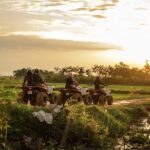
This tour starts with a simple plan: you’re met in your hotel lobby, then transferred to the starting area and onto the first stretch of cycling near Angkor Park. You’re on a mountain bike, and you’ll get a helmet plus bottled water and snacks. That matters more than it sounds—days at Angkor can be long, and having small fuel and hydration built into the schedule keeps you from feeling like you’re constantly scrambling.
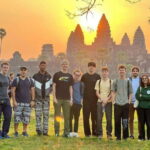
It’s also a private setup, so it’s just your group riding together with the guide. That typically makes the day easier if your comfort level with biking varies. Your guide can set the pace and help you time the stops so you’re not stressed about keeping up.
You can also read our reviews of more cycling tours in Siem Reap
The rhythm of the day: timing, distances, and what to expect at the pace
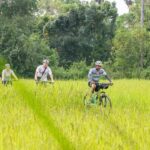
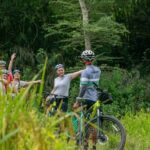
The ride typically runs about 7–8 hours, mixing cycling time with temple time. Expect around 25–40 km total, spread across a route that’s designed for ancient sites rather than for pure speed. You’ll stop frequently—enough to step off the bike, look closer, and get the context you’d miss if you were just hopping between landmarks with no guide.
A steady cadence works best here. Think: ride a while, stop, learn something, photograph, then ride again. If you like having a plan but still want freedom to slow down at the moments that grab you, this format fits well.
Also, since Angkor ticketing is its own thing, your guide will help with that at the entrance. That saves you time and confusion if you’re new to the system.
Entry at Angkor Wat: how the first temple time sets the mood
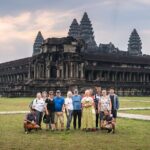
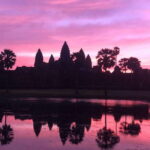
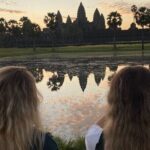
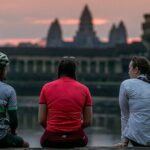
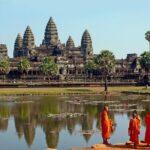
Your Angkor day kicks off at Angkor Wat, and you’ll spend about 2 hours there. It’s the largest and best preserved monument of the Angkor group, and that reputation is easy to see in person—its layout, scale, and carved details are what make it feel both orderly and overwhelming.
What I like about approaching it by bike is the mental shift. You arrive with momentum, so the first stop doesn’t feel like standing around waiting for the day to begin. You get to move from the “travel” mode into “temple looking” mode fast.
One practical note: admission tickets aren’t included in the tour price. Your guide assists with purchasing them at the entrance of Angkor Park, but you’ll still want to budget for the ticket.
Ta Nei Temple: small, late-12th-century details near the baray
Next is Ta Nei Temple for about 30 minutes. It’s a late 12th-century stone temple built during the reign of King Jayavarman VII, and it’s near the northwest corner of the East Baray, a major holy reservoir. Ta Nei is dedicated to the Buddha, which helps it feel like more than just a “pretty stop”—there’s a clear religious identity in the layout.
This is the kind of stop that works well on a cycling day. It’s not only about the biggest famous names; it’s also where you notice smaller forms and the way later rulers changed the temple world over time.
French Dam (ទំនប់ទឹកបារាំង): a water-and-birds pause
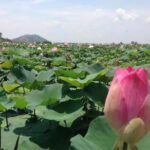
Then you get a scenic breather at the French Dam for about 19 minutes. The tour frames it as a view with big trees and the sound of water mixing with birds. I appreciate this moment because it gives your brain a rest between major stone-and-sun sections.
It’s also a reminder that Angkor isn’t only temples. The water systems and surrounding ecology shaped where people lived and built. Even if you only have a short stop here, it makes the rest of the day feel more connected.
You can also read our reviews of more private tours in Siem Reap
Bayon Temple: learning why the faces feel so present
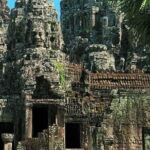
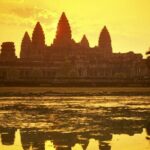
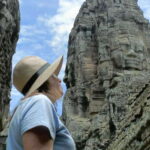
After that, you head to Bayon Temple for about 1 hour. Bayon was built nearly 100 years after Angkor Wat, and it sits at the center of a royal city layout. The standout impression is the temple’s famous face towers—something you experience differently when you’re arriving as part of a route rather than as a single, isolated photo stop.
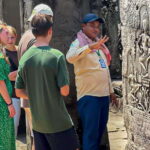
This is where an English-speaking guide really earns their keep. The best moments come from understanding the structure and location, not just recognizing it from postcards. You’ll get explanations that help you connect the temple design to the bigger Khmer Empire story without turning the day into a lecture.
Angkor Thom South Gate: restored heads and the main-road approach
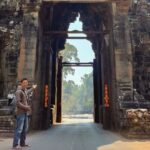
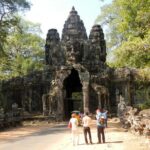
Your next stop is Angkor Thom South Gate for about 30 minutes. The south gate is popular because it’s fully restored and many of the heads remain in place. It’s also the entry route on the main road from Angkor Wat into Angkor Thom, so the geometry and framing make sense.
Cycling adds something here: you approach it as part of a sequence. That matters, because this gate is both a landmark and a transition—one more “portal” from open space into the dense temple complex.
If you’re the kind of traveler who likes composition—where you stand, what lines lead your eye—this is a good stop to slow down for a few minutes rather than rushing through for the next temple.
Ta Prohm: the tree-temple experience and why it stays memorable
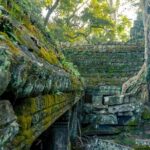
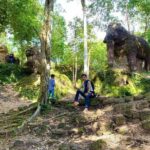
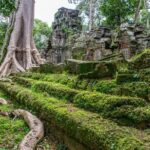
The final major temple stop is Ta Prohm for about 1 hour. It’s often described as the kingdom of trees, and it’s famous because it has been left mostly untouched by archaeologists except for clearing pathways for visitors and structural strengthening to slow down deterioration.
I love Ta Prohm on a cycling tour because the “in-between” feeling is intact. When you reach it, you’re already coming from jungle roads and water views, so the setting doesn’t feel random. The trees growing through the stone become the story, and your guide’s context helps you see the blend of nature and human design as something intentional rather than merely dramatic.
One more practical note: Angkor days can be hot and walking-heavy even with bike stops. A helmeted bike ride helps, but bring a calm mindset—take your time at Ta Prohm instead of trying to power through like it’s a checklist.
What you actually get included (and what you need to pay for)
Here’s the value breakdown of what the tour includes:
- pickup & drop-off at your hotel
- English-speaking cycling guide
- mountain bike and helmet
- bottled water and snacks
Lunch is not included. During the tour, lunches are available at local restaurants with vegetarian and non-vegetarian options, and meal prices are typically in the $3–$10 range per dish. That’s a pretty normal range for Siem Reap, but you should still plan for it so you’re not surprised halfway through the day.
Also, tip for your guide isn’t included. If your guide helped you enjoy the day—especially with the storytelling and pacing—it’s worth budgeting for gratuity.
Price check: is $61.75 a good deal for Angkor by bike?
At $61.75 per person for about 7–8 hours, this tour looks like solid value because it bundles the “hard parts” together: hotel pickup, private guiding, bike + helmet, and the basic ride comforts. You’re also covering a meaningful distance (25–40 km), and you’re not just doing a driver-and-walk shuffle.
The trade-off is also clear: Angkor admission tickets are extra, and lunch is on your own budget. If you’re cost-comparing, factor those items in before you decide.
Still, if you want Angkor Wat, Bayon, Angkor Thom, and Ta Prohm in one guided day with a lot of movement and fewer crowd patterns, the bike format can justify the price quickly.
The guide factor: why names like Leap and Sok matter
The quality signal here is the guide. I’ve seen multiple days in Angkor improve dramatically when the guide can connect what you see—stone faces, causeways, temple placement—to why it matters. This tour’s guides are consistently described as energetic and story-focused.
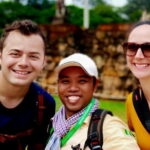
For example, I’ve come across days led by Leap, praised for enthusiastic, high-energy explanations that make centuries of Cambodian history feel relatable. There’s also mention of Sok as a guide who paired culture with nature and steered groups through jungle trails, with solid care and good food during the day.
Even if you don’t recognize the name, look for the behavior: clear communication, good pacing, and the ability to explain what you’re standing next to.
Small practical tips to make your day easier
A few no-drama things help you enjoy the ride more:
- Wear comfortable clothes that handle sun and heat well.
- Use sunscreen and bring water-friendly habits even though bottled water is provided.
- If you’re planning photos, remember the best angles at gates and face towers often take a minute of patience, not a sprint.
If you’re traveling as a family or mixed group, the private nature can help. But you’ll still want moderate fitness, since biking for 25–40 km plus temple walking is the deal.
Should you book this Angkor Jungle Biking Adventure?
You should book if you want:
- an active Angkor day with real riding time, not only walking between gates
- major temples plus calmer, scenic stops (including Ta Nei and the French Dam)
- a guide-led experience that helps you understand what you’re seeing
- a private day where the pace can match your group
You might skip it if:
- you’re mainly looking for a low-effort sightseeing day
- you strongly prefer going fully on foot only, without biking distance
- you don’t want to handle extra costs for Angkor tickets and lunch
FAQ
FAQ
Is pickup and drop-off included?
Yes. Pickup and drop-off at your hotel are included, and you’ll provide your hotel name for pickup.
How long is the tour?
It runs about 7 to 8 hours.
What’s included in the price?
Included items are the English-speaking biking guide, mountain bike and helmet, bottled water, snacks, plus hotel pickup and drop-off.
Are Angkor tickets included?
No. Admission tickets are not included, and your guide assists you in purchasing the Angkor ticket at the entrance of Angkor Park.
Do I have to pay for lunch?
Lunch isn’t included. You can eat at local restaurants during the tour, with both vegetarian and non-vegetarian options, and dish prices are typically in the $3–$10 range.
Do I need a certain fitness level?
You should have a moderate physical fitness level since the route includes biking around 25–40 km.
Is this a private tour?
Yes. It’s a private tour/activity, so only your group participates.