REVIEW · SIEM REAP
Angkor Wat 2-Day Tour
Book on Viator →Operated by Cambodia Golden Tours · Bookable on Viator
Two days can still feel like a full lifetime. I like this tour for its English-speaking guide who explains what you are seeing, and its cold towels and drinking water that keep you moving through the heat. The main catch: temple tickets and lunch near the temples are not included, so you’ll need a bit of cash set aside and you’ll want to follow the temple dress code.
You start at 8:00am in Siem Reap, and you’re taken to the key temple zones in a private setup, so your day is built around your pace. You’ll also get a mobile ticket, which makes the whole process smoother once you arrive.
Price-wise, $360 for two days is most fair if you care about a guided circuit, not just being dropped at ruins. If you’re the type who prefers total freedom with no set timing, you might find a private guided plan a bit structured.
In This Review
- Quick highlights before you plan your day
- Angkor Wat in Two Days: the big-temple priority plan
- From Siem Reap at 8:00am: how logistics shape the experience
- Day 1 in Angkor Thom: South Gate, Bayon faces, and Baphuon scale
- A good mental tip while you’re there
- The Royal Palace terraces: Elephant stage and Leper King carvings
- Beyond Angkor Thom: Chau Say Tevoda, Thommanon, Takeo, plus Ta Prohm
- Practical note for Ta Prohm
- Banteay Kdei and Srah Srang: restoration, forest quiet, and water views
- Day 2 focus: Angkor Wat as the jewel, then the Thousand-Lingas vibe
- Sunset at Angkor Wat or Bakheng Mountain: pick your style
- Price and logistics: what $360 really covers
- Two budget tips so you don’t feel squeezed
- Who this tour suits best (and who may want to tweak it)
- My take: the best way to enjoy it without rushing
- Should you book this 2-day Angkor Wat tour?
- FAQ
- What time does the tour start?
- Is this tour private?
- What’s included in the price?
- Are temple tickets included?
- Is lunch included?
- Do I need to follow a dress code?
- Do I get a ticket on my phone?
Quick highlights before you plan your day
- Private touring with an English-speaking guide so you can actually understand what you’re walking through.
- Cold towels and drinking water for the real-world comfort part of Angkor.
- Mobile ticket to reduce waiting and paper hassle.
- The Angkor Thom cluster hits the most famous faces, gates, and royal terraces in one stretch.
- Ta Prohm + trees-through-stone photos without wasting time hunting.
- Sunset choice at Angkor Wat or Bakheng Mountain, based on your light preferences.
Angkor Wat in Two Days: the big-temple priority plan
This is a classic Angkor approach: you focus on the famous clusters people travel halfway around the world for, without trying to cram in every single ruin on the map.
What makes it work is the sequencing. You’re not just hopping between random spots. You’re guided through the story threads Angkor is famous for: gateways and defensive walls at Angkor Thom, royal ceremonial spaces, Buddhist-era layers, then the big showpiece that everyone bookmarks on day one.
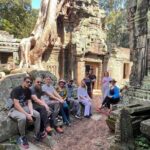
And because it’s private, you’re not stuck behind a slow crowd. Your guide can pause when you want photos, and you can move on when you want to beat the heat.
A few more Siem Reap tours and experiences worth a look

From Siem Reap at 8:00am: how logistics shape the experience
The day begins at 8:00am in Siem Reap. That start time matters in Angkor because mornings are when you feel the ruins at their best, when the sun is still manageable and the temple stones look less washed out.
Transportation is included, and in practice that usually means a vehicle that can handle short transfers and tight temple entrances. In the feedback I’ve seen about this company, drivers like Mr. Ly and Vutha are often described as punctual and flexible, which matters when your group wants a quick detour for a better photo angle or you need a short break.
Two small things also matter more than people think:
- Cold towels keep you from feeling grim by mid-morning.
- Drinking water helps you stay in “walk mode” longer.
Add the private setup, and the whole day feels less like an assembly line.
Day 1 in Angkor Thom: South Gate, Bayon faces, and Baphuon scale
Angkor Thom is where the park starts feeling like a fortress-city, not just a collection of monuments. Your first core moment is the South Gate of Angkor Thom. It’s built to protect the capital, and you’ll see the front of the causeway with figures tied to the Hindu myth of the Churning of the Sea of Milk. The point isn’t only the myth. It’s that this gateway sets the tone for everything that follows: ornate protection, not plain architecture.
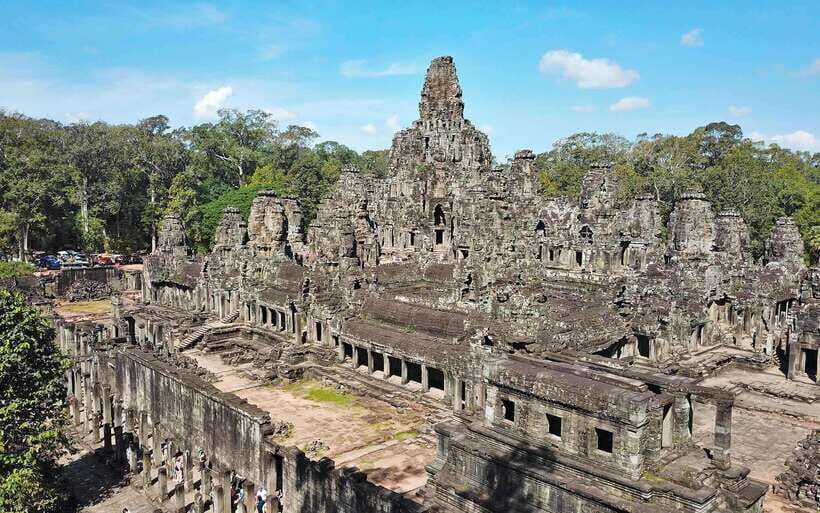
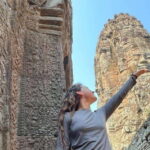
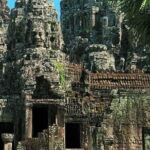
From there, it’s a short ride/walk to the Bayon Temple, which is considered the heart of Angkor Thom. Bayon is famous for its 54 towers and the 216 smiling faces of Avalokiteshvara. The faces can feel almost otherworldly because they’re everywhere, on every tier, no matter where you stand.
Then you move to Baphuon, the second biggest temple in Angkor Thom. It’s pyramid-shaped with three tiers and was built in the mid-11th century as a state temple dedicated to Shiva. The practical takeaway here: Baphuon gives you more of that “towering mass” feeling than Bayon’s face-filled surrealism.
A good mental tip while you’re there
Try to spot what type of storytelling the temple is doing. Bayon tells through repeated faces. Baphuon tells through form and size. The South Gate tells through defensive mythic decoration.
The Royal Palace terraces: Elephant stage and Leper King carvings
Two famous terraces sit right at the front of the royal palace area: the Terrace of Elephants and the Terrace of the Leper King.
The Terrace of Elephants is long—about 350m—and it functioned as a ceremonial stage. It’s also described as a base for the king to watch military training. That background matters when you look at the carvings: you’re not just seeing ornament. You’re seeing a platform designed for public display.
Next door is the Terrace of the Leper King, which is known for carvings that often cause people to stop and stare longer than planned. The interesting part isn’t only the detail. It’s the way the terrace gives you a sense of royal-era storytelling packed into a relatively compact space.
If you only have a short window to see these terraces well, prioritize time here over rushing to another photo stop. This is where Angkor starts to feel like a human place: power, ceremony, and people.

Beyond Angkor Thom: Chau Say Tevoda, Thommanon, Takeo, plus Ta Prohm
After the core Angkor Thom area, the tour moves into nearby temple groups outside the capital zone.
You’ll visit Chau Say Tevoda, Thommanon, and Takeo. This cluster is often chosen because it expands the variety without forcing long travel blocks. Your guide can explain how these temples fit into the larger Angkorian world, and you get to compare styles rather than just stacking similar-looking towers.
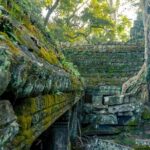
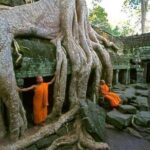
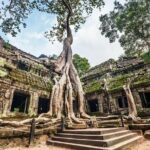
Then comes one of the most photographed temples in the park: Ta Prohm. It was used as a Buddhist monastery and university in the Angkor period, and it’s nicknamed the Tomb Raider temple because the movie was filmed here. The biggest “wow” factor is the large tree growing through parts of the structure. It turns the stone into something living and messy, which is why photos look dramatic even on cloudy days.
Practical note for Ta Prohm
Go in expecting queues in peak hours. If you want the best shots, use the moments when the path clears for quick photos, then step aside and let your eyes adjust to the wider composition.
Banteay Kdei and Srah Srang: restoration, forest quiet, and water views
Later in the day, or as the circuit evolves, you reach Banteay Kdei. It was recently restored but still open to tourists. The surrounding forest setting makes it feel calmer and more secluded than the “high spotlight” temples.
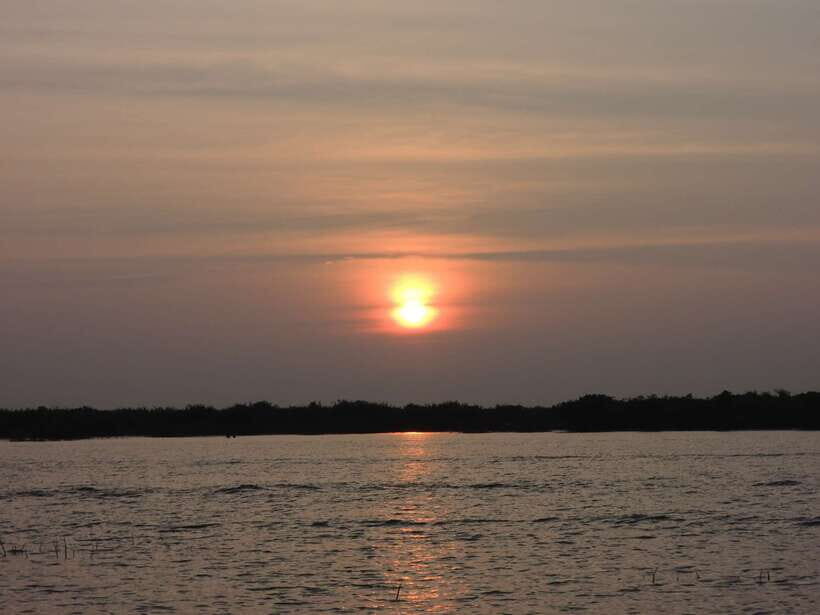
Then you move to Srah Srang, a reservoir (a baray) linked with the Banteay Kdei area. This is one of the best places in the tour for a slower moment. You get strong views, and it’s especially noted for sunrise and sunset.
If you care about light and reflections, Srah Srang is a smarter target than trying to force a perfect angle at a crowded main temple. Even if you don’t get a perfect photo, you’ll probably get a better sense of how water was designed into the ceremonial landscape.
Day 2 focus: Angkor Wat as the jewel, then the Thousand-Lingas vibe
Day 2 is where the tour leans into the headline. Angkor Wat is described as the largest religious building in the world, and it’s treated as the jewel of Angkorian art on this itinerary.
Your morning starts with a drive to Angkor Wat, then you explore many other temples in the smaller circuit around it. This part is valuable because Angkor Wat is not meant to be seen like a single monument. It’s best understood through the nearby walkways and the way different structures relate to each other.
On day 2, the tour also aims for the “river of thousand Lingas” theme mentioned in the plan. While the exact expression of that theme depends on how the circuit is organized on the day, you should expect the itinerary to bring you to water-linked, sacred-spaces energy—especially around the reservoir stop described on the route.
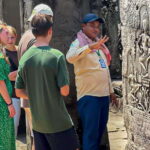
This is where a guide earns their keep. Stone looks similar to people who rush. With a proper explanation, you start noticing why a site was designed, not just how it looks.
Sunset at Angkor Wat or Bakheng Mountain: pick your style
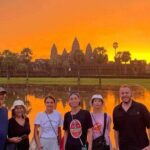
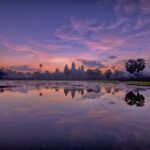
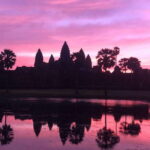
At the end of the trip, you go to a sunset site: Angkor Wat or Bakheng Mountain.
If you want the most iconic silhouette and the sense of seeing the biggest religious monument lit by sunset, choose Angkor Wat. If you want the elevation and that “temple on a hill” feeling, Bakheng is the alternative.
Either way, sunset in Angkor is partly about the light and partly about how you manage the crowd. Your guide and driver planning is key here, and that’s a strong point in the feedback I’ve seen—people often highlight the driver being supportive and ready to adjust so the group can actually enjoy the moment.
Price and logistics: what $360 really covers
The price is $360 for an approx. 2-day private tour from Siem Reap. What’s included:
- transportation
- cold towels
- drinking water
- English-speaking guide
Not included:
- temple tickets
- lunch near the temples
- personal expenses
So the value equation looks like this: you’re paying for guided time plus comfort and transport, not for the temple entry fees themselves. For most visitors, that’s a fair trade. Temple tickets are usually easy to budget once you know you’re going, while the guide’s explanations and the time saved by doing the circuit efficiently can be harder to replicate on your own.
One more practical plus: the tour uses mobile tickets, which can reduce friction when you arrive.
Two budget tips so you don’t feel squeezed
- Carry cash or be ready to handle any site ticket payments on the ground since tickets aren’t included.
- Plan for lunch near temples, since it’s also not covered.
Who this tour suits best (and who may want to tweak it)
This Angkor circuit suits you best if:
- you want a private plan rather than a group scramble
- you appreciate explanations of what you’re seeing—especially with Bayon faces and the royal terraces
- you want comfort supports like cold towels in the middle of a long day
- you care about sunrise/sunset moments, including Srah Srang and the final sunset stop
It may be less ideal if:
- you want total freedom with no set route
- you hate structure and prefer choosing each temple independently
- you’re extremely budget-tight once you factor in temple tickets and meals
One more fit detail: I’ve seen this operation praised for working well for solo travelers as well, since private arrangements make it easier to have the tour truly match your pacing.
My take: the best way to enjoy it without rushing
This tour is packed with signature sites: South Gate to Bayon, royal terraces, Ta Prohm, Banteay Kdei, Srah Srang, and then Angkor Wat plus sunset. That’s the whole point.
To enjoy it, keep your priorities straight:
- Spend time on the spots that reward looking. Bayon faces and the terraces are two of them.
- Use Srah Srang for a breath. It’s where you slow down rather than just collect another temple name.
- Treat sunset as the payoff, not just a photo stop.
Also, follow the temple dress code rules. Don’t wait until you’re at the entrance.
Should you book this 2-day Angkor Wat tour?
I’d book it if you want the most famous Angkor hits in a two-day window with an English guide, comfort breaks, and a sunset plan that doesn’t feel improvised.
You should also book it if you care about getting meaning from the stone—Bayon’s smiling faces, Baphuon’s tiers and Shiva dedication, and why the royal terraces were built for public ceremony.
Skip it only if you strongly prefer unguided exploration or you don’t want to handle temple tickets and lunches separately. In that case, you’ll probably feel more satisfied with a self-guided plan.
If you do book, pick a sunset option that matches your vibe: Angkor Wat for iconic, Bakheng for elevation. Then show up early-ish in spirit. Angkor is best when you let the morning set the pace.
FAQ
What time does the tour start?
The tour starts at 8:00am, with the meeting point in Siem Reap.
Is this tour private?
Yes. It’s listed as a private tour/activity, meaning only your group participates.
What’s included in the price?
Transportation, cold towels, drinking water, and an English-speaking guide are included.
Are temple tickets included?
No. Temple tickets are not included.
Is lunch included?
No. Lunch near the temples is not included.
Do I need to follow a dress code?
Yes. You need to follow the dress code rules when visiting the temples.
Do I get a ticket on my phone?
You get a mobile ticket. Confirmation is received at booking time.