REVIEW · SIEM REAP
Full-Day Temples of Angkor Small Group Tour
Book on Viator →Operated by Journey Cambodia · Bookable on Viator
Angkor rewards people who go early. This full-day small-group tour strings together Angkor Wat, Angkor Thom, Bayon, and Ta Prohm in one day, with the comfort of an air-conditioned ride and frequent cool-downs. I especially like how the stops are paced so you can actually read the carvings instead of just rushing for photos, and I also like the practical extras like cold water and cool towels during the heat.
One thing to consider: you’ll pay an additional temple pass of $37 per person on site (the $19 price covers the guide and transport). Also, plan for lots of walking and stair climbing—sometimes steep—because Angkor is not a sit-and-look kind of place.
In This Review
- Key points before you go
- Why this Angkor temples tour feels manageable
- Price and what it really costs in your pocket
- Pickup time and how the morning flow works
- Angkor Wat: the main show, plus the stair workout
- Angkor Thom South Gate and Bayon: the faces that follow you
- The Leper King and Elephant Terraces: worth seeing, even from the route
- Lunch at Srah Srang: recharging before the jungle maze
- Ta Prohm: vines, trees, and that movie-famous mood
- The guide makes a huge difference here
- Comfort tips that matter on an 8-hour temple day
- Who this tour fits best
- Should you book this Full-Day Temples of Angkor Small Group Tour?
- FAQ
- What is included in the tour price?
- How much is the Angkor temple pass?
- What temples do you visit in a full day?
- Is lunch included?
- What time does the tour start?
- What should I wear and bring?
- What is the cancellation policy?
Key points before you go
- Early start timing helps you see the big sights before the worst heat and crowds
- Small group size (max 15) keeps the day feeling personal, not chaotic
- Licensed English-speaking guides connect Khmer artwork to real meaning
- Air-conditioned minivan plus water and cool towels keep you moving
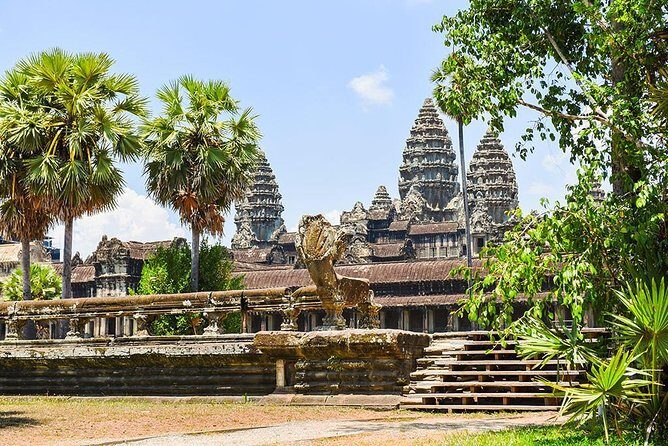
- A high-impact route covers Angkor Wat, Bayon, and jungle Ta Prohm in one day
- You’ll need respectful clothing and comfy shoes for temples with steep steps
Why this Angkor temples tour feels manageable
Angkor can overwhelm you fast. The sheer size of the site means you either spend days hopping around, or you accept a big “greatest hits” day. This tour is the second option, done smartly.
The small-group format is the real sanity saver. With a maximum of 15 people, you’re less likely to get lost in a crowd when you’re trying to line up for stairs, shaded corners, or a decent angle on the bas-reliefs. It also makes it easier for your guide to answer questions without turning every stop into a traffic jam.
The other win is comfort. You’re in an air-conditioned minivan, and you get mineral water plus cool towels during the day. That matters in Siem Reap’s heat and humidity, especially when the walking involves repeated climbs—Angkor’s designers didn’t build many flat, easy routes.
A few more Siem Reap tours and experiences worth a look
Price and what it really costs in your pocket
The headline price is $19 per person, but the day has two parts: the tour package and the temple pass.
- Your $19 covers hotel pickup/drop-off, an English-speaking guide, air-conditioned transport, mineral water and cool towels, and local tax.
- The Angkor temple pass is extra: $37 per person, paid directly at the site. Visa cards are accepted, and it’s available to purchase the day of the tour.
So think of it like this: you’re paying for a day of guided logistics and comfort, then paying the official entry fee for the temples themselves. For many people, that’s actually a solid value—especially if you like historical explanations and want someone to help you understand what you’re looking at.
Pickup time and how the morning flow works
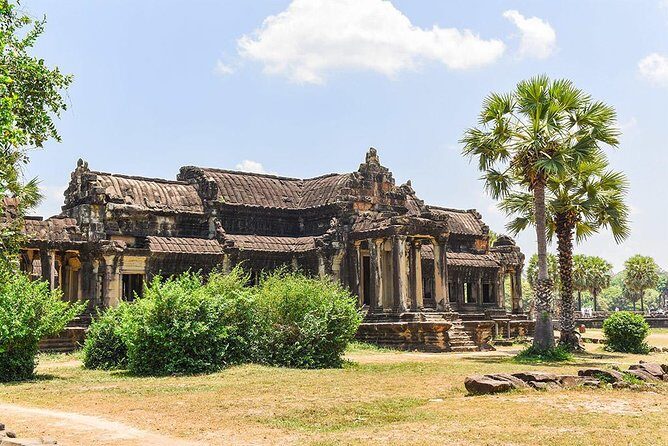
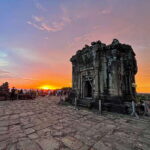
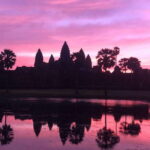
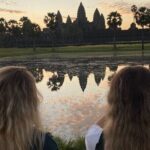
This tour is built around an early start. Many departures begin with pickup at your Siem Reap hotel around 4:30am, timed so you can reach Angkor Wat early enough to catch the light changes and set up for the main sights before the day gets heavy.
That early timing has a practical benefit. You’re not just chasing a sunrise moment—you’re also getting more comfortable walking conditions. The route includes multiple stair climbs and long stretches between temples, and mornings let you move before the temperature ramps up.
Once you’re on the road, your guide starts working immediately, not after the first stop. That’s a big deal at Angkor. If someone frames the sites early—Hindu foundations, Buddhist layers, and Khmer symbolism—you’ll notice details you would otherwise miss.
Angkor Wat: the main show, plus the stair workout
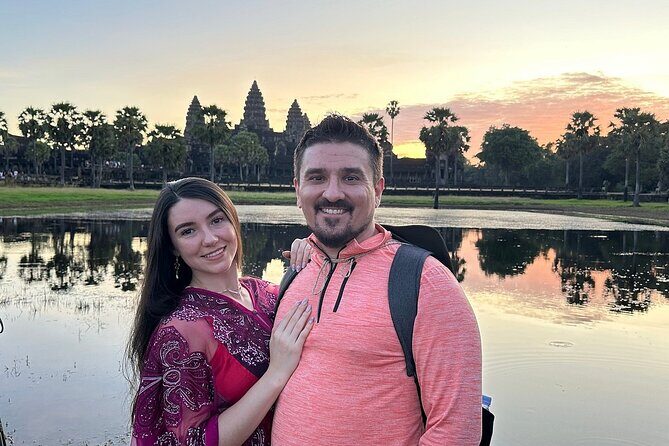
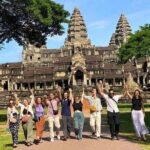
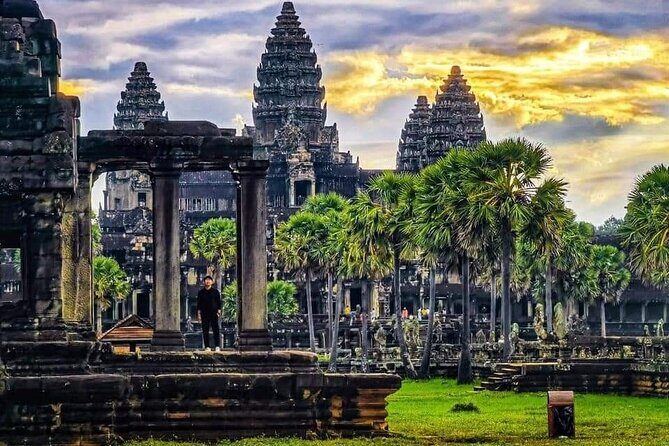
Angkor Wat is the stop that most people picture before they arrive. This tour starts there, with about two hours on site (so you can see more than just the front moat views).
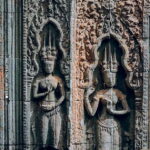
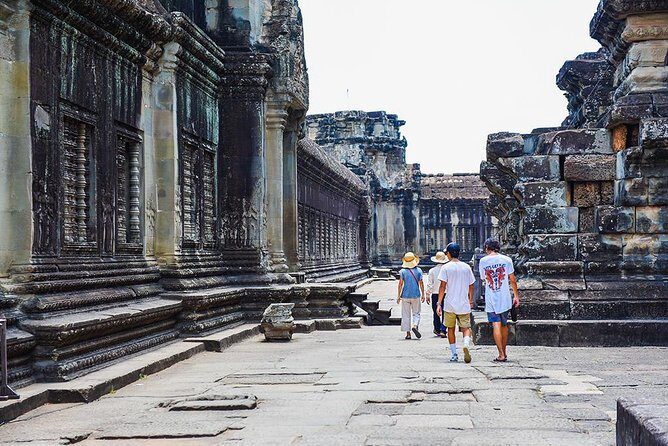
What I like here is the way your guide can turn the maze of corridors into something readable. You’ll move through narrow stone passageways lined with bas-relief carvings and shrines. You’ll also get a chance to take in gold-shrouded statues tended by local monks, which adds a sense of living continuity rather than making the place feel like a frozen museum.
Then comes the part that tests your legs: climbing stairs into a central gallery. The views are worth it, but it’s also where the day can feel physically demanding. Even if you’re fit, expect ups and downs. One tip that keeps coming up: wear real walking shoes and plan for a slow, steady pace.
Also, if you get a guide who likes photography, you’ll likely get extra help spotting the best angles for images without spending all your time posing and stopping for selfies.
Angkor Thom South Gate and Bayon: the faces that follow you
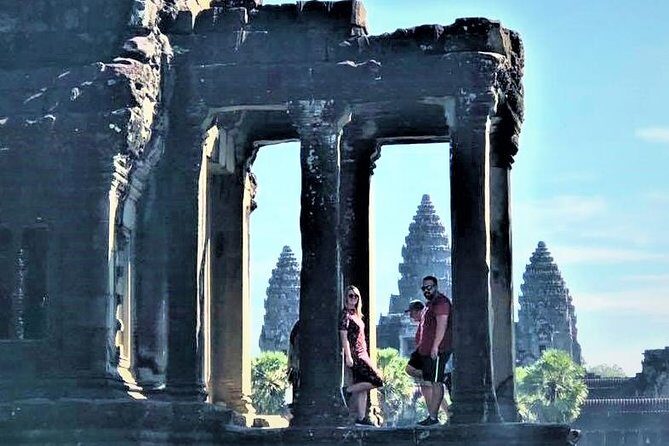
After Angkor Wat, the tour moves to Angkor Thom’s South Gate. This entrance isn’t just impressive—it’s designed to feel like a transition into a different world. You’ll pause to take in the grand scale before entering the city.
From there, the story gets visual fast. The lane is guarded by 108 statues of smiling gods and fierce demons, and your guide can explain what you’re seeing beyond the surface spectacle. Even if you don’t memorize numbers and names, this is one of those moments where understanding the symbolism makes the stone feel intentional rather than random.
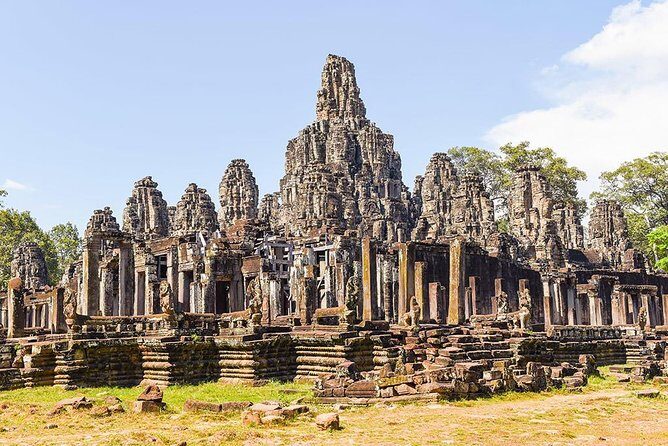
Next is Bayon Temple, the heart of Angkor Thom. This is where those famous serene faces stare out from towers in every direction. Expect long bas-reliefs that narrate dramatic Khmer victories, including stories connected to conflicts with the Cham. That narrative angle helps you see why Bayon is often described as more than just architecture.
Time on Bayon is about 1.5 hours, so you won’t rush through. Still, it’s another stop with uneven footing and lots to look at. If you’re the type who likes to stop often to interpret carvings, Bayon is where you’ll be happiest.

The Leper King and Elephant Terraces: worth seeing, even from the route
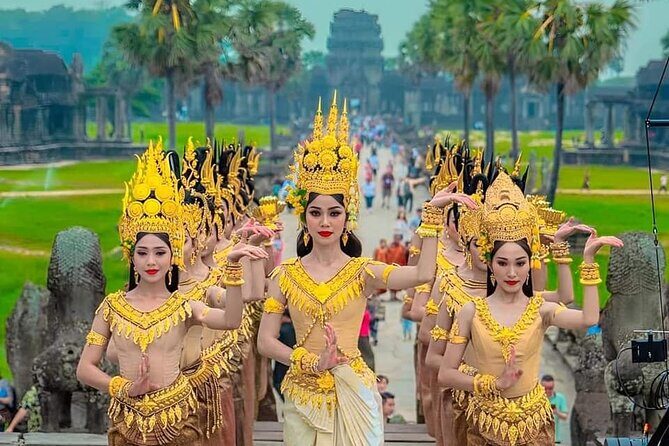
You won’t necessarily spend a full block of time at these two terraces, but you do pass by the famous Terrace of the Leper King and the Terrace of Elephants.
Why that still works: these terraces are part of the story of how Angkor’s rulers used art to communicate power. Even a brief stop gives you a sense of the scale and detail Khmer artisans achieved—animal forms, decorative stone work, and a grand theatrical feel. If you’re the kind of person who loves architecture details, this is the “quick peek” section that whets your appetite for more time at Angkor later.
If you want to go deeper, you’d normally add a separate temple-focused day. But for a one-day highlights route, these terraces function as a bridge between Bayon’s major imagery and the more atmospheric jungle scene waiting next.
Lunch at Srah Srang: recharging before the jungle maze
After the main stone stops, the tour takes a lunch break near Srah Srang. This is a good moment to reset: you’ve done heavy sightseeing, and the next temple involves more climbing through uneven roots and stone.
Important detail: lunch is not included. You’ll have time at a Khmer local restaurant nearby, and you can choose what you eat. Many people appreciate having an air-conditioned room during the break, especially on hot days.
Also, this is your chance to refuel strategically. If you tend to get cranky when you’re hungry, eat earlier rather than later. The afternoon at Ta Prohm is more physically demanding than you might expect, and you’ll want energy for steps, shadows, and photo stops.
Ta Prohm: vines, trees, and that movie-famous mood
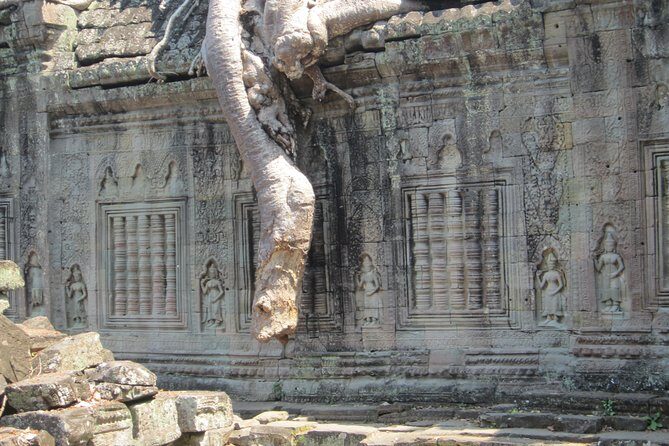
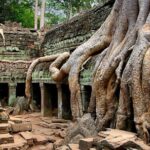
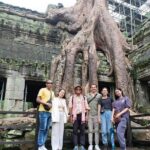
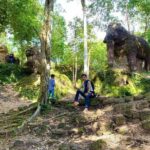
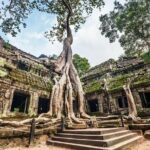
Ta Prohm is the temple that feels like it’s being swallowed by the forest. It’s also one of the most dramatic places to visit because nature is part of the design’s current look—huge fig trees, creeping vines, and stonework that looks half-reclaimed.
You’ll get about 1.5 hours here, enough time to explore at a comfortable pace instead of sprinting from one postcard angle to the next. The ruins are maze-like, with hidden chambers and corridors that pull you off the main path. Your guide can help you choose where to spend attention so you don’t end up walking in circles.
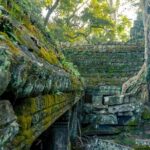
This is also where footwear matters most. The ground can be uneven, and the temple has many up-and-down steps. If you’re worried about mobility, Ta Prohm is where you’ll feel it the most, so go slow, stop often, and use the shaded edges when you need them.
The guide makes a huge difference here
One of the strongest themes in the tour experience is the role your guide plays. Angkor’s storytelling isn’t obvious if you just look at random carvings. When the guide connects the dots—what each style suggests, how religious layers changed over time, why the sculptures look the way they do—you start seeing the temples as history you can read.
On past departures, English-speaking guides connected to this tour include names such as Sokpee (sometimes spelled that way in guest messages), Saruon Pal, Pal Saruon, Sak, Sarak, Kiss (Sok), Chansarak, Samnang Yean (Lucky), Yuth, and Chhay. Whoever leads your day, you’ll benefit most if you ask questions while you still have momentum—especially at Angkor Wat and Bayon, where the details are dense.
There’s also a practical side: guides keep you moving at the right pace. They help you avoid wasting time where you can’t see much, and they nudge you toward viewpoints that make the whole day feel like it flows rather than stutters.
Comfort tips that matter on an 8-hour temple day
Here’s what I’d do before you go, based on what makes this tour work smoothly:
- Wear comfortable walking shoes with grip. Angkor is full of stairs and uneven stone.
- Bring sun protection. On some days, temperatures can push high, and you’ll want something for your head.
- Plan for a clothing check. You need respectful dress that covers shoulders and knees. A light layer is useful if your outfit runs short.
- Use the provided cool downs. Mineral water and cool towels help, but you still need to drink steadily, not only when you feel thirsty.
If you’re camera-happy, bring a plan too. The temples reward patience. It’s easy to burn time repositioning your shot. A guide who helps with timing and angles can save you from spending all day on your own feet and not enough time looking.
Who this tour fits best
This tour is a strong pick if you want:
- A guided, high-impact Angkor highlights day without handling logistics yourself
- Explanations that help you interpret what you’re seeing
- A small-group feel with an upper limit that’s not massive
It might be less ideal if:
- You want a slow, museum-like pace at fewer sites
- You hate stairs and uneven walking
- You’re hoping the $19 price includes temple entry (it doesn’t)
Should you book this Full-Day Temples of Angkor Small Group Tour?
If your goal is to see Angkor Wat, Angkor Thom, Bayon, and Ta Prohm in one day without stress, I think this is a smart booking. The value isn’t just the low tour price—it’s the mix of air-conditioned transport, cool towel refreshes, pickup/drop-off, and a guide who can make the stone feel meaningful.
Book it if you’re willing to work your legs a bit and you’re okay paying the $37 temple pass separately. Skip it (or consider a different pace) if you want long sits, minimal climbing, or you’re visiting with someone who struggles with lots of steps.
FAQ
What is included in the tour price?
The tour includes hotel pickup and drop-off, a licensed English-speaking tour guide, transport by air-conditioned minivan, mineral water and cool towel, and local tax. Temple entrance fees are not included.
How much is the Angkor temple pass?
The temple pass is $37 per person. It must be paid directly to the site, and Visa cards are accepted.
What temples do you visit in a full day?
You’ll visit Angkor Wat, Angkor Thom South Gate, Bayon Temple, the area passing by the Terrace of the Leper King and Terrace of Elephants, Srah Srang for lunch, and Ta Prohm.
Is lunch included?
Lunch is not included. There is a lunch stop near Srah Srang at a Khmer local restaurant.
What time does the tour start?
The tour starts very early, with pickup reported around 4:30am, so you can arrive at Angkor Wat early.
What should I wear and bring?
You need respectful clothing that covers shoulders and knees. Wear comfortable walking shoes, and it helps to bring sun protection. The tour provides mineral water and cool towels.
What is the cancellation policy?
You can cancel for a full refund if you cancel at least 24 hours before the experience’s start time.