REVIEW · SIEM REAP
Private Full-Day Sunrise Tour in Angkor Wat Temple
Book on Viator →Operated by Angkor Guide Tour · Bookable on Viator
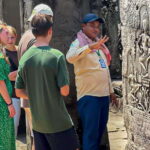
Sunrise at Angkor Wat shifts how you see Angkor. This full-day private tour (about 7 hours) starts early, then moves you through the big emotional set pieces in Angkor Thom—Angkor Wat, the Bayon faces, and Ta Prohm’s famous tree roots—while your English guide explains what you’re looking at. I like the way the guide connects the temples to Khmer stories, so the carvings aren’t just scenery.
Two things I especially like: the timing for sunrise at Angkor Wat, and the guide’s storytelling plus photo help (many guests specifically mention guides like Chanra and the way they capture great shots). One key consideration: the temples pass is not included, and it costs $37 per person for a 1-day pass.
In This Review
- Key highlights worth knowing before you go
- The 4:30 am sunrise start: why it’s worth the early wake-up
- Angkor Wat sunrise and the temple galleries you’ll actually understand
- Angkor Thom’s South Gate causeway: the Naga tug-of-war
- Bayon Temple: the faces, the bas-reliefs, and the crowd factor
- Baphuon: the prototype style temple and the stone-on-stone detail
- Phimeanakas and the royal-enclosure feel (with a cooler break)
- Terrace of the Elephants: a 300+ meter timeline of power
- Ta Nei: short, specific, and close to the East Baray
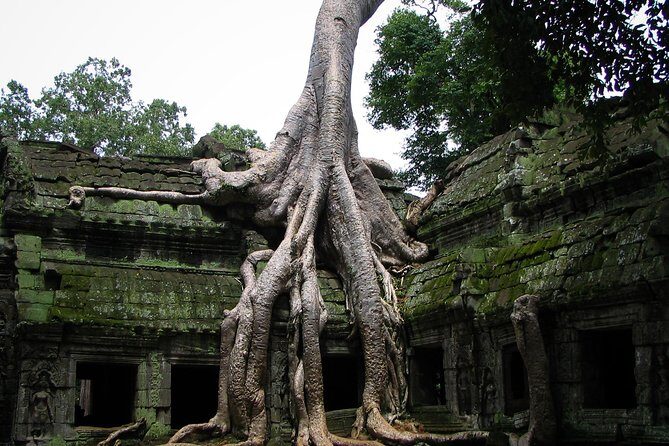
- Ta Prohm: the famous roots and why it feels like a movie set
- Midday lunch near Angkor Wat: the reset you’ll be glad you built in
- Price and value: what $43 really covers (and what to add)
- Who this sunrise loop fits best
- Should you book this sunrise Angkor Wat day tour?
- FAQ
- What time does the tour start?
- How long is the experience?
- Is hotel or airport pickup included?
- What’s included in the price?
- Do I need a temples pass?
- Is this a private tour?
- What if the weather is bad?
Key highlights worth knowing before you go
- 4:30 am start gives you that first-light feel at Angkor Wat, before the day fully heats up.
- South Gate of Angkor Thom puts you on the Naga causeway with giant figures on both sides.
- Bayon’s 49 towers and smiling faces are the visual payoff of the Angkor Thom center.
- Ta Prohm’s massive roots are the reason people associate this stop with Tomb Raider.
- Air-conditioned vehicle + bottled water make the long temple day more manageable.
The 4:30 am sunrise start: why it’s worth the early wake-up
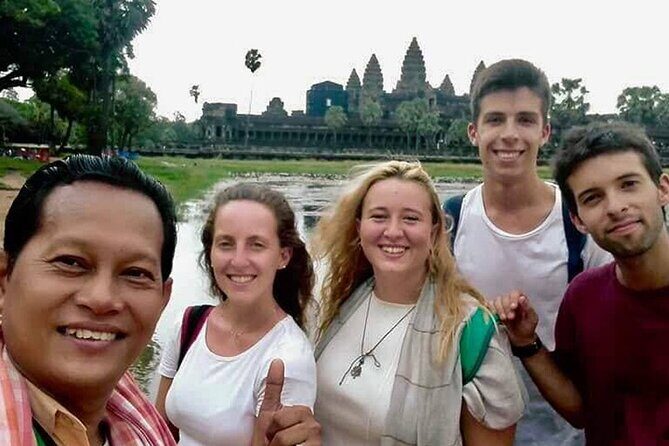
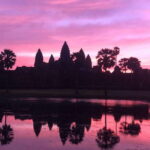
Angkor is one of those places where time of day changes everything. Starting around 4:30 am means you get to reach Angkor Wat while the light is low and the crowds are still building. That early window is why this tour is labeled as a sunrise experience, not just a morning temple tour.
You’ll spend the first part of the day focused on Angkor Wat itself: sunrise, then time inside the temple galleries. The practical value here is simple. You’re not rushing through the main site in the hottest, brightest hours. You’re arriving when the atmosphere helps the architecture feel dramatic rather than flat.
After that, you’re in a full, packed rhythm of temple stops. Expect the day to move. This is not a slow stroll tour. It’s better thought of as a carefully paced loop that hits the major mental “must-see” moments in one run.
You can also read our reviews of more private tours in Siem Reap


Angkor Wat sunrise and the temple galleries you’ll actually understand
Angkor Wat is the headline, so you should give it a real chunk of attention. On this tour, you get about 3 hours centered on sunrise and then visiting the temple galleries. The big win is that your guide doesn’t just point things out. They explain the stories and history behind what you’re seeing inside the complex.
What to look for while you’re there:
- The transition from outside views into the galleries, where the carvings start doing their work—telling Khmer stories through stone.
- The way the sunrise light changes the look of the temple surfaces and towers, which helps you spot details that are harder to see later.
- The overall layout, so you understand why certain viewpoints feel like “anchors” in the experience.
A small but important note for planning: temple admission tickets are not included. You’ll need the 1-day temples pass on top of the tour price, so factor that into your total budget.
Angkor Thom’s South Gate causeway: the Naga tug-of-war
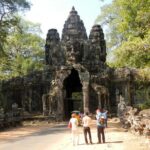
After Angkor Wat, you head toward the grand South Gate of Angkor Thom. This approach is its own mini-story, because you don’t just walk into the complex—you enter through a visual legend.
You cross a causeway over a 100 m wide moat. The Naga balustrade lines the walkway, starting with a massive seven-headed Naga held by a multi-armed, multi-headed giant. On each side are 54 stone giants pulling on the Naga. One side is associated with the Devas; the other with the Asuras. The whole setup represents a tug-of-war between opposing forces—good vs. evil in the symbolic logic of the art.
This is a stop where it helps to slow down for a minute and look both left and right. If you only stare straight ahead, you miss the “two teams” effect. If you take a few minutes to step into the detail on the balustrades, you’ll come away feeling like you saw something more specific than a gate photo.
The actual time here is about 15 minutes, so you’re not expected to linger forever. Still, if you want a better shot, you’ll want your camera ready before you step onto the causeway.
Bayon Temple: the faces, the bas-reliefs, and the crowd factor
Bayon is the emotional center of Angkor Thom. It’s built by King Jayavarman VII in the late 12th or early 13th century, and it’s known for being the only Mahayana state temple dedicated to Buddha during the Angkor period.
Here’s what hits you fast:
- Bayon’s grounds include 49 towers.
- Each tower is decorated with large, smiling faces connected with Buddhisattva Avalokesvara.
- You’re surrounded by tiers of stone, which makes the faces feel like they’re looking down—or out—at you.
You’ll have about 50 minutes at Bayon, and that’s both good and a little tricky. It’s good because you’ll have time to explore the tiers and catch the bas-reliefs. It’s tricky because Bayon is described as very busy. In practical terms, this means:
- your photos will involve other people,
- you’ll want to pause in moments where you can see carvings without standing in a thick bottleneck,
- and you should expect some competition for the best angles.
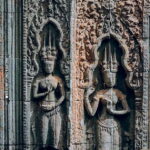
The bas-reliefs are a major reason Bayon matters. You can see scenes linked to Khmer armies, apsaras, naval battles, fishermen, and even cockfights. If you get tired of “just faces,” this is where Bayon turns into a full storybook.
Baphuon: the prototype style temple and the stone-on-stone detail
Next is Baphuon Temple. You’ll spend about 40 minutes here, and it’s one of the more satisfying contrast stops because Baphuon feels like it was built to show how much stone can carry.
You can think of Baphuon as a prototype for the Baphuon style, covering available surfaces with intricate carvings. The carvings range from lotus flowers and wild animals to hunters and devata figures. There are also scenes tied indirectly to Hindu mythology and references to epic poems like the Ramayana.
There’s also a design idea you’ll want to keep in mind while you walk around: the sandstone temple-mountain symbolizing Mount Meru, which matters in both Hindu and Buddhist cosmology. That symbolic “mountain” concept helps you read the vertical layout and understand why parts of the complex feel like steps toward a sacred center.
The main potential drawback of a stop like this is simple: details are everywhere, and if you rush, your brain misses half of them. Give yourself permission to stop more often than you think you need to.
A few more Siem Reap tours and experiences worth a look

Phimeanakas and the royal-enclosure feel (with a cooler break)
After the large carved surfaces, Phimeanakas shifts your pace a bit. It’s part of the royal enclosure, so you’ll likely pass through it as part of the broader flow.
Phimeanakas matters because it comes with a story, and because the area around it is described as thick with trees and ponds. That adds practical comfort. When you’re visiting around the hotter part of the day, this little pocket can feel cooler simply because the setting has more natural shade and water.
You’ll have about 30 minutes here. Use that time to look up and down. Temples like this reward slow scanning—especially when your guide is pointing out details tied to the royal enclosure context.
Terrace of the Elephants: a 300+ meter timeline of power
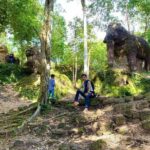
From Phimeanakas, you move to the Terrace of the Elephants. This terrace was built by King Jayavarman VII at the end of the 12th century, and it stretches for more than 300 meters from Baphuon on the south to the Leper King terrace to the north.
Even if you don’t memorize the entire complex layout, the terrace length changes your experience. Instead of being trapped in one viewpoint, you walk through a long corridor of history and symbolism. It also gives your legs something to do after earlier stops that were heavy on climbing and tight viewing spots.
This stop is about 30 minutes, which is the right length to appreciate scale without turning it into a sore-feet marathon.
Ta Nei: short, specific, and close to the East Baray
Ta Nei is a late 12th-century stone temple located near the northwest corner of the East Baray (a large holy reservoir). It’s dedicated to the Buddha, which adds another layer to the tour’s broader theme of changing religious influences across time.
You’ll only have about 15 minutes here, and that’s exactly why it’s valuable. Short stops keep the day from draining you. You get the “aha” moment—temple form, setting near the baray, and Buddha dedication—then you’re moving again.
If you tend to get distracted by small details, this is a stop where listening to your guide can make a huge difference. With limited time, you’ll get the most if you let the explanation anchor your quick walk.
Ta Prohm: the famous roots and why it feels like a movie set
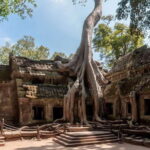
Finally, you hit Ta Prohm. The original name was Rajavihara, meaning Monastery of the King. Built in 1186 AD by King Jayavarman VII, it’s one of the first temples from his reign.
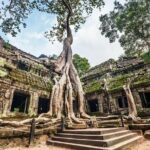
What people remember immediately is the way gigantic tree roots grow over and around the structures. This is also the place associated with the Tomb Raider movie, so even if you never saw the film, you’ll recognize the vibe: nature and stone tangled together in a way that looks staged even when it’s not.
You’ll have about 1 hour here, which is a solid amount of time for:
- walking the edges of the main structures,
- looking for root patterns and how they interact with walls and doorways,
- and grabbing photos from angles that show both stone and vegetation.
Ta Prohm can be visually intense. If you’ve had a long day already, take a few minutes to just stand and let the scene come to you. It’s one of those places where photos don’t fully show how thick the roots feel in person.
Midday lunch near Angkor Wat: the reset you’ll be glad you built in
By around 12:00 pm, the day shifts from temple touring into lunch time. You’ll have a break at a local restaurant near Angkor Wat.
This matters more than it sounds. When you start at 4:30 am and spend the morning moving through major temple complexes, energy drops fast. A midday meal gives you a controlled recovery point instead of letting hunger turn the rest of the day into low-grade frustration.
Also, because the tour keeps going through the afternoon, lunch isn’t just about food. It’s about getting yourself back to steady walking pace and steady attention for the remaining sites.
Price and value: what $43 really covers (and what to add)
The tour price is $43.00 per person for about 7 hours, in a private setup for your group, with an English-speaking guide and an air-conditioned vehicle. Pickup is offered, and it includes parking fees and road tolls plus bottled water.
Where the value math gets important is the temples pass. Admission tickets are not included, and the 1-day pass is $37 per person. So your realistic total is closer to:
- $43 tour price
- + $37 temples pass per person
before you consider lunch costs.
Still, that pass is for the temples, while the tour price is for the early start timing, vehicle, guide interpretation, and the full set of major stops. For many people, the guide makes the difference between seeing stone and understanding why it looks the way it does.
Who this sunrise loop fits best
This is a strong fit if:
- you want the headline moments (Angkor Wat sunrise, Bayon, Ta Prohm) in one day,
- you like explanations that connect carvings to meaning,
- you prefer a planned route without having to figure out timing and transport on your own.
It’s also a good choice if you travel in a group that would benefit from shared costs (the experience mentions group discounts). And it’s private, so your pacing can be more comfortable than a bigger group tour.
Should you book this sunrise Angkor Wat day tour?
I’d book it if you care about timing and context, not just checklists. The early sunrise start plus a full loop through Angkor Thom and Ta Prohm is a practical way to see the core emotional hits of the Angkor area in one long, well-structured day.
If you’re on a tight budget, do the temples-pass math up front, since admission isn’t bundled into the tour price. And if you dislike crowds, know that Bayon is described as very busy, so you may need a little patience for photos and slow looking.
FAQ
What time does the tour start?
The tour start time is 4:30 am.
How long is the experience?
The duration is about 7 hours.
Is hotel or airport pickup included?
Yes. Pickup is offered, and pickup/drop-off at the airport is included.
What’s included in the price?
Included items are bottled water, an air-conditioned vehicle, English tour guide, and parking fees and roads tolls.
Do I need a temples pass?
Yes. The tour does not include temple admission tickets. A 1-day temples pass costs $37 per person and is for access to the temples on the itinerary.
Is this a private tour?
Yes. It’s listed as private, so only your group will participate.
What if the weather is bad?
The experience requires good weather. If it’s canceled due to poor weather, you’ll be offered a different date or a full refund.