REVIEW · SIEM REAP
Two Day Angkor Temples Tours
Book on Viator →Operated by Angkor Heritage Tours · Bookable on Viator
Two days at Angkor can feel like a movie. This private tour from Siem Reap strings together the big-name sites and lesser-seen temples, with history you can actually follow and photo planning that helps you get better shots on real ruins, not just postcards.
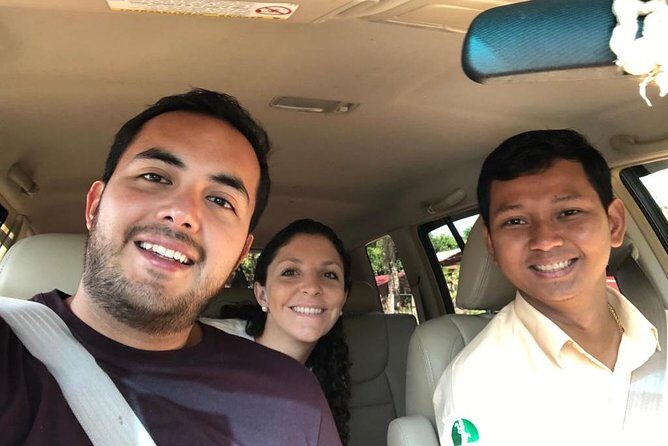
I like how the guides keep it conversational and responsive. Names that show up in feedback include Borey Hang, Mr. Kim, Kimhoeun, and Mr. Bunleat, and the common thread is they stay focused on what you want to see and how you want to experience it.
One thing to plan for: temple admission tickets are not included, so you’ll want to budget those add-ons (and GST isn’t included either).
In This Review
- Key highlights
- Two Days at Angkor: What This Tour Does Differently
- Price and Logistics: Getting Value Beyond the Sticker
- Pickup, Timing, and the Meeting Point in Siem Reap
- Day 1 Temple Route: Pink Stone, Barays, and Quiet Big Names
- Banteay Srei: The Temple of Pink Stone Details
- Banteay Samre: A Suryavarman II Temple in Solid Shape
- Preah Khan: Sacred Sword and a Maze of Corridors
- Neak Pean: A Small Temple on a Man-Made Island
- Ta Som: Quick Stop With a Big Character
- Eastern Mebon and Pre Rup: Two Pyramid-Style Moments
- Day 2: Angkor Wat, Angkor Thom, and the Tree-Wrapped Ta Prohm
- Angkor Wat: The Monument Everyone Hopes Looks Like the Photos
- Phnom Bakheng: A Short Stop With a Big Spot
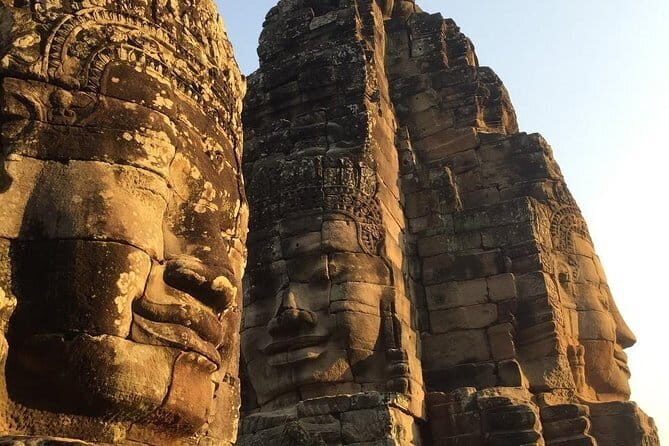
- Angkor Thom and Bayon Focus: A City Built for Scale
- Ta Prohm: The Ruin That Feels Alive
- How the Guides Actually Improve Your Day
- What to Expect Walking Between Temples
- Who This Two-Day Angkor Tour Fits Best
- Should You Book This Two Day Angkor Temples Tour?
- FAQ
- What is included in the Two Day Angkor Temples Tour?
- Are temple admission tickets included?
- What is the price per person?
- How long is the tour?
- Is this tour private or group?
- Do they offer pickup in Siem Reap?
- Where is the meeting point?
- Is this tour okay if I’m not very fit?
- What happens if weather is poor?
- Is there free cancellation?
Key highlights
- Private, in-your-group touring inside Angkor, not a cattle-car bus plan
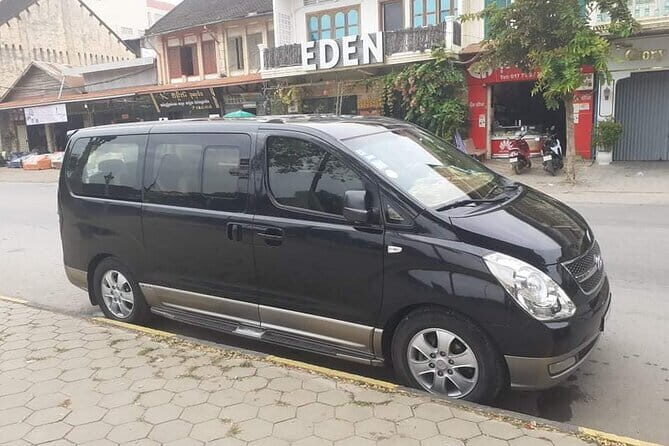
- Air-conditioned vehicle with pickup so the travel days feel easier
- A smart mix on Day 1: Banteay Srei, Banteay Samre, Preah Khan, and more
- Big Day 2 classics: Angkor Wat, Angkor Thom, and Ta Prohm
- Guides who help you shoot better photos, including iPhone/photo tips mentioned in feedback
- Budget clarity: admission tickets are extra, so don’t plan on using only the tour price
Two Days at Angkor: What This Tour Does Differently
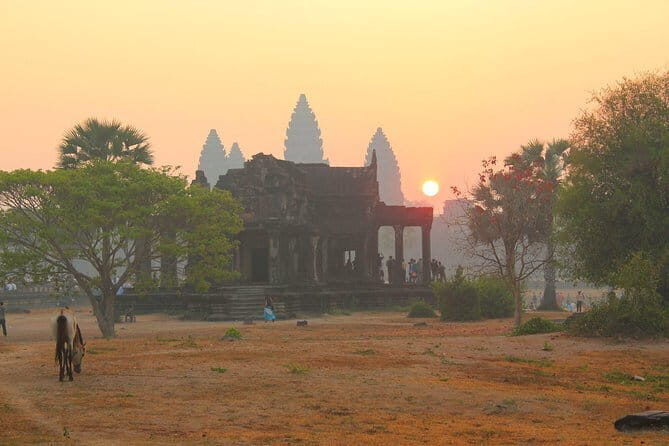
Angkor can overwhelm you fast. There are too many temples, too many facts, and too many ways to do it wrong. The appeal of this two-day setup is that it feels structured without turning rigid. You get a full circuit across both days, but the guide stays tuned to your pace and interests.
Two things make the biggest difference in my view:
First, you’re not just walking up to stone. The guides are there to connect what you’re seeing to the religious and cultural world behind it—Hinduism, Buddhism, and how the kingdoms that built Angkor understood power, sacred space, and storytelling.
Second, you’re not just carrying a camera around hoping for the best. Feedback points to practical coaching for photography, including tips tailored to phone cameras. That matters at Angkor because the best views can depend on small choices: where you stand, where the light hits, and how you frame faces and doorways.
A few more Siem Reap tours and experiences worth a look

Price and Logistics: Getting Value Beyond the Sticker
The tour price is $102.57 per person for roughly 2 days, and it’s typically booked about 28 days in advance. That tells me two things: demand is steady, and if you want smoother planning, you shouldn’t leave it to the last minute.
What you get for your money is pretty straightforward:
- An air-conditioned vehicle
- Pickup offered
- A private setup (only your group participates)
- Group discounts (so the more people you have, the easier it often is to make the math work)
What isn’t included:
- Temple admission tickets
- GST
So is it good value? It can be, because the main “cost” at Angkor is time and energy. An efficient route with a guide who helps you interpret what you’re seeing usually means you spend less time wandering, and more time understanding. If you’d rather take your temples slower and more thoughtfully, the private format is where you feel the payoff.
One practical tip: because admission tickets are separate, check your budget early. Don’t assume your tour price covers everything once you start climbing gates and towers.
Pickup, Timing, and the Meeting Point in Siem Reap
This is designed to work smoothly from Siem Reap. You’ll meet at Angkor Enterprise, Apsara Rd, Krong Siem Reap, Cambodia.
The tour includes an air-conditioned vehicle, which you’ll appreciate because Angkor days are long and you’ll be moving between sites. A/c doesn’t replace temple walking, but it does help you recharge between stops.
Also, this tour is set up for people with a moderate physical fitness level. You don’t need to be an athlete, but you should expect uneven stone, steps, and time spent on your feet.
Day 1 Temple Route: Pink Stone, Barays, and Quiet Big Names
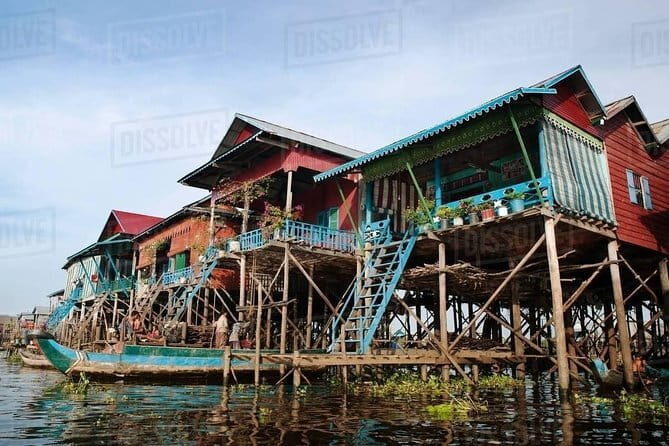
Day 1 has a classic feel: you start with Hindu temples, then you work through a range of styles and eras that shaped Angkor’s look. The stops are timed around roughly 30 to 60 minutes each for most sites, with one shorter stop later on—enough time to see key features without feeling like you’re doing push-card sightseeing.
Banteay Srei: The Temple of Pink Stone Details
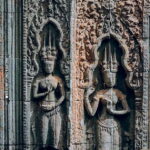
You start at Banteay Srei, often called the jewel of Angkorian art. The big reason it’s loved is not just that it’s old—it’s that it’s visually fine-grained. It’s a Hindu temple dedicated to Lord Shiva, built in the 10th century, and it’s known for its pinkish stone.
What I find useful about starting here is that it sets your eye for detail early. Doorways, carvings, and symmetry become easier to notice when you’re not already exhausted.

Banteay Samre: A Suryavarman II Temple in Solid Shape
Next is Banteay Samre, also from the broader Angkor era, built in the 12th century by Suryavarman II and dedicated to Lord Vishnu.
The note that matters for your trip: it’s described as being in fairly healthy preservation. That tends to make your time there more rewarding because you can still read the structure without mentally filling in too many gaps.
Preah Khan: Sacred Sword and a Maze of Corridors
Then comes Preah Khan (the Sacred Sword). This is one of the larger Angkor complexes, and the vibe is different from a simple temple-mountain. You’re dealing with maze-like vaulted corridors, fine carvings, and stone that’s picked up lichen over time.
A good guide makes this kind of site work. Without guidance, these large complexes can blur into a lot of similar doorways. With good interpretation, you start seeing why different sections feel connected.
Neak Pean: A Small Temple on a Man-Made Island
Neak Pean is a Buddhist temple called the Intertwined snake. It’s smaller and it sits on an artificial island in the middle of a man-made lake known as Jayatataka or the north Baray.
This stop is worth it if you like contrast. Day 1 already includes big, structured spaces. Neak Pean gives you a calmer moment with a different religious focus, plus the setting adds atmosphere.
Ta Som: Quick Stop With a Big Character
Ta Som is a satellite temple of Preah Khan, built by Jayavarman VII in the late 12th century. It’s described as small, but it has a memorable feature: a large head at the eastern gate.
This is one of those places where you can do it fast and still feel like you got something. If you’re in a hurry, it’s not the kind of site where you’ll lose your day, but if you slow down, you can still enjoy the details at the gate.
Eastern Mebon and Pre Rup: Two Pyramid-Style Moments
Day 1 finishes with Eastern Mebon and Pre Rup.
- Eastern Mebon is a Hindu temple erected by Rajendravarman II. It was originally on an islet in the Eastern Baray, but is now mostly on dry land. That change makes it an interesting read for how the landscape around Angkor has shifted.
- Pre Rup is also credited to Rajendravarman II, built in the 10th century. It’s described as a pyramid-shaped temple-mountain with three tiers.
If you want an efficient end to Day 1, this works. You end on form—pyramids, tiers, and views—so you can compare them to what you’ll see on Day 2 at the grandest scale.
Day 2: Angkor Wat, Angkor Thom, and the Tree-Wrapped Ta Prohm
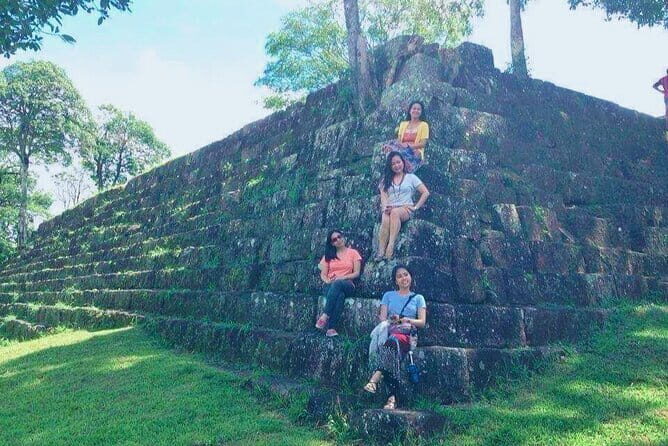
Day 2 is built for the names people come to Cambodia for. The tour hits Angkor Wat first, then Phnom Bakheng, then Angkor Thom, and finishes with Ta Prohm.
This is where your guide’s timing choices matter. You’ll be going for the most dramatic spaces, so a guide who can explain what you’re looking at keeps the day from feeling like a highlight list.
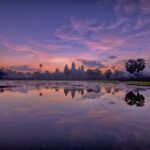
Angkor Wat: The Monument Everyone Hopes Looks Like the Photos
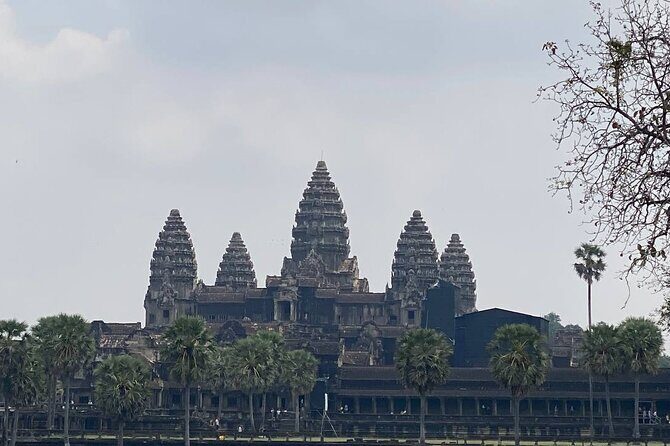
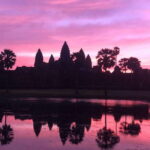
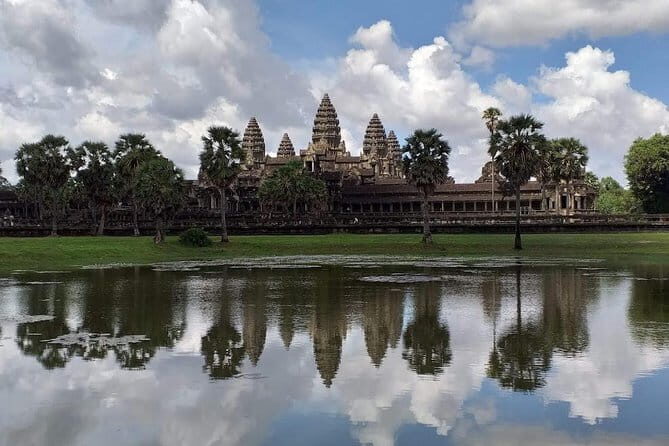
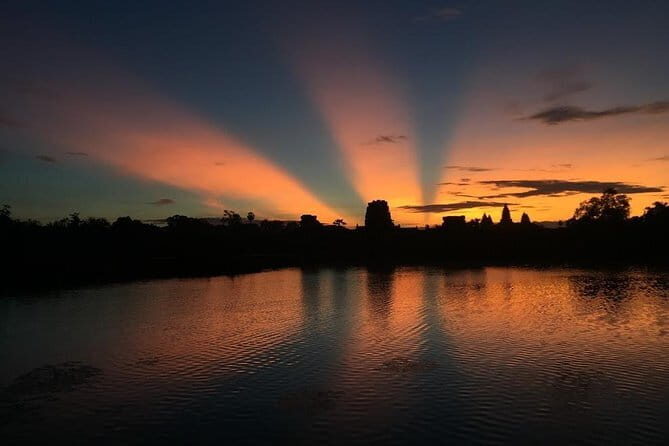
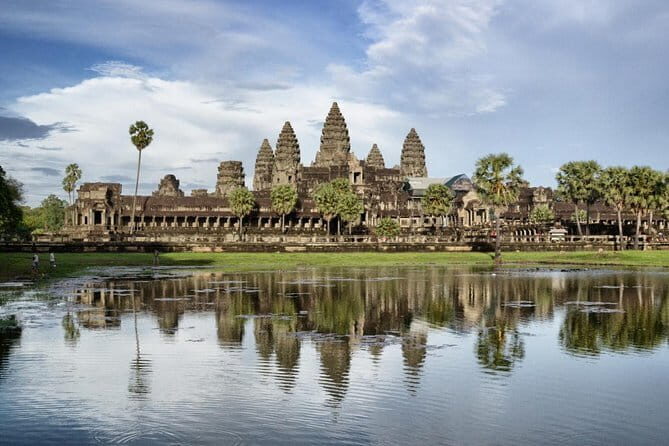
Angkor Wat was built by Suryavarman II in the 12th century to honor Lord Vishnu. It’s called the largest and the most breathtaking of Angkor’s monuments.
It’s easy to get that first moment wrong. Don’t just rush for the widest view. When a guide slows you down for the key features—geometry, entrance design, and symbolism—you end up seeing more than you expected in the time you have.
Phnom Bakheng: A Short Stop With a Big Spot
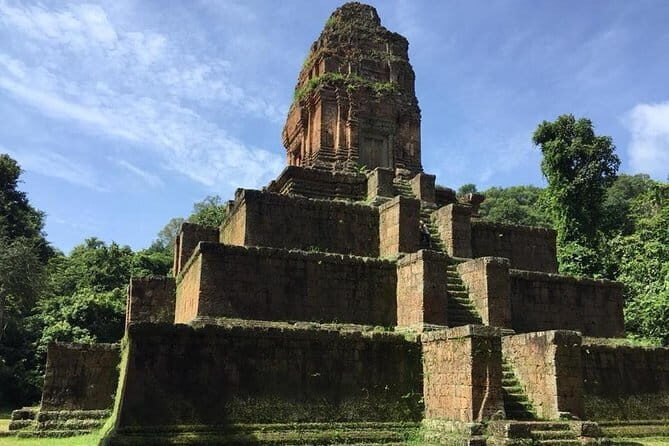
After Angkor Wat, you go to Phnom Bakheng, built in the early 10th century by Yasovarman I. It’s described as the claim to fame for temple-mountains in the area, with five tiers and seven levels.
Notice the schedule detail: the stop is listed as about 1 minute. That doesn’t mean it’s useless. It usually signals a quick viewpoint-style pause. Go ready with patience: the real value here is catching the view and moving on.
Angkor Thom and Bayon Focus: A City Built for Scale
Next is Angkor Thom (the great city), built by Jayavarman VII. It’s tied to the Bayon, and the city at its peak may have supported a population of up to one million in the surrounding region.
This is where a guide helps you understand scale. When you hear the population story and then see the city layout, the stone stops feeling like random monuments and starts feeling like a plan.
Ta Prohm: The Ruin That Feels Alive
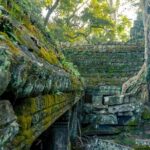
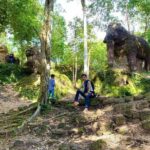
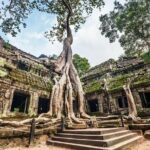
You finish with Ta Prohm, described as the most atmospheric ruin at Angkor. The reason it’s famous: it’s been swallowed by trees, and that look is part of its charm.
The tour gives about 1 hour here, which is about right. You want enough time to walk the paths, find a few framed angles, and let the mood settle in. If you’re someone who loves story in ruins, Ta Prohm usually delivers.
How the Guides Actually Improve Your Day
This tour stands or falls on guide quality—and the feedback here is consistent. Guides like Borey Hang are described as friendly and charming, plus strong on the history and religious context of Hinduism and Buddhism.
There’s also a practical side. Feedback highlights flexibility, including a reported pivot when a family enjoyed a specific site like Ta Prohm. That matters because Angkor isn’t one-size-fits-all. If you’re more interested in carving detail, you’ll want time in places like Banteay Srei. If you love mood and setting, Ta Prohm is a magnet.
Two extra guide touches that sound small but make a real difference:
- Cold water: one review mentions endless cold water from Borey Hang.
- Photography coaching: multiple comments connect the guide with photo spot suggestions, plus iPhone photography tips.
You don’t have to be a serious photographer to benefit. Even basic instruction helps you frame doorways and faces so your pictures feel intentional instead of accidental.
What to Expect Walking Between Temples
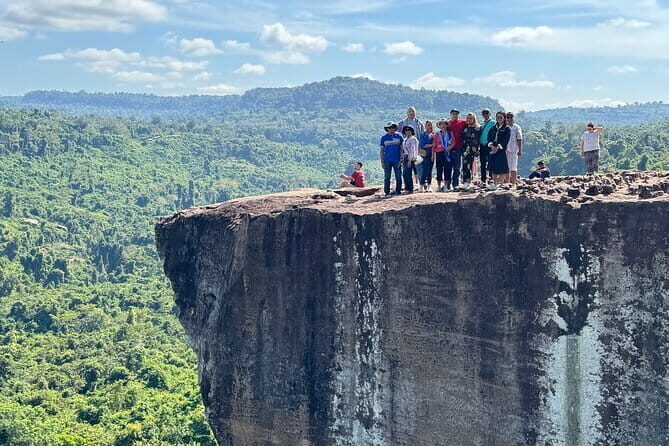
This is a temple-hopping plan, so your comfort depends on your preparation.
What you’ll likely deal with:
- Lots of time on foot across stone paths and steps
- Uneven ground and doorways at different heights
- Heat and sun through the day (so plan to take shade breaks when you can)
What you should do before you go:
- Wear shoes you trust on uneven terrain
- Carry sun protection and a refillable water bottle (and yes, you may get cold water from the guide)
- Keep your camera ready, but don’t force every shot—Angkor is more enjoyable when you also pause and look
If you enjoy learning while you walk, you’ll feel the tour working. If you only want to check boxes fast, you might find you want more time than the average stop length.
Who This Two-Day Angkor Tour Fits Best
This tour is a good match if you:
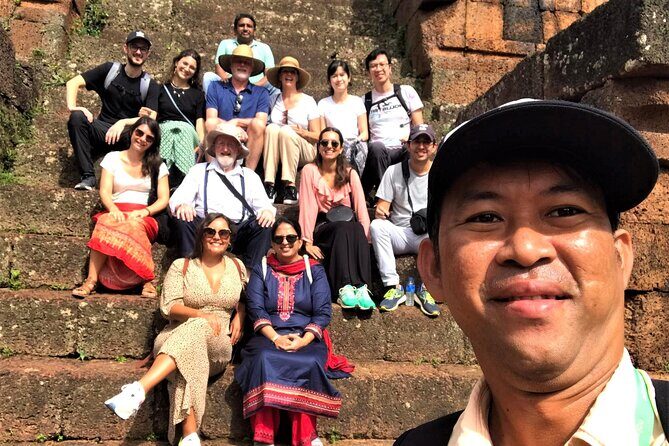
- Want a private Angkor experience without the stress of planning a route yourself
- Prefer a guide who can explain what you’re seeing, not just point and move
- Care about photos enough to want guidance on where and how to shoot
- Are short on time and want both classic and off-the-main-temple stops
It also fits families and mixed-age groups, since the private format can help the pace. Just remember the tour calls for moderate physical fitness, so choose accordingly.
Should You Book This Two Day Angkor Temples Tour?
I’d book it if you want Angkor done with structure and a human guide who actually talks through the meaning of the stones. The combination of a two-day route, air-conditioned transport, pickup, and guides known for history and photography tips is a strong practical package—especially for people who don’t want to wrestle with logistics after landing in Siem Reap.
I’d hesitate if you hate extra costs for admissions. Since temple tickets aren’t included and GST isn’t included, your final spend will be higher than the base tour price.
If you’re the type who likes your travel with both beauty and context, this is the kind of Angkor plan that turns a day of ruins into something you can remember.
FAQ
What is included in the Two Day Angkor Temples Tour?
The tour includes an air-conditioned vehicle. Pickup is also offered. Admission tickets and GST are not included.
Are temple admission tickets included?
No. Temple admission tickets are not included in the tour price.
What is the price per person?
The price is $102.57 per person.
How long is the tour?
It runs for 2 days (approximately).
Is this tour private or group?
It’s private. Only your group will participate.
Do they offer pickup in Siem Reap?
Yes, pickup is offered.
Where is the meeting point?
You meet at Angkor Enterprise on Apsara Rd in Krong Siem Reap.
Is this tour okay if I’m not very fit?
The tour suggests a moderate physical fitness level. You should expect walking and some steps.
What happens if weather is poor?
The experience requires good weather. If it’s canceled due to poor weather, you’ll be offered a different date or a full refund.
Is there free cancellation?
Yes. You can cancel up to 24 hours in advance for a full refund. If you cancel less than 24 hours before the start time, there’s no refund.