REVIEW · SIEM REAP
2-Day Angkor Wat Tour with Banteay Srei and Floating Village
Book on Viator →Operated by Asean Angkor Guide · Bookable on Viator
Angkor rewards early mornings. This 2-day private tour strings together the big names—Angkor Wat, Bayon, Ta Prohm—plus the delicate carvings of Banteay Srei and a boat look at Kampong Phluk. You also get a practical rhythm: start early for the light, break for lunch, then circle back for sunset options.
Two things I especially like are the comfort and the guidance. You’ll ride in air-conditioned comfort with a driver, and the tour includes cool towels and water breaks during the temple run. The best part is how the guide handles timing and explanations—past guides shared in the experience stories (like Sean, Saylor, Sei La, and Raman) were praised for clear English, smooth organization, and knowing where to stand for better photos.
The main drawback to plan for: this price doesn’t cover key extras. Admission fees and the Tonle Sap boat portion cost extra, including an Angkor Thom South Gate fee listed at $62 per person, plus $15 per person for the Tonle Sap pass and boat ride.
In This Review
- Key highlights at a glance
- Sunrise at Angkor Wat: why the 4:40 AM start matters
- Day 1 through Angkor Thom: from Bayon faces to temple-mountain views
- The midday pause at Angkor Archaeological Park
- Angkor Wat proper on Day 1: big scale, clear context
- Sunset from Phnom Bakheng: optional, and timing-dependent
- Day 2 temples: Ta Prohm to Preah Khan, with a sunrise foundation
- Ta Prohm: the temple where trees do the work
- Pre Rup and Eastern Mebon: viewpoints and temple-mountain mood
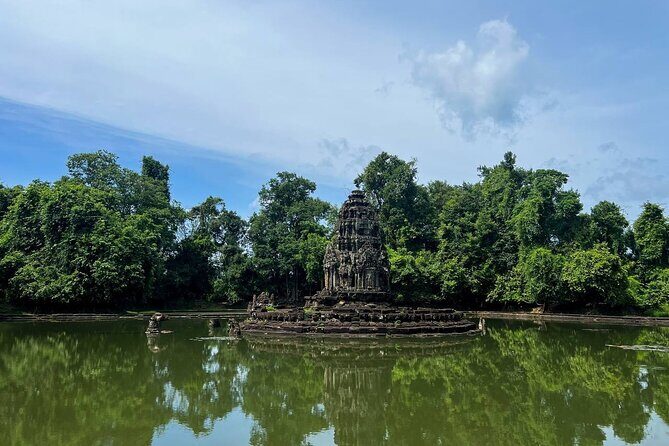
- Ta Som and Neak Pean: calmer pacing, still worth stopping
- Preah Khan before lunch: a large compound with meaning
- Banteay Srei: why the detail level feels special
- Kampong Phluk on Tonle Sap: the boat ride and the $15 pass
- What changes when water levels drop (late March to July)
- Price and what you’ll budget on top of $130
- Guide quality and photo strategy: how you get better shots
- What to bring so the day feels easier
- Should you book this 2-day private Angkor tour?
- FAQ
- Is this tour private?
- How much does the tour cost?
- What is included in the tour price?
- Are meals included?
- What extra costs should I expect?
- When is the sunrise pickup on Day 2?
- Can I cancel for a full refund?
Key highlights at a glance
- 4:40 AM Angkor Wat sunrise on Day 2, with hotel pickup before the city fully wakes up
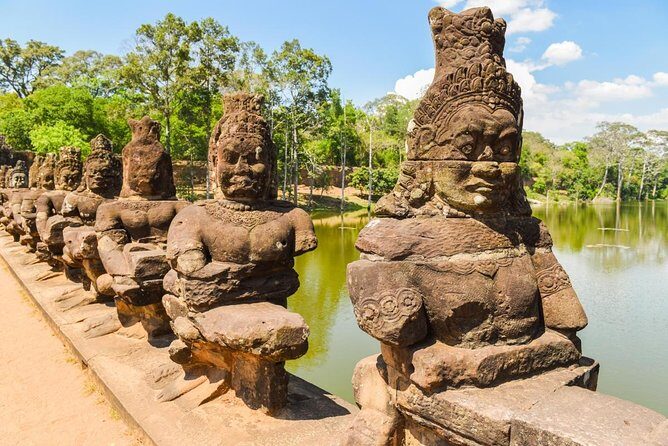
- Angkor Thom circuit on Day 1: Bayon, Baphuon, and both terraces you keep seeing in photos
- Ta Prohm in the trees, the famous temple left with massive roots in place
- Banteay Srei’s carvings: a smaller temple with unusually fine sandstone reliefs
- Kampong Phluk boat time on Tonle Sap (Tonle Sap pass + private boat ride are extra)
- Dry-season reality (late March to July): different views and daily life when water levels drop
Sunrise at Angkor Wat: why the 4:40 AM start matters
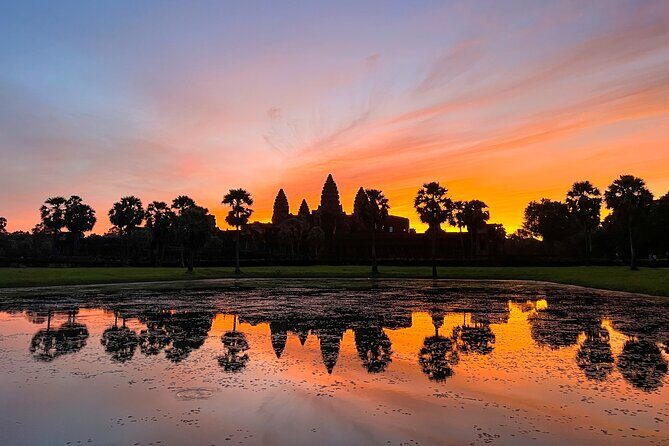
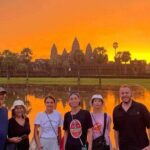
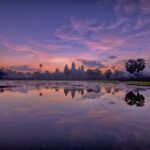
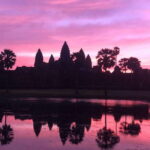
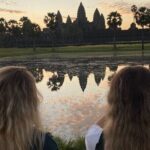
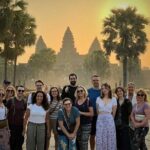
If you only do one sunrise in your life, Angkor Wat is the one to choose. This tour schedules a Day 2 pickup at 4:40 AM and then goes straight to watch the light over the world’s largest religious monument on its massive 162.6-hectare site.
The practical win is that you’re not fighting crowds at the worst time of day. You’re also there early enough to move without feeling rushed, which is important because you’ll be walking, climbing, and standing in the sun later.
A few more Siem Reap tours and experiences worth a look

Day 1 through Angkor Thom: from Bayon faces to temple-mountain views
Day 1 is built like a hits-to-deeper-temples route, starting inside the walls of Angkor Thom. That’s smart because you get a clear storyline: Jayavarman VII’s capital, the ceremonial terraces, then the shift to the major religious center.
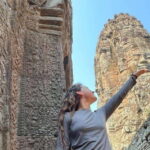
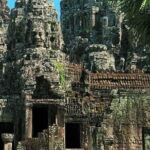
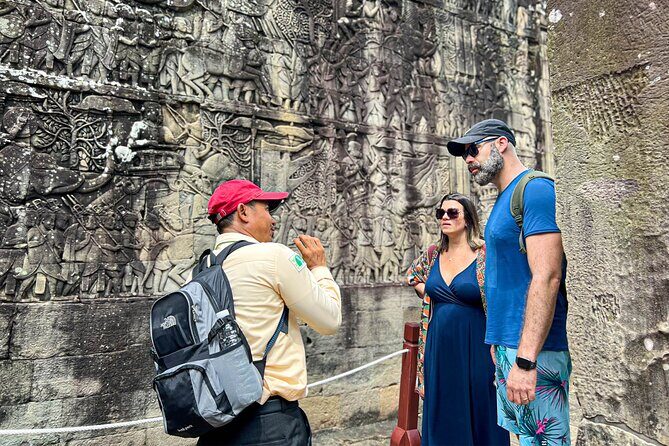
Bayon Temple is first, and it’s easy to see why it’s iconic. It was built in the late 12th or early 13th century as the state temple of the Mahayana Buddhist king Jayavarman VII, and it anchors the Royal City. Expect to spend real time here—45 minutes—and use the guide’s explanations to connect what you’re seeing to who built it and why.
Next is Baphuon Temple, a three-tiered “temple mountain” in the northwest section of Angkor Thom. The mid-11th century build is associated with Udayadityavarman, so it adds a different historical angle from Bayon’s Jayavarman VII focus.
Then you get the two famous terraces. The Terrace of the Elephants is part of the walled city complex and was used by Jayavarman VII as a viewing platform for major public moments. After that, the Terrace of the Leper King shifts the tone: it’s built in Bayon style under Jayavarman VII, and the modern name comes from an older reference to carvings you can’t unsee once you hear it.
The midday pause at Angkor Archaeological Park
After the temple-block, you’ll have lunch time in Angkor Archaeological Park, usually about 45 to 60 minutes. Admission tickets aren’t included here, and food is pay-your-own, so I’d treat this as your chance to reset: water, a quick snack, and then back out.
Angkor Wat proper on Day 1: big scale, clear context
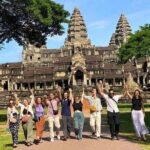
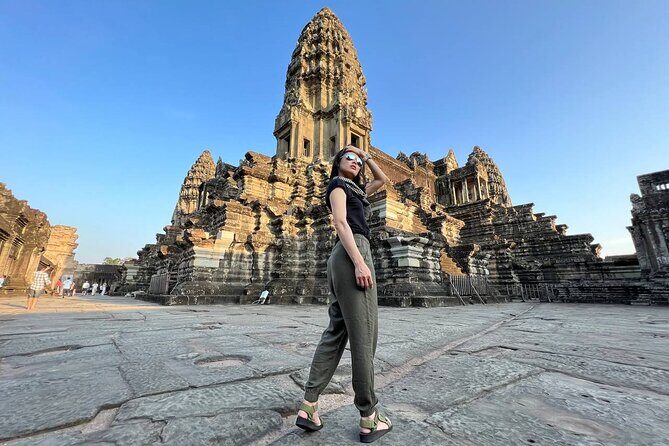
After Angkor Thom, the tour moves to Angkor Wat, the main stage. It’s described as the largest religious monument in the world and originally dedicated to Vishnu, which matters because it helps you understand the carvings and the layout beyond just “this is impressive.”
Your time here is about 1 hour 30 minutes. That’s plenty if your guide keeps you oriented—where you’re standing, how the space is structured, and what details to look for while you walk.
Then there’s a built-in flexibility point at the end of Day 1: Phnom Bakheng. If weather allows and you still have energy, you’ll try for sunset from the mountain.
Sunset from Phnom Bakheng: optional, and timing-dependent
Phnom Bakheng is all about the view, but it’s also the kind of stop that depends on conditions. The tour only goes if the weather cooperates and you’re not too tired, so don’t assume it’s guaranteed.
I like this kind of optional add-on because it respects how people actually feel after a day inside Angkor. If you’re prone to overheating or you already know sunrise is your priority, you might be happier using the energy on recovery instead of pushing for one more viewpoint.
Day 2 temples: Ta Prohm to Preah Khan, with a sunrise foundation
Day 2 starts with sunrise at Angkor Wat again—this time after a traditional Cambodian breakfast is included. That’s a good design choice because it keeps you from arriving at the sunrise hangry and tired.
Then the tour transitions into variety: you’re not just repeating the Angkor Thom loop. You’re moving through temples with different vibes—jungle drama, Hindu architecture, and large monastic compounds.
Ta Prohm: the temple where trees do the work
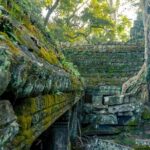
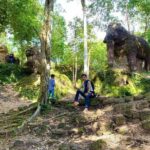
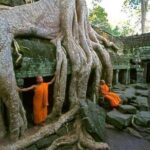
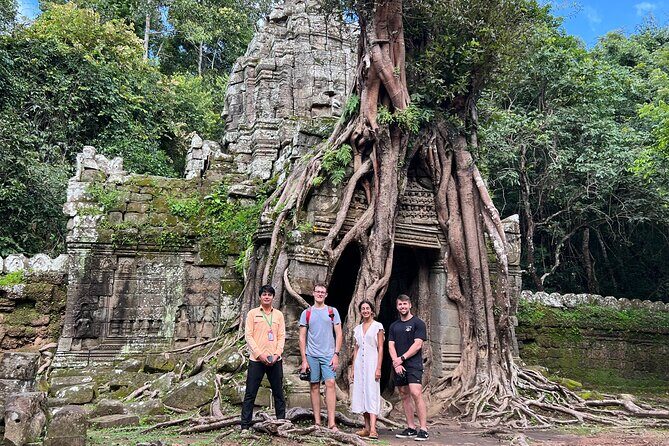
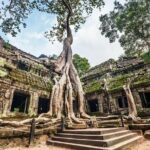
Ta Prohm is the “jungle temple” stop, left in its original state and partly overgrown with huge roots. The guide’s value here is huge. If you know where to look, the scene reads like a story instead of random rubble and trees.
Your time is about 1 hour. Use it to notice how the roots interact with doorways and towers, and how the temple feels more like a setting than a monument.
Pre Rup and Eastern Mebon: viewpoints and temple-mountain mood
Next is Pre Rup, a Hindu temple at Angkor built as the state temple of Khmer king Rajendravarman (dated to 961 or early 962). It’s a different feeling than Ta Prohm—more structured, more “step by step” in how you navigate the space.
After that, Eastern Mebon gives you the “island temple” idea. It’s a 10th-century structure built during Rajendravarman’s reign, sitting on what was once an artificial island at the center of the dry East Baray reservoir.
Ta Som and Neak Pean: calmer pacing, still worth stopping
Ta Som is a late 12th-century Jayavarman VII Mahayana Buddhist temple associated with Lord Svara, and it’s often a good reset after the busier big-name sites.
Then you reach Neak Pean, built during Jayavarman VII’s reign in 1191 to dedicate to Maha… (the tour description cuts off, but the key detail is the date and the sacred purpose). Neak Pean tends to feel quieter in practice because it’s not always the first obsession people plan around.
Preah Khan before lunch: a large compound with meaning
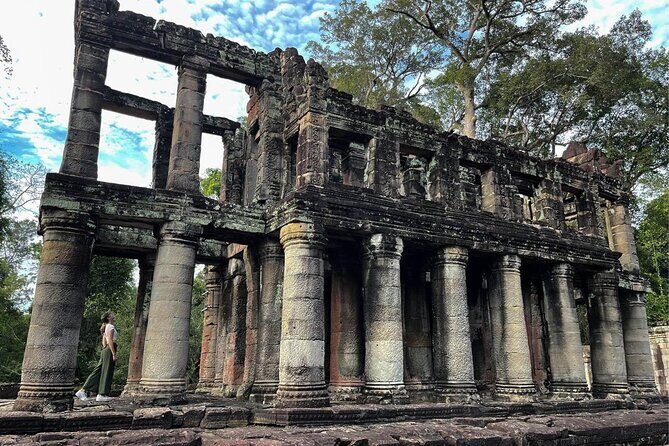
Before lunch, you’ll visit Preah Khan, a 12th-century temple built for Jayavarman VII to honor his father. It’s located northeast of Angkor Thom and just west of the Jayat… (again, the text truncates), but the important part is that it’s a larger, compound-style temple where you can take more time to absorb layout and carving patterns.
You’ll stop for lunch after this, then continue on.
Banteay Srei: why the detail level feels special
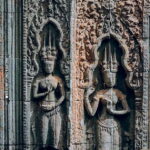
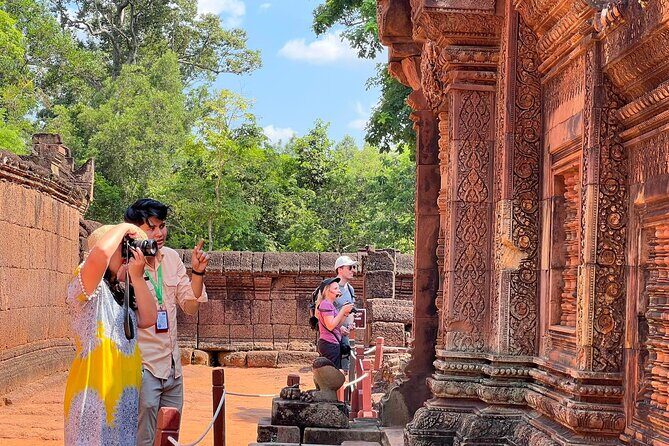
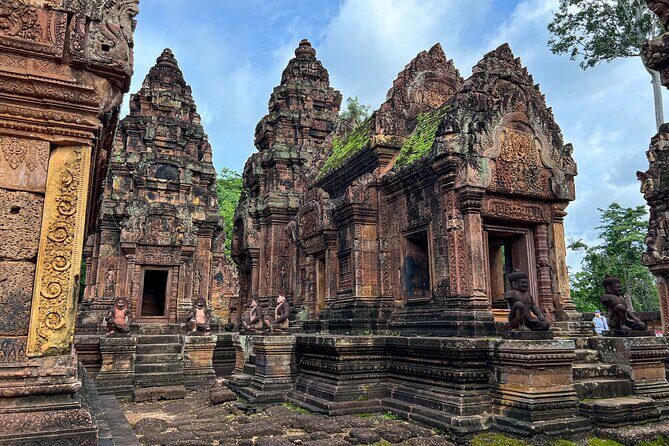
Banteay Srei is usually the “wait, I didn’t expect this” temple. It’s small compared to the big complexes, but the relief work is the star. The description calls it intricately carved and well-preserved, and notes that its detailed sandstone reliefs are regarded as some of the finest and most skillfully crafted.
This is scheduled for the early afternoon, and I like that timing. The light can be harsh in midday, but the carvings are the point, so you’ll still get something from it even if you’re not chasing the best photo-light.
Your time here is about 45 minutes. For a carved temple, that’s the right amount—enough to scan widely and then slow down for a few areas rather than rushing the entire façade.
Kampong Phluk on Tonle Sap: the boat ride and the $15 pass
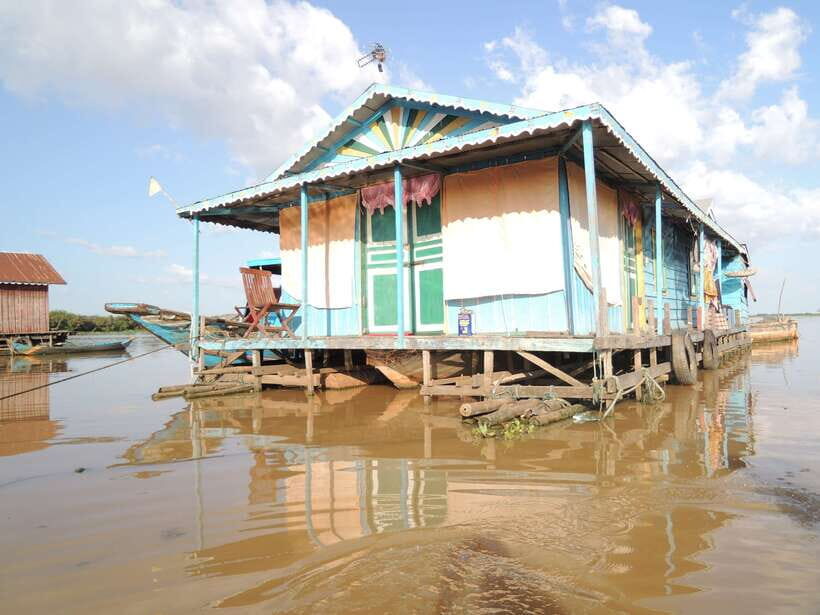
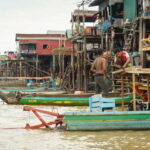
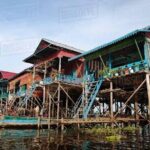
After Banteay Srei, you drive to Kampong Phluk, a flooded and fishing village on Tonle Sap Lake about 21 kilometers from Siem Reap. The tour includes a local boat ride once you reach the lake port.
The cost here is important: the tour lists Tonle Sap pass and a private boat ride as $15 per person, not included in the base $130. You’re paying for access to the water route and the chance to see how the village works day to day.
What changes when water levels drop (late March to July)
One of the most useful details in the tour info is the seasonal reality. From the end of March to the end of July, water levels in the floating villages start receding. That can mean fewer postcard-perfect scenes, and some boats may get stuck. Smaller canoes may not be able to travel through the jungle forest.
But it also changes the experience in a real way: you get a different perspective on daily life when the water is lower. If your goal is to see people’s routines and not just hunt for water-and-stilts photos, this is the time to go in a different frame of mind.
Your time at Kampong Phluk is about 1 hour 30 minutes.
Price and what you’ll budget on top of $130
At $130 per person for a 2-day private guided plan, you’re paying for three big things: a guide who can explain what you’re looking at, a driver who keeps the routing efficient, and air-conditioned private transport.
What you should expect to pay extra for:
- Angkor Thom South Gate admission: $62 per person
- Tonle Sap pass + private boat ride: $15 per person
- Food and soft drinks during lunch breaks (lunch time is planned, but you pay yourself)
Also note that several stops list admission tickets as not included. The only specific ticket prices stated are the Angkor Thom South Gate fee and the Tonle Sap pass/boat cost, so I’d plan your cash for at least those and then be ready for any other on-site temple entries that apply to your exact route.
Value-wise, the base price starts making sense if:
- you want sunrise timing without doing it independently,
- you care about learning context (not just walking through stone),
- you’d rather pay for someone to handle the pacing.
Guide quality and photo strategy: how you get better shots
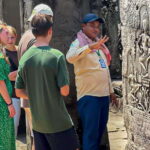
A lot of Angkor tours look similar on paper, but the guide can change the whole experience. In the stories shared about this tour, strong guides repeatedly got credit for English that’s easy to follow, smooth organization, and the habit of choosing quieter routes and better angles.
That means you should actively use your guide. Ask them where the light hits best, where to stand for fewer crowds, and how to frame the big temple views without shooting over everyone’s heads.
You’ll also notice the little logistics that matter: many guides and drivers in the experience notes were praised for being ready with cold bottles and a cool wash cloth when you return to the van after temple stops.
What to bring so the day feels easier
Angkor is hot, and bugs love a late-day snack. This tour specifically recommends:
- insect repellent
- sunscreen
- sun hat
- comfortable shoes
I’d also bring a small refillable water bottle if you can, since you’ll be moving between sites and standing around waiting for the next best moment.
And pack for sunrise fatigue. Even if you’re excited, the 4:40 AM pickup is real. Bring something to pull on quickly (a light layer) and plan to take your midday breaks seriously.
Should you book this 2-day private Angkor tour?
Book it if you want a tight two-day plan that covers Angkor Wat, the Angkor Thom highlights, Ta Prohm, Banteay Srei, and then a real Tonle Sap village stop. It’s also a good fit if you like learning as you walk, because the format is built around guided context.
Skip it, or choose a lighter plan, if you hate early mornings or if you already know you’ll want tons of free time to wander alone. This tour is structured and full, and you’ll be moving from one temple to another across two long days.
If you do book, I’d go in with two priorities: treat sunrise as the key experience, and use your guide to get better photo angles without wasting time. That combo is where the tour’s value really shows.
FAQ
Is this tour private?
Yes. It’s described as a private tour/activity, meaning only your group participates.
How much does the tour cost?
The price is listed as $130.00 per person.
What is included in the tour price?
Included items are a professional English-speaking tour guide and driver, private transport with air-conditioning, free cool towels during the tour, and breakfast on Day 2.
Are meals included?
Breakfast is included on Day 2. Lunch breaks during the route are planned, but food and soft drinks are not included.
What extra costs should I expect?
Tonle Sap pass and a private boat ride are listed as $15 per person. Admission fee for Angkor Thom South Gate is listed as $62 per person, and other admissions are shown as not included at specific stops.
When is the sunrise pickup on Day 2?
You’ll be picked up from your hotel lobby before sunrise at 4:40 AM.
Can I cancel for a full refund?
Yes. Free cancellation is available if you cancel up to 24 hours in advance for a full refund.