REVIEW · SIEM REAP
5 Days | Angkor Sunrise & Preah Vihear Explorers
Book on Viator →Operated by Hok Cambodia Journeys · Bookable on Viator
Five days, and your feet will remember it. This tour blends Angkor Wat at sunrise with a wider Khmer hit list, then adds the border views of Preah Vihear and the less-fussed ruins of jungle-adjacent stops like Ta Nei. You get temples, yes, but you also get Cambodia’s everyday layers—markets, floating villages, and a monk’s water blessing day.
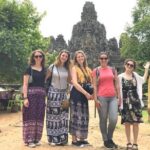
What I like most is the balance of famous and quieter sights. I especially loved pairing the heavyweights (Angkor Wat, Bayon) with places such as Ta Nei and remote Beng Mealea, where the setting does a lot of the talking. I also think the tour is strongest when it slows down for explanations, and the English guide Hok is repeatedly praised for clear, vivid commentary and for helping with photos.
One possible drawback: you’re on an early-start schedule for several days, and some big-ticket items are not included. In other words, it can feel like a lot of moving parts until you’re holding the right passes and tickets in your hands.
In This Review
- Key things I’d plan around
- The big picture: how this 5-day Cambodia plan actually feels
- Day 1 in Angkor Thom: Angkor Wat to Ta Prohm, plus night market culture
- Sunrise at 4:30 AM and the Angkor circuit on Day 2
- Day 3’s Phnom Kulen and Beng Mealea: sacred sites and rugged ruins
- Day 4 to Preah Vihear: border views, Ta Mok’s House, and Koh Ker
- Day 5’s mix of memory and daily life: Killing Fields, museum, Tonle Sap, Wat Bo
- Price and value: what $640 gets you, and what you should budget too
- Practical tips so your days don’t run you
- Who should book this tour, and who might skip it
- FAQ
- What is the price and duration of this tour?
- Is pickup from my hotel included?
- Are hotel accommodations included?
- Is the Angkor Temple Pass included?
- Are tickets for Preah Vihear and Koh Ker included?
- Is the Tonle Sap floating village boat trip included?
Key things I’d plan around
- Two serious Angkor mornings (one sunrise at 4:30 AM, plus a full Angkor circuit on day 1)
- Jungle ruin energy at Ta Nei and Beng Mealea, with fewer crowds and more uneven stone
- Preah Vihear + Koh Ker for contrast: a cliff-top temple near Thailand and a former Khmer capital
- Real Cambodia moments with a Tonle Sap floating village visit and a monk-led water blessing
- Optional evening culture with the night market and Phare Cambodian Circus
- Tickets aren’t fully bundled, so you should budget for the Angkor pass and other temple fees
The big picture: how this 5-day Cambodia plan actually feels
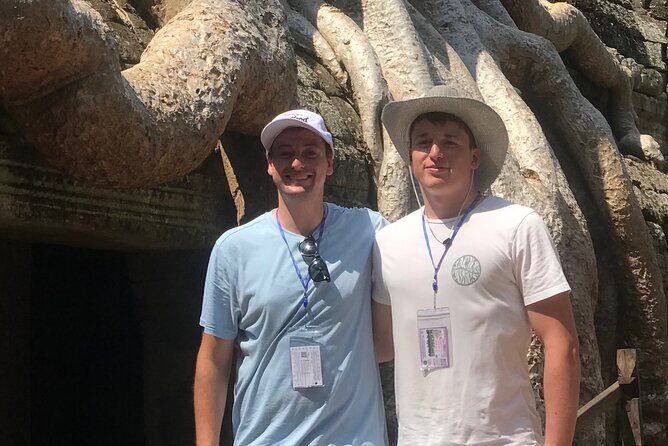
This trip is built for people who want more than one Angkor day and more than one “temple photo.” You’ll stack sunrise energy at Angkor Wat, work through major Angkor sites, then move outward to Phnom Kulen, Beng Mealea, Preah Vihear, and Koh Ker. By day 5, you’re in Siem Reap’s cultural and historical core too, with the Killing Fields, the Angkor National Museum, Tonle Sap, and Wat Bo.
What makes it work for your time is the sequencing. Angkor is scheduled early on multiple days, when the light is better and the day isn’t roasting yet. Then the route turns outward to sites that don’t behave like a quick hop from town.
Value-wise, you’re paying for a guided, air-conditioned van plan plus a lot of driving. At $640 per person, I’d treat this as a serious itinerary, not a light sampler—especially since hotel stays and several key tickets are listed as not included.
A few more Siem Reap tours and experiences worth a look

Day 1 in Angkor Thom: Angkor Wat to Ta Prohm, plus night market culture
Day 1 starts with a hotel pickup at 8:00 AM and a stop to get the 3-day Angkor Temple Pass. That’s important because without the pass, your Angkor time can turn into a frustrating mess of individual tickets. Having it lined up early makes the rest of the day feel smoother.
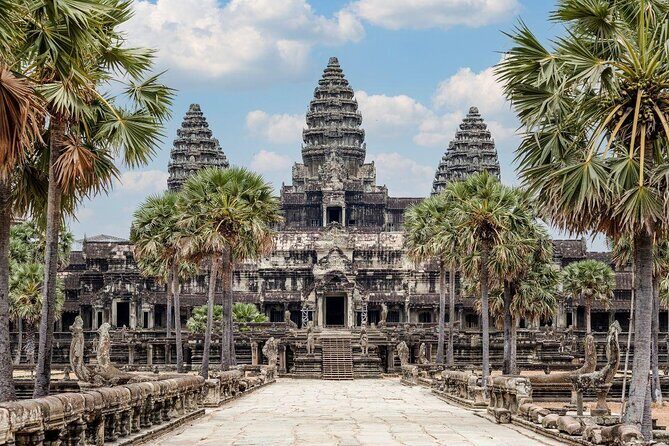
Then you jump into Angkor Wat, the big masterclass of Khmer architecture. Expect a well-preserved, world-famous site and a temple layout designed to feel balanced and monumental. The walking is steady, so it’s smart to wear shoes you can trust and keep water within reach.
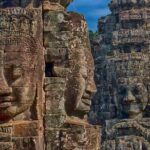
From there, you enter Angkor Thom through the South Gate, with the iconic bridge flanked by the 54 gods and 54 demons. It’s one of those scenes that’s easier to understand with an on-site guide than from a photo. After that, Bayon gives you the faces of the temple and bas-reliefs where Hindu and Buddhist themes overlap—one of the Khmer Empire’s most interesting identity shifts.
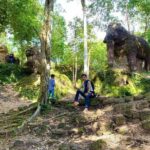
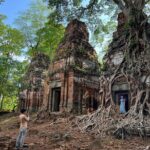
You also get Ta Nei, which sits deeper in the jungle feel. It’s the kind of stop where the ruins don’t just sit there—they blend with the environment. You might spot wildlife sounds and movement as you walk, and the lower visitor flow makes it feel calmer than the most famous spots.
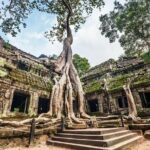
Next is Ta Prohm, the famous ruin with giant roots tangled into stone. It’s instantly recognizable, and that fame can be a double-edged sword: it’s spectacular, but it can also feel busy. Either way, it’s a great place to see how nature reclaims a structure.
You finish back in Siem Reap with the night market and an optional dinner paired with an Apsara dance performance. If you want something cultural that isn’t another temple, this is a solid choice—especially after a full day of heat and stone.
My practical tip for day 1: pack light sun protection. Even when clouds help, Angkor exposure is still real.
Sunrise at 4:30 AM and the Angkor circuit on Day 2
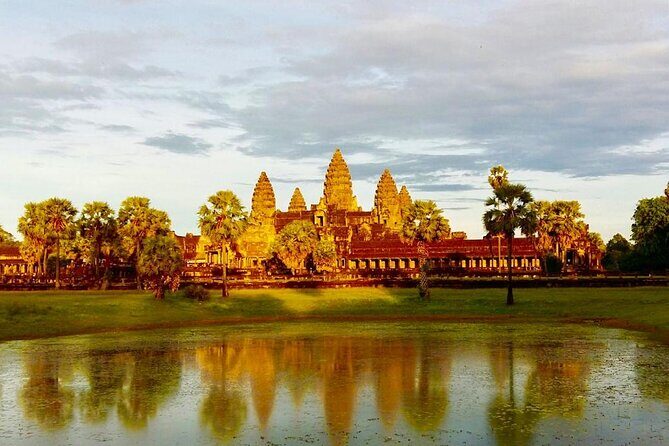
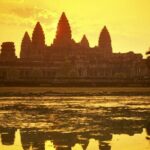
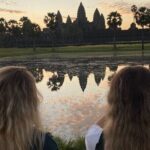
Day 2 is a proper early morning. You’ll be picked up around 4:30 AM for the Angkor Wat sunrise experience. The plan is to get you in position before the crowd energy hardens, and you’ll have time to see the sky change while the temple stays sharp in the pre-dawn light.
The route guidance here matters. You’re told to aim for the reflecting pool area in front of the main temple, which gives you a classic mirrored-light view as sunrise hits. If you’re into photos, this is also where the guide’s photo help (especially with an English-speaking guide like Hok) can make a difference.
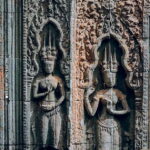
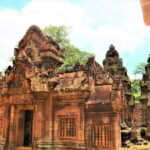
After the sunrise portion, the day turns to temples that feel more detailed than dramatic. You’ll visit Banteay Srei, often called the Lady Temple, known for its pink sandstone and fine carvings that remain impressively intact. It’s one of the Angkor stops where you can slow your brain down and enjoy craftsmanship, not just scale.
Then comes Preah Khan, one of the larger complexes in the region. The guide’s explanations help connect the site to Jayavarman VII’s religious and educational purposes—this wasn’t just a monument, it was tied to a royal school role in its time.
You’ll continue with Ta Som, including an East Gate scene where trees and roots have grown into the stone structure. It’s visually similar to Ta Prohm, but the vibe is different: Ta Som feels more layered and quieter.
Neak Pean is another good pacing move. It’s described as a medical bathing concept with linked pools representing elements. Even if you don’t focus on the theory while walking, it gives you a break from carvings and huge stair climbs.
The day winds down with Bodia Spa Pub Street as an optional massage stop. This is the kind of add-on that makes sense on day 2 because your feet will start talking.
Day 3’s Phnom Kulen and Beng Mealea: sacred sites and rugged ruins
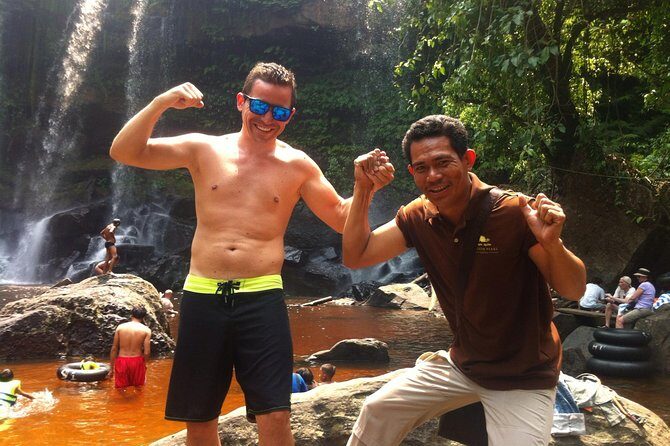
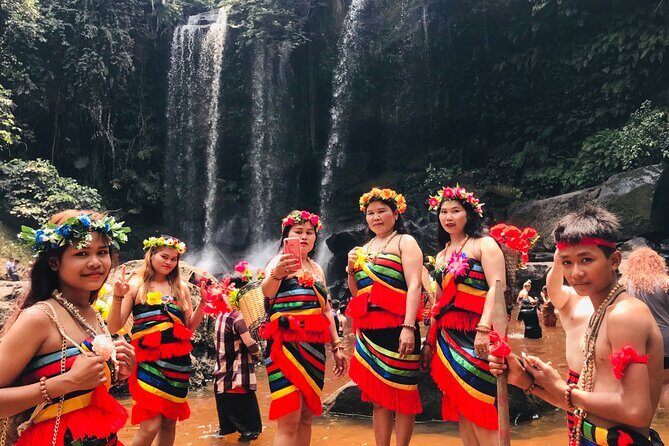
Day 3 begins at 8:00 AM with a drive to Phnom Kulen National Park. Phnom Kulen is a sacred mountain tied to Khmer origin mythology and royal power claims. You’ll be able to see several featured spots: the holy waterfalls, a reclining Buddha, a sacred river area with thousand Lingas, Srash Damrei, and the Bat Cave.
The site’s importance is not just spiritual theater. It’s tied to the way the Khmer Empire framed power through the Devaraja cult idea—King Jayavarman II proclaiming himself as god-king. That context helps you see why people still come here with reverence.
Then the route shifts to Prasat Beng Mealea, about 66 km from Siem Reap by road. This is one of the most interesting contrasts in the whole itinerary. Beng Mealea is described as a remote jungle temple in an original ruined condition, with limited restoration compared to the major Angkor temples. It opened after land mines were cleared, which is worth knowing before you treat it like a manicured attraction.
Here, you’ll want to move carefully. The terrain is uneven, the stones can look unstable, and the plan explicitly notes you should exercise caution. If you enjoy exploring with a “walk inside history” mindset, this is a highlight.
By the time you return to Siem Reap, you’ll likely feel the change in pace. This day isn’t built to be easy, but it’s built to be different.
Day 4 to Preah Vihear: border views, Ta Mok’s House, and Koh Ker
Day 4 starts early again, with pickup around 5:30 AM. You’re asked to get breakfast boxes from your hotel, and there’s a stop at Anlong Veng for breakfast and refreshment. Anlong Veng matters historically as a last stronghold capital area of the Khmer Rouge Army before 1998.
You’ll also visit Ta Mok’s House, a major memory place connected to Khmer Rouge leadership. This portion can hit harder than the temple days because it’s not scenic. Plan to go respectfully, slow down, and take it in as education, not sightseeing.
Then you head to Preah Vihear, a Hindu temple on top of the Dangrek Mountain Range, close to the Thailand border. You’re told you can see Thai army presence from the Cambodia side. That detail makes the location feel very current—this temple isn’t just about ancient stone; it sits in a living border region.
The temple itself is described as incredible and Hindu, and the viewpoint from the mountain setting is part of the payoff. The drive is long, but the top view is why this day exists.
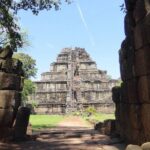
After Preah Vihear, you continue to Koh Ker. The trip includes a one-hour lunch break at a local restaurant near the park. Koh Ker is identified as the ancient Khmer capital under King Jayavarman IV, who ruled from 921 to 944. Visiting it gives you a break from the Angkor-centered routine and shifts your brain to a different Khmer power geography.
By the end, you return to Siem Reap for a calmer evening.
A few more Siem Reap tours and experiences worth a look
Day 5’s mix of memory and daily life: Killing Fields, museum, Tonle Sap, Wat Bo
Day 5 is the emotional and reflective day. You’ll be picked up at 9:00 AM and start with Wat Thmey Killing Field. This is where Khmer Rouge victims’ skulls are placed, and the tour includes context about the 1975–1979 Pol Pot genocide. You’re also told about the scale: about 3 million Cambodian people killed, and that there are around 386 killing field sites across Cambodia.
This stop is not a “look and move on” moment. If you’re the type who hates heavy history on vacation, consider that this day will stay with you. If you want understanding—real, specific understanding—this is where you get it.
From there, you go to the Angkor National Museum. The big value here is seeing artifacts and learning how Khmer-era objects are interpreted and preserved. The tour explains that many original items are not visible inside the original temples anymore, and that pieces were moved to places like the conservation center and other museums. It’s a good way to make sense of what you saw earlier.
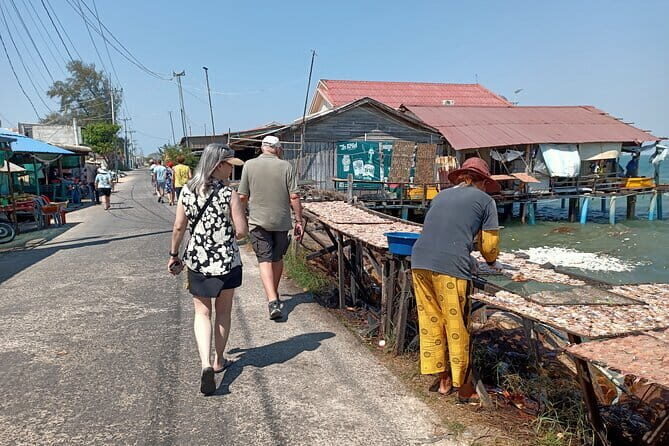
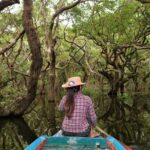
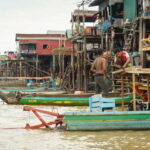
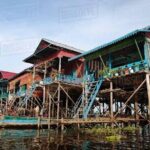
Next is Chong Kneas floating village on Tonle Sap Great Lake, with a 90-minute local visit featuring fishermen families and floating houses. The practical takeaway is that Tonle Sap life is seasonal and connected to the lake, and you get to witness everyday routines rather than just temple scenes.
One thing to watch: the tour lists boat trip & lake entrance fees as not included, even though the Chong Kneas portion is presented as a paid activity. Before you go, confirm what you’ll pay on the day so your day 5 doesn’t get awkward at the dock.
Finally, you go to Wat Bo for the monk’s water blessing ceremony. This is included, and the purpose is safe travel, prosperity, and good fortune. It’s a simple, hands-on cultural practice that contrasts sharply with the heaviness of the morning.
If you want a lighter ending, there’s an optional evening show: Phare, The Cambodian Circus, usually 8:00 PM to 9:00 PM. Plan to arrive at least half an hour early for seating.
Price and value: what $640 gets you, and what you should budget too
At $640 per person for roughly five days, you’re paying for:
- an air-conditioned vehicle
- an English tour guide
- cold water and towels
- local fresh fruits and coconut
- pickup and structured site time
That’s real value in Cambodia because distance between sites is part of the story, and heat makes transport comfort matter.
But you should also plan for extra costs listed as not included:
- Angkor Temple Pass
- Preah Vihear ticket
- Koh Ker ticket
- boat trip & lake entrance fees for the floating village portion
- Phare Circus ticket (optional)
- hotel accommodation
So the true cost depends on your ticket totals and how many optional evenings you add. Still, the structure is useful: the guide organizes the pass purchase for the Angkor day, and the rest of the schedule keeps you from guessing.
If you’re a value hunter who wants a totally all-in price with hotel included, this might feel incomplete. If you’re okay paying for tickets directly and you want a guided plan that reaches beyond standard Angkor, the price makes sense.
Practical tips so your days don’t run you
Here’s how I’d set yourself up.
First: respect the start times. 4:30 AM and 5:30 AM pickups mean you should plan your evenings in Siem Reap around rest, not late-night wandering. The schedule is tight, and the temples don’t care that you slept poorly.
Second: bring a small kit. You’ll get cold water and towels, but you still want sunscreen, a hat, and comfortable shoes for uneven ground at Ta Nei and Beng Mealea. Temple stone can be smooth one minute and rough the next.
Third: keep your tickets organized. The Angkor pass is handled on day 1, but other tickets are not included. With a plan that spans multiple payment points, having a simple envelope or pouch for documents saves time.
Fourth: choose your optional activities based on energy. If day 2 massage sounds tempting, it’s there for a reason. If Phare sounds fun, go only if you still have enough fuel after your history-heavy day.
Finally: be ready for mixed emotions. The Killing Fields stop is serious. If you can handle it, your understanding of Cambodia deepens fast.
Who should book this tour, and who might skip it
Book this if you want a guided route that covers Angkor sunrise, the Angkor Thom circuit, plus outward Khmer sites like Phnom Kulen, Preah Vihear, and Koh Ker—and you also want cultural stops like Tonle Sap and the Wat Bo water blessing ceremony.
You might skip it if you hate early mornings, dislike long driving days, or need a fully all-in package price that includes hotels and every ticket. This plan is active and it spends real time at major sites, including the emotionally difficult memory stop.
If you do book, one more smart move: confirm in advance which day-fees you’ll pay onsite (especially floating village boat/lake fees and any temple tickets) so your final day feels smooth instead of last-minute.
FAQ
What is the price and duration of this tour?
The tour is about 5 days and costs $640.00 per person.
Is pickup from my hotel included?
Yes. The tour offers pickup from your hotel for the different start times each day.
Are hotel accommodations included?
No. Hotel accommodation is not included.
Is the Angkor Temple Pass included?
No. The Angkor Temple Pass is not included, but the tour arranges purchasing the 3-day pass on day 1.
Are tickets for Preah Vihear and Koh Ker included?
No. Preah Vihear ticket and Koh Ker Temple Ticket are not included.
Is the Tonle Sap floating village boat trip included?
The tour lists boat trip & lake entrance fees as not included, even though the Chong Kneas visit is part of day 5. You should budget for those fees.